Tag: AMD Ryzen 7 5800X3D

  • AMD Ryzen 5800X3D Relaunch Required Extensive Engineering Work

    AMD Ryzen 5800X3D Relaunch Required Extensive Engineering Work

    Key Takeaway

    – AMD re-announced the Ryzen 7 5800X3D at Computex 2026 as a re-release, set for June 25 at $350.
    – The chip highlights AM4 platform longevity, allowing gamers to keep using DDR4 memory and existing motherboards.
    – Re-engineering was required because TSMC’s original 3D V-Cache stacking process was no longer available.
    – Engineers had to re-qualify, fabricate, test, and validate the chip using the new stacking approach to meet quality standards.


    Comptex Re-Intros the 5800X3D Chip

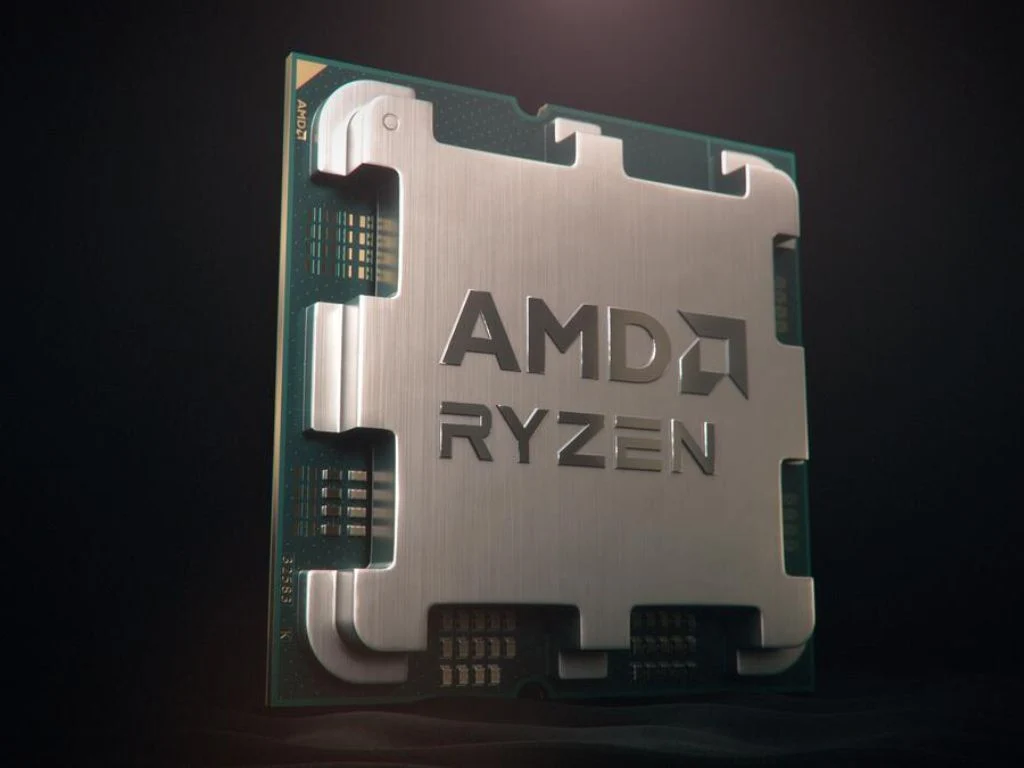
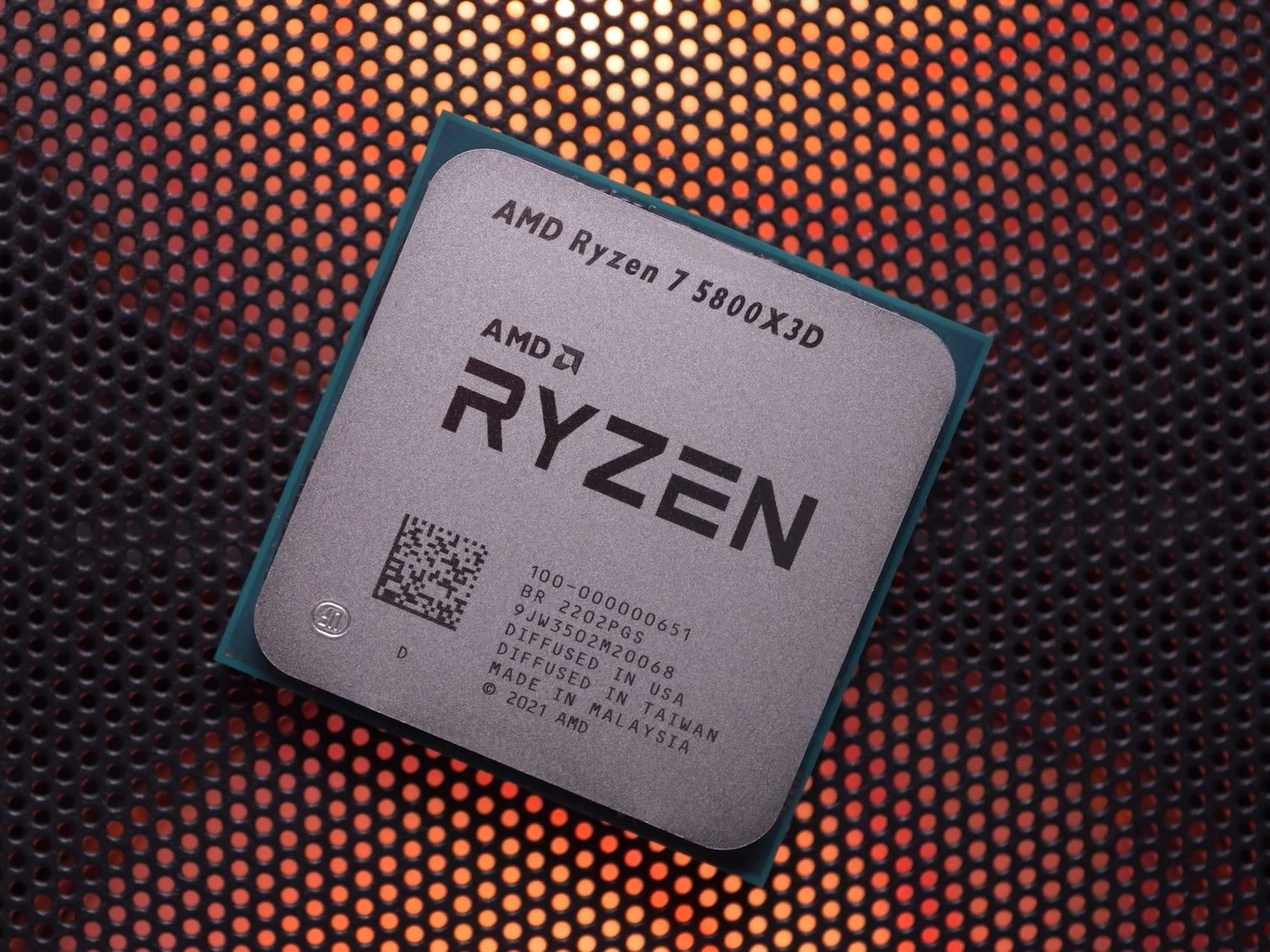
    After numerous leaks and rumors, the AMD Ryzen 7 5800X3D has been formally re announced by Team Red at Computex 2026. The tenth anniversary of the 5800X3D just goes to show the longevity of the AM4 platform, even as the company continues to produce Zen 4 and Zen 5 chips. This means gamers can stick to reliable, relatively inexpensive DDR4 memory without haveing to upgrade their motherboards, while still getting a bump in CPU and gaming performance.

    Return of the King at $350

    In press briefings at Computex, AMD framed the Ryzen 7 5800X3D as the “Return of the King,” evoking the chip’s status in 2022 as the first Ryzen gaming processor to introduce 96MB of 3D V-Cache. Even today, it remains one of the best go-to options, with the re-release set for June 25, 2026, at a retail price of $350.

    McAfee Addresses Gamers

    At Computex, David McAfee, the corporate VP and GM of AMD’s Client Channel and Graphics Business, addressed gamers while announcing the processor. Stating “We’re commited to giving gamers high-performance technologies with the flexibility to upgrade their systems over time. Ultimately, our goal is to deliver unmatched ownership experiences for players around the world.” The road to re-releasing the Ryzen 7 5800X3D was not as straightforward though as simply refabricating the chips, because AMD says a lot of engineering effort went into adapting to the current chip manufacturing landscape.

    Engineering Behind the Return

    Bringing back the 5800X3D wasn’t just a matter of dusting off the old design and pressing “go” on the production line. McAfee stated that “a whole body of engineering work” went into reproducing the original bonding process TSMC used for the 5800X3D. This is because, as AMD moved forward to second-generation 3D V-Cache designs, the original process was no longer available. So engineers had to re-qualify the design for the new stacking approach, fabricate and validate new sample chips, and run extensive reliability tests to ensure the re-released chip would meet quality control requirements and gamers’ standards.

    Process Changes Explained

    McAfee explained: “It’s not as simple as bringing back the 5800X3D. The original stacking process that was used at TSMC changed when we went from first-gen to second-gen cache, so we had to re-engineer that product, and there actually went a fair amount of development work into bringing back the 5800X3D.” AMD had to put a whole lot of work into re-validating the chip for modern fabrication.

    • 96MB of 3D V-Cache
    • Re-release date: June 25, 2026
    • Retail price: $350
    • AM4 platform compatibility
    • DDR4 memory support
    Sources
  • AMD Ryzen 7 5800X3D Relaunch Bundle: Noctua Cooler & Carbice Pads

    AMD Ryzen 7 5800X3D Relaunch Bundle: Noctua Cooler & Carbice Pads

    Key Takeaway

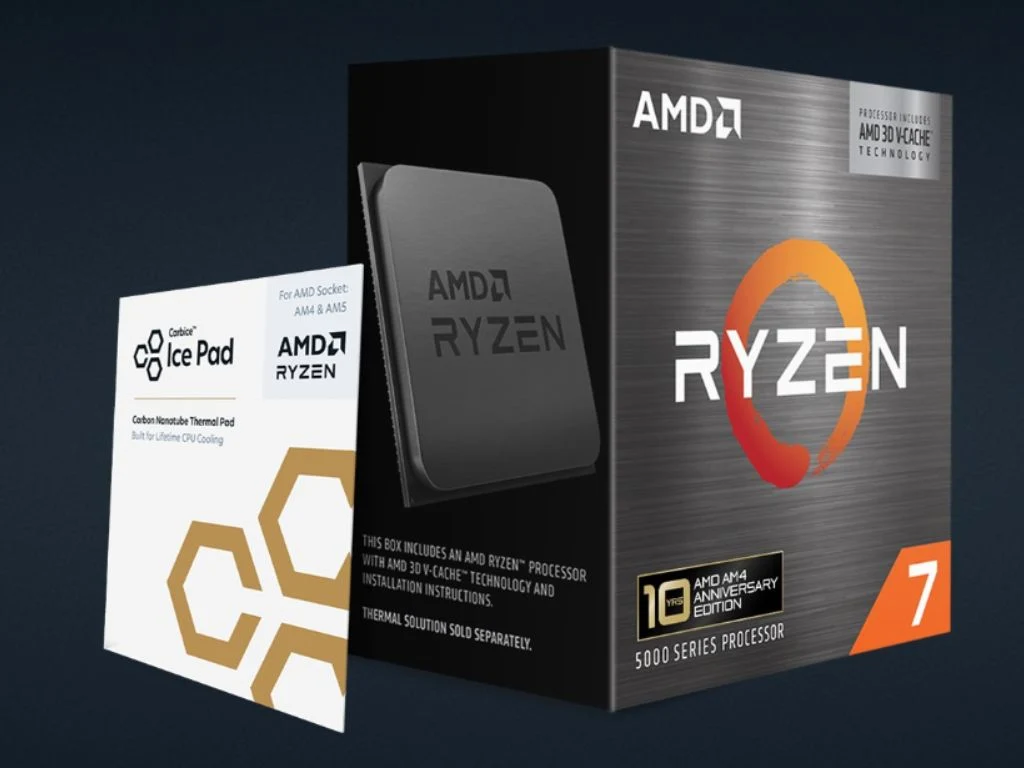
    – AMD re-releases Ryzen 7 5800X3D as a 10th Anniversary Edition at a lower price ($349).
    – Bundle includes Carbice carbon nanotube thermal pads and a Noctua cooler.
    – Carbice pads offer long-term reliability without needing to replace dried thermal paste.
    – Upgrade targets gamers on older AM4 platforms, avoiding costly DDR5 and AM5 upgrades.
    – Product launch scheduled for June 25, 2026.


    AMD Revives the Legendary 5800X3D

    After numerus visual leaks and rumors, AMD is finally bringing back the Ryzen 7 5800X3D, now bundled with Carbice Thermal Ice Pads and a Noctua cooler. To provide gamers with older systems a smart, inexpensive upgrade path, AMD has launched the Ryzen 7 5800X3D as a 10th Anniversary Edition. For context, the new carbon nanotube-based thermal pad promises stable temperatures and long-term reliability without the usual three to six months of maintenance required to scrape off old, dried-up thermal paste.

    A Unique Collaberation with Noctua

    At the same time, AMD and Carbice have also collaborated with industry-leading heatsink and PC fan manufacturer Noctua, allowing DIY PC builders to get their hands on Carbice’s thermal pads for the first time. So, what exactly are Carbice’s Ice Pads? Carbice’s thermal solution uses vertically aligned carbon nanotubes layed on an aluminum backbone and topped with a nanoscale polymer coating that helps it conform more closely to surfaces over time. The currently available consumer product is Carbice’s IP90 pads, starting with the NT-CP1 AM5/4 model, and is expected to hit shelves in September 2026.

    Improved Heat Dissapation

    Carbice’s thermal solution actually improves heat dissipation as the system continues to heat and cool, instead of breaking down and drying out over time. Applying Carbice Ice Pads is straightforward. PC builders simply have to peel and stick the easy-to-use thermal pad without creating a blotchy mess, and they can swap thermal pads easily if they need to switch heatsinks or coolers. Noctua CEO Roland Mossig described its solution, saying:

    “Carbice’s unique, innovative TIM technology has already proven to be a game changer in applications that demand ultimate reliability, such as satellites, aerospace, and critical infrastructure. We’re confident that the superior long-term performance, ease of use, and dependability of Carbice pads will be equally attractive to PC enthusiasts, so we’re excited to bring them to this market and to collaborate with Carbice on future R&D.”

    The Glorious Return of the CPU

    On the other end of the spectrum, we have the glorious return of the Ryzen 7 5800X3D, which couldn’t have arrived at a better time, as DDR5 memory prices have jumped to unprecedented levels, making an upgrade to AM5 less feasible. The Ryzen 7 5800X3D, still boasting strong gaming performance, ships with 8 Zen 3 cores and 96 MB of total V-Cache, making it a go-to solution for gamers still on AM4 motherboards. It’s now expected to be available at a more attractive $349 for the 10th anniversary edition starting 25th june 2026, down from its 2022 retail launch price of $449, even as current price tags for the older SKU on Amazon make it seem like a much less approachable play for users intending to stay on AM4.

    Sources
  • AMD Relaunches Ryzen 7 5800X3D for AM4 Amid DDR5 RAM Shortage

    AMD Relaunches Ryzen 7 5800X3D for AM4 Amid DDR5 RAM Shortage

    Key Takeaway

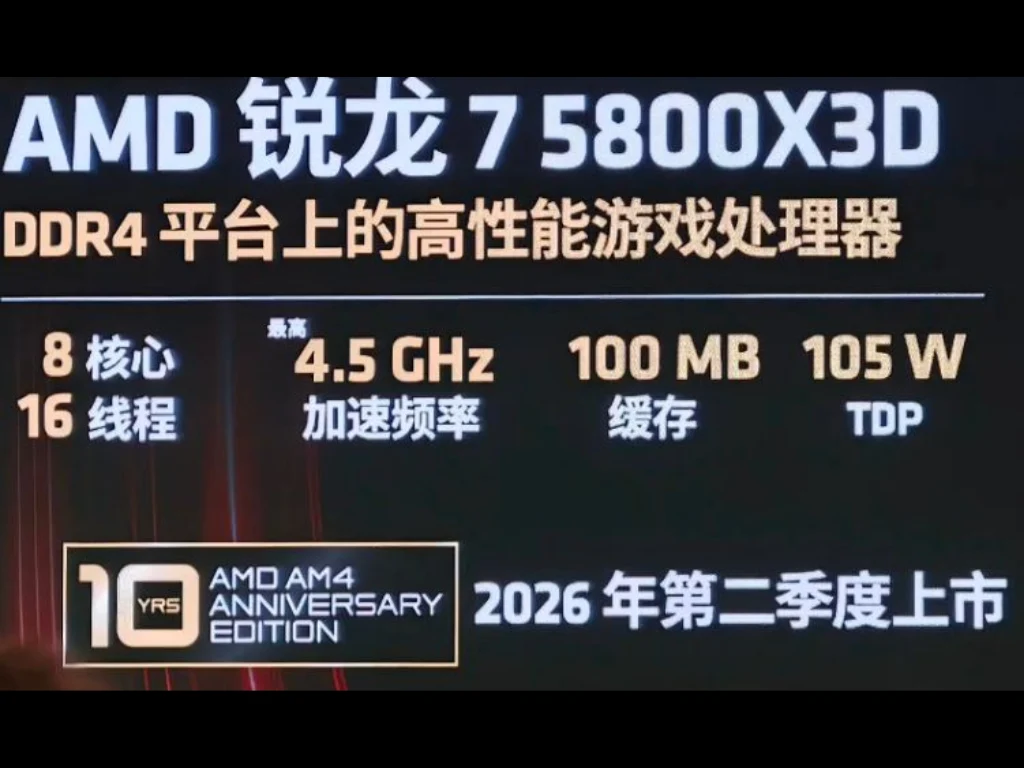
    1. AMD’s Ryzen 7 5800X3D is rumored to return as an “AM4 10th Anniversary Edition,” launching in Q2 2026.
    2. The new edition will have the same specs as the original, with no changes to the silicon, only re-packaged.
    3. Reviving the older platform benefits consumers by allowing continued use of DDR4 memory amid rising DDR5 prices.
    4. The CPU remains competitive in gaming performance, offering a cost-effective option for users with budget-friendly motherboards.

    Rumors about AMD’s Zen 3 Based CPU comeback

    There is a lot of chatter going around that AMD might be bringing back the popular Zen 3 based X3D CPU, mostly the Ryzen 7 5800X3D. According to hardware insider HXL, it’s expected to make a return as a special “AM4 10th Anniversary Edition” CPU, maybe releasing in the 2nd quarter of 2026. This is not sudden news as AMD recently teased at CES that they might revisit some older Zen 3 CPUs to keep supporting DDR4 memory for their loyal user base.

    AM4 celebrating its extended life

    The AM4 socket that first arrived in 2016 is still very much alive, and this upcoming anniversary version of the Ryzen 7 5800 X3D seems like AMD’s homage to a long-standing platform that still has fans. It’s like a little celebration of years of motherboard compatibility, even as newer options arrive. The leak points out that the new CPU apparently features the same specs as it did when launched in 2022, which is kinda interesting considering the tech world kept moving forward.

    Specifics and performance of the rumored chip

    Regarding its specifications, the Ryzen 7 5800 X3D has handy 8 cores and 16 threads, running on a base clock of 3.4 GHz that can boost up to 4.5 GHz under heavy load. It also carries a quite impressive 96 MB of 3D V-Cache, which is key for its gaming prowess. The leak reveals that AMD isn’t making any intrinsic changes under the hood, just repackaging the same silicon for this new release.

    Market and price implications of reviving older tech

    Even if it seems like a nostalgic throwback, it’s totally practical especially now since DDR5 memory prices have gone way up. For example, 32GB DDR5 kits that used to be around $90 are now often going for between $300 and $500. This price hike makes the idea of sticking to older, more affordable platforms look more attractive. AMD’s decision to revive this platform allows many gamers and PC builders to upgrade without going broke.

    Historical pricing and performance insights

    The original Ryzen 7 5800X3D was launched with a retail price of $449, later dropping to as low as $268, before being discontinued about two years ago. Currently, it sold for roughly $329. It’s still uncertain what the price for the new Anniversary Edition will be, but since it’s based on an older manufacturing process, AMD will probably aim to keep it affordable. Despite the years, this processor remains relevant thanks to its 3D V-Cache technology, competing well with newer CPUs like AMD’s Ryzen 5 9600X or Intel’s Core Ultra 5 245K in gaming, all while sipping just 105 watts and working smoothly with budget-friendly motherboards.

    Sources
  • Ryzen 7 5800X3D vs Core Ultra 9 285K: Gaming Performance Test

    Ryzen 7 5800X3D vs Core Ultra 9 285K: Gaming Performance Test

    Key Takeaways

    1. The AMD Ryzen 7 5800X3D remains a top-performing gaming CPU, closely competing with Intel’s latest flagship, the Core Ultra 9 285K.
    2. At 1080p/Medium settings, the Ryzen 7 5800X3D achieved an average of 188 FPS, almost matching the performance of the Ryzen 5 9600X.
    3. Even at 1080p/Ultra settings, the Ryzen 7 5800X3D held strong against CPUs like the Core i5-14600K, with an average FPS of 151.
    4. There is a suggestion for AMD to reintroduce AM4 CPUs like the Ryzen 7 5800X3D, as DDR4 RAM prices are more affordable compared to DDR5.
    5. Reintroducing the Ryzen 7 5800X3D would provide gamers with a solid and cost-effective alternative in a challenging market for memory and SSDs.


    When we took a look at the AMD Ryzen 7 5800X3D back in 2022, it was the quickest gaming CPU available. It even outperformed the much pricier Core i9-12900K, which is Intel’s top 12th-gen CPU. Fast forward to today, and the Ryzen 7 5800X3D’s performance remains quite relevant. Actually, testing from Hardware Unboxed shows that the Ryzen 7 5800X3D is only a few percentage points behind Intel’s latest flagship, the Core Ultra 9 285K.

    Performance at 1080p/Medium

    In the 14 games that HU tested at 1080p/Medium settings, the Ryzen 7 5800X3D achieved an average of 188 FPS, along with a 1% Low of 151. This means the CPU was nearly on par with the Ryzen 5 9600X and was just a tad behind the Core Ultra 9 285K (which you can find on Amazon). The Ryzen 7 9800X3D, on the other hand, was noticeably faster, boasting a 35% higher average FPS compared to the Ryzen 7 5800X3D.

    Performance at 1080p/Ultra

    The findings were similar at 1080p/Ultra, where the Ryzen 7 5800X3D still held its ground against the Core i5-14600K and the Ryzen 5 9600X. For example, while the Core i5-14600K and Ryzen 5 9600X had an average FPS of 153, the Ryzen 7 5800X3D closely matched this performance with an average of 151 FPS.

    In simpler terms, even with recent games like Battlefield 6, the Ryzen 7 5800X3D can keep pace with the newest CPUs. This is excellent news for those who are already using this processor or are planning to build a new system with it.

    Potential Reintroduction of AM4 CPUs

    As pointed out by HU, it would be beneficial for AMD to bring back AM4 CPUs like the Ryzen 7 5800X3D. Due to the current shortage in RAM supply, the prices of DDR4 RAM modules, although still high, are much more reasonable compared to DDR5 RAM kits. Since the latest Zen 5 and Intel Arrow Lake chips only work with DDR5, building a PC with the newest Intel/AMD CPUs has become quite costly for everyday gamers.

    Thus, bringing back the Ryzen 7 5800X3D would offer consumers a solid and affordable alternative to the latest CPUs. This is particularly crucial now, as the memory and SSD market may worsen in the future, and improvements might not come until 2028.

    Source:
    Link


  • Fate Trigger First Impressions: Room for Improvement and Growth

    Fate Trigger First Impressions: Room for Improvement and Growth

    Key Takeaways

    1. Closed Beta and Early Access: Fate Trigger is currently in closed beta, with early access scheduled for early 2026. Players can only experience the game through invites, and updates are being released to address bugs.

    2. Gameplay Mechanics: Players choose an “Awakener” with distinct roles (Assaulter, Support, Defender) and abilities. The gameplay features team-based mechanics, a shrinking map, and a unique “knocked out” state instead of instant death.

    3. System Requirements and Performance: The game has low system requirements and supports various AI-driven upscalers. However, it caps FPS at 60 by default, requiring manual unlocking for high-refresh-rate monitors.

    4. Customization and Monetization: Players can customize their Awakeners with skins earned through a battle pass or real money. Some characters need to be unlocked through in-game tasks, a mechanic that feels outdated for PC.

    5. Connectivity Issues: Many players face login problems and high latency, needing VPNs to connect. While server expansions are planned, latency issues are expected to persist until more servers are in place.


    Fate Trigger is a fresh player in the expanding world of battle royals that are similar to Fortnite. Right now, the only way to experience it is through an invite to its closed beta. Registrations have now ended, and the game is set to enter early access in early 2026. As a beta, it isn’t really in peak form at the moment, but the developers are consistently releasing updates to fix the various bugs. You can think of Fate Trigger as a mix of Fortnite, Apex Legends, Valorant, and Overwatch, featuring anime characters. Before each match, you choose your Awakener, which falls into three broad categories: Assaulter, Support, and Defender. Each Awakener comes with three abilities—one passive, one regular (that can be used often), and an ultimate ability that has a cooldown. It’s not as intricate as the other games mentioned, but that could change with future updates.

    System Requirements

    Fate Trigger, powered by Unreal Engine 5, has surprisingly low system requirements for PC. It supports various AI-driven upscalers, including DLSS, FSR, and XeSS, though not their newest versions. While enabling Frame Generation might help boost performance a bit, it’s best to keep it off unless you really need it. With all upscaling turned off and visual settings maxed out, I managed to achieve an average of 60-70 FPS on my setup, which includes an AMD Ryzen 7 5800X3D, GeForce RTX 3080 Ti, and 48 GB of RAM. The game caps the FPS at 60 by default, so if you have a monitor with a high refresh rate and suitable hardware, you’ll need to unlock it manually.

    Customization Options

    Like many live service games, you can customize your Awakener with a wide array of in-game skins. Some can be earned by progressing through the battle pass, while others require actual money. Currently, the game doesn’t allow payments, and players receive a limited amount of ‘Premium’ currency to try things out. Unfortunately, you can’t access all Awakeners from the start; some must be unlocked by completing specific in-game tasks, including daily logins. This design feels like an outdated mechanic from mobile games that really doesn’t have a place on PC, but here we are.

    Login Issues

    Daily logins wouldn’t be a hassle if I could actually get into the game. I found it impossible to log into Fate Trigger without using a VPN, as the client wouldn’t connect to the server; this issue is shared by many players on Discord. A company rep has mentioned that a fix is forthcoming, but didn’t specify when it would arrive. I had to rely on my VPN to log in each time, which isn’t ideal for always-online titles that require low latency. While I could disable the VPN once I reached the main menu, it didn’t help much with latency. A “high latency” warning constantly appeared on my screen, and though the gameplay itself wasn’t laggy, some of my hits took longer to register. This should improve once more servers are set up globally outside the US and EU.

    Fate Trigger’s primary gameplay loop is quite straightforward. You and four teammates can drop anywhere on the map. Periodically, parts of the map are sealed off by Pale Blight, which is similar to Fortnite’s storm. Moving around is facilitated by portals, ziplines, and vehicles with special abilities. Overall, it still feels quite basic, but more features are expected to come with updates. Instead of instantly dying, you enter a ‘knocked out’ state for a few minutes, giving your teammates a chance to revive you. However, enemies can also use this moment to eliminate you completely. Fate Trigger allows you to cheat death once or even multiple times, depending on the Awakener you have in your squad. The last team standing wins, and you receive in-game currency for your efforts.

    Weapon Variety

    Weapons are distributed throughout the arena, along with various attachments like extended magazines, scopes, and suppressors. The selection of weapons is decent considering it’s still in pre-launch, offering a variety of SMGs, assault rifles, shotguns, LMGs, and sniper rifles. Each weapon can be customized with unique skins, which can be earned through the battle pass or by spending real money. You can easily find weapons, armor, backpacks, and shields in the arena, and loot can be salvaged from defeated enemies. However, the shooting mechanics need further refinement. Some hits don’t register at all, likely due to the aforementioned high latency. Consequently, enemies can feel like they take many bullets to take down.

    The game has added more servers, but latency issues will persist until additional servers are deployed.

    Final Thoughts

    Overall, Fate Trigger doesn’t seem to aim for a revolutionary take on the Battle Royale genre. It combines elements from successful games in the field. While the anime aesthetic may attract some players, the gameplay innovation is lacking. The closed beta allows players to try out new modes like Team Deathmatch, Rapid Trial, and ranked matches for limited times. Team Deathmatch is genuinely enjoyable, offering a refreshing change of pace, even if it lacks the flair of classic arena shooters. In conclusion, the game needs more time to develop, and it’s uncertain if it will set new standards in the genre upon release. It has been in development for just under a year. A 2026 PC launch seems likely, with a console version expected to follow soon after. A mobile port is also in the works, as is typical these days.

    Source:
    Link



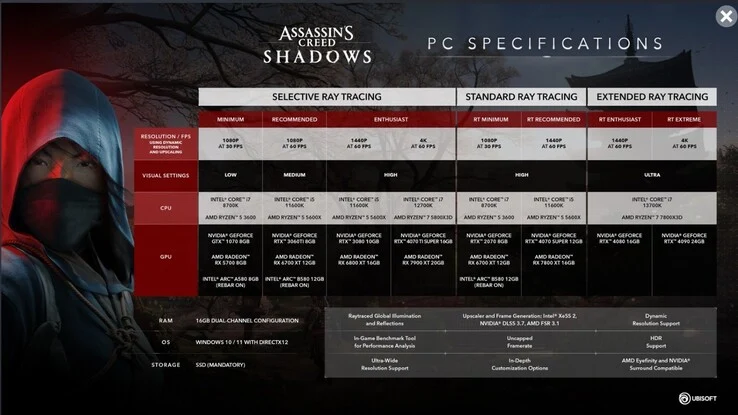
  • Assassin’s Creed Shadows PC Requirements: Easy for 1080p Gamers

    Assassin’s Creed Shadows PC Requirements: Easy for 1080p Gamers

    We recently got an in-depth preview of Assassin’s Creed Shadows, just ahead of its launch on March 20. Ubisoft has also disclosed the system requirements for PC users. Notably, the game will feature capabilities tailored for PC, such as uncapped FPS, compatibility with AI upscalers like DLSS, FSR, and XeSS, along with raytraced lighting and reflections. Additionally, it will support ultra-wide screens, dynamic resolution adjustments, and come with a built-in benchmark tool. It’s worth mentioning that the new Nvidia GeForce RTX 50 series graphics cards are not included in this lineup, yet Assassin’s Creed Shadows should work smoothly with any of the four GPUs that were highlighted.

    Hardware Needs for 4K Gaming

    To enjoy the game at a stunning 4K with raytracing maxed out, you’ll need an Intel Core i7-13700K or AMD Ryzen 7 7800X3D, paired with at least an Nvidia GeForce RTX 4090. For those gaming at 1440p, a GeForce RTX 4080 will suffice. Oddly enough, AMD’s Radeon RX 7900 XTX is absent from the requirements, which raises some eyebrows.

    Confusion with Raytracing Options

    When it comes to “standard” raytracing, the requirements become a bit more perplexing. For 1080p, you’ll need a decent Core i7-8700K or Ryzen 5 3600X, along with a GeForce RTX 2070 or Radeon RX 6800 XT. However, if you wish to play at 1440p, the specs escalate, requiring a Core i5-11600K or Ryzen 5 5600X along with a GeForce 4070 Super, Radeon RX 7800 XT, or Intel Arc B580. A noticeable trend is that AMD and Intel GPUs seem to need more VRAM compared to Nvidia for running Assassin’s Creed Shadows, which is quite curious.

    Minimum Requirements and 60 FPS Gameplay

    What Ubisoft means by ‘selective’ ray tracing is still unclear. For the absolute minimum, you’ll need an AMD Ryzen 5 3600 or Intel Core i7-8700K, plus a three-generation-old GeForce GTX 1070 or Radeon RX 5700, or the newer Intel Arc A580. To hit that 60 FPS target, slightly upgraded hardware will be required, like the Core i5-11600K or AMD Ryzen 5 5600X, paired with a GeForce RTX 3060 Ti, Radeon RX 6700 XT, or Intel Arc B580.

    For 1440p gaming, the requirements ramp up to an Intel Core i5-11600K or AMD Ryzen 5 5600X, along with a GeForce RTX 3080 or Radeon RX 6800 XT. Finally, for 4K gaming, you’ll need to bump your specs to a Core i7-12700K or Ryzen 7 5800X3D, coupled with either a GeForce RTX 4070 Ti Super or Radeon RX 7900 XT. All setups will need a minimum of 16 GB of RAM and Windows 10 or 11. Interestingly, AMD has not disclosed the required hard drive capacity for the game, but it’s reasonable to expect it to exceed 100 GB.

    In summary, it seems that Assassin’s Creed Shadows should operate on a broad spectrum of hardware, especially at lower resolutions. This is promising for handheld devices like the Steam Deck, Asus ROG Ally, and Lenovo Legion Go. However, the biggest challenge for the Steam Deck will be Ubisoft’s mandatory app integration, which could complicate things.

    Source:
    Link