

Tag: 4K 360Hz

  • Samsung Unveils World’s Thinnest Laptop OLED Panel: 240Hz

    Samsung Unveils World’s Thinnest Laptop OLED Panel: 240Hz

    Key Takeaway

    – 20% thinner OLED panel for gaming laptops unveiled at Computex 2026
    – Thickness reduction achieved by etching TFT and encapsulation glass by over 30%
    – Proprietary techniques prevent panel warping despite slimmer design
    – Enables thinner, lighter laptops without sacrificing thermal or component space
    – Not yet in commercial production; no confirmed first adopters


    Record-breaking slim OLED panel

    After announcing the development of the world’s first 4K 360Hz QD-OLED, Samsung Display wants to break another record by unveiling its new “Ultra Slim” OLED panel at Computex 2026. Designed specifically for the high-performance gaming laptop market, this new technology promises to shed bulk without sacrificing the visual fidelity gamers demand. It’s a pretty big deal for folks who care about lugging around a lighter machine but still want those rich colors and deep blacks.

    How they made it so thin

    The new panel achieves a dramatic reduction in thickness, cutting the module’s outer-edge profile by more than 20% compared to Samsung’s current mass-produced displays. To reach this benchmark, Samsung engineers developed a specialized etching process that reduces the thickness of both the Thin Film Transistor (TFT) substrate glass and the encapsulation glass by over 30%. This aproach is quite innovative, and it allows them to shave off millimeters without completely redesigning the whole panel structure from scratch.

    Despite the aggressive physical reduction, Samsung has addressed the common industry challenge of panel warping, utilizing proprietary manufacturing techniques to ensure structural integrity in the thinner form factor. They’ve managed to keep the thing from bending like a wet noodle, which is often a problem when you take away too much material from a display.

    Design flexibility for manufacturers

    While portability is the primary benefit of the Ultra Slim design, Samsung emphasizes that the technology maintains premium visual standards: “The Ultra Slim panel provides device manufacturers with unprecedented design flexibility”, the company says. By reducing the footprint of the display module, manufacturers can develop thinner, lighter laptops that do not compromise on the high-end thermal management or component space required for modern gaming hardware. This means they can still pack in a proper cooling system and a powerful GPU without needing to make the chassis thicker.

    • Reduces module outer-edge profile by over 20%
    • Both TFT substrate and encapsulation glass reduced by over 30%
    • Proprietary anti-warping manufacturing techniques
    • Maintains premium visual standards for gamers

    Status and availability unclear

    It’s worth noting that while Samsung Display is showcasing the technology at Computex to demonstrate its design capabilities, the Ultra Slim panel has not yet reached the commercial manufacturing stage, and it’s unclear which new laptops might be first to utilize it. So, don’t expect to see this in the next Alienware or Razer blade right away; it’s still very much a prototype that needs to go through final testing and production scaling before hitting the streets.
    Sources

    • MSI Launches World’s First Triple Mode 4K 360Hz OLED Gaming Monitor

      MSI Launches World’s First Triple Mode 4K 360Hz OLED Gaming Monitor

      Key Takeaway

      – World’s first triple-mode gaming monitor (4K 360Hz / 2K 520Hz / FHD 680Hz)
      – 32-inch 5th-gen QD-OLED panel with Samsung’s Penta Tandem technology
      – Peak HDR brightness of 1,500 nits and VESA DisplayHDR True Black 600
      – DarkArmor Film improves black levels by 40%
      – Includes DisplayPort 2.1a (UHBR20) and USB-C with 98W PD


      Gaming Monitor News

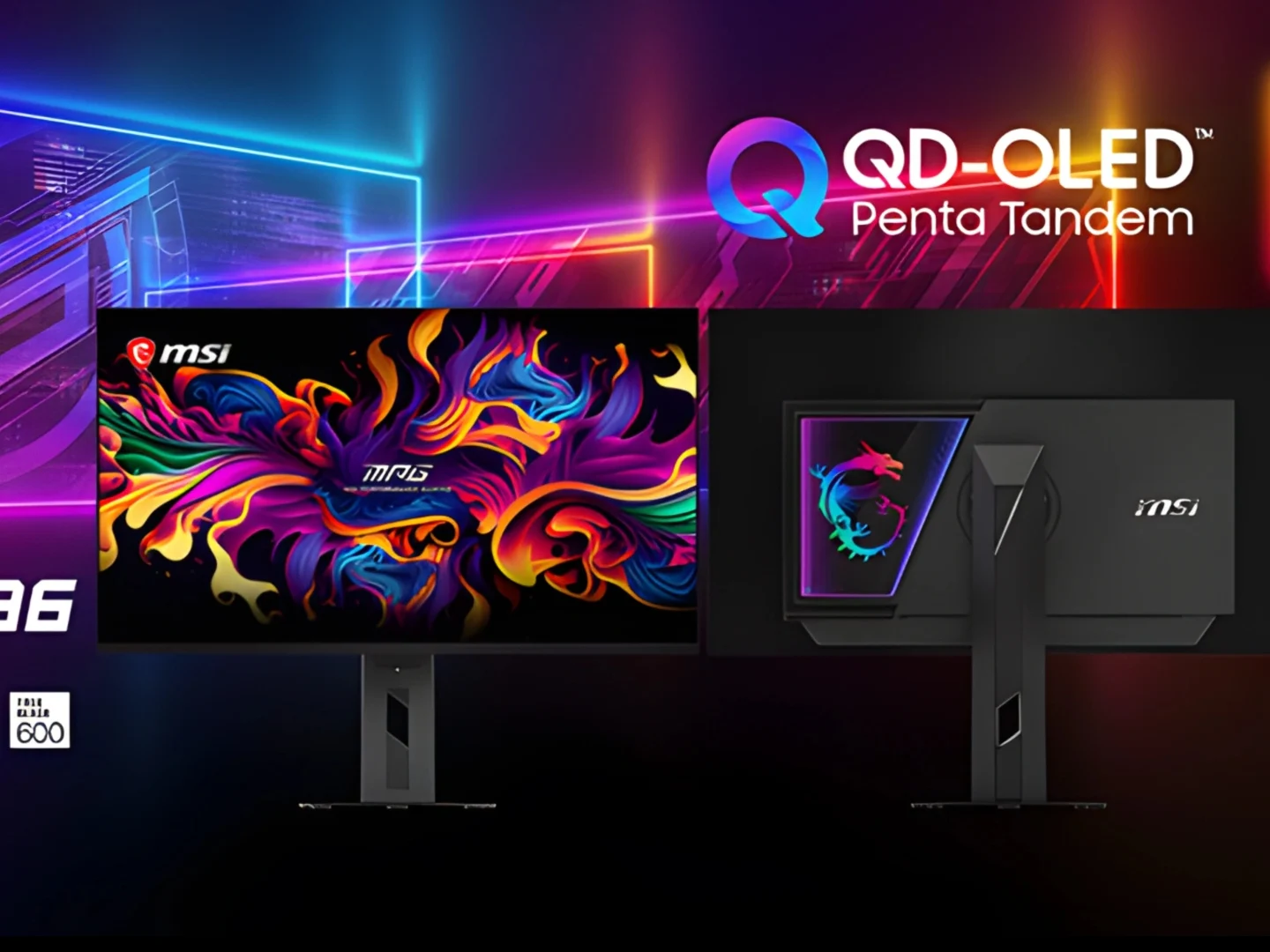
      Before Computex 2026, MSI have unveiled there MPG OLED 322URDX36 gaming monitor with “Triple Mode” technology, making it the worlds first. We seen dual-mode monitors before, but MSI is taking high-refresh-rate gaming to the next level with there 322URDX36. It is a 32-inch OLED display, and it uses a 5th-gen QD-OLED panel with Samsung’s Penta Tandem technology.

      Triple Mode and Specifications

      With the MPG OLED 322URDX36, MSI joins Samsung in deliver a 4K 360 Hz gaming monitor. The Triple Mode represents three resolution and refresh rate combinations — 4K at 360 Hz, 2K at 520 Hz, and FHD at 680 Hz. There are several dual-mode offerings on the market that can switch between 4K and FHD or 2K and FHD, but none that reach 360 Hz at 4K or offer three modes. This sets it apart from other displays currently avalible.

      Additional Features and Connectivity

      Other specifications for the MPG OLED 322URDX36 include a DarkArmor Film, which reportedly improves black levels by 40%. It has used this film in previous models as well. The monitor has a peak HDR brightness of 1,500 nits and comes with VESA DisplayHDR True Black 600, as well as ClearMR 18000 certifications. There is a DisplayPort 2.1a (UHBR20) and a USB Type-C port with 98W PD, along with other connectivity options.

      Pricing and Availability

      MSI will debut this monitor at Computex early next month, after which, pricing and availability information should be revelaed. This is all that is currently known about there latest gaming display. Enthusiasts can expect more details shortly following the trade show. The monitor promises high performance for competitive gamers who demand the best.

      • 4K at 360 Hz
      • 2K at 520 Hz
      • FHD at 680 Hz
      • Peak HDR brightness: 1,500 nits
      • VESA DisplayHDR True Black 600
      • ClearMR 18000 certifications
      • DisplayPort 2.1a (UHBR20)
      • USB Type-C port with 98W PD
      • DarkArmor Film for 40% better black levels
      • 5th-gen QD-OLED panel with Penta Tandem


      Sources

      • Samsung 4K 360Hz QD-OLED Monitor: World’s First by Samsung Display

        Samsung 4K 360Hz QD-OLED Monitor: World’s First by Samsung Display

        Key Takeaway

        – 31.5-inch QD-OLED panel with 4K resolution at 360 Hz, plus a built-in 1080p 680 Hz mode
        – Re-engineered internal driving circuitry to handle higher data load and a dual-mode resolution/refresh feature
        – First to meet VESA DisplayHDR True Black 600 standard (≥600 nits brightness with deep blacks)
        – Vertical V-Stripe subpixel layout for improved text clarity and reduced edge blur
        – Mass production targeted for H2 2026, with collaborations from ten global tech brands


        Samsung Display reveals new 31.5-inch QD-OLED monitor panel

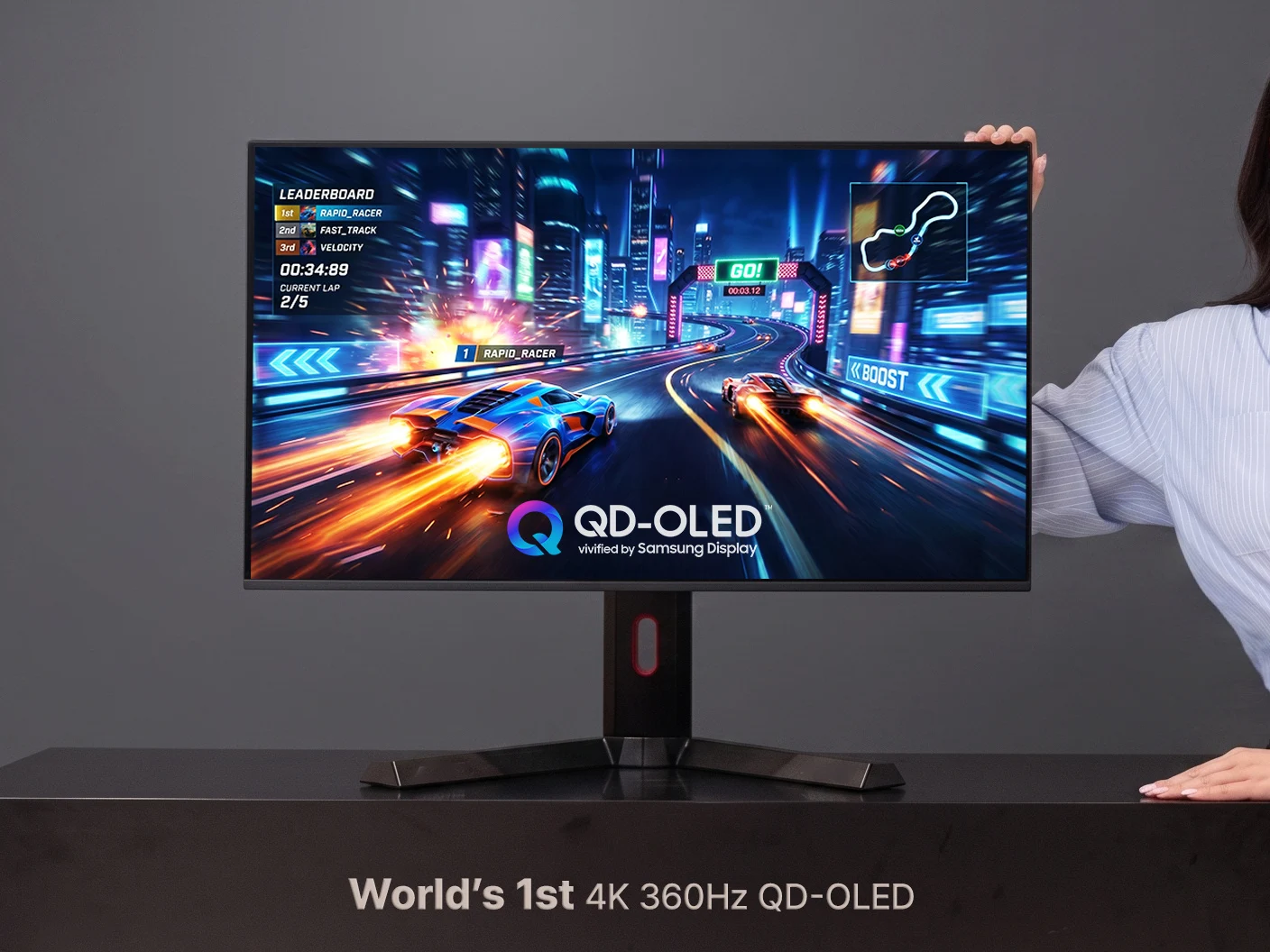
        In a bold move, the company announced a 31.5-inch QD-OLED panel that sports 4K resolution and a whopping 360 Hz refresh rate, with plans to showcase this at Computex 2026 in June. The claim that this panel can deliver both 4K clarity and ultra-high refresh rate in one device marks a notable shift from prior compromises where users had to pick either 4K at 240Hz or lower QHD for 360Hz. This product seems to be stepping into a new territory where high resolution meets extreme speed, a combination tech enthusiasts have awaited for years.

        Engineering tweaks enable higher data throughput

        Samsung Display says the breakthrough comes from re-engineering the panel’s internal driving circuitry to accommodate the heavier data load required by 4K at 360 Hz. This technical rework purportedly optimizes how signals are processed and delivered across the panel, reducing bottlenecks that previously limited performance. The result, they claim, is sustained performance at those demanding specifications without compromising other aspects of the display’s behavior.

        Dual-mode functionality and HDR capabilities

        Another notable feature is a built-in dual-mode function that lets users drop the resolution to 1080p while ramping the refresh rate up to 680 Hz for scenarios that demand extreme motion clarity. Such a mode could be particularly appealing to competitive gamers or professional users who need ultra-fast response times in fast-paced workloads. Additionally, the panel claims to be the first monitor panel to pass the VESA DisplayHDR True Black 600 standard, achieving at least 600 nits peak brightness while maintaining deep black levels, which is a meaningful milestone for contrast-rich visuals.

        Vertical V-Stripe subpixel layout and production plans

        The panel introduces a vertical “V-Stripe” subpixel arrangement, aligning red, green, and blue subpixels in a way that’s intended to improve text legibility and minimize edge blurring. This layout change is part of Samsung Display’s broader effort to optimize both text and image quality on high-end OLED panels. Mass production is expected in the second half of 2026, and the company is already collaborating with ten global tech brands to bring these panels to market, signaling strong industry adoption in the near term.

        Sources