Tag: QD OLED

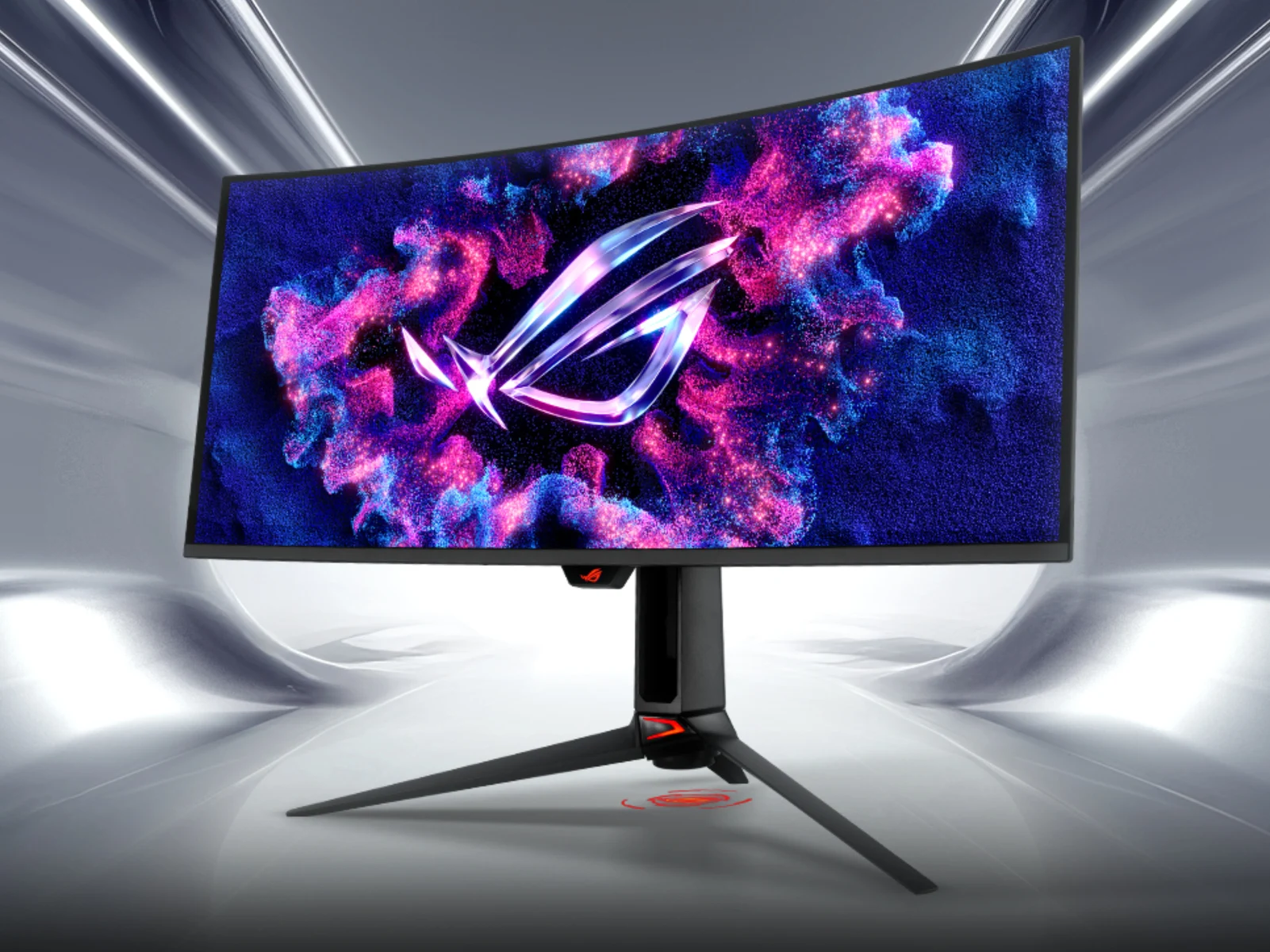
  • Asus ROG Swift PG34WCDN US: 34-inch 360Hz OLED Monitor

    Asus ROG Swift PG34WCDN US: 34-inch 360Hz OLED Monitor

    Key Takeaway

    – Asus ROG Swift OLED PG34WCDN now available in the US for $1,299.
    – Features Samsung’s new 5th Gen RGB Stripe QD-OLED panel for better text clarity.
    – Specs: 34-inch ultrawide, 3440×1440, 360Hz refresh rate, 1800R curve.
    – Included features: BlackShield coating, 500 nits full-screen brightness, 1,300 nits peak HDR.
    – Connectivity: full-bandwidth DisplayPort 2.1 UHBR20, USB-C with 90W power delivery.


    Its Finally Here

    Months after its CES 2026 unveiling, the Asus ROG Swift OLED PG34WCDN is finally up for grabs in the US. The monitor is now available through Amazon and Newegg for $1,299, joining a small but growing group of displays built around Samsung Display’s latest RGB Stripe QD-OLED panel, a.k.a 5th Gen QD-OLED panel.

    Pricing and Competition Details

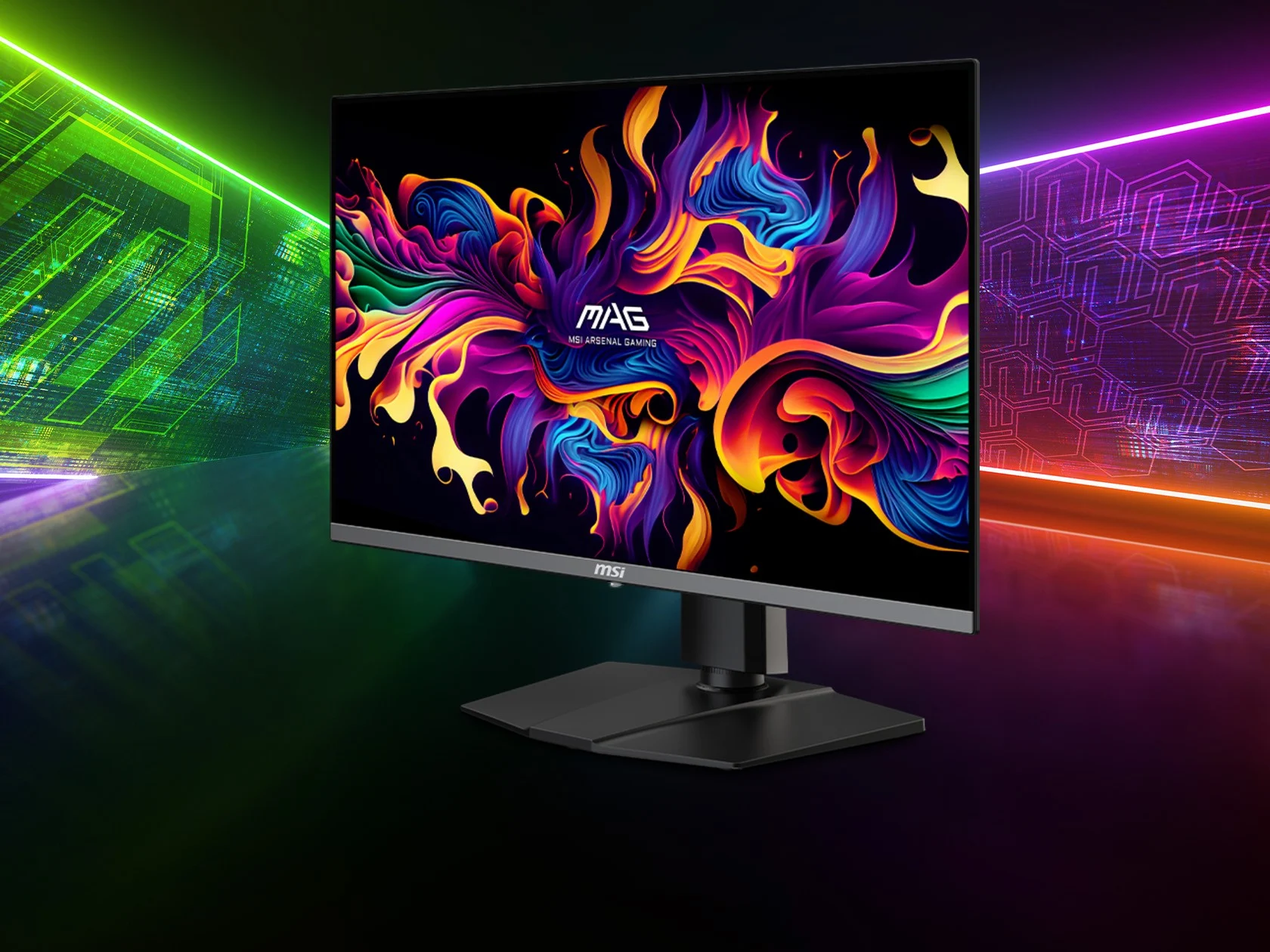
    That also makes it one of the most expensive options in the category. For comparison, MSI’s competing MPG 341CQR QD-OLED X36 uses the same panel but is listed at $899.99, though it has yet to reach store shelves.

    Panel Technology and Performance

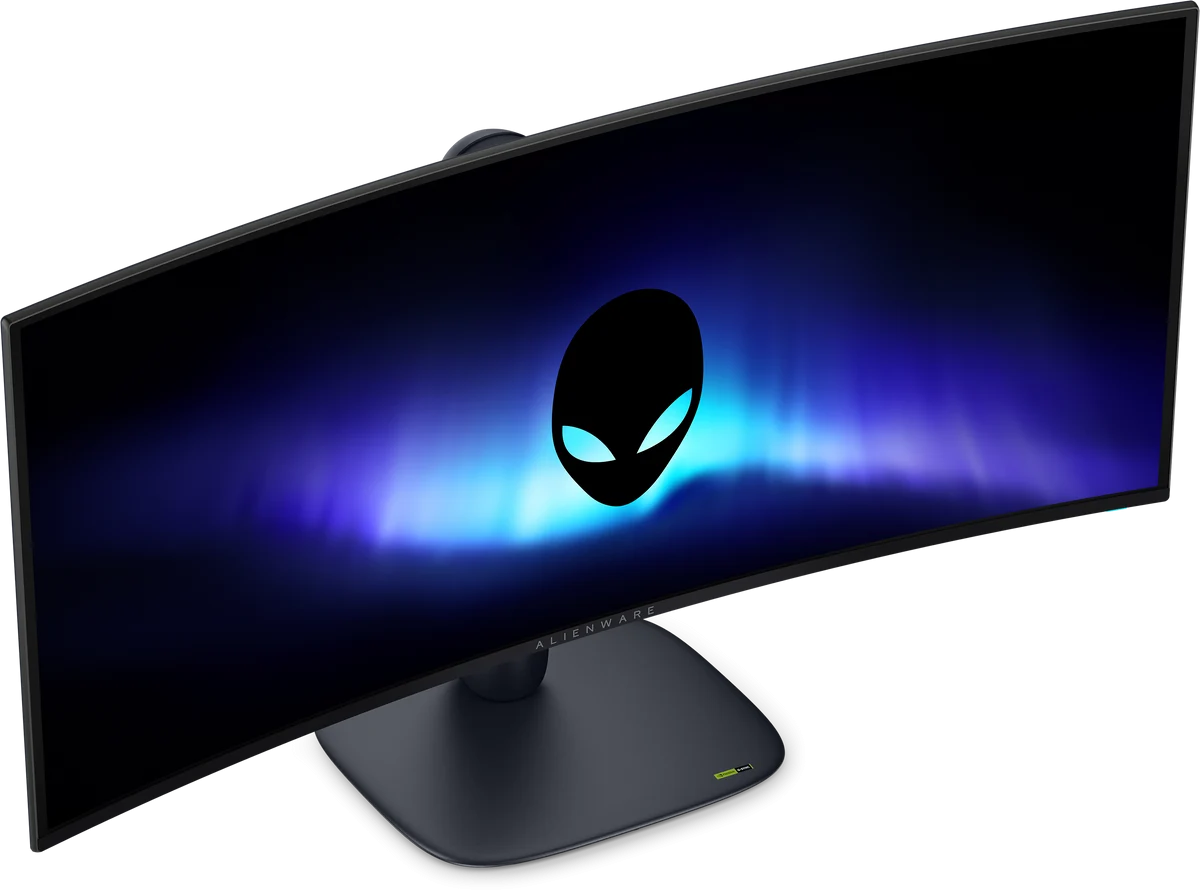
    As we previously reported, the ROG Swift OLED PG34WCDN pairs a 1800R-curved 34-inch ultrawide panel with a 3440 x 1440 resolution and a 360Hz refresh rate. The biggest highlight here is the underlying 5th Gen QD-OLED panel from Samsung Display. Unlike earlier generations, it uses an RGB stripe sub-pixel layout that reduces color fringing and improves text clarity, addressing one of the biggest complaints about OLED monitors.

    Coating and Brightness Specs

    The monitor also features a new BlackShield coating, which Asus says improves black depth by 40% and offers 2.5X better scratch resistance than previous QD-OLED monitors. That said, this new panel coating is applied by Samsung Display, so it comes standard on all 5th Gen QD-OLED monitors, just different branding. The PG34WCDN is still an impressive showcase for the panel, with up to 500 nits full-screen brightness and 1,300 nits peak HDR brightness.

    Connectivity and Availability

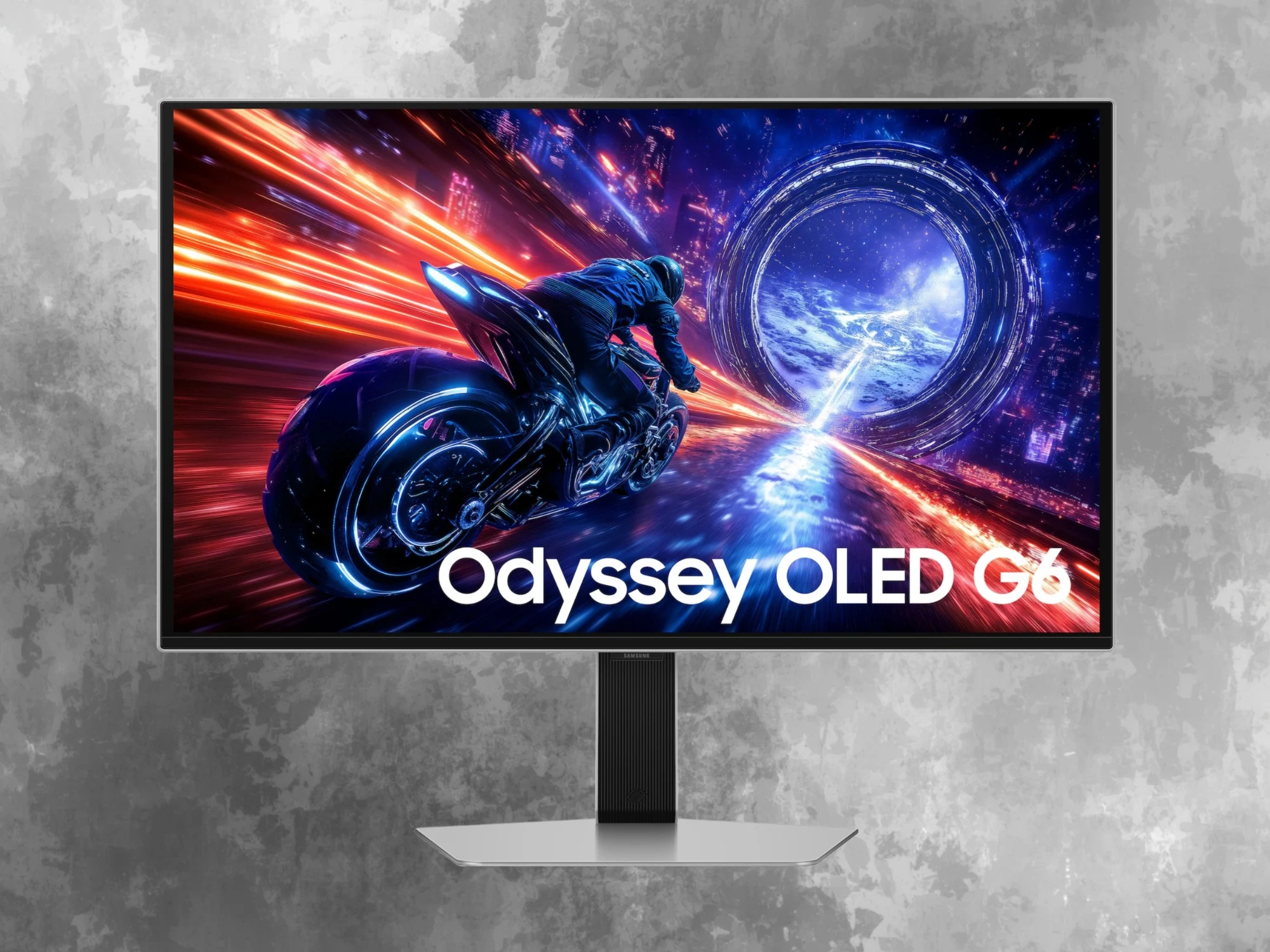
    Elsewhere, the monitor offers full-bandwidth DisplayPort 2.1 UHBR20 connectivity and a USB-C port with 90W power delivery. Other upcoming monitors based on the same RGB stripe QD-OLED panel include the MSI MPG 341CQR QD-OLED X36, Gigabyte MO34WQC36, Acer Predator X34 F3, and HP’s OMEN 34-inch OLED. For now, however, the ROG Swift OLED PG34WCDN is the only model available to buy.
     

    Sources
  • Samsung Odyssey 500Hz OLED Gaming Monitor: $400 Off at Amazon

    Samsung Odyssey 500Hz OLED Gaming Monitor: $400 Off at Amazon

    Key Takeaway

    – Samsung Odyssey G6 (G60SF) is a 27-inch QHD QD-OLED monitor with a 500Hz refresh rate, now $600 ($400 off MSRP).
    – Prioritizes blistering-fast esports gaming with negligible input lag and G-Sync compatibility, but requires a potent GPU.
    – Features high HDR brightness (DisplayHDR TrueBlack 500), reduced glare coating, and a thin metal build with RGB lighting.
    – Lacks internal speakers and USB-C power delivery; text fringing may affect productivity use.
    – Best for competitive gamers seeking speed and image quality over 4K cinematic experiences.


    4K OLED Gaming Monitors Getting Cheaper

    4K OLED gaming monitors have become more affordable, but the QHD Samsung Odyssey G6 prioritizes blistering-fast gameplay. The 27-inch display supports refresh rates up to 500Hz and boasts the brightness and vivid colors of a QD-OLED panel. A slick look and solid build quality also give it an advantage over its competitors. This monitor is realy built to keep up with the fastest paced games.

    Price Drop Makes This Deal Hard to Beat

    When it launched in August 2025, this G60SF model wasn’t as appealing at a $999.99 MSRP. Fortunately, it’s now discounted by $400, representing the lowest Amazon sale price to date. If the $600 Samsung OLED monitor sells out, Best Buy is offering the same deal for a limited time. That means you can get it for six hundred dollars at both retailers for now.

    Design and Build Are Solid but Minimal

    The G6 sports a metal construction while remaining thin and occupying a small footprint. A ring of RGB lighting on its back panel confirms that it’s aimed at gamers. However, one trade-off of the compact form factor is the lack of internal speakers. So you will definitely need a headset or external speakers if you want any sound coming from this device.

    Resolution and Refresh Rate Explained

    The Odyssey OLED gaming monitor featured in this deal renders games, videos, and apps at a 2560 x 1440 resolution. Gamers will still need a potent graphics card to realize its 500Hz refresh rate. Even so, benefiting competitive shooters, it’s a more realistic target than on 4K alternatives. The PCWorld review measured negligible input lag, with G-Sync compatibility minimizing screen tearing. Your games will look super smooth if you can push those frames.

    QD-OLED Panel Offers Brightness and Color

    As another QD-OLED advantage, the G6’s peak HDR brightness is sufficient to overcome some ambient light. Its coating is also less glossy than that of many of its rivals, reducing distracting glare. DisplayHDR TrueBlack 500 enhances wide color palettes and maintains deep blacks. This makes the picture quality stand out even in a brightly lit room.

    Connectivity Options and Missing Features

    The G60SF ships with 2x HDMI 2.1 ports and a DisplayPort 1.4 connection. Sadly, it’s missing a USB-C port with power delivery, which 27-inch QHD options like the MSI MPG 271QR include. For productivity purposes, owners may notice some text fringing, a symptom of this panel technology. This can be a bit annoying if you plan to do a lot of reading or word processing on it.

    Who Should Buy This Monitor?

    Buyers with more desk space and who prefer cinematic single-player titles could opt for a 32-inch 4K display. Otherwise, the Samsung OLED monitor on sale at Amazon for $600 excels at esports gaming without compromising on image quality. Its a great choice for gamers who want high speed and good visuals with out spending a fortune on a 4K model.


  • Alienware 34-Inch QD-OLED Curved Monitor Revealed

    Alienware 34-Inch QD-OLED Curved Monitor Revealed

    Key Takeaway

    – Cheaper Alienware AW3426DW is a refreshed 34-inch QD-OLED monitor with higher brightness, anti-reflective coating, and 280 Hz refresh rate.
    – Features 3440×1440 resolution, 0.03 ms response time, 1300 nits peak HDR brightness, and 99% DCI-P3 coverage.
    – Supports HDMI 2.1 (full resolution/refresh), DP 1.3, USB-C (15W charging), and VRR technologies (FreeSync, G-Sync, AdaptiveSync).
    – Lacks a KVM switch; includes a 3-year OLED burn-in warranty and cable management stand.
    – Launches July 2026; price to be announced.


    Monitor Update from Dell

    Dell has launched a cheaper variant of the Alienware AW3926QW 5K monitor. It is called the Alienware AW3426DW, and it is essentially a refreshed version of the Alienware AW3425DW launched last year. Notable upgrades include increased peak brightness, an anti-reflective coating and a higher refresh rate.

    Detailed Specifications

    The Alienware AW3426DW gaming monitor uses a 34-inch 10-bit QD-OLED panel with a resolution of 3,440 x 1,440 (21:9 aspect ratio), 1800R curvature, up to 280 Hz refresh rate and a peak brightness of 1300 nits with HDR (3% APL), 0.03 ms grey-to-grey response time and 99% coverage of the DCI-P3 colour gamut. It is compatible with AMD FreeSync Premium Pro, Nvidia G-Sync, VESA AdaptiveSync, VESA DisplayHDR True Black 500 and Dolby Vision.

    Connectivity and Ports

    For I/O, you get two HDMI 2.1 ports that can actually drive the monitor at its full advertised resolution/refresh rate, a DP 1.3 port, a USB-A port, a USB-B port and a USB-C port. The USB ports are all rated at 5 Gbps, and the USB-C port can charge peripherals at up to 15 Watts. Some bells and whistles found in higher-end monitors, such as a KVM switch, are notably absent.

    Warranty and Availability

    Dell offers a three-year warranty for the Alienware AW3926QW’s OLED panel that explicitly covers burn-in. The stand has a dedicated channel for cable management. The monitor launches in July 2026, and its price will be revealed as that time period approaches.


    Sources

    • MSI Launches World’s First Triple Mode 4K 360Hz OLED Gaming Monitor

      MSI Launches World’s First Triple Mode 4K 360Hz OLED Gaming Monitor

      Key Takeaway

      – World’s first triple-mode gaming monitor (4K 360Hz / 2K 520Hz / FHD 680Hz)
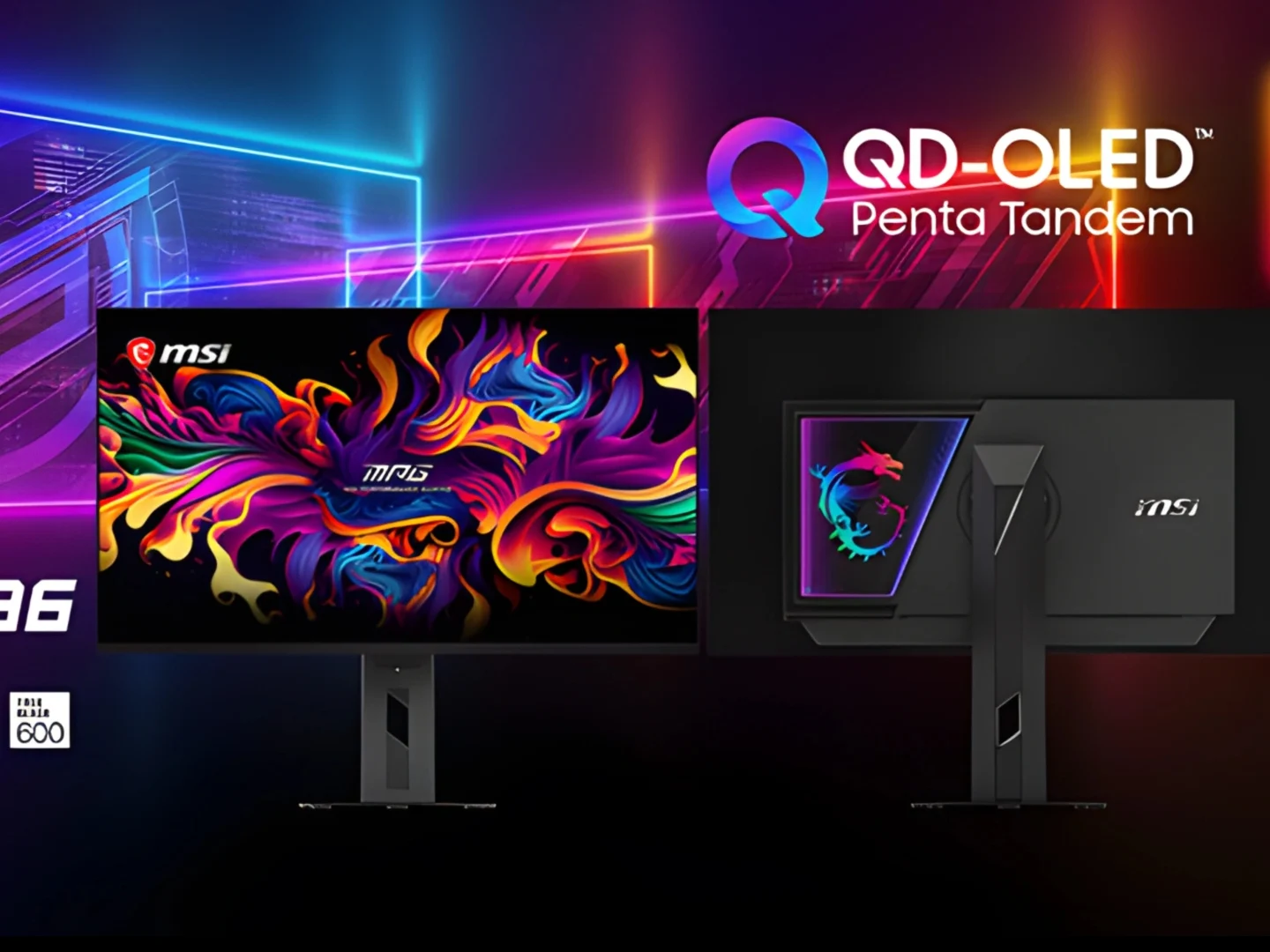
      – 32-inch 5th-gen QD-OLED panel with Samsung’s Penta Tandem technology
      – Peak HDR brightness of 1,500 nits and VESA DisplayHDR True Black 600
      – DarkArmor Film improves black levels by 40%
      – Includes DisplayPort 2.1a (UHBR20) and USB-C with 98W PD


      Gaming Monitor News

      Before Computex 2026, MSI have unveiled there MPG OLED 322URDX36 gaming monitor with “Triple Mode” technology, making it the worlds first. We seen dual-mode monitors before, but MSI is taking high-refresh-rate gaming to the next level with there 322URDX36. It is a 32-inch OLED display, and it uses a 5th-gen QD-OLED panel with Samsung’s Penta Tandem technology.

      Triple Mode and Specifications

      With the MPG OLED 322URDX36, MSI joins Samsung in deliver a 4K 360 Hz gaming monitor. The Triple Mode represents three resolution and refresh rate combinations — 4K at 360 Hz, 2K at 520 Hz, and FHD at 680 Hz. There are several dual-mode offerings on the market that can switch between 4K and FHD or 2K and FHD, but none that reach 360 Hz at 4K or offer three modes. This sets it apart from other displays currently avalible.

      Additional Features and Connectivity

      Other specifications for the MPG OLED 322URDX36 include a DarkArmor Film, which reportedly improves black levels by 40%. It has used this film in previous models as well. The monitor has a peak HDR brightness of 1,500 nits and comes with VESA DisplayHDR True Black 600, as well as ClearMR 18000 certifications. There is a DisplayPort 2.1a (UHBR20) and a USB Type-C port with 98W PD, along with other connectivity options.

      Pricing and Availability

      MSI will debut this monitor at Computex early next month, after which, pricing and availability information should be revelaed. This is all that is currently known about there latest gaming display. Enthusiasts can expect more details shortly following the trade show. The monitor promises high performance for competitive gamers who demand the best.

      • 4K at 360 Hz
      • 2K at 520 Hz
      • FHD at 680 Hz
      • Peak HDR brightness: 1,500 nits
      • VESA DisplayHDR True Black 600
      • ClearMR 18000 certifications
      • DisplayPort 2.1a (UHBR20)
      • USB Type-C port with 98W PD
      • DarkArmor Film for 40% better black levels
      • 5th-gen QD-OLED panel with Penta Tandem


      Sources

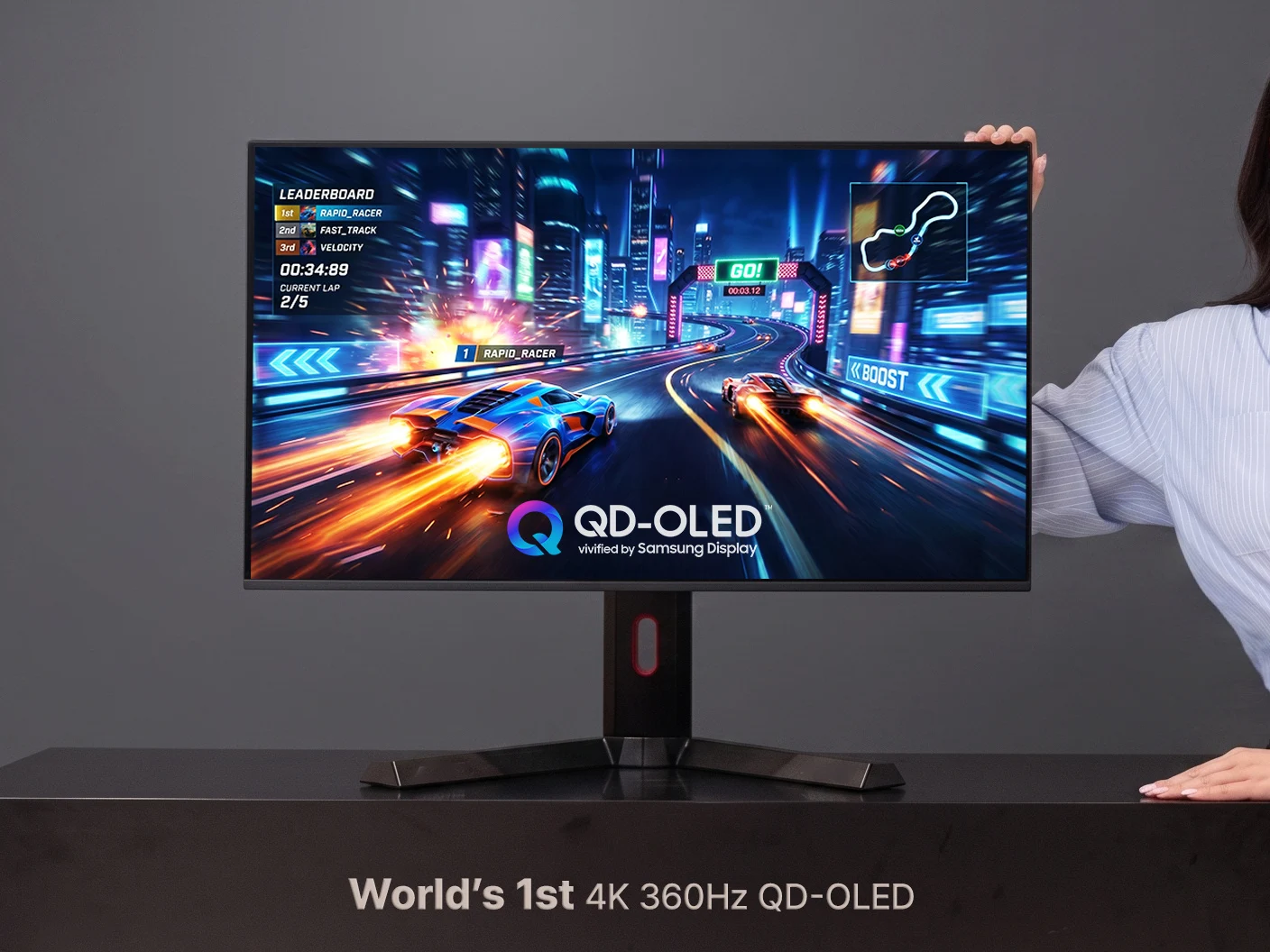
      • Samsung 4K 360Hz QD-OLED Monitor: World’s First by Samsung Display

        Samsung 4K 360Hz QD-OLED Monitor: World’s First by Samsung Display

        Key Takeaway

        – 31.5-inch QD-OLED panel with 4K resolution at 360 Hz, plus a built-in 1080p 680 Hz mode
        – Re-engineered internal driving circuitry to handle higher data load and a dual-mode resolution/refresh feature
        – First to meet VESA DisplayHDR True Black 600 standard (≥600 nits brightness with deep blacks)
        – Vertical V-Stripe subpixel layout for improved text clarity and reduced edge blur
        – Mass production targeted for H2 2026, with collaborations from ten global tech brands


        Samsung Display reveals new 31.5-inch QD-OLED monitor panel

        In a bold move, the company announced a 31.5-inch QD-OLED panel that sports 4K resolution and a whopping 360 Hz refresh rate, with plans to showcase this at Computex 2026 in June. The claim that this panel can deliver both 4K clarity and ultra-high refresh rate in one device marks a notable shift from prior compromises where users had to pick either 4K at 240Hz or lower QHD for 360Hz. This product seems to be stepping into a new territory where high resolution meets extreme speed, a combination tech enthusiasts have awaited for years.

        Engineering tweaks enable higher data throughput

        Samsung Display says the breakthrough comes from re-engineering the panel’s internal driving circuitry to accommodate the heavier data load required by 4K at 360 Hz. This technical rework purportedly optimizes how signals are processed and delivered across the panel, reducing bottlenecks that previously limited performance. The result, they claim, is sustained performance at those demanding specifications without compromising other aspects of the display’s behavior.

        Dual-mode functionality and HDR capabilities

        Another notable feature is a built-in dual-mode function that lets users drop the resolution to 1080p while ramping the refresh rate up to 680 Hz for scenarios that demand extreme motion clarity. Such a mode could be particularly appealing to competitive gamers or professional users who need ultra-fast response times in fast-paced workloads. Additionally, the panel claims to be the first monitor panel to pass the VESA DisplayHDR True Black 600 standard, achieving at least 600 nits peak brightness while maintaining deep black levels, which is a meaningful milestone for contrast-rich visuals.

        Vertical V-Stripe subpixel layout and production plans

        The panel introduces a vertical “V-Stripe” subpixel arrangement, aligning red, green, and blue subpixels in a way that’s intended to improve text legibility and minimize edge blurring. This layout change is part of Samsung Display’s broader effort to optimize both text and image quality on high-end OLED panels. Mass production is expected in the second half of 2026, and the company is already collaborating with ten global tech brands to bring these panels to market, signaling strong industry adoption in the near term.

        Sources
      • Flagship Samsung S95F OLED TV $899 Deal — Lowest Amazon Price

        Flagship Samsung S95F OLED TV $899 Deal — Lowest Amazon Price

        Key Takeaway

        – The Samsung S95F (55″) offers strong brightness, excellent reflection handling, and a slim design aided by the external Slim One Connect box, plus low input lag and up to 165Hz (VRR) for gaming.
        – It uses a QD-OLED panel with a matte coating that mitigates reflections but can create a slight grayish tint in deep blacks in bright rooms; no Dolby Vision support (HDR10+ only).
        – Deals: notable sale at Best Buy for the S95FD (~$899) with Amazon historically around $1,600, presenting flagship value for a 55″ OLED.


        Overview of the Samsung S95F Deal

        Until the S95H arrived, the 2025 Samsung S95F headlined the manufacturer’s OLED TV lineup. Although it normally demands a flagship-worthy investment, the 55-inch version is now at a record-low price. The Samsung TV boasts stellar brightness and reflection handling, allowing it to thrive in all environments.

        Current Retail Offer

        Sold through BrandsMart USA, Best Buy has the retailer-specific S95FD version on sale for $899. The deal is attracting attention since the best Amazon sale price to date was around $1,600.

        Design and Panel Technology

        The Samsung S95F has an unconventional setup, shipping with the external Slim One Connect box. With 4 accessible HDMI 2.1 ports, owners keep setups tidy by using a single connection to the flat panel. That also makes the display itself thinner than rivals like the LG G5.

        Brightness, Coating, and Room Suitability

        Relying on a QD-OLED panel, the 55-inch OLED TV is significantly brighter than lower-end alternatives. Still, the matte coating is what sets it apart from the competition, handling the harshest reflections. It’s an excellent candidate for bright rooms, but some reviews note that ambient light adds a grayish tint to its deep blacks.

        Gaming and Performance

        While it enhances Hollywood blockbusters, the Samsung TV also entices gamers looking for an upgrade. Rtings measured low input lag and a maximum 165Hz refresh rate to promote smoother gameplay. VRR is available to reduce stuttering during fast action.

        Smart Features and Content Availability

        Opinions vary as to its ease of use, but the Tizen OS offers virtually every popular smart TV app. Cloud gaming options from Nvidia and Xbox operate without consoles or PCs, further reducing clutter.

        Dolby Vision and Competitors

        Unfortunately, one downside of this OLED TV is the lack of Dolby Vision. Nevertheless, HDR10+ delivers bright, colorful images in movies and games. Otherwise, shoppers should consider the LG G5 or the Sony Bravia 8 II, both of which support Dolby Vision and DTS audio.

        Market Alternatives

        The newer Samsung S95H produces even higher brightness at a much steeper price. Still, particularly for buyers with smaller spaces, the 55-inch OLED TV deal delivers flagship-level value.

        Disclaimer

        The discounted price or deal mentioned in this item was available at the time of writing and may be subject to time restrictions and/or limited unit availability.


      • MSI MAG 272UP QD-OLED E16 4K 165Hz Monitor $599.99

        MSI MAG 272UP QD-OLED E16 4K 165Hz Monitor $599.99

        Key Takeaway

        – 27-inch 4K QD-OLED with Samsung 4th Gen panel and Penta Tandem tech, but without Dark Armor film; focused on efficiency and brightness up to 1,000 nits peak.
        – 165Hz refresh rate, 0.03ms response time, G-Sync VRR, and DisplayHDR True Black 400 certification; VESA ClearMR 9000 for motion clarity.
        – I/O includes two full-bandwidth HDMI 2.1 ports, DisplayPort 1.4, and a USB-C (up to 15W) for power; listed price $599.99 (US).

        The MSI MAG OLED family grows again, and this time it brings a 27-inch 4K option that aims to balance price and performance, all while leveraging Samsung’s Penta Tandem technology. The earlier MAG OLED 271QPX32 introduced a 27-inch 1440p panel with a blistering 320Hz refresh rate and MSI’s Dark Armor film, and now the new MAG 272UP QD-OLED E16 steps into the scene, promising a more approachable entry point with some trade-offs.

        Like its 4K sibling, the MAG 272UP QD-OLED E16 uses Samsung’s 4th Gen QD-OLED panel with Penta Tandem tech, but noticeably it lacks the Dark Armor film. This omission is said to influence black depth and scratch resistance, while the rest of the improvements center on efficiency compared to earlier 3rd Gen models. MSI asserts it can hit up to 1,000 nits peak brightness and still sip less power than previous generations, a claim that aims to reassure buyers chasing brightness without sacrificing energy use.

        In terms of core specs, the MAG 272UP QD-OLED E16 delivers a typical SDR brightness of 250 nits, covers 99% of the DCI-P3 color gamut, and carries DisplayHDR True Black 400 certification. For gamers, it pairs 165Hz with a 0.03ms response time and G-Sync VRR, while also earning VESA ClearMR 9000 status for motion clarity. However, it doesn’t quite reach the same ClearMR rating as the MAG 271QPX X32, which sits at ClearMR 15000, indicating a slight performance gap in motion handling.

        Connectivity on the MAG 272UP QD-OLED E16 includes two full-bandwidth HDMI 2.1 ports, DisplayPort 1.4, and a USB-C port, though the USB-C is capped at 15W PD. The monitor is currently listed at $599.99 in the US, and the page shows it as Temporarily out of stock, suggesting a potential restock window rather than a sold-out state. This price point positions it as an appealing option for those seeking a 4K OLED with strong gaming chops without stepping up into the premium tiers.

        Sources
      • Gigabyte 4K QD-OLED Gaming Monitor with 240Hz Refresh Rate Launches

        Gigabyte 4K QD-OLED Gaming Monitor with 240Hz Refresh Rate Launches

        Key Takeaway

        1. The Gigabyte MO32U24 is a 32-inch 4K QD-OLED gaming monitor with a 240 Hz refresh rate, 0.03 ms response time, and 1000 nits HDR brightness.
        2. It offers wide viewing angles (178%), high color coverage (99% DCI-P3), and advanced black level enhancement features.
        3. The monitor is equipped with multiple connectivity options, including HDMI 2.1, DisplayPort 1.4, USB Type-C, and USB 3.2 ports, along with built-in stereo speakers and thermal cooling.
        4. Certified with DisplayHDR True Black 500 and VESA ClearMR 13000, it emphasizes deep blacks and vibrant colors in high ambient lighting conditions.
        5. The sleek, adjustable design features tilt, swivel, pivot, and height adjustments, catering to gaming ergonomics.

        Introduction to Gigabyte’s New Gaming Monitor

        Gigabyte has announced their newest gaming monitor, the MO32U24, which has been released to the world market. It’s a direct competition for other high-end gaming screens like the Philips’ Evnia 27M2N5500XD and the LG UltraGear OLED 27GX790B, which currently costs around $994. The monitor is crafted specifically with gamers in mind, featuring an impressive 32-inch QD-OLED panel, supporting 3840 x 2160 UHD resolution, and a rapid refresh rate of 240 Hz.

        Display Features and Visual Performance

        The monitor doesn’t just look good, its display packs a punch with a peak HDR brightness of 1000 nits. The response time is nearly instant at 0.03 ms GTG, and it covers 99% of the DCI-P3 color space, which ensures vivid, true-to-life colors. The viewing angle for this display is also wide at 178°, similar to what was seen in the Acer Nitro XV273U W1 back at IFA last year. The advanced Obsidian Shield film technology is included, which boosts black levels by up to 40% and helps preserve deep blacks and vibrant colors even when there’s bright ambient lighting around.

        Certifications and Additional Features

        This high-performance gaming monitor has acquired DisplayHDR True Black 500 and VESA ClearMR 13000 certifications, highlighting its quality and capability. It also comes equipped with dual 5 W stereo speakers, and an airflow-based thermal cooling system embedded with graphene film, which keeps the device cool even during intense gaming sessions. Connectivity options are plentiful, including 2 HDMI 2.1 ports, a DisplayPort 1.4, a USB-C port, two USB 3.2 ports, one upstream USB port, and a dedicated earphone jack.

        Design and Adjustability

        Looking at its design, Gigabyte’s MO32U24 sports a modern, gamer-centric aesthetic with a sleek black finish. The stand provides various ergonomic adjustments like tilt, swivel, pivot, and height adjustments up to 130 mm, making it flexible for various setups. The company hasn’t shared the official retail price yet but offers additional details through their official website. Overall, the monitor’s specs and design make it a promising choice for gaming enthusiasts.


        Sources

      • Samsung S90H TV Series Likely Uses WOLED Panels Instead of QD-OLED in US

        Samsung S90H TV Series Likely Uses WOLED Panels Instead of QD-OLED in US

        Key Takeaway

        1. Samsung’s 2026 OLED TVs, particularly the S95H and S90H series, are available for review, with the S95H emerging as a top contender for best OLED TV of the year.
        2. The S90H series has shifted from previous panel lotteries, with US models now seemingly exclusively using WOLED panels instead of QD-OLEDs, a change confirmed by early reviews.
        3. The S90H series features a matte coating across all models, and there are concerns it may be shipped with older 2025 WOLED panels rather than the latest technology, raising questions about panel quality and value.
        4. Despite potential downgrades in panel technology, most S90H models have experienced a significant price increase of around $200 compared to last year.

        New Samsung OLED TVs 2026 Overview

        Samsung’s got some new OLED TVs for 2026, and they are starting to appear in different shops around the world. Early reviews about their models, the S95H and S90H series, are now out. The S95H is promising to be one of the best OLED TVs this year, offering high-end features. On the other hand, the S90H series seems to have some controversial changes, especially concerning what kind of panels they’re using, and that might make QD-OLED fans a little disappointed.

        Panel Lottery and Regional Variations

        In past years, Samsung had an issue called the “panel lottery,” especially for the S90 series. This meant that in many countries outside the US and Korea, different sizes of the same model had different panels. For example, in Europe, only the 65-inch S90 would feature the advanced QD-OLED panels, all other sizes from smaller 42-inch to larger 83-inch or 90-inch were equipped with WOLED panels made by LG. Sometimes even the 65-inch versions had WOLEDs, creating confusion among consumers. This year they seem to have stop that because, in the US, Samsung now appears to only use WOLED technology across the S90H lineup.

        Performance and Color Capabilities

        Reviewers like The Display Guy and Ecoustics tested the 65-inch version of the new S90H OLED TVs. Their findings suggested that despite Samsung’s marketing, the panel on these models may not be the QD-OLED type they expected. Ecoustics measured the color reproduction and found it can display 98.6% of the P3 color standard but only 74.77% of the BT.2020 color space, hinting that the panel might actually be WOLED. This could be a disappointment for viewers who wanted the richer colors of true QD-OLED tech.

        Design and Panel Technologies

        In addition to potential panel downgrades, the S90H series has adopted a matte screen coating across all variants, a change from previous models that often featured glossy finishes. The Display Guy was unable to confirm if every S90H model uses WOLED panels or if Samsung is hiding some of the details, as the company has a history of not disclosing the panel type. This uncertainty is frustrating for consumers who care about the exact tech inside their TV, especially since European buyers have had to deal with similar issues before.

        Color Gamut and Panel Concerns

        Another concern with the current lineup is the brightness and color range. The reviewers speculate that Samsung might only be using older 2025 WOLED panels in the entire S90H series, not the latest 4-layer WOLED panels seen in competitors like LG’s C6 or G6 models. There’s hope that the smallest 42-inch and biggest 83-inch models may still use the newer panels, but the reviewer hasn’t yet seen proof of this, having only tested a pre-production 65-inch sample.

        Pricing and Value Concerns

        Adding to the worries, the new S90H models are priced higher than last year’s, with most models seeing a $200 increase. For example, the 65-inch version now costs $2,700, up from $2,500. This price hike doesn’t seem justified if the panels are actually downgraded to WOLED, especially since consumers expect more from a premium lineup. The inconsistencies and increases make it hard for buyers to decide whether this series is truly worth the investment.

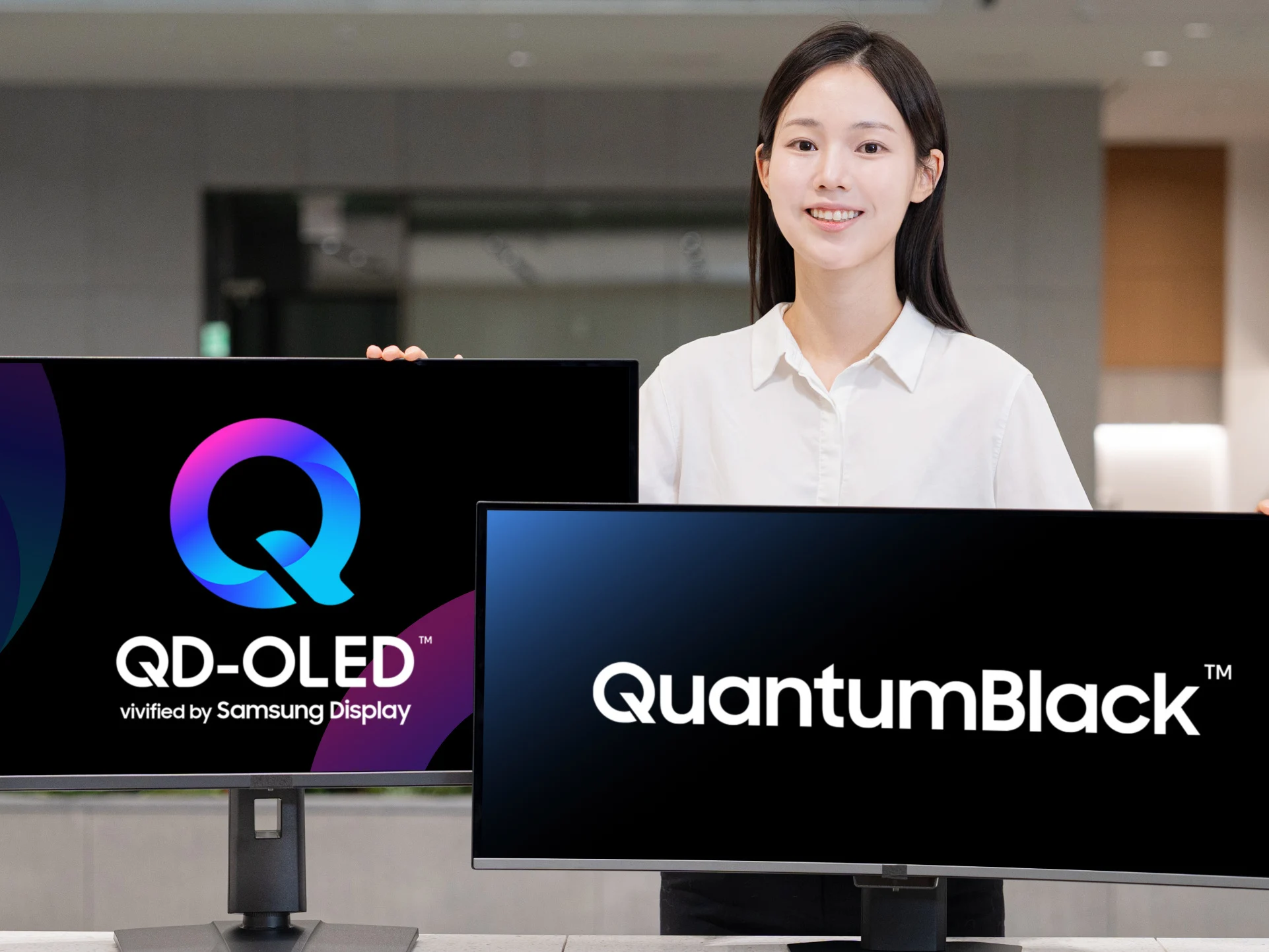
      • Samsung Display’s QuantumBlack Film Cuts QD-OLED Reflectivity by 20%

        Samsung Display’s QuantumBlack Film Cuts QD-OLED Reflectivity by 20%

        Key Takeaways

        1. Samsung Display has introduced a new low-reflection film called QuantumBlack, reducing light reflection by 20% compared to previous films.
        2. QuantumBlack improves surface hardness from 2H to 3H on the pencil hardness scale, enhancing scratch resistance.
        3. This new technology will be featured in all newly launched QD-OLED monitor products this year.
        4. QD-OLED panels can achieve true black by shutting off power to individual pixels, but reflections can affect contrast.
        5. Several monitor makers, including ASUS, Gigabyte, and MSI, are already using QuantumBlack in their products.


        Samsung Display has revealed a new low-reflection film called QuantumBlack, claiming it lowers light reflection by 20% compared to its prior film. Additionally, it has improved the surface hardness from 2H to 3H on the pencil hardness scale.

        New Advancements in QD-OLED Technology

        This technology is set to be featured in all newly launched QD-OLED monitor products this year, and Samsung Display has successfully registered the trademark for the name. QD-OLED panels can achieve true black by completely shutting off power to individual pixels. However, reflections from ambient light can lessen the contrast seen on the screen, which can affect the impressive black levels that make these panels stand out from regular LCD options.

        The Evolution of Low-Reflection Film

        Samsung Display has included low-reflection film in its QD-OLED monitor range since its inception. QuantumBlack is the most recent version of this technology. A surface with a 2H rating is more likely to get scratched during common handling tasks like moving or cleaning. In contrast, the 3H rating offered by QuantumBlack, based on internal tests by Samsung Display, shows good resistance against scratches, even from fingernail contact.

        Market Adoption of QuantumBlack

        On the commercial front, several monitor makers have already introduced products utilizing this new film. ASUS has launched its version called Black Shield, while Gigabyte has named its product Obsidian Shield, and MSI’s offering is titled Dark Armor.

        Source:
        Link