Tag: Intel Core Ultra 7 258V

  • NEC Lavie Nextreme 13.3″ ultralight laptop Core Ultra 7 258V launched

    NEC Lavie Nextreme 13.3″ ultralight laptop Core Ultra 7 258V launched

    Key Takeaway

    – Ultra-light, carbon-fiber 13.3″ business laptop at 994 g with 74 Wh user-replaceable battery for 20+ hour runtimes.
    – High-performance AI readiness: Intel Core Ultra 7 258V with 47 TOPS NPU and up to 32 GB RAM / 1 TB storage.
    – Rich connectivity: Wi-Fi 7, Bluetooth 5.4, dual USB-C (PD/DP), USB-A, HDMI, Ethernet, microSD; 1,920×1,200 touchscreen and Full HD webcam.
    – Durable design: Toray carbon fiber body with scratch- and fingerprint-resistant coating; compact 299 × 214 × 17.9 mm form factor.
    – Availability and price: NEC Lavie Nextreme in Japan at ¥308,400 (~$1,935), with about one-week delivery.


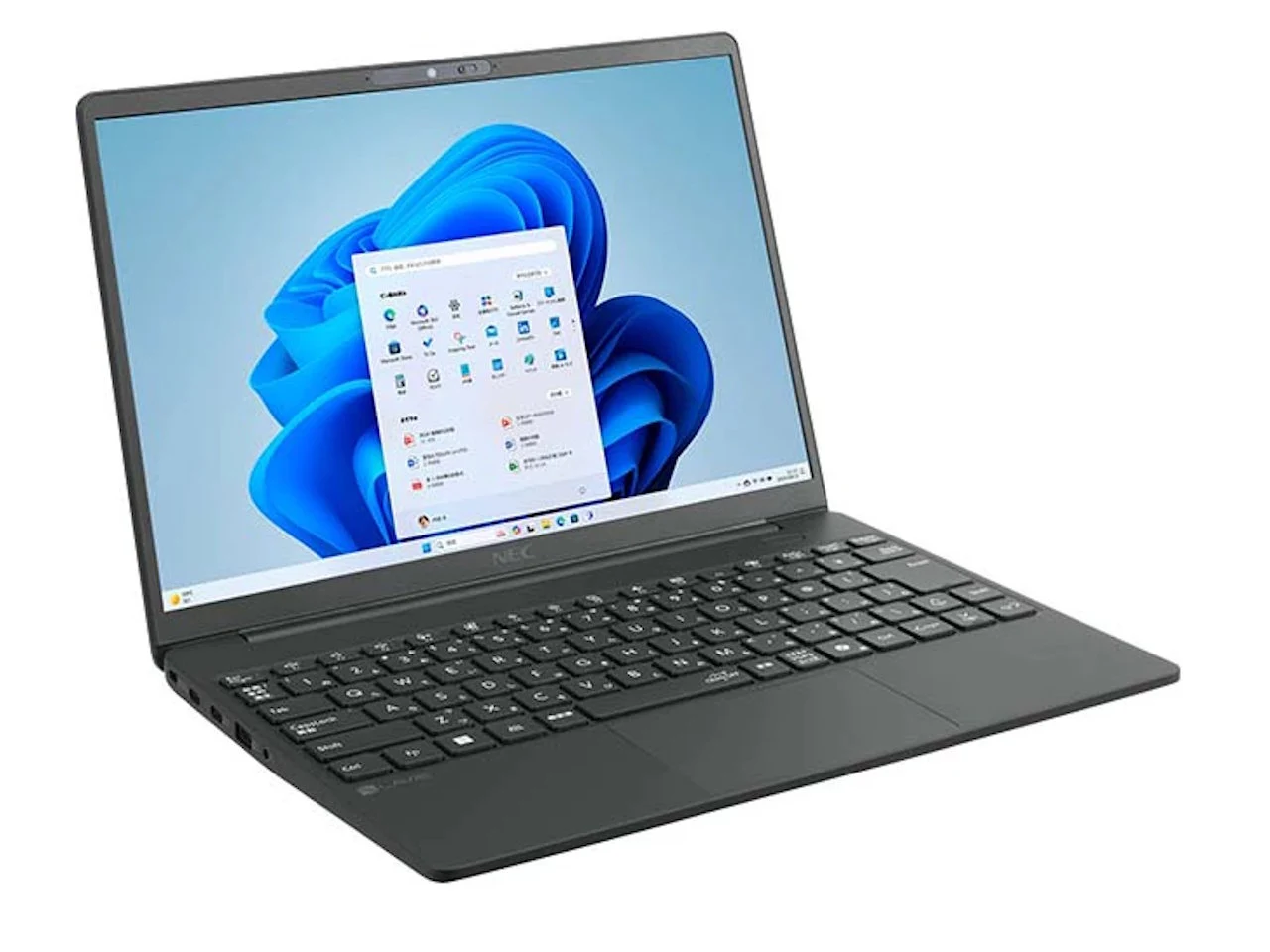
    NEC has unveiled its latest 13.3-inch Lavie Nextreme model designed for all-day use by business people and weighing only 994 grams (2.19 lbs.) thanks to a carbon fiber body. The NEC Lavie Nextreme can be ordered from NEC for 308,400 yen (~$1,935), with delivery in about a week to customers in Japan.

    Battery and Performance

    A 74 Wh user-replaceable battery provides 20+ hour runtimes (JEITA Measurement Method Ver.3.0 for video playback), while an Intel Core Ultra 7 258V CPU helps accelerate Copilot+ AI workflows thanks to a 47 TOPS NPU. The laptop is fitted with 32 GB of LPDDR5X RAM and up to 1 TB of storage to handle the higher RAM demands of AI apps.

    Display and Connectivity

    The Nextreme is fitted with a 1,920×1,200 IPS touchscreen display that is designed to provide wide viewing angles with high color accuracy and a Full HD webcam. It also comes with a wide range of ports, including two USB 3.2 Gen2 Type-C ports (PD, DP), two USB 3.2 Gen2 Type-A ports, one HDMI port, and one Ethernet jack. Sound is output through dual 2W speakers or the headphone/microphone jack. Storage can be added using the microSD card slot. It also has Wi-Fi 7 and Bluetooth 5.4 wireless connectivity.

    Build and Design

    The Lavie is made of Toray carbon fiber with a scratch- and fingerprint resistant coating. It measures just 299 x 214 x 17.9 mm (11.8 x 8.4 x 0.7 in.) for easy carrying to business meetings.

    Market Availability

    Readers outside Japan looking for a similar business notebook, albeit at a slightly heavier weight, might consider the 13.8-inch Microsoft Surface Laptop for Business sold here on Amazon and highlighted in Notebookcheck Reviews on YouTube.

    Sources
  • MSI Claw 8 AI+ Boosts Performance and Battery Life with New Drivers

    MSI Claw 8 AI+ Boosts Performance and Battery Life with New Drivers

    Key Takeaways

    1. The MSI Claw 8 AI+ received updates that significantly boost gaming performance, particularly with the new Intel graphics driver (version 32.0.101.6987 WHQL).
    2. Forza Horizon shows a performance increase from 66 FPS to 88 FPS at 1200p resolution and Medium settings after the driver update.
    3. Other games also benefit from performance improvements, although specific performance numbers were not provided.
    4. Updates to the MSI Center and BIOS have improved battery life on the MSI Claw 8 AI+, though no direct comparisons were made.
    5. The Intel Core Ultra 7 258V model is more power-efficient at lower TDPs compared to the Z2 Extreme version, which is noted to be slightly superior in early reviews.


    Since it came out, the MSI Claw 8 AI+ has undergone several updates aimed at boosting performance. As shown by ETA Prime, the newest Intel graphics driver, version 32.0.101.6987 WHQL, brings a significant increase in performance for the gaming handheld.

    Performance Benchmarks

    In the recent video, ETA Prime started by testing Forza Horizon at a 17 W TDP, 1200p resolution, and Medium settings. Before the update, the game used to run at an average of 66 FPS, but now, post-update, the handheld is performing at an average of 88 FPS under the same conditions. The YouTuber didn’t offer much in the way of before-and-after comparisons for other games, though.

    General Improvements

    Nonetheless, ETA mentions that the latest driver does improve performance across other titles as well. The additional games tested on the updated gaming handheld included various popular titles, although specific performance numbers weren’t disclosed.

    In addition to the performance enhancements, ETA Prime also pointed out that updates to the MSI Center and BIOS have led to better battery life. While a direct before-and-after comparison wasn’t conducted, battery tests were performed on the updated Core Ultra 258V-powered MSI Claw 8 AI+.

    Battery Life Testing

    The games used for battery life benchmarking had the screen brightness set at 50%, a refresh rate of 60 Hz, and fan settings on auto. Plus, WiFi, Bluetooth, and RGB lighting were all kept enabled. Here’s how the battery life varied at different TDP levels:

    Overall, the Intel Core Ultra 7 258V gaming handheld appears to perform better now than it did at launch, thanks to these updates. Early reviews suggest that the Z2 Extreme version of the MSI Claw might be slightly superior, but it’s important to note that the Intel model is more power-efficient at lower TDPs. For more information, check out ETA Prime’s latest video on YouTube.

    Source:
    Link


  • OneXPlayer X1 Air Launching This Month: 4 Key Upgrades from X1 Pro

    OneXPlayer X1 Air Launching This Month: 4 Key Upgrades from X1 Pro

    Key Takeaways

    1. The OneXPlayer X1 Air features an Intel Core Ultra 7 258V processor and a 2.5K display measuring 10.95 inches.
    2. It is expected to have better battery life due to a more energy-efficient processor and a 10% larger battery (72 Wh).
    3. The device will include ‘hot-swappable PCIe mini SSD storage,’ making SSD replacement easier than in previous models.
    4. The OneXPlayer X1 Pro will have a built-in stand, contrasting with the detachable stand of earlier versions.
    5. The OneXPlayer X1 Air will be available for order on the OneXPlayer website by late August, with unverified pricing details.


    Roughly a month has passed since One-Netbook showcased a new iteration of the OneXPlayer X1. The company shared this information on Chinese social media, confirming that the OneXPlayer X1 Air will differ from the current OneXPlayer X1 and OneXPlayer X1 Pro (currently $1,199 – renewed on Amazon) in several aspects. However, they have not disclosed the release date for the 3-in-1 device.

    New Details Emerge

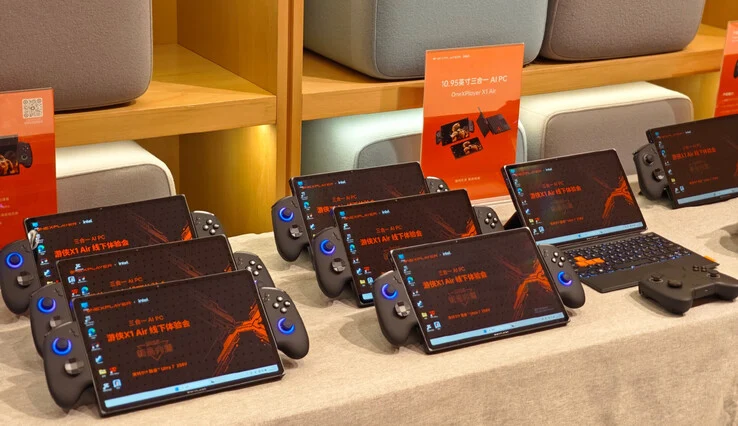
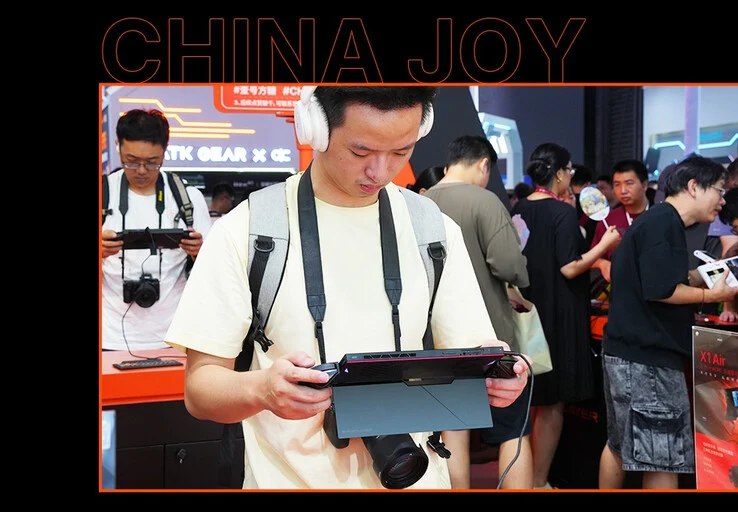
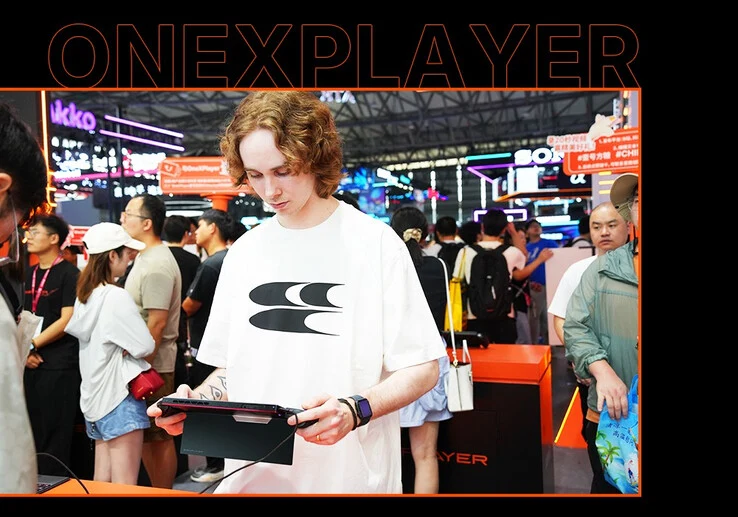
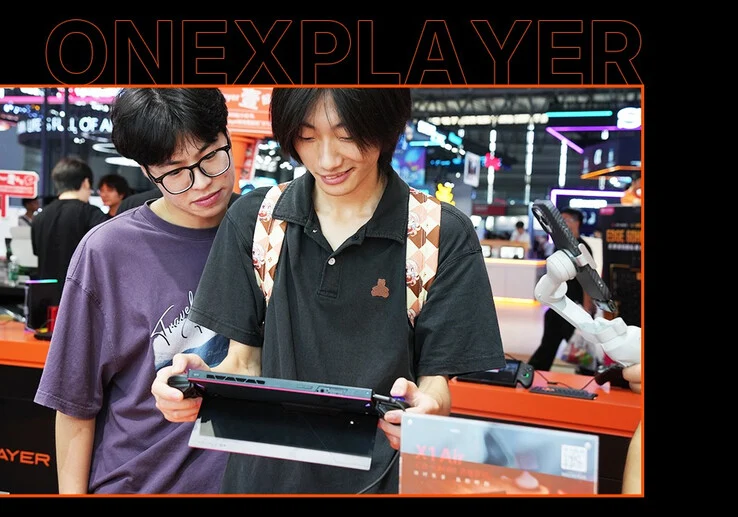
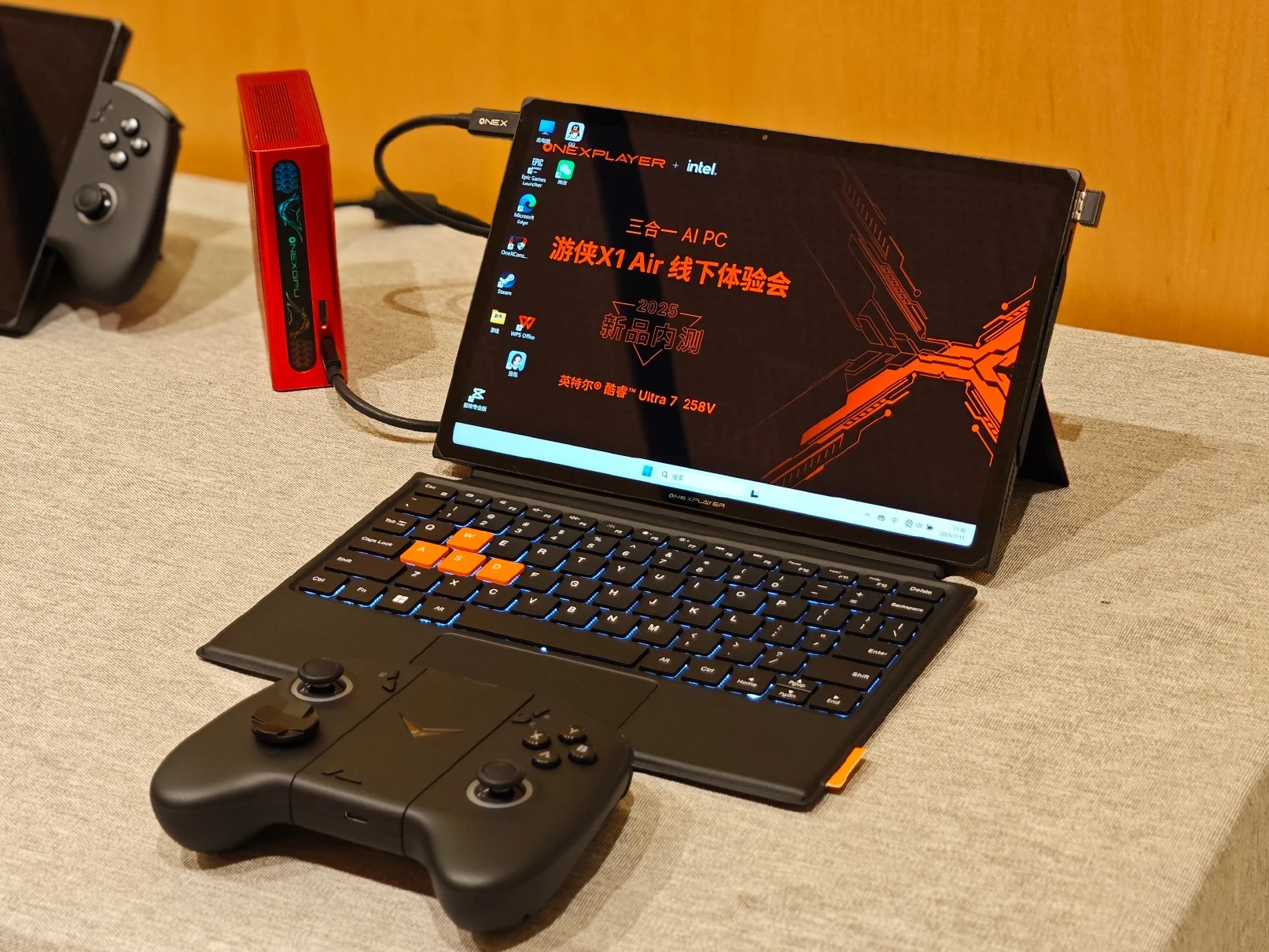
    The device was displayed recently at ChinaJoy 2025 in Shanghai, where One-Netbook provided additional insights about its second Intel-powered OneXPlayer X1 model and the fourth one announced to date. As mentioned earlier, the OneXPlayer X1 Air will feature an Intel Core Ultra 7 258V processor along with a 2.5K display measuring 10.95 inches diagonally.

    Performance Improvements

    Although the display seems to be the same as before, the Core Ultra 7 258V is expected to be much more energy efficient than the Ryzen AI 9 HX 370 found in the OneXPlayer X1 Pro. Combined with a 10% larger battery (72 Wh vs. 65 Wh), the OneXPlayer X1 Air should deliver significantly better battery life compared to the OneXPlayer X1 Pro in our evaluations.

    Additionally, One-Netbook has hinted that the OneXPlayer X1 Air will include ‘hot-swappable PCIe mini SSD storage.’ While they haven’t provided specific details yet, the teaser implies that swapping out the SSD in the Air will be easier than in the OneXPlayer X1 or X1 Pro, which is a more complicated process than what many other gaming handhelds offer.

    Design Features and Availability

    Furthermore, it seems that the OneXPlayer X1 Pro will come with a built-in stand, unlike the detachable solution provided with the OneXPlayer X1 and X1 Pro. Currently, One-Netbook announced that the OneXPlayer X1 Air will be available for order on its OneXPlayer website by late August. However, details regarding the full pricing and availability are still unverified at this time.

    Source:
    Link


  • Ryzen Z2 Extreme vs Intel Core Ultra 7 258V: Handheld Gaming Test

    Ryzen Z2 Extreme vs Intel Core Ultra 7 258V: Handheld Gaming Test

    Key Takeaways

    1. MSI has launched the Claw A8 handheld featuring the AMD Ryzen Z2 Extreme, contrasting with the previously released Claw 8 AI+ with Intel Core Ultra 7 258V.
    2. The AMD Ryzen Z2 Extreme consistently shows better 1% lows in gaming performance, indicating a smoother experience compared to the Intel variant.
    3. The Ryzen Z2 Extreme outperforms the Intel model in average FPS at both 17 W and 30 W TDPs, suggesting it is more favorable for gaming.
    4. The Intel Core Ultra 7 258V has a slight edge in power efficiency, comparable to the Steam Deck, but the Ryzen model offers better overall performance.
    5. The performance advantage of the Claw A8 could be impacted if the price of the Claw 8 AI+ decreases.


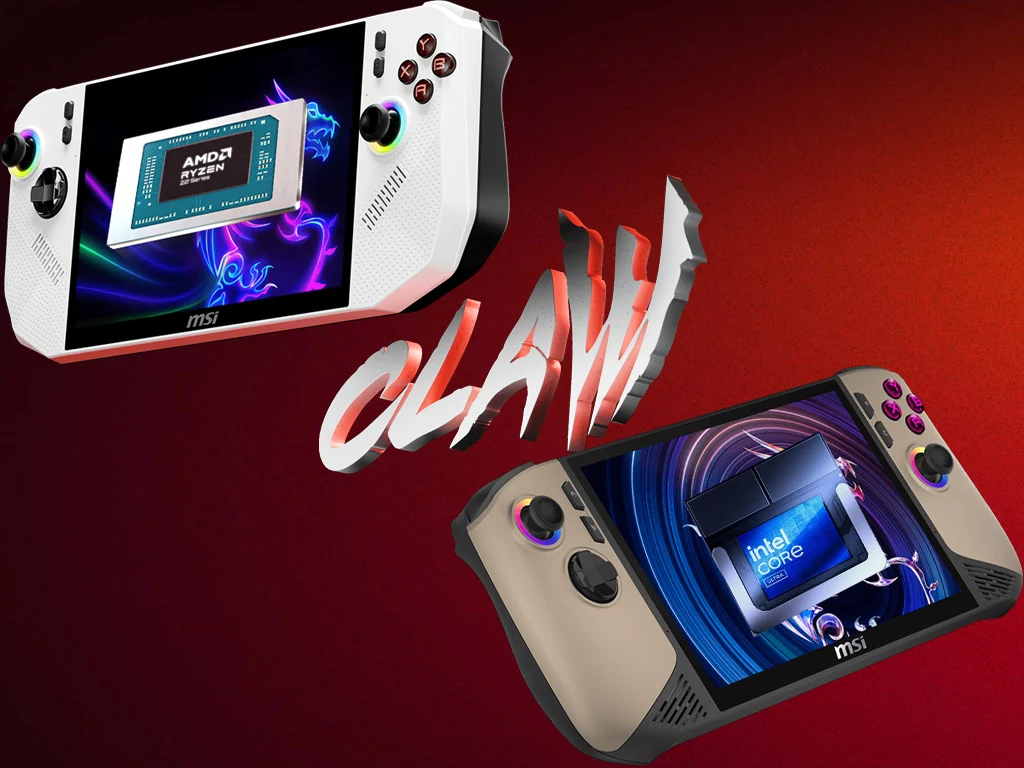
    MSI has recently launched the AMD Ryzen Z2 Extreme version of its new Claw gaming handheld, named the A8. In contrast, the already released 8 AI+ features the Intel Core Ultra 7 258V, which we’ve seen performs reasonably well for handheld gaming devices.

    Comparison of Performance

    Golden Pig Upgrade, a reviewer from China, has compared the Claw A8 with the 8 AI+. This side-by-side assessment reveals how the Intel Core Ultra 7 258V with Arc 140V stacks up against the Ryzen Z2 Extreme using the Radeon 890M.

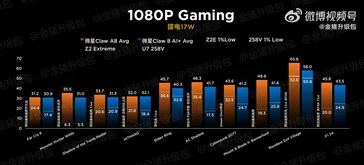
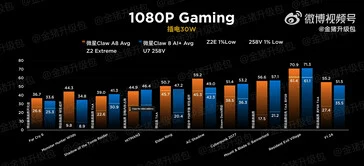
    According to the charts provided by the reviewer, the AMD-powered gaming handheld consistently demonstrates superior 1% lows across nearly all tested games. This indicates that the Ryzen Z2 Extreme MSI Claw can deliver a smoother gaming experience compared to the Intel Core Ultra 7 258V variant.

    Power Efficiency Insights

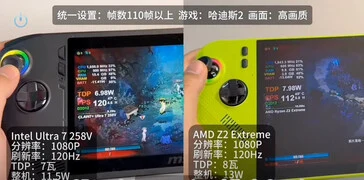
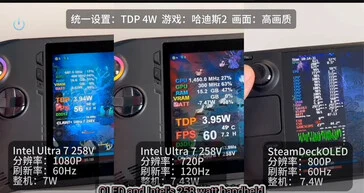
    Additionally, the average FPS on the Ryzen Z2 Extreme gaming handheld outperforms most games tested at both 17 W and 30 W TDPs. On the subject of power efficiency, the Intel Core Ultra 7 258V shows a minor edge, typically aligning with the performance offered by the Steam Deck.

    However, when we look at the overall performance, the Z2 Extreme handheld shows about 5.7% better performance at 30 W and roughly 7.4% better at 17 W. This suggests that the Claw A8 is more favorable for gaming; nevertheless, the value proposition could shift if the price of the Claw 8 AI+ is reduced. For further details on how these two models compare, take a look at the images included below.

    Source:
    Link


  • OneXPlayer Unveils X1 Air Gaming Handheld with Intel Lunar Lake

    OneXPlayer Unveils X1 Air Gaming Handheld with Intel Lunar Lake

    Key Takeaways

    1. The OneXPlayer X1 Air features the Intel Core Ultra 7 258V processor, Arc 140V iGPU, and 32 GB of LPDDR5x RAM, offering superior performance in gaming.
    2. The iGPU slightly outperforms the Radeon 890M, suggesting the X1 Air will exceed the gaming capabilities of the Ryzen Z2 Extreme and AI 9 HX 370 handhelds.
    3. The X1 Air is a versatile 3-in-1 device that functions as a gaming handheld, a tablet, and a laptop with a keyboard accessory.
    4. It includes a 10.95-inch “2.5K” display, a 72 Wh battery, and features such as PCIe 4.0 storage and RGB lighting effects.
    5. The device has a lightweight aluminum body, two USB4 ports, and an adjustable kickstand for convenient use.


    OneXPlayer is preparing to unveil its latest gaming handheld, known as the X1 Air. A recent teaser has confirmed that it will be equipped with the Intel Core Ultra 7 258V, a high-end processor from the Lunar Lake series. Additionally, it comes with the Arc 140V iGPU and is supported by 32 GB of LPDDR5x RAM.

    Performance Insights

    Our analysis suggests that this iGPU outperforms the Radeon 890M slightly in both performance and efficiency. As a result, the X1 Air will likely surpass the capabilities of the Ryzen Z2 Extreme and AI 9 HX 370 handhelds in gaming performance.

    Versatile Design

    Returning to the teaser, it highlighted several key specifications of the OneXPlayer X1 Air. Similar to its counterparts in the X1 series, this device is designed as a 3-in-1 gadget. It can function as a gaming handheld with detachable controllers, a tablet when nothing is attached, and a laptop with a keyboard accessory.

    The company has indicated that the X1 Air is lightweight and features an aluminum body. While the full port configuration wasn’t revealed in the teaser, it did confirm the presence of two USB4 ports. However, it remains uncertain if an OCuLink port will be included, which is typically better for eGPU setups (GMKtec AD-GP1 curr. $469.99 on Amazon).

    Display and Battery Upgrade

    Furthermore, the teaser video mentioned that the OneXPlayer X1 Air will come with a 10.95-inch screen boasting “2.5K” resolution, likely the same display found in the X1 Pro. The battery has also been improved; while the Pro model has a 65.02 Wh battery, the Air is set to include a 72 Wh battery.

    In terms of design, it resembles both the X1 Pro and the standard X1, featuring an adjustable kickstand on the back for convenient use on surfaces. Other significant features highlighted in the teaser include PCIe 4.0 storage and RGB lighting effects. OneXPlayer is anticipated to release more information about this exciting new gaming handheld shortly.

    Source:
    Link

  • Lenovo ThinkPad X1 Carbon Gen 13 Aura Edition Launches in China

    Lenovo ThinkPad X1 Carbon Gen 13 Aura Edition Launches in China

    The Lenovo ThinkPad X1 Carbon Gen 13 Aura Edition has made its debut in China. This laptop is among the first in the world to come with a PCIe 5.0 M.2 slot, which promises faster data transfer speeds. To put it in perspective, a PCIe Gen 5 SSD can provide about twice the performance of a PCIe 4.0 SSD due to the new interface’s higher data transfer rate of 3,938 MB/s per lane compared to the 1,969 MB/s of its predecessor.

    The Need for Cooling Solutions

    Despite the benefits of the faster data transfer, there are challenges that come with it. Specifically, PCIe 5.0 SSDs need effective cooling to maintain their enhanced performance, and Lenovo seems to have tackled this with the ThinkPad X1 Carbon Aura. The laptop is equipped with a Gen 5 SSD that includes a dedicated heatsink, reducing the likelihood of thermal throttling. For instance, the 1 TB PNY CS3150 XLR8 Gen 5 SSD is currently priced at $152.99 on Amazon.

    Impressive Storage Capabilities

    The SSD that comes in the 2025 ThinkPad X1 Carbon Aura is said to be the SK hynix PCB01, launched back in March. Featuring the Alistar ACNT093 controller, the 2 TB version of this SSD boasts a sequential read speed of up to 14,000 MB/s and a write speed that reaches up to 12,000 MB/s.

    In addition, Lenovo is also providing the 2025 ThinkPad X1 Carbon Aura with a 1 TB storage option, which appears to utilize the same Gen 5 SSD. Beyond the high-speed storage, the laptop is powered by the Intel Core Ultra 7 258V, a capable mid-range processor from the Lunar Lake series.

    Additional Features and Pricing

    Among other noteworthy features of the laptop are its OLED display with a refresh rate of 120 Hz, a 57 Wh battery, 32 GB of LPDDR5x RAM, a magnesium alloy chassis, and a variety of ports. The starting price is set at CNY 15,999, which is approximately $2,200. Lenovo has already rolled it out to the global market, and it made its first appearance at IFA 2024.


    Image 1
  • Tencent Games and Intel Unveil World’s First Glasses-Free 3D Handheld

    Tencent Games and Intel Unveil World’s First Glasses-Free 3D Handheld

    In a partnership with Intel, Tencent Games has launched the Sunday Dragon 3D One. They are calling it the "world’s first" handheld gaming device that does not require glasses. This device is said to be experimental, and Tencent aims to investigate the possibilities of "naked-eye 3D" tech in gaming.

    Powerful Components

    Inside, the Sunday Dragon 3D One is equipped with the Intel Core Ultra 7 258V, a high-performance APU from the Lunar Lake series, which will also be used in the MSI Claw 8 AI+. It comes with 32 GB of LPDDR5X RAM and a storage capacity of 1 TB. Similar to the Lenovo Legion Go (currently priced at $499 on Amazon), it features detachable controllers.

    Unique Display Features

    What distinguishes this Tencent Games handheld is its display. According to the company, the Sunday Dragon 3D One includes an 11-inch screen with a real-time eye-tracking sensor. Combined with an "image interlacing algorithm," this 120 Hz display can provide "naked-eye 3D visual effects."

    Tencent has already optimized several PC games for this 3D technology, including Path of Exile, Blade & Soul, and Arena Breakout: Infinite. However, it remains uncertain if other games can deliver a true glasses-free 3D experience without developer support.

    Previous Innovations

    This isn’t the first device to offer a glasses-free 3D display. For instance, Nubia has its Pad 3D series, which features a similar technology. When they launched their second-generation tablet, Nubia mentioned an AI-based neural network algorithm capable of transforming any 2D content into 3D. It’s likely that Tencent Games has developed something akin to this for their new gaming handheld.

    Source: Link

  • AMD Ryzen AI 9 HX 370 Beats Intel Core Ultra 7 in 1080p Gaming

    AMD Ryzen AI 9 HX 370 Beats Intel Core Ultra 7 in 1080p Gaming

    Now that the AMD Ryzen AI 9 HX 370 and Intel Core Ultra 7 258V have been around for some time, AMD has seized the chance to compare its Strix Point products with those from the Lunar Lake range. This assessment mainly looks at gaming performance, with AMD’s own data (which isn’t surprising) showing that it leads over Intel. The graphs below show how Strix Point performs in several popular games at 1080p resolution.

    Performance Overview

    AMD evaluated the Ryzen AI 9 HX 370 across sixteen different games, where it outshined the Core Ultra 7 258V by an average of 75%. The Strix Point setup utilized an Asus ZenBook S16 equipped with 32 GB LPDDR5-7500 RAM, while the Lunar Lake processor was tested in an Asus ZenBook S14, also with the same memory configuration.

    Detailed Comparison

    When examining the graphs closely, it shows that both processors produce roughly equivalent frame rates natively. The Radeon 890M gains an edge thanks to AMD’s FSR 3.0 and AFMF frame generation. Although Intel XeSS provides a noticeable boost in performance, it still falls short compared to its rival; the limited availability of this technology isn’t helping its case either.

    Our tests arrive at a similar finding: AMD relies on FSR and AFMF to keep a competitive edge over Intel. It often depends on the specific game in many cases.

    Future Developments

    That said, this reliance isn’t necessarily negative since these technologies are designed to maximize performance from low-power chips; they appear to be functioning as planned. It will be fascinating to see how AMD develops these technologies further with the upcoming RDNA 4.

    Source: Link,Link,Link


    Image 1
    Image 1
    Image 1
  • Machenike Intel Lunar Lake Mini PC Launches with Core Ultra 7 258V

    Machenike Intel Lunar Lake Mini PC Launches with Core Ultra 7 258V

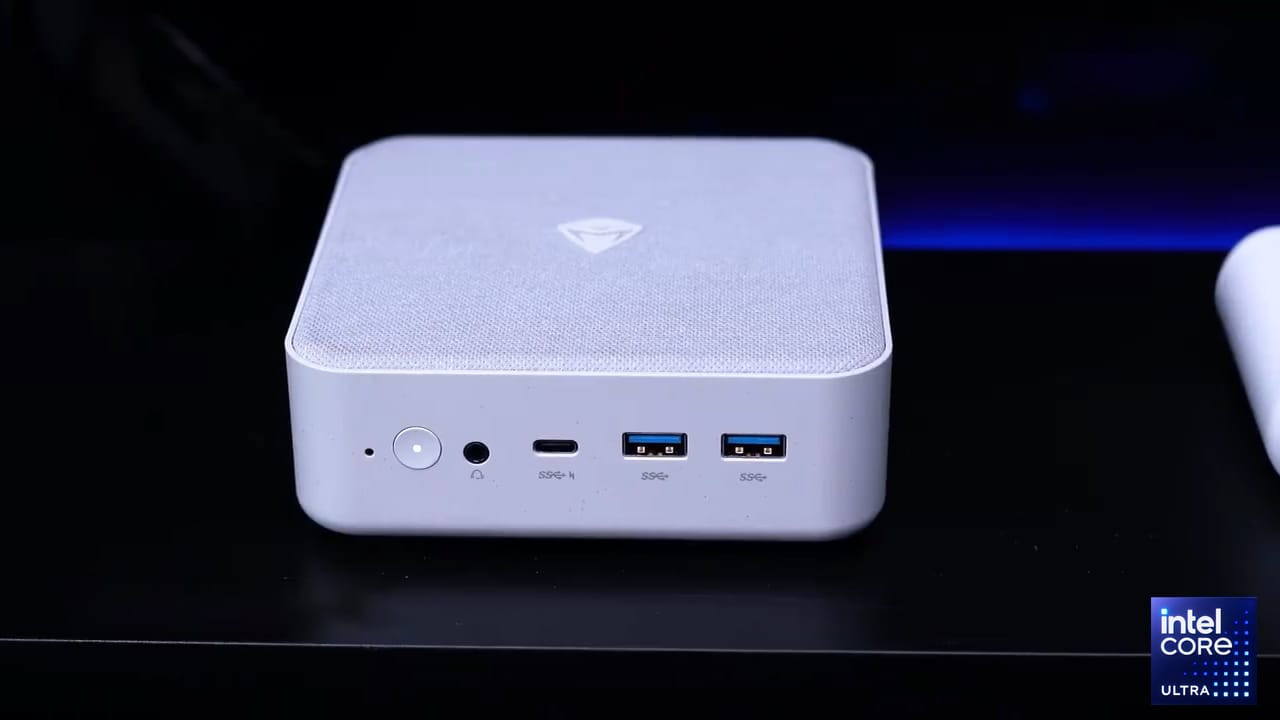
    The Creator 14 mini PC by Machenike has been revealed as the first of its kind using the Lunar Lake technology, joining the ranks of other notable devices like the Asus NUC 14 Pro AI and the Khadas AI PC Dev Kit. This announcement hints at an increasing interest in mini PCs featuring the new Lunar Lake architecture.

    Powerful Specs in a Small Package

    This compact device has a volume of just 0.7 liters and is powered by the Intel Core Ultra 7 258V processor, which is among the highest performing chips in the Lunar Lake series. It comes equipped with four performance cores and four efficiency cores, along with 32 GB of RAM. The integrated Arc 140V GPU means it can handle gaming quite well too.

    Cooling Solutions and Performance

    Machenike has integrated a dual-fan cooling system with the 258V, although they haven’t disclosed the thermal design power (TDP) for the processor within this mini PC. Intel indicates that the maximum turbo power reaches 37W. Benchmarks show that this CPU outperforms the previous generation Core Ultra 7 155H, which operates at 28W, but it still trails behind the Ryzen AI 9 HX 370 in some performance metrics.

    Connectivity and Market Availability

    According to the company, this Lunar Lake mini PC supports up to three displays and includes two 2.5G Ethernet ports, all within a lightweight chassis. While Machenike has yet to announce pricing or availability, their products typically remain within the Chinese market. This likely means that the Creator 14 may not be available internationally. Once it launches in China, other brands like Minisforum, Aoostar, Beelink, and GMKtec (Nucbox K6 currently priced at $483.99 on Amazon) might introduce their own mini PCs featuring the Core Ultra 200 series.

    孤城Hardware on Weibo


    Image 1