Tag: PCIe 5.0

  • ASUS launches refreshed ROG NUC gaming mini PC at premium price

    ASUS launches refreshed ROG NUC gaming mini PC at premium price

    Key Takeaway

    – 2026 ROG NUC 15 uses Intel Core Ultra 200HX Plus CPU while the GPU remains unchanged from the last generation.
    – Design gets bolder branding with “For Those Who Dare” and introduces a patented removable stand that cradles the chassis.
    – Core specs stay high-end (DDR5 RAM, PCIe 5.0 storage, silent cooling) with WiFi 7 and Bluetooth 5.4.
    – Front IO features 2 USB-A ports and 1 USB-C; rear IO details are not fully disclosed in the article.
    – China pricing starts at CNY 29,999 (~$4,421) with a white variant at CNY 30,999 (~$4,569); global launch details TBD.

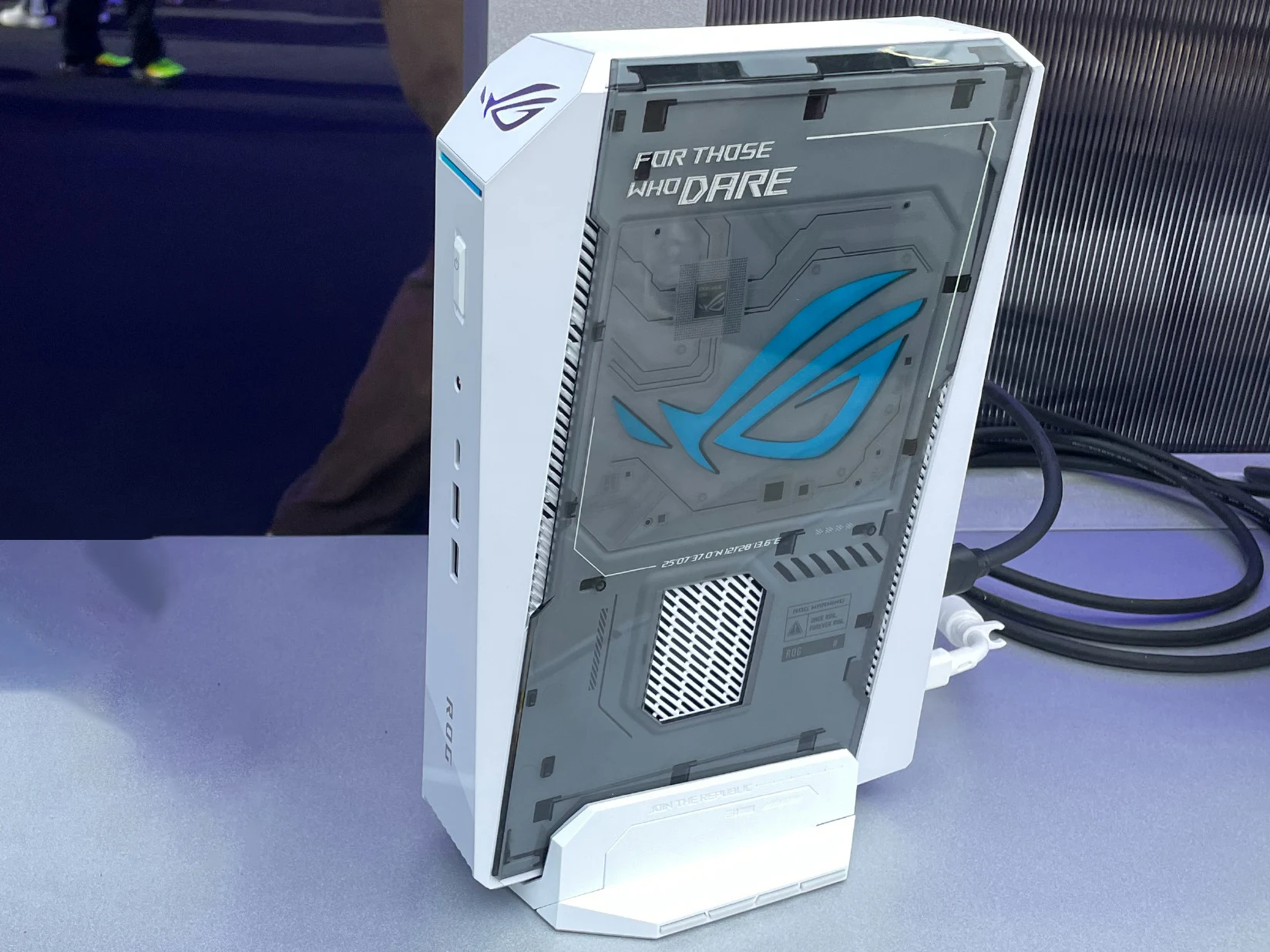
    Asus has launched the successor to the 2025 ROG NUC 15, and as we speculated, the main difference is that the Intel Core Ultra 200HX Plus series powers the gaming mini PC. The GPU department hasn’t seen an upgrade. The design changes include more prominent For Those Who Dare and ROG branding, plus a patented removable stand cradling the chassis instead of a screw-on fit.

    Design and branding updates

    Beyond these cosmetic changes, the rest of the system specs appear to be the same as the last-gen ROG NUC 15. DDR5 RAM and PCIe 5.0 storage stand out as the high-speed backbone, while the cooling remains notably quiet. Wireless connectivity includes WiFi 7 and Bluetooth 5.4, and the overall chassis is engineered to house these elements with minimal fan noise.

    Performance and ports

    Port-wise, Asus highlights the rich configuration of the 2026 ROG NUC. The front appears to have two USB Type-A and one USB-C, while the back features the following: In China, the refreshed ROG NUC mini PC starts at CNY 29,999, which is around $4,421. There’s a new white version available, costing CNY 30,999, about $4,569. The top-end option curr. $3,399 remains as a benchmark for the model lineage.

    Pricing and availability

    In China, the refreshed ROG NUC mini PC starts at CNY 29,999, which is around $4,421. There’s a new white version available, costing CNY 30,999, about $4,569. Asus has yet to share details on the available configurations and plans for the global launch. No firm date was given for a worldwide rollout, but fans hope for a formal announcement soon.

    Final thoughts

    Overall, the 2026 ROG NUC balances a strong core with bold styling and practical upgrades like the removable stand. The absence of an GPU upgrade this time around is noticeable, yet the presence of DDR5 RAM, PCIe 5.0 storage, and WiFi 7 keep it competitive in a crowded market. The real question remains the price and availability worldwide.

    Sources

  • MCIO G2 eGPU Dock with MCIO Support Detailed Ahead of Launch

    MCIO G2 eGPU Dock with MCIO Support Detailed Ahead of Launch

    Key Takeaway

    1. The GPD G2 dock supports PCIe 5.0 x8 hardware via the GPD Box mini PC, offering higher bandwidth than most current mini PC ports, but actual speeds may be limited by USB4 v2 and Thunderbolt 5 interference.
    2. It features a PCIe Gen 5 x16 GPU slot with 126GBps bandwidth, an 80Gbps USB4 v2 port with 100W Power Delivery, and an 800W PSU suitable for high-end GPUs.
    3. Additional ports include two USB 3.2 Gen 2 Type-A, a gigabit Ethernet port, and an M.2 NVMe slot, expanding storage options.
    4. The G2 dock is set to launch soon but lacks confirmed pricing and availability details.

    Introduction to GPD G2 Dock

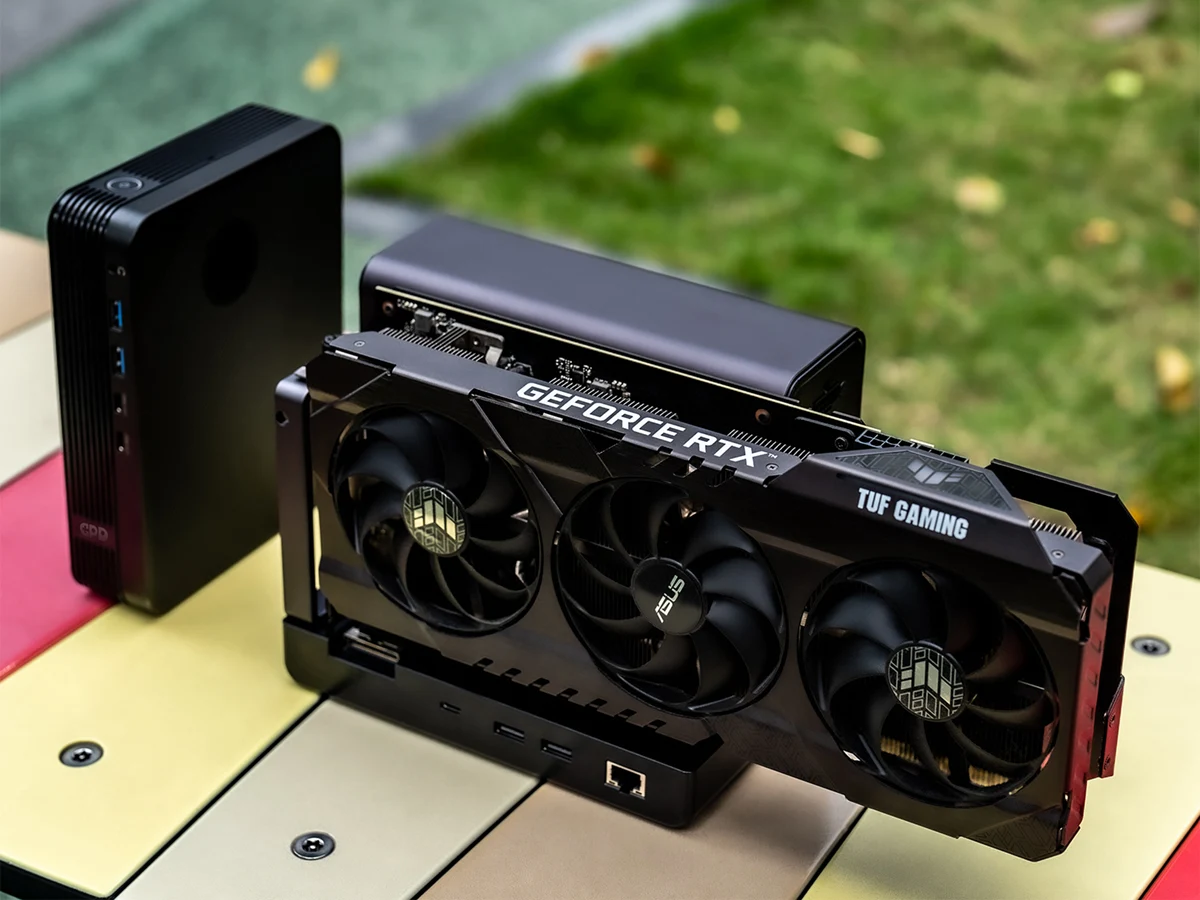
    GPD has released details about their new G2 dock, designed specially to work with the GPD Box mini PC which is equipped with the MCIO 8i port. This dock is an upgrade over the traditional OCuLink PCIe 4.0 x4 standard because it utilizes 8 lanes instead of just four, promising better performance and more bandwidth for users.

    Technical Compatibility and Support

    The specifications sheet of the GPD G2 dock states its support for PCIe 4.0 x8, but the company has confirmed that the GPD Box’s port supports PCIe 5.0 x8. We contacted GPD for clarifications, and a company spokesman said that the dock physically supports PCIe 5.0. Nonetheless, due to potential interference between MCIO and USB4 v2 or Thunderbolt 5, the actual speed might not hit the full PCIe 5.0 x8 bandwidth. Still, operating at PCIe 4.0 with 8 lanes, the dock should surpass most modern mini PC and handheld gaming device ports in throughput.

    Additional Features and Connectivity

    • The PCIe slot meant for a GPU is a Gen 5 x16 slot, offering a data bandwidth of roughly 126GBps, capable of supporting high-performance graphics cards like the Nvidia RTX 5090.
    • It includes a USB4 v2 port rated at 80Gbps for versatile connectivity across a range of devices.
    • This dock supports Power Delivery 3.0 with up to 100W, enabling charging of connected devices through a typical 5-feet Silkland USB4 v2 cable, priced at around $24.95.
    • The built-in power supply unit (PSU) outputs 800W, suitable for running large GPUs and demanding desktop setups.
    • Expandable storage is possible through an NVMe M.2 slot with PCIe 3.0 x2 interface, which can be used to increase the storage capacity of the connected host device.
    • Other ports include two USB 3.2 Gen 2 Type-A ports, besides a standard gigabit Ethernet port for network connections.

    Availability and Final Notes

    GPD has not announced the official price or release date for the G2 dock yet, but it is expected to be available soon. This expansion dock appears to be a powerful addition for users needing high-speed data transfer, graphics processing, and flexible connectivity options in a compact form factor.


    Sources

  • CopprLink Outperforms OCuLink in RTX 5090 eGPU Benchmark

    CopprLink Outperforms OCuLink in RTX 5090 eGPU Benchmark

    Key Takeaway

    1. CopprLink supports data rates of up to 64 GT/s, offering significantly higher performance than OCuLink 4.0’s 16 GT/s per lane.
    2. In practical testing, CopprLink experienced an average performance drop of around 2.29% compared to native connections.
    3. CopprLink’s higher performance benefits eGPU setups but currently requires specialized high-performance adapters and cabling, limiting mainstream adoption.
    4. The high cost of compatible components (e.g., $1,299 dock and $999 adapter) makes CopprLink a premium solution.

    Understanding the New PCI-SIG CopprLink Technology

    In recent times PCI-SIG introduced their latest interface called CopprLink during May 2024, and not too many has adopted it yet, unlike OCuLink or USB4. Yet, this new tech shows promise with its high-performance capabilities. The consortium announced that CopprLink can currently deliver data speeds of up to 64 GT/s, which is quite impressive. Unlike other interfaces, this increase in data transfer rate is a significant upgrade for high-speed data applications.

    Speed Comparisons and Performance Gains

    Looking into the specs and comparing with OCuLink 4.0, which can reach 16 GT/s per lane, the differences are vast. This means that with CopprLink, you should expect much better eGPU performance, especially for demanding tasks like gaming or professional rendering. PCWorld has recently tested this technology with a setup involving a desktop Nvidia RTX 5090 GPU and a HighPoint RocketStor 8631D, which uses CopprLink cabling. The results show the potential of this new interface in real-world applications.

    Practical Limitations and Cost Factors

    However, this setup isn’t your average plug-and-play. It needs a dedicated high-performance adapter featuring PCIe Gen 5 x16 connection to connect to the host PC. This technical requirement partly explains why CopprLink isn’t widely popular yet in consumer eGPU setups, unlike OCuLink, which is more accessible. The prices for these high-end components are steep — the RocketStor 8631D alone goes for $1,299, and the adapter costs about $999.

    Benchmark Results and Future Prospects

    The tests carried out by PCWorld revealed an average performance drop of around 2.29% when using CopprLink in comparison to native setups, which is a significant improvement over the 23% performance loss seen with OCuLink as per Golden Pig Upgrade’s 2024 data. This performance edge, coupled with the high cost of the equipment, indicates that CopprLink is currently targeted more towards premium, professional-grade solutions rather than casual or mainstream consumer use. For more detailed insights, you can find the full testing video linked in their coverage.

    Sources
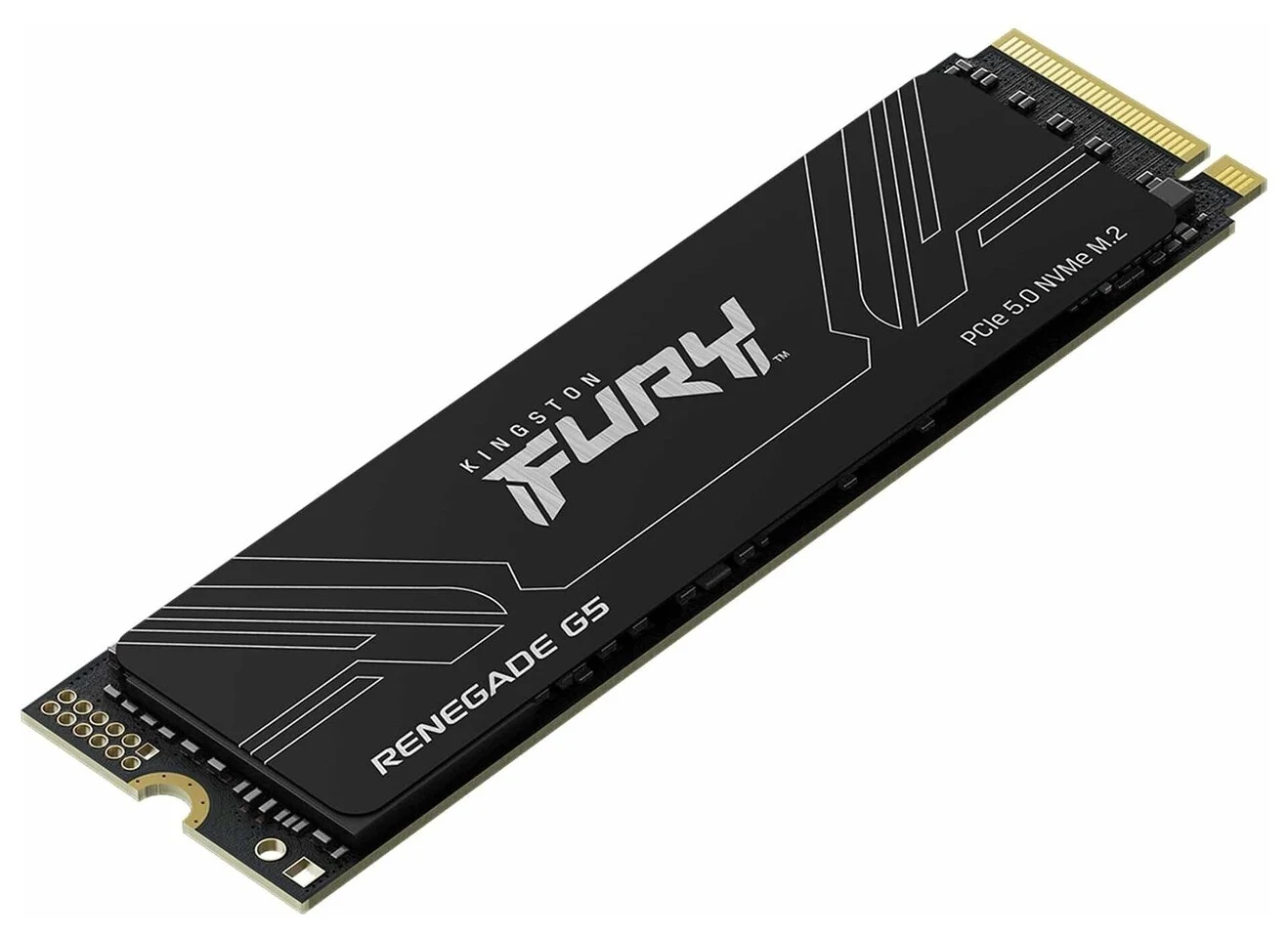
  • Kingston Fury Launches 8TB Renegade G5 SSD with 14,800 MB/s Speed

    Kingston Fury Launches 8TB Renegade G5 SSD with 14,800 MB/s Speed

    Key Takeaways

    – Kingston Fury launched an 8 TB SSD, the Renegade G5, with read speeds up to 14,800 MB/s and write speeds up to 14,000 MB/s.
    – The Renegade G5 outperforms other high-capacity SSDs like Corsair’s MP700 Pro XT and TeamGroup’s T-Force Z54E, which max out at 4 TB.
    – It utilizes a PCIe 5.0 x4 interface for remarkable data transfer speeds.
    – Designed for gamers and content creators, it efficiently handles large 4K and 8K files.
    – The SSD features a Silicon Motion SM2508G controller and 218-layer BiSC8 3D TLC NAND, with a 5-year warranty expected.


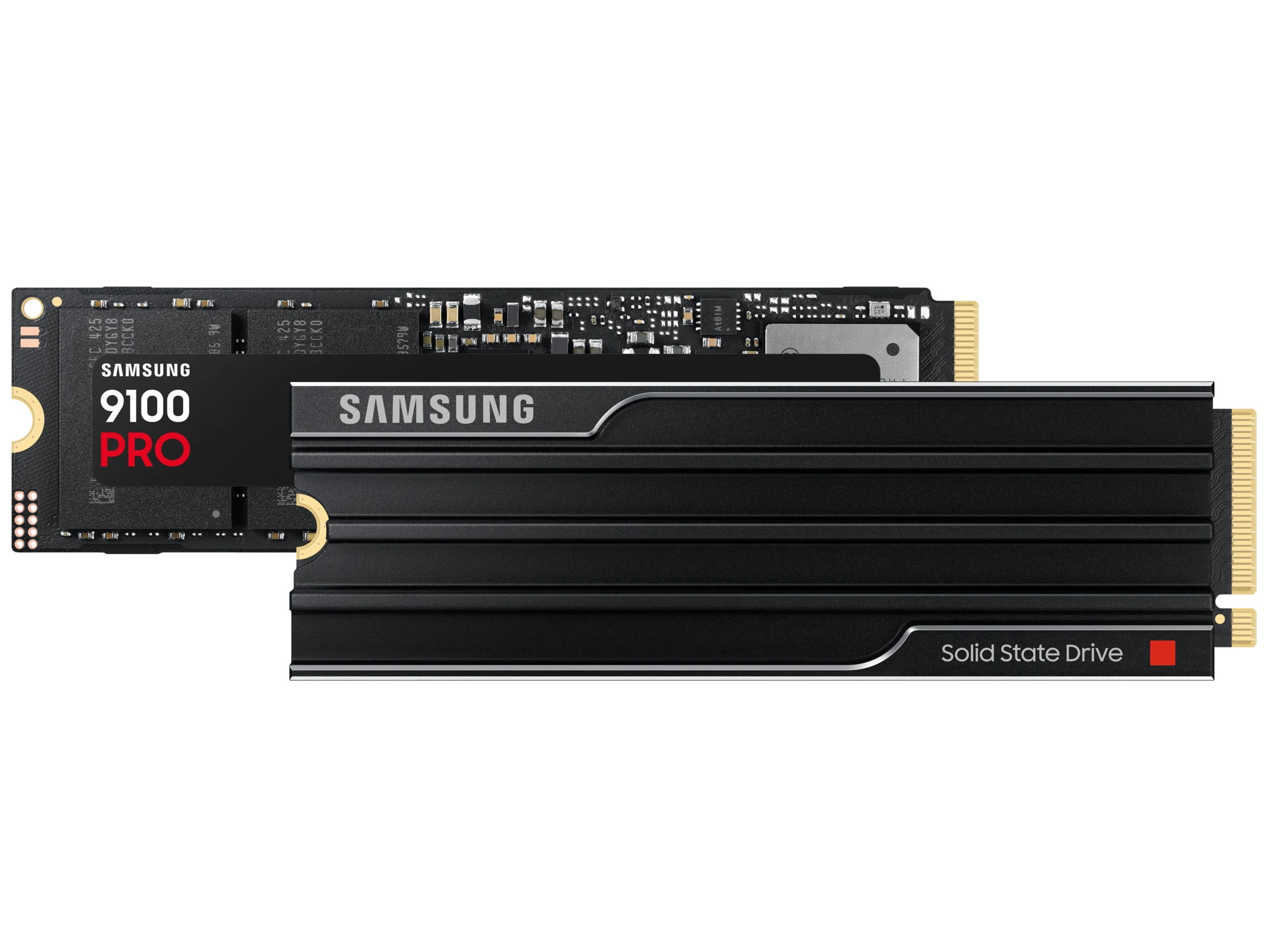
    Kingston Fury has launched a new 8 TB SSD that features impressive read speeds of up to 14,800 MB/s and write speeds reaching 14,000 MB/s in its Renegade G5 PCIe 5.0 series. When compared to other high-capacity SSDs like Corsair’s MP700 Pro XT and TeamGroup’s T-Force Z54E, both of which max out at 4 TB, the Renegade G5 8 TB stands out. Additionally, it surpasses the Samsung 9100 PRO, which has a maximum write speed of 13,400 MB/s.

    Advanced Technology

    The remarkable data transfer speeds were made possible thanks to a PCIe 5.0 x4 interface utilized by Kingston.

    Designed for Creatives

    The Renegade G5 8 TB is aimed at gamers, content creators, and professionals who handle large 4K and 8K files. This new SSD can store extensive game libraries and project files while still delivering top-notch speeds.

    Innovative Components

    To achieve its performance, the storage drive incorporates the Silicon Motion SM2508G controller and a 218-layer BiSC8 3D TLC NAND. Kingston has optimized its firmware architecture for demanding workloads. Previously, the G5 was available in 1 TB, 2 TB, and 4 TB versions, but now the company has increased the maximum capacity without losing any speed.

    Kingston claims that the new Renegade SSD includes a 5-year warranty. While potential buyers will need to wait for the official price announcement, this SSD is expected to be positioned as a premium option for users with significant storage needs.

    Source:
    Link


  • Asus Mainboards Deliver 250W PCIe GPUs Without Power Cables

    Asus Mainboards Deliver 250W PCIe GPUs Without Power Cables

    Key Takeaways

    1. Asus has launched motherboards in its BTF line that provide up to 600 watts to compatible graphics cards without needing extra power cables.
    2. A new concept motherboard can deliver 250 watts directly through PCIe 5.0 x16, replacing the standard 75 watts, but requires an additional 8-pin connector.
    3. The new design keeps the power cable less visible, although it doesn’t eliminate the need for it entirely.
    4. The concept motherboard is backward compatible, allowing prototype GPUs to work with older motherboards using standard 8-pin cables.
    5. The release date and availability of the new PCIe connector product remain uncertain, but it indicates potential for future innovations.


    Asus has already released motherboards in its BTF (Back to the Future) line that can supply compatible graphics cards with up to 600 watts. This means there’s no need for an extra power cable. The method utilizes a special connector located next to the PCIe slot, allowing the GPU power cable to connect directly to the motherboard. However, this setup has the downside of being compatible only with a limited range of Asus products.

    New Power Transfer Method

    In response, the company has come up with a concept motherboard capable of delivering up to 250 watts of power directly through PCIe 5.0 x16, replacing the standard 75 watts. Although this motherboard does need an additional 8-pin connector for power, it doesn’t completely get rid of the need for a power cable; instead, it just relocates it to a less visible spot. For context, 250 watts is sufficient to power an Nvidia GeForce RTX 5060 Ti, which is currently priced at $369 on Amazon.

    Compatibility and Future Prospects

    This innovative design is backward compatible, meaning that Asus’s prototype GPUs can still function with older motherboards, although they would need the standard 8-pin power cables in that scenario. At this point, the motherboard remains just a concept, and it’s not yet known if or when a product featuring this updated PCIe connector will be available for purchase. Nevertheless, this concept shows that a feasible solution could be developed without requiring significant alterations to the PCIe connector.

    Source:
    Link


  • Samsung Launches 8TB 9100 Pro NVMe SSD for High-Performance Storage

    Samsung Launches 8TB 9100 Pro NVMe SSD for High-Performance Storage

    Key Takeaways

    1. Samsung will launch an 8 TB version of its 9100 Pro NVMe series on September 2, 2025, expanding its lineup which currently includes 1 TB, 2 TB, and 4 TB models.
    2. The 8 TB drive offers impressive speeds of up to 14,800 MB/s for sequential reads and 13,400 MB/s for writes, maintaining the same performance as the 4 TB version.
    3. Pricing for the standalone model is set at $1,050, while the heatsink version will cost $1,150, with expectations for lower retail prices upon market release.
    4. The 8 TB model is notable for its high capacity, surpassing many competitors in the PCIe 5.0 SSD market, making it a unique option for consumers.
    5. The drive is designed to be energy-efficient and well-balanced for gaming and productivity, expected to perform similarly to its smaller counterparts.


    Samsung is set to launch a new 8 TB version of its 9100 Pro NVMe series, with plans for it to hit the market on September 2, 2025. This M.2 drive will be the highest capacity option in a lineup that was first introduced earlier this year, which already includes 1 TB, 2 TB, and 4 TB models.

    Performance Specs

    The performance of the 8 TB drive is on par with the 4 TB version, boasting impressive speeds of up to 14,800 MB/s for sequential reads and 13,400 MB/s for writes. While Samsung has increased the storage capacity, the speed remains unchanged, as the same controller and settings are used to maintain consistent performance.

    Pricing Details

    However, the price is on the higher end of the spectrum. The standalone drive (MZ-VAP8T0BW) is priced at $1,050, while the version with a heatsink (MZ-VAP8T0CW) will cost $1,150. Typically, retail prices are lower; for example, the 4 TB model was launched at $673 but can now be found for around $478, so it’s reasonable to expect the 8 TB model might be priced below $1,050 when it comes to market.

    Unique Selling Proposition

    The main selling point remains its massive capacity. Many PCIe 5.0 SSDs that use Phison’s E26 or Silicon Motion’s SM2508 technology still do not reach 8 TB, making the 9100 Pro one of the few options available in this category. Another competitor is TeamGroup’s T-Force GE Pro M.2, which also offers an 8 TB PCIe 5.0 solution. Additionally, SanDisk is preparing to release an 8 TB WD Black SN8100 in 2025, but the exact launch date is still under wraps.

    Samsung’s drive will come equipped with a factory heatsink, allowing it to maintain performance and fit within the compact bay of the PlayStation 5, expanding its usability beyond just desktop computers. To give you an idea, 8 TB can hold approximately 80 modern AAA games, each averaging 90.6 GB.

    Balanced Performance

    Reviews of the smaller capacities of the 9100 Pro indicate a well-balanced and energy-efficient performance for both gaming and productivity tasks. Since the 8 TB model is designed to deliver the same performance, it’s expected that it will exhibit a similar profile in real-world usage.

    Source:
    Link


  • Phison Shows Apex PCIe 5.0 RAID with 140 GB/s SSD Speeds

    Phison Shows Apex PCIe 5.0 RAID with 140 GB/s SSD Speeds

    Key Takeaways

    1. PCIe 5.0 offers transfer speeds over 14 GB/s, while PCIe 6.0 and 7.0 are expected to reach 28 GB/s and 56 GB/s, respectively.
    2. A demonstration at Computex showed 32 PCIe 5.0 SSDs in RAID 0 achieving speeds comparable to PCIe 7.0 X8, with sequential speeds of 113.6 GB/s.
    3. The AMD Ryzen Threadripper Pro 7985WX system used for the demo utilized three PCIe 5.0 slots to enhance transfer speeds.
    4. Phison’s PS5028-E28 Gen5 SSDs are rated for maximum read speeds of 14.8 GB/s and write speeds of 14 GB/s, with support for 3,000K IOPS.
    5. Current Windows 11 kernel limitations may restrict speeds, suggesting potential for higher transfer rates with future software updates.


    PCIe 5.0 is currently the quickest expansion bus standard for mainstream SSDs, boasting transfer speeds that exceed 14 GB/s. Each new PCIe generation typically doubles the maximum theoretical speeds of its predecessor. Therefore, the anticipated PCIe 6.0 standard should enable transfer speeds of nearly 28 GB/s over 4 lanes, while PCIe 7.0 could potentially reach around 56 GB/s on the same 4 lanes. However, users don’t have to wait for future PCIe versions to enjoy speeds that go well beyond the theoretical limits of PCIe 5.0. At this year’s Computex event, Phison partnered with Apex Storage to showcase a solution that links up to 32 PCIe 5.0 SSDs in RAID 0, achieving speeds comparable to PCIe 7.0 X8 and even higher.

    AMD-Powered Demonstration

    For their showcase at Computex, Phison utilized an AMD-driven system featuring an AMD Ryzen Threadripper Pro 7985WX installed on an Asus Pro WS WRX90E-SAGE SE motherboard, which offers a total of 7 PCIe 5.0 slots. They only needed three of those slots to create a RAID matrix that included 32 SSDs distributed across three Apex cards.

    Although it was possible to use just two cards for a 32 SSD matrix, spreading the SSDs across three cards seems to have enhanced the transfer speeds even more. The sequential speeds hit an impressive 113.6 GB/s, while sequential write speeds were slightly lower at 104.6 GB/s according to CrystalDiskMark 8.0.6. This version of the well-known SSD benchmark also features a Mix test that combines 70% read speeds with 30% write speeds, where the Phison matrix achieved a remarkable transfer rate of 146 GB/s.

    Phison’s New SSDs

    The matrix of 32 SSDs consists of Phison’s latest PS5028-E28 Gen5 individual units. These units are manufactured on TSMC’s N6 fabrication nodes and are rated for maximum read speeds of 14.8 GB/s, while write speeds can reach up to 14 GB/s. They also support random transfers of up to 3,000K IOPS.

    Phison noted that the existing Windows 11 kernel used during the tests is restricting speeds, indicating that there is potential for even quicker transfer rates with enhancements to the operating system code. Additionally, the PM584 microchip switch with 84 lanes that powers each Apex card is currently limited to 128 TB per matrix. This means the setup could accommodate either 32 x 4 TB SSDs across two cards or 16 x 8 TB SSDs on a single card.

    Source:
    Link


  • Minisforum BD790i: Mobile AMD X3D Chips for Desktop Use

    Minisforum BD790i: Mobile AMD X3D Chips for Desktop Use

    Key Takeaways

    1. Mobile AMD X3D APU: The BD790i X3D features the Ryzen 9 7945HX3D, a powerful mobile processor optimized for desktop use.

    2. Unique Cooling Solution: Unlike typical mini PC motherboards, it has a robust heatsink and supports a 12 cm active fan for improved cooling.

    3. Enhanced Thermal Management: The motherboard effectively manages heat with dedicated cooling for VRM, memory slots, and M.2 SSDs, making it suitable for NAS setups.

    4. Robust Expansion Options: It includes a full-sized PCIe 5.0 x16 slot for a discrete GPU, along with various connectivity options like HDMI 2.1, DisplayPort 1.4, and USB 3.2.

    5. Pre-order and Pricing: The BD790i X3D is available for pre-order at $599, with a $50 discount, and is expected to ship by mid-March.


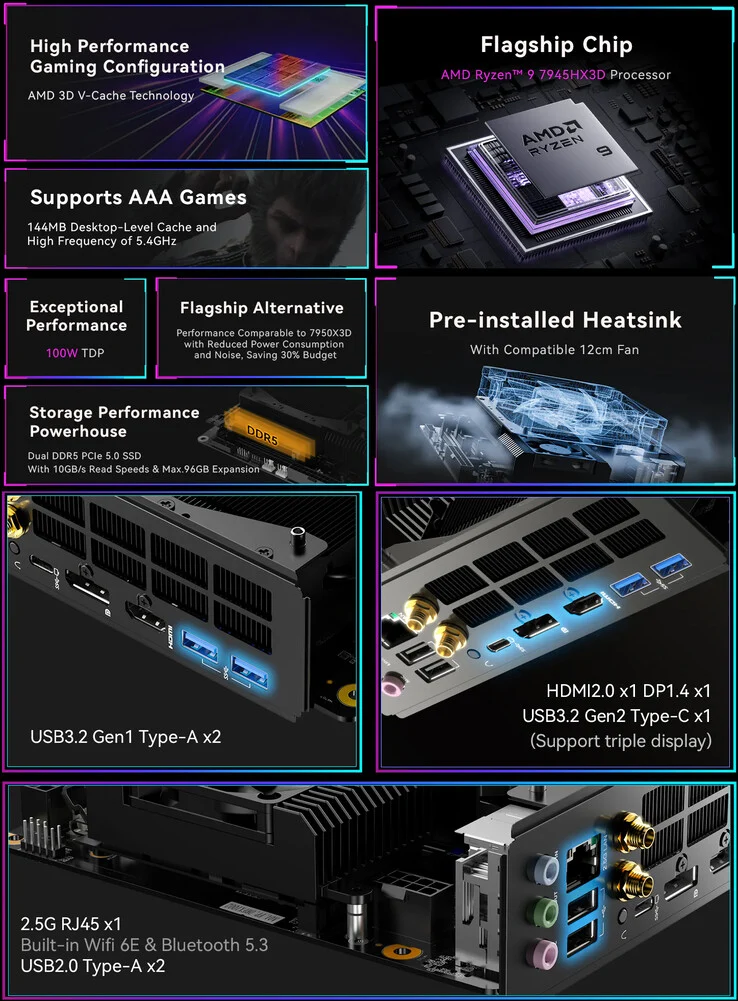
    The Minisforum MoDT lineup has welcomed a fresh member: the BD790i X3D. As the name suggests, this model brings the mobile AMD X3D APU into the desktop realm, starting with the Ryzen 9 7945HX3D. If you’re not already acquainted with this platform, it’s essentially a desktop board that utilizes mobile processors.

    Unique Cooling Solution

    In contrast to standard mobile motherboards commonly found in mini PCs or laptops, the MoDT range from Minisforum does not come with a built-in heat spreader. Instead, they have combined the mobile chip with a more robust heatsink. The cooling arrangement on the new BD790i X3D even supports a 12 cm active fan, although it remains unclear if third-party coolers can also work with the motherboard.

    Enhanced Thermal Management

    The cooler that comes installed is also responsible for managing the heat produced by the VRM and memory slots. Moreover, there’s a dedicated fan and heatsink for the two M.2 slots, which makes this motherboard a great choice for a NAS setup that can truly benefit from PCIe 5.0 SSDs.

    The Ryzen 9 7945HX3D, which is soldered onto the board, ranks among the quickest mobile gaming processors currently on the market, thanks to its 3D V-Cache technology. It also includes the Radeon 610M, but since this RDNA 2 integrated GPU only has 2 compute units, it is best suited for basic rendering tasks.

    Robust Expansion Options

    On the plus side, the Minsiforum BD790i X3D features a full-sized PCIe 5.0 x16 slot that allows users to add a discrete GPU for enhanced gaming performance (PowerColor Fighter AMD Radeon RX 7600 currently priced at $249.99 on Amazon). The motherboard also boasts a solid variety of connectivity options, including one HDMI 2.1, one DisplayPort 1.4, one USB 3.2 Gen 2 Type-C, one 2.5G Ethernet, and two USB 3.2 Gen1 Type-A ports. For wireless features, it includes built-in Bluetooth 5.3 and WiFi 6E.

    Minisforum has started accepting pre-orders for the new BD790i X3D motherboard, with introductory pricing set at $599, which offers a $50 discount off the standard price. The pre-ordered products are anticipated to begin shipping in the middle of March.

    Source:
    Link


  • Lenovo ThinkPad X1 Carbon Gen 13 Aura Edition Launches in China

    Lenovo ThinkPad X1 Carbon Gen 13 Aura Edition Launches in China

    The Lenovo ThinkPad X1 Carbon Gen 13 Aura Edition has made its debut in China. This laptop is among the first in the world to come with a PCIe 5.0 M.2 slot, which promises faster data transfer speeds. To put it in perspective, a PCIe Gen 5 SSD can provide about twice the performance of a PCIe 4.0 SSD due to the new interface’s higher data transfer rate of 3,938 MB/s per lane compared to the 1,969 MB/s of its predecessor.

    The Need for Cooling Solutions

    Despite the benefits of the faster data transfer, there are challenges that come with it. Specifically, PCIe 5.0 SSDs need effective cooling to maintain their enhanced performance, and Lenovo seems to have tackled this with the ThinkPad X1 Carbon Aura. The laptop is equipped with a Gen 5 SSD that includes a dedicated heatsink, reducing the likelihood of thermal throttling. For instance, the 1 TB PNY CS3150 XLR8 Gen 5 SSD is currently priced at $152.99 on Amazon.

    Impressive Storage Capabilities

    The SSD that comes in the 2025 ThinkPad X1 Carbon Aura is said to be the SK hynix PCB01, launched back in March. Featuring the Alistar ACNT093 controller, the 2 TB version of this SSD boasts a sequential read speed of up to 14,000 MB/s and a write speed that reaches up to 12,000 MB/s.

    In addition, Lenovo is also providing the 2025 ThinkPad X1 Carbon Aura with a 1 TB storage option, which appears to utilize the same Gen 5 SSD. Beyond the high-speed storage, the laptop is powered by the Intel Core Ultra 7 258V, a capable mid-range processor from the Lunar Lake series.

    Additional Features and Pricing

    Among other noteworthy features of the laptop are its OLED display with a refresh rate of 120 Hz, a 57 Wh battery, 32 GB of LPDDR5x RAM, a magnesium alloy chassis, and a variety of ports. The starting price is set at CNY 15,999, which is approximately $2,200. Lenovo has already rolled it out to the global market, and it made its first appearance at IFA 2024.


    Image 1