Tag: Phison

  • AI-Driven Shortages Could Bankrupt Consumer Electronics Firms

    AI-Driven Shortages Could Bankrupt Consumer Electronics Firms

    Key Takeaways

    1. Significant shortages of RAM and NAND memory are expected to persist until 2030 or 2035, impacting the consumer electronics sector.
    2. Smaller and medium-sized companies may struggle or shut down due to strict payment conditions from foundries and declining smartphone sales.
    3. Prices for eMMC memory have surged dramatically, rising from $1.5 to over $20, and nearly $30 in the automotive sector for an 8 GB chip.
    4. The mass production of Nvidia’s 10 million Vera Rubin units could consume 20% of global NAND production capacity by 2026, exacerbating existing supply issues.
    5. Phison is launching the aiDAPTIV+ middleware solution to reduce reliance on costly memory by utilizing affordable Flash memory for AI-driven applications.


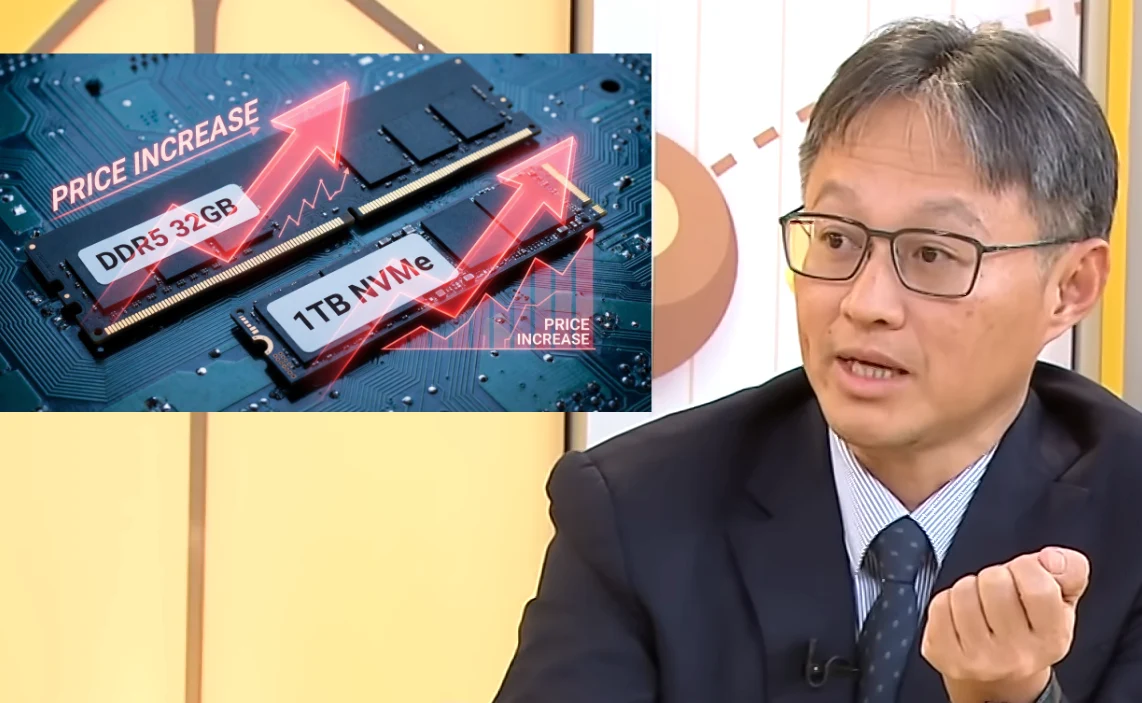
    In a recent chat on the ChenTalkShow, Phison’s CEO, Chien-Cheng Pan, shared a troubling forecast for the consumer electronics sector, driven by an unprecedented demand for AI hardware that has led to significant shortages.

    RAM and NAND Shortages

    Pan emphasized that the shortages of RAM and NAND memory are critical issues that will create major challenges for many companies in the consumer electronics field over the next few years. He predicts that these essential components will likely remain in short supply until 2030 or even 2035, given the current production limitations. Foundries are now requiring three-year pre-payments, which could pose significant difficulties for some businesses.

    Impact on Smaller Companies

    As a result, many smaller and medium-sized firms may have to abandon certain product lines or completely close their doors due to the stringent payment conditions set by foundries. This year, the smartphone market is expected to experience a decline of 200-250 million units, with the PC and TV sectors also facing some effects but to a lesser extent. The smartphone segment will be more heavily impacted, as RAM and storage make up over 20% of the total material costs. In contrast, the server and data center arena will find the situation more manageable, with memory and storage comprising only 5-6% of their expenses.

    Price Surge in eMMC Memory

    Even the less expensive eMMC memory, which was previously priced at $1.5 for an 8 GB chip, is now seeing a dramatic rise in demand, pushing prices well above $20, and nearly $30 for the automotive market for the same capacity.

    Pan further elaborated that the situation could escalate significantly once Nvidia begins mass production of the anticipated 10 million Vera Rubin units. Each Vera Rubin board necessitates over 20 TB of SSD storage and requires up to 576 GB of RAM. With the RAM market already facing challenges, the SSD market is also expected to see similar price hikes, as the demand from the 10 million Vera Rubin units alone could consume 20% of the global NAND production capacity by 2026.

    aiDAPTIV+ Middleware Solution

    In response to the rising demand for AI-driven DRAM and NAND memory, Phison is introducing a middleware solution called aiDAPTIV+. This innovative technology merges minimal DRAM capacity with specialized Flash memory. It essentially shifts the burden of costly HBM and GDDR memory to more affordable Flash memory, reducing the need for numerous high-cost and power-intensive GPU cards. The optimized middleware can expand GPU memory by an additional 320GB for PCs and up to 8TB for workstations and servers through aiDAPTIVCache.

    Source:
    Link


  • Microsoft and Phison Refute SSD Failure Claims After Windows 11 Update

    Microsoft and Phison Refute SSD Failure Claims After Windows 11 Update

    Key Takeaways

    1. SSD malfunctions linked to recent Windows 11 update have raised concerns for Microsoft and Phison.
    2. Phison conducted over 4,500 hours of testing but could not replicate the SSD failure issue.
    3. Microsoft found “no connection” between the SSD failures and the August 2025 Windows 11 security update.
    4. Initial complaints primarily came from users in Japan, with some reports from other countries.
    5. Phison recommends using a heatsink or thermal pad on SSDs to prevent overheating during demanding tasks.


    The latest news regarding SSD malfunctions tied to the most recent Windows 11 update has caught the eye of both Microsoft and Phison. For those who might not know, several users have experienced issues where their drives became unreachable while trying to perform large, continuous file transfers.

    Update from Phison

    Phison, the manufacturer of SSD controllers, recently provided an update on this situation. The company stated that they couldn’t recreate the problem, after more than 4,500 hours of testing combined. This evaluation included conducting 2,200 test cycles across various drives.

    Microsoft’s Findings

    Microsoft has shared a similar update regarding the situation. They reported that they found “no connection” between the SSD failures and the Windows 11 security update from August 2025. The conclusions drawn by both companies are not unexpected, considering the issue wasn’t as prevalent as some other Windows-related problems that have occurred in the past.

    Regional Reports

    It is important to note that the initial complaints originated from users in Japan. As pointed out by @Necoru_cat on X, the Japanese version has been updated since these reports surfaced. This might suggest that the SSD failure issue is primarily affecting the Japanese version of Windows 11, although some users from other countries have also reported similar problems.

    Phison, however, has not completely disregarded the issue. The company mentioned that they will “closely monitor the situation.” Furthermore, they advise users to install a heatsink or thermal pad on their SSDs when handling demanding tasks (2 TB Samsung 990 Pro with heatsink curr. $169.99 on Amazon). This measure could help maintain performance and reduce the risks of overheating and related malfunctions.

    Source:
    Link


  • Phison Shows Apex PCIe 5.0 RAID with 140 GB/s SSD Speeds

    Phison Shows Apex PCIe 5.0 RAID with 140 GB/s SSD Speeds

    Key Takeaways

    1. PCIe 5.0 offers transfer speeds over 14 GB/s, while PCIe 6.0 and 7.0 are expected to reach 28 GB/s and 56 GB/s, respectively.
    2. A demonstration at Computex showed 32 PCIe 5.0 SSDs in RAID 0 achieving speeds comparable to PCIe 7.0 X8, with sequential speeds of 113.6 GB/s.
    3. The AMD Ryzen Threadripper Pro 7985WX system used for the demo utilized three PCIe 5.0 slots to enhance transfer speeds.
    4. Phison’s PS5028-E28 Gen5 SSDs are rated for maximum read speeds of 14.8 GB/s and write speeds of 14 GB/s, with support for 3,000K IOPS.
    5. Current Windows 11 kernel limitations may restrict speeds, suggesting potential for higher transfer rates with future software updates.


    PCIe 5.0 is currently the quickest expansion bus standard for mainstream SSDs, boasting transfer speeds that exceed 14 GB/s. Each new PCIe generation typically doubles the maximum theoretical speeds of its predecessor. Therefore, the anticipated PCIe 6.0 standard should enable transfer speeds of nearly 28 GB/s over 4 lanes, while PCIe 7.0 could potentially reach around 56 GB/s on the same 4 lanes. However, users don’t have to wait for future PCIe versions to enjoy speeds that go well beyond the theoretical limits of PCIe 5.0. At this year’s Computex event, Phison partnered with Apex Storage to showcase a solution that links up to 32 PCIe 5.0 SSDs in RAID 0, achieving speeds comparable to PCIe 7.0 X8 and even higher.

    AMD-Powered Demonstration

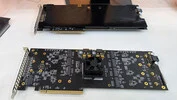
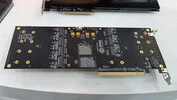
    For their showcase at Computex, Phison utilized an AMD-driven system featuring an AMD Ryzen Threadripper Pro 7985WX installed on an Asus Pro WS WRX90E-SAGE SE motherboard, which offers a total of 7 PCIe 5.0 slots. They only needed three of those slots to create a RAID matrix that included 32 SSDs distributed across three Apex cards.

    Although it was possible to use just two cards for a 32 SSD matrix, spreading the SSDs across three cards seems to have enhanced the transfer speeds even more. The sequential speeds hit an impressive 113.6 GB/s, while sequential write speeds were slightly lower at 104.6 GB/s according to CrystalDiskMark 8.0.6. This version of the well-known SSD benchmark also features a Mix test that combines 70% read speeds with 30% write speeds, where the Phison matrix achieved a remarkable transfer rate of 146 GB/s.

    Phison’s New SSDs

    The matrix of 32 SSDs consists of Phison’s latest PS5028-E28 Gen5 individual units. These units are manufactured on TSMC’s N6 fabrication nodes and are rated for maximum read speeds of 14.8 GB/s, while write speeds can reach up to 14 GB/s. They also support random transfers of up to 3,000K IOPS.

    Phison noted that the existing Windows 11 kernel used during the tests is restricting speeds, indicating that there is potential for even quicker transfer rates with enhancements to the operating system code. Additionally, the PM584 microchip switch with 84 lanes that powers each Apex card is currently limited to 128 TB per matrix. This means the setup could accommodate either 32 x 4 TB SSDs across two cards or 16 x 8 TB SSDs on a single card.

    Source:
    Link