
Key Takeaways
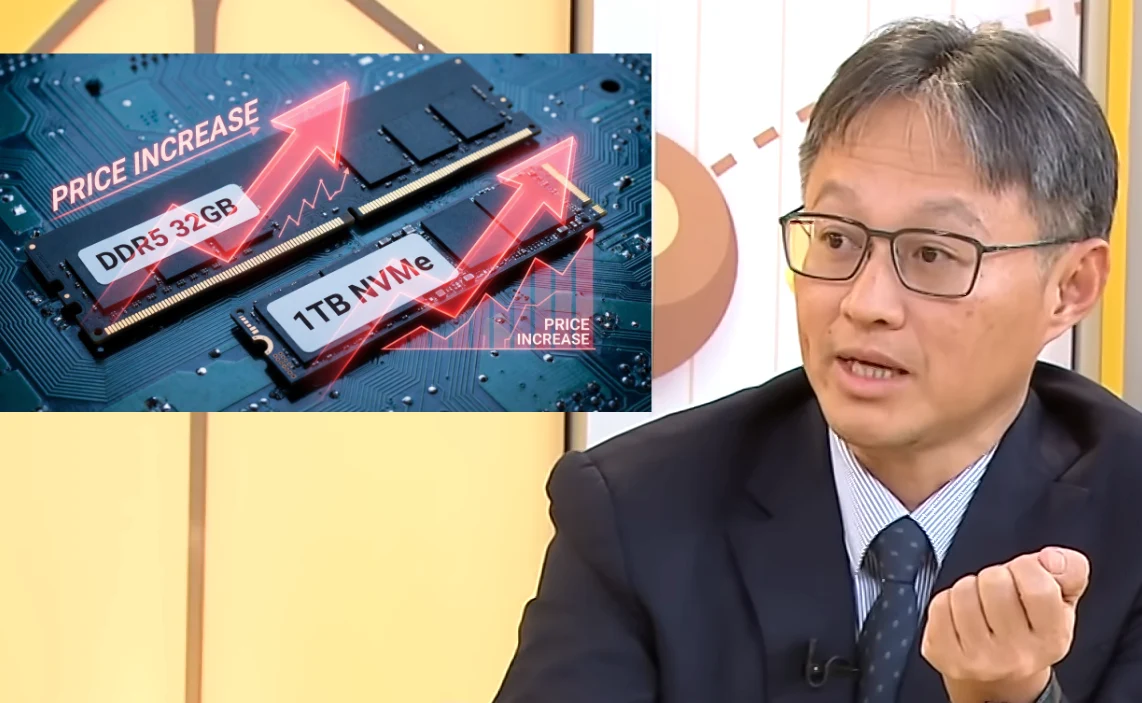
1. Significant shortages of RAM and NAND memory are expected to persist until 2030 or 2035, impacting the consumer electronics sector.
2. Smaller and medium-sized companies may struggle or shut down due to strict payment conditions from foundries and declining smartphone sales.
3. Prices for eMMC memory have surged dramatically, rising from $1.5 to over $20, and nearly $30 in the automotive sector for an 8 GB chip.
4. The mass production of Nvidia’s 10 million Vera Rubin units could consume 20% of global NAND production capacity by 2026, exacerbating existing supply issues.
5. Phison is launching the aiDAPTIV+ middleware solution to reduce reliance on costly memory by utilizing affordable Flash memory for AI-driven applications.
In a recent chat on the ChenTalkShow, Phison’s CEO, Chien-Cheng Pan, shared a troubling forecast for the consumer electronics sector, driven by an unprecedented demand for AI hardware that has led to significant shortages.
RAM and NAND Shortages
Pan emphasized that the shortages of RAM and NAND memory are critical issues that will create major challenges for many companies in the consumer electronics field over the next few years. He predicts that these essential components will likely remain in short supply until 2030 or even 2035, given the current production limitations. Foundries are now requiring three-year pre-payments, which could pose significant difficulties for some businesses.
Impact on Smaller Companies
As a result, many smaller and medium-sized firms may have to abandon certain product lines or completely close their doors due to the stringent payment conditions set by foundries. This year, the smartphone market is expected to experience a decline of 200-250 million units, with the PC and TV sectors also facing some effects but to a lesser extent. The smartphone segment will be more heavily impacted, as RAM and storage make up over 20% of the total material costs. In contrast, the server and data center arena will find the situation more manageable, with memory and storage comprising only 5-6% of their expenses.
Price Surge in eMMC Memory
Even the less expensive eMMC memory, which was previously priced at $1.5 for an 8 GB chip, is now seeing a dramatic rise in demand, pushing prices well above $20, and nearly $30 for the automotive market for the same capacity.
Pan further elaborated that the situation could escalate significantly once Nvidia begins mass production of the anticipated 10 million Vera Rubin units. Each Vera Rubin board necessitates over 20 TB of SSD storage and requires up to 576 GB of RAM. With the RAM market already facing challenges, the SSD market is also expected to see similar price hikes, as the demand from the 10 million Vera Rubin units alone could consume 20% of the global NAND production capacity by 2026.
aiDAPTIV+ Middleware Solution
In response to the rising demand for AI-driven DRAM and NAND memory, Phison is introducing a middleware solution called aiDAPTIV+. This innovative technology merges minimal DRAM capacity with specialized Flash memory. It essentially shifts the burden of costly HBM and GDDR memory to more affordable Flash memory, reducing the need for numerous high-cost and power-intensive GPU cards. The optimized middleware can expand GPU memory by an additional 320GB for PCs and up to 8TB for workstations and servers through aiDAPTIVCache.
Source:
Link