Tag: Samsung 990 Pro

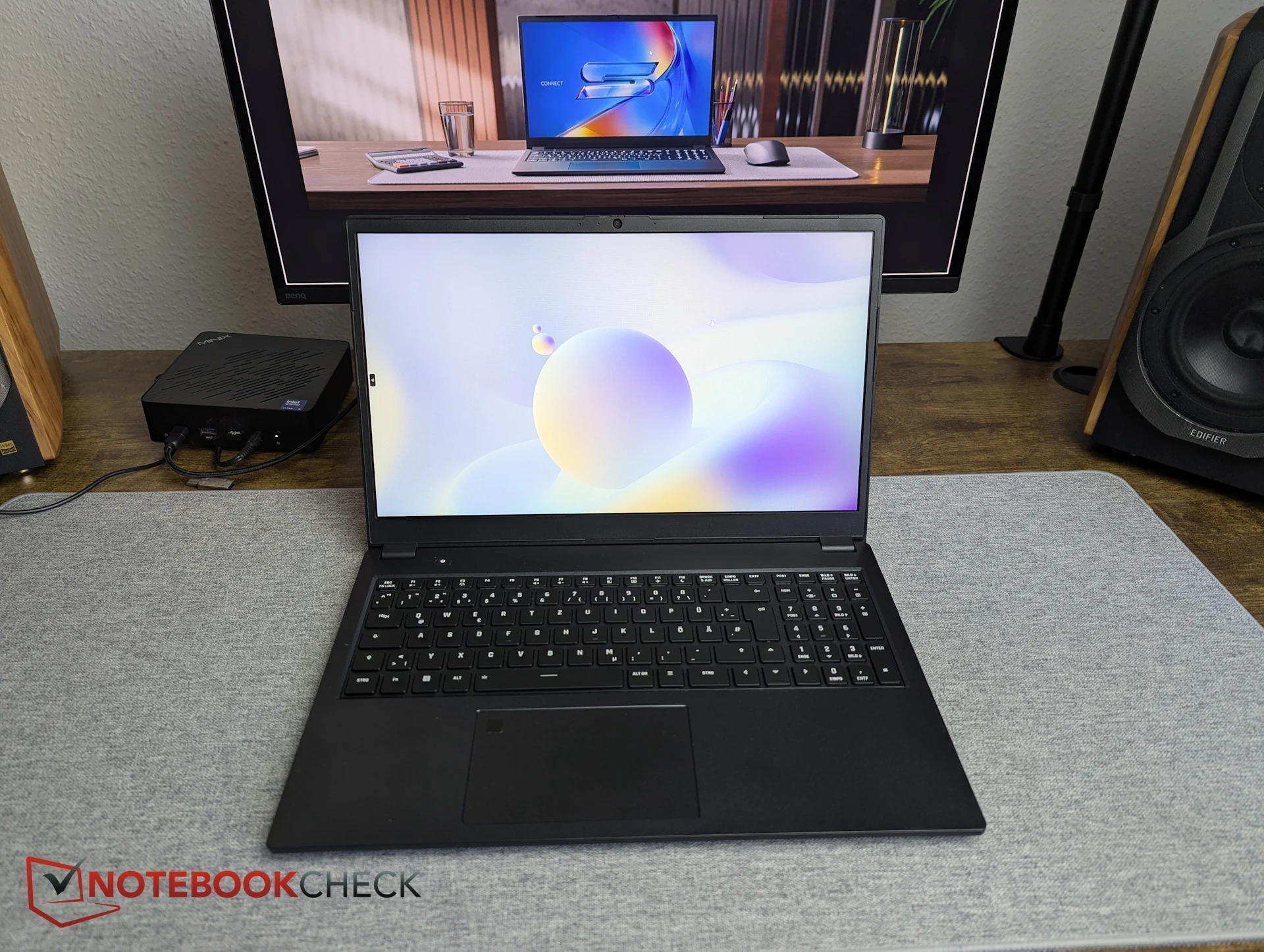
  • Schenker Connect 15: From €1,000 to €1,600 Laptop

    Schenker Connect 15: From €1,000 to €1,600 Laptop

    Key Takeaway

    – Starting price is now ~€1,000 (up from €965), with Wi-Fi 7, CPU, and display included as standard.
    – RAM and storage upgrades cause the biggest price jumps: +€175 for 16GB RAM, +€355 for 32GB RAM, up to +€183 for a 1TB SSD.
    – LTE module costs an extra €79; a Secured-Core PC Level 3 option adds €29.
    – You can save €50 by choosing a 24-month warranty instead of the default 36-month warranty.
    – A fully configured review unit (32GB RAM, 1TB SSD, Windows) reaches roughly €1,655—expensive for an office laptop.


    The highly configurable business and enterprise laptop Schenker Connect 15 can be set up on bestware.com starting at 965 Euro. But what does that actually include—are LTE, smartcard support, Wi-Fi 7, and other features still part of the base package, with only RAM reduced? We spent some time configuring the system on bestware.

    Price Changes and Core Features

    Since our last visit, Schenker appears to have slightly increased prices. Instead of €965, the base configuration now shows €998.99, meaning the entry point is effectively around €1,000. The good news first: Wi-Fi 7 also appears to be included in the starting configuration at no extra cost. The same applies to the CPU and display—there are simply no alternative options available.

    Saving on the Warranty

    There is even a way to save on warranty. By default, Schenker provides a 36-month warranty on this business laptop. Those willing to accept 24 months instead can reduce the price by €50. In that case, the Connect 15 starts at €948.99.

    Add-On Features and LTE

    Unsurprisingly, the LTE module is one of the add-on features that comes at an additional cost. The Huawei ME906s module adds €79. Companies and other interested buyers can also select a Secured-Core PC Level 3 setup for €29.

    Dramatic Memory Price Jumps

    The most dramatic price jumps currently come from memory choices. The base configuration includes only 8 GB of DDR5 RAM. Upgrading to 2x 8 GB already increases the price by €175—an extreme jump for just one additional 8 GB module. Our review unit was equipped with 2x 16 GB DDR5 RAM, which adds a hefty €355 on top of the base price.

    Storage Costs and Final Summary

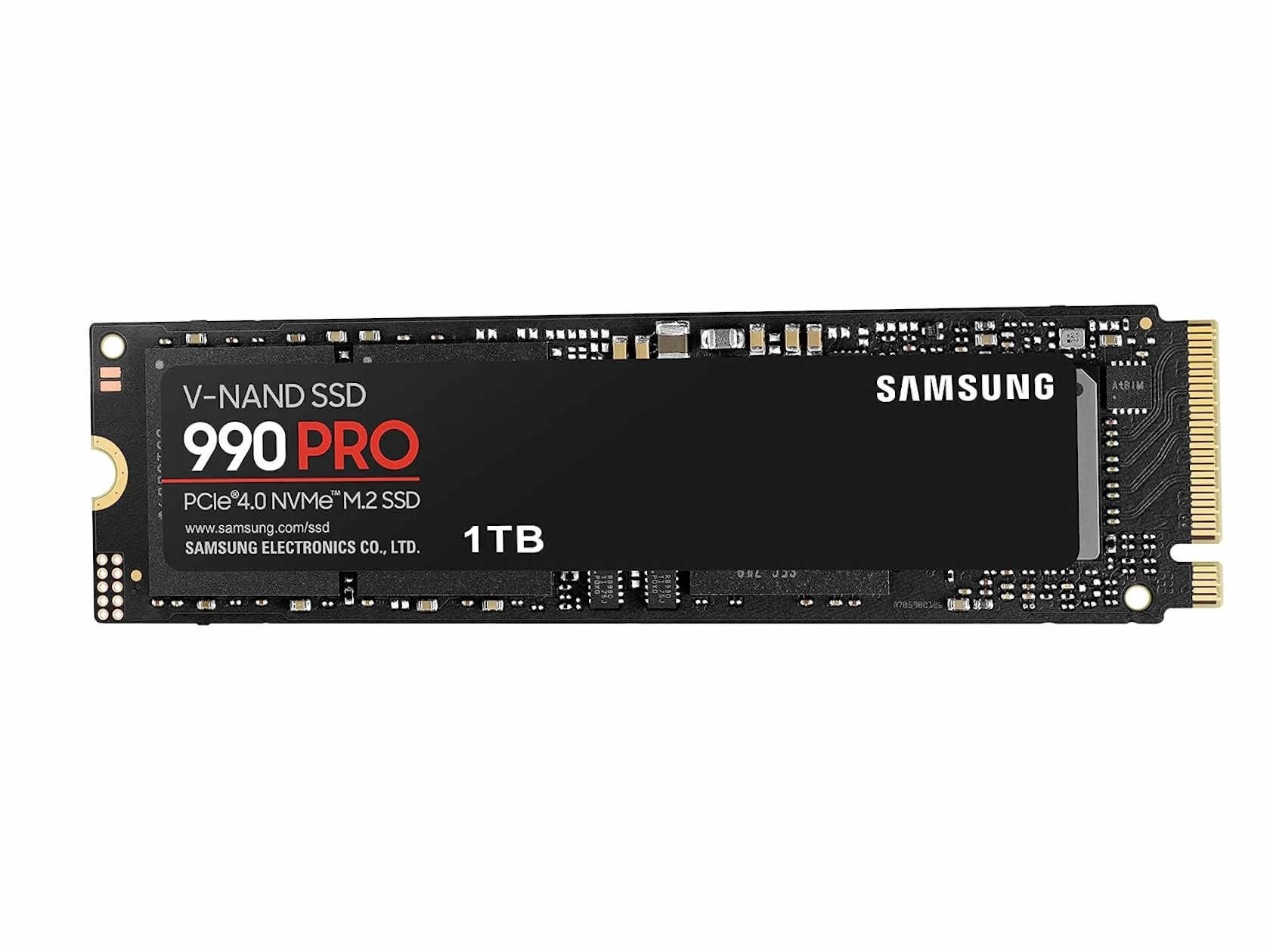
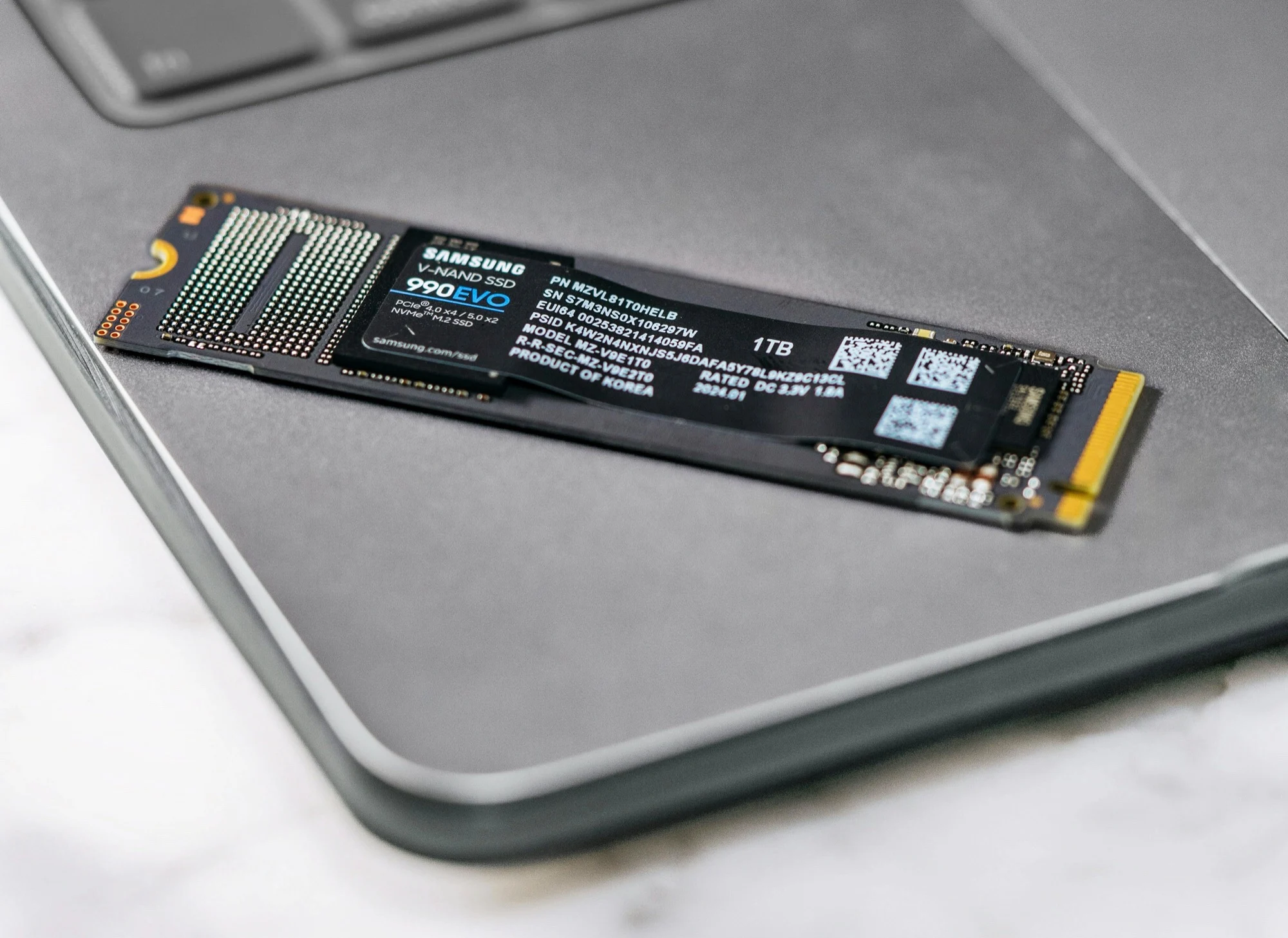
    Similar price jumps apply to storage. The base model comes with just 500 GB. Moving up to 1 TB costs at least €75 more, depending on the SSD model. The Samsung 990 Pro with 1 TB used in our review unit adds around €183.

    In summary, the Schenker Connect is not a low-cost business laptop. However, the premium price is not driven primarily by its core feature set. With only 8 GB of RAM and a 500 GB SSD, benchmark results would likely differ significantly compared to our test configuration. Our review setup would currently cost around €1,616—and that doesn’t even include the operating system. With a pre-configured Windows installation (without a license) the price jumps to a final 1.655 Euro, which is hardly inexpensive for an office laptop.
    Sources

    • Samsung 1TB 990 Pro SSD Price Cut on Amazon and Best Buy

      Samsung 1TB 990 Pro SSD Price Cut on Amazon and Best Buy

      Key Takeaway

      – The 1-TB 990 Pro is on sale for $249.99 (down from $339.99), offering fast sequential read/write speeds and low thermals without a heatsink.
      – PC component prices have stabilized somewhat in recent months, with small drops observed in the US.
      – Real-world 1TB 990 Pro performance averages around 5.09 GB/s read and 5.28 GB/s write (AS SSD) across tested machines.


      Pricing note and sale context

      If you’ve been holding out on upgrading or increasing your storage space in your system of choice due to the ongoing memory, storage, and hardware crunch, which caused tech prices to skyrocket, then you might be in for some relief because the 1-TB 990 Pro is currently on sale for $249.99, down from $339.99, making it a good option for users who don’t need ample storage but want lightning-fast read and write speeds and top-tier performance.

      Market trends and price fluctuation

      SSD prices have been on the higher side for a while, along with DDR5 and DDR4 memory, leading to a rise in counterfeit items among other consequences. However, the past few months have been somewhat stable, leading to a small drop in certain PC component prices in the States.

      Performance figures and efficiency

      While far away from the theoretical limit of the PCIe 4.0 interface of 7.9 GB/s, our tests show the average 1-terabyte 990 Pro delivers sequential AS SSD read speeds of 5.09 GB/s with writes even higher at 5.28 GB/s (19 machines tested in total), which is solid. Best of all, it operates efficiently and produces low thermals without needing a heatsink.

      Historical pricing and model context

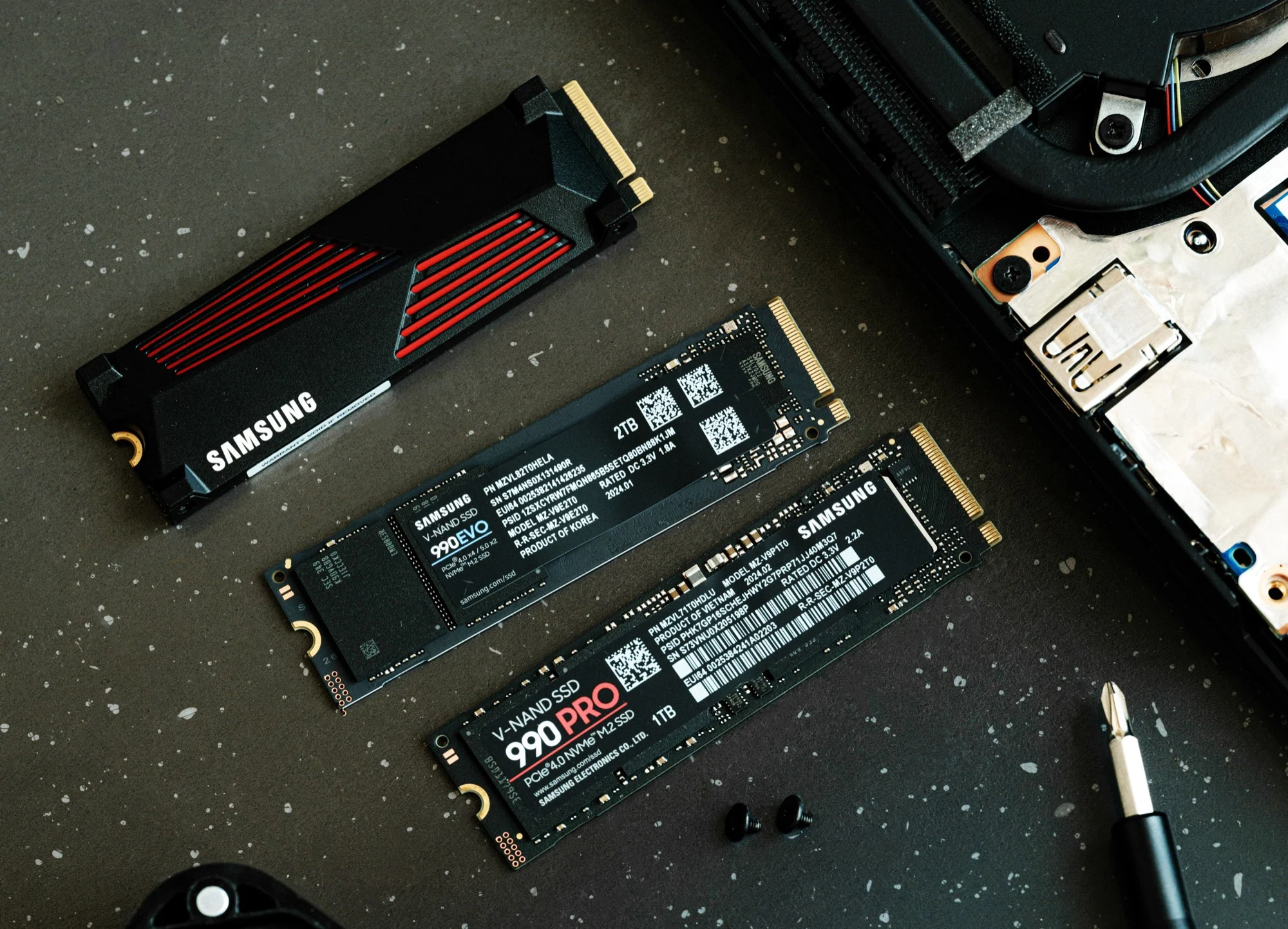
      It must be noted that SSD prices haven’t fallen back to what they once were just yet. The 1-TB and 2-TB variants of the Samsung SSD were released in 2022 for $169.99 and $289.99, respectively. The 2-TB model is currently discounted, too in the States, but it’s not a good price.

      Disclaimer and note on deals

      Disclaimer: Notebookcheck is not responsible for price changes carried out by retailers. The discounted price or deal mentioned in this item was available at the time of writing and may be subject to time restrictions and/or limited unit availability.

      Sources
      • Fake Samsung 990 Pro SSDs detected in Europe

        Fake Samsung 990 Pro SSDs detected in Europe

        Key Takeaway

        – Counterfeit Samsung 990 Pro SSDs have been identified in both Japan and Germany, with the German fake being non-functional.
        – The counterfeit SSDs mimic packaging and labels but reveal discrepancies like poorer print quality and different PCB color.
        – Genuine Samsung SSDS can be distinguished using tools like Samsung Magician, which can identify non-authentic units even if they appear operational.

        Counterfeit Samsung 990 Pro Found in Germany

        Recently, there was a tight situation found in Germany where some fake SSDs were sold pretending to be the real Samsung 990 Pro, which normally costs around $319 for 1 TB. The incident is similar to what was seen in Japan, where cheaper SSDs with a fresh packaging were sold at the same high price as genuine ones. But in Germany, the fake SSDs are more obvious because they don’t even work properly.

        Comparison of Packaging and Construction

        A member from the ComputerBase community explains that they ordered two Samsung 990 Pros from an online shop in Austria earlier in April. The packaging seemed almost identical to the real, but when looked at closely, the print quality was lower, and some symbols like the CE mark were placed differently. After opening, it was clear these were fakes, especially because the stickers looked copied but the SSDs were on a blue circuit board, unlike the usual black board of authentic Samsung 990 Pro units.

        Detection and Verification by Software

        Connecting these SSDs to a computer shows they are recognized by programs like CrystalDiskInfo, but the details don’t match real Samsung devices — the memory isn’t correct and firmware IDs are off. Additionally, Samsung Magician software labels these SSDs as “non-Samsung”, confirming they are counterfeit. If you bought one lately, it’s best to run Samsung Magician or similar tools to verify its authenticity, because as in Japan, some fake SSDs are even functional and may appear normal at first.

        The retailer in Austria is now investigating where they got these SSDs from, but how these counterfeit drives entered the market without being caught remains a mystery. This incident shows the importance of checking purchases carefully to avoid fake products.

        Sources
      • Samsung and SK Hynix May Reduce NAND Production to Boost SSD Prices

        Samsung and SK Hynix May Reduce NAND Production to Boost SSD Prices

        Key Takeaways

        1. Prices for DRAM and SSDs have significantly increased due to major companies like OpenAI dominating the market.
        2. The Samsung 990 Pro 1TB SSD has risen in price from $90 in October to $199 on Amazon.
        3. Major manufacturers Samsung Electronics and SK Hynix plan to cut NAND flash production by 4.5% and 10.5%, respectively.
        4. The shift in production focus is towards RAM for Nvidia’s Vera Rubin graphics chips, which are essential for AI data centers.
        5. Price reductions for SSDs and RAM are unlikely until at least 2028 due to ongoing supply constraints and production shifts.


        Since companies like OpenAI have taken a significant portion of the global DRAM market, prices for memory have greatly increased over the last few months. SSD prices have also been affected by this surge. For instance, the Samsung 990 Pro with 1TB of storage is now priced at $199 on Amazon, a notable rise from $90 in October, according to data from Camelcamelcamel.

        Future Price Trends

        This upward trend in prices might not stop soon, as reported by Chosun Biz. Both Samsung Electronics and SK Hynix are looking to cut their NAND flash production by 4.5% and 10.5%, respectively. To give you a clearer picture, these two firms make up over 60% of the global NAND output. With demand expected to increase while supply shrinks, we could see even sharper price increases.

        Production Shifts

        The reasoning behind this reduction in NAND manufacturing isn’t due to a lack of customers. Rather, it’s more lucrative for these companies to shift their fabs to produce RAM for Nvidia’s Vera Rubin graphics chips, which are crucial for AI data centers. Even though NAND prices may keep rising, both Samsung Electronics and SK Hynix believe that DRAM production will yield better profits in 2026 and 2027. It will take a while for competitors like China’s YMTC to fill the gap in supply, so don’t expect any price reductions in SSDs and RAM until at least 2028.

        Source:
        Link


      • Microsoft and Phison Refute SSD Failure Claims After Windows 11 Update

        Microsoft and Phison Refute SSD Failure Claims After Windows 11 Update

        Key Takeaways

        1. SSD malfunctions linked to recent Windows 11 update have raised concerns for Microsoft and Phison.
        2. Phison conducted over 4,500 hours of testing but could not replicate the SSD failure issue.
        3. Microsoft found “no connection” between the SSD failures and the August 2025 Windows 11 security update.
        4. Initial complaints primarily came from users in Japan, with some reports from other countries.
        5. Phison recommends using a heatsink or thermal pad on SSDs to prevent overheating during demanding tasks.


        The latest news regarding SSD malfunctions tied to the most recent Windows 11 update has caught the eye of both Microsoft and Phison. For those who might not know, several users have experienced issues where their drives became unreachable while trying to perform large, continuous file transfers.

        Update from Phison

        Phison, the manufacturer of SSD controllers, recently provided an update on this situation. The company stated that they couldn’t recreate the problem, after more than 4,500 hours of testing combined. This evaluation included conducting 2,200 test cycles across various drives.

        Microsoft’s Findings

        Microsoft has shared a similar update regarding the situation. They reported that they found “no connection” between the SSD failures and the Windows 11 security update from August 2025. The conclusions drawn by both companies are not unexpected, considering the issue wasn’t as prevalent as some other Windows-related problems that have occurred in the past.

        Regional Reports

        It is important to note that the initial complaints originated from users in Japan. As pointed out by @Necoru_cat on X, the Japanese version has been updated since these reports surfaced. This might suggest that the SSD failure issue is primarily affecting the Japanese version of Windows 11, although some users from other countries have also reported similar problems.

        Phison, however, has not completely disregarded the issue. The company mentioned that they will “closely monitor the situation.” Furthermore, they advise users to install a heatsink or thermal pad on their SSDs when handling demanding tasks (2 TB Samsung 990 Pro with heatsink curr. $169.99 on Amazon). This measure could help maintain performance and reduce the risks of overheating and related malfunctions.

        Source:
        Link


      • TerraMaster D4 SSD: High-Performance 32TB Flash Storage Unveiled

        TerraMaster D4 SSD: High-Performance 32TB Flash Storage Unveiled

        Key Takeaways

        1. TerraMaster’s new D4 SSD is a Direct Attached Storage (DAS) device, not a NAS.
        2. It can hold up to four M.2 2280 SSDs, supporting a total storage capacity of 32TB.
        3. Data transfer speeds can reach up to 3,257 MB/s for reading and 3,192 MB/s for writing using four SSDs in RAID 0.
        4. The D4 SSD connects via USB 4, with a size of 5.43 x 2.36 x 5.51 inches and a bandwidth of 40 Gbps.
        5. It is priced at $299 and includes automatic data backup tools for Windows users.


        TerraMaster has introduced a new storage option. This product isn’t a network-attached storage (NAS) device; it’s a Direct Attached Storage, commonly referred to as “DAS.” The D4 SSD acts mainly as an external case specifically designed for SSDs. It has the capacity to hold up to four M.2 2280 SSDs that connect through PCIe. The manufacturer claims that it can support a total storage capacity of 32TB. Data transfers can reach speeds of up to 3,257 MB/s for sequential reading and 3,192 MB/s for writing. These impressive speeds are achieved when using four Samsung 990 Pro SSDs in RAID 0 configuration. In contrast, a single SSD would achieve maximum speeds of 1,600 MB/s or 1,500 MB/s for reading and writing, respectively.

        Dimensions and Connection

        The new storage solution from TerraMaster is sized at 5.43 x 2.36 x 5.51 inches and connects through USB 4, boasting a bandwidth of 40 Gbps. It’s important to ensure that the laptop or desktop computer being used can also handle these high speeds. The company mentions that it supports automatic data backups with a dedicated tool for Windows users. However, it’s important to remember that relying solely on this external storage device for crucial data backups isn’t advisable. The D4 SSD, which has active cooling, can now be purchased directly from TerraMaster for $299.

        Source:
        Link


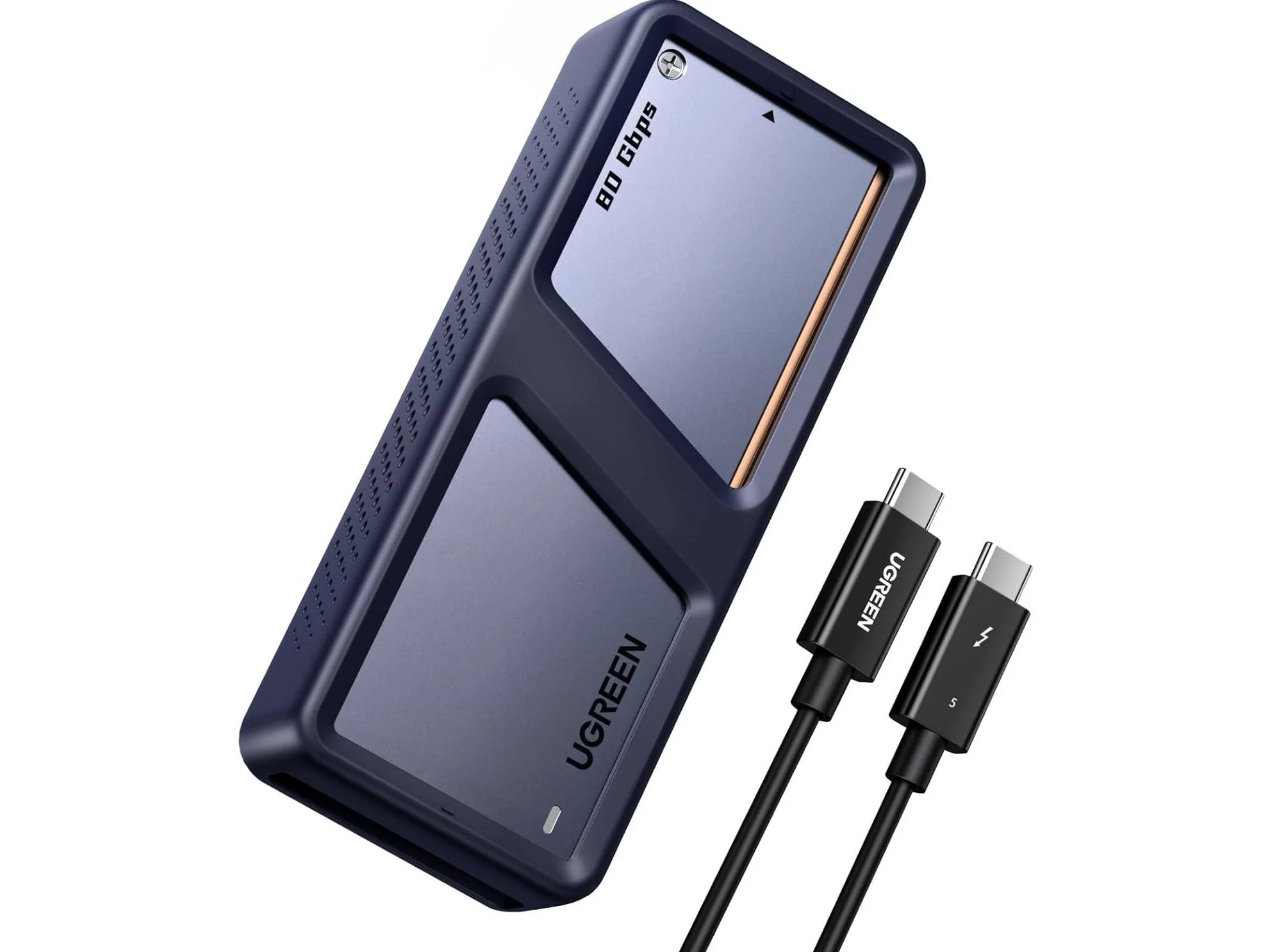
      • Ugreen Introduces Thunderbolt 5 SSD Enclosure with Active Cooling

        Ugreen Introduces Thunderbolt 5 SSD Enclosure with Active Cooling

        Key Takeaways

        – Ugreen has launched a new SSD enclosure utilizing Thunderbolt 5 technology, compatible with Thunderbolt 4 but with slower speeds.
        – The maximum theoretical bandwidth of Thunderbolt 5 is 80Gbps, achievable only with Thunderbolt 5 devices.
        – The enclosure can reach sequential read and write speeds over 6,000MB/s when used with fast SSDs like the Samsung 990 Pro.
        – It supports M.2 2280 SSDs with a PCIe connection but does not support SATA SSDs.
        – The enclosure features silicon padding for drop protection, an aluminum casing, and a built-in fan for heat management, priced at $229 (enclosure only).


        There are many ways to increase the storage capacity of a laptop or computer, but only a few external options provide high-speed data transfer through the latest ports like USB4 or Thunderbolt 5. Ugreen has just launched a new SSD enclosure that utilizes Thunderbolt 5 technology, while also being compatible with Thunderbolt 4, but with slower transfer rates.

        Maximum Bandwidth

        It’s important to mention that the maximum theoretical bandwidth of 80Gbps is achievable only on devices that have Thunderbolt 5. Ugreen claims that this new enclosure can reach sequential read and write speeds exceeding 6,000MB/s when paired with a fast SSD. The Chinese company has shared benchmarks using various M.2 storage options, and drives like the Samsung 990 Pro show impressive performance.

        Compatibility and Design

        However, this enclosure is limited to supporting M.2 2280 SSDs with a PCIe connection, and it does not support SATA SSDs. In addition, the enclosure features silicon padding designed to provide protection against drops, while the outer casing is made of aluminum. A built-in fan helps manage the heat during operation. The new Ugreen 80Gbps M.2 NVMe SSD enclosure is now listed for $229 on Amazon, but keep in mind that this price is for the enclosure alone and does not include a solid-state drive.

        Source:
        Link