Tag: Crucial

  • Micron VP Justifies Shift from Gamers to AI for Enterprise Demand

    Micron VP Justifies Shift from Gamers to AI for Enterprise Demand

    Key Takeaways

    1. DRAM prices have increased significantly since late 2025 due to high demand from AI companies, affecting supply chains.
    2. Micron has decided to close its Crucial consumer memory division to focus on enterprise clients, particularly in the AI sector.
    3. The closure of Crucial has received backlash from gamers and tech experts who value consumer products.
    4. Micron aims to still support consumers indirectly by providing DRAM to major brands like Dell and Asus.
    5. The ongoing DRAM supply shortage may worsen, with other companies like SK Hynix potentially shifting focus away from consumers as well.


    Gamers who are not completely oblivious are probably aware of the troubling state of memory prices lately. Since late 2025, the cost of DRAM has soared, driven by the massive demand from AI companies that are overwhelming the supply chains.

    Micron’s Controversial Move

    In response to this situation, Micron has made the contentious choice to close its consumer memory and storage division, Crucial, and redirect its efforts mostly toward enterprise clients, particularly the AI giants. This decision has drawn significant backlash from gamers and tech experts who focus on consumer products.

    In a recent chat with Wccftech, Christopher Moore, a Vice President at Micron, discussed the reasoning behind the closure of the Crucial brand. Moore explained that Micron is still aiming to cater to consumers globally by providing DRAM to major clients like Dell and Asus, which hold a big slice of the consumer market.

    Focus on Enterprise Demand

    Moore also acknowledged that the demand in the data center industry is too significant to overlook. Thus, tapping into the ever-growing enterprise market is crucial for the company’s overall strategy.

    …we see it as our mission to assist consumers worldwide. We’re simply doing this through different means. We still have a large presence in the client and mobile sectors. Additionally, we are, of course, supporting our data center clients. Currently, the total addressable market (TAM) for data centers is expanding at a rapid pace. We want to ensure that we contribute to fulfilling that TAM effectively.

    Given that Micron is fundamentally a business focused on maximizing profits, prioritizing high-margin enterprise customers over individual consumers is a strategic decision that makes sense, even if it understandably frustrates gamers and tech enthusiasts.

    Industry Trends and Future Implications

    The DRAM supply shortage is not expected to resolve itself anytime soon, as some original equipment manufacturers (OEMs) are resorting to extreme measures to secure long-term agreements with suppliers. Recent whispers in the industry also suggest that another key player, SK Hynix, may follow Micron’s footsteps and shift its focus away from consumers to cater to enterprise clients, which could leave everyday buyers in an even tougher spot.

    Source:
    Link


  • SK Hynix May Leave Consumer DRAM and NAND Business After Micron’s Move

    SK Hynix May Leave Consumer DRAM and NAND Business After Micron’s Move

    Key Takeaways

    1. A shortage of DRAM is causing rising RAM prices for DIY builders and affecting consumer electronics like laptops and GPUs.

    2. Micron will stop selling consumer DRAM starting February 2026, meaning Crucial-branded RAM and SSDs will no longer be available.

    3. Rumors suggest SK Hynix may consider exiting the consumer DRAM and NAND market, impacting various manufacturers and major OEMs.

    4. If SK Hynix exits, Samsung could become the leading supplier, while Chinese companies like CXMT might gain market share.

    5. The market is expected to remain unstable until 2028, leaving consumers and manufacturers in a challenging situation.


    The consumer memory sector is facing some serious challenges. A shortage of DRAM from key memory manufacturers has led to rising RAM prices for DIY builders, and this issue is also expected to impact consumer electronics like laptops and GPUs. To make matters worse, Micron declared in December 2025 that it would halt the sale of consumer DRAM starting in February 2026. Consequently, the well-known Crucial-branded RAM and SSDs will no longer be available after that date.

    Possible Changes from SK Hynix

    It appears that Micron’s actions may have prompted SK Hynix to consider its own exit from the consumer DRAM and NAND market, according to a rumor posted by Jukan on X. Unlike Micron, SK Hynix does not market RAM and storage products under its own brand. Therefore, if SK Hynix decides to withdraw from the RAM and storage sector, it would impact not only third-party RAM and SSD manufacturers but also major consumer hardware OEMs like Dell.

    Potential Market Impact

    SK Hynix is among the largest, if not the largest, suppliers of consumer DRAM and NAND storage globally. Thus, if the company does indeed leave the consumer market, it would severely impact the overall industry.

    On the other hand, if SK Hynix exits, Samsung would become the leading supplier of memory and NAND worldwide. This scenario might also present a significant opportunity for Chinese companies like CXMT to strengthen their foothold in the international market. Reports indicate that HP is already looking to CXMT to fulfill its DRAM requirements.

    Uncertainty Ahead

    Although SK Hynix’s potential exit from the consumer market remains unverified, the circulation of such rumors highlights the dire situation. Predictions suggest that the market may not stabilize until 2028, leaving many with little choice but to hope for improvement.

    Source:
    Link


  • Crucial to Honor RAM and SSD Warranties Amid Micron Changes

    Crucial to Honor RAM and SSD Warranties Amid Micron Changes

    Key Takeaways

    1. Micron is leaving the consumer market, ending the Crucial brand after 30 years.
    2. The company is shifting focus to more profitable sectors, particularly AI and enterprise clients, due to rising memory costs.
    3. Increased demand for AI data centers is driving up prices, benefiting major memory manufacturers like Samsung and SK Hynix.
    4. Crucial product warranties will remain valid, and products will still be sold until the end of February.
    5. Industry trends suggest the consumer memory market is being deprioritized in favor of higher profits from AI-related sectors.


    One of the leading memory manufacturers, Micron, has declared its departure from the consumer market, marking the end of the well-known Crucial brand after thirty years.

    Shift in Focus

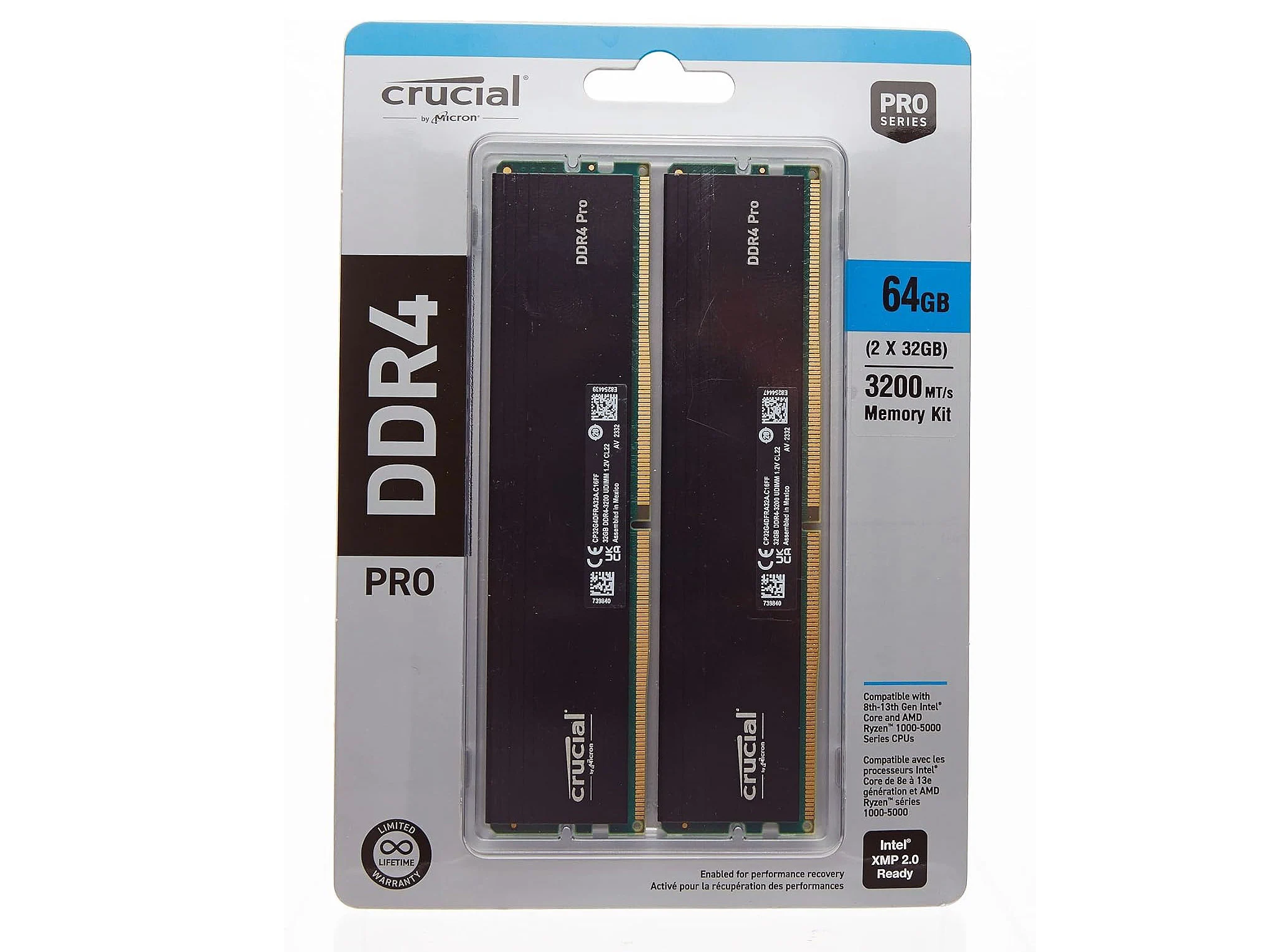
    This decision comes as the two largest memory firms, Samsung and SK Hynix, have discovered they can charge Nvidia significantly more for the premium memory used in its graphics cards and AI chipsets, and the market is willing to absorb those prices. In contrast, the consumer memory sector has been sidelined, as it’s not as profitable. For example, the 64GB Crucial Pro memory kit has seen a decrease in price on Amazon, yet it remains twice the price it was just a month ago.

    Rise of AI Demand

    The soaring demand for AI data centers by virtually all major companies in Silicon Valley is driving this unusual hike in memory costs. As a result, Micron announced it would stop producing Crucial RAM or SSD goods for retail consumers, turning its focus toward the AI sector and enterprise clients moving forward.

    “Micron has made the tough choice to exit the Crucial consumer business to enhance supply and support for our larger, strategic customers in faster-growing segments,” the statement said, highlighting the significant profits being made in AI data centers.

    Future of Crucial Products

    Existing Crucial product warranties will remain valid, and Micron will continue to sell its RAM and SSDs through regular retail channels until the end of February. After that, the Crucial consumer brand will disappear completely.

    Recently, some industry insiders suggested that Samsung may have faced similar issues when its MX division, responsible for the Galaxy S26 series, was not given preferred pricing for mobile memory by the DX semiconductor sector. A Samsung representative has reached out to deny these allegations, stating:

    “Recent reports that Samsung’s DS division has turned down specific customer requests are unfounded and false. We are in constant communication with global customers to meet industry demands.”

    Still, there is ample indirect evidence suggesting that the consumer memory market is being sacrificed for the sake of AI profits, and Micron’s announcement serves as further proof that this trend, along with high memory prices, could persist.

    Source:
    Link