Key Takeaways
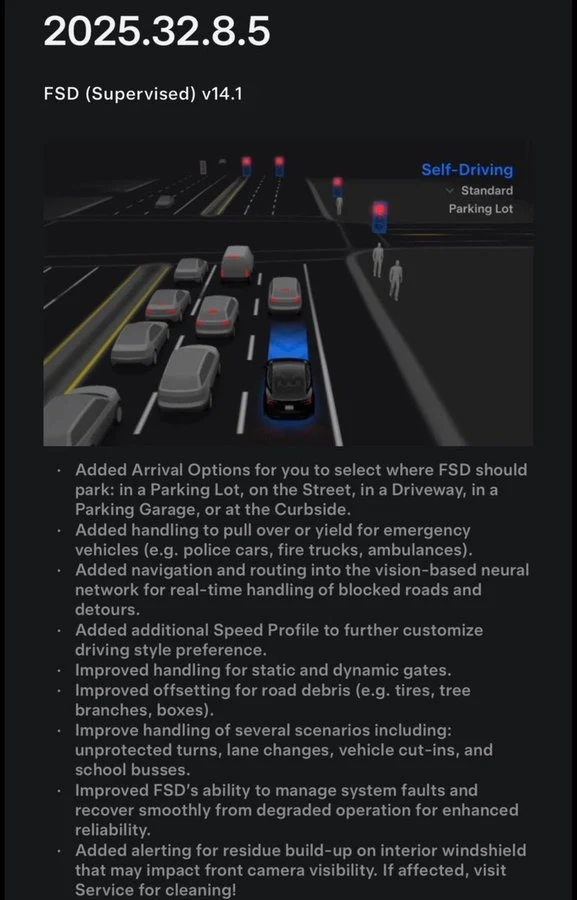
1. Tesla has released Full Self-Driving (FSD) version 14.1 as part of the 2025.32.8.5 software update, available soon for early testers and select customers.
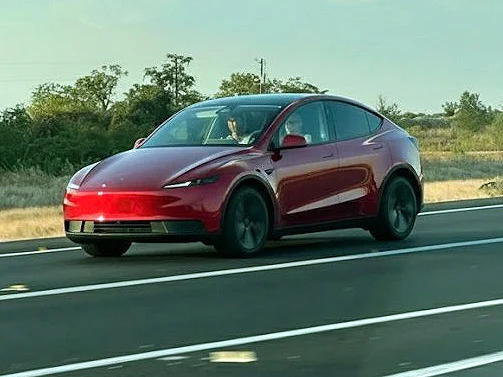
2. FSD 14 is only compatible with newer Tesla models using the HW4 camera and computer system, facing challenges integrating FSD 13 into older HW3.0 vehicles.
3. This update offers significant improvements, including six times the parameter count of FSD 13, resulting in smoother performance and a new safety-focused Sloth driving mode.
4. New features include the ability to select parking spots at the end of a journey, with a “sentient” driving experience expected in the upcoming FSD 14.2 version.
5. Many of the updates in FSD 14.1 are bug fixes and enhancements addressing past performance issues, alongside the eagerly awaited new functionalities.
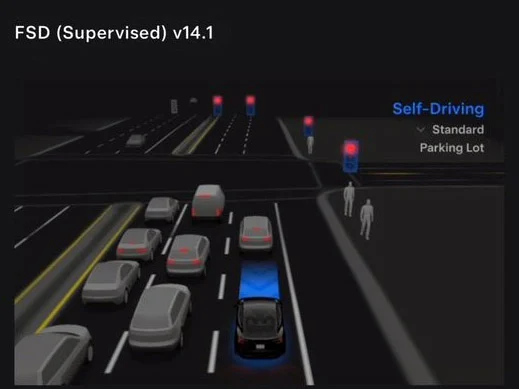
Tesla has begun releasing its next Full Self-Driving (Supervised) version 14.1, which is integrated into the new 2025.32.8.5 software update. Early access testers and certain customers are expected to receive it soon.
Compatibility Issues
Sadly, FSD 14 is designed exclusively for newer Tesla models equipped with the HW4 camera and computer system. Tesla is struggling to integrate even the previous FSD 13 into older Hardware 3.0 vehicles.
Enhanced Driving Experience
Nonetheless, FSD 14 represents a significant advancement in self-driving technology, boasting six times the parameter count compared to FSD 13, according to Elon Musk. In actual use, users can expect smoother performance and a new Sloth driving mode that prioritizes safety over speed, even more so than the Chill mode. The update also highlights the ability to select a parking spot at the end of a journey, while Musk’s anticipated “sentient” driving experience will reportedly be featured in the forthcoming FSD 14.2 version.
Features to Anticipate
The anticipated “sentience” of FSD is among the planned enhancements, alongside the new features for autonomous parking spot selection that are currently available only as options at the end of a trip. These are the functionalities that users are eagerly awaiting, while many of the other new features in FSD 14.1 appear to be primarily bug fixes and enhancements addressing situations where FSD has previously underperformed.
Source:
Link