Category: All News

  • CISA Sets June 3 Deadline for Windows Defender Patch

    CISA Sets June 3 Deadline for Windows Defender Patch

    Key Takeaway

    – Federal agencies must patch RedSun (CVE-2026-41091) and UnDefend (CVE-2026-45498) by June 3 to comply with CISA’s Binding Operational Directive 22-01.
    – RedSun grants SYSTEM privileges via the Defender tiering engine; UnDefend blinds Defender entirely, enabling ransomware or lateral movement.
    – Verify Malware Protection Engine 1.1.26040.8 and Antimalware Platform 4.18.26040.7 in Windows Security before the deadline.
    – Three unpatched zero-days remain: YellowKey (BitLocker bypass), GreenPlasma (CTFMON privilege escalation), and MiniPlasma (cldflt.sys exploit, works on fully patched Windows 11/Server 2022/2025).
    – Mitigate YellowKey immediately by disabling WinRE’s autofstx.exe and switching BitLocker from TPM-only to TPM+PIN.


    Federal Agencies Face Urgent Microsoft Defender Patches Deadline

    Federal agencies have until June 3 to apply fixes for two actively exploited Microsoft Defender vulnerabilities tied to the Nightmare Eclipse disclosure campaign. With that deadline 48 hours away, three additional Windows zero-days from the same researcher remain unpatched, and June 9 is the next opportunity Microsoft has to address them. The current situation demands immediante action from IT departments managing government systems.

    Background on the Nightmare Eclipse Campaign and CISA Involvement

    The saga began in early April when Nightmare Eclipse dropped BlueHammer (CVE-2026-33825), patched in the April 14 Patch Tuesday with its CISA deadline passing in early May. The current countdown is anchored by a separate CISA action on May 20, adding RedSun (CVE-2026-41091) and UnDefend (CVE-2026-45498) to the Known Exploited Vulnerabilities catalog after Huntress confirmed active exploitation in real-world attacks. CISA mandated remediation under Binding Operational Directive 22-01 with a 14-day window. Thesse vulnerabilities are being actively used in attacks right now according to security researchers.

    Technical Details of RedSun and UnDefend Vulnerabilities

    RedSun targets the Defender tiering engine to escalate privileges to SYSTEM. UnDefend triggers a denial-of-service condition in the Antimalware Platform, blinding Defender entirely and creating a window for ransomware deployment or lateral movement without triggering alerts. Both vulnerabilities allow attackers to bypass critical security features in Windows Defender. The impact is severe for enterprise environments where Defender is a primary line of defense.

    Required Version Numbers for Patching

    Both are fixed in Malware Protection Engine 1.1.26040.8 and Antimalware Platform 4.18.26040.7. Verify those version numbers in Windows Security settings before June 3. Administrators should check these version numbers manually to ensure updates have been applied correctly. Failure to meet this deadline could result in compliance violations for federal agencies.

    Additional Unpatched Zero-Days From Nightmare Eclipse

    YellowKey (CVE-2026-45585) bypasses BitLocker on TPM-only systems via the Windows Recovery Environment, allowing physical access to unlock encrypted drives without a recovery key. GreenPlasma is a CTFMON privilege escalation flaw with no CVE and no patch. MiniPlasma re-exploits CVE-2020-17103 in cldflt.sys, a 2020 flaw whose patch was either incomplete or silently regressed. These vulnerabilities present serious risks for organisations that rely on BitLocker for data protection.

    Confirmed Exploitation on Modern Windows Systems

    ThreatLocker and Will Dormann confirmed it still produces a SYSTEM shell on fully patched Windows 11 and Windows Server 2022 and 2025. Windows 10 is unaffected, which matters for teams managing mixed fleets. This discrepency means administrators cannot assume all systems are equally vulnerable. Testing should be conducted on relevant operating systems to understand exposure.

    Mitigation Steps for YellowKey BitLocker Bypass

    For YellowKey, run reagentc /disable, mount the offline WinRE registry hive, remove autofstx.exe from BootExecute under ControlSet001ControlSession Manager, then run reagentc /enable to commit the change. Transition BitLocker from TPM-only to TPM+PIN wherever possible. This manual process is required until Microsoft releases an official patch. Organisations should prioritise this mitigation for high-security systems.

    Future Timeline for Remaining Vulnerabilities

    Nightmare Eclipse has signalled a July 14 release targeting that month’s Patch Tuesday. This provides a timeline for planning additional security updates. Cisa.gov Microsoft/CVE-2026-41091 Microsoft/CVE-2026-45498
  • Casio Launches Unique Skeleton Blue G-Shock Frogman & CasiOak

    Casio Launches Unique Skeleton Blue G-Shock Frogman & CasiOak

    Key Takeaway

    – 2026 “Love The Sea and The Earth” collection includes two models: a premium Frogman (GW-8200) and an accessible CasiOak (GA-B2100)
    – Frogman features semi-transparent blue bioplastic case, titanium bezel, 200M water resistance, Tough Solar, dive timer, tide/moon data, and whale animation backlight
    – CasiOak has whale-shaped mode hand, gradient blue strap, Bluetooth connectivity, and Tough Solar
    – Pricing: Frogman ~$540, CasiOak ~$180; both come with cardboard box and cotton pouch
    – Release scheduled for early June 2026; both models previously leaked


    Every Summer, Casio and ICERC Japan Team Up

    Every summer, Casio and ICERC Japan, which is a nonprofit that has spend 35 years working to protect whales and dolphins, release a joint G-Shock collection under the “Love The Sea and The Earth” banner. This years release is one of the more unique ones in recent memory. Two models, which were leaked previously, make up the 2026 collection, with a release planned for early June.

    The Higher-End Model Is Built on the GW-8200 Frogman Platform

    The higher-end piece is built on the GW-8200 Frogman platform, which has been long associated with serious diving use. The semi-transparent light blue bioplastic case and strap is meant to depict the surface of open water — and the effect does work. The titanium bezel keeps weight down while being corrosion-resistant. The asymmetric case shape (a Frogman signature) is designed specifically for wrist movement underwater and over wetsuits. The screwback case meets ISO 6425 200M water resistance standards.

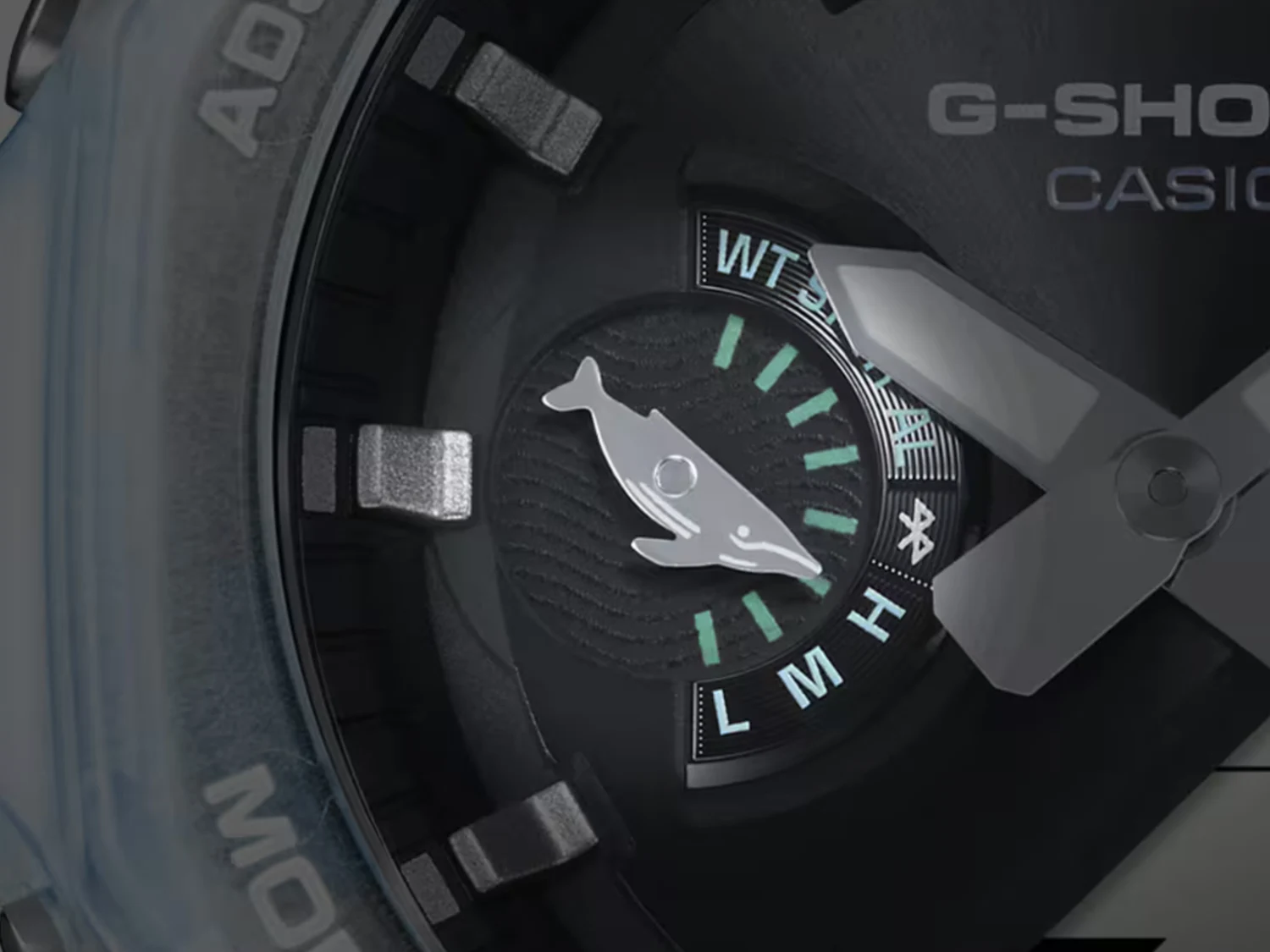
    Feature-wise, the GW-8202K-2 packs Tough Solar charging, Dive Time mode with underwater logging, tide graph, moon phase display, and the full standard G-Shock suite of world time, stopwatch, timer, and alarm. The backlight triggers a leaping whale animation on the display. The caseback has an engraved “Love The Sea and The Earth” motif. Price is approximately $540 (converted from 85,800 Japanese Yen).

    The More Accessible Piece Is Based on the GA-B2100 CasiOak

    The more accessible piece is based on the GA-B2100 CasiOak, measuring 48.5 × 45.4 × 11.9 mm with Carbon Core Guard construction. Its mode hand is shaped like a whale, azure accent text runs across the dark dial, and the strap transitions from near-clear at the lugs to a deeper blue at the buckle end. Bluetooth and Tough Solar are both present. Price is approximately $180 (converted from 29,150 Japanese yen).

    Both Watches Ship With a Cardboard Box and a Cotton Storage Pouch

    Both watches ship with a cardboard box and a cotton storage pouch.

    • GW-8202K-2: Frogman, semi-transparent blue, titanium bezel, 200M WR
    • GA-B2100: CasiOak, whale mode hand, Bluetooth, Tough Solar
    • Pricing: $540 (Frogman) and $180 (CasiOak)


    Sources

  • Asus ROG Ally X20 Handheld: OLED, Ryzen Z2 Extreme

    Asus ROG Ally X20 Handheld: OLED, Ryzen Z2 Extreme

    Key Takeaway

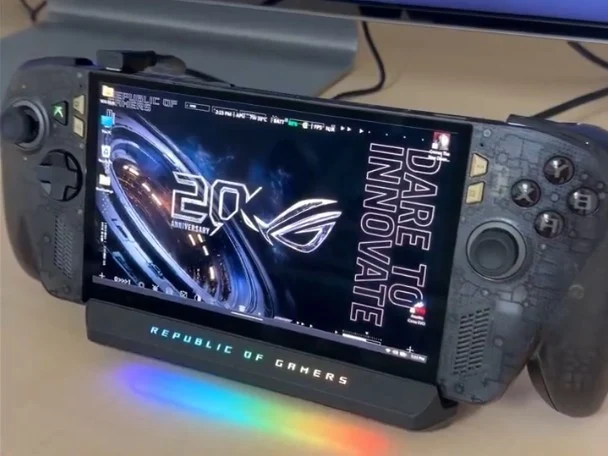
    – 20th-anniversary ROG Ally X20 announced at Computex 2026
    – First ROG handheld with an OLED display (7.4 inches)
    – Powered by AMD Ryzen Z2 Extreme chipset
    – Transparent black shell with gold accents
    – Full specs, pricing, and availability expected soon


    Asus is celebrating the 20th anniversary of its ROG gaming brand, and to mark the milestone, it has announced a new handheld gaming PC at Computex 2026. The new device is officially known as the ROG Ally X20, and while it has a similar design to the ROG Xbox Ally X (read our review), there are some significant differences.

    OLED Display and Screen Size

    First, and what can be termed the biggest feature, is that the ROG Ally X20 has an OLED display. This makes it an alternative to the Lenovo Legion Go 2 (read our review) which also has an OLED display. However, while Lenovo’s handheld has an 8.8-inch display, Asus has settled for a smaller 7.4-inch panel.

    Refresh Rate and FreeSync Support

    On the bright side, it is larger than the 7-inch screen of the ROG Xbox Ally X. It also has a high refresh rate, and AMD FreeSync support. The full details have not yet been revealed, so there are still a lot we do not know about the display.

    The ROG Ally X20 has a transparent black shell which has a golden strip on the back and a few golden buttons. Videocardz also reports that the ROG Ally X20 is powered by the AMD Ryzen Z2 Extreme, the same chipset inside the ROG Xbox Ally X. Unfortunately, there’s no info on the RAM and storage configuration. We also do not know if it has a larger battery capacity.

    Pricing and Availabilty Expectations

    Nevertheless, we expect the full technical specifications as well as pricing and availability will surface during Asus’s press event in a few hours.

    • PCMag on X
    • Videocardz
    Sources
  • Dell XPS 13 Vs MacBook: Users Fear Windows 11 on 8GB RAM

    Dell XPS 13 Vs MacBook: Users Fear Windows 11 on 8GB RAM

    Key Takeaway

    – Dell XPS 13 matches MacBook Neo at $699 with superior hardware (chassis, display).
    – Entry-level XPS 13 with 8GB RAM underperforms on Windows 11, unlike macOS on MacBook Neo.
    – Microsoft officially recommends 16GB RAM for smooth Windows 11, unfeasible at this price point.
    – RAM supply crunch prevents OEMs from offering 16GB in $699 laptops.
    – Microsoft must optimize Windows 11 for Windows laptops to truly compete with MacBook Neo.


    MacBook Neo Success Forces Dell to Finally Compete

    It appears that the success of MacBook Neo is finally haveing the effect that many wished it would on Windows laptops. Dell has announced a new XPS 13 that directly competes with the MacBook Neo at $699 ($599 for students).

    Hardware Perspective and Core Specs

    From a purely hardware perspective, Hardware Canucks asserts that this XPS 13 is a “better MacBook Neo”. This assessment looks accurate, as the XPS 13 boasts a high-quality chassis, a display that punches way above its price tag, and much more.

    RAM Concerns for Entry-Level Models

    However, Hardware Canucks is concerned that the entry-level versions of the Dell XPS 13 that will compete with the MacBook Neo might not hold up well with only 8 GB of RAM. Windows 11 is notoriously resource-hungry, a problem that Microsoft is working on fixing. macOS on the Apple MacBook Neo, on the other hand, is shown to run smoothly on just 8 GB of RAM.

    Many users on Reddit have also expressed similar concerns. For instance, one user sarcastically remarked on r/Technology that “Windows 11 on 8 GB of memory sounds like a fun experience”. Another exclaimed that “For a Windows PC to even remotely be taken seriously as a competitor to a Mac, it needs at least 16 gigs of ram, which no PC at this price point will ever have”.

    Microsoft Recommends 16GB and Market Reality

    Microsoft officially recommends 16 GB of RAM for Windows 11 for smooth operation. In the current market conditions, it is not reasonable to expect a $699 laptop to have 16 GB of RAM. As shown by the recent enormous Steam Deck price increase, OEMs both big and small have been affected by the RAM supply crunch.

    Conclusion and OS Handicap

    So, Windows laptop OEMs do not just have to worry about the price-to-performance of the hardware of their laptops, but also hope that Windows plays nicely. Microsoft needs to resolve this handicap if Windows laptops are to have a real chance at competing favorably with the MacBook Neo.

  • Surface Laptop Ultra: RTX Spark & Mini-LED Power

    Surface Laptop Ultra: RTX Spark & Mini-LED Power

    Key Takeaway

    – Powered by Nvidia’s new RTX Spark SoC with up to 128 GB RAM
    – Features a 15-inch mini-LED display with 2,000 nits peak brightness
    – Designed with improved repairability and a full port selection (HDMI, USB-C, USB-A, SD card, headphone jack)
    – Likely very expensive, continuing Microsoft’s trend of premium pricing
    – Release timeline uncertain—may not launch properly until 2027


    New Surface Laptop Ultra: Power and Price

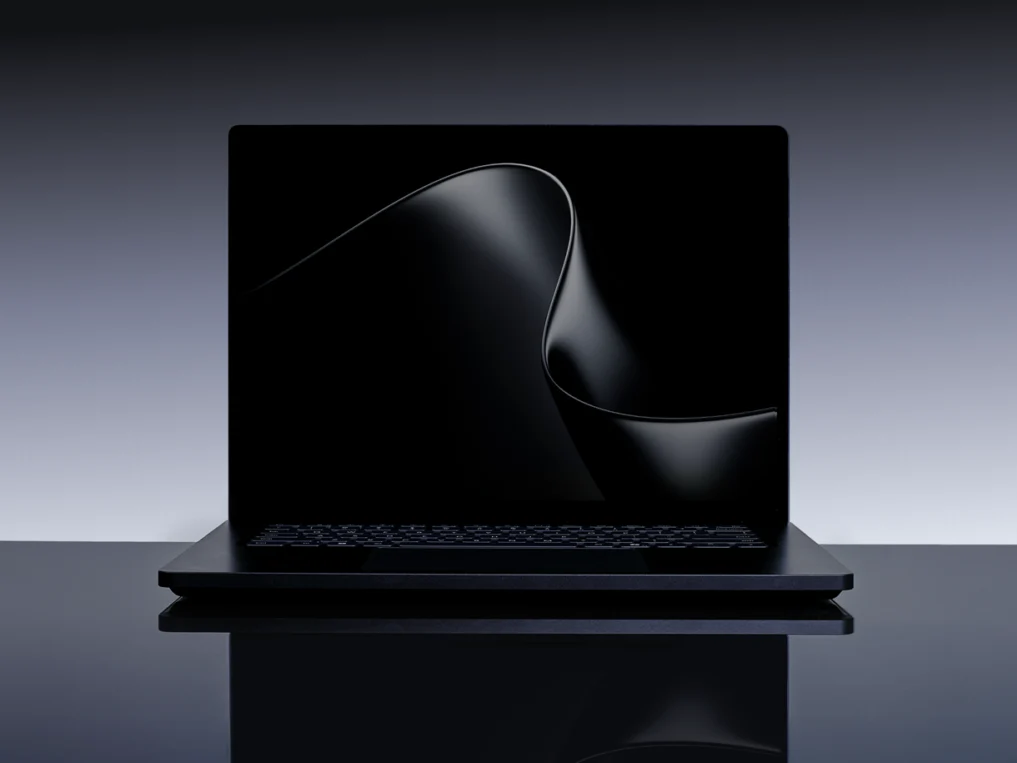
    Microsoft has unveiled what could easily be one of its most powerful Surface-branded laptops to launch in 2026. Dubbed as the Surface Laptop Ultra, it runs Nvidia’s shiny new RTX Spark SoC with support for up to 128 GB of RAM. It might cost you an arm and a leg, though, which, at this point, seems the bare minimum to get any powerful machine.

    Display and Battery Life Details

    Unfortunately, Microsoft’s blog post announcing the Surface Laptop Ultra is bereft of details. It boasts of ‘all day’ battery life, something even Nvidia claimed in its RTX Spark reveal. For the screen, the laptop employs a 15-inch mini-LED panel with 2,000 nits peak brightness and 262 PPI pixel density, tacitly implying it is a 3.2K-3.5K panel with a 16:10 aspect ratio.

    Ports and Repairability

    Microsoft says the Surface Laptop Ultra comes with all the ports required for creative workloads, namely HDMI, USB-C, USB-A, an SD card slot, and a headphone jack. Unlike previous Surface laptops that were notoriously hard to repair, this one has supposedly been designed with repairability in mind.

    Availabilty and Pricing Concerns

    The Microsoft Surface Laptop Ultra will be available for purchase later this year. However, Moore’s Law is Dead stated that RTX Spark-powered machines wouldn’t be available properly until 2027. Based on its specs, and the general tendency for Microsoft to overprice its laptops, the Surface Laptop Ultra won’t be cheap.

    Sources
  • Geekom A9 Max Upgradeability: Is It Worth Buying?

    Key Takeaway

    – High-end mini PC with AMD Ryzen AI 9 HX 470 (12 cores, 24 threads) and Radeon 890M iGPU.
    – Comes with 32 GB DDR5 RAM and 2 TB SSD, but uses a single RAM module, limiting memory bandwidth.
    – Single-channel RAM cripples iGPU performance, impacting 3D benchmarks.
    – Adding a second RAM module significantly boosts performance, especially for the integrated graphics.
    – Good build quality, low power consumption, quiet operation, but lacks modern ports like OCuLink or USB4 v2.


    Geekom Rolls Out a New High-End Mini PC

    With the A9 Max, Geekom is launching a new high-end mini PC in the 2026 edition, which is based on AMDs current Gorgon Point platform. The AMD Ryzen AI 9 HX 470 with 12 cores and 24 threads works inside, combined with the integrated Radeon 890M built on the RDNA 3.5 architecture. The equipment is complemented by 32 GB DDR5 RAM and a 2 TB SSD, making the compact computer primarily aimed at demanding users who are looking for alot of performance in a tiny space.

    Build Quality and Connectivity Insights

    In the detailed test, the Geekom A9 Max turns out to be a powerfull and high-quality mini PC with extensive connectivity. In addition to the good CPU performance, the comparatively low power consumption and the pleasant noise level under load are particularly positive. The familiar aluminum housing looks high-quality but still dosent offer any modern connections like OCuLink or USB4 v2.

    Memory Configuration Under Fire

    The memory configuration of the test device is especially open to critisism. Geekom only uses a single RAM module ex works, which limits the memory bandwidth. This not only affects the general system performance but also the integrated Radeon 890M in particular. As a result, the iGPU cannot fully develop its high potential and falls short of expectations in some 3D benchmarks. The recently tested Minisforum AI X1 Pro also had different memory.

    How to Unlock Full Performance

    The performance can be significantly improved by retrofitting a second RAM module (32 GB at Amazon), whereby the integrated graphics unit in particular benifits from the higher memory bandwidth. Despite this limitation, the Geekom A9 Max leaves a good impression overall and is currently one of the more powerful mini PCs in its segment with the AMD Ryzen AI 9 HX 470 chip.

    Final Review Details

    All details about the Geekom A9 Max including benchmarks, measured values, and detailed comparisons can be found in the full evaluation document.

    • Processor: AMD Ryzen AI 9 HX 470 (12 cores, 24 threads)
    • Graphics: Integrated Radeon 890M (RDNA 3.5)
    • Memory: 32 GB DDR5 RAM (single module)
    • Storage: 2 TB SSD
    • Case: Aluminum housing
    • Connectivity: lacks OCuLink and USB4 v2


    Sources

    • 81-Year-Old Dev Revives Head Over Heels Sequel After 37 Years

      81-Year-Old Dev Revives Head Over Heels Sequel After 37 Years

      Key Takeaway

      – 81-year-old developer Colin Porch released “Return to Blacktooth: A Head Over Heels Adventure” on May 4, 2026, after abandoning it 37 years ago.
      – The game is available for $12.99 on itch.io for Atari ST and Commodore Amiga systems, running smoothly on original hardware or emulators.
      – Physical boxed editions are planned for release later in 2026.
      – The game features over 300 puzzle rooms, a chiptune soundtrack, and no AI usage, but reviewers note it is quite challenging.
      – Porch was inspired to finish the project after his old boss highlighted the retro gaming resurgence, leading him to secure rights and partner with Thalamus Digital Publishing.


      Old Developer Finally Drops Game He Stashed for Decades

      An 81-year-old ex-game maker suddenly decided to put out his forgotten puzzle game, after he noticed the old-school gaming scene blowing up again. Colin Porch, now 81, launched a follow-up to a much-loved 1980s classic that he begun working on 37 years ago. The retro game is titled Return to Blacktooth: A Head Over Heels Adventure, hitting the scene on May 4, 2026, letting retro players dive into an isometric puzzler where a wacky duo cracks over 300 bright puzzle rooms stretching across five different worlds.

      Price and Platform Details

      You can grab the game on itch.io, and it’s been put out by Thalamus Digital Publishing for both the Atari ST and Commodore Amiga systems. Considering how much love was poured into this thing, the $12.99 price might seem fair to some gamers. You can fire it up on original retro machines or an emulator, and it runs impressively smooth, especially given the amount of detail in the sprites.

      Physical Editions and a Devs Emotional Journey

      But that’s not the end of the tale, because boxed physical editions of Return to Blacktooth: A Head Over Heels Adventure are already being prepared and are planned for release later in 2026. After shelving the game for almost forty years, Colin Porch found a fresh emotional link to the project when he picked up where he left off. In a chat with Time Extension, he said: “You simply cannot believe how excited I am. Since working on the original game back in the ’80s, this sequel has been an enormous part of my life. The game is full of puzzles, and I had a lot of fun devising them. It’s my wits against the person who’s going to be playing it.”

      Soundtrack and Difficulty

      The game is a love letter to old home computers and video games, with its chiptune soundtrack, hilarious sound effects, and no hint of AI use anywhere in its creation. Still, it ain’t a walk in the park; reviewers say it’s pretty darn challenging and will test your brain.

      How Colin Porch Finally Finished the Sequel

      Colin Porch’s backstory and the road to this sequel wasn’t easy. He started building the game at Ocean Software right after finishing the ports of the first Head Over Heels, but the mid-1980s chaos in the video game industry and the move to home computers discouraged him and led him to pause the project. Years later, he bumped into his old boss, Gary Bracey, who told him about the retro gaming revival and the hunger for new yet genuine retro experiences. So, Colin Porch went on a mission to get permission from the new Atari we know today and teamed up with Thalamus to finally finish Return to Blacktooth: A Head Over Heels Adventure.

    • Nvidia N1X Confirmed as RTX Spark: Release Details

      Nvidia N1X Confirmed as RTX Spark: Release Details

      Key Takeaway

      – RTX Spark is Nvidia’s new Windows on ARM chip, built on TSMC’s 3nm node, with a 20-core MediaTek CPU and 6,144 CUDA cores.
      – Supports up to 128 GB LPDDR5X unified memory, 600 GB/s NVlink bandwidth, and 1 petaflops FP4 AI performance.
      – Gaming features include DLSS 4.5, Frame Generation, and Reflex; runs 1440p games and supports anti-cheat for titles like Fortnite and Valorant.
      – Day-one creative app support includes Adobe Photoshop, Premiere, Blender, and CapCut, with 12K video decoding and 90 GB 3D scene rendering.
      – Launching in Fall 2026 in laptops from Asus, Dell, HP, Lenovo, Microsoft, and MSI, plus unspecified mini-PCs.


      Nvidia’s awaited Windows on ARM chip launches

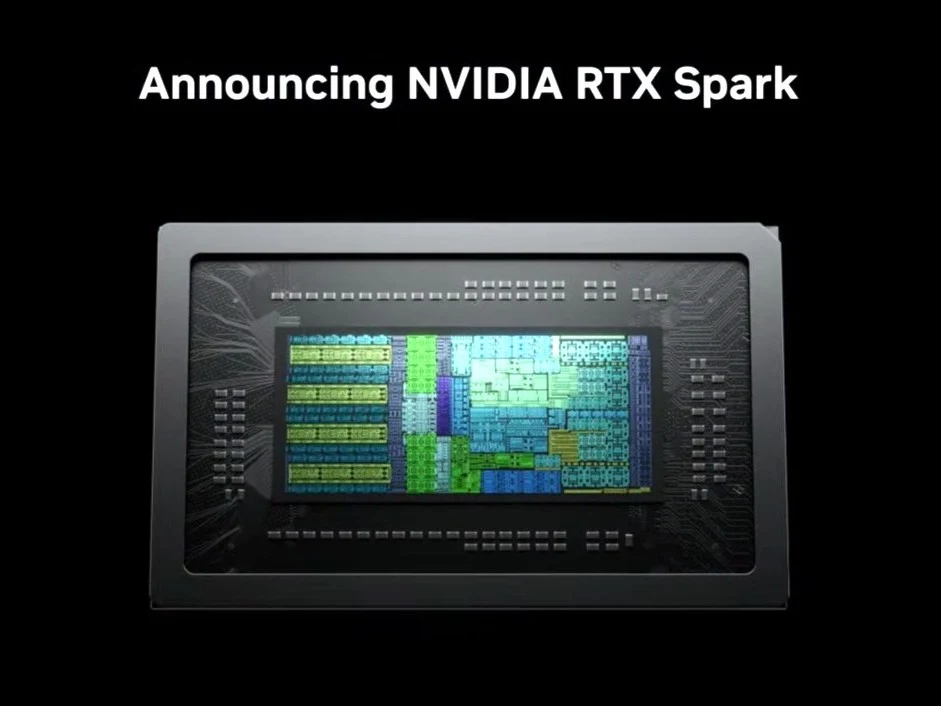
      Nvidia’s long-awaited Windows on ARM chip is finally here. It is made on an unspecified 3 nm node from TSMC. Formerly known as the N1X, which was likely its internal codename, the chip will launch as the RTX Spark. It won’t be the only one, with Nvidia stating other, lower-specced SKUs expected to surface later. Of course, this isn’t exactly new information. Multiple reports talked about the N1X and its sub-variants at length, with the most recent leak confirming at least two variants.

      Specs are still a secret mostly

      Officially, Nvidia has refused to divulge much in the way of specs. The RTX Spark will come with an unspecified GPU with 6,144 CUDA cores and a 20-core CPU tailor-made by MediaTek. Nvidia claims the GPU can comfortably run games at 1440p thanks to DLSS 4.5, Frame Generation, Reflex, and the laundry list of gaming features found on Blackwell GPUs. Ray reconstruction and RTX Video Frame Gen are also supported.

      Creative softwares support is big

      Creatives will be pleased to know that Adobe Photoshop and Premiere will run on the RTX Spark on day one. Other companies, such as Blackmagic Design, Blender, CapCut, ComfyUI and OTOY have also partnered up with Nvidia to bring their software stack to the platform. The company claims power users can render 90 GB 3D scenes with OptiX and DLSS and edit 12K 4:2:2 video with the NVIDIA Blackwell decoder. Nvidia confirmed the machine will run Windows at launch but didn’t confirm/deny Linux support.

      Memory and AI chops

      The Nvidia RTX Spark supports up to 128 GB of LPDDR5X unified memory. With NVlink, its memory bandwidth peaks at 600 GB/s. Like everything else Nvidia has announced in the past year, the RTX Spark is touted as an AI powerhouse with 1 peraflops of FP4 performance. The company claims it can run 120 billion parameter models locally and even run ‘gaming agents’ that can, among other things, change your monitor’s refresh rate.

      Benchmarks and gaming readiness

      Nvidia has not shown off any performance metrics of the RTX Spark, meaning we have to rely on leaked benchmarks to figure out how it fares against other Arm-based offerings from Apple and Qualcomm. E-sports gamers will be pleased to know that Nvidia is actively working with numerous anti-cheat software makers to get the RTX Spark ready for popular titles. For now, the list includes Fortnite, Valorant, League of Legends, and PUBG, with more titles coming soon.

      Laptops and launch timeline

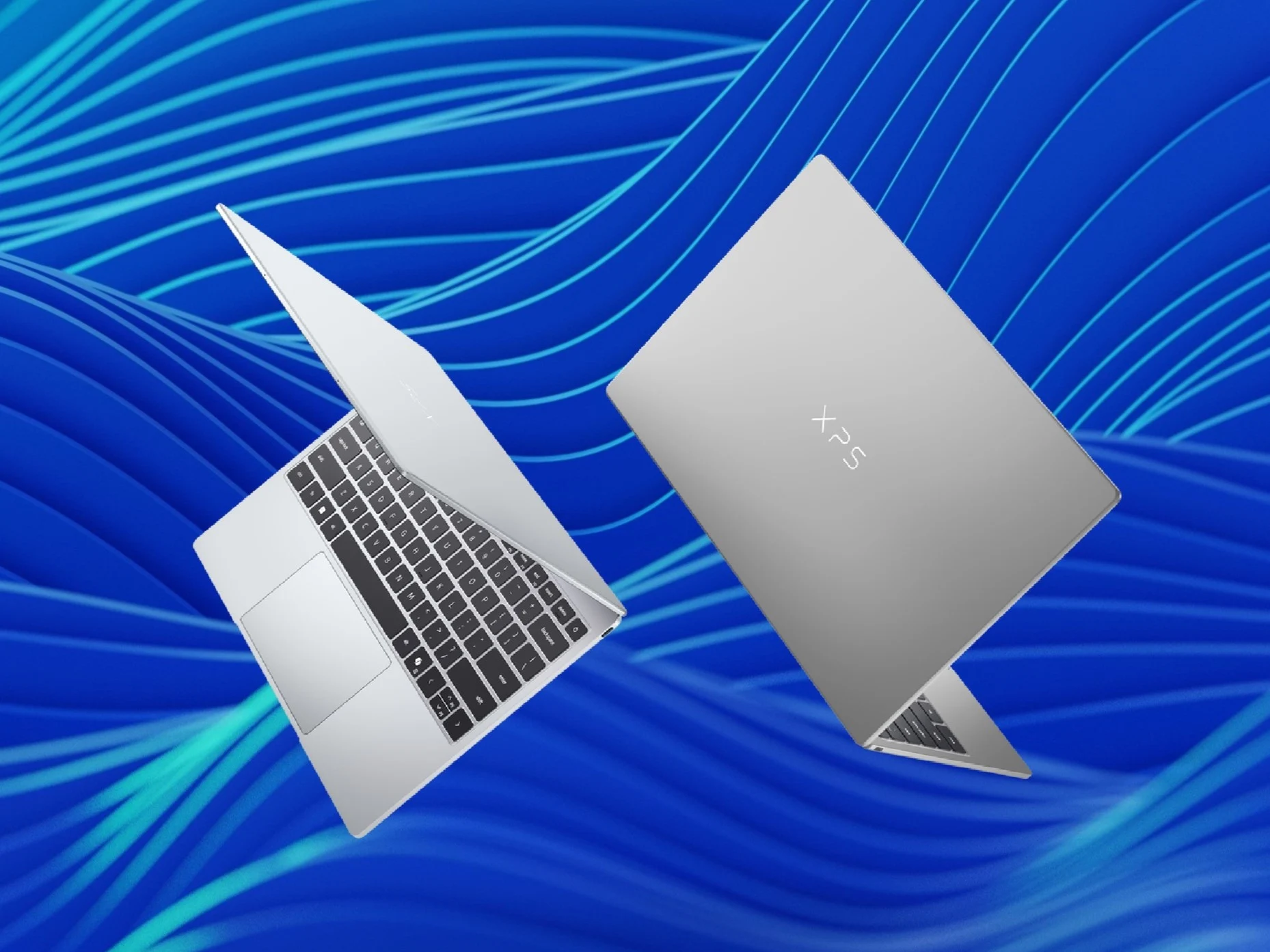
      Some of the laptops that will launch with the RTX Spark include the Asus ProArt P14, ProArt P15, Dell XPS 16, HP OmniBook X 14, HP OmniBook Ultra 16, Lenovo Yoga Pro 9n, Microsoft Surface Laptop Ultra and MSI Prestige N16 Flip AI. It will also power some mini-PCs, but Nvidia didn’t specify which ones. Machines powered by the RTX Spark are expected to hit shelves in Fall 2026.


      Sources

      • Google I/O’s Unexpected Winner: DuckDuckGo

        Google I/O’s Unexpected Winner: DuckDuckGo

        Key Takeaway

        – DuckDuckGo’s traffic tripled after Google’s controversial AI-heavy search update.
        – DuckDuckGo offers users the ability to opt out of AI-generated summaries and images.
        – Users are switching due to a desire for choice and a simpler, AI-free search experience.
        – DuckDuckGo saw a 30% spike in mobile app downloads, with a 29% daily increase in the U.S.
        – Google’s forced AI mode has led to inaccurate results, pushing users to seek alternatives.


        DuckDuckGo sees big traffic jump after Googles AI update

        Privacy-oriented search engine alternative DuckDuckGo’s search page traffic has tripled since Google rolled out its biggest yet most controversial update in recent years. The Mountain View-based company revealed on May 19 that it was delving deeper into AI for search engine results at its I/O developer conference. The unasked-for result? DuckDuckGo’s traffic has spiked significantly.

        DuckDuckGo gives users a choice over AI

        DuckDuckGo has embraced AI in its search results to a similar extent as Google, but it still offers users the option to turn off AI-generated summaries or exclude AI-generated images via no-ai.duckduckgo.com. This means no more AI chat features and to-the-point search results without the extra AI enhancements.

        Traffic numbers show users fleeing Google

        Visitors to DuckDuckGo’s No AI search engine tripled on May 28 and are still climbing, averaging around 84% above the normal traffic since Google’s controversial I/O conference. The backlash stems from the fact that many users simply want an AI-free search experience, with direct results rather than being fed a pushy AI experience on the world’s most-used search engine.

        Considering the commotion, DuckDuckGo’s founder and CEO, Gabriel Weinberg, stepped forward with his two cents and said, “Google is force-feeding AI with no way to opt out. As a result, their results are getting worse, not better. We want to be the place that puts users in charge and allows them to decide how much or how little AI they want.”

        Executives highlight user demand for choice

        The chief communications and policy officer at DuckDuckGo, Kamyl BazBaz, summed it up in a single sentence: “People just want a choice.”

        Many users are currently switching to DuckDuckGo (via TechCrunch), with an estimated 30% spike in the search engine’s mobile app downloads and an even sharper increase on iOS. Analytics firm Apptopia cited a 29% increase in daily app downloads in the U.S. in late May.

        Google transforms search into AI mode

        Google, on the other hand, has transformed its once-simple search box into something more “intelligent” and conversational. Its AI mode now offers longer answers to search queries and pulls in personal context from Gmail or even your Photos when deemed relevant.

        While AI Overviews were being tested in recent years, AI mode now sits at the top and is pretty much hard to skip for most users, sometimes churning out inaccurate or hallucinated AI answers and thereby forcing people to look for alternatives elsewhere.

        • No AI – DuckDuckGo
        • TechCrunch
        Sources
      • Sonic CD Remake Rumor: Ex-Sega Exec Shares New Claim

        Sonic CD Remake Rumor: Ex-Sega Exec Shares New Claim

        Key Takeaway

        – Sega is reportedly working on a full-scale remake of *Sonic CD* (1993).
        – The claim comes from former Sega VP Mike Fischer, who stated, “I’ve heard that they’re remaking Sonic CD.”
        – It is unclear if the remake will use classic 2D side-scrolling or the modern “Boost Formula” gameplay.
        – Fischer criticized modern Sonic games, calling the 2011 *Sonic CD* port and fan-made games superior to recent official titles.


        Former Sega Exec Drops Bombshell News About Sonic CD Remake

        A former high-level Sega executive has given many Sonic fans a ray of hope, saying he’s herd that Sega is working on a remake of the 1993 classic Sonic game Sonic CD, which introduced time-travel mechanics and debuted Metal Sonic and Amy Rose. This news about Sonic CD getting a remake come from Mike Fischer, former Vice President of Marketing at Sega of America, who worked at the company during the heyday of the Sega Genesis.

        Interview Reveals Shocking Revelation

        He dropped this shocking revelation during an interview with Sega-16 while reflecting on the Blue Blur’s long-drawn history. Sonic CD was initially released for the Sega CD add-on for the Genesis home console, and it took an interesting turn for a Sonic title, with a banger opening cutscene, time-travel gameplay, and a catchy, memorable soundtrack. Sonic CD was treated to a polished update in 2011 by a third-party developer we know as Christian Whitehead, the very same developer who went on to create Sonic Mania in collaboration with Headcannon and PagodaWest Games with Sega’s blessing in 2017.

        Full-Scale Remake Or Boost Formula?

        But it seems that Sega is planning a full-scale remake of the original Sonic CD. However, its not clear if the remake will stick to the retro 2D side-scrolling platforming gameplay or switch it up with the “Boost Formula” seen in Sonic Unleashed and subsequent titles. During the interview, Fischer said, “I’ve heard that they’re remaking Sonic CD, which would be wonderful. That was my favorite Sonic game.” He also made a jab at recent Sonic titles for failing to capture the charm of the Blue Blur in modern Sonic games by stating:

        “I don’t think that they’ve ever really met the creative potential that Sonic really brings since that original generation of 16-bit games. And, you know, Takashi Iizuka has taken over from Naka, and there’s some important handover legacy there, but the games just aren’t good. The only good Sonic game they had in a very long time was a fan-made game.”

        No Specific Title Mentioned

        However, he didn’t specify which title in particular, given the myriad of fan releases that happen every day. Sega could be working on a Sonic CD remake, given the amount of spotlight the company has given to Sonic in recent years, including back-to-back Sonic the Hedgehog movies that turned out to be major commercial and critical successes. Furthermore, Sonic Generations was given an overhaul with a standalone re-release plus expansion in late 2024 called Sonic X Shadow Generations, focusing on Shadow’s perspective during the events of the original game.

        Sources