Category: All News

  • Spectrum Data Leak After Charter Refuses Ransom

    Spectrum Data Leak After Charter Refuses Ransom

    Key Takeaway

    – Attackers used voice phishing (vishing) to steal a Charter employee’s Microsoft Entra credentials, bypassing technical defenses.
    – The breach exposed data for at least 13 million individuals, including names, addresses, phone numbers, and plan details, primarily from Spectrum Enterprise.
    – A dispute exists over whether federally protected Customer Proprietary Network Information (CPNI) was stolen; independent researchers are now assessing the leaked data.
    – This attack follows a 2026 pattern by ShinyHunters: compromise cloud identities via social engineering, pivot to SaaS platforms, and extort data before public release.
    – Affected customers should change passwords, enable two-factor authentication, freeze credit with major bureaus, and verify exposure via Have I Been Pwned.


    Spectrum Owner Charter Communications Confirms Data Breach After Ransom Deadline Passes

    Charter Communications, the company behind Spectrum internet, cable, and mobile service, has confirmed a data breach after the ShinyHunters extortion group published stolen customer records when its May 27 ransom deadline passed without a response. The attack was not sophisticated in a technical sense. ShinyHunters told BleepingComputer the breach occurred on April 1 through a voice phishing attack targeting a Charter employee’s Microsoft Entra account. No technical barrier was broken. Someone called, impersonated IT support, and walked away with valid credentials. The attackers used that access to export customer records from Charter’s Salesforce instance before the intrusion was detected.

    Over 13 Million Individuals Affected Alongside Support Ticket Records

    The Cybernews research team confirmed ShinyHunters published data covering at least 13 million individuals alongside nearly 10 million customer support ticket records. Most of the customer data originates from Spectrum Enterprise, the division serving large businesses, corporations, and government agencies. A separate internal employee directory subset of around 85,000 records was also exposed, containing job titles, work emails, and in a limited number of cases, home addresses. Published customer records include names, email addresses, physical addresses, phone numbers, phone type, and plan information. ShinyHunters originally claimed 40 to 42 million records, a figure that exceeds Charter’s entire US customer base of 32 million. Cybernews noted the dataset likely contains duplicates. Have I Been Pwned, via BleepingComputer, confirmed 4.9 million unique email addresses and added them to its database.

    Dispute Over CPNI Data and ShinyHunters Campaign Pattern

    The most consequential dispute concerns Customer Proprietary Network Information, a federally protected category covering call records, service subscriptions, and usage patterns. Charter told BleepingComputer that no sensitive personal information or CPNI data was exfiltrated. ShinyHunters claims the opposite. With the data now publicly posted, independent researchers are in a position to assess both claims. The broader pattern here is hard to miss. ShinyHunters has worked through a string of major targets in 2026 using the same general approach: compromise a cloud identity or SSO account through social engineering, pivot into connected SaaS platforms, export data at scale, and set a ransom deadline. Carnival Corporation was hit in April after attackers accessed systems through a third-party account. ADT, Aura, and Panera were also caught in the same campaign window. Charter did not engage before May 27. The data is now public.

    Steps Spectrum Customers Should Take To Protect Themselves

    Spectrum customers should change their account password, enable two-factor authentication, and treat unexpected contact claiming to be from Charter or Spectrum with caution. Have I Been Pwned can confirm whether your email address was exposed. A credit freeze at Equifax, Experian, and TransUnion is free, reversible, and prevents new accounts from being opened in your name.
  • OPPO Reno 16 Pro Global Leak: Smaller Battery, Weaker Chip

    OPPO Reno 16 Pro Global Leak: Smaller Battery, Weaker Chip

    Key Takeaway

    – Global OPPO Reno 16 series specifications differ from Chinese versions.
    – Global Reno 16 Pro has smaller 6,700mAh battery and Dimensity 8550 chipset (vs 7,000mAh and Dimensity 9500s in China).
    – Three global models: Reno 16, 16 Pro, and 16 FS, each with different processors, displays, and battery capacities.
    – All models expected to ship with Android 16 and IP69 rating.
    – Launch expected in India in July 2025.


    OPPO Reno 16 Series Global Specs Leak

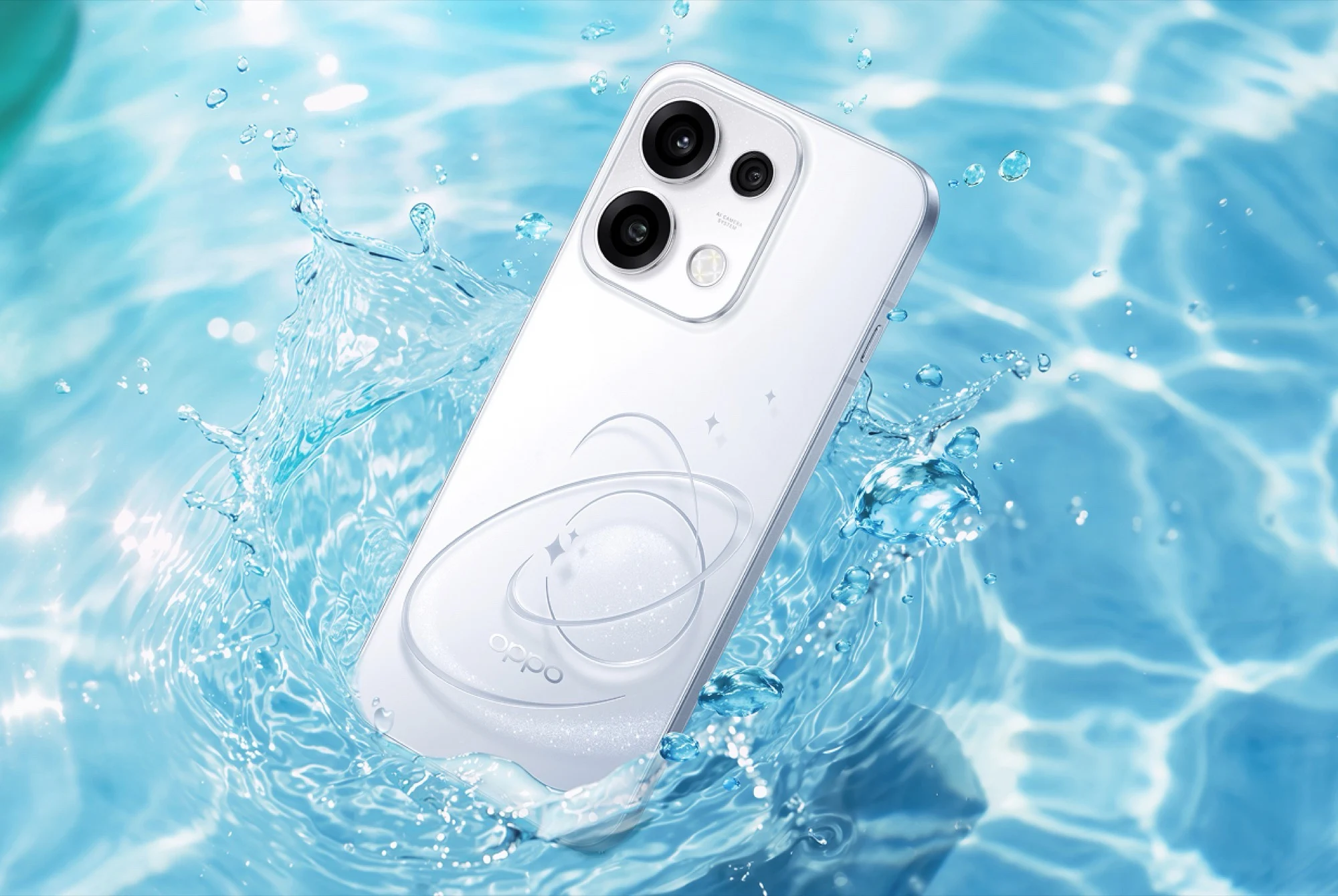
    The OPPO Reno 16 series was recently launched in China and now we have some new information on the global variants. Tipster Sudhanshu says the global models will be different in specs when compared to the Chinese models. The Chinese version of the Reno 16 Pro has a 7000mAh battery, MediaTek Dimensity 9500s chipset and a quad camera setup with a 200MP primary camera and three 50MP lenses for ultra-wide, telephoto and selfies. It also supports 80W wired and 50W wireless charging and has an IP69K rating for water and dust resistance.

    Reno 16 Pro Global Version Downgrades

    The global version of the leaked Reno 16 Pro, however, falls short in a few areas. It is said to have a smaller 6,700mAh battery and a Dimensity 8550 chipset. It retains the 200MP primary camera and is expected to come with a 6.32-inch 144Hz AMOLED display. This represents a notable shift from the Chinese model’s hefty 7,000mAh cell and more powerfull processor, though the display size and refresh rate remain competitive. The global Pro variant sacrifices some battery capacity and processing power, wich may effect market positioning.

    Reno 16 and Reno 16 FS Features

    The global market will also get the Reno 16 standard and the Reno 16 FS variant. The base Reno 16 is rumored to have a 6.32-inch 120Hz display, Snapdragon 7 Gen 4 processor, 50MP main camera, and 6,000mAh battery. The Reno 16 FS, on the other hand, packs a MediaTek Dimensity 7300 processor, a bigger 6.57-inch 120Hz screen, and a 6,500mAh battery. Both devices offer substantial battery life improvements over current mid-range phones, and the Snapdragon 7 Gen 4 in the vanilla model should provide solid everyday performance for users.

    Launch Details and Software

    All three devices are expected to ship with Android 16 out of the box and will have an IP69 rating. They are also expected to launch in India this July. Tipster Sudhanshu on X shared the initial details regarding the global specs. The inclusion of high refresh rate screens across the lineup and the upgraded protection rating suggests OPPO is targetting durability without comprimising on display quality, though prices remain unconfirmed for the global rollout.

    • Reno 16 Pro global: 6.32-inch 144Hz AMOLED, Dimensity 8550, 6,700mAh battery, 200MP primary camera
    • Reno 16 standard: 6.32-inch 120Hz display, Snapdragon 7 Gen 4, 50MP main, 6,000mAh battery
    • Reno 16 FS: 6.57-inch 120Hz screen, Dimensity 7300, 6,500mAh battery
    Sources
  • 007 First Light: Why Stealth Fails in James Bond Game

    Key Takeaway

    – Stealth is an option, not a requirement; combat is rarely punished
    – Players often abandon stealth because melee and shootouts are more fun
    – Failed stealth attempts usually don’t ruin the mission
    – Inability to hide bodies suggests stealth isn’t the real goal
    – Hitman comparisons highlight that 007 First Light is more forgiving than pure stealth games


    How James Bond’s Stealth Often Fails in 007 First Light

    As the term “secret agent” implies, James Bond is supposed to work in the shadows. He often chooses to slip past foes instead of leaving a trail of bodies. Players can take that approach in the new Bond game 007 First Light also. In practice, however, stealth rarely seems to maintain for long. As Reddit user u/TitleSuccessful7393 reports, he really does attemt to proceed as quietly and inconspicuously as possible. But in 90% of cases, a room ends up looking “like this” after he exits – with a screenshot showing Bond in front of a glass door and, behind it, a room full of downed enemies. Many players admit that their own missions tend to play out in much the same way.

    Why Players Prefer Fists and Firearms

    The Reddit discussion reveals several reasons why players often prefer to fix problems with fists or firearms. The main one is simple: melee combat and shootouts are fun – and the game apparently allows players to punch or shoot their way through most situations without much punishment. One player writes, for example, that after a failed stealth attempt, he simply beat up every enemy in the area without feeling penalized for it. Apart from special challenges such as “Pacifist” or “Ghost,” the game does not seem to strongly reward stealth. Also, the gameplay loop encourages aggresive tactics over careful planning.

    Comparisons to Hitman and Bond Factor

    Comparisons with the Hitman series, also developed by IO Interactive, come up frequently. Unlike the studio’s assassin simulation, 007 First Light apparently does not turn a failed stealth attempt into a major problem. Once discovered, players can usually still complete the mission successfully. For many, that is exactly the Bond factor: James Bond may begin by sneaking elegantly through enemy territory, but sooner or later he often has to escape using his fists, gadgets or firepower. This difference makes the game feel less punishing and more action orientated.

    No Body Hiding and Stealth as an Option

    The fact that players cannot hide bodies is even seen by some as a sign that full stealth was never the real goal. In short, 007 First Light is not a classic stealth shooter. Apart from a few story passages, stealth is more of an option than a requirement – and most players seem perfectly fine with that so far. The game focuses on flexibility rather than forced quietness, which suits many fans expectations of a Bond adventure.


    Sources

  • Bambu A2L 3D Printer: 19 Filaments & Plotter Mode

    Bambu A2L 3D Printer: 19 Filaments & Plotter Mode

    Key Takeaway

    – 105% more print volume than the X2D (330 × 320 × 325 mm)
    – Targeted at cosplayers, allowing single-piece prints and increased productivity
    – Equipped with PMSM servo motor, vibration compensation, and expansion module support
    – Supports up to 19 filaments with multiple AMS units
    – Priced at $469 (standalone) / $569 (Combo with AMS Lite)


    Bambu Lab’s Newest Machine

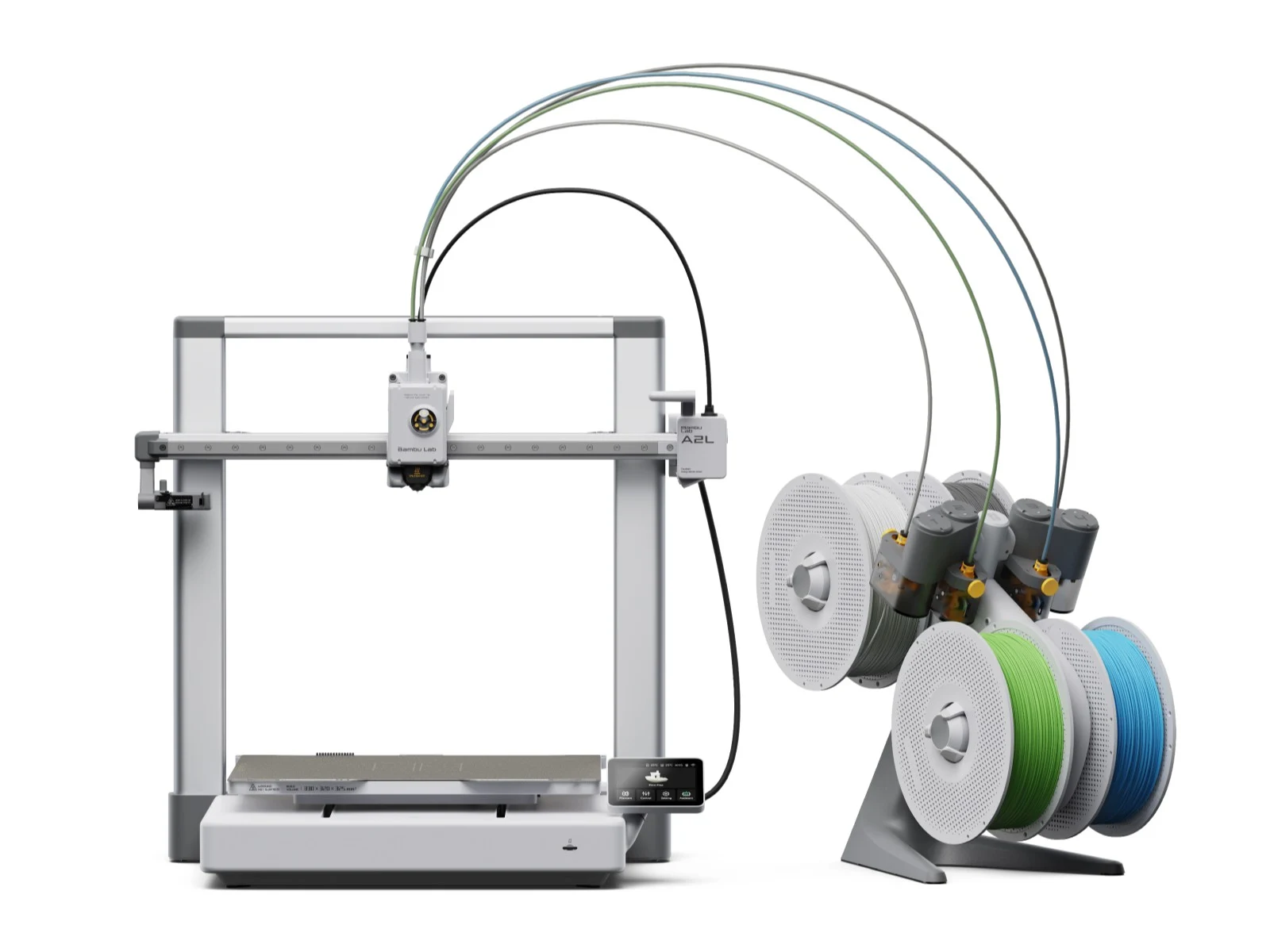
    The company is expanding its lineup of 3D printers with the A2L, an open-frame 3D printer that is designed to stand out with its large build volume of 330 × 320 × 325 mm (12.99 × 12.60 × 12.80 in). By comparison, the Bambu Lab X2D which we recently reviewed adopts a closed design and offers a build volume of 256 × 256 × 260 mm (10.08 × 10.08 × 10.24 in). While the differnce may not seem dramatic at first glance, the A2L actually provides a whopping 105% more print volume than the X2D, thanks to the square-cube law.

    Targeting Creatives and Productivity

    Bambu Lab is also positioning the A2L as a tool for cosplayers who want to create their own clothing or gear. In practice, the large build volume should allow you to produce larger objects in a single piece. The A2L can also help significantly boost productivity by letting you print more individual items on a single plate, instead of having to repeatedly clear the bed between runs. Its a huge step up from smaller machines.

    Technical Specefications and Features

    Bambu Lab describes the A2L as essentially an H2S Lite, suggesting that it delivers powerful features at an afforable price. It is equipped with a special PMSM servo motor, adaptive vibration compensation, built-in dampers, and a mounting point for expansion modules. The company also claims print quality on par with a CoreXY 3D printer. A blade-cutting kit is also available, allowing the A2L to transform into a drawing plotter and cutter for various materials.

    Size, Heat, and Multi-Material Support

    With external dimensions of 544 × 529 × 505 mm (21.42 × 20.83 × 19.88 in), it supports up to four AMS units and one AMS Lite, enabling printing with up to 19 filaments in different colors or materials. The print bed can be heated up to 80°C (176°F), and the hot end up to 300°C (572°F).

    Pricing and Configurations

    The Bambu Lab A2L Combo with an AMS Lite is priced at $569 / €489. The standalone unit, for those who dont need the multi-material system, comes in at $469 / €379. This makes it a compelling option for enthusiasts looking for a very large build volume without spending a fortune.


    Sources

  • Deal: Cozy City Builder Like Settlers Hits Steam Low Price

    Key Takeaway

    – Fabledom is a cozy, fairy-tale city builder currently 70% off on Steam ($6.30).
    – It offers simpler resource management and less emphasis on combat than *The Settlers*.
    – A unique romance system with neighboring rulers unlocks quests, rewards, and buildings.
    – The game is best for short sessions; appeal reportedly fades after 10-15 hours.
    – Rated 7/10 by PC Games, but has 85% positive Steam reviews; lacks official controller support.


    A Pleasant Alternative for Shorter Sessions

    Anyone who feels that The Settlers: New Allies no longer has much to offer may find Fabledom to be a pleasant alternative for shorter sessions. The city builder follows a similar basic formula of settlement building, resource management and economic growth, but presents it in a much cozier, more fairy-tale-like way. Anyone interested now has the best opportunity yet on Steam: according to SteamDB, Fabledom is 70% off for the first time, bringing the regular price down from around $21 to $6.30.

    Living in a Storybook World

    Instead of placing players in a historical setting, Fabledom drops them into a living storybook. Flying pigs, gnomes, giants, dragons and witches are part of everyday life here. A small settlement gradually grows into a magnificent kingdom. Along the way, players build relationships with neighboring rulers. One special feature is the romance system: depending on which ruler players form a bond with, new quests, rewards and buildings are unlocked.

    Players gather resources, set up production chains, expand residential districts and look after the well-being of their inhabitants – much like in The Settlers. However, Fabledom largely does away with complex economic chains and the strong focus on military conflict and conquest. Battles and defense do play a role, but they are far less central. In terms of depth, Fabledom cannot keep up with The Settlers. German gaming magazine PC Games also criticized this, awarding the game only 7 out of 10 points in its review. Anyone looking for a relaxed building experience, however, should still feel right at home.

    Critics Praise Its Charm but Note Limited Longevity

    The review praised the charming fairy-tale look and the modular building system, which allows some buildings to be customized. The diplomacy elements were also well received. Overall, however, Fabledom still seems more suited to short sessions. According to PC Games, the city builder loses a noticeable amount of appeal after 10 to 15 hours. Steam players have so far submitted around 7,500 reviews, 85% of which are positive. Steam Deck compatibility is listed as “Playable.” Due to the lack of official controller support, however, the controls may prove somewhat difficult.

    A Few Important Notes About This Deal

    Disclaimer: Not responsible for price changes carried out by retailers. The discounted price or deal mentioned in this item was available at the time of writing and may be subject to time restrictions and/or limited unit availability.

    • Regular price $21
    • Discounted price $6.30
    • 70% off for the first time
    • Steam rating: 85% positive from 7,500 reviews
    • Steam Deck: “Playable” but no controller support


    Sources

  • Steam Machine: Why June 2026 Launch Is Expected

    Key Takeaway

    – Valve added a Steam Machine “Welcome Tour” to its backend, suggesting device setup content is ready.
    – This follows Valve’s pattern with the Steam Controller, where backend assets preceded a quick launch announcement.
    – Fans predict official details (price, launch date) could arrive around Summer Game Fest 2026 (June 5).
    – Skeptics note the Welcome Tour may just be file prep, and some leaked assets might be from other Steam hardware.
    – Overall, evidence is circumstantial, but the leak aligns with Valve’s stated first-half 2026 launch window.


    As first reported by leaker Brad Lynch, Valve recently added the Steam Machine Welcome Tour to the Steam backend. The Welcome Tour appears to be a short introduction that guides new users through the device’s features and controls during initial setup. The discovery is currently being discussed on Reddit, where fans are pointing to several reasons why the Steam Machine may be close to launch.

    Evidence from Past Leaks

    The strongest argument comes from comparisons with earlier Valve hardware leaks. One Reddit user pointed to similar backend discoveries involving the Steam Controller. In late April, Valve added three GIFs to the Steam backend that demonstrated the controller’s operating concept. SteamDeckHQ reported on the discovery on April 25. Just two days later, Valve officially confirmed the controller’s price and launch date, before releasing it on May 4.

    Patterns in Backend Activity

    The leaked content is not identical, but both cases suggest that Valve is already onboarding hardware-related assets at the backend level. If the company follows a similar pattern with the Steam Machine, details such as pricing and a launch date could be revealed soon – perhaps even around Summer Game Fest 2026, which begins on June 5. As many Reddit users note, that timing would also fit Valve’s previously stated target of releasing the Steam Machine in the first half of 2026.

    • Pricing: Not yet confirmed, but expected to be competitive with other handheld PCs.
    • Launch date: Possibly around Summer Game Fest 2026 (June 5).
    • Specs: Likely similar to Steam Deck, with possible upgrades to processor and storage.

    Skeptical Viewpoints

    Not everyone is convinced. Several users point out that a Welcome Tour in the backend does not automatically mean that the hardware is about to go on sale. Valve may simply be preparing files while work continues elsewhere. There is also debate over certain details in the leaked images. Some users question whether all of the elements shown actually belong to the Steam Machine. References to a microSD card or keyboard shortcuts such as “Shift + Tab” appear more closely associated with other Steam hardware and may have come from existing templates rather than the Steam Machine itself. For now, the evidence remains circumstantial. Still, the combination of the Welcome Tour leak, Valve’s previous hardware rollout pattern and the company’s first-half 2026 launch window has convinced many fans that an official announcement may not be far away.

    Sources
  • Huawei Nova 16 Ultra: 200MP Camera, 7000mAh Battery, Slim Design

    Huawei Nova 16 Ultra: 200MP Camera, 7000mAh Battery, Slim Design

    Key Takeaway

    – IP69-certified waterproofing in an ultra-thin (7.1mm) design
    – 7,000 mAh battery with 100W wired and 50W wireless charging
    – 6.84-inch LTPO OLED display with 120Hz refresh rate and 6,000 nits peak HDR brightness
    – Triple rear camera system: 200MP main, 50MP ultra-wide, 50MP periscope telephoto (3.7x optical zoom)
    – HiSilicon Kirin 9010S chipset is a performance disadvantage versus flagship Qualcomm/MediaTek rivals


    Redefining Mid-Range Boundaries

    The Huawei Nova 16 Ultra is designed to blur the boundaries between premium mid-range and flagship smartphones, as the new top model in the Huawei Nova series makes few compromises when it comes to features. The 7.1 millimeter thick, 220 gram smartphone is IP69-certified and therefore waterproof. Despite its particularly thin body, Huawei is able to install a gigantic 7,000 mAh battery, which can be charged either via USB-C with up to 100 watts or wirelessly with 50 watts.

    Display and Performance Nuances

    The 6.84-inch display is based on an LTPO OLED panel that achieves a resolution of 2,856 × 1,320 pixels, a peak HDR brightness of 6,000 nits and a frame rate of 120 Hz. Kunlun Glass protects the screen from scratches. Compared to the flagships of the competition, the HiSilicon Kirin 9010S is probably the biggest disadvantage, as the chip cannot keep up with the fastest processors from Qualcomm and MediaTek. This processor choice might limit its appeal for power users seeking absolute peak performance in demanding tasks like heavy gaming or 4K video editing.

    Camera System and Design Details

    Huawei has installed a pill-shaped notch in the style of the Apple iPhone 17, which houses a 50 megapixel f/2.0 main camera with a 1/2.5 inch sensor as well as a multispectral sensor, which should enable more accurate color reproduction. The unusual camera module on the back offers space for a 200 MP f/1.8 main camera with a 1/1.28-inch sensor, a 50 MP ultra-wide-angle camera with macro function and a 50 MP f/2.2 periscope telephoto camera with 3.7x optical zoom. This versitile setup aims to compete with dedicated photography devices.

    Pricing and International Availibility

    The Huawei Nova 16 Ultra will be available in China with 12 GB RAM and 256 GB flash storage for CNY 4,699 ($694), with 512 GB memory for 5,199 yuan ($768), or with 1 TB memory for 5,799 yuan ($857). Huawei has not yet confirmed any details about a possible international launch. The pricing stratagy positions it directly against other high-end mid-rangers, offering substantial hardware for the cost.

    • 256 GB model: CNY 4,699 ($694)
    • 512 GB model: CNY 5,199 ($768)
    • 1 TB model: CNY 5,799 ($857)
    • Battery: 7,000 mAh with 100W wired and 50W wireless charging
    • Display: 6.84-inch LTPO OLED, 2,856 × 1,320 pixels, 120 Hz, 6,000 nits peak HDR brightness
    • Protection: Kunlun Glass and IP69 certification
    • Processor: HiSilicon Kirin 9010S
    • Front Camera: 50 MP f/2.0 with multispectral sensor
    • Rear Cameras: 200 MP main, 50 MP ultrawide with macro, 50 MP periscope telephoto with 3.7x optical zoom
    • RAM: 12 GB
    Sources
  • Forza Horizon 6: Reddit Mocks Absurd Barn Finds

    Key Takeaway

    – Barn Finds in *Forza Horizon 6* are criticized for a comedic mismatch between loving dialogue and the cars’ dilapidated condition.
    – Treasure Cars are explained in-game as being hidden by a Japanese businessman, but this lore is easily missed if players skip radio dialogue.
    – The Reddit community finds the mechanic unintentionally funny, but does not consider it a game-ruining flaw.


    Barn Finds in Forza Horizon 6 Draws Mixed Reactions

    The Forza Horizon 6 community on Reddit recently criticized the deserted Car Meets, but now theres something more light-hearted to talk about. The current conversation revolves around the well-known Barn Finds, in which players track down rare vehicles in abandoned barns or remote hiding places. What is actually one of the series’ charming collectible mechanics comes across as unintentionally funny to some fans. The criticism is not meant entirely seriously, however. The poster makes it clear that the mechanic does not ruin the game by any means (Forza Horizon 6 is also covered in Notebookchecks benchmark test).

    Dialogue Contradictions and Vehicle Condition

    Specifically, thread creator u/Patient_Life_9900 takes aim at the discrepancy between the dialogue and the condition of the vehicles. In the game, it is sometimes emphasized that a previous owner apparently loved a car – while the vehicle itself looks as though it has endured decades of neglect and rough treatment. This seems particularly absurd with extremely rare models such as the Nissan R390 or historic racing cars.

    Treasure Cars and Community Mockery

    The so-called Treasure Cars in FH6 (currently available on Amazon for around $70) also come in for some mockery. Several comments joke that some finds feel less like forgotten classics and more like spontaneous car theft. However, one user points out that Treasure Cars are explained in the game via radio dialogue: according to that explanation, they come from the collection of a generous Japanese businessman who had the vehicles hidden for the festival. Some Reddit users were not even aware of this.

    Missable Background Details

    Anyone who does not listen to the right station or skips the presenter segments can apparently easily miss this small piece of background information. Incidentally, the same also applies to entertaining Pokémon references.

    Sources
  • Asus Pro-Grade Mini PC: RTX Spark, 140W Cooling, 128GB RAM

    Asus Pro-Grade Mini PC: RTX Spark, 140W Cooling, 128GB RAM

    Key Takeaway

    – Powered by Nvidia RTX Spark superchip with 1 petaflop AI performance
    – Fits 128GB unified memory, handling 90GB+ 3D scenes and 120B-parameter LLMs
    – Compact 150x150x51mm chassis with 140W thermal headroom for sustained workloads
    – High-bandwidth connectivity and storage for professional studios and edge AI
    – Part of Asus ProArt ecosystem, compatible with AI tools like Creator Hub, MuseTree, and StoryCube


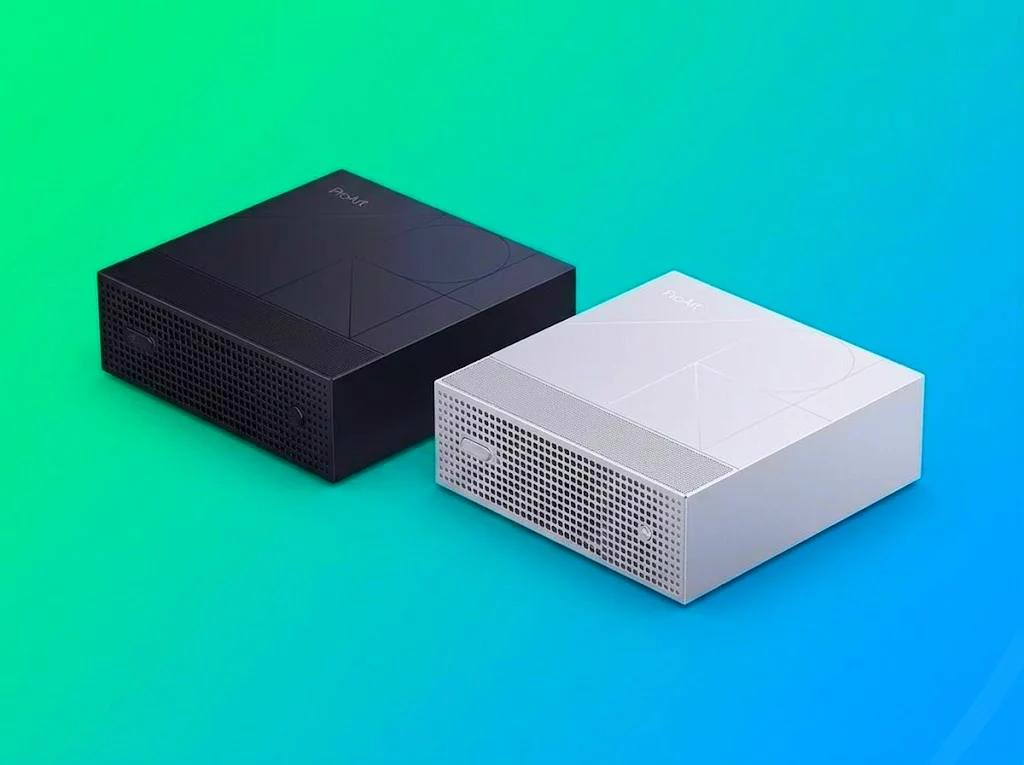
    Along side the anouncement of the new ProArt P16 and P14 MacBook Pro rivals, Asus has unveiled the new ProArt Mini PC, a direct competitor to the just-announced HP OmniDesk mini PC. Designed to bring workstation-class generative AI and large-scale rendering capabilities for those who don’t have a large desk, Asus’ Mac Studio rival is built entirely around the new Nvidia RTX Spark superchip platform.

    Small Size, Massive AI Power

    Despite measuring only 150x150x51mm, the ProArt Mini PC is engineered to handle intensive AI workloads that typically require much larger hardware. The tiny PC is powered by the Nvidia RTX Spark superchip, which integrates an Nvidia Blackwell-based RTX GPU with 6,144 CUDA cores and a 20-core Nvidia Grace CPU.

    Unified Memory and Insane Performance

    The system utilizes a unified memory architecture supporting up to 128GB of RAM. By allowing dynamic memory allocation between system and graphics resources, the device is optimized to handle massive datasets, such as 90GB+ 3D scenes or 120B-parameter Large Language Models (LLMs) with up to 1 million tokens of context. Asus rates the system at 1 petaflop of AI performance.

    Maintaining performance stability in a chassis this small requires sophisticated thermal management. The ProArt Mini PC features a dedicated thermal architecture designed to provide up to 140W of thermal headroom, ensuring the hardware can sustain long-duration rendering and AI training tasks without performance throttling.

    Connectivity and Storage Options

    To meet the requirements of professional studios and edge AI deployment, the unit includes high-bandwidth connectivity and storage options:

    • High-speed networking for rapid data transfer
    • Expandable storage for large datasets
    • Multiple display outputs for complex workflows

    The ProArt Mini PC is positioned as a foundational device for the broader Asus creative ecosystem. It is fully compatible with the suite of AI-optimized software Asus is rolling out for the ProArt series, including the ProArt Creator Hub for resource management and specialized tools like MuseTree and StoryCube for generative workflows.

    Availibility and Pricing

    The system is designed for professional developers and content creators who need to deploy AI agent-ready infrastructure in small-footprint environments. Asus has confirmed that the ProArt Mini PC will be available starting in the fall of 2026, with further configuration and pricing details to be released closer to the launch date.


    Sources

  • Asus Unveils RTX Spark MacBook Pro Rivals: 14 & 16-Inch 4K, 128GB RAM

    Asus Unveils RTX Spark MacBook Pro Rivals: 14 & 16-Inch 4K, 128GB RAM

    – New ProArt laptops (P16, P14) and Mini PC debut with Nvidia RTX Spark superchip.
    – Unified memory architecture with up to 128GB RAM and 1 petaflop AI performance.
    – Can run 120B-parameter LLMs, generate 4K AI video, and render 90GB+ 3D scenes.
    – Chassis is 13% thinner and 16% lighter, with up to 99.9 Wh battery.
    – Features Lumina Pro OLED displays with Delta E < 1 color accuracy.[/key]


    New AI Workstations at Computex

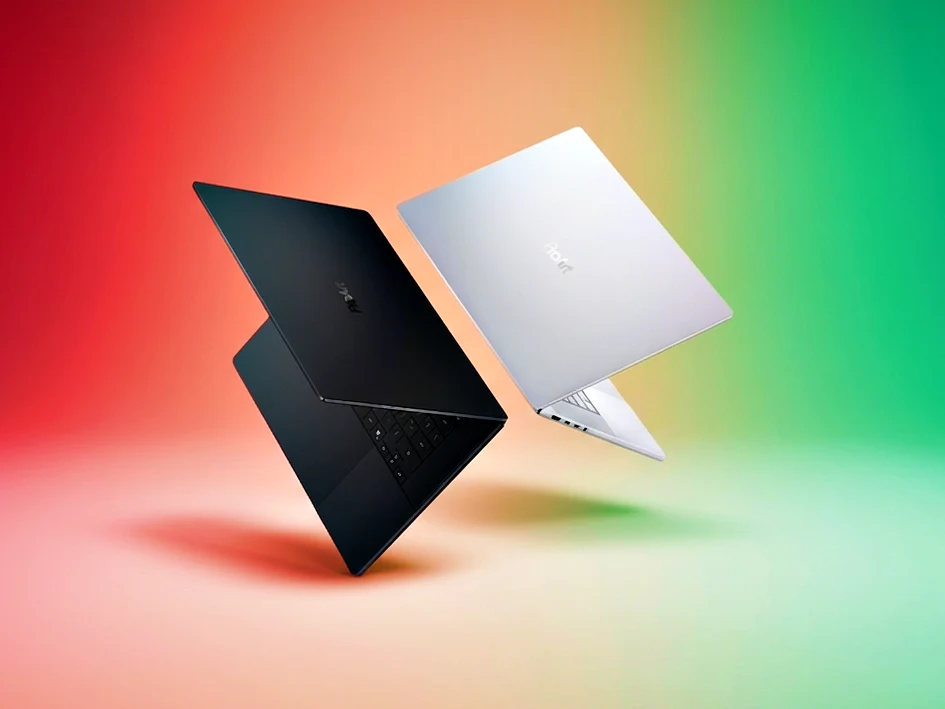
    Asus has officially pulled the curtain back on a new generation of AI-focused creative workstations laptops at Computex 2026. Headlined by the ProArt P16 (H7607), ProArt P14 (H7407), and a new ProArt Mini PC, the lineup is the first to be built around the Nvidia RTX Spark superchip, a platform designed specifically to handle the demands of personal AI agents and complex creative workflows.

    The Nvidia RTX Spark Architecture

    The core of this new lineup is the Nvidia RTX Spark superchip, which transitions away from traditional discrete CPU/GPU configurations. The platform pairs a 20-core Nvidia Grace CPU with an Nvidia Blackwell-based RTX GPU, connected via the high-speed NVLink-C2C interconnect. The system utilizes a unified memory architecture, supporting up to 128GB of RAM, which allows for dynamic allocation between system and graphics tasks.

    Breakthrough Performance Numbers

    According to Asus, the platform delivers up to 1 petaflop of AI performance, featuring fifth-generation Tensor Cores capable of FP4 precision. This compute power is intended to support heavy-duty tasks such as running 120B-parameter Large Language Models (LLMs) with up to 1 million tokens of context, generating 4K AI video, and rendering 90GB+ 3D scenes. Asus has overhauled the chassis design for the new P16 and P14, resulting in a frame that is 13% thinner and 16% lighter than the previous generation.

    Battery Life and Build Quality

    Despite the reduction in size, the laptops include high-capacity batteries (up to 99.9 Wh) to maintain all-day longevity. The display technology remains a priority for the ProArt series. Both models utilize Asus Lumina Pro OLED technology with a Delta E < 1 color accuracy rating. The laptops will be available in "Nano Black" and "Neo White" finishes, featuring an anti-smudge coating and haptic touchpads.


    Sources