
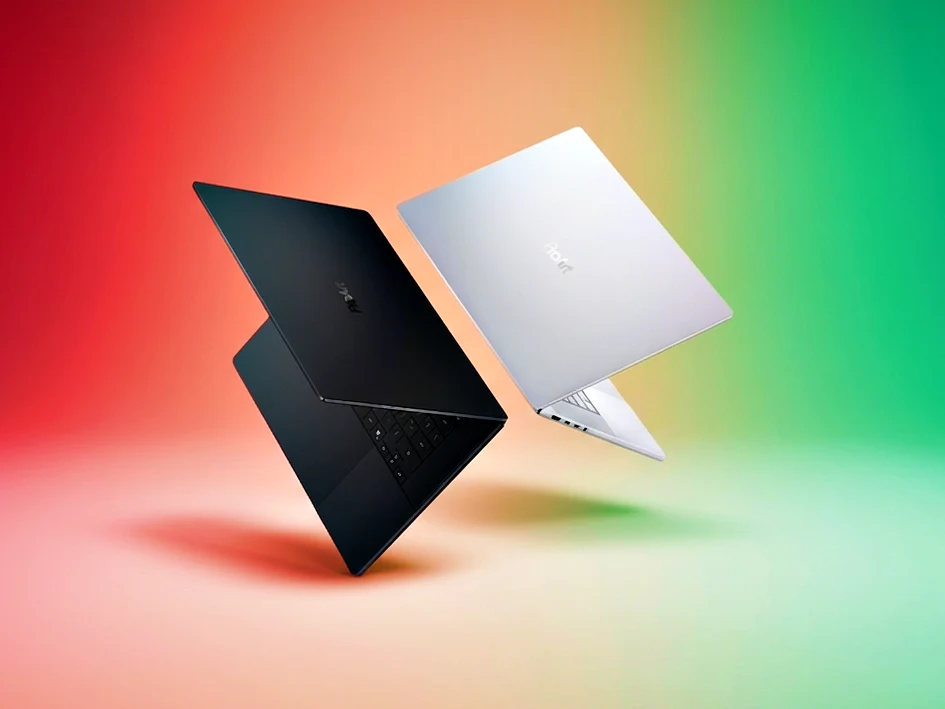
Tag: ProArt P16

  • Asus Unveils RTX Spark MacBook Pro Rivals: 14 & 16-Inch 4K, 128GB RAM

    Asus Unveils RTX Spark MacBook Pro Rivals: 14 & 16-Inch 4K, 128GB RAM

    – New ProArt laptops (P16, P14) and Mini PC debut with Nvidia RTX Spark superchip.
    – Unified memory architecture with up to 128GB RAM and 1 petaflop AI performance.
    – Can run 120B-parameter LLMs, generate 4K AI video, and render 90GB+ 3D scenes.
    – Chassis is 13% thinner and 16% lighter, with up to 99.9 Wh battery.
    – Features Lumina Pro OLED displays with Delta E < 1 color accuracy.[/key]


    New AI Workstations at Computex

    Asus has officially pulled the curtain back on a new generation of AI-focused creative workstations laptops at Computex 2026. Headlined by the ProArt P16 (H7607), ProArt P14 (H7407), and a new ProArt Mini PC, the lineup is the first to be built around the Nvidia RTX Spark superchip, a platform designed specifically to handle the demands of personal AI agents and complex creative workflows.

    The Nvidia RTX Spark Architecture

    The core of this new lineup is the Nvidia RTX Spark superchip, which transitions away from traditional discrete CPU/GPU configurations. The platform pairs a 20-core Nvidia Grace CPU with an Nvidia Blackwell-based RTX GPU, connected via the high-speed NVLink-C2C interconnect. The system utilizes a unified memory architecture, supporting up to 128GB of RAM, which allows for dynamic allocation between system and graphics tasks.

    Breakthrough Performance Numbers

    According to Asus, the platform delivers up to 1 petaflop of AI performance, featuring fifth-generation Tensor Cores capable of FP4 precision. This compute power is intended to support heavy-duty tasks such as running 120B-parameter Large Language Models (LLMs) with up to 1 million tokens of context, generating 4K AI video, and rendering 90GB+ 3D scenes. Asus has overhauled the chassis design for the new P16 and P14, resulting in a frame that is 13% thinner and 16% lighter than the previous generation.

    Battery Life and Build Quality

    Despite the reduction in size, the laptops include high-capacity batteries (up to 99.9 Wh) to maintain all-day longevity. The display technology remains a priority for the ProArt series. Both models utilize Asus Lumina Pro OLED technology with a Delta E < 1 color accuracy rating. The laptops will be available in "Nano Black" and "Neo White" finishes, featuring an anti-smudge coating and haptic touchpads.

    Sources

  • Asus ProArt P16: Best Multimedia Laptop with Tandem OLED

    Asus ProArt P16: Best Multimedia Laptop with Tandem OLED

    Key Takeaways

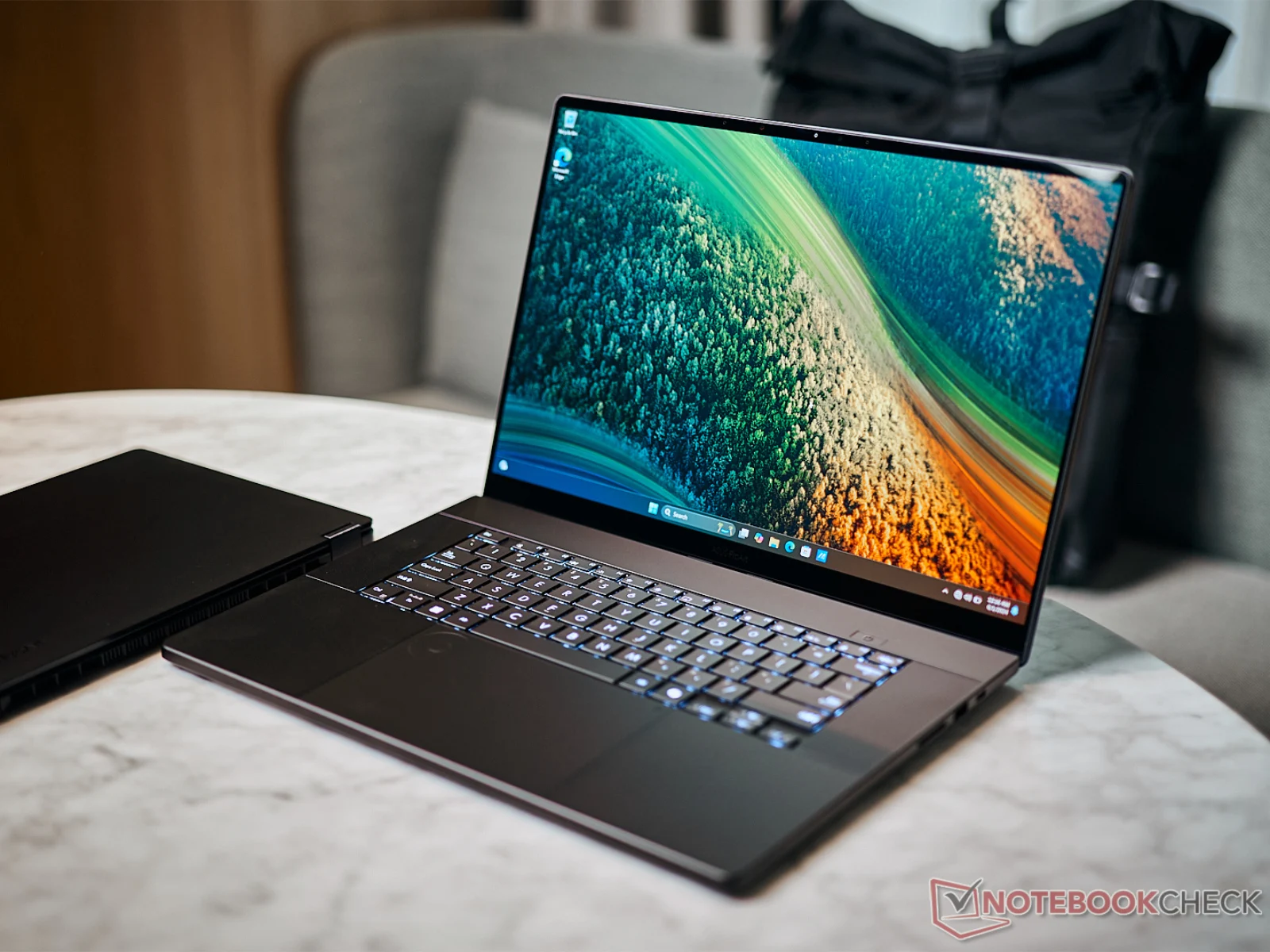
    1. The Asus ROG Zephyrus G16 features a multimedia variant, the ProArt P16, now upgraded with high-end GPUs like the GeForce RTX 5090.
    2. Enhanced cooling with a new vapor chamber system allows maximum TGP of 120 Watts for improved performance in both models, though the P16 lacks Advanced Optimus GPU switching.
    3. The Lumina Pro OLED display now offers 4K resolution, 120 Hz refresh rate, and significantly improved brightness of up to 1600 nits in HDR mode.
    4. The ProArt P16 provides increased VRAM (12-24 GB) and up to 64 GB of soldered RAM, suitable for demanding photo and video editing tasks.
    5. Despite its strengths, the ProArt P16 has a high price tag of €4,799 and doesn’t outperform competitors in every aspect, such as CPU capabilities and battery life.


    The Asus ROG Zephyrus G16 is an advanced and relatively slim gaming laptop, with a multimedia variant known as the ProArt P16. Until now, the P16 was only offered with the mobile RTX 5070 as its top GPU choice, and the 2.8K OLED display with a 120 Hz refresh rate was somewhat underwhelming in terms of its peak brightness. The company has finally released a faster model, and we’ve already taken a look at the high-end version featuring the GeForce RTX 5090.

    Enhanced Cooling and Performance

    Similar to the gaming-focused ROG Zephyrus G16, the new P16 has a slightly bulkier chassis to accommodate an upgraded vapor chamber cooling system. The high-end mobile GPUs (RTX 5070 Ti, RTX 5080, or RTX 5090) operate with a maximum TGP of 120 Watts, and overall, the performance of both models is nearly identical. This includes gaming capabilities, despite the P16 lacking support for Advanced Optimus GPU switching. In contrast to earlier P16 versions, users will enjoy increased VRAM (12-24 GB depending on the GPU) for photo and video editing tasks. Additionally, up to 64 GB of RAM is available, though it’s soldered in, meaning upgrades aren’t possible.

    Stunning Display Improvements

    Another significant update is the Lumina Pro OLED display that boasts a 4K resolution and 120 Hz refresh rate. This OLED panel, also seen in devices like the Lenovo Yoga Pro 9i 16, delivers remarkable image quality that isn’t compromised by the touch layer. Asus has notably enhanced the brightness, now achieving close to 700 nits in SDR mode and up to 1600 nits in HDR mode. This advancement means the new OLED screens are now competitive with Mini-LED displays. The color profiles for sRGB and P3 remain well calibrated. Although the battery life does take a small hit, most users will likely consider this trade-off worthwhile for the enhanced display quality.

    Overall Impressions

    While the ProArt P16 doesn’t excel in every single aspect (the Yoga Pro 9i 16 has its edge in color gamut, SDR brightness, and PWM; the MacBook Pro outperforms in CPU capabilities and battery longevity), it offers a compelling overall package that’s tough to surpass. However, Asus has set a high price point, with our premium review configuration priced at €4,799. For more detailed insights, be sure to check out our full review on the new ProArt P16.


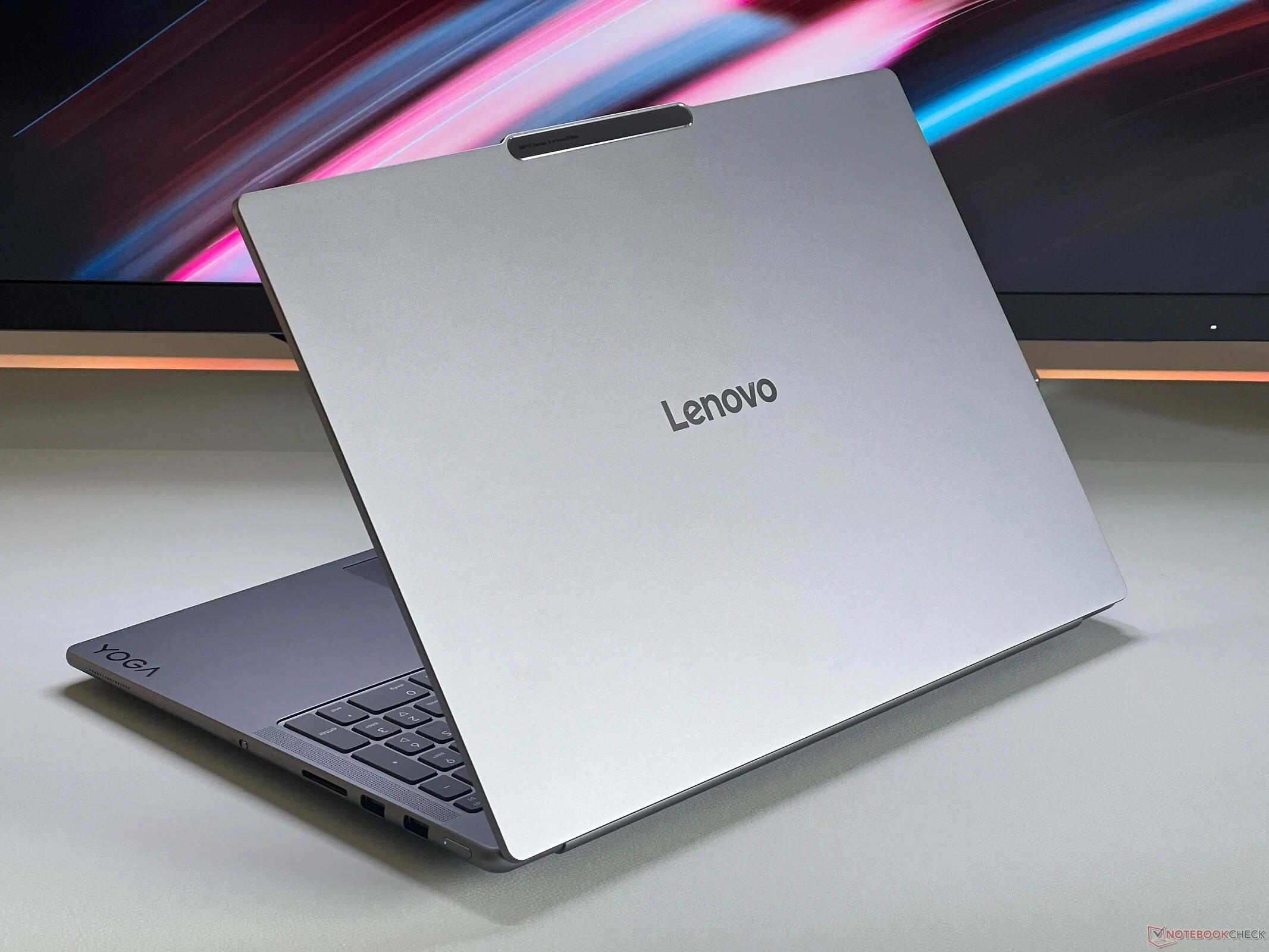
  • Lenovo Yoga Pro 9i 16 G10: The Ultimate Windows Multimedia Laptop?

    Lenovo Yoga Pro 9i 16 G10: The Ultimate Windows Multimedia Laptop?

    Key Takeaways

    1. The Yoga Pro 9i 16 G10 is Lenovo’s premium multimedia laptop with top-notch screen options and build quality.
    2. It features the Nvidia GeForce RTX 5070 GPU, but its 8 GB VRAM may limit performance in high-resolution gaming and editing tasks.
    3. Asus’s ProArt P16 offers enhanced graphics and a better OLED display but at a higher price and with less powerful variants available.
    4. The Yoga Pro 9i 16 is a strong contender against Apple’s MacBook Pro 16 in the under €3,000 category.
    5. For gaming, the Yoga Pro 9i 16 is a superior Windows option compared to competitors.


    The Yoga Pro 9i 16 G10 is Lenovo’s top-tier multimedia laptop, boasting excellent screen choices along with a premium build, comfortable controls, and solid performance. We previously highlighted the impressive Tandem OLED display. When it comes to GPU performance, the best available option is the Nvidia GeForce RTX 5070 Laptop. While the performance is decent, the limited VRAM (8 GB) might pose some challenges. This could lead to frame drops during high-resolution gaming, and it may also affect tasks like photo or video editing.

    Asus’s Competitive Edge

    Asus is now providing enhanced versions of the ProArt P16, featuring faster graphics options and an upgraded Tandem OLED display. However, these configurations come with a hefty price tag. In the €3,000 range, Asus only has the less powerful OLED variant, which falls short compared to the Yoga Pro 9i 16’s 2.8K OLED screen. For those seeking peak GPU performance along with more VRAM (up to 24 GB) for editing purposes, the ProArt P16 currently stands alone without a Windows competitor.

    Summary of Features

    Overall, the Yoga Pro 9i 16 stands out as an exceptional multimedia laptop, especially in the below €3,000 segment. It serves as a strong alternative to Apple’s MacBook Pro 16, particularly when considering the cost. For gamers, it’s clear that the Windows option remains the superior choice. For further details, you can check out our comprehensive review of the Yoga Pro 9i 16.


  • Asus ProArt 16: New Nvidia RTX 5070 Ti, 5080, 5090 Variants

    Asus ProArt 16: New Nvidia RTX 5070 Ti, 5080, 5090 Variants

    Key Takeaways

    1. Asus updated the ProArt P16 laptop with Nvidia’s GeForce RTX 50 series and retained the AMD Ryzen AI 9 HX 370 APU.
    2. The ProArt P16 with GeForce RTX 5090 is priced at $3,999 in the U.S. and CNY 29,999 (around $4,214) in China.
    3. A more affordable GeForce RTX 5080 variant was introduced alongside the RTX 5090 in China.
    4. In Italy, Asus launched the RTX 5080 and RTX 5090 variants, but not the RTX 5060 or RTX 5070 models available in other Eurozone countries.
    5. Pricing for the ProArt P16 in the Eurozone starts at €3,199 (around $3,748) for the RTX 5070 Ti, with the RTX 5090 variant priced at €4,699 (approximately $5,505).


    Almost two weeks ago, Asus revealed an updated version of its ProArt P16 creator laptop. To summarize, the company upgraded the ProArt P16 with Nvidia’s GeForce RTX 50 laptop series this spring, while keeping the AMD Ryzen AI 9 HX 370 APU. Then, at the beginning of last month, Asus launched a GeForce RTX 5090 edition with a price tag of $3,999, though they did not start pre-orders at that time.

    New Variants in China

    Shortly after the initial release, Asus began selling the GeForce RTX 5090 variant in China for CNY 29,999 (around $4,214). They also introduced a more affordable GeForce RTX 5080 version for the first time. In other regions, the ProArt P16 has been available with a choice between Nvidia’s GeForce RTX 5060 and GeForce RTX 5070 laptop GPUs, currently priced at $2,899 on Amazon.

    Expansion to Italy

    Now, Asus has quietly launched the GeForce RTX 5080 and GeForce RTX 5090 variants in Italy, along with a lower-tier GeForce RTX 5070 Ti variant. Interestingly, the company has opted not to sell GeForce RTX 5060 or GeForce RTX 5070 models in Italy, which are available in other Eurozone countries like Germany.

    Pricing details for the ProArt P16 start at €3,199 (about $3,748) in the Eurozone with a GeForce RTX 5070 Ti, 32 GB of RAM, and 2 TB of storage. If you choose the GeForce RTX 5080, it automatically comes with 64 GB of RAM for a price of €4,099 (around $4,803). Finally, if you select the GeForce RTX 5090, the price of the ProArt jumps to €4,699 (approximately $5,505) since it includes 4 TB of storage to go along with its 64 GB of RAM. At the moment, it’s uncertain when these GPU options will become available in other markets. All prices mentioned include a 22% VAT.

    Source:
    Link