
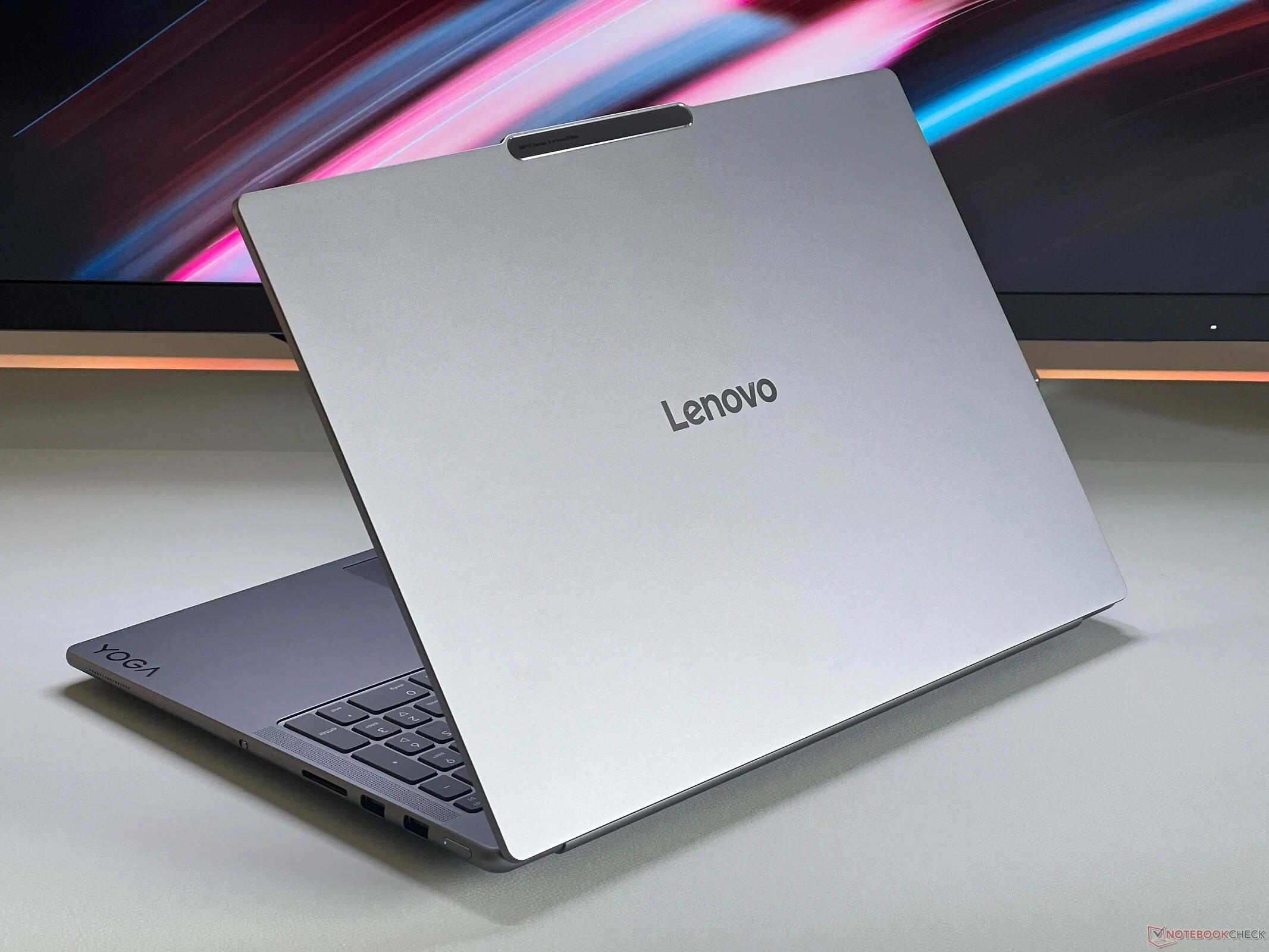
Tag: Yoga Pro 9i 16

  • Lenovo Yoga Pro 9i 16 G10: The Ultimate Windows Multimedia Laptop?

    Lenovo Yoga Pro 9i 16 G10: The Ultimate Windows Multimedia Laptop?

    Key Takeaways

    1. The Yoga Pro 9i 16 G10 is Lenovo’s premium multimedia laptop with top-notch screen options and build quality.
    2. It features the Nvidia GeForce RTX 5070 GPU, but its 8 GB VRAM may limit performance in high-resolution gaming and editing tasks.
    3. Asus’s ProArt P16 offers enhanced graphics and a better OLED display but at a higher price and with less powerful variants available.
    4. The Yoga Pro 9i 16 is a strong contender against Apple’s MacBook Pro 16 in the under €3,000 category.
    5. For gaming, the Yoga Pro 9i 16 is a superior Windows option compared to competitors.


    The Yoga Pro 9i 16 G10 is Lenovo’s top-tier multimedia laptop, boasting excellent screen choices along with a premium build, comfortable controls, and solid performance. We previously highlighted the impressive Tandem OLED display. When it comes to GPU performance, the best available option is the Nvidia GeForce RTX 5070 Laptop. While the performance is decent, the limited VRAM (8 GB) might pose some challenges. This could lead to frame drops during high-resolution gaming, and it may also affect tasks like photo or video editing.

    Asus’s Competitive Edge

    Asus is now providing enhanced versions of the ProArt P16, featuring faster graphics options and an upgraded Tandem OLED display. However, these configurations come with a hefty price tag. In the €3,000 range, Asus only has the less powerful OLED variant, which falls short compared to the Yoga Pro 9i 16’s 2.8K OLED screen. For those seeking peak GPU performance along with more VRAM (up to 24 GB) for editing purposes, the ProArt P16 currently stands alone without a Windows competitor.

    Summary of Features

    Overall, the Yoga Pro 9i 16 stands out as an exceptional multimedia laptop, especially in the below €3,000 segment. It serves as a strong alternative to Apple’s MacBook Pro 16, particularly when considering the cost. For gamers, it’s clear that the Windows option remains the superior choice. For further details, you can check out our comprehensive review of the Yoga Pro 9i 16.
     

  • Lenovo Yoga Pro 9i: Best Notebook Display with New Tandem-OLED Panel

    Lenovo Yoga Pro 9i: Best Notebook Display with New Tandem-OLED Panel

    Key Takeaways

    1. Mini-LED panels, like those in the Apple MacBook Pro, set a high standard for laptop brightness, reaching up to 1600 nits HDR and 1000 nits SDR.
    2. Tandem OLED technology, which stacks two light-emitting layers, offers brighter images, more vivid colors, and better efficiency compared to traditional OLED panels.
    3. The Lenovo Yoga Pro 9i 16 is the first laptop featuring a tandem OLED display, achieving brightness levels comparable to Mini-LEDs (up to 1600 nits HDR and nearly 1000 nits SDR).
    4. The tandem OLED display in the Yoga Pro 9i 16 provides better response times and fewer blooming issues compared to Mini-LED panels.
    5. The new tandem OLED screen is more power-efficient, resulting in longer battery life while maintaining high brightness levels.


    Mini-LED panels have set the standard for laptop brightness. A prime instance of this is the current Apple MacBook Pro, boasting brightness levels that reach up to 1600 nits HDR and 1000 nits SDR. While OLED panels have made strides this year, their peak brightness still maxes out at roughly 700 nits for SDR and 1,100 nits for HDR content. This brings us to a new technology called tandem OLED, which stacks two light-emitting layers. This advancement not only provides brighter images and more vivid colors but also enhances efficiency.

    Lenovo’s Yoga Pro 9i 16

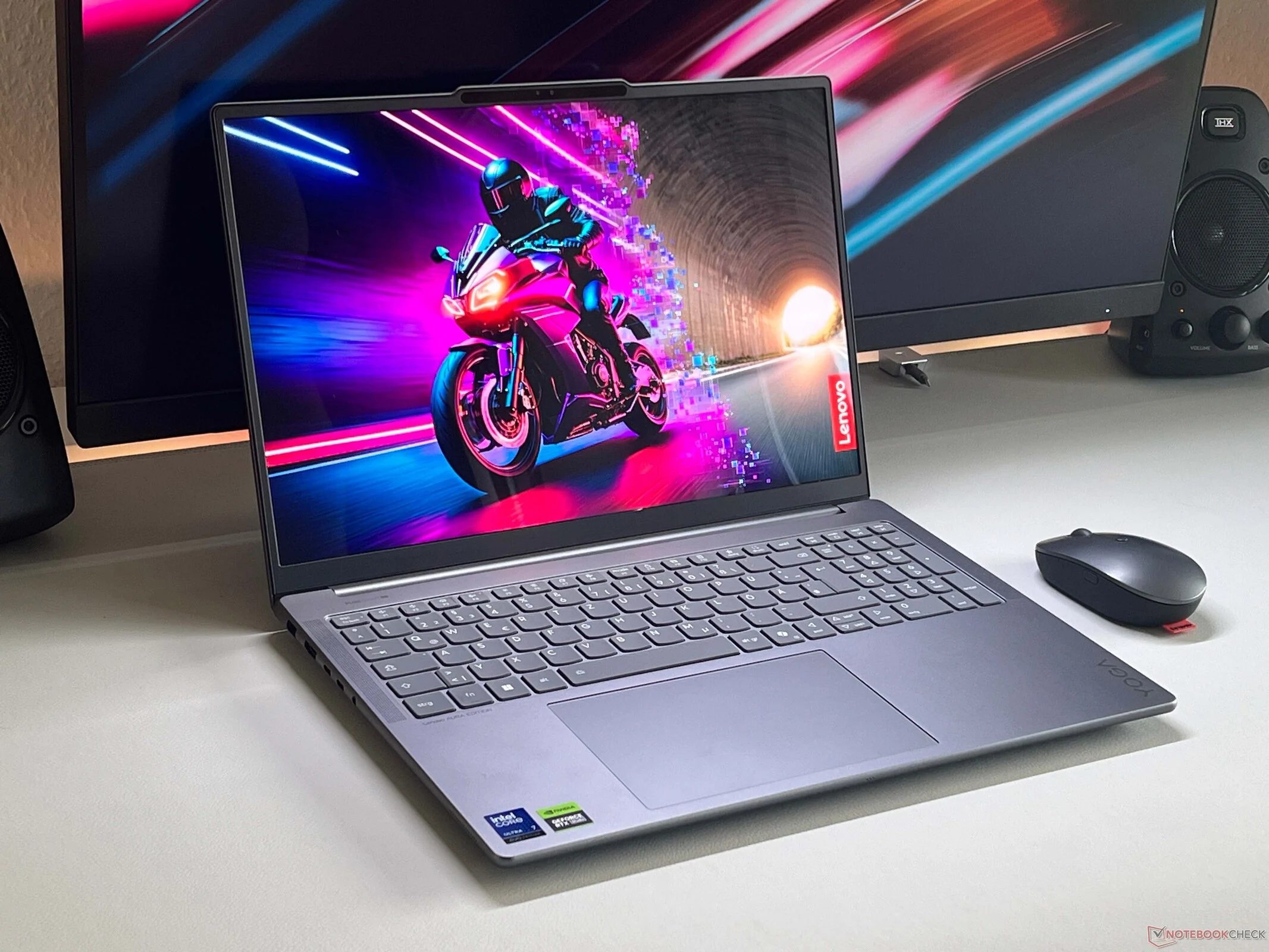
    The Lenovo Yoga Pro 9i 16 is the first laptop we’ve looked at that features this tandem OLED display. With a resolution of 3200 x 2000 pixels and a refresh rate of 120 Hz, it delivers exceptional image quality, covering the AdobeRGB color spectrum. In terms of brightness, it rivals Apple’s Mini-LED display, achieving nearly 1,000 nits in SDR and up to 1,600 nits in HDR. There is some PWM flickering at brightness settings of 60% and lower, but since the frequency exceeds 1 kHz and the amplitude is minimal, it shouldn’t pose any problems. When compared to the Mini-LED panel (which merges a traditional IPS display with Mini-LED backlighting), the OLED’s response times are significantly better, and there are fewer blooming issues. This could hint at what the OLED display in a future MacBook Pro may look like.

    A Closer Look at the OLED Screens

    Examining the 2.8K OLED display of the Yoga Pro 9i 16, which we previously reviewed, is also quite fascinating. It delivers remarkable image quality with high brightness levels (up to 1,100 nits) and stands out as one of the finest panels available today. However, if you frequently engage with HDR content (like games and movies) or utilize the broader color gamut, the 3.2K display is a significant upgrade. The new tandem OLED screen is also more power-efficient at equivalent brightness levels, as we found slightly longer battery life during our Wi-Fi testing compared to the 2.8K OLED. For more details on the new tandem OLED screen, check out our review of the Yoga Pro 9i 16.