
Key Takeaways
1. Mini-LED panels, like those in the Apple MacBook Pro, set a high standard for laptop brightness, reaching up to 1600 nits HDR and 1000 nits SDR.
2. Tandem OLED technology, which stacks two light-emitting layers, offers brighter images, more vivid colors, and better efficiency compared to traditional OLED panels.
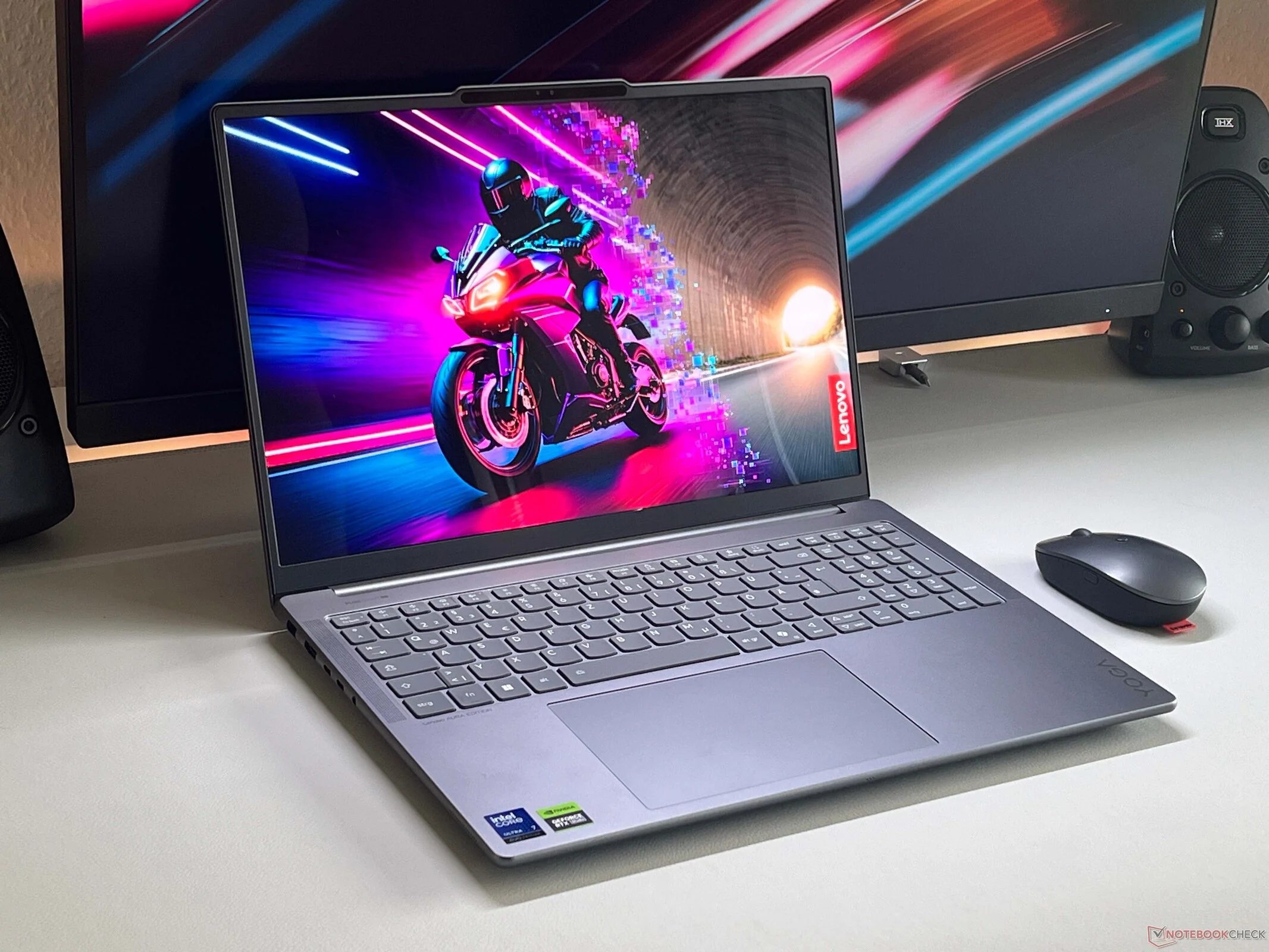
3. The Lenovo Yoga Pro 9i 16 is the first laptop featuring a tandem OLED display, achieving brightness levels comparable to Mini-LEDs (up to 1600 nits HDR and nearly 1000 nits SDR).
4. The tandem OLED display in the Yoga Pro 9i 16 provides better response times and fewer blooming issues compared to Mini-LED panels.
5. The new tandem OLED screen is more power-efficient, resulting in longer battery life while maintaining high brightness levels.
Mini-LED panels have set the standard for laptop brightness. A prime instance of this is the current Apple MacBook Pro, boasting brightness levels that reach up to 1600 nits HDR and 1000 nits SDR. While OLED panels have made strides this year, their peak brightness still maxes out at roughly 700 nits for SDR and 1,100 nits for HDR content. This brings us to a new technology called tandem OLED, which stacks two light-emitting layers. This advancement not only provides brighter images and more vivid colors but also enhances efficiency.
Lenovo’s Yoga Pro 9i 16
The Lenovo Yoga Pro 9i 16 is the first laptop we’ve looked at that features this tandem OLED display. With a resolution of 3200 x 2000 pixels and a refresh rate of 120 Hz, it delivers exceptional image quality, covering the AdobeRGB color spectrum. In terms of brightness, it rivals Apple’s Mini-LED display, achieving nearly 1,000 nits in SDR and up to 1,600 nits in HDR. There is some PWM flickering at brightness settings of 60% and lower, but since the frequency exceeds 1 kHz and the amplitude is minimal, it shouldn’t pose any problems. When compared to the Mini-LED panel (which merges a traditional IPS display with Mini-LED backlighting), the OLED’s response times are significantly better, and there are fewer blooming issues. This could hint at what the OLED display in a future MacBook Pro may look like.
A Closer Look at the OLED Screens
Examining the 2.8K OLED display of the Yoga Pro 9i 16, which we previously reviewed, is also quite fascinating. It delivers remarkable image quality with high brightness levels (up to 1,100 nits) and stands out as one of the finest panels available today. However, if you frequently engage with HDR content (like games and movies) or utilize the broader color gamut, the 3.2K display is a significant upgrade. The new tandem OLED screen is also more power-efficient at equivalent brightness levels, as we found slightly longer battery life during our Wi-Fi testing compared to the 2.8K OLED. For more details on the new tandem OLED screen, check out our review of the Yoga Pro 9i 16.


Leave a Reply