Tag: Tandem OLED

  • Dell unveils Nvidia RTX creator laptop: 16-inch OLED, 128GB RAM

    Dell unveils Nvidia RTX creator laptop: 16-inch OLED, 128GB RAM

    Key Takeaway

    – Dell’s XPS 16 Creator Edition challenges the Surface Laptop Ultra and MacBook Pro M5 by focusing on the creative professional market.
    – It is among the first laptops to feature Nvidia’s RTX Spark platform, enabling local AI and high-performance computing in a slim form factor.
    – Key specs include up to 128GB of unified memory, a Tandem OLED display with True Black HDR 600, and built-in SD card reader and HDMI port.
    – The laptop balances slim design with robust thermal and processing demands for modern AI and creative workflows.
    – Pricing and launch date are unannounced, with RTX Spark laptops expected in fall 2026.


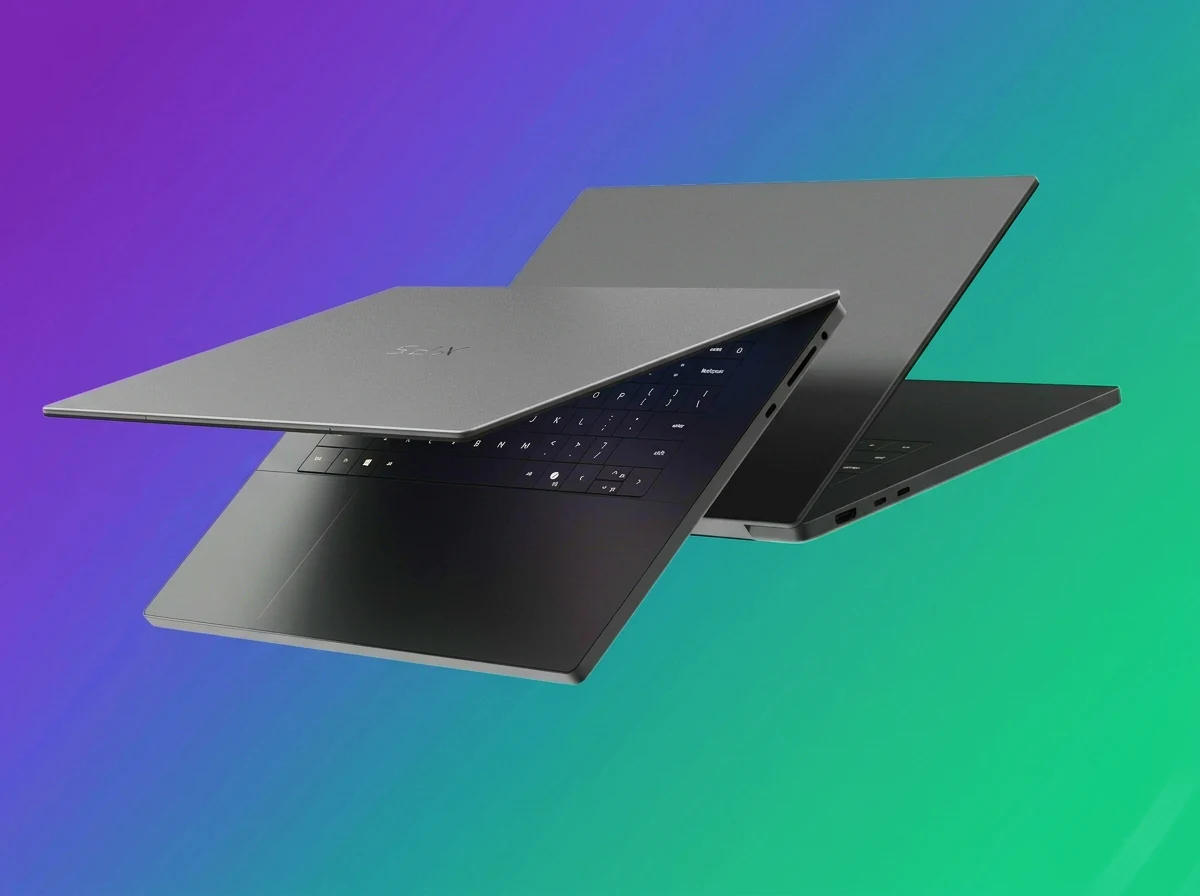
    After unveiling its MacBook Neo rival, Dell has officially challenged the just-announced Surface Laptop Ultra and Apple’s MacBook Pro M5 series by announcing the upcoming Dell XPS 16 Creator Edition, starting a monumental shift for the premium laptop line.

    Bridging Productivity and Workstation Power

    Designed to bridge the gap between traditional productivity machines and high-performance workstations, the new laptop is among the first to feature the newly announced Nvidia RTX Spark platform. This architecture is really quiet a big deal for portable systems.

    Core Specifications of the RTX Spark

    The core of the XPS 16 Creator Edition is the integration of Nvidia’s RTX Spark architecture. Nvidia’s new chips are engineered to bring a full-stack AI environment to slim, portable form factors. By combining a high-performance RTX GPU with an ultra-efficient CPU and up to 128GB of unified memory, Dell aims to provide power users and AI developers with local computing capabilities previously reserved for bulkier systems. This means you don’t need a huge desktop anymore to run heavy AI models.

    For creative professionals, this RTX Spark-powered XPS 16 translates into tangible workflow improvements: rendering tasks can be completed much faster, video editing timelines will feel smoother, and complex 3D models can be manipulated in real time without lag.

    Display and Port Selection Upgrades

    While performance is the headliner, Dell has focused on practical usability for creators who work on the move. The XPS 16 Creator Edition features a Tandem OLED display capable of True Black HDR 600, ensuring high color accuracy for pro-grade design and color grading. The screen also supports a high refresh rate and covers the full DCI-P3 color gamut for vibrant visuals.

    Built-in Connectivity Returns

    Addressing common pain points for portable laptops, the XPS 16 Creator Edition also features a built-in SD card reader and an HDMI port (just like the Surface Laptop Ultra and MacBook Pro). This welcome upgrade aims to reduce the reliance on dongles for photographers and videographers who frequently offload media. It supports USB-C charging aswell, but having these legacy ports is a major plus.

    With the XPS 16 Creator Edition, Dell is positioning its flagship laptop to compete more directly in the professional creative market currently dominated by Apple’s Macs, while balancing the slim aesthetic of the XPS series with the robust thermal and processing demands of modern AI and creative workflows.

    Future Plans and Launch Window

    Dell says that the new XPS 16 Creator Edition is only the first step in the company’s collaboration with Nvidia, and there’s more to come. Pricing and an official launch date haven’t been announced yet, but most new RTX Spark laptops are expected to debut in the fall of 2026. There will be more models revealed later that also use this platform.

    Sources

  • Affordable Gigabyte MO27Q28GR 280Hz OLED Monitor for $599.99

    Affordable Gigabyte MO27Q28GR 280Hz OLED Monitor for $599.99

    Key Takeaways

    1. The Gigabyte MO27Q28GR features a 280Hz Tandem OLED panel with a peak brightness of 1,500 nits and 99.5% DCI-P3 color accuracy.
    2. It is similar to the previous model, the MO27Q28G, but offers a glossy display coating instead of a matte finish.
    3. The monitor is priced at $599.99, undercutting the Asus ROG Strix OLED XG27AQWMG by $50.
    4. It includes a built-in KVM switch and a USB-C port with 15W Power Delivery.
    5. Shipping for the monitor is scheduled between March 5 – 9.


    Gigabyte has launched the MO27Q28GR in the United States, following its reveal at CES 2026 last month. This monitor features a 280Hz Tandem OLED panel from LG Display, which boasts impressive specifications such as a peak brightness of 1,500 nits in HDR. Additionally, it offers enhanced color accuracy with 99.5% DCI-P3 coverage while using 20% less power than earlier 3rd Generation WOLED monitors.

    Similarities to Previous Model

    In many ways, this new monitor is akin to the Gigabyte MO27Q28G that was released in 2025. The key distinction lies in the display coating: the earlier version has a matte finish, while the MO27Q28GR provides a glossy alternative using the same 280Hz Tandem OLED panel. This option serves as a competitor to the Asus ROG Strix OLED XG27AQWMG, which is currently priced at $649 on Amazon. Both finishes offer unique benefits, with glossy screens generally producing richer colors and deeper blacks, particularly in bright settings.

    Pricing and Features

    The MO27Q28GR is available for $599.99 on Amazon, matching the price of its matte predecessor and undercutting the Asus ROG Strix OLED XG27AQWMG by $50. Additionally, the Gigabyte model includes a built-in KVM switch and a USB-C port, though it only supports 15W Power Delivery. On the flip side, for an extra $50, the Asus model features a proximity sensor aimed at minimizing burn-in issues. According to Amazon, the shipping window is set for March 5 – 9.

    Source:
    Link


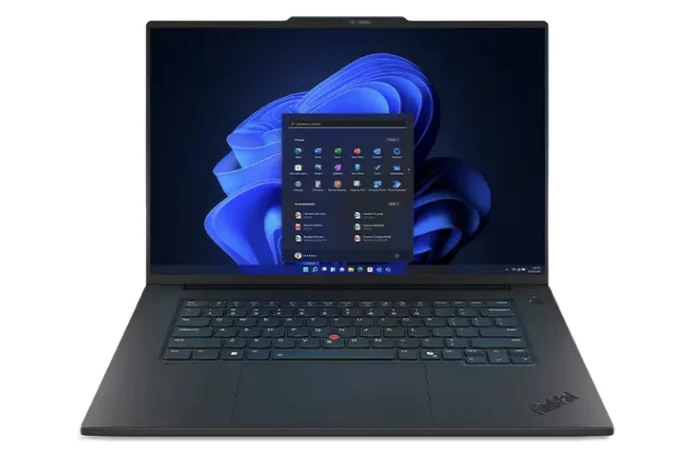
  • Lenovo ThinkPad P1 Gen 8: Bright OLED Display at 1500 Nits

    Lenovo ThinkPad P1 Gen 8: Bright OLED Display at 1500 Nits

    Key Takeaways

    1. The ThinkPad P1 16 Gen 8 features a new tandem OLED touchscreen with exceptional brightness levels.
    2. It can reach 600 nits in SDR mode and up to 1500 nits in HDR mode, outshining many competitors.
    3. The tandem OLED display eliminates the halo effect often seen in mini-LED laptops, enhancing HDR content quality.
    4. The high HDR brightness may not be necessary for the primary professional users of the workstation.
    5. Lenovo may use this advanced panel in future premium multimedia and gaming laptops where HDR is more relevant.


    The ThinkPad P1 16 Gen 8 might appear just like its predecessor, the ThinkPad P1 16 Gen 7, but it comes with some noteworthy upgrades. A standout feature is the new tandem OLED touchscreen, which provides several advantages over standard OLED displays, notably its remarkable brightness levels. In fact, the ThinkPad P1 16 Gen 8 can achieve 600 nits in SDR mode and an impressive 1500 nits in HDR mode, a fact we verified using our independent X-Rite colorimeter.

    Brightness Comparison

    At 600 nits, this Lenovo workstation outshines many IPS or OLED multimedia laptops, which typically max out between 400 and 500 nits. When HDR is turned on, the maximum brightness of 1500 nits surpasses that of even high-end gaming laptops with mini-LED technology, such as the Razer Blade 18. Furthermore, the tandem OLED display does not experience the halo effect commonly seen in mini-LED laptops, resulting in HDR content looking exceptionally vivid on the ThinkPad P1 16 Gen 8.

    Target Audience Consideration

    However, having such a high HDR brightness feature on a mobile workstation feels a bit odd, since professionals who are the main users may not require such elevated brightness levels. It’s likely that Lenovo will incorporate this same panel option in some of their premium multimedia and Legion gaming laptops down the line, where HDR functionalities could be seen as a more valuable selling point.

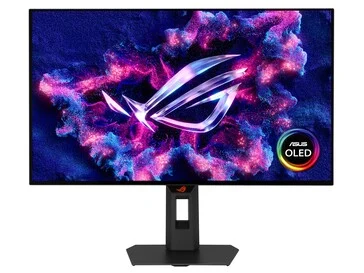
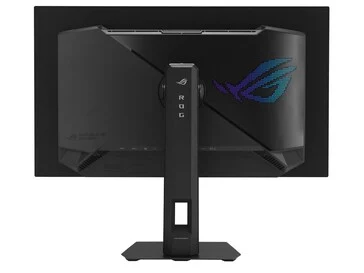
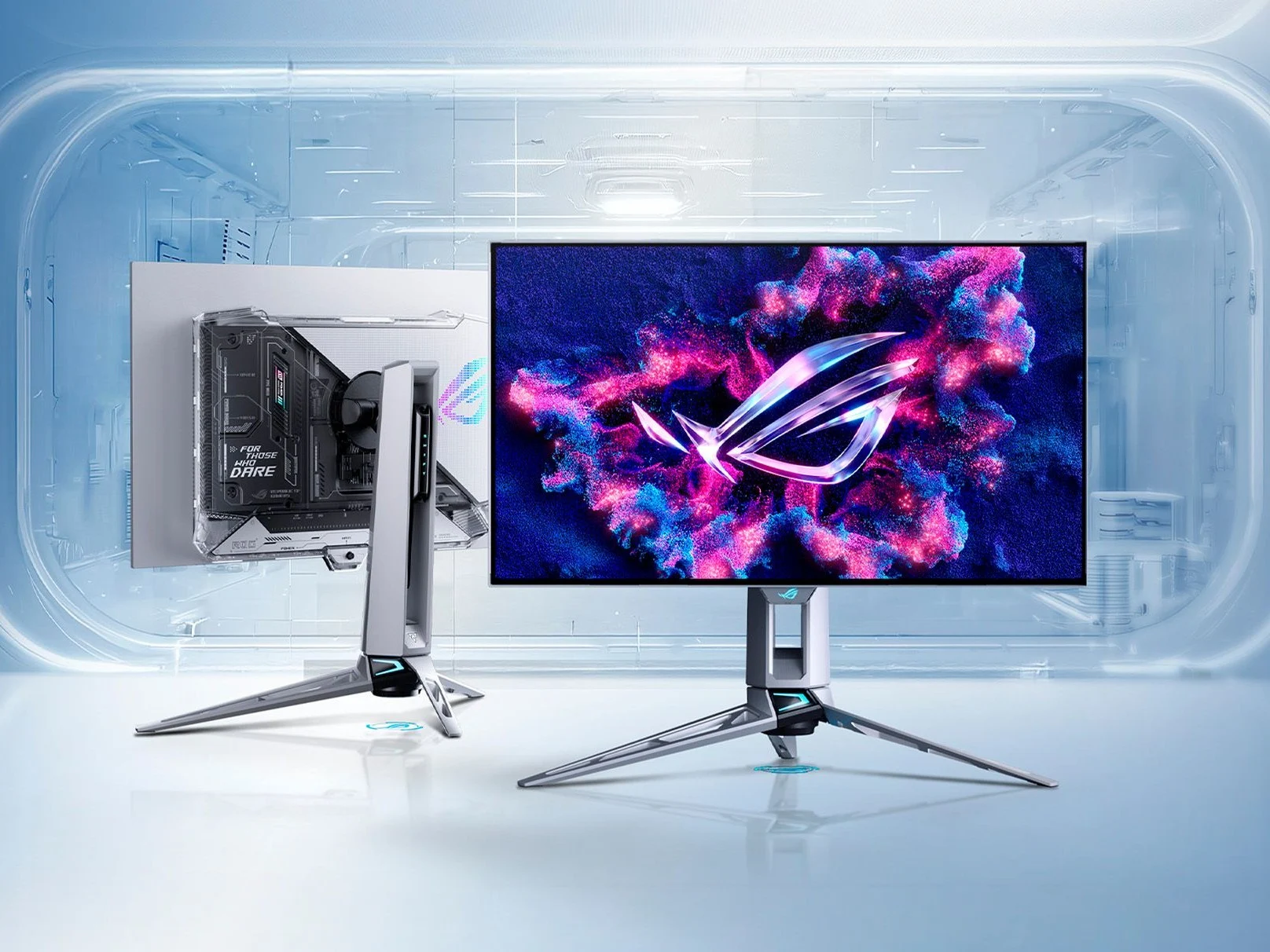
  • Asus Launches 720Hz OLED Gaming Monitors at $1,099

    Asus Launches 720Hz OLED Gaming Monitors at $1,099

    Key Takeaways

    1. Asus has launched two new monitors in the U.S.: the ROG Swift OLED PG27AQWP-W and Strix OLED XG27AQWMG, featuring LG’s latest Primary RGB Tandem OLED panel for improved performance.

    2. The ROG Swift OLED PG27AQWP-W offers an impressive refresh rate of up to 720Hz, with a native refresh rate of 540Hz at 1440p, making it ideal for competitive gamers.

    3. The ROG Strix OLED XG27AQWMG is priced at $599.99, providing a budget-friendly option compared to competitors while still offering high-quality features.

    4. Both monitors share a 1440p resolution, cover 99.5% of the DCI-P3 color space, and are VESA DisplayHDR 500 True Black certified with peak HDR brightness of 1,500 nits.

    5. Unique features of both models include a glossy screen, an integrated proximity sensor, and support for G-SYNC compatibility and HDMI 2.1.


    Asus has recently introduced the ROG Swift OLED PG27AQWP-W and Strix OLED XG27AQWMG monitors in the United States. Both of these models utilize LG’s latest Primary RGB Tandem OLED panel, which is claimed to have notable benefits compared to older 2nd- and 3rd-generation WOLED panels, including better brightness, a wider color range, and more.

    Unique Features

    Unlike many other Tandem OLED monitors, the PG27AQWP-W and XG27AQWMG come with a glossy screen and an integrated proximity sensor. The ROG Swift OLED PG27AQWP-W impressively can push its refresh rate up to a staggering 720Hz. However, even though Asus announces availability for both models, we haven’t spotted any listings at significant retailers as of now.

    Competitive Edge

    As mentioned earlier, the PG27AQWP-W boasts a native refresh rate of 540Hz at 1440p and can also switch to a 720Hz mode at 720p resolution, making it an excellent choice for gamers who are serious about competition. It also has a stunningly quick 0.02 ms response time and supports DisplayPort 2.1a UHBR20, allowing it to achieve its top refresh rates without needing DSC.

    The PG27AQWP-W is priced at $1099 in the United States, which is surprisingly lower than in other markets, like China.

    Pricing Comparison

    The ROG Strix OLED XG27AQWMG features a 27-inch display with a 1440p resolution and a maximum refresh rate of 280Hz. It directly competes with models like the LG Ultragear 27GX700A-B (currently listed at $846.27 on Amazon) and the Gigabyte MO27Q28G. However, the Asus monitor shines with its TrueBlack Glossy coating, which promises to deliver superior colors and contrast.

    Asus has set the price for the ROG Strix OLED XG27AQWMG at $599.99, making it a more budget-friendly choice compared to both the LG and Gigabyte monitors. The Gigabyte MO27Q28G is not yet available in the U.S. but can be found in the UK for £529.99 (~$698).

    Similarities

    Despite their differences in refresh rates, the PG27AQWP-W and XG27AQWMG share many features. Both have a 1440p resolution, cover 99.5% of the DCI-P3 color space, and are VESA DisplayHDR 500 True Black certified. Additionally, their peak HDR brightness has increased to 1,500 nits, up from 1,300 nits seen in the 3rd Gen WOLED monitors.

    Source:
    Link


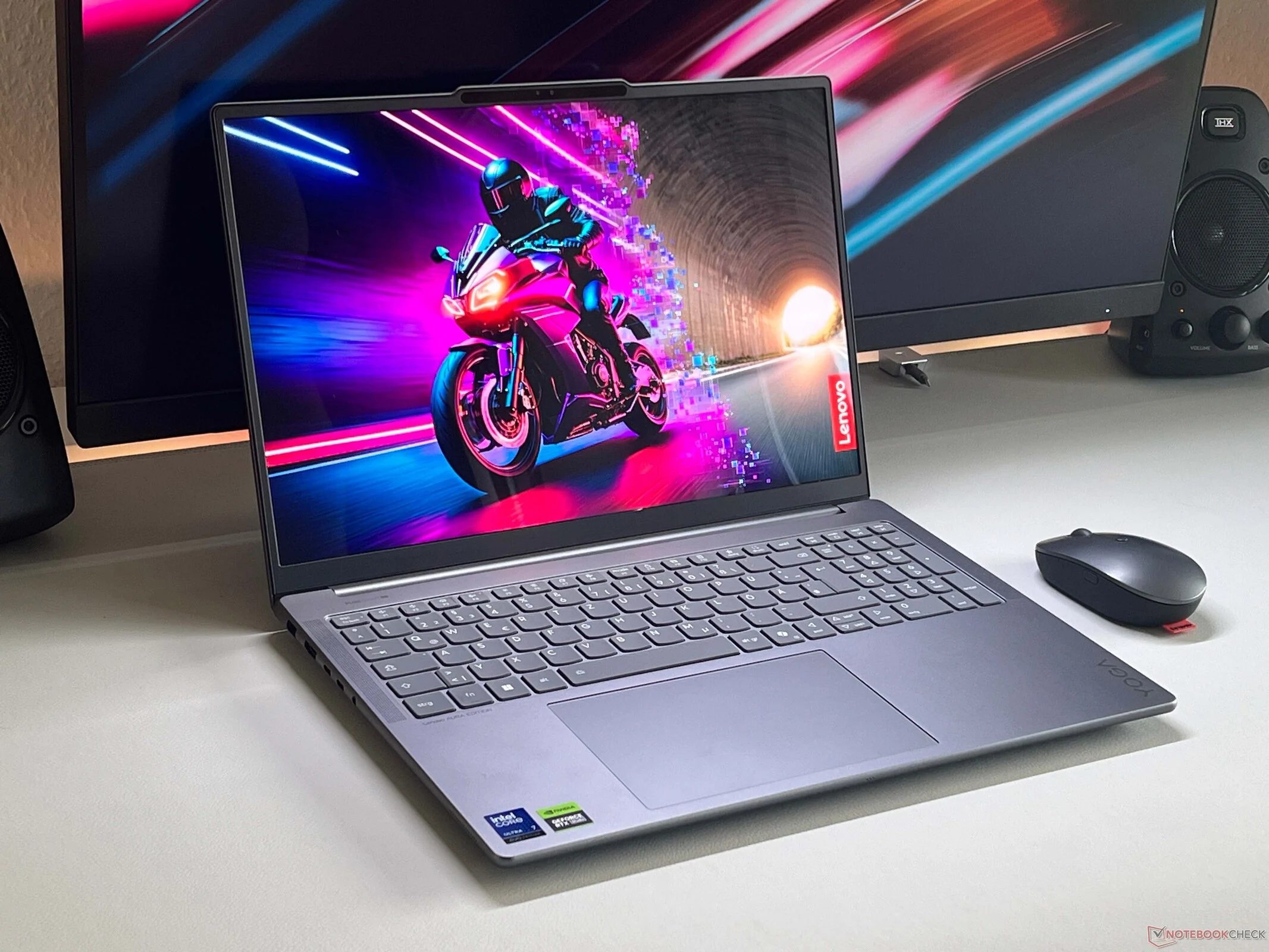
  • Lenovo Yoga Pro 9i: Best Notebook Display with New Tandem-OLED Panel

    Lenovo Yoga Pro 9i: Best Notebook Display with New Tandem-OLED Panel

    Key Takeaways

    1. Mini-LED panels, like those in the Apple MacBook Pro, set a high standard for laptop brightness, reaching up to 1600 nits HDR and 1000 nits SDR.
    2. Tandem OLED technology, which stacks two light-emitting layers, offers brighter images, more vivid colors, and better efficiency compared to traditional OLED panels.
    3. The Lenovo Yoga Pro 9i 16 is the first laptop featuring a tandem OLED display, achieving brightness levels comparable to Mini-LEDs (up to 1600 nits HDR and nearly 1000 nits SDR).
    4. The tandem OLED display in the Yoga Pro 9i 16 provides better response times and fewer blooming issues compared to Mini-LED panels.
    5. The new tandem OLED screen is more power-efficient, resulting in longer battery life while maintaining high brightness levels.


    Mini-LED panels have set the standard for laptop brightness. A prime instance of this is the current Apple MacBook Pro, boasting brightness levels that reach up to 1600 nits HDR and 1000 nits SDR. While OLED panels have made strides this year, their peak brightness still maxes out at roughly 700 nits for SDR and 1,100 nits for HDR content. This brings us to a new technology called tandem OLED, which stacks two light-emitting layers. This advancement not only provides brighter images and more vivid colors but also enhances efficiency.

    Lenovo’s Yoga Pro 9i 16

    The Lenovo Yoga Pro 9i 16 is the first laptop we’ve looked at that features this tandem OLED display. With a resolution of 3200 x 2000 pixels and a refresh rate of 120 Hz, it delivers exceptional image quality, covering the AdobeRGB color spectrum. In terms of brightness, it rivals Apple’s Mini-LED display, achieving nearly 1,000 nits in SDR and up to 1,600 nits in HDR. There is some PWM flickering at brightness settings of 60% and lower, but since the frequency exceeds 1 kHz and the amplitude is minimal, it shouldn’t pose any problems. When compared to the Mini-LED panel (which merges a traditional IPS display with Mini-LED backlighting), the OLED’s response times are significantly better, and there are fewer blooming issues. This could hint at what the OLED display in a future MacBook Pro may look like.

    A Closer Look at the OLED Screens

    Examining the 2.8K OLED display of the Yoga Pro 9i 16, which we previously reviewed, is also quite fascinating. It delivers remarkable image quality with high brightness levels (up to 1,100 nits) and stands out as one of the finest panels available today. However, if you frequently engage with HDR content (like games and movies) or utilize the broader color gamut, the 3.2K display is a significant upgrade. The new tandem OLED screen is also more power-efficient at equivalent brightness levels, as we found slightly longer battery life during our Wi-Fi testing compared to the 2.8K OLED. For more details on the new tandem OLED screen, check out our review of the Yoga Pro 9i 16.


  • Gigabyte MO27Q28G OLED Monitor Launches in UK at Low Price

    Gigabyte MO27Q28G OLED Monitor Launches in UK at Low Price

    Key Takeaways

    1. Gigabyte’s MO27Q28G Tandem OLED monitor is now available for preorder in the UK for £499.99 (around $662), with shipping starting on October 29.
    2. It features a 4th Gen WOLED panel with Primary RGB Tandem OLED technology, enhancing brightness, text clarity, and color volume compared to previous models.
    3. The monitor offers impressive HDR brightness of up to 1,500 nits and SDR brightness of 335 nits, covering nearly 99.5% of the DCI-P3 color gamut.
    4. It includes competitive gaming features such as a 280Hz refresh rate, 0.03 ms response time, G-Sync technology, and customizable in-game enhancements.
    5. The MO27Q28G comes with a variety of ports, an integrated KVM switch, OLED care features, and a 3-year warranty for the OLED panel.


    Gigabyte has launched its eagerly awaited MO27Q28G Tandem OLED monitor in the UK market. Initially introduced at Computex 2025, this model has been accessible in Europe since last month. UK consumers can now place preorders on Amazon for £499.99 (around $662), with the expected shipping date set for October 29.

    Features and Specifications

    As mentioned in earlier reports, the MO27Q28G is equipped with the cutting-edge 4th Gen WOLED panel produced by LG, which is also featured in the LG 27GX700A-B (currently priced at $847.99 on Amazon). This innovative panel incorporates a new Primary RGB Tandem OLED technology, which is claimed to enhance both SDR and HDR brightness, sharpen text clarity, and expand color volume compared to the older 3rd Gen WOLED monitors.

    At approximately $662, Gigabyte’s monitor is significantly more affordable while offering extra features like an integrated KVM switch.

    Performance Improvements

    When compared to the previous generation, the Gigabyte MO27Q28G achieves up to 1,500 nits in HDR brightness, and the SDR brightness has improved to 335 nits, up from the former 1,300 nits and 275 nits. The Primary RGB Tandem panel design further boosts text clarity and color accuracy. Specifically, the MO27Q28G covers nearly 99.5% of the DCI-P3 color gamut, slightly surpassing the 98.5% coverage seen in earlier models. Thanks to the DisplayHDR True Black 500 certification, viewers can expect games and films to appear more vivid and lifelike.

    Gaming Features

    While the MO27Q28G might not offer the ultra-smooth visuals seen in 500Hz OLED monitors like the Aorus FO27Q5P, it still comes equipped with several competitive gaming features. It boasts a refresh rate of 280Hz, a response time of just 0.03 ms, and G-Sync technology for tear-free gaming experiences. Additionally, it provides in-game enhancements such as customizable crosshairs and the option to adjust resolution and aspect ratio on the fly.

    Additionally, purchasers will have access to a comprehensive selection of ports, including DisplayPort 1.4, HDMI 2.1, USB-C, and USB-A. The monitor also integrates a built-in KVM switch and offers various OLED care features, alongside a 3-year warranty for the OLED panel.

    The Gigabyte MO27Q28G is now available for preorder in the UK via Amazon, with shipments commencing on October 29.

    Source:
    Link


  • LG Display Pioneers Tandem OLED for Future Apple iPhones

    LG Display Pioneers Tandem OLED for Future Apple iPhones

    Key Takeaways

    1. LG Display is promoting Tandem OLED panels for use in new devices, starting with the Dell XPS 13 and Apple iPad Pro models.
    2. Tandem OLED technology improves brightness and reduces power consumption by placing subpixels in a unique layout.
    3. Apple may implement Tandem OLED panels in future iPhones, with plans to supply them by 2028.
    4. The introduction of Tandem OLED technology is expanding into the gaming monitor market with various models available.
    5. Consumers may have to wait until the iPhone 20 or iPhone XX to see Tandem OLED panels in iPhones.


    LG Display is really pushing Tandem OLED panels into new areas, first shown last year in the Dell XPS 13. Soon after, Apple started using similar panels in the latest iPad Pro 11 and iPad Pro 13 (currently $1,099 on Amazon), which have much brighter peak brightness compared to regular OLED tablet screens.

    Future iPhones with Tandem OLED

    A recent report suggests that Apple might be looking to use Tandem OLED panels in its upcoming iPhones. Earlier this month, we talked about how these panels would place all the subpixels in the front layer, with blue subpixels at the back. This design aims to boost brightness while cutting down on power use. Allegedly, LG Display is encouraging Apple to integrate Tandem OLED tech into iPhones, with a source telling DealSite, “It is understood that LG Display is continuously promoting Apple to install tandem OLED on Bar-type iPhones…We aim to supply tandem OLED to iPhone models to be released in 2028. However, it is up to Apple whether or not to install tandem OLED.”

    Waiting for New Technology

    This means we might have to wait until the iPhone 20 or iPhone XX at the earliest before we see Tandem OLED panels in iPhones. Meanwhile, Tandem OLED technology is now being introduced to the gaming monitor market through two different panel types. For instance, early models include the Asus ROG Swift OLED PG27AQWP-W, Gigabyte MO27Q28G, and the LG UltraGear OLED 27GX700A.

    Source:
    Link


  • Xiaomi 15 Ultra: Dual-Layer OLED Display, 24GB RAM Tipped

    Xiaomi 15 Ultra: Dual-Layer OLED Display, 24GB RAM Tipped

    Another leak regarding the upcoming Xiaomi 15 series has surfaced, this time focusing on the top-tier Xiaomi 15 Ultra.

    While the standard and Pro models are anticipated to launch shortly after Qualcomm’s Snapdragon 8 Gen 4 release, making them the first to feature this new SoC, the Ultra variant is rumored to be released sometime in Q1 2025. But leaks have been trickling out, revealing details about the phone.

    Display and Technology

    Now, tipster Smart Pikachu suggests the phone will feature a 2K dual-layer OLED display. This technology, recently dubbed “Tandem OLED” by Apple in their latest iPad, offers improved brightness and HDR performance compared to single-layer OLED panels.

    While Apple may have brought the term to the mainstream, Honor actually debuted it earlier with the Magic 6 Ultimate. Nonetheless, Xiaomi seems ready to embrace the stacked OLED trend.

    Specifications

    The Xiaomi 15 Ultra is expected to be powered by the Snapdragon 8 Gen 4 processor, like its siblings. The leak also hints at an impressive 24GB of RAM and a battery capacity of over 6000mAh.

    However, this might come at a cost — both in terms of weight and size. Smart Pikachu suggests that the 15 Ultra won’t be light or thin. Xiaomi’s current flagship, the 14 Ultra, is already quite hefty at 9.2mm thick and weighing 229.5 grams. The 15 Ultra could be a real hand-filler if the leak holds true.

    Release and Availability

    It’s important to remember that these are just leaks, and Xiaomi’s final design choices could differ. However, they do offer a glimpse into the potential direction the company might be taking with its upcoming flagship.

    A previous report also indicated that Xiaomi has plans to launch both the vanilla model and the Xiaomi 15 Ultra globally, while the Xiaomi 14 Pro may remain exclusive to the Chinese market.


    Xiaomi 15 Ultra: Dual-Layer OLED Display, 24GB RAM Tipped