Tag: LG Display

  • Apple Watch battery boost with HMO over LTPO OLED

    Key Takeaway

    – Apple Watch Series 11 battery life improvement is a marketing trick; real runtime is barely longer.
    – For longer battery life now, you need an Apple Watch Ultra or a smartwatch from another brand.
    – A major battery life upgrade is expected in 2027 with the Apple Watch Series 13.
    – This upgrade comes from using new HMO OLED displays from LG Display, which consume less power.
    – HMO OLED panels are not ready for mass production yet, missing the Series 12 release.


    Apple Watch Series 11 Battery Life Trickery

    Acording to Apple, the Apple Watch Series 11 achieves a battery life of 24 hours instead of the 18 hours that older models were supposed to achieve. However, this “upgrade” was only achieved by Apple bought by a trick. In practice, the battery life is hardly any longer. So if you want a longer runtime, you currently have to either go for the much larger and more expensive Apple Watch Ultra or a smartwatch from another manufacturer.

    Upcoming Apple Watch Ultra 4 Design and Series 12 Software

    This year, the Apple Watch Ultra 4 in particular is set to receive a new design, while the Apple Watch Series 12 is said to mainly benefit from software improvements. According to a new report from The Elec the Apple Watch could finally get a longer battery life in 2027.

    Future HMO OLED Technology for Better Battery

    This is because LG Display is currently developing a High-Mobility Oxide (HMO) TFT. This HMO OLED panel is intended to replace the LTPO OLED display of future Apple Watches. As LG Display will initially produce these panels in very small formats, the Apple Watch is the most likely product from the iPhone manufacturer to benefit from this technology first. HMO is said to have one major advantage over LTPO: lower power consumption.

    No Panels for Series 12, HMO Could Arrive in 2027

    It is still unclear when exactly the first HMO OLED panels will be delivered. As LG Display has not yet validated the panels for mass production, the displays will not be available for the Apple Watch Series 12. At the earliest, the panel might be ready to ship as part of the Apple Watch Series 13, which is expected to be launched in September 2027. The Elec | Giang duong (teaser image)

    Sources
  • 2028 iPhone with Advanced 4-Side Bending OLED Displays

    2028 iPhone with Advanced 4-Side Bending OLED Displays

    Key Takeaway

    1. Apple is exploring the use of IZO cathode technology for a more advanced, 4-side bending OLED panel for 2028 iPhones.
    2. LG Display is investing heavily (~$770M) in OLED infrastructure to develop this new transparent electrode tech, likely for early R&D and eventual mass production.
    3. Samsung Display is considering new factory lines to accommodate the required equipment, due to current limitations in their existing lines.

    New Developments in OLED Technology for Future iPhones

    Recently, industry insiders, like ETNews, reported that Apple is making moves to improve their display tech, especially for their next big thing. They chatting with South Korean display companies to develop a new 4-side bending OLED panel, set for release in 2028. This technology could turn the actual shape and look of future iPhones into something more flexible and sleek, offering a higher level of perfection.

    Innovations in Transparent Electrode Materials

    This new design involves curving all four edges of the screen, which is a complex engineering feat. What’s more interesting is that Apple aims to make this possible by using a new cathode material—most likely IZO (Indium Zinc Oxide). The cathode, as you may know, is a crucial part of OLEDs, letting light pass through in top-emission displays. Using a more transparent cathode should greatly enhance the display’s clarity at the curved edges, making the phone look sharper and more seamless. This isn’t just about style, it’s about tech and functionality, and Apple sure is pushing hard for it.

    Manufacturers Gear Up for the Transition

    Samsung and LG, Apple’s main OLED producers, are already preparing for this upgrade. LG seems to be ahead with a significant investment of about 770 million dollars, aiming to establish new OLED infrastructure. This investment targets the development and later mass production of these advanced panels, especially focusing on the delicate TCO sputtering equipment needed for low-damage deposition. They plan to start R&D first, then scale up production when all is ready.

    Challenges and Industry Shifts

    Meanwhile, Samsung Display is considering whether they should buy new factory lines. But their current facilities are somewhat limited—they either lack the space or the flexibility needed for the new equipment. Therefore, a new dedicated line appears more likely. Apple’s strong push to accelerate this transition, however, makes the Korean companies feel the need to spend sooner on factories so they can meet ultra-high standards set by Apple. This race to develop these flexible, transparent displays is on, and everyone is gearing up for the 2028 release date.

    Sources
  • LG Display’s 240 Hz RGB OLED Panel Solves Key Monitor Issues

    LG Display’s 240 Hz RGB OLED Panel Solves Key Monitor Issues

    Key Takeaways

    1. LG Display will showcase an innovative OLED panel at CES 2026 that enhances text sharpness.
    2. WOLED panels have an extra white subpixel for brightness but can reduce text clarity and cause color fringing.
    3. Samsung’s QD-OLED panels offer better text clarity than WOLEDs but still experience some fringing issues on Windows.
    4. LG’s new RGB stripe OLED panel features a straight-line RGB subpixel configuration, improving text readability and reducing visual distortions.
    5. The new panel boasts a native 4K resolution with a 240 Hz refresh rate, suitable for gaming and professional tasks, with competition from TCL CSOT on the horizon.


    It appears that LG Display has a lot more to present at CES 2026 than just the new Tandem WOLED panel sizes. The company has revealed it will display an innovative OLED panel designed to enhance text sharpness, which has been a concern with many OLED monitors.

    WOLED vs QD-OLED

    To summarize, LG Display’s WOLED panels incorporate an extra white subpixel in addition to the RGB subpixels, which boosts the panel’s brightness. However, this setup also diminishes text sharpness and may lead to color fringing, showing red, green, and blue halos around the text. On the other hand, Samsung’s QD-OLED panels provide slightly improved text and edge clarity compared to WOLEDs, although their triangular RGB pixel arrangement still results in some fringing, particularly on Windows, where ClearType isn’t fully optimized.

    New RGB Stripe OLED Panel

    The latest LG Display RGB stripe OLED panel features a genuine RGB subpixel configuration, with the red, green, and blue subpixels aligned in a straight line. LG Display asserts that this design “significantly cuts down on visual distortions like color bleeding and fringing, even when viewed closely.” Most importantly, LG Display claims the panel is “optimized for operating systems like Windows and for font-rendering engines, making sure of superb text readability and high color precision.”

    Improved Features and Competition

    While this isn’t the first OLED panel to adopt an RGB stripe subpixel design, past versions were limited to a 60 Hz refresh rate. The new panel from LG Display combines a native 4K resolution with an impressive 240 Hz refresh rate, which can shift to 480 Hz at 1080p, making it ideal for both gaming and productivity tasks, including text editing and professional design activities. That being said, TCL CSOT is also developing an RGB OLED panel that may rival LG Display’s newest model.

    LG Display aims to unveil the new 240Hz RGB stripe OLED panel at CES in January.

    Source:
    Link


  • Apple’s 2027 Anniversary iPhone to Challenge Display Manufacturers

    Apple’s 2027 Anniversary iPhone to Challenge Display Manufacturers

    Key Takeaways

    1. By 2027, LG is expected to produce most iPhone 20 screens, shifting from Samsung’s current dominance in display production.
    2. LG Display is investing 400 billion Korean won (around $271 million) to develop new display technology for Apple’s upcoming iPhone.
    3. The iPhone 20 will feature entirely new AMOLED panels that are borderless and curved, differing from Samsung’s previous Edge panels.
    4. New production challenges include creating curved edges, thinner protective layers, and integrating components like Face ID and the camera under the display.
    5. Samsung may need to build additional factories to meet the demands of producing the new type of display required by Apple.


    From today’s view, it seems that by 2027, most iPhone 20 screens might be produced by LG. This is according to a report from the Korean media outlet Dealsite which says LG is making significant efforts to gear up for making these new displays. Typically, Samsung Display accounts for 60% of iPhone display panels, while LG Display makes up the remaining 40%. Yet, Samsung seems to be focusing mainly on creating foldable AMOLED panels for the upcoming iPhone Fold next year, as shared by an industry source with the magazine. When it comes to the anniversary iPhone, there’s a surprising lack of updates from Samsung’s suppliers.

    LG’s Major Investment

    On the flip side, LG Display is said to be putting in a massive investment of 400 billion Korean won (around $271 million) for Apple’s 2027 iPhone, which, after the iPhone 18, is expected to skip the iPhone 19 name and go straight to iPhone 20 or iPhone XX. Industry insiders note that these large investments are mainly because Apple’s display needs call for entirely new manufacturing techniques. The AMOLED panels are designed to be completely borderless and curved on all sides, which is a whole new idea compared to Samsung’s previous Edge panels.

    New Production Challenges

    The panels must have their edges curved, and the circuitry has to follow suit. Moreover, the thin-film encapsulation (TFE) method that protects against moisture and air must be much thinner. Additionally, Apple plans to seamlessly integrate all visible components, like the Face ID sensor and FaceTime camera, under the display. This plan will demand brand new production facilities from display makers. An industry expert believes that Samsung will also likely need to construct additional factories to manufacture this new type of Apple display.

    Source:
    Link


  • OLED TV Production Costs Drop, But Discounts Not Coming Soon

    OLED TV Production Costs Drop, But Discounts Not Coming Soon

    Key Takeaways

    1. Decreasing Production Costs: The cost of producing OLED panels is expected to drop significantly, from around $1,000 in 2020 for a 65-inch panel to potentially below $500 by 2026.

    2. Consumer Price Expectations: Despite lower production costs, consumers may not see immediate price drops in retail due to manufacturers needing to recover initial investment costs.

    3. LG Display’s Cost-Cutting Strategies: LG Display has achieved a 30% reduction in production expenses through expanded production lines and plans further efficiency improvements for future OLED production.

    4. Competitive Landscape: OLED technology faces competition from RGB LED displays, but their overall production costs are comparable, making OLED still a strong contender.

    5. Cautious Future Outlook: Consumers should temper their expectations for quick price reductions as manufacturers aim to maintain their premium pricing and profit margins even with decreasing costs.


    Over the past ten years, OLED TVs have gradually shifted from being luxury items to common features in home entertainment. Companies like LG Display have been fine-tuning their manufacturing methods, and new reports from the industry suggest that their hard work is starting to show results, at least out of sight.

    Production Costs Decrease

    A new report from FlatpanelsHD indicates that the expense involved in making OLED panels is continually decreasing. Back in 2020, the production cost for a 65-inch OLED panel from LG Display was around $1,000. By 2024, this number is expected to have fallen to about $600, with estimates hinting it might dip below $500 before 2026 arrives. Additionally, the production of larger panels, like the 77-inch and 83-inch models, is also getting cheaper thanks to improved efficiency and higher yield rates.

    Consumer Expectations

    While this news might be exciting for buyers looking for cheaper OLED TVs, experts in the industry warn that these cost reductions won’t immediately lead to significant price drops on store shelves. The report suggests that companies still need to recover their initial expenses related to factory upgrades, new production lines, and employee training. Because of these upfront costs, manufacturers are more inclined to absorb the extra margin rather than pass on the full savings to consumers.

    LG Display’s Strategies

    The Korean news source Biz Chosun provides more insights into LG Display’s ongoing efforts to cut costs. Their expansion of production lines and increases in yield reportedly resulted in a 30% drop in production expenses last year. For 2025, LG Display plans to further lower costs through innovative design changes in the display driver structure, which is anticipated to enhance the efficiency of OLED production.

    This improvement in cost efficiency not only benefits LG but also helps shield it from rising competition from RGB LED displays, which are often referred to as the “OLED killer.” These displays are seen as potential rivals due to their superior brightness and color accuracy. However, as noted by Biz Chosun, when you include the expenses for LED chips, backlight components, and driver systems, the production costs for RGB LEDs also fall within the $400–$600 range, indicating they might not be as financially advantageous as thought.

    Future Outlook

    Despite the promising outlook for OLED technology, consumers should keep their expectations in check regarding immediate price reductions. TV manufacturers usually prefer to maintain their pricing structures to uphold their premium market status and profit margins, even as their internal costs go down. This suggests that the OLED price revolution might take longer to arrive in homes.

    Currently, the decreasing production costs point to a bright future for display technology, even with RGB miniLED vying for the best price-to-performance ratio, where OLED still holds a strong position, remaining robust and gradually moving toward being more affordable for the mass market.

    Source:
    Link


  • LG Display Pioneers Tandem OLED for Future Apple iPhones

    LG Display Pioneers Tandem OLED for Future Apple iPhones

    Key Takeaways

    1. LG Display is promoting Tandem OLED panels for use in new devices, starting with the Dell XPS 13 and Apple iPad Pro models.
    2. Tandem OLED technology improves brightness and reduces power consumption by placing subpixels in a unique layout.
    3. Apple may implement Tandem OLED panels in future iPhones, with plans to supply them by 2028.
    4. The introduction of Tandem OLED technology is expanding into the gaming monitor market with various models available.
    5. Consumers may have to wait until the iPhone 20 or iPhone XX to see Tandem OLED panels in iPhones.


    LG Display is really pushing Tandem OLED panels into new areas, first shown last year in the Dell XPS 13. Soon after, Apple started using similar panels in the latest iPad Pro 11 and iPad Pro 13 (currently $1,099 on Amazon), which have much brighter peak brightness compared to regular OLED tablet screens.

    Future iPhones with Tandem OLED

    A recent report suggests that Apple might be looking to use Tandem OLED panels in its upcoming iPhones. Earlier this month, we talked about how these panels would place all the subpixels in the front layer, with blue subpixels at the back. This design aims to boost brightness while cutting down on power use. Allegedly, LG Display is encouraging Apple to integrate Tandem OLED tech into iPhones, with a source telling DealSite, “It is understood that LG Display is continuously promoting Apple to install tandem OLED on Bar-type iPhones…We aim to supply tandem OLED to iPhone models to be released in 2028. However, it is up to Apple whether or not to install tandem OLED.”

    Waiting for New Technology

    This means we might have to wait until the iPhone 20 or iPhone XX at the earliest before we see Tandem OLED panels in iPhones. Meanwhile, Tandem OLED technology is now being introduced to the gaming monitor market through two different panel types. For instance, early models include the Asus ROG Swift OLED PG27AQWP-W, Gigabyte MO27Q28G, and the LG UltraGear OLED 27GX700A.

    Source:
    Link


  • LG Unveils 540 Hz 4th Gen WOLED Panel for OLED Gaming Monitors

    LG Unveils 540 Hz 4th Gen WOLED Panel for OLED Gaming Monitors

    Key Takeaways

    1. LG Display introduced its first 540 Hz, 27-inch WOLED panel, with interest from companies like Gigabyte and SDC for future gaming monitors.
    2. The panel features 1,500 nits peak brightness, potentially reaching 4,000 nits in HDR mode, though this high brightness is limited to 3% of the panel area.
    3. It maintains a 99.5% coverage of the DCI-P3 color space, ensuring excellent color performance.
    4. The panel achieves its 540 Hz refresh rate at a native resolution of 1440p, with an option to boost to 720 Hz at 720p using Dual Mode technology.
    5. The availability date for the new 4th Gen 27-inch WOLED panel in consumer gaming monitors has not yet been confirmed.


    LG Display has recently disclosed additional details regarding its initial 540 Hz and 27-inch WOLED panel. To provide some background, the company had previously hinted at this panel a few months back. While complete specifics are still unclear, Gigabyte and SDC have already shown interest in being among the first to incorporate this panel into their upcoming gaming monitor models.

    Display Showcase

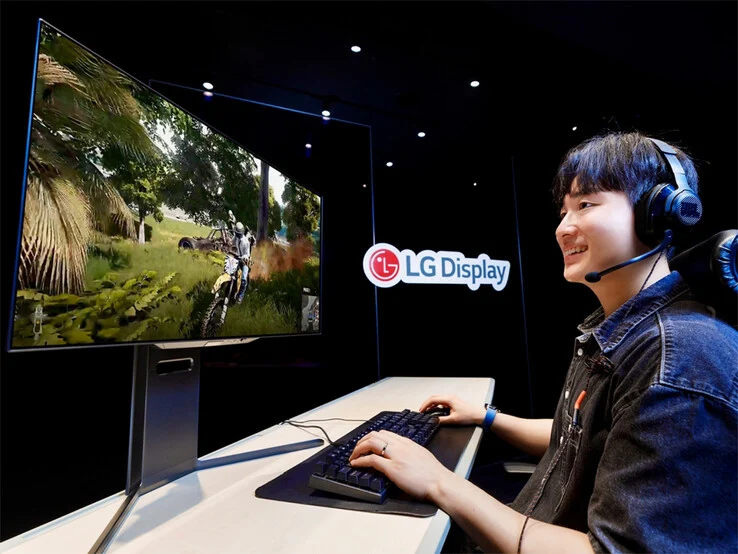
    During the K-Display 2025 event held at COEX in Seoul, LG Display also presented the 5K2K panel that is featured in the UltraGear OLED 45GX950A, currently priced at $1,996 on Amazon. LG Display emphasizes that this panel is part of its 4th generation OLED lineup, utilizing Primary RGB Tandem technology. Consequently, the 540 Hz panel offers an impressive peak brightness of 1,500 nits, which can soar to 4,000 nits when HDR mode is enabled. However, LG Display has not yet confirmed this, though it is expected that the 4,000 nits brightness will only apply to 3% of the panel at any given moment (3% APL).

    Color Performance

    In addition, the new panel will continue to deliver performance comparable to previous WOLED panels, boasting a 99.5% coverage of the DCI-P3 color space. Furthermore, LG Display has officially stated that the new 27-inch panel achieves its 540 Hz refresh rate at a native resolution of 1440p. Alternatively, users can take advantage of LG’s Dual Mode technology, which allows the refresh rate to be increased to 720 Hz by lowering the resolution to 720p. It is still uncertain when this latest 4th Gen 27-inch WOLED panel will be available for purchase in gaming monitors for consumers.

    Source:
    Link


  • LG Display Tests JDI eLEAP OLED Tech for Brighter, Efficient Panels

    LG Display Tests JDI eLEAP OLED Tech for Brighter, Efficient Panels

    Key Takeaways

    1. LG Display is testing Japan Display’s eLEAP OLED technology, which uses lithography instead of FMM, leading to finer pixel structures and higher aperture ratios.
    2. The evaluation is happening at LG Display’s Paju facility, utilizing existing equipment for quick assessment and low investment.
    3. eLEAP technology shows potential for niche markets, especially in 20~30-inch automotive displays and monitors, with advantages like enhanced brightness and lower power consumption.
    4. Samsung Display is rumored to explore eLEAP technology, indicating increased industry interest in maskless OLED production methods.
    5. Successful tests of eLEAP could revolutionize the OLED industry by improving yields and performance, enabling more energy-efficient and high-resolution displays.


    LG Display has started to work on and test Japan Display’s (JDI) eLEAP OLED technology, which doesn’t use FMM. Instead, eLEAP employs lithography for arranging red, green, and blue OLED materials, which allows for a finer pixel structure and higher aperture ratios. JDI asserts that this innovative method produces an aperture ratio that is twice that of standard FMM OLED, thus enhancing light-emitting efficiency from 28% to 60%.

    Testing at Paju Facility

    The evaluation is taking place on LG Display’s E4 production line in Paju, South Korea, which typically manufactures large OLED panels for televisions. The company already has all the required CVD and thin-film encapsulation equipment, compatible with eLEAP, allowing for a swift assessment and minimal investment in new capital.

    Potential Market Applications

    While LG Display has yet to make a decision regarding mass production of eLEAP, the company acknowledges the technology’s potential for niche OLED markets, particularly in the 20~30-inch range for automotive displays and monitors. The Paju facility is suitable for initial operations due to its current lower utilization, since most TV OLED panels are produced in Guangzhou, China.

    eLEAP panels come with several advantages, like enhanced brightness, lower power consumption, and the potential for flexible and shapeable displays. The company claims its technology significantly prolongs the lifespan of OLED panels by more than three times when compared to those using FMM, and offers over double the brightness of existing FMM-based OLEDs. These benefits match the market demands for energy-efficient, high-performance displays in VR headsets, wearables, and the automotive sector.

    Industry Interest in eLEAP

    There are also rumors that Samsung Display is looking into eLEAP, with research and development expected to begin in late 2024, which shows a growing interest in maskless OLED production techniques within the broader industry. Additionally, the Chinese OLED manufacturer Vixionox is advancing towards non-FMM OLED production using the ViP branding for its next-generation OLED lines.

    Although the timeline for commercial launch is still uncertain, these tests might signify a turning point for the OLED industry. Traditional FMMs restrict design possibilities and increase costs. If these efforts prove successful, LG Display and others may enhance yields and performance, paving the way for a new era of energy-efficient, high-resolution displays across various devices.

    Source:
    Link


  • LG Display Unveils 540 Hz OLED Panel Plans for Gaming Monitors

    LG Display Unveils 540 Hz OLED Panel Plans for Gaming Monitors

    Key Takeaways

    1. LG Display is launching two new WOLED screens, including a gaming monitor with 4,000 nits brightness and 540 Hz refresh rate, set to release later this year.
    2. The new monitor will have a peak brightness of around 1,500 nits for a small portion of the screen, surpassing current models like the LG UltraGear OLED 27GX790A-B.
    3. The 540 Hz panel will outperform Samsung’s existing 500 Hz QD-OLED panel, which has the same resolution and fast response time.
    4. LG Display’s Dual-Mode technology allows the panel to reach 720 Hz at 720p resolution, with only one monitor currently using this feature.
    5. Mass production of the 540 Hz model is planned for late this year, while a similar 27-inch WOLED panel with 280 Hz refresh rate is already in production, with the Gigabyte MO27Q28G expected to launch this summer.


    LG Display has revealed some information about what TFTCentral believes to be at least two new WOLED screens expected to launch later this year. To recap, Asus mentioned initial details about a new gaming monitor that offers 4,000 nits brightness and a refresh rate of 540 Hz last month at Computex 2025.

    Brightness and Specifications

    In its press release, LG Display does not specify the 4,000 nits peak brightness. Instead, it mentions that gamers can look forward to around 1,500 nits for a small part of the 27-inch screen (APL 1.5%). Nevertheless, this display will shine brighter than LG Display’s current model found in monitors like the LG UltraGear OLED 27GX790A-B, which is currently priced at $899.99 on Amazon.

    Competitive Edge

    Additionally, this 540 Hz panel would be faster than a 500 Hz version made by Samsung Display. This 500 Hz QD-OLED panel is already used in more gaming monitors and has the same native resolution of 2,560 x 1,440 pixels and a fast 0.03 ms GtG response time as the upcoming LG Display model.

    Innovative Features

    As always, LG Display has its Dual-Mode technology, which allows the panel to reach 720 Hz when it switches to 720p resolution. So far, only one monitor from Super Display Co (SDC) has been seen using this specialized 720p/720 Hz setting.

    Currently, LG Display aims to start mass production of this 540 Hz model in the latter half of the year. Meanwhile, the company has already begun making a similar 27-inch WOLED panel that uses 4th Gen Primary Tandem technology. This other panel features a 1440p resolution and a lowered refresh rate of 280 Hz. The Gigabyte MO27Q28G is expected to be the first model using this new panel, as the company displayed it at Computex 2025. The MO27Q28G is expected to be available for purchase later this summer.

    Source:
    Link


  • LG Achieves Mass Production of Blue Phosphorescent OLED Panels

    LG Achieves Mass Production of Blue Phosphorescent OLED Panels

    Key Takeaways

    1. LG Display is the first company to mass-produce blue phosphorescent OLED panels, a key element in achieving energy-efficient displays.
    2. The breakthrough was made possible through collaboration with Universal Display Corporation (UDC) and will debut at SID Display Week 2025.
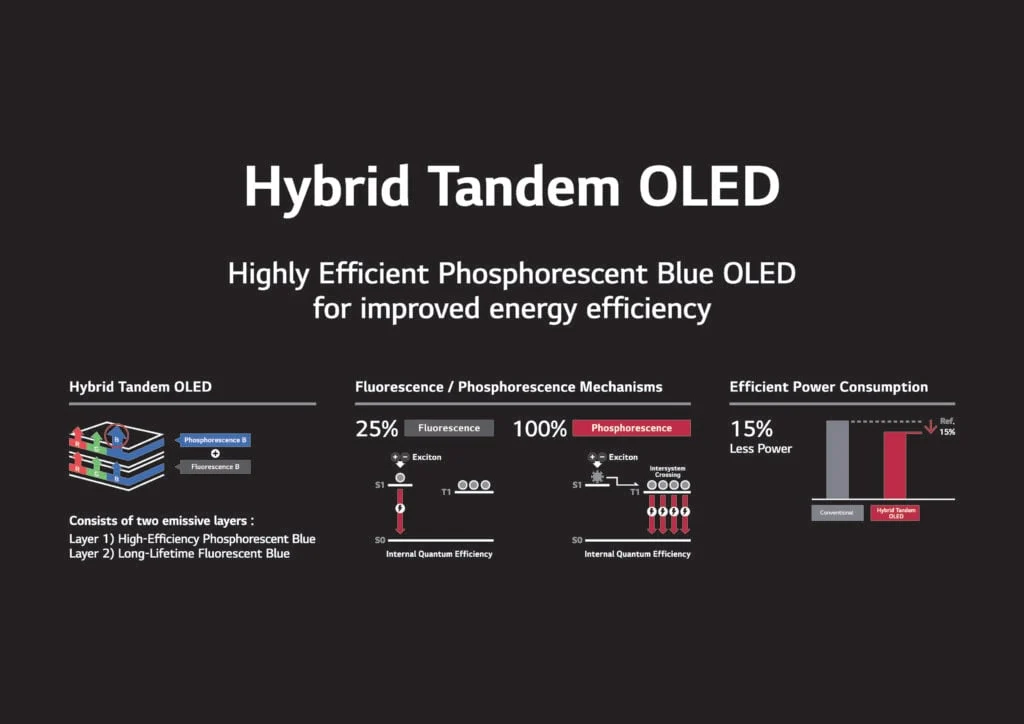
    3. Blue phosphorescent materials address the inefficiency of current blue fluorescence, which only achieves 25% light emission efficiency.
    4. LG’s innovative “dual-stack tandem” design combines blue fluorescence with blue phosphorescence, reducing power consumption by approximately 15%.
    5. This technology enables brighter displays, longer battery life, and potential applications in smartphones, tablets, wearables, and AR/VR devices.


    LG Display has recently achieved a significant milestone that many in the display sector have long sought after. They are now the first to mass-produce blue phosphorescent OLED panels. This is crucial because blue has often been seen as the missing element in what is referred to as the “dream OLED,” a display that utilizes energy-efficient phosphorescence for red, green, and blue colors.

    LG Display’s Breakthrough in Power Efficiency

    This innovation comes after eight months of collaboration with Universal Display Corporation (UDC), and the new panel is scheduled to make its debut at SID Display Week 2025 in San Jose. Interestingly, many people thought Samsung would be the first to succeed in creating blue phosphorescence and integrate it into future foldable devices like the Galaxy Z Fold 7 or Flip 7, but LG has taken the lead.

    The Importance of This Development

    So, why is this important? While red and green phosphorescent materials have been utilized for years in current OLED displays due to their high efficiency and low power consumption, blue has remained a tough nut to crack. Blue light, having a shorter wavelength and higher energy, poses significant challenges. The existing OLED panels have depended on blue fluorescence, which, while more stable, is quite inefficient, reaching only 25% light emission efficiency at best.

    Innovative Design Approach

    LG’s new method employs a hybrid “dual-stack tandem” structure. The lower layer continues to use blue fluorescence for added durability, but it is now combined with a blue phosphorescent layer on top. This setup reduces power consumption by approximately 15% while maintaining stability and lifespan. In an age dominated by power-hungry smartphones, tablets, and AI devices, this achievement is not just remarkable; it’s crucial.

    This advancement heavily relies on UDC’s PHOLED technology, which utilizes organometallic compounds that include heavy metals like iridium. These materials enable the panel to harness both singlet and triplet excitons, allowing it to extract significantly more light from the same energy input with nearly 100% efficiency.

    Beyond Just Energy Savings

    The advantages extend beyond merely lower power consumption. The new panels might facilitate brighter displays, longer-lasting batteries, and potentially slimmer devices. LG indicates that this technology is primarily targeted at small and medium displays, currently focusing on smartphones and tablets. However, there is evident potential for use in wearables, foldable devices, AI PCs, and even AR or VR headsets.

    The quest for blue phosphorescent OLED has been one of the toughest challenges in display technology. With LG’s recent breakthrough, the dream OLED is no longer just a theoretical idea—it is becoming a reality and will be available soon.

    Source:
    Link