Tag: Windows on Arm

  • Microsoft & Nvidia Use AI to Optimize Windows Apps on RTX Spark PCs

    Microsoft & Nvidia Use AI to Optimize Windows Apps on RTX Spark PCs

    Key Takeaway

    – Microsoft and Nvidia are betting on AI to optimize and run legacy x86 apps on Arm-based Windows PCs.
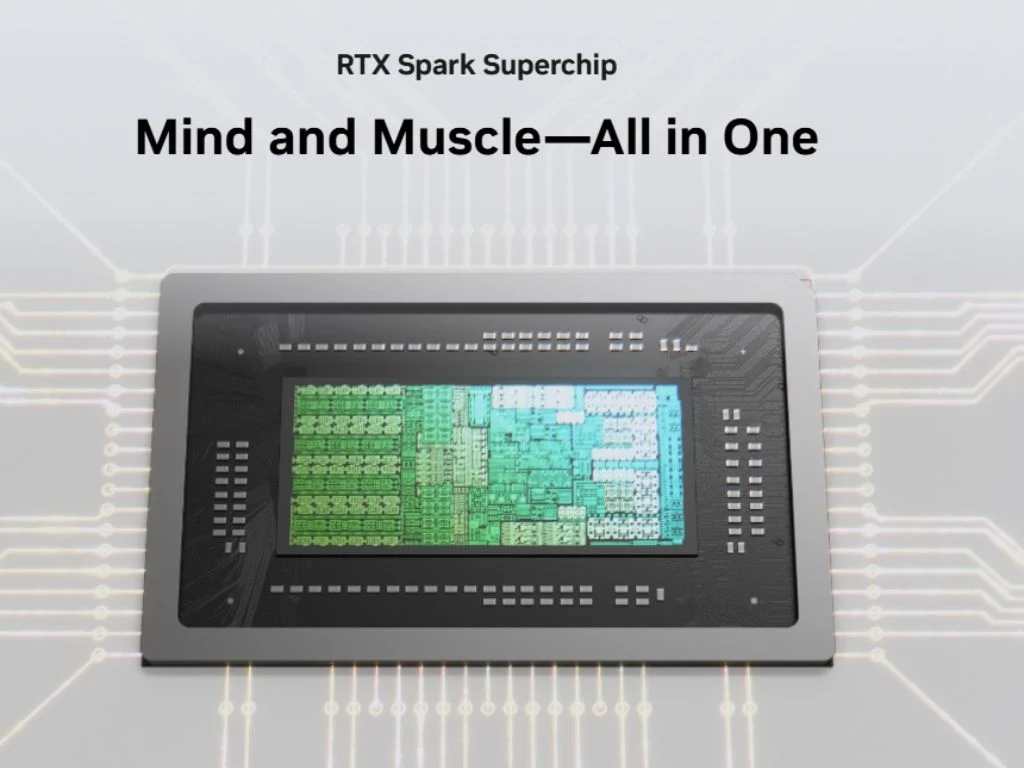
    – Nvidia unveiled the RTX Spark Superchip SoC, a slimmed-down Arm-based chip for laptops and compact desktops.
    – AI agents can help convert and validate x86 applications for improved speed, compatibility, and scale on Arm systems.
    – 90% of time on Windows on Arm PCs is spent on native apps, but some legacy apps and games still require manual code rework.
    – Complex apps with tight security (e.g., anti-cheat systems) will still need human oversight, despite Nvidia’s compatibility promises.


    Microsoft and Nvidia is currently making a calculated bet that AI can handle much of the heavy lifting in running older, unoptimized apps on the latest Windows on Arm and x86 hardware, including Nvidia’s powerful new RTX Spark chips and Qualcomm’s Snapdragon X processors.

    Nvidia announces new RTX Spark superchip

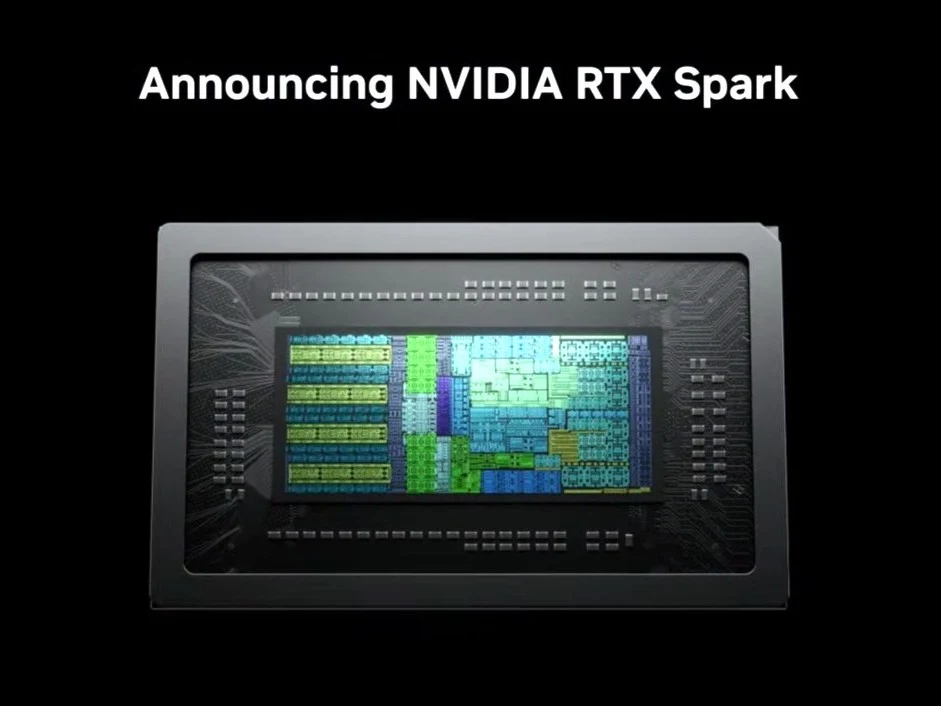
    At Computex on June 1, 2026, Nvidia announced that its Arm-based Grace Blackwell platform had been slimmed down for laptops and compact desktops, dubbing the new configuration the Nvidia RTX Spark Superchip SoC. This new chip promise to bring significant performance improvements for Windows on Arm devices while maintaining power efficiency. The superchip is designed to handle both AI workloads and traditional computing task with ease.

    Microsoft showcases agentic AI at Build 2026

    At its Build 2026 developer conference, Microsoft showcased how “agentic AI” could help convert and validate x86 apps for improved speed and better compatibility, and scale them more effectively on Arm-based systems. The session description read, “See where Arm performance gains are real today, and how agentic AI can help convert and validate x86 applications for speed, compatibility, and scale.” Microsoft’s demos showed AI agents automatically identifying bottleneck in x86 code running under emulation.

    NVIDIA’s Jensen Huang also stepped into the limelight, framed the bigger picture more clearly, and stated, “The PC is being reinvented. For forty years, you launched apps. Click. Type. With RTX Spark and Microsoft Windows, you ask, and the PC does the work.” Huang emphasized that this represents a fundamental shift in how users will interact with their computers going forward. Microsoft’s Satya Nadella stated that RTX Spark has been a “real breakthrough” for delivering “unmetered intelligence to every home and every desk with Windows.”

    Native application performance and emulation challenges

    Microsoft says that currently, 90 percent of the time people spend on their Windows on Arm PCs is inside applications that run natively without any translation layer. Some tools, such as the Prism emulator and related translation technologies, allow a range of older x86 programs to run on Snapdragon X laptops and upcoming RTX Spark machines. There are a few setbacks: some legacy business apps and certain games don’t perform well under emulation or don’t run at all. As a result, developers often have to manually rework parts of the code to achieve optimal performance on Arm hardware.

    AI agents reduce cloud dependency

    That’s where Nvidia and Microsoft step into the picture with their new generation of Arm-based Windows PCs built around AI agents, which are designed to handle real work across apps without constantly communicating with the cloud. These AI agents can automatically detect when an application is struggling under emulation and apply optimization patch in real-time. This local processing capability means users don’t need to rely on internet connectivity for better app performance.

    All in all, Microsoft isn’t claiming that AI agents will magically fix everything overnight. Complex applications with tight security features, such as anti-cheat systems, will still require extensive human oversight, but Nvidia has promised at least some level of compatibility with existing anti-cheat software to placate gamers, a key demographic for the GPU designer, even as it pushes more dedicated hardware, such as the DGX Spark, for users looking to have more agency over their local AI inference.
    Sources
  • Asus Ascent QN10 Mini PC: Qualcomm Snapdragon X2 Elite AI

    Asus Ascent QN10 Mini PC: Qualcomm Snapdragon X2 Elite AI

    Key Takeaway

    – 18-core Snapdragon X2 Elite with 80 TOPS AI compute power
    – Up to 32GB LPDDR5x RAM and 4TB NVMe SSD storage
    – Runs Windows on ARM with native OpenClaw support
    – No Nvidia GPU, limiting AI model compatibility
    – Wi-Fi 7, Bluetooth 5.4, 2.5 GbE, and three USB4 ports


    Asus Ascent QN10 Mini PC Launches with Snapdragon Power

    The Asus Ascent QN10 mini PC has arrived targeting businesses and AI developers with an 18-core Snapdragon X2 Elite X2E-88-100 CPU offering 80 TOPS of AI compute power, up to 32 GB of LPDDR5x 9600 RAM, and up to 4 TB of M.2 2280 NVMe SSD storage. Developers have access to the Qualcomm AI Hub, a repository of select AI models and sample apps to use in training and developing customized ones, and can run OpenClaw natively on the CPU.

    Software and Compatibility Challanges

    The Ascent runs Windows on ARM, a variant of regular Windows 11 for x64 CPUs (AMD or Intel). The Snapdragon SoC offers performance at potentially less power than AMD or Intel offerings by using a design based on ARM CPUs commonly found in modern smartphones. The recently released MacBook Neo that Notebookcheck reviewed also uses a smartphone processor in a computer.

    Limitations Without Nvidia Graphics

    However, the AI mini PC does not have an Nvidia GPU, so it can’t run the much larger library of AI models, sample apps, and other AI services that Nvidia offers. Windows on ARM is also limited in its app, driver, and peripheral compatibility versus regular Windows 11 for x64 (AMD or Intel).

    Connectivity and Port Selection

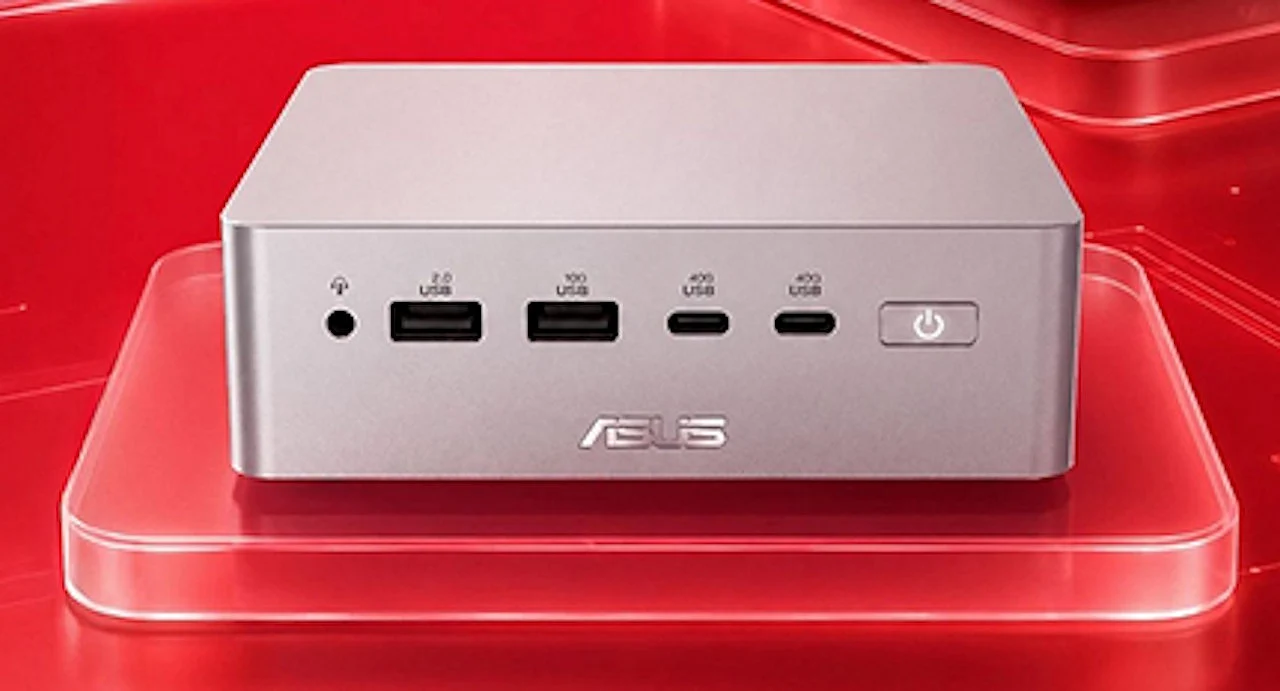
    The QN10 comes with Wi-Fi 7, Bluetooth 5.4, and 2.5 GbE connectivity. It also has three USB4 ports, three USB-A 3.2 ports, one USB-A 2.0 port, one HDMI 2.1 FRL port, and a headphone jack.

    • Wi-Fi 7 and Bluetooth 5.4
    • 2.5 GbE Ethernet
    • Three USB4 ports
    • Three USB-A 3.2 ports
    • One USB-A 2.0 port
    • One HDMI 2.1 FRL port
    • Headphone jack

    Dimensions and Weight Details

    The mini PC measures 130 x 130 x 40 mm (5.1 x 5.1 x 1.6 in.) and weighs 720 g (1.6 lbs.).

    Sources
  • Nvidia N1X Confirmed as RTX Spark: Release Details

    Nvidia N1X Confirmed as RTX Spark: Release Details

    Key Takeaway

    – RTX Spark is Nvidia’s new Windows on ARM chip, built on TSMC’s 3nm node, with a 20-core MediaTek CPU and 6,144 CUDA cores.
    – Supports up to 128 GB LPDDR5X unified memory, 600 GB/s NVlink bandwidth, and 1 petaflops FP4 AI performance.
    – Gaming features include DLSS 4.5, Frame Generation, and Reflex; runs 1440p games and supports anti-cheat for titles like Fortnite and Valorant.
    – Day-one creative app support includes Adobe Photoshop, Premiere, Blender, and CapCut, with 12K video decoding and 90 GB 3D scene rendering.
    – Launching in Fall 2026 in laptops from Asus, Dell, HP, Lenovo, Microsoft, and MSI, plus unspecified mini-PCs.


    Nvidia’s awaited Windows on ARM chip launches

    Nvidia’s long-awaited Windows on ARM chip is finally here. It is made on an unspecified 3 nm node from TSMC. Formerly known as the N1X, which was likely its internal codename, the chip will launch as the RTX Spark. It won’t be the only one, with Nvidia stating other, lower-specced SKUs expected to surface later. Of course, this isn’t exactly new information. Multiple reports talked about the N1X and its sub-variants at length, with the most recent leak confirming at least two variants.

    Specs are still a secret mostly

    Officially, Nvidia has refused to divulge much in the way of specs. The RTX Spark will come with an unspecified GPU with 6,144 CUDA cores and a 20-core CPU tailor-made by MediaTek. Nvidia claims the GPU can comfortably run games at 1440p thanks to DLSS 4.5, Frame Generation, Reflex, and the laundry list of gaming features found on Blackwell GPUs. Ray reconstruction and RTX Video Frame Gen are also supported.

    Creative softwares support is big

    Creatives will be pleased to know that Adobe Photoshop and Premiere will run on the RTX Spark on day one. Other companies, such as Blackmagic Design, Blender, CapCut, ComfyUI and OTOY have also partnered up with Nvidia to bring their software stack to the platform. The company claims power users can render 90 GB 3D scenes with OptiX and DLSS and edit 12K 4:2:2 video with the NVIDIA Blackwell decoder. Nvidia confirmed the machine will run Windows at launch but didn’t confirm/deny Linux support.

    Memory and AI chops

    The Nvidia RTX Spark supports up to 128 GB of LPDDR5X unified memory. With NVlink, its memory bandwidth peaks at 600 GB/s. Like everything else Nvidia has announced in the past year, the RTX Spark is touted as an AI powerhouse with 1 peraflops of FP4 performance. The company claims it can run 120 billion parameter models locally and even run ‘gaming agents’ that can, among other things, change your monitor’s refresh rate.

    Benchmarks and gaming readiness

    Nvidia has not shown off any performance metrics of the RTX Spark, meaning we have to rely on leaked benchmarks to figure out how it fares against other Arm-based offerings from Apple and Qualcomm. E-sports gamers will be pleased to know that Nvidia is actively working with numerous anti-cheat software makers to get the RTX Spark ready for popular titles. For now, the list includes Fortnite, Valorant, League of Legends, and PUBG, with more titles coming soon.

    Laptops and launch timeline

    Some of the laptops that will launch with the RTX Spark include the Asus ProArt P14, ProArt P15, Dell XPS 16, HP OmniBook X 14, HP OmniBook Ultra 16, Lenovo Yoga Pro 9n, Microsoft Surface Laptop Ultra and MSI Prestige N16 Flip AI. It will also power some mini-PCs, but Nvidia didn’t specify which ones. Machines powered by the RTX Spark are expected to hit shelves in Fall 2026.


    Sources

    • Surface Pro 12: 64GB RAM and Cellular Connectivity Announcement

      Surface Pro 12: 64GB RAM and Cellular Connectivity Announcement

      Key Takeaway

      – Surface Pro 12 introduces 12th-gen Intel Core Ultra CPUs (Core Ultra 5 335 or Core Ultra 7 366H) with LPDDR5X RAM options (16/32/64 GB) and no Arc B390 GPU option.
      – Available in 120 Hz IPS or OLED displays with battery options of 47 Wh (IPS) or 53 Wh (OLED), plus optional 5G cellular from launch.
      – Business-focused rollout: Surface Pro 12 launched first for business; Surface Pro 11 with Snapdragon remains on shelves, with Snapdragon X2 variants due later in 2026.


      Microsoft has launched the Surface Laptop 8 today

      Okay, so first thing, this paragraph changes style a bit and keeps a steady flow while still noting the core facts. The article repeats that Microsoft introduced the Surface Laptop 8 alongside a refreshed Surface Pro, which makes sense given their cadence of updates. There is mention of a Surface Pro 12 appearing globally, and the focus here is on business models rather than consumer variants, which affects availability timing and pricing dynamics. The tone remains informative but with a casual touch that hints at the strategic rollout and product positioning. The details about pricing references the typical pattern of higher prices for newer generations, bridging the information to what customers may expect in stores and online during launch windows.

      Key specs and configurations evolve

      In this paragraph, the writing shifts to a more technical register, stacking the specs in a concise list-like narrative without using bullet points. The Surface Pro 12 reportedly uses Intel Panther Lake processors from the twelfth gen, including Core Ultra 5 335 and Core Ultra 7 366H, with RAM options of 16, 32, or 64 GB LPDDR5X. This section explicitly notes the absence of an Arc B390 graphics option to align with the Surface Laptop 8, preserving consistency across the product line. The emphasis stays on hardware choices that impact performance, multitasking capability, and potential battery life, while keeping the prose readable for a general audience.

      Display, battery, and connectivity details

      Here, the style becomes more descriptive about the display and power aspects. The Surface Pro 12 offers a choice between 120 Hz IPS and OLED displays, paired with batteries rated at 47 Wh and 53 Wh respectively. The text also mentions optional 5G cellular connectivity available from day one, which is a key selling point for mobile professionals. The pricing note indicates a starting point in the US at $1,949, climbing to $2,249.99 with cellular, which helps shoppers gauge the added value of the connectivity option. The overall tone remains practical, highlighting what these options mean for daily use and on-the-go productivity.

      • Display choices: 120 Hz IPS or OLED
      • Battery options: 47 Wh or 53 Wh
      • Configurations: 5G available from launch

      Availability and business-focused rollouts

      In this final paragraph, the emphasis is on business-first availability and the strategic delay of consumer models. The article reiterates that the new Pro variant is being rolled out with business-oriented SKUs first, while the consumer sibling may follow later. The pricing remains a guiding beacon for potential buyers who need to weigh performance versus cost, and the absence of certain graphics options is framed as a deliberate alignment with the Laptop 8 lineup. The closing lines remind readers to consult official channels for the most current specs and regional availability, while keeping the style varied and accessible. The tone stays grounded, acknowledging that more versions and updates could surface in the future.


      Sources

    • Windows on ARM Hurts Surface Device Reputation for Users

      Windows on ARM Hurts Surface Device Reputation for Users

      Key Takeaways

      1. Performance Comparison: The Intel model of the Surface Pro offers better GPU performance, avoids compatibility issues, and operates with a quieter fan compared to the ARM version.

      2. Battery Life and Connectivity: The ARM version of the Surface Pro provides longer battery life in certain situations and includes an option for a built-in 5G modem.

      3. Target Audience: The new Intel Lunar Lake models are primarily aimed at business users who generally prefer x86 over ARM devices, while the higher price of the Intel model may deter private consumers.

      4. Surface Reputation Concerns: Microsoft’s strategy might damage the Surface brand’s reputation, as users have reported issues with Snapdragon processors, leading to higher return rates due to compatibility problems.

      5. Future Model Uncertainty: There is uncertainty about Microsoft’s future plans for other Surface models, such as the Surface Laptop Studio, especially in relation to the performance limitations of current Snapdragon chips.


      After the review of the Surface Laptop for Business, we had the chance to check out the convertible Surface Pro for Business, which comes with an Intel Lunar Lake processor. Our opinion was quite clear regarding the Intel version of the Surface Laptop, but the choice between the two models of the Surface Pro is more intricate, as each has its unique benefits. The Intel model avoids compatibility issues due to its x86 design, provides superior GPU performance, and runs with a quieter fan during regular use. Conversely, the ARM version boasts extended battery life in certain situations, enhanced multi-core CPU performance, and can come with a built-in 5G modem.

      Target Audience for New Models

      The latest Intel Lunar Lake models are aimed at business users, who seem to have a preference against ARM devices. While private consumers can also buy these models, the price gap makes it less appealing. For instance, our review unit costs about 800 Euros more than the similar ARM version during our assessment, which is difficult to rationalize.

      Concerns Over Surface Reputation

      We believe that Microsoft’s strategy might harm the reputation of the Surface line. Previous reports indicate that Surface models with Snapdragon processors are returned more often. This stems from the lack of information from Microsoft regarding potential limitations, as familiar applications may not function properly. It’s particularly important that casual users receive clear guidance; otherwise, offering both models would allow users to make their own choice.

      Microsoft appears to be withholding the superior Intel versions to promote Windows on ARM devices. There is no doubt that the Snapdragon versions of the Surface Pro and Surface Laptop are excellent for a specific group of users, but they aren’t for everyone. Moreover, we will have to wait and see how Microsoft plans to handle other models like the Surface Laptop Studio going forward (if they plan to release a new version), as there’s currently no Snapdragon chip that offers GPU performance on par with dedicated GPUs.

    • Lenovo Yoga 2-in-1 Leak Hints at Nvidia N1x Arm CPU with MediaTek

      Lenovo Yoga 2-in-1 Leak Hints at Nvidia N1x Arm CPU with MediaTek

      Windows on Arm has made notable strides lately, particularly in power efficiency and user experience, thanks to the new Qualcomm Snapdragon X Elite CPU family. If a recent leak from Lenovo is accurate, it appears that Nvidia may also be entering the Windows on Arm ecosystem alongside this mobile computing leader.

      Nvidia’s Entry into the Market

      A job listing that has since been taken down from Lenovo’s job board, along with the naming convention for a forthcoming Lenovo Yoga 2-in-1 laptop, suggests that Nvidia is preparing to introduce an Arm System on Chip (SoC) designed for Windows mobile devices.

      The job posting, which was highlighted by @_h0x0d_ on X, sought a software engineer to engage in “New SoC NV N1x in-house design & development” in China. This indicates that Lenovo may already be in the early stages of developing a laptop powered by Nvidia technology.

      Details on the Upcoming Laptop

      Further details from another Lenovo leak narrow down the specifics, implying that the Yoga 2-in-1 model could be among the first to feature Nvidia’s new Arm SoC. The device’s model number supposedly includes “N1X” in its platform code. While performance metrics are yet to be revealed, it is anticipated that efficiency will be a major focus for Nvidia.

      Interestingly, there are talks that this new SoC might incorporate Nvidia’s latest RTX 5000 “Blackwell” GPU architecture within its integrated GPU. This could position the SoC as a contender for future handheld gaming consoles, potentially competing with products like the Asus ROG Ally (currently priced at $499.99 at Best Buy).

      Additional Insights and Future Launch

      Additional speculation from @AnhPhuH on X sheds more light on the forthcoming SoC. Unlike the Nvidia Tegra T239 that is believed to be powering the anticipated Nintendo Switch 2, the new Nvidia N1x SoC will reportedly be developed in partnership with MediaTek. Anh Phu also mentioned that the unveiling of this Nvidia SoC is likely to occur at Computex 2025, which is expected to be held from May 20–23 this year.

      Source:
      Link

    • Importance of the New Snapdragon X Chip for Windows Laptops

      Importance of the New Snapdragon X Chip for Windows Laptops

      Qualcomm is making significant strides in the Windows on ARM space with its Snapdragon X series chips. The company has previously introduced its high-end X Plus and X Elite system-on-chips (SoCs), but now they’ve rolled out a new option aimed at expanding access to Windows on ARM for more consumers.

      Fresh Innovations at CES 2025

      At CES 2025, Qualcomm presented its latest ARM PC chip, simply called the Snapdragon X. This product is positioned as an economical choice, designed to run Windows laptops that are priced around $600. These laptops, featuring innovations like Copilot+PC, are set to compete with Intel and AMD in the budget-friendly laptop market.

      Why This Matters for Budget Laptops

      We believe this development is crucial for the budget Windows laptop sector. The Snapdragon X is categorized as the entry-level option in Qualcomm’s expanding lineup of processors for PCs. It joins the Snapdragon X Plus and Snapdragon X Elite, which are intended for more premium devices.

      In contrast to its more powerful counterparts, which can have up to 12 cores and clock speeds over 3GHz, the Snapdragon X has an eight-core structure, with a peak clock speed of 3GHz and 30MB of cache. Although these specifications may not rival the raw capabilities of its higher-tier siblings, they are well-suited for the needs of average users.

      Efficiency and Performance Highlights

      Manufactured using a 4-nanometer process, the Snapdragon X emphasizes Qualcomm’s commitment to efficiency. The company asserts that the Snapdragon X will surpass Intel’s Core 5 120U in terms of performance-per-watt and battery life. While this isn’t Qualcomm’s first attempt to highlight energy efficiency as a key selling point, they face the challenge of convincing consumers that Windows on ARM laptops have matured enough to serve as viable options against Intel or AMD devices.

      Moreover, the Snapdragon X is equipped with a Neural Processing Unit (NPU) that can achieve 45 TOPS (trillion operations per second).

    • ASUS to Launch Snapdragon X Elite-Powered Laptop on March 20

      ASUS to Launch Snapdragon X Elite-Powered Laptop on March 20

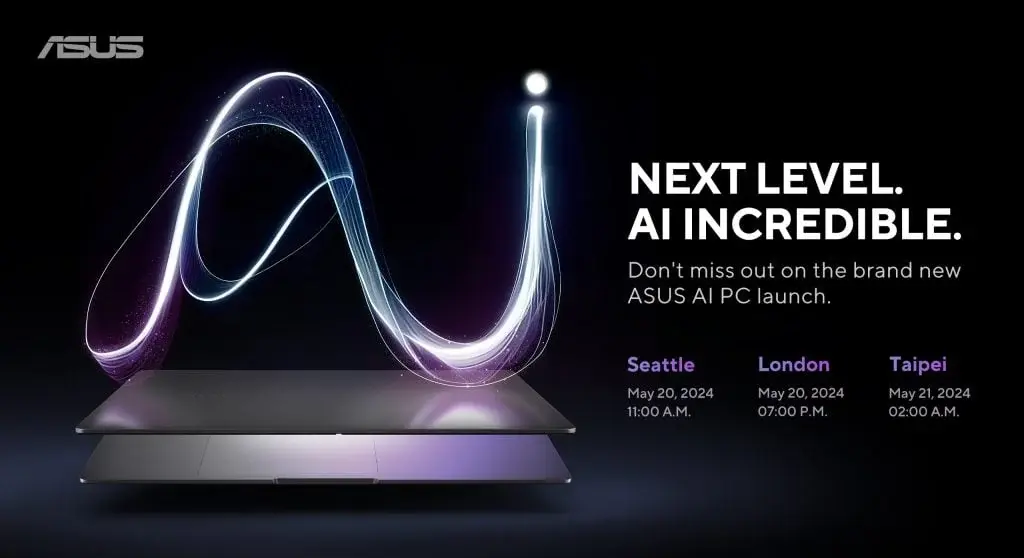
      Microsoft is set to unveil the Surface Pro 10 and Surface Laptop 6 on May 20, both powered by Snapdragon X series chips. This development has been highly anticipated, with Microsoft being joined by ASUS in this endeavor. ASUS has confirmed its participation in the virtual launch event scheduled for May 20, 2024, at 11:00 a.m. PST, where new Windows on Arm machines will be showcased.

      ASUS Joins Virtual Launch Event

      The collaboration for the launch event includes Qualcomm, Microsoft, and ASUS, with the possibility of other manufacturers like Lenovo also making contributions to the Windows on Arm platform.

      Focus on AI Innovation

      ASUS is gearing up for the event with the tagline "Next Level. AI Incredible," emphasizing innovative AI features and enhanced performance in their new Windows on Arm laptop, described as an 'ultraportable' premium device.

      Industry Collaboration and Features

      The virtual launch event will feature speakers from Qualcomm and Microsoft, shedding light on the advantages of the Windows on Arm platform and the integration of artificial intelligence in PCs. The event will highlight the joint efforts of these companies in revitalizing the Arm-based platform.

      Qualcomm has introduced two new Arm-based processors – the Snapdragon X Elite and the more budget-friendly Snapdragon X Plus. The X Elite chip boasts 12 Qualcomm Oryon CPU cores, while the X Plus offers 10 cores, albeit at slightly lower clock speeds. Initial benchmark listings suggest promising performance and power efficiency. However, the specifics of the tests and the accuracy of showcased capabilities remain subject to scrutiny. As laptop manufacturers begin incorporating these chips into their devices, the real-world performance of these new processors will soon be revealed.

    • Qualcomm’s Latest Innovation: Snapdragon X Elite Chip

      Qualcomm’s Latest Innovation: Snapdragon X Elite Chip

      For more than fifteen years, Qualcomm has been in pursuit of a successful Arm-based Windows laptop that excels in performance and battery life. Despite encountering a few victories along the journey, devices powered by Qualcomm have often fallen short of meeting mainstream expectations, leaving Intel and AMD as the primary contenders in the market.

      Qualcomm’s Latest Innovation: Snapdragon X Elite Chip

      Qualcomm’s newest offering, the Snapdragon X Elite chip, introduces a compelling feature: the capability to run existing x86/64 games without necessitating developers to adapt them for Arm architecture. This innovation has the potential to revolutionize the landscape of Windows on Arm devices.

      Rising to Meet Industry Standards

      Apple’s transition to M-series silicon chips has raised the industry benchmark significantly. The exceptional performance and efficiency gains of Apple’s chips, even when running legacy x86 software via Rosetta 2 emulation, have set a high standard. In response, Windows on Arm endeavors to bridge the gap, with Qualcomm’s Snapdragon X Elite poised to transform the user experience.

      Advancements in Emulation and Support

      Qualcomm emphasizes its collaboration with game developers to ensure smooth compatibility of their titles on forthcoming Snapdragon-powered laptops. Leveraging advanced emulation techniques, the Snapdragon X Elite chip enables x86/64 games to operate at near-optimal speeds. Qualcomm asserts that its Adreno GPU drivers fully endorse contemporary graphics standards, minimizing performance compromises during emulation.

      If Qualcomm’s assertions hold true, the Snapdragon X Elite chip could herald a new era for Arm-based laptops. Despite potential uncertainties associated with unreleased hardware, Qualcomm’s confidence in its product instills a sense of assurance. However, challenges may arise with games utilizing kernel-level anti-cheat software or relying heavily on AVX instruction sets. Nonetheless, the successful implementation of Qualcomm’s vision could mark a significant milestone for Windows on Arm.


      Qualcomm's Latest Innovation: Snapdragon X Elite Chip