Tag: NVIDIA

  • Nvidia MSRP Myth: GPU Prices and the RAM Crisis Explained

    Nvidia MSRP Myth: GPU Prices and the RAM Crisis Explained

    Key Takeaways

    1. Rising system memory prices are affecting not just memory modules but also graphics cards (GPUs) due to their dependence on VRAM.
    2. Nvidia’s suggested retail prices (MSRP) are unreliable, as actual sales prices often do not reflect these recommendations.
    3. Nvidia’s pricing strategy with board partners allows them to transfer increased costs from rising RAM prices to consumers without changing the MSRP.
    4. The end of Nvidia’s Observed Pricing Program (OPP) has made it harder for manufacturers to sell GPUs at MSRP, impacting profitability.
    5. The shift in focus towards high-end models may lead to reduced availability and increased prices for budget graphics cards.


    System memory prices have been rising, which isn’t shocking anymore. However, the so-called RAR crisis is affecting more than just memory modules; it also impacts other parts like graphics cards. This seems reasonable since GPUs depend on RAM, or more specifically, VRAM. In a recent video, German hardware YouTuber der8auer reveals that the recent spike in GPU prices is more complicated than it seems. Titled “Die Nvidia UVP-Lüge” (“The Nvidia MSRP Lie”), he claims that Nvidia’s suggested retail prices are no longer a good guide. Although they promote their entry-level prices, these are seldom seen in actual sales.

    Internal Pricing Issues

    Der8auer, who is known for his hardware reviews and overclocking content, has over half a million subscribers on YouTube. He points out a significant problem with Nvidia’s MSRP, which lies in its pricing strategy with board partners. Typically, GPUs and VRAM are sold together, so when RAM prices rise, it directly affects what the manufacturers have to pay. This setup helps Nvidia keep its profit margins intact while transferring cost increases to the downstream without officially changing the MSRP. Consequently, board partners take on these extra costs and often pass them along to consumers when they sell the products.

    The End of the OPP Program

    For a long time, Nvidia’s OPP (Observed Pricing Program) was crucial in keeping graphics card pricing close to the suggested MSRP. Under this program, manufacturers received financial incentives when they sold cards at the recommended price. Der8auer explains that many models would not be profitable without this support. However, now that the program is gone, achieving the MSRP has become even more difficult. While the suggested price still exists in theory, selling at that price is rarely beneficial for retailers. Because of this, der8auer warns that manufacturers might increasingly concentrate on high-end models since lower-tier cards are no longer profitable without subsidies. This change could lead to reduced availability in the budget category and drive prices even higher.

    der8auer via YouTube

    Source:
    Link


  • Apple Faces Major Price Hike from TSMC for iPhones and MacBooks

    Apple Faces Major Price Hike from TSMC for iPhones and MacBooks

    Key Takeaways

    1. Nvidia has become TSMC’s top customer, surpassing Apple, which previously held this position.
    2. TSMC is reportedly seeking to increase prices for Apple, with the largest price hike in recent years being demanded.
    3. Apple has historically benefited from discounted rates and priority access to TSMC’s advanced process nodes.
    4. Consumers may face higher prices for Apple products, including the iPhone 18 and future MacBooks, due to TSMC’s price increases.
    5. TSMC’s price hikes are expected to continue for at least four more years, impacting Apple’s product pricing strategy.


    Nvidia’s CEO Jensen Huang has recently announced that the company is now the top customer for TSMC, a position that Apple used to hold. This new status comes with certain advantages, and Apple has been known to benefit from them. For example, Apple has had priority access to TSMC’s latest process nodes, and this will likely extend to the upcoming TSMC 2 nm process node, which will be utilized for the A20 SoC in the iPhone 18 series.

    TSMC’s Price Increase Strategy

    Now, it seems TSMC is capitalizing on this change and seeking to increase prices for Apple. Following Nvidia’s rise as TSMC’s biggest client, a leaker named Fixed Focus Digital has reported that TSMC’s CEO, C.C. Wei, has personally approached Apple with a demand for “the largest price increase seen in recent years.”

    Impact on Apple’s Pricing

    For several years, TSMC has been hiking the prices of its advanced process nodes consistently. This trend is projected to persist for another four years starting in 2026. Apple, being TSMC’s largest customer, has historically enjoyed certain perks, like discounted rates and priority access to the most advanced process nodes. However, TSMC is now aiming to charge Apple significantly more than what it has previously paid.

    If the information from Fixed Focus Digital holds true, and Apple agrees to TSMC’s requests, then consumers should brace themselves for higher prices on iPhones, MacBooks, and iPads by 2026. The iPhone 18, for instance, might experience a substantial price increase due to TSMC’s hike in the costs associated with its 2 nm node.

    Future Apple Products Pricing

    In a similar vein, the M6 MacBooks, expected to launch in late 2026 or early 2027, could also see a notable price jump compared to M5 models, especially given the declining memory market conditions.

    Source:
    Link


  • Nvidia Surpasses Apple as TSMC’s Top Customer in 2025

    Nvidia Surpasses Apple as TSMC’s Top Customer in 2025

    Key Takeaways

    1. Nvidia has become the world’s largest company with a market valuation of approximately $4.3 trillion, driven by demand for Data Center equipment from AI firms.
    2. In 2025, Nvidia surpassed Apple to become TSMC’s top client, significantly increasing its revenue share from 11% to more than Apple’s 25%.
    3. Nvidia’s Data Center revenue in Q3 2025 exceeded Apple’s iPhone revenue for the first time.
    4. TSMC may soon prioritize Nvidia over Apple, possibly offering Nvidia the same privileges Apple previously enjoyed.
    5. Despite Apple’s success with the iPhone 17 series, Nvidia’s strong growth trajectory is expected to influence TSMC’s future strategies.


    Thanks to an unmatched surge in demand for Data Center equipment from AI firms, Nvidia has now become the world’s biggest company with a market valuation of approximately $4.3 trillion. Their growth was especially impressive in 2025, showcasing a 62% Year-over-Year increase in revenue for Q3 FY2026. The Data Center items, particularly the H200, played a pivotal role in driving this revenue surge. Thus, it’s not shocking to learn that Nvidia has reportedly emerged as the largest customer for TSMC, given that its latest Data Center and client GPUs use TSMC’s advanced process nodes.

    Nvidia Surpasses Apple

    In a podcast, Nvidia’s CEO Jensen Huang disclosed that Nvidia has surpassed Apple to become TSMC’s top client in 2025. In 2024, Apple represented about 25% of TSMC’s revenue, while Nvidia made up less than half at 11%. This indicates that in 2025, Nvidia generated more revenue for TSMC than Apple, a claim supported by Nvidia’s record-setting Q3 FY2026 earnings.

    Record-Breaking Revenue

    According to information shared by I/O Fund (cited by Beth Kindig on X), Nvidia’s revenue from Data Centers in Q3 2025 surpassed Apple’s iPhone revenue for the very first time.

    For a considerable time, Apple has received special treatment from TSMC, which included discounts and priority access to the latest process nodes. This was understandable, given that Cupertino’s orders formed a significant part of TSMC’s yearly earnings. With Nvidia now taking over Apple’s position, it is reasonable to anticipate that TSMC will extend the privileges previously exclusive to Apple to Team Green.

    Future Outlook

    Rumors are already circulating that TSMC is urging Apple to agree to a significant price increase. While the accuracy of this information remains uncertain, it seems likely that TSMC will prioritize Nvidia over Apple in the future, especially since Nvidia’s Data Center business shows no signs of slowing down.

    That’s not to suggest that Apple is struggling, as the iPhone 17 series has gained considerable popularity. However, the momentum and anticipated growth of Nvidia will surely be crucial indicators for TSMC moving forward.

    Source:
    Link


  • CheckMag: DLSS 4.5 Performance Analysis & Visual Quality Insights

    CheckMag: DLSS 4.5 Performance Analysis & Visual Quality Insights

    Key Takeaways

    1. DLSS 4.5 introduces a 2nd generation Transformer model, enhancing image quality through improved temporal stability and sharper details compared to its predecessor.

    2. The Nvidia app now supports DLSS 4.5 in over 400 titles, with new presets (Preset L and Preset M) optimized for different performance levels.

    3. DLSS 4.5 can result in significant performance drops, with frame rates decreasing by up to 44.5% in some games when using the new Preset M.

    4. Users with RTX 20 and RTX 30 series GPUs may experience diminished benefits from DLSS 4.5 due to hardware limitations, making the original DLSS 4 a viable option.

    5. Future updates will include multi-frame generation (MFG) for RTX 50 cards, enhancing frame output dynamically to match monitor refresh rates.


    Nvidia first unveiled DLSS with its RTX 20 Turing series of GPUs. DLSS 1 wasn’t well-known for its image quality because it functioned mainly as a spatial image upscaler and had limited support from games. However, last year marked a significant advancement with the arrival of DLSS 4, which utilized a Transformer model alongside RTX 50 Blackwell GPUs, greatly enhancing upscaled visual fidelity.

    The DLSS 4.5 Update

    This year, Nvidia is rolling out a minor update, DLSS 4.5, which aims to fine-tune DLSS 4 even further. Nvidia claims that the 2nd generation Transformer in DLSS 4.5 provides improved temporal stability, better resolution, and crisper details.

    With the Nvidia app now officially offering DLSS 4.5 upscaling in over 400 titles, we take a detailed look at image quality comparisons between the new 2nd generation Transformer model and its predecessor, along with anti-aliasing techniques like TAA and DLAA.

    Getting Started with DLSS 4.5

    To start using DLSS 4.5, make sure to update the Nvidia app to version 11.0.6.379 or later (it should automatically update on launch if it hasn’t done so already). While it’s not strictly necessary, having the latest Game Ready Driver version 591.74 or newer installed will enhance your experience.

    Developers will take time to natively integrate DLSS 4.5 into their games. In the meantime, you can manually adjust the DLSS version through the Nvidia app.

    DLSS works by rendering at a lower native resolution, which is usually shown as a percentage of the target resolution. For example, the internal render resolutions for a target of 4K would be:

    You also have the option of using DLAA, Nvidia’s AI-based anti-aliasing solution that operates directly at the native resolution.

    New Presets for DLSS 4.5

    Nvidia uses preset settings to choose the appropriate DLSS version for each game based on its rendered resolution, with the new Preset L and Preset M created specifically for DLSS 4.5.

    Preset M is the best option for DLSS Performance and higher modes, including DLAA, while Preset L is optimized for DLSS Ultra Performance. Preset K is the older Transformer from DLSS 4.

    The simplest way to set your DLSS preferences is to choose DLSS Override to Recommended. This will automatically activate Preset M for Performance, L for Ultra Performance, and K for all other modes.

    You also have the option to select your desired model preset from the Super Resolution dropdown in the Custom tab.

    Another method is to choose the Super Resolution Mode to set an input resolution, which will then select the appropriate preset accordingly.

    Once you have chosen your override mode for the game, open the Nvidia overlay (Alt+Z), navigate to Statistics, and choose DLSS in the Statistics view section.

    This will display the model override preset when you press Alt+R while playing a game.

    And that’s all there is to it. Now, let’s dive into some pixel examination.

    Our testing setup consists of an Intel Core i9-14900K processor with 32 GB of DDR5-6400 RAM (32-39-39-80) and a Zotac Gaming GeForce RTX 5090 Arcticstorm AiO GPU, all running on a Gigabyte Z790 Aorus Master motherboard.

    Testing Results with Popular Titles

    For this comparison, we evaluated four popular AAA games: Battlefield 6, Cyberpunk 2077: Phantom Liberty, Doom: The Dark Ages, and Black Myth: Wukong. We compared image quality at 4K native TAA, 4K native DLAA, DLSS 4 Performance, and DLSS 4.5 Performance (Preset M).

    All games were set to maxed-out 4K Ultra settings. Frame generation and ray reconstruction (RR) were disabled where applicable. Notably, RR still utilizes the original Transformer model, so enabling it in-game effectively reverts you back to DLSS 4.

    In Battlefield 6, DLSS 4.5 Preset M shows noticeable visual enhancements compared to the previous Performance mode.

    We observed a general increase in image sharpness, with many previously missing details—particularly in distant objects like mountains and terrain features—now appearing well-reconstructed. However, no significant improvements were seen in direct first-person view.

    That said, these quality upgrades come at the cost of a 7% decrease in average frame rate when compared to the original Transformer model.

    Doom: The Dark Ages takes advantage of the idTech8 engine’s built-in ray tracing, adding depth and gameplay value. The game also supports path tracing with ray reconstruction (RR), but we turned those off for our comparison.

    Immediately, we can see that DLSS 4.5 Preset M provides a noticeably better image than even the native resolution, with details in the dried tree, the statue, and the rocky mound it sits on looking much clearer and sharper.

    However, this improvement comes with a steep 44.5% performance hit, dropping the average frame rate from 175 fps using DLSS 4 Performance to just 97 fps with DLSS 4.5 Preset M.

    Enabling path tracing (PT) with Preset M but without RR significantly enhances lighting quality but further halves the frame rate.

    Despite being over five years old, Cyberpunk 2077’s neon-lit streets are still a great display for Nvidia’s latest tech.

    With DLSS 4.5 Preset M and path tracing on, we noticed a considerable enhancement in scene quality. Reflections, in particular, appear much more realistic with Preset M compared to the pixelated look of the earlier Transformer.

    Distant objects also show a marked improvement in sharpness and cleaner anti-aliasing with Preset M in comparison to TAA, while the average frame rate impact is minimal at around 3%.

    Preset L offers nearly identical image quality to Preset M and a convincingly better picture compared to the older Ultra Performance mode without affecting frame rates.

    That’s quite impressive, considering Preset L has to upscale from significantly fewer native pixels than Preset M.

    Black Myth: Wukong, known for its dense foliage and path tracing effects, pushes Unreal Engine 5 to its limits, making it ideal for any upscaling help.

    At Full RT Cinematic settings, Preset M effectively restores detail at long distances and reduces shimmer effects that were present with the old Transformer.

    However, the overall image can appear a bit oversharpened, with noticeably sharper shadows compared to native TSR 100.

    On average, the frame rate drop with Preset M is about 5% compared to DLSS 4 Performance mode.

    Likewise, Preset L performs well in upscaling from 720p native, reconstructing the image with much clearer quality than the previous Transformer while virtually eliminating performance loss.

    DLSS 4’s transition to a Transformer model from the DLSS 3.x convolutional neural network (CNN) already marked a significant enhancement in upscaled image quality. Nvidia’s new DLSS 4.5 with its 2nd generation Transformer promises even further fidelity improvements, and it mostly delivers.

    Across the games tested, the primary visual impact of DLSS 4.5 is seen in increased sharpness and, at times, enhanced temporal stability, especially in long-distance views and complex lighting situations.

    However, these differences are mostly noticeable when running DLSS Performance or Ultra Performance, as the 2nd generation Transformer is specifically optimized for these scenarios.

    While Nvidia generally recommends Preset M, Preset L is surprisingly effective given the low native resolution it starts from. This can be especially advantageous for users with RTX 4060 or RTX 5060 GPUs (both laptop and desktop) that have limited VRAM.

    Later in the year, Nvidia is set to introduce multi-frame generation (MFG) up to 6x, generating up to five frames for every rendered frame, but this feature will be exclusive to RTX 50 cards. MFG 6x will operate dynamically, producing just as many frames as needed to match the monitor’s refresh rate.

    Conclusion

    Now for the downside. The enhancements of DLSS 4.5 come at a cost. Even with high-end RTX 40 and RTX 50 series GPUs, you will notice a performance overhead, especially with Preset M. This can be quite significant in some games, necessitating the use of frame generation for smoother visuals.

    The RTX 20 and RTX 30 series cards face even more challenges as their Tensor cores lack FP8 acceleration, which the 2nd generation Transformer relies on. While DLSS 4.5 is still functional on these cards, the performance penalty may easily outweigh the slight visual quality increase.

    Ultimately, the advantages of upgrading to DLSS 4.5 are heavily reliant on the specific game, your target resolution and graphic settings, and the RTX GPU you’re utilizing.

    Sometimes, sticking with the original DLSS 4 might still be the wiser option.

     

  • Nvidia RTX 50 Series GPU Shipments Ongoing Amid Memory Losses

    Nvidia RTX 50 Series GPU Shipments Ongoing Amid Memory Losses

    Key Takeaways

    1. Nvidia refutes rumors about discontinuing the RTX 5060 Ti and RTX 5070 Ti, confirming continued shipment of Blackwell GPUs.
    2. Nvidia acknowledges a strong demand for GeForce RTX GPUs but faces limited memory supply, planning to assist suppliers in maximizing availability.
    3. Despite rising memory costs, Nvidia has delayed passing these increases on to partners and consumers, aiming to keep RTX 50 series prices stable.
    4. Gamers are challenged by high prices, with the RTX 5090 retailing over $3000, but Nvidia is working to prevent even steeper price hikes.
    5. The memory shortage is impacting RTX 50 series GPU availability, compounded by strong sales and high demand, but production cost increases are not as severe as predicted.


    The memory shortage has led to speculations about the discontinuation of various Nvidia graphics cards. However, Asus has refuted claims that the RTX 5060 Ti and RTX 5070 Ti have been phased out. Nvidia has now confirmed that it will keep shipping the Blackwell GPUs. Additionally, Wccftech reports that the company might be sacrificing some profits to maintain lower prices.

    Nvidia’s Response to Confusion

    To clarify recent misunderstandings, Nvidia has reached out to several websites. It informed Hardware Unboxed and Wccftech that there is strong demand for GeForce RTX GPUs, but memory supply is limited. The company plans to continue shipping all GeForce SKUs while assisting suppliers in maximizing memory availability.

    Industry Insights on GPU Pricing

    Wccftech has gathered insights from industry insiders on how Nvidia is managing the memory shortage. Customers have noticed an increase in graphics card prices, with some attributing this to high GDDR7 costs. Nevertheless, Team Green has reportedly delayed passing on these memory cost hikes longer than most other companies. Not all memory cost increases are being transferred to partners or consumers.

    Nvidia has faced backlash for its increasing focus on enterprise AI solutions, as seen in Jensen Huang’s keynote at CES 2026. Yet, sources suggest that the company has been proactive in preventing RTX 50 series prices from skyrocketing.

    Market Challenges for Gamers

    Gamers might find it hard to swallow the fact that Nvidia is sacrificing profits due to rising memory prices. The already pricey RTX 5090 often retails for over $3000. Nonetheless, other signs indicate that Nvidia has managed to stave off even steeper price hikes.

    There were earlier rumors that Nvidia had ceased shipping Blackwell chips to partners with bundled DRAM, forcing companies to source their own GDDR7 VRAM. However, Wccftech states these claims are unfounded. A source has mentioned that the increased costs of producing graphics cards are not as extreme as some had predicted.

    In spite of Nvidia’s reassurances, many RTX 50 series GPUs are still in short supply and are becoming less affordable. The memory shortage is affecting the availability of new options, but strong sales and high demand are also significant contributing factors, beyond just memory prices.

    Source:
    Link


  • Nvidia Cuts GPU Supply, RTX 50 Super Cards Unlikely to Release

    Nvidia Cuts GPU Supply, RTX 50 Super Cards Unlikely to Release

    Key Takeaways

    1. Nvidia is reportedly cutting GPU supply to partners by 15% to 20%, leading to reduced availability and potential price increases.
    2. The RTX 5070 Ti and RTX 5060 Ti 16GB will be discontinued, with the RTX 50 Super series facing delays and possible indefinite launch postponement.
    3. There is an anticipated shortage of GPUs, particularly those with higher VRAM, affecting the availability of new models.
    4. Nvidia is shifting focus from higher-end models to the RTX 5060 and RTX 5060 Ti 8GB, despite claims of continued shipments of all GeForce SKUs.
    5. Advancements in AI technology are contributing to RAM shortages, further complicating the GPU supply situation.


    Despite Nvidia’s statements, rumors are swirling that GPU supply will soon become even more limited. Recently, Asus confirmed that the RTX 5070 Ti will be discontinued, with the RTX 5060 Ti 16GB to follow. Another rumor indicates that Nvidia is cutting GPU supply to its board partners, which may delay the RTX 50 Super series indefinitely.

    Supply Cuts and Impacts

    Information from ‘MEGAsizeGPU’ on X reveals that Nvidia has reduced GPU supply to add-in-card (AIC) partners by 15% to 20%. This decrease implies a general reduction in GPU availability, meaning board partners will have even fewer graphics cards in stock. Consequently, this will likely lead to increased prices for the remaining units. The leaker also mentioned that there won’t be any new products launched in 2026.

    Uncertainty in the Market

    While the leaker did not provide a source for this information, it appears there will be a shortage of GPUs, particularly those with higher VRAM. The RTX 50 Super series might miss its anticipated launch in 2026. This follows reports from Board Channel that the RTX 5070 Super, RTX 5070 Super Ti, and RTX 5080 Super will not be released anytime soon due to memory shortages. They were initially expected to be available in the first quarter of this year.

    Nvidia’s Focus Shift

    Additional reports from Board Channels indicate that Nvidia has already decreased shipments for the RTX 5060 Ti 16GB and RTX 5070 Ti 16GB models, as it shifts its focus to the RTX 5060 and RTX 5060 Ti 8GB. However, Nvidia maintains that it will continue shipping all GeForce SKUs and is “working closely with our suppliers to maximize memory availablity.”

    At this point, it is evident that advancements in AI technology are contributing to RAM shortages and driving prices up. It’s no wonder that many channels are reporting a lack of supply and product discontinuations.

    Source:
    Link


  • Nvidia Unveils 9 New Games Launching on GeForce NOW This Week

    Nvidia Unveils 9 New Games Launching on GeForce NOW This Week

    Key Takeaways

    1. Nvidia adds nine new games to GeForce NOW this week.
    2. Major release: Quarantine Zone: The Last Check, where players manage a checkpoint during a zombie outbreak.
    3. Two stealth games, Styx: Master of Shadows and Styx: Shards of Darkness, are included, available for free on Epic Games Store until January 22.
    4. Players must make critical decisions and manage limited resources in Quarantine Zone: The Last Check.
    5. The new game additions enhance the variety of titles available on the GeForce NOW platform.


    Nvidia has shared exciting news for GeForce NOW users, announcing that nine new games are being added to the platform this week. The selection features a variety of known titles, including one that just released.

    Major New Release

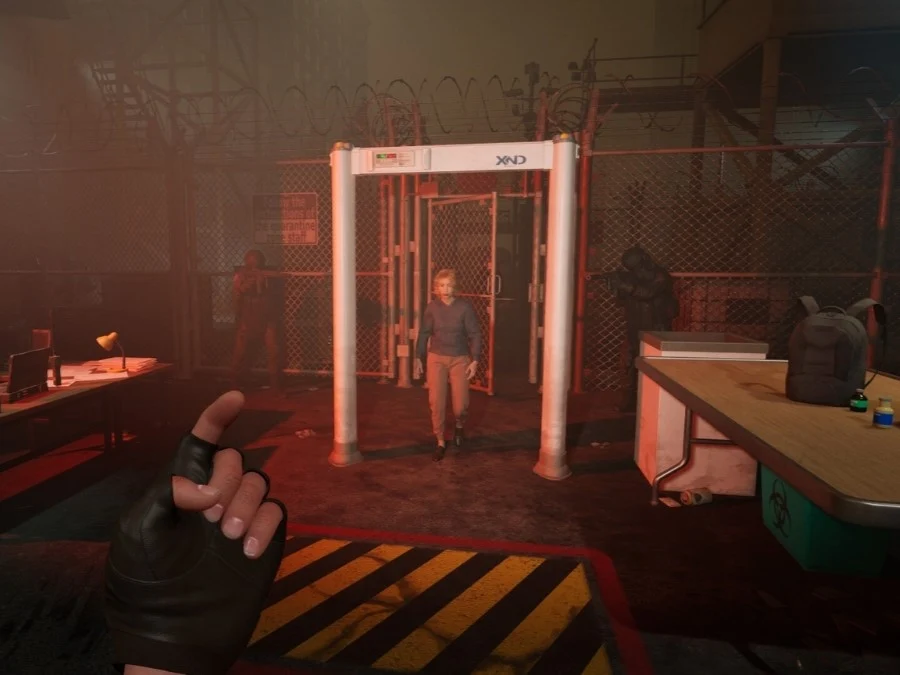
    The standout addition this week is Quarantine Zone: The Last Check, which was released on January 12. In this game, you take on the role of managing a critical checkpoint amidst a zombie outbreak. Your job involves inspecting the survivors attempting to enter the safe zone and making decisions about who gets in. You’ll need to utilize various tools to check for infection signs, uncover hidden items, and notice any suspicious actions. Additionally, you must handle limited resources such as food, medicine, and electricity, since every choice impacts the safety of those you are protecting.

    More Games Join the Lineup

    Nvidia is also bringing Styx: Master of Shadows and Styx: Shards of Darkness into the GeForce NOW collection. These titles emphasize stealth and calculated movement instead of direct confrontation. You assume the role of Styx, a goblin assassin who depends on remaining undetected, strategizing attacks, and leveraging the environment to gain an edge. The timing couldn’t be better, as both games are currently available for free on the Epic Games Store as part of their weekly giveaway, which lasts until January 22.

    Complete List of New Titles

    To wrap it up, you can view the complete list of the nine games that are hitting the service this week below:

    Nvidia

    Source:
    Link


  • G-Sync Pulsar: Game-Changer in Monitors Since CRT, Says Benchmarks

    G-Sync Pulsar: Game-Changer in Monitors Since CRT, Says Benchmarks

    Key Takeaways

    1. G-Sync Pulsar Breakthrough: Nvidia’s G-Sync Pulsar is a significant advancement for PC gaming, offering superior motion clarity compared to traditional displays.

    2. Motion Clarity Advantage: G-Sync Pulsar provides 3-4 times better motion clarity on IPS panels, addressing issues found in previous technologies and enhancing the gaming experience.

    3. Current Limitations: The technology is restricted to supported Nvidia GPUs on Windows 11, with no current support for Linux or MacOS, and is only compatible with IPS panels.

    4. Future Potential: There is hope for broader adoption, including potential support for OLED displays, which could elevate G-Sync Pulsar as the preferred standard for gaming monitors.

    5. Ongoing Developments: Nvidia is working on firmware updates to lower the G-Sync Pulsar threshold to 60 Hz, which is essential for games capped at that framerate.


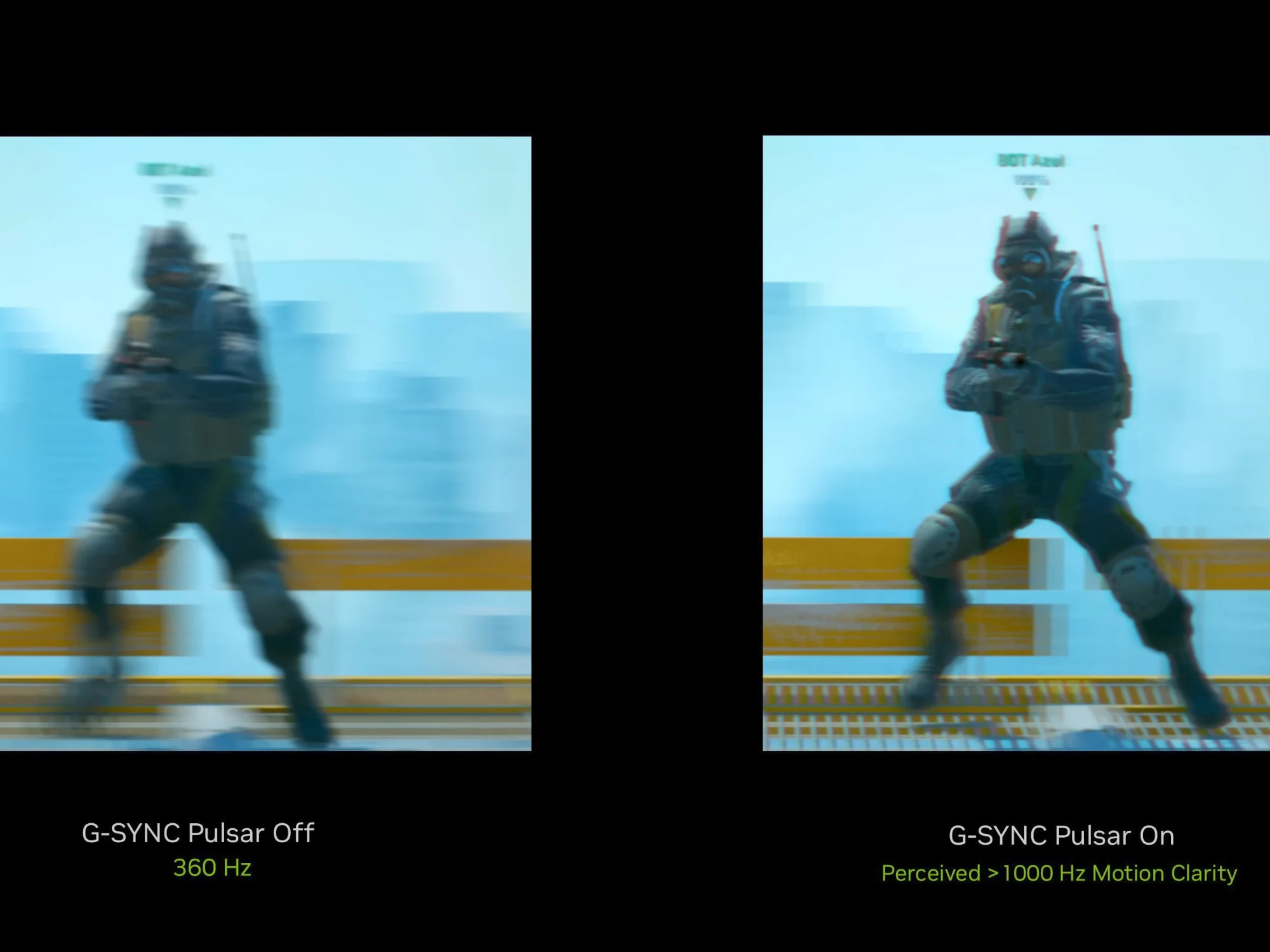
    CES 2026 was a bit of a letdown for people not deeply involved in AI developments, but Nvidia’s G-Sync Pulsar has emerged as a significant breakthrough for the future of PC gaming. G-Sync Pulsar stands out for gamers, especially since much of the hardware showcased focused more on AI features than improving gaming performance. According to various reliable benchmarks and reviews, Nvidia’s G-Sync Pulsar provides the clearest motion quality we’ve seen since CRT monitors, which is a big deal for serious gamers. Nvidia claims it’s like multiplying FPS by four, but that’s more relevant to flat panels and could be seen as just marketing talk—but what’s really happening is far more fascinating, in my view.

    OLED Monitors vs. G-Sync Pulsar

    For a long time, OLED monitors have been seen as the best option for gaming displays, boasting pixel response times similar to CRTs, along with infinite contrast and rich colors, unlike IPS panels. However, OLED technology has its limitations due to being a flat panel and functioning as a “sample & hold” display. The per-pixel lighting, while beneficial, has its downsides. Using Black Frame Insertion can reduce sample & hold blur, but it also causes noticeable flickering and can dim the brightness, which is a disadvantage compared to IPS panels. Before G-Sync Pulsar, OLED already outshined TN, IPS, and VA panels in motion clarity and contrast thanks to its near-perfect pixel response time. Still, each frame was rendered as a separate image, resulting in significant motion blur at the same refresh rates.

    The Innovation of G-Sync Pulsar

    G-Sync Pulsar addresses the motion clarity issue for IPS displays by employing the unified backlight of IPS panels in a technique known as backlight strobing. While backlight strobing isn’t a new idea, achieving it alongside seamless variable refresh rate (VRR) implementation is a novel development. This strobing technique resembles CRT scanlines, meaning sections of the screen refresh continuously rather than all at once. It may appear chaotic in videos, but to the human eye, it produces the sharpest motion clarity ever on a flat panel. Indeed, G-Sync Pulsar can deliver 3-4 times better motion clarity on an IPS panel compared to one without it, significantly reducing the input framerate needed for clear motion. Unfortunately, OLED’s per-pixel backlighting, while great for contrast, does not work with the G-Sync Pulsar approach.

    Limitations and Future Prospects

    While motion clarity is vital, increasing true native FPS also helps lower input lag. For years, the flat panel market has considered raising FPS as the only solution to improve motion clarity, needing a rapid pixel response time for those advantages. That’s why TN panels were the go-to choice in eSports before Fast IPS became common in late 2019/2020, and why IPS displays were gradually phased out of high-end gaming monitors by OLEDs until G-Sync Pulsar changed the game.

    However, G-Sync Pulsar has its restrictions. It’s currently limited to supported Nvidia GPUs running on Windows 11, with no announced support for Linux or MacOS. Moreover, even though IPS panels have worse contrast compared to OLEDs, G-Sync Pulsar is strictly tied to IPS panels right now. There’s hope that OLEDs might eventually support this technology; the Blur Busters CRT beam simulator shader, which works with 240Hz+ OLEDs, operates on a similar principle but at the cost of high GPU usage. For monitor support of this tech to be ideal, widespread adoption in OLEDs would make G-Sync Pulsar the gold standard for gaming displays.

    Current Challenges and Future Improvements

    As of now, G-Sync Pulsar only works with content at 75 Hz or higher, which is problematic for games capped at 60 FPS due to emulation or design choices, such as fighting games like Street Fighter 6 or Tekken 8. Thankfully, Digital Foundry has confirmed that Nvidia is developing a firmware update for G-Sync Pulsar monitors that will lower the Pulsar threshold to 60 Hz. However, this also means that if the framerate drops below that target in any game, the sample & hold blur will return. Like Richard Leadbetter from Digital Foundry and Mark Rejhon from Blur Busters, I believe it’s essential to reduce the floor to 60 Hz for retro gaming and certain 60 FPS genres.

    In conclusion, while it isn’t flawless yet, nothing is perfect—and even in its current form, it represents a significant leap over existing gaming displays. A future with G-Sync Pulsar bringing CRT-level motion clarity to IPS panels is on the horizon, and eventually, this technology may extend to other GPU makers, operating systems, and display types. I hope that day comes soon, as an avid player of retro, fighting, and stylish action games, all of which would gain tremendously from this—along with popular eSports titles. I see this technology as a major challenge for AMD and Intel as they move into the next generation of display tech; for their GPUs to remain competitive with Nvidia, they will likely need to offer similar capabilities to G-Sync Pulsar, just as G-Sync opened the door for widespread VRR support and DLSS made GPU vendor upscaling mainstream.

    Source:
    Link


  • AMD and Nvidia Shift CES Focus to AI, Leaving Consumers Behind

    AMD and Nvidia Shift CES Focus to AI, Leaving Consumers Behind

    Key Takeaways

    1. AMD and Nvidia had limited offerings for gamers at CES 2026, with no new GPUs announced.
    2. Both companies heavily focused on artificial intelligence during their keynotes, with AMD mentioning “AI” 214 times and Nvidia 136 times.
    3. The term “gaming” was absent from Nvidia’s keynote and mentioned only three times by AMD and Intel, indicating a shift away from consumer interests.
    4. The emphasis on AI is negatively affecting the consumer market, leading to rising prices for memory, storage, and potential GPU price increases.
    5. The outlook for consumers in 2026 appears bleak, with concerns about potential market pullbacks from companies like SK Hynix in the DRAM and NAND sectors.


    While CES 2026 showcased a variety of innovative tech, especially in gaming and multimedia laptops, it was disappointing to see that AMD and Nvidia had little to offer gamers. Nvidia, for example, only introduced DLSS 4.5 and didn’t present any new GPUs, not even any minor updates like the RTX 50 Super cards. AMD, on the other hand, launched the Ryzen AI 400 APUs, additional Ryzen AI Max+ chips, and the Ryzen 7 9850X3D, but these processors didn’t bring any new architectures or integrated graphics options.

    AI Takes Center Stage

    At CES 2026, both AMD and Nvidia primarily focused on artificial intelligence. According to 3DCenter, AMD mentioned “AI” a whopping 214 times during its 114:2-minute keynote, averaging 1.87 mentions per minute. Nvidia was not far behind, with “AI” appearing 136 times in its 85:04-minute presentation, which averages to 1.6 per minute. In contrast, Intel performed better, only using the term 55 times at a rate of 1.33 times per minute.

    The Absence of Gaming

    Interestingly, the term “gaming” was missing entirely from Nvidia’s keynote, while it only surfaced three times in the presentations from AMD and Intel. This shows a clear shift in focus from consumer interests to AI, which is unfortunate for companies that built their reputations on catering to everyday consumers, gamers, and DIY enthusiasts.

    Even though AMD, Nvidia, and Intel are companies that must prioritize profits for their stakeholders, the heavy emphasis on AI is negatively impacting the consumer market. This focus has resulted in skyrocketing prices for memory and storage, potential increases in GPU prices, and more.

    A Gloomy Outlook

    Sadly, it doesn’t seem like conditions will get better anytime soon. In fact, 2026 might turn out to be worse for consumers, especially with rumors circulating that SK Hynix might pull out of the consumer DRAM and NAND sectors.

    Source:
    Link


  • Nvidia Delays RTX 50 Super GPUs to Focus on AI Amid Memory Shortage

    Nvidia Delays RTX 50 Super GPUs to Focus on AI Amid Memory Shortage

    Key Takeaways

    1. Nvidia did not announce new GPUs at CES 2026, disappointing many gamers.
    2. The release of the RTX 50 Super series has been delayed, with no early launch expected.
    3. A memory shortage could impact the production of the RTX 50 Super series, which may include higher clock speeds and more VRAM.
    4. Nvidia is focusing on AI and professional-grade GPUs instead of consumer models, affecting gamers’ expectations.
    5. AMD’s slow progress in GPU development means Nvidia feels less pressure to release new products, potentially delaying the RTX 60 series until 2027.


    By not unveiling any new GPUs, Nvidia’s presence at CES 2026 left a lot of gamers feeling let down. A fresh rumor from Board Channels isn’t offering any comfort to these disappointed fans. VideoCardz has shared that Nvidia has allegedly cautioned its partners not to expect the RTX 50 Super series to arrive anytime soon.

    Delayed Expectations

    Initially, there were suggestions that the RTX 5070 Super, RTX 5070 Super Ti, and RTX 5080 Super would be launched in the first quarter of 2026. However, the timeline for the updated Blackwell graphics cards has been pushed back to later in the year. Jensen Huang’s failure to announce the hardware at CES caused many followers to lose their optimism for an early release.

    Future of Nvidia GPUs

    Now, the pressing question is whether Nvidia GPUs will ever come out. The Board Channels post points to a memory shortage as a significant issue. The RTX 50 Super series is said to come with increased clock speeds and more VRAM. However, using larger 3GB GDDR7 modules could create additional pressure on the DRAM supply chain.

    AI data centers are also in dire need of the chips used in the consumer-grade Blackwell models. Nvidia seems to find it more lucrative to concentrate on RTX Pro cards, such as the RTX 6000 Blackwell Server Edition. The company has plans to widen its reach in the AI sector, especially after the launch of the Vera Rubin Platform.

    AMD’s Slow Progress

    Another element influencing this situation is the lack of competition from AMD. Its RDNA 5 GPUs might not be revealed until at least the middle of 2027, which coincides with the expected PS6 release. While AMD has made some progress in the market, Team Green doesn’t feel an urgency to bring new products to market.

    The latest gossip suggests that current Nvidia GPUs could stick around until the RTX 60 series is released in 2027. In the meantime, it’s possible that the manufacturer may entirely bypass the RTX 50 Super lineup. Yet, there are worries that the memory shortage could interfere with these plans.

    Recently, a German retailer found out that its supplier would cease sending some graphics cards. There could also be notable price hikes on the RTX 5090 and lower-end options. With the company’s shift towards enterprise support, gamers are doubtful that Nvidia has their needs in focus.