Tag: RTX 50 Series

  • HP launches 16-inch gaming laptop with Nvidia graphics and 64GB RAM

    HP launches 16-inch gaming laptop with Nvidia graphics and 64GB RAM

    Key Takeaway

    – Intel SKUs start at $2,679 (Core Ultra 7 270HX Plus, RTX 5070 Ti, 16 GB RAM, 512 GB Gen 5, 460 W GaN charger, 83 Wh battery) and can go up to $4,469 (Core Ultra 9 290HX Plus, RTX 5090, 64 GB RAM, 2 TB Gen 5, 240 Hz OLED).
    – Only Intel variants are available in Ceramic White ($10 surcharge).
    – AMD SKUs start at $2,899 (Ryzen AI 7 450, RTX 5070 Ti, 16 GB RAM, 512 GB Gen 4, 240 Hz IPS) and max out at $4,569.99 (Ryzen AI 9 HX 475, RTX 5080, 48 GB RAM, 2 TB Gen 5, 240 Hz OLED).
    – HP expects to begin shipping new Omen Max 16 laptops in June.


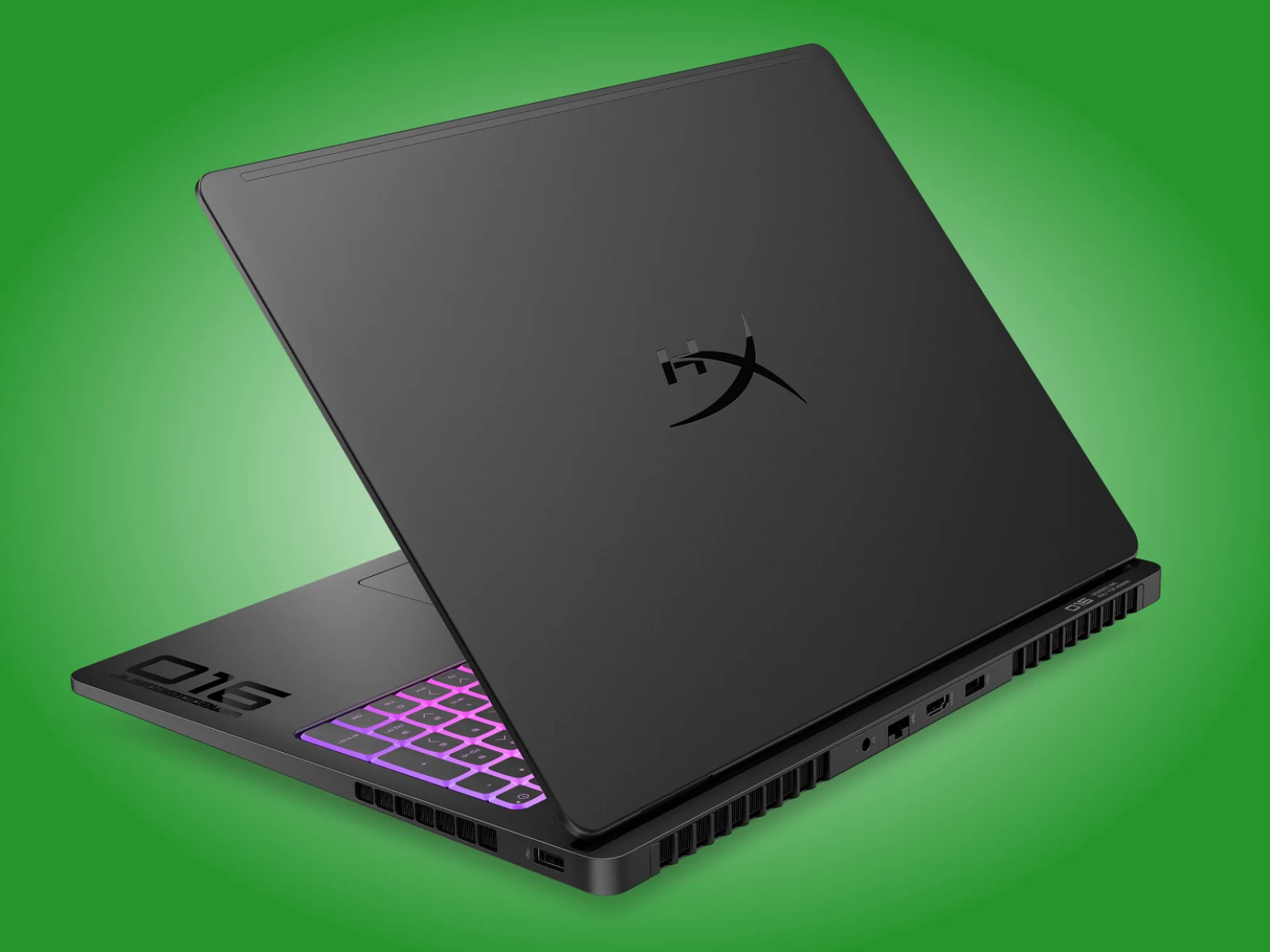
    Intel models start at $2,679 with a Core Ultra 7 270HX Plus processor

    On the one hand, Intel models start at $2,679 with a Core Ultra 7 270HX Plus processor, a GeForce RTX 5070 Ti GPU and a 240 Hz IPS display for $3,699. This SKU also contains 16 GB of RAM and 512 GB of PCIe Gen 5 storage too, as well as a 460 W GaN power adapter and an 83 Wh battery. The paragraph reads like an opening shot in a catalog, but the facts stay the same with the tech specs intact and the price tag clearly listed, including the GaN adapter and the sizable battery. The language here shifts slightly as it introduces the baseline configuration and its features, though it remains informative and exact, making the reader aware of what to expect from the entry option.

    Alternatively, Intel models can be configured up to the Core Ultra 9 290HX Plus, RTX 5090, 64 GB of RAM, 2 TB of PCIe Gen 5 storage and a 240 Hz OLED display. However, this variant currently runs to $4,469. Only Intel variants can be purchased in a Ceramic White finish too, for which HP levies a $10 surcharge. This sentence stacks higher-end choices and a minor cosmetic surcharge, keeping the reader informed about the most premium build in the Intel line, including the OLED display and large RAM/storage specs, while noting the extra color option and its price impact.

    AMD SKUs start at $2,899 with a Ryzen AI 7 450

    On the other hand, AMD SKUs start at $2,899 with a Ryzen AI 7 450, an RTX 5070 Ti, a 240 Hz IPS display, 16 GB of RAM and a 512 GB PCIe Gen 4 SSD. This paragraph keeps the price and the core features aligned with the baseline AMD configuration, mentioning the slightly older Gen 4 storage and the same display refresh rate, while highlighting the RAM and GPU combination that parallels the Intel entry but with different platform choices. The tone remains straightforward, ensuring the reader can compare options side by side without confusion.

    AMD tier details and price ceiling

    More expensive than their Intel counterparts, AMD models also top out at $4,569.99 despite containing inferior hardware. Specifically, AMD models can be configured with up to a Ryzen AI 9 HX 475 and RTX 5080 with 48 GB of RAM, 2 TB of PCIe Gen 5 storage and a 240 Hz OLED. The final sentence in this block emphasizes the paradox of price versus performance within the AMD lineup, noting that higher price does not always equate to stronger hardware, and it lists the top end options, including the OLED panel, large RAM, and Gen 5 storage to anchor the full spec spectrum.

    Shipping and finish notes

    HP hopes to begin shipping new Omen Max 16 laptops in June. Please see the company’s website for more details. The closing statement gives a shipping timeframe and directs readers to look up official pages for comprehensive updates, while preserving the context of the models discussed and their availability window, keeping the reader oriented toward where official confirmations live.

    Sources

  • ZOTAC Cancels RTX 50 Series Orders, Relists at Higher Prices

    ZOTAC Cancels RTX 50 Series Orders, Relists at Higher Prices

    Key Takeaways

    1. ZOTAC faces backlash for allegedly canceling RTX 50 series GPU orders and relisting them at higher prices.
    2. Customers received cancellation emails citing a “system error,” despite prior order confirmations.
    3. Price increases for the RTX 5090 range were significant, with some models rising by several hundred dollars.
    4. The ZOTAC Store website is under maintenance, leaving customers without updates on the situation.
    5. Corsair responded to similar criticism by offering 40% discount coupons to affected customers.


    ZOTAC is facing significant criticism at the moment after allegations emerged that the company canceled orders for the RTX 50 series GPUs only to relist them later at much higher prices. This situation echoes what Corsair experienced a few weeks ago, as they too were criticized for reportedly canceling DDR5 RAM orders before relisting them at inflated prices.

    Cancellation Emails Sent

    According to a user on Reddit, numerous customers who ordered RTX 50 series cards received cancellation emails from ZOTAC, despite their orders being confirmed without any issues just a day prior. The emails stated that the cancellations were due to a “system error” and reassured customers that full refunds would be issued to their original payment methods. Customers were also informed that they could reorder the cards once the issue was resolved.

    Price Increases Noticed

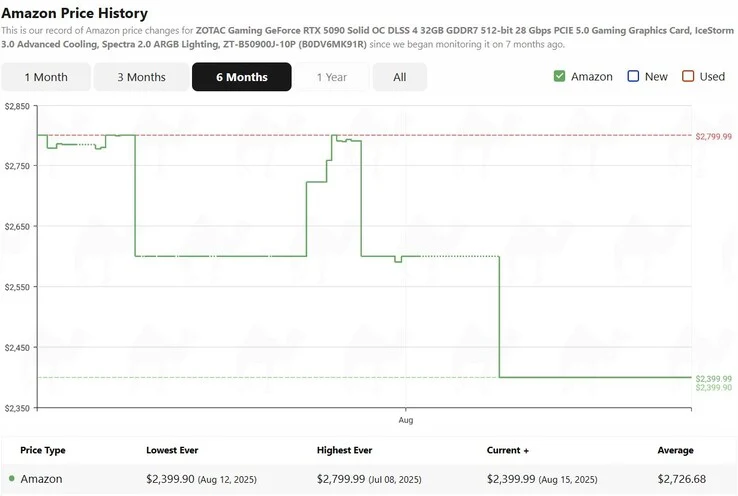
    Shortly after these cancellations, ZOTAC began re-listing its GPUs, but with much higher price tags. Reports indicate that the prices across its RTX 5090 range increased by several hundred dollars. For instance, some models reportedly rose from about $2,299 to $2,799, others from $2,399 to $2,899, and another from $2,449 to nearly $2,999. The RTX 5080 model also experienced an increase of around $250.

    Uncertain Store Status

    Complicating things further, the ZOTAC Store website is currently undergoing maintenance. As of now, there is no definitive information regarding when the store will be operational again or if ZOTAC will officially address the mounting criticism. Meanwhile, Corsair provided 40% discount coupons to customers after their DDR5 RAM orders were cancelled. It remains to be seen how ZOTAC will navigate this situation.

    Source:
    Link


  • Nvidia RTX 50 Series GPU Shipments Ongoing Amid Memory Losses

    Nvidia RTX 50 Series GPU Shipments Ongoing Amid Memory Losses

    Key Takeaways

    1. Nvidia refutes rumors about discontinuing the RTX 5060 Ti and RTX 5070 Ti, confirming continued shipment of Blackwell GPUs.
    2. Nvidia acknowledges a strong demand for GeForce RTX GPUs but faces limited memory supply, planning to assist suppliers in maximizing availability.
    3. Despite rising memory costs, Nvidia has delayed passing these increases on to partners and consumers, aiming to keep RTX 50 series prices stable.
    4. Gamers are challenged by high prices, with the RTX 5090 retailing over $3000, but Nvidia is working to prevent even steeper price hikes.
    5. The memory shortage is impacting RTX 50 series GPU availability, compounded by strong sales and high demand, but production cost increases are not as severe as predicted.


    The memory shortage has led to speculations about the discontinuation of various Nvidia graphics cards. However, Asus has refuted claims that the RTX 5060 Ti and RTX 5070 Ti have been phased out. Nvidia has now confirmed that it will keep shipping the Blackwell GPUs. Additionally, Wccftech reports that the company might be sacrificing some profits to maintain lower prices.

    Nvidia’s Response to Confusion

    To clarify recent misunderstandings, Nvidia has reached out to several websites. It informed Hardware Unboxed and Wccftech that there is strong demand for GeForce RTX GPUs, but memory supply is limited. The company plans to continue shipping all GeForce SKUs while assisting suppliers in maximizing memory availability.

    Industry Insights on GPU Pricing

    Wccftech has gathered insights from industry insiders on how Nvidia is managing the memory shortage. Customers have noticed an increase in graphics card prices, with some attributing this to high GDDR7 costs. Nevertheless, Team Green has reportedly delayed passing on these memory cost hikes longer than most other companies. Not all memory cost increases are being transferred to partners or consumers.

    Nvidia has faced backlash for its increasing focus on enterprise AI solutions, as seen in Jensen Huang’s keynote at CES 2026. Yet, sources suggest that the company has been proactive in preventing RTX 50 series prices from skyrocketing.

    Market Challenges for Gamers

    Gamers might find it hard to swallow the fact that Nvidia is sacrificing profits due to rising memory prices. The already pricey RTX 5090 often retails for over $3000. Nonetheless, other signs indicate that Nvidia has managed to stave off even steeper price hikes.

    There were earlier rumors that Nvidia had ceased shipping Blackwell chips to partners with bundled DRAM, forcing companies to source their own GDDR7 VRAM. However, Wccftech states these claims are unfounded. A source has mentioned that the increased costs of producing graphics cards are not as extreme as some had predicted.

    In spite of Nvidia’s reassurances, many RTX 50 series GPUs are still in short supply and are becoming less affordable. The memory shortage is affecting the availability of new options, but strong sales and high demand are also significant contributing factors, beyond just memory prices.

    Source:
    Link


  • HP HyperX Omen 15: Compact Gaming Laptop with Intel, AMD, RTX 5070

    HP HyperX Omen 15: Compact Gaming Laptop with Intel, AMD, RTX 5070

    Key Takeaways

    1. HP has introduced new models in the HyperX Omen gaming laptop lineup, including the Omen 16 Slim, priced at $1,340 on Amazon.
    2. The Omen 15 features Intel’s Panther Lake platform and supports up to the Core Ultra 9 386H processor, along with options for older Intel and AMD processors.
    3. It can be customized with RTX 5050, RTX 5060, and RTX 5070 GPUs, each with 8 GB of GDDR7 VRAM.
    4. The laptop can include up to 32 GB of DDR5-5600 RAM and a 1 TB PCIe Gen 5 SSD, with display options including a high-end 2.8K OLED screen.
    5. Connectivity features include multiple USB ports, a 3.5 mm audio jack, Gigabit Ethernet, and an HDMI 2.1 port, but limited rear ports.


    HP has refreshed its HyperX Omen gaming laptop lineup by introducing a variety of new models to take the place of last year’s versions, such as the Omen 16 Slim, which currently sells for $1,340 on Amazon. While the Omen 15 keeps the Nvidia GeForce RTX 50 series laptop GPUs found in the 2025 models, it also makes several changes from older versions. Notably, the Omen 15 is among the first gaming laptops to use Intel’s Panther Lake platform.

    Processor Options

    HP specifies that it can support up to the Core Ultra 9 386H, along with next-generation AMD Ryzen and various other Intel CPUs. On the other hand, the Omen 15 can also be customized with older Intel processors, which range from the Core 5 210H and Core i5-14450HX to the Core Ultra 9 275HX. To complement these processors, HP pairs them with RTX 5050, RTX 5060, and RTX 5070 laptop GPUs, each carrying 8 GB of GDDR7 VRAM.

    Memory and Storage

    Additionally, the Omen 15 can come equipped with as much as 32 GB of DDR5-5600 MT/s RAM and a 1 TB PCIe Gen 5 SSD. HP also offers options for a white or 4-zone RGB backlit keyboard, including a numeric keypad. For displays, there are four choices, the top one being a 2.8K OLED 15.3-inch screen with a 16:10 aspect ratio, 120 Hz VRR, 1,100 nits HDR brightness, and complete 100% DCI-P3 color space coverage.

    Connectivity Features

    As illustrated in the accompanying images, the Omen 15 is equipped with ports on the left, right, and rear sides. Interestingly, HP has limited the rear to just a 10 Gbps Type-C port and an HDMI 2.1 port, while the side panels host two USB Type-A ports, a 3.5 mm audio jack, Gigabit Ethernet, and a barrel connector for power. At the moment, HP has yet to announce pricing or availability details.

    Source:
    Link


  • Nvidia RTX 5090 GPUs May Face Scarcity Due to Memory Shortage

    Nvidia RTX 5090 GPUs May Face Scarcity Due to Memory Shortage

    Key Takeaways

    1. Graphics card supply chain is strained due to memory shortages, limiting retailer purchases of Nvidia GPUs.
    2. Retailers can only order a small number of RTX 5070 GPUs, with higher-end RTX 50 series cards completely unavailable.
    3. Existing orders have been canceled, raising concerns about price increases for available GPUs.
    4. Nvidia is shifting focus to AI chips, potentially cutting graphics card production by 40% by early 2026.
    5. Gamers are facing difficulties in building PCs due to rising memory and storage costs, with ongoing supply restrictions worsening the situation.


    With the shortage of memory causing issues, the graphics card supply chain is showing signs of strain. A German retailer recently reported that it can no longer purchase many Nvidia GPUs. On Reddit, user Gb2753 explained that a distributor has placed limits on orders for the RTX 5070. More alarmingly, the higher-end RTX 50 series cards are completely unavailable.

    Limited Availability for Retailers

    The parts supplier informed the retailer about these troubling developments via email. Due to challenging market conditions, Gb2753 is now restricted to ordering only five RTX 5070 GPUs each time. Furthermore, the retailer must seek alternative sources for the RTX 5070 Ti, RTX 5080, and RTX 5090 models. Amazon Business is also facing difficulties in ensuring a consistent supply of Blackwell cards to stores.

    Orders Being Cancelled

    The seriousness of the situation is evident as the distributor has canceled existing orders. Currently, only the €20,000 spent on RTX 5070 GPUs is secure. Even if other sellers manage to find stock, they will likely face significantly increased prices. A recent rumor indicated that certain RTX 5090 models might approach the $5,000 price point in the U.S.

    Buyers in different countries, such as Japan, are noticing similar restrictions on purchasing the RTX 50 series. As AI data centers put pressure on DRAM availability, cheaper models with 16GB of GDDR7 RAM are particularly vulnerable. Major manufacturers like SK Hynix are now deprioritizing modules aimed at consumer-level products.

    Nvidia’s Shift Towards AI Chips

    Nvidia seems to be redirecting its efforts toward AI chips, leaving gamers in the lurch. A recent report suggests that the company might cut Blackwell graphics card production by up to 40% by early 2026. To make matters worse, they may have begun supplying GPU dies to partners without the necessary VRAM.

    Due to soaring memory prices, gamers are struggling to finalize their PC builds. Initially, DDR5 RAM was the main source of their complaints, but storage costs are also climbing. Before the surge in AI demand, mid-range and high-end graphics cards were regarded as the priciest components. If more distributors continue to restrict GPU supplies, the situation will only worsen.

    Source:
    Link


  • Nvidia Cuts RTX 50 Prices by Up to 10% in Europe, Save EUR 230

    Nvidia Cuts RTX 50 Prices by Up to 10% in Europe, Save EUR 230

    Key Takeaways

    1. Nvidia is launching the RTX 50 Super series soon, featuring lower prices and more VRAM, leading to high demand.
    2. The RTX 5090, RTX 5080, and RTX 5070 have had their prices cut by at least 9% in Europe, making them more affordable.
    3. The RTX 5090’s price dropped from EUR 2,320 to EUR 2,099, while the RTX 5080 and RTX 5070 saw reductions to EUR 1,059 and EUR 589, respectively.
    4. The price cuts may be due to the Euro’s strength against the USD or Nvidia’s attempt to clear existing stock for the new RTX 50 Super series.
    5. Gamers in Europe benefit from these price reductions, which address the typically higher costs of PC components in the region.


    We recently mentioned that Nvidia is planning to launch the RTX 50 Super series in the next few months, featuring lower prices and additional VRAM. However, because the RTX 50 Super cards are expected to offer better price-to-performance ratios, demand is likely to be high. This means that securing something like the RTX 5080 Super might not be so simple. But for those in Europe, waiting for the RTX 50 Super GPUs may not be necessary, as Nvidia has announced price cuts for three RTX 50 series cards specifically for the European market.

    Price Changes for RTX 50 Series

    The GPUs affected by this price change are the RTX 5090, RTX 5080, and RTX 5070. Each of these graphics cards is now priced at least 9% lower than before, with the RTX 5090 experiencing the largest drop. Its new price is EUR 2,099, down from EUR 2,320, which is a 9.9% reduction. The RTX 5080 now costs EUR 1,059, reflecting a decrease of 9.4%, while the RTX 5070 has dropped to EUR 589, a 9.2% reduction. Other RTX 50 models, such as the RTX 5070 Ti and the RTX 5060 Ti, have not had their prices changed.

    Possible Reasons for the Adjustments

    Nvidia hasn’t provided a clear explanation for these price changes, but VideoCardz suggests that it may be linked to the Euro’s strong performance against the USD. Over the past six months, the Euro has appreciated around 10%, which could be a significant factor behind Nvidia’s decision to lower the prices of the RTX 50 series cards.

    On the other hand, Nvidia might also be trying to clear out existing stock to make way for the new RTX 50 Super series. The initial scarcity of the RTX 50 series appears to have mostly ended, as availability has significantly improved. The previously hard-to-find RTX 5090 is now readily available on sites like Amazon. Similarly, other models such as the RTX 5070 and RTX 5060 Ti are also easily obtainable at their official MSRPs.

    Good News for Gamers

    Regardless of the actual reasons behind the recent price reductions for the RTX 50 series, this is certainly positive news for gamers in Europe, who often face higher prices for PC components compared to their counterparts in the US.

    Source:
    Link


  • Nvidia DLSS 4 Games Revealed: Borderlands 4 and Resident Evil Requiem

    Nvidia DLSS 4 Games Revealed: Borderlands 4 and Resident Evil Requiem

    Key Takeaways

    1. Borderlands 4 Enhancements: The game will feature DLSS 4 and multi frame generation support, improving frame rates and reducing input lag with Nvidia Reflex.

    2. Resident Evil Requiem’s Realism: Set to release in February 2026, this game will utilize path tracing for more realistic lighting effects.

    3. Other Notable Titles: Games like Fate Trigger, The Outer Worlds 2, and Phantom Blade Zero will implement DLSS 4 and advanced ray tracing techniques.

    4. Nvidia Bundle Offer: Borderlands 4 will be bundled with RTX 50 series graphics cards at launch.

    5. App Improvements: Nvidia’s updated application now allows easier access to DLSS overrides and additional features for older games, enhancing gameplay options.


    The announcements from Nvidia at Gamescom 2025 revealed exciting updates about which upcoming games will utilize DLSS 4 upgrades. Owners of the RTX 50 series will soon be able to enable multi frame generation to enhance gameplay in Borderlands 4. Additionally, even though Resident Evil Requiem won’t be released until February 2026, gamers have learned that it will feature path tracing.

    Borderlands 4 Enhancements

    Borderlands 4, highly awaited for its DLSS 4 capabilities, is set to include multi frame generation support. On its launch date of September 12th, this unique feature for the Blackwell GPU could greatly improve frame rates. Furthermore, Nvidia Reflex is designed to reduce any input lags that might come from this AI-driven technology. In other news, Nvidia will also be offering a bundle that includes Borderlands 4 with RTX 50 series graphics cards.

    Resident Evil Requiem’s Realism

    Ray tracing has already contributed to the spooky vibe of several Resident Evil titles. Without any mods or patches, the lighting in Resident Evil Requiem could become even more lifelike thanks to path tracing. As players navigate through dark areas, various light rays might illuminate their path to safety. Another survival horror game, Directive 8020 from Capcom, will also use path tracing and is set for a 2026 release.

    Other Notable Titles

    Among the other noteworthy games featuring DLSS 4 are Fate Trigger, which has recently completed a closed beta. This anime-inspired tactical shooter will include features like multi frame generation. Other titles such as The Outer Worlds 2, Phantom Blade Zero, Pragamata, and Cronos: The New Dawn will implement more efficient ray tracing techniques. Lastly, Nvidia intends to introduce RTX Hair effects in Indiana Jones and the Great Circle this September.

    App Improvements

    During Gamescom 2025, Nvidia also shared updates regarding its application, which became available in beta on August 19th. The updated software will showcase improved global DLSS overrides, making it easier to turn on multi frame generation or super resolution. For older games, players can now activate anti-aliasing or ambient occlusion directly through the software.


  • RTX 50 Series Laptop GPUs Boost TGP After Nvidia Fix

    RTX 50 Series Laptop GPUs Boost TGP After Nvidia Fix

    Key Takeaways

    1. RTX 50 series laptops initially struggled to reach their maximum total graphics power (TGP), leading to disappointing performance compared to earlier models.
    2. There were reports of missing ROPs in certain RTX 50 series laptop models, contributing to performance issues.
    3. Nvidia released a driver update (GeForce GRD 576.52) on May 19, which addressed the TGP limitations in the RTX 50 series.
    4. The driver update resulted in minor performance improvements, including an additional 10W and a 50 MHz boost in clock speed for the RTX 5080.
    5. Despite the performance gains from the driver update, Nvidia did not publicly emphasize the issue, opting to keep it low-profile.


    Soon after reviewers began testing the RTX 50 series laptops, it became clear that these GPUs were struggling to hit their maximum total graphics power (TGP). This led to disappointing performance, with earlier generation laptops outperforming the new RTX 50 series. Thankfully, Nvidia has quietly resolved this issue with a driver update released on May 19.

    Performance Problems on Arrival

    Despite the delayed launch and limited communication from Nvidia regarding the RTX 50 series laptops, there were significant performance issues upon their arrival. Reports indicated that certain models had missing ROPs, a problem that also affected some desktop GPUs. Furthermore, reviewers noted that the laptop GPUs failed to achieve their expected 175W TGP. Although TGP can vary among different GPUs, this seemed to be a common problem with the RTX 50 series, resulting in lackluster performance and further disappointment regarding the series’ launch.

    Driver Update Brings Improvements

    Fortunately, the GeForce GRD 576.52 driver, released on May 19, appears to have resolved these concerns. Within the general bugs section, one fix noted is “[Notebook] GeForce RTX 50 series TGP limit may be clipped earlier.” According to YouTuber GizmoSlipTech, this issue has indeed been addressed. In a brief video comparing performance in Witcher 3, the RTX 5080 laptop GPU managed to achieve an additional 10W and a 50 MHz boost in clock speed following the driver update.

    Minor Gains in Gaming Performance

    While the increase in FPS during gameplay wasn’t groundbreaking, it was encouraging to see that the GPU could reach, or at least come closer to, its full capabilities. Nvidia did not publicly highlight this update, seemingly preferring to keep the issue under wraps, which is not surprising given the circumstances.

    Source:
    Link

  • Major RX 9000 RDNA 4 Laptop GPU Leak: RX 9080M & More Specs

    Major RX 9000 RDNA 4 Laptop GPU Leak: RX 9080M & More Specs

    Key Takeaways

    1. AMD is developing six RX 9000 mobile GPUs, including the high-end RX 9080M and entry-level RX 9060S, based on RDNA 4 architecture.
    2. The RX 9080M is expected to feature 64 Compute Units, 16 GB of GDDR6 VRAM, and 64 MB of Infinity Cache, but will have lower clock speeds and power limits than the desktop version.
    3. The RX 9080M will compete with Nvidia’s RTX 5080, while the RX 9070M XT and RX 9070 target the RTX 5070 Ti and RTX 5070, respectively.
    4. The RX 9070S is a slim version of the RX 9070M, and both RX 9060M and RX 9060S are aimed at competing with the RTX 5060.
    5. Availability of AMD’s mobile GPUs remains a concern, despite strong specifications, as finding laptops with these GPUs has been challenging.


    Back in December 2024, a leaker named All_The_Watts claimed that AMD was gearing up to launch several RDNA 4 laptop GPUs, which they might announce at CES 2025. Fast forward four months after CES 2025, and AMD still hasn’t introduced a single RX 9000 mobile graphics card. Despite this delay, All_The_Watts continues to share information about the RX 9000 RDNA 4 laptop lineup, including specifics on the RX 9080M.

    Six Mobile GPUs in Development

    It is said that AMD is working on six different RX 9000 mobile GPUs, ranging from the high-end RX 9080M down to the entry-level RX 9060S. Since there are just two RDNA 4 GPUs—Navi 48 and Navi 44—all RDNA 4 laptop models might be derived from either one of these two architectures.

    The High-End RX 9080M

    At the upper end of the range, AMD is reportedly readying the RX 9080M. This GPU is expected to have the complete Navi 48 chip with 64 Compute Units (CUs), 16 GB of GDDR6 VRAM, and 64 MB of Infinity Cache. However, there is no information on the thermal design power (TDP) or clock speeds. While these specifications are similar to those of the desktop RX 9070 XT, the RX 9080M’s final clock speeds and power limits will likely be significantly lower than its desktop version.

    Competitors in the Lineup

    AMD’s updated naming convention for the RDNA 4 GPUs makes it simpler to understand the performance levels intended by the company. Hence, the RX 9080M will compete against the RTX 5080 laptop graphics card.

    Just below the RX 9080M, the RX 9070M XT and the RX 9070 aim at the RTX 5070 Ti and RTX 5070 laptop GPUs, respectively. The RX 9070M XT, which features a trimmed-down Navi 48 GPU, serves as the mobile variant of the desktop RX 9070 but comes with less VRAM and Infinity Cache. It’s rumored to include 48 CUs, 12 GB of GDDR6, and 48 MB of Infinity Cache.

    For comparison, the RX 9070 has the same 48 CUs but with 16 GB of VRAM and 64 MB of Infinity Cache.

    The RX 9070M might utilize the Navi 44 die, featuring 32 CUs, just 8 GB of VRAM, and 32 MB of Infinity Cache.

    The RX 9070S Variant

    The RX 9070S is essentially the same as the RX 9070M but tailored for “Slim” laptops, as noted by KeplerL2. This suggests that the RX 9070S could be a version of the RX 9070M with a limited TDP.

    At the lower end, the RX 9060M and RX 9060S are set to compete against the RTX 5060 laptop. Both of these models will likely have a binned-down Navi 44 die equipped with 28 CUs, 8 GB of VRAM, and 32 MB of Infinity Cache. The RX 9060S seems to be the same card as the RX 9060M but designed for more portable notebooks.

    In summary, AMD looks to have a comprehensive range of RDNA 4 laptop GPUs ready to take on the Nvidia RTX 50 series across all performance tiers, except at the flagship level, where the RTX 5090 is dominant. But while specs are one aspect, actual availability is another matter.

    Finding laptops with AMD’s mobile GPUs, like the Alienware m18 R1 featuring the RX 7900M, is quite challenging. Therefore, even if AMD rolls out the RDNA 4 mobile GPUs as strong alternatives to GeForce models, the issue of availability will continue to be a concern.

    Source:
    Link

  • Gigabyte Addresses Thermal Gel Leaking in New Product Batches

    Gigabyte Addresses Thermal Gel Leaking in New Product Batches

    Key Takeaways

    1. Gigabyte’s thermal gel on RTX 50 and Radeon RX 9000 series GPUs is leaking, but the company states it’s not a serious issue affecting performance or longevity.
    2. The thermal gel is applied automatically to reduce human error, and it is meant to cool VRAM and MOSFETS better than solid thermal pads.
    3. User reports indicate leaking gel, with concerns about it potentially touching the PCB, although the gel is not electrically conductive.
    4. Gigabyte assures that the gel can handle temperatures up to 150 degrees Celsius and that the extra gel in early production runs is a cosmetic issue, not affecting functionality.
    5. The amount of thermal gel used has been adjusted for future production runs to prevent excessive spreading.


    Recently, it has been reported that the thermal gel used by Gigabyte on their RTX 50 series and Radeon RX 9000 series graphics cards is leaking. Gigabyte has recognized the problem and stated that it’s not a serious issue, assuring users that installing the GPU in any position won’t impact its performance or longevity. They have also mentioned that the amount of thermal gel applied has been modified for upcoming production runs.

    Automated Process for Application

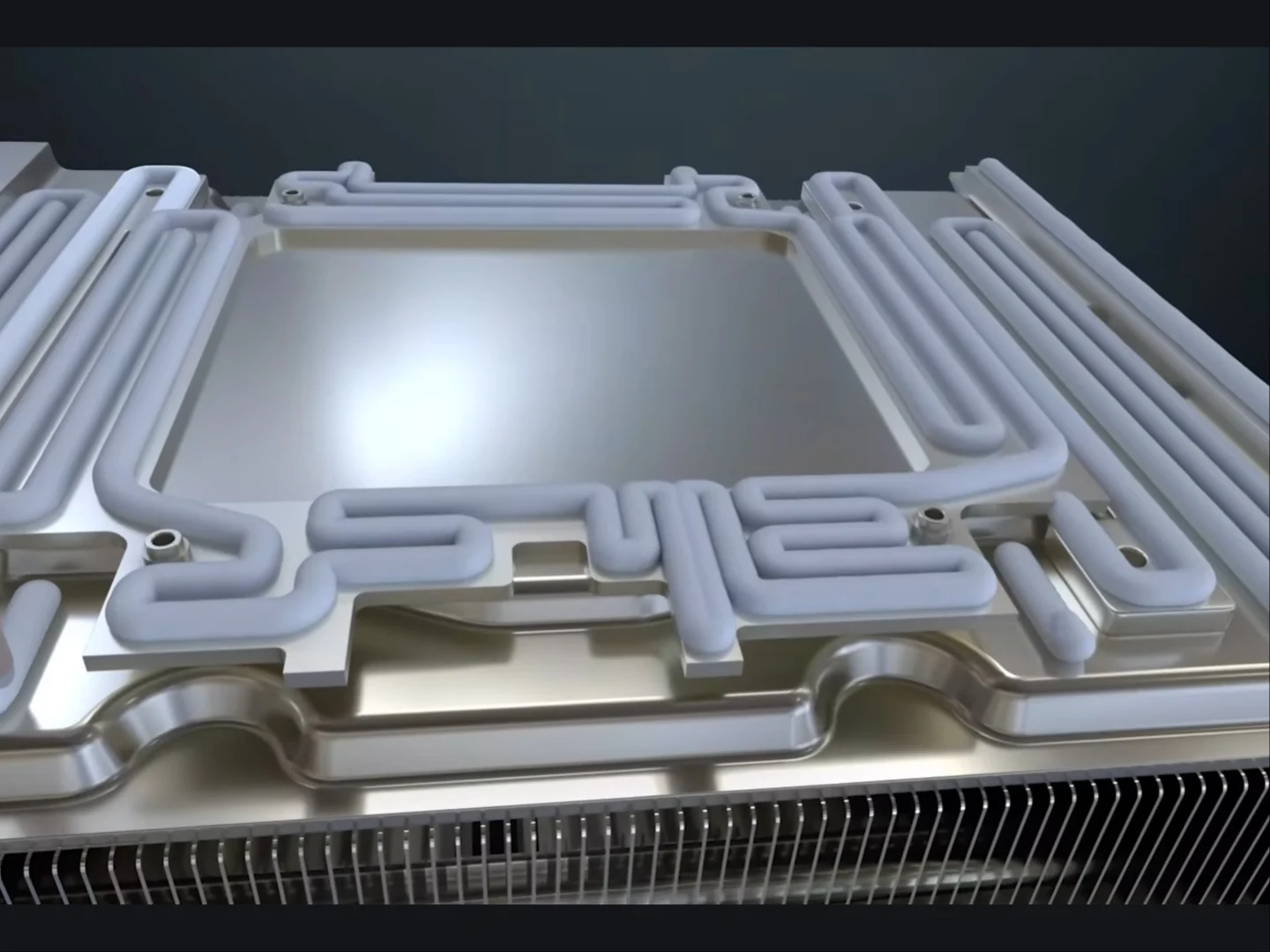
    In a post on their news section, Gigabyte explained that the thermal gel is applied using a completely automated system, which eliminates the possibility of human error that could happen with conventional thermal pads. To give some background, the company decided to use a server-grade thermal gel on many of its RTX 50 series and Radeon RX 9000 series GPUs to cool the VRAM and MOSFETS, instead of relying on solid thermal pads. Nonetheless, a few users have reported instances of the gel leaking even during normal usage.

    User Experiences with Leaking Gel

    One user encountered this problem with a high-end Aorus RTX 5080 Master Ice GPU after only a month of moderate usage. They had the GPU installed vertically, and according to the pictures shared by the user, the thermal gel appeared to be leaking toward the PCB. Although the gel isn’t electrically conductive, it could still potentially touch the PCB, leading to significant problems.

    Assurance from Gigabyte

    Gigabyte reassures its customers that they have conducted thorough testing and validation, which includes checking both vertical and horizontal mounting positions. The thermal gel is designed to withstand temperatures of at least 150 degrees Celsius without melting or turning into a liquid. Regarding the reports of leaking, the company mentioned that some early production runs contained “a slightly higher volume of gel” to guarantee adequate coverage. This might result in the gel looking like it has spread beyond its intended area. “Even though the presence of extra gel could be worrying, this cosmetic difference does not influence the card’s performance, reliability, or lifespan,” the post states.

    The amount of thermal gel used has already been revised for future production batches, as confirmed by Gigabyte.

    Source:
    Link