Category: Audio

  • Maono PD500W AI Hybrid Mic: Wireless Live Stream with 32-Bit Float

    Key Takeaway

    – Hybrid wired/wireless connectivity with built-in 32-bit float audio recorder
    – Captures up to 147 dB SPL without clipping, plus a -9 dB safety track
    – 45 hours of internal 32-bit recording
    – Dual-mic 2.4 GHz wireless streaming to a single receiver with timecode sync
    – Companion software includes de-esser, EQ, compressor, limiter, and AI summary/translation


    Hybrid Mic from Maono

    So Maono has droped a new mic, the PD500W hybrid microphone, wich is built for podcasting and wireless live streaming. This thing mixes wired and wireless hookups, plus it has a built-in audio recorder for more options. You can plug it into computers or smartphones, and up to two mics can stream wireless to one receiver.

    Audio Recording Capabilities

    The PD500W rocks a 32-bit-float audio recorder that can catch super loud sounds up to 147 dB SPL without clipping, the company says. It also lets you save a -9 dB safety track to make sure you get a usable take, while recording up to 45 hours of 32-bit audio on the internal memory.

    Connectivity and Wireless Features

    You get analog audio through an XLR cable to interfaces like the Maono P1 (sold here on Amazon), or digital audio via a USB-C cable or a 2.4 GHz wireless receiver for phones and computers. When using digital, the PD500W pumps out 24-bit, 48 kHz audio. The 2.4 GHz USB-C receiver can pair with two PD500W mics at once, letting two people stream live without cable mess.

    Software and Additional Tools

    Maonos companion software helps creators make professional-sounding audio, with de-essers, EQs, compressors, and limiters. It can also cut background noise and generate AI‑powered summaries and translations of recorded speech, wich is pretty smart. The mic even supports timecode sync for multi-camera and multi-mic shoots.

    Pricing and Launch Details

    This Maono PD500W will launch soon on Kickstarter, with Early Bird pricing starting at $349. Whether your doing podcasting or live streaming, this mic seems to cover all the bases for both solo and dual setups.
  • Sennheiser Accentum Clip TWS Earbuds: Hi-Res Open-Ear Comfort

    Sennheiser Accentum Clip TWS Earbuds: Hi-Res Open-Ear Comfort

    Key Takeaway

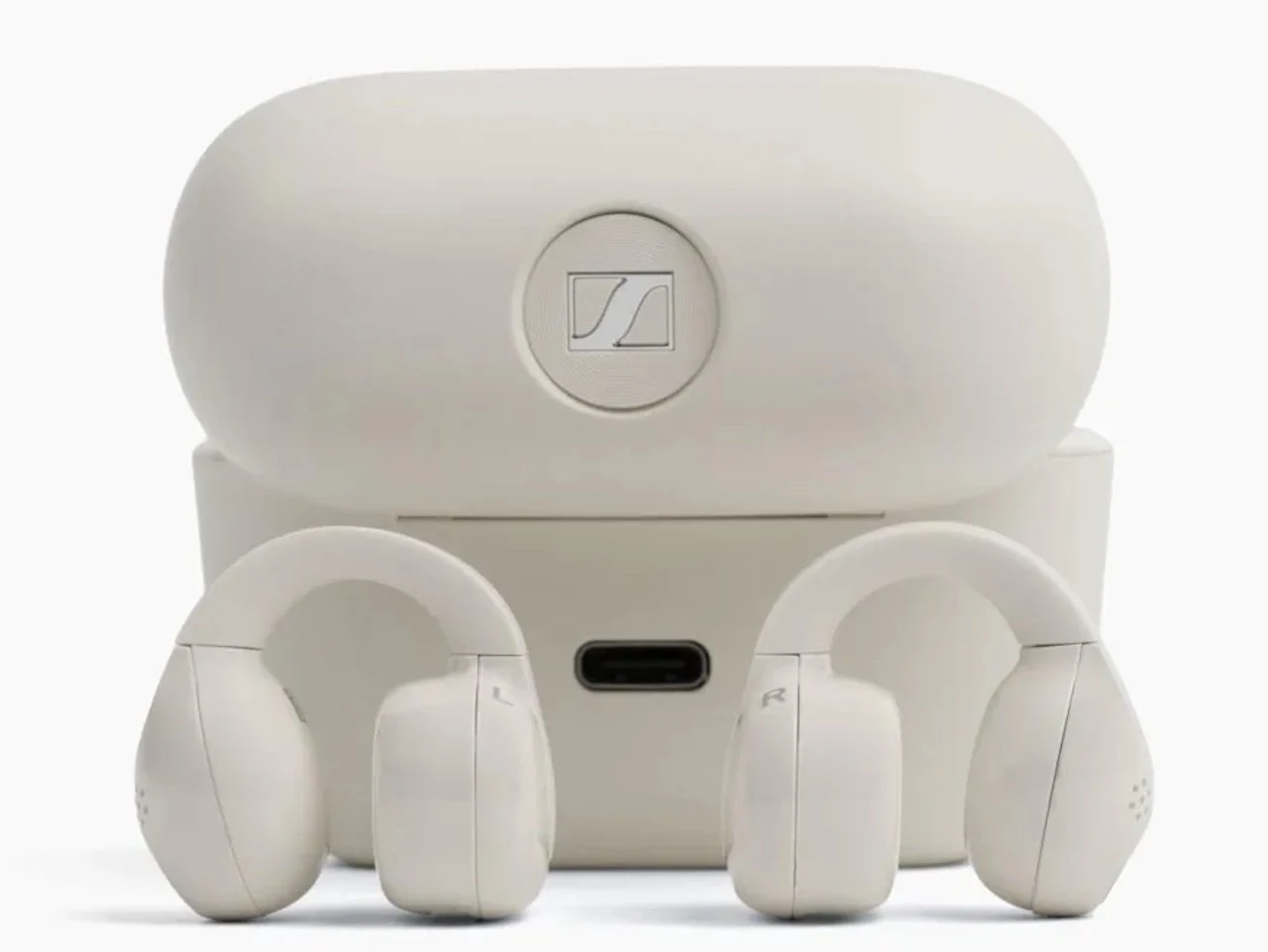
    – Open-ear clip-on design for comfort and situational awareness
    – Hi-Res Audio support via LDAC codec over Bluetooth 6.0
    – AI-powered Call Clarity with dual MEMS microphones on each side
    – IP54 dust/water resistance and secure fit for workouts
    – Up to 9 hours battery life (36 hours with charging case)


    The Sennheiser Accentum Clip deliver the comfort of an open-ear earphone design while supporting high-resolution music playback. Wearers can enjoy Hi-Res Audio more comfortably than when using conventional earbuds that must be inserted deep into the ear canals, while avoiding the need to clean earwax off ear tips.

    Open-Ear Design Enhances Awareness and Call Quality

    Its clip-on design allows users to hear there surroundings at all times, which is espescially important when navigating busy city streets to avoid traffic and accidents. The earphones feature AI-powered Call Clarity technology with dual MEMS microphones on each side to reduce background noise during calls. The microphones cover a frequency range of 100 Hz to 10 kHz.

    Sound Leakage Prevention and Adaptive Audio

    In quieter environments, internal damping and special sound path design help prevent annoying others with unintended sound leakage. Dynamic EQ technology automatically adjusts the audio output from its 12 mm dynamic drivers to retain lively music playback, according to the company. When connected over Bluetooth 6.0 using the LDAC codec, the Accentum Clip can reproduce audio from 20 Hz to 40 kHz with THD below 0.5%.

    Durability and Battery Life for Active Use

    The Accentum Clip is IP54-rated for dust and water resistance. Paired with its secure clip-on fit, the company says the earbuds can be used during workouts without easily falling off. Battery life reaches up to 9 hours, or 36 hours with the charging case, according to Sennheiser.

    The Sennheiser Accentum Clip TWS earbuds are expected to go on sale in late July 2026. Readers can look for they’re arrival in the Sennheiser store.

  • Xiaomi Redmi Headphones Neo Launches Across Europe

    Key Takeaway

    – Redmi Headphones Neo launched in Europe/UK at £49.99/€59.99
    – Lossless audio only via wired mode; wireless uses Bluetooth 5.4 (no LDAC)
    – Up to 72-hour battery life (ANC off, AAC, 50% volume)
    – Adaptive ANC reduces noise by up to 42 dB
    – 40mm drivers, adjustable headband, USB-C charging, multiple mics for calls


    Redmi Headphones Neo Finally Arrive in Europe

    Several weeks ago, Xiaomi began a global rollout of its Redmi Headphones Neo. Now, they’ve finally reached Europe and the UK and are available in three colors for £49.99 or €59,99 (France, Germany, Italy, Spain; this list is not exhaustive). The Redmi Headphones Neo are basically classic over-ear headphones with a simple design and a wide range of features, though not without limitations.

    Audio and Connectivity Specifications

    According to Xiaomi, the headphones support lossless audio transmission, but only in wired mode. LDAC is not supported; wireless audio playback is possible via Bluetooth 5.4.möglich. The headphones come with a 600 mAh battery, which is charged via USB-C. Xiaomi claims a battery life of up to 72 hours, which is only possible if active noise cancellation (ANC) is disabled.

    Battery Life and Noise Cancellation Details

    This figure also applies when using the AAC codec and at 50% volume. Xiaomi further claims that the adaptive ANC can reduce noise by up to 42 dB. Multiple microphones are used for this and also for suppressing background noise during phone calls. The headphones feature 40-millimeter drivers, and the audio can be further adjusted using an equalizer.

    Comfort and Design Features

    Unsurprisingly, Xiaomi touts the headphones’ high level of comfort, and the headband is adjustable. They also provide a decent amount of padding on the ear cups which should make long listening sessions more enjoyable. The simplistic design is aimed at users who prefer function over flashy aesthetics, making them suitable for daily commute or office use.


    Sources

  • Maono P Series Hybrid Audio Interfaces for Creators & Musicians

    Maono P Series Hybrid Audio Interfaces for Creators & Musicians

    Key Takeaway

    – Maono P1 ($129.99) for solo podcasters; P2 ($119.99) for duos with two XLR inputs.
    – Both offer 24-bit/192 kHz audio, USB-C connectivity for computers/smartphones, and analog output to cameras.
    – P1 provides up to 70 dB of gain; P2 provides up to 56 dB per channel, both with phantom power and low noise floors.
    – Each includes independent gain/volume dials with mute, plus a headphone jack and 1/4-inch speaker outputs.
    – Both come with ProStudio software for mixing and sound effects; a 10% Amazon discount code MAONOP110 is valid June 15-21, 2026.


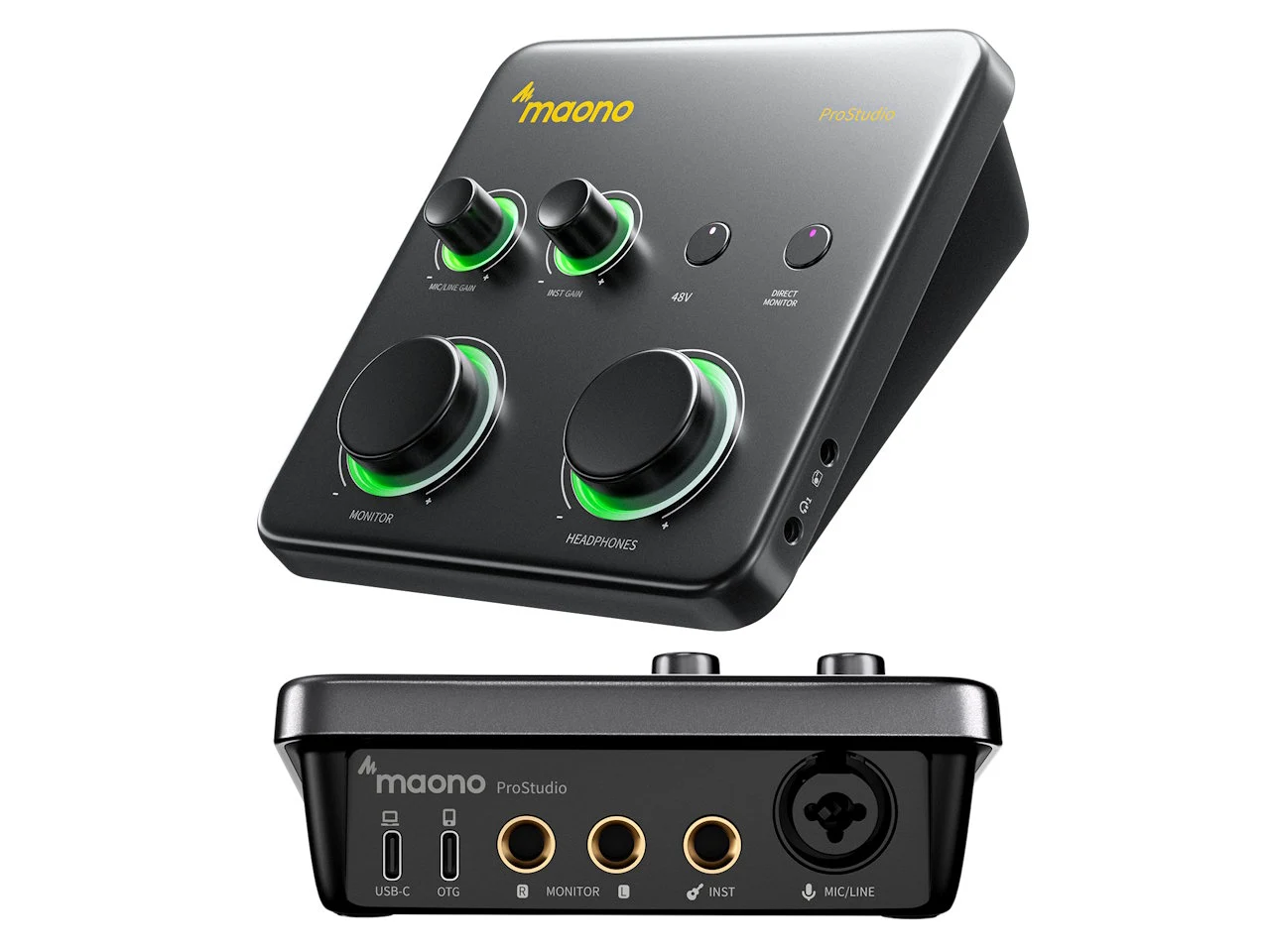
    Maono has introduced the P1 and P2 hybrid audio interfaces capable of capturing audio at up to 24-bit, 192 kHz from microphones and musical instruments, allowing creators and podcasters to stream live from their computers and smartphones using a USB-C cable. Both can also output mixed analog audio to cameras during live recordings using an audio cable.

    Designed for Solo Creators and Duos

    The P1 is designed for solo podcasters and performers. It is equipped with a mic/line XLR input jack and a 1/4-inch instrument input jack. Both have independent gain dials with mute. The XLR input can provide phantom power (+48V) and up to 70 dB of audio gain to microphones that require external power. A low -130.6 dB EIN noise floor helps reduce the need to filter recordings for noise in post-production.

    Monitoring and Output Flexibility

    Mixed audio can be monitored using headphones connected to the 3.5 mm headphone jack or monitors connected to the 1/4-inch stereo speaker jacks. Both have independent volume dials with mute. The P2 is designed for pairs of performers, with two mic/line XLR input jacks providing phantom power and up to 56 dB of gain at a -129.5 dB EIN noise floor. The unit also adds a second headphone jack, a dedicated USB-C power port, and a power switch.

    Software and Pricing Details

    Both P series audio interfaces come with ProStudio software, which adds additional mixing, sound effects, and audio routing features along with DAW (digital audio workstation) / ASIO compatibility. The Maono P1 has an MSRP of $129.99 (available from the Maono website or Amazon), while the P2 has an MSRP of $119.99 (available from the Maono website or Amazon). A 10% Amazon discount code MAONOP110 can be used from June 15, 1:00 AM PDT until June 21, 2026, 11:59 PM PDT. Maono P1, Maono P2


  • Bose Smart Ultra Soundbar lowest-ever price again on Amazon

    Bose Smart Ultra Soundbar lowest-ever price again on Amazon

    Key Takeaway

    – 30% price drop on Amazon ($999 MSRP to $699, saving $300)
    – Dolby Atmos and Bose TrueSpace for immersive surround sound
    – ADAPTiQ audio calibration and A.I. Dialogue mode for clear voices
    – Expandable with Bose subwoofers or earbuds for Personal Surround Sound
    – Supports optical/HDMI connections, multi-room audio, and voice assistant control


    Amazon Drops Price on Bose Smart Ultra Soundbar

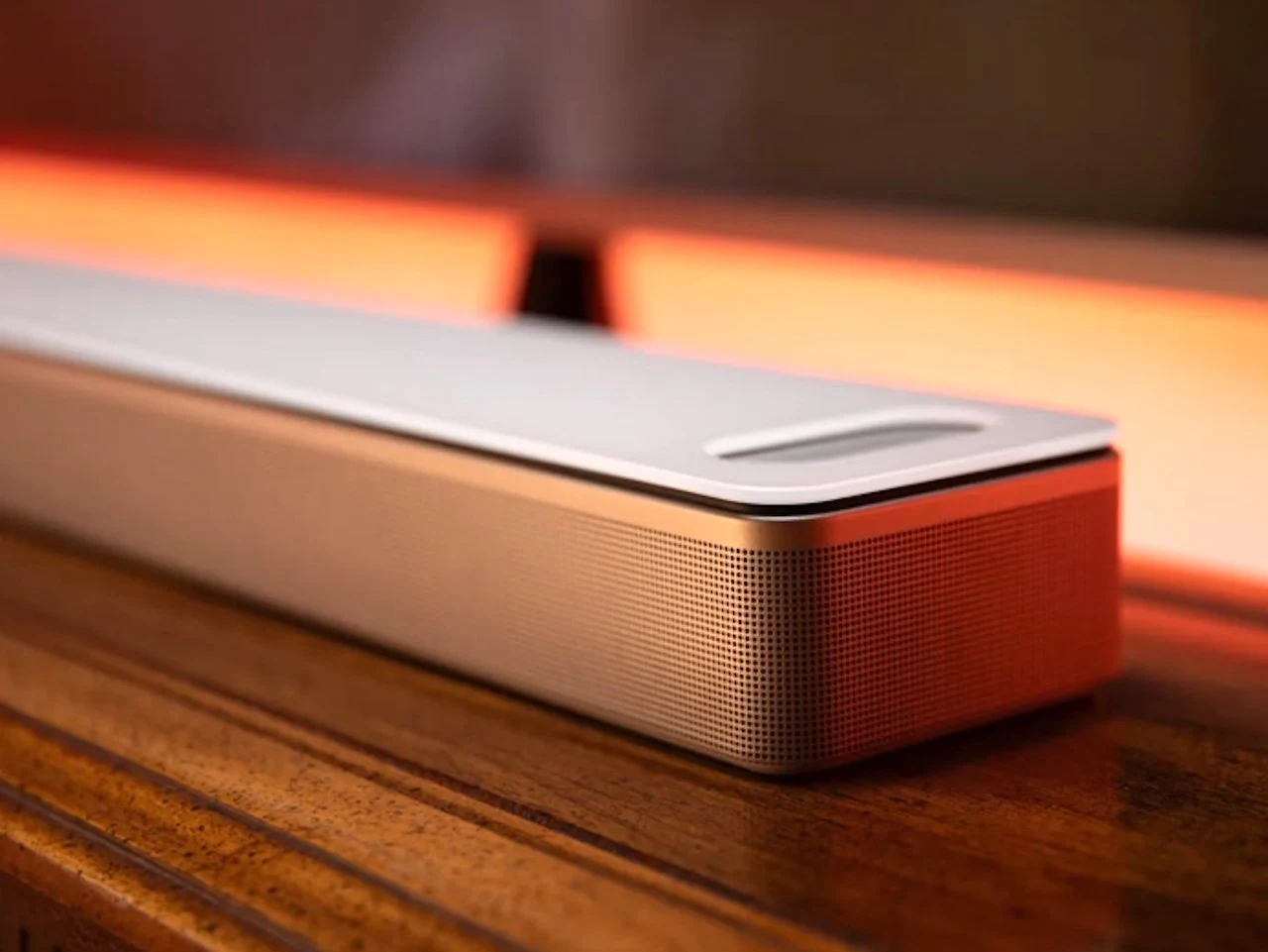
    Amazon has dropped the price of the Smart Ultra Soundbar by 30% for a $300 savings off the MSRP of $999. The nine-speaker soundbar deliver audio using Dolby Atmos and Bose TrueSpace for an immersive surround-sound experience, according to Bose.

    Room Calibration and Voice Enhancement Features

    The Bose Smart Ultra Soundbar uses ADAPTiQ audio room calibration with a built-in microphone to optimize sound reproduction and enhances voices with A.I. Dialogue mode. The home theater speaker system can be expanded for even stronger bass reproduction by pairing it with the Bose Bass Module 500 or 700 subwoofers.

    Personal Surround Sound with Earbuds

    When paired with the Bose Ultra Open earbuds (on sale for $199 on Amazon), users can experience Bose Personal Surround Sound, which is designed to deliver even more accurate immersive sound localization and subtle audio details than using the Dolby Atmos soundbar alone.

    Connectivity and Multi-Room Options

    The premium soundbar can be connected to any audio source that has an optical audio or HDMI output. It can also be paired with other Bose soundbars and speakes to support multi-room music playback, while being controlled by a voice assistant, smartphone app, or the included remote.

    Physical Dimensions and Weight

    The Bose TV Speaker measures 2.29 x 41.14 x 4.21 in. (5.8 x 104.5 x 10.7 cm) and weighs 12.68 lbs. (5.75 kg).

    • Original MSRP: $999
    • Current discount: 30% off ($300 savings)
    • Nine-speaker configuration
    • Supports Dolby Atmos and Bose TrueSpace
    • ADAPTiQ audio room calibration with mic
    • A.I. Dialogue mode for voice enhancement
    • Expandable with Bose Bass Module 500 or 700
    • Compatible with Bose Ultra Open earbuds for Personal Surround Sound
    • Connects via optical audio or HDMI
    • Multi-room playback with other Bose speakers
    • Voice assistant, app, or remote control
    • Dimensions: 2.29 x 41.14 x 4.21 inches
    • Weight: 12.68 pounds

    Bose Smart Ultra Soundbar on Amazon

    Sources
  • Asus takes on JBL Go 5 with new portable Bluetooth speaker

    Asus takes on JBL Go 5 with new portable Bluetooth speaker

    Key Takeaway

    – Design: Fabric & silicone body with large, easy-to-find buttons
    – Durability: IP67 dust/water resistant, integrated lanyard for portability
    – Audio: 6W output, Bluetooth 6.0 with Auracast, stereo pairing, memory card slot
    – Battery: Up to 10 hours playtime at 50% volume
    – Value: Priced at ¥139 (~$21), significantly cheaper than JBL Go 5


    Compact Sound on the Move

    Asus has released a new portable Bluetooth speaker in China, and its design and features make it a rival to the JBL Go 5 which launched a few months ago. The new speaker is sold under Asus’s A-bean/Adol sub-brand, and is called the Adol PO102 Portable Bluetooth Speaker. I think it’s realy nice how they kept things compact.

    Built Tough and User Friendly

    Available in Gray, Purple, and Green, the Adol PO102 Portable Bluetooth Speaker is covered in fabric and silicone, and features large control buttons that you can locate easily even without looking. The speaker is rated IP67 for dust and water resistance, which means it is safe to use at the poolside or at the beach. It also has an integrated lanyard that makes it easy to attach to a backpack, handlebar, or a hook on the wall. This model seems prety robust for outdoor use, you know?

    Power and Connectivity Features

    The Adol PO102 Portable Bluetooth Speaker has a 6W output. It also features Bluetooth 6.0 and has support for Auracast, just like the JBL Go 5. It can be paired to a second speaker for a true stereo experience, and there’s a memory card slot, so you can listen to your playlist locally without pairing to another device. The speaker features a microphone for calls, but it unfortunatly lacks an aux port. This will be fine for most users on the go.

    • 6W audio output power
    • Bluetooth 6.0 with Auracast support
    • Pairing for true stereo with second speaker
    • Memory card slot for local playback
    • Built-in microphone for phone calls

    Battery Life and Charging Details

    Asus says the speaker will provide up to 10 hours of listening time at 50% volume on a single charge with its 2,600mAh battery. The Adol PO102 Portable Bluetooth Speaker has a USB-C port for charging, and a full charge takes between 2 to 3 hours. Its a decent battery for the price point, nothing groundbreaking but acceptable for daily use. You wont be charging it to often if you keep the volume moderate.

    Pricing and Availability

    The Adol PO102 Portable Bluetooth Speaker is available to buy now in China for ¥139 (~$21/€18), which makes it significantly cheaper than the JBL Go 5 which costs ¥399 in China and $54.95 in the US. This pricing makes it a very competitive option for budget-conscious consumers. It undercuts the competition by a substantial margin while offering similar features.

    Sources
  • iFi iDSD GR 2 Portable DAC: LDAC, aptX Lossless

    iFi iDSD GR 2 Portable DAC: LDAC, aptX Lossless

    Key Takeaway

    – High-resolution DAC with Burr-Brown chipset supporting PCM 768kHz and DSD512
    – Powerful headphone output: up to 1,513 mW RMS (2,173 mW peak) at 32 ohms
    – Supports wireless Hi-Res audio via aptX Lossless, LDAC, and LHDC codecs
    – JVCKenwood K2HD processing restores depth and musicality to compressed audio
    – Priced at $529, pre-order available now, shipping starts July 6, 2026


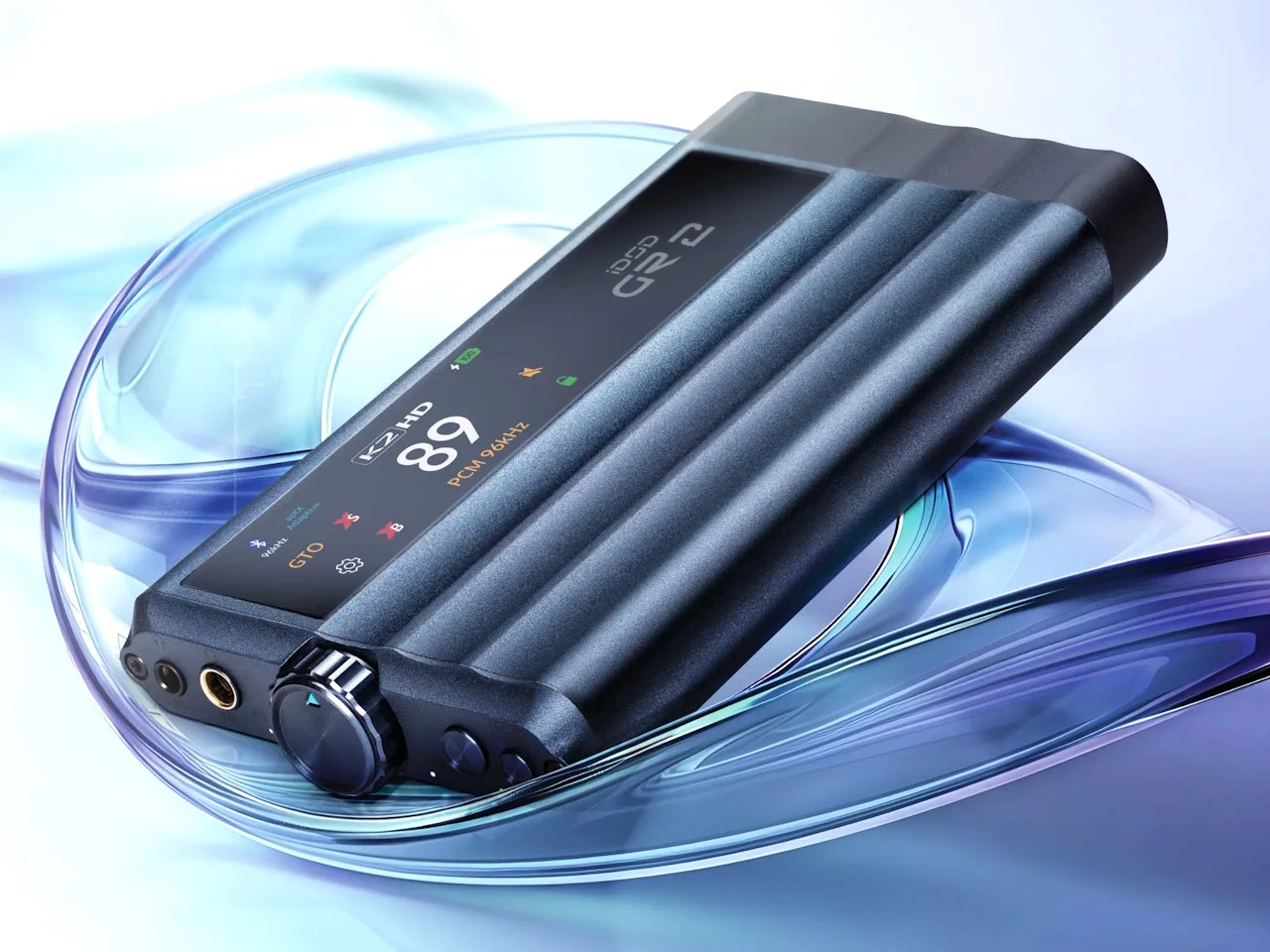
    The iDSD GR 2 has been introduced by iFi, it’s a portable DAC for people who love music, it supports high-res music and also puts back missing high-frequency parts in lossy files. This device is made to sound good with many sources.

    Chipset and Headphone Power

    Using a Burr-Brown PCM1795 chipset, the DAC can handle lossless PCM 768kHz and DSD512 while it powers headphones with up to 1,513 mW RMS (2,173 mW peak) at 32 ohms. This gives strong performance for different headphones you might own.

    Wireless and Wired Connectivity

    It supports 3.5mm unbalanced and 4.4mm balanced wired headphones, plus it also works with wireless headphones that have Hi-Res Audio because it includes aptX Lossless, LDAC, and LHDC high-res Bluetooth codecs. Furthermore, extra support for SBC, AAC, aptX, and aptX Adaptive codecs is included, and JVCKenwood K2HD processing helps bring back depth, tone, and musicality to compressed audio, iFi says. The DAC also takes S/PDIF optical and coaxial inputs.

    Control and Battery Life

    A color OLED touchscreen controls the iDSD GR 2, but you can do more fine-tuning and get OTA updates through the iFi Nexus app for Android phones. The 4,900 mAh lithium-polymer battery runs the DAC for up to 7 hours and charges fully in 3.5 hours, according to the company. This makes it great for on-the-go listening.

    This compact DAC measures 141 x 75 x 19 mm (5.55 x 2.95 x 0.75 inches) and it weighs 268 g (0.59 lbs). It’s pretty small for something so powerful.

    Pricing and Pre-Order Info

    You can pre-order the iDSD GR 2 from iFi for $529, and shipping will start on July 6, 2026. People can also check out other things from the brand at various retailers. It’s a solid option for hi-fi fans.

    • Price: $529
    • Pre-order ships: July 6, 2026
    • Supports PCM 768kHz, DSD512
    • Power: 1,513 mW RMS (2,173 mW peak) at 32 ohms
    • Bluetooth: aptX Lossless, LDAC, LHDC, SBC, AAC, aptX, aptX Adaptive
    • Battery: 4,900 mAh, 7 hours playback, 3.5 hour recharge
    • Size: 141 x 75 x 19 mm, weight: 268 g
    • Inputs: S/PDIF optical and coaxial
    • Touchscreen and Nexus app control
    Sources
  • Enable LDAC for Better Bluetooth Sound: Marshall Milton Example

    Enable LDAC for Better Bluetooth Sound: Marshall Milton Example

    Key Takeaway

    – LDAC is Sony’s high-resolution Bluetooth codec that transmits more data than standard codecs like SBC/AAC, reducing compression and data loss.
    – To use LDAC, you need three components: LDAC-compatible headphones, an Android smartphone, and LDAC-capable music files.
    – Enable LDAC via Android’s Developer Options by selecting it under “Bluetooth Audio Codec” and adjusting “Audio Quality” to “Optimized for Audio Quality.”
    – The highest 990 kbps mode is unstable in poor wireless environments; phones often fall back to 660 or 330 kbps automatically.
    – LDAC is a refinement, not a game changer—improvements in clarity and soundstage are subtle and depend on headphone quality and source material.


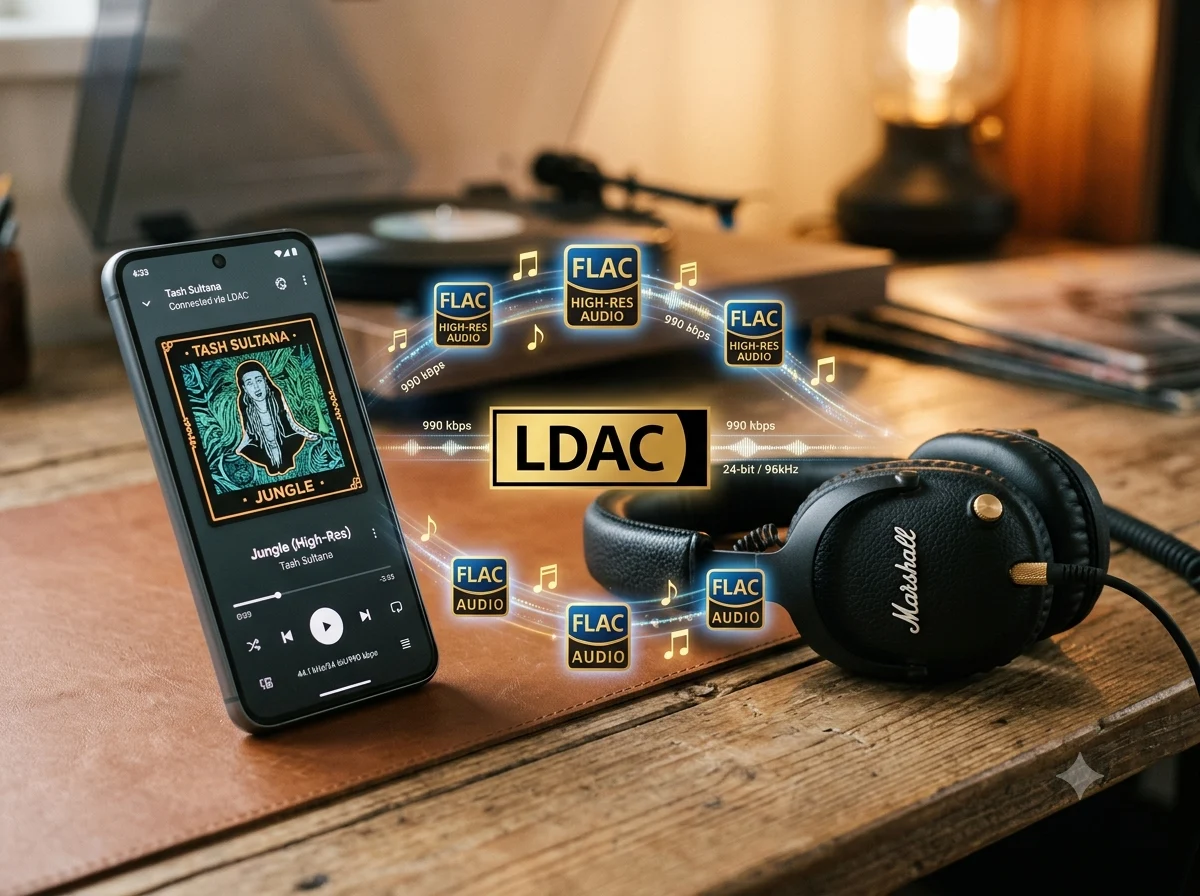
    So, first off, what exactly is LDAC? It is Sony’s proprietary Bluetooth codec designed for high-resolution audio, transmitting way more data than standard stuff like SBC and AAC. This means your audio files undergo less compression, which results in less data loss. By shoving substantially more data over Bluetooth, LDAC can theoretically give you better audio quality, but its not a magic bullet.

    How it affects sound quality

    In the best-case scenario, LDAC provides greater detail retrieval in your music—especially when using high-resolution FLAC files—including cleaner highs and slightly improved spatial imaging. However, Bluetooth audio remains compressed, so the effect has its limits. In practice, the sound quality difference between LDAC and AAC is actually considerably smaller then the difference between two completly different headphone models.

    Using LDAC on the Marshall Milton

    The new Marshall Milton (our review), for example, supports not only the standard codecs mention above but also the higher-resolution LDAC codec. So if you’ve gone out and bought headphones with LDAC support, how do you actually get it to work? Three conditions must be satisfied: you need LDAC-compatible headphones, an Android smartphone, and LDAC-capable music. On the Marshall Milton, LDAC activates automatically once the headphones connect to your smartphone via Bluetooth. To double-check that it’s enabled, you can dive into the Android settings.

    Enabling LDAC in developer options

    Open Android’s Developer Options (go to Settings, then About phone, and tap “Build number” seven times). Scroll on down to Bluetooth Audio Codec and then select LDAC. If the headphones are not connected, the option will be grayed out and completely unavailable. Under “Audio Quality,” you can also pick “Best Effort / Optimized for Audio Quality” if you want to get the most out of it.

    Bitrate stability in real worlds

    In practice, the 990 kbps mode remains stable only in excellent wireless environments, and many smartphones automatically fall back to 660 or 330 kbps instead. This behavior can also be adjusted in the settings if you want to mess with it. If you manually select the highest quality mode and the connection becomes unstable, Android will automatically switch to the next lower bitrate to keep things from cutting out.

    The bottom line on LDAC

    LDAC is not a game changer but rather a refinement codec. If your headphones feature high-quality drivers and the other requirements are met, it can extract a little more clarity and soundstage from your music. However, Bluetooth connections still involve significant compression, so the improvement is relatively subtle. And if the source material isn’t high quality or the headphones themselves aren’t capable enough, your unlikely to notice much of a difference at all.


    Sources

    • Google Confirms New Home Smart Speaker Spring 2026

      Google Confirms New Home Smart Speaker Spring 2026

      Key Takeaway

      – Google confirms new smart speaker launch next week via a company email.
      – Release date is likely June 25, aligning with a previous Best Buy Canada listing.
      – Priced at $100, available in four colors: Berry, Hazel, Jade, and Porcelain.
      – Features a squished Apple HomePod mini shape and can pair with Google TV Streamer for surround sound.


      At I/O last month, it was a widely anticipated that Google would unveil details regarding its upcoming smart speaker. However, no such announcements materialized during the event itself. A recent listing from a retailer did indicate a June 25 release date, which does align with Google’s initial promise of a Spring 2026 launch window. As it stands now, a brand new update straight from Google has confirmed the product’s launch for the very next week.

      Email Confirmation and Release Details

      A check-in and thank you email, which was sent from Anish Kattukaran, who is the Chief Product Officer of Google Home & Nest, it reached our inbox and likely the inboxes of many other users too. This particular email talks about the various developments concerning Gemini for the home and also thanks customers for they’re continued feedback. Right at the end of the email, it states, “those of you who have been patiently waiting for a certain speaker… keep a very close eye on your inbox next week.” This is a pretty clear hint at the upcoming device.

      Timeline and Retailer Listings

      This is likely the very same Google Home Speaker that was first teased back in October of last year, with a previously announced release date was set for Spring 2026. Since the spring season is almost over, Google has now finally decided to share a concrete release timeline. Just recently, a Best Buy Canada listing showed up which originally had a June 25 release date. That date has since been changed to simply read “Coming soon.” It is a possibility that Google will make the official announcement for the new smart speaker between June 15 and June 22, and then sales will actually start on June 25.

      Design, Colors, and Pricing

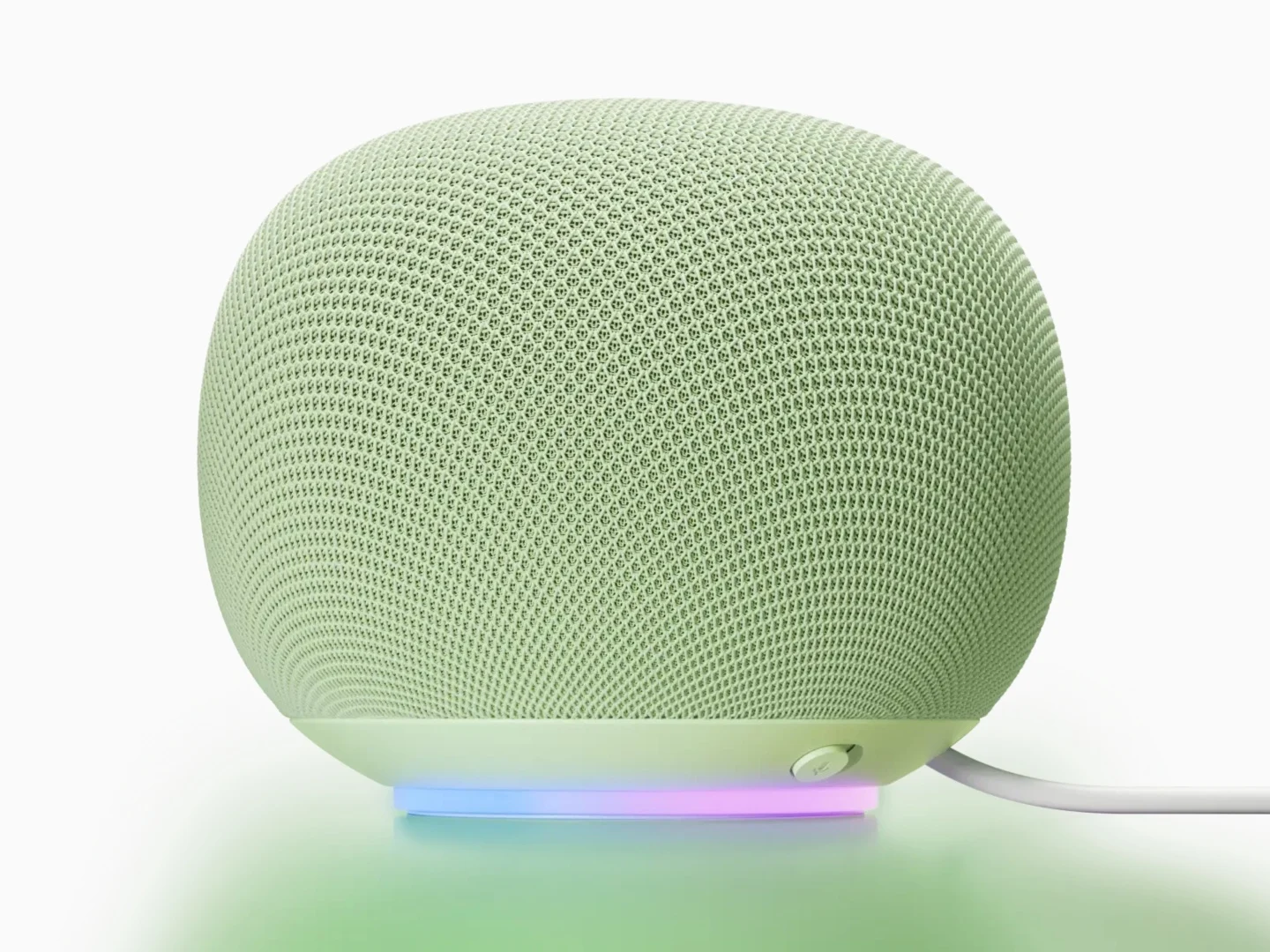
      The Google Home Speaker will have a completly different shape compared to the old Google Nest mini speaker, it looks more like a squished up version of the Apple HomePod mini. The device will allow users to pair two of them together with a Google TV Streamer to achieve a full on surround sound experience. There will be four different colors avaliable to choose from, which are namely, Berry, Hazel, Jade, and Porcelain. Interestingly though, the Best Buy listing only shows off the Hazel and Porcelain color options. The speaker is going to be priced at $100.

    • Kenwood Glass Core & Pro ANC Earbuds Launch Japan

      Kenwood Glass Core & Pro ANC Earbuds Launch Japan

      Key Takeaway

      – Kenwood introduces Glass Core series with glass diaphragms for high transparency and wide frequency coverage.
      – Two models available: Glass Core (10mm glass driver) and Glass Core Pro (adds MEMS driver and adaptive ANC).
      – Both support LDAC high-resolution audio and use liquid silicone eartips for improved noise cancellation.
      – Pro model features Exofield spatial audio and K2 Technology to upscale low-resolution audio.
      – Pricing: Glass Core at ~$170, Glass Core Pro at ~$300; shipping starts late June 2026.


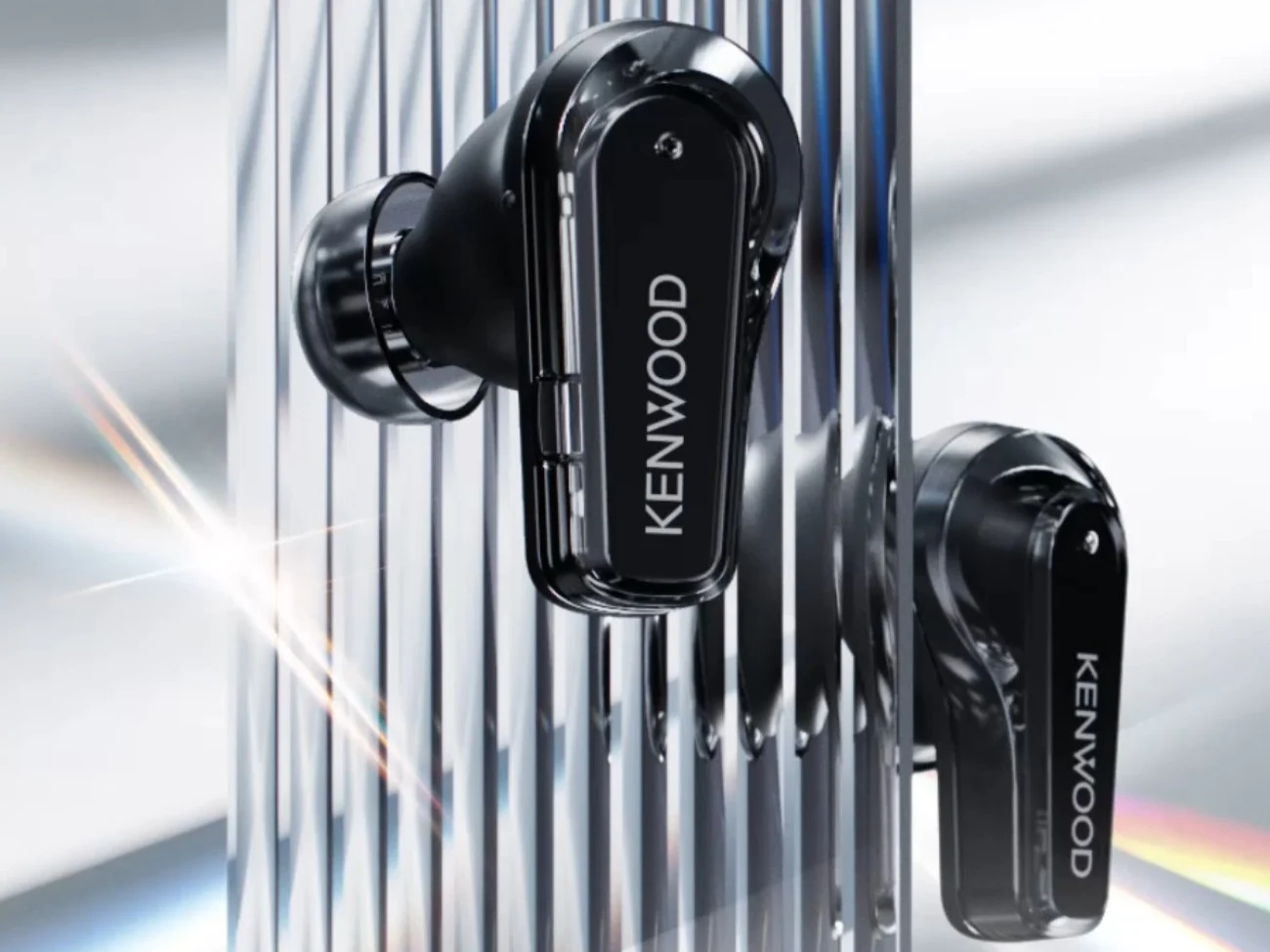
      Kenwood has introduced the Glass Core series of ANC wireless earbuds in Japan, featuring glass diaphragms to reproduce music with high transparency, wide frequency coverage, and spacious expression while suppressing unwanted vibration, according to the company. The launch coincides with the company’s 80th anniversary, positioning them as a premium offering.

      Two Models and Audio Codec Support

      The series includes two models—the Glass Core (KH-CRZ90T) and the Glass Core Pro (KH-CRZ100T)—both supporting high-resolution audio via the LDAC Bluetooth audio codec, in addition to standard SBC and AAC audio codecs. The former uses a 10 mm glass diaphragm, while the latter adds a MEMS driver to enhance high-frequency sound reproduction.

      Noise Cancellation and Eartip Design

      To reduce external noise, both models use newly developed liquid silicone eartips, with improved sealing when inserted into the ear canals. The Glass Core model comes with active noise cancellation with wind noise reduction and AI background call noise reduction. The Pro model features the company’s most advanced adaptive ANC technology.

      The Pro model further enhances spatial performance with Exofield technology, which simulates the localization and spread of sound as if played through room speakers. Additionally, this model uses K2 Technology to upscale low‑resolution audio by restoring lost high‑frequency components in compressed music sources.

      Pricing and Availability Details

      The Glass Core has an MSRP of 27,800 yen (~$170), while the Glass Core Pro retails for 49,900 yen (~$300). Both models are available through Kenwood Japan’s website, with shipping scheduled to begin in late June 2026.