Tag: Open source

  • OmniDrive Turns Blu-ray Drives into Retro-Game Dumpers

    OmniDrive Turns Blu-ray Drives into Retro-Game Dumpers

    Key Takeaway

    – OmniDrive enables legally ripping and dumping proprietary disc games from multiple consoles (e.g., GameCube, Wii, Xbox families, PS3/PS5, Dreamcast) using compatible MT1959 chipset drives.
    – It’s open-source and widely endorsed by preservation communities (Redump) as a replacement for older firmware.
    – Setup requires verifying drive compatibility with MakeMKV’s diagnostic tool, flashing the drive with OmniDrive, and using free tools (Media Preservation Frontend or redumper) to create ISO or raw dumps.
    – There is a non-trivial risk: flashing the wrong firmware can brick the drive; thorough checks and exact model confirmation are essential.


    Game collectors and preservationists can now legally rip their retro GameCube, Wii, and Xbox games using a compatible Blu-ray disc drive.

    In this article, we will keep the tone varied and the lines a touch informal, while sticking to the facts about OmniDrive and its use for legally backing up disc-based games. The core message is that a legally compliant path exists for converting physical media into digital libraries using a compatible optical drive and open source firmware.

    What OmniDrive does and why it matters

    OmniDrive is custom firmware that converts certain optical drives into rippers for various consoles’ proprietary disc formats. This enables game preservation enthusiasts to back up their own discs and dump content without stepping into shady territory or piracy, providing a clear route for legit archival work.

    Community reception and platform reach

    Retro video game preservation communities have welcomed OmniDrive as a practical tool. Redump.org and related wikis note that OmniDrive is highly recommended and has replaced older firmware recommendations once used in 2022, signaling a shift toward newer open-source solutions.

    Supported platforms and disc types

    OmniDrive can read and dump a wide array of discs across 12 major platforms, including Nintendo GameCube, Wii, and Wii U; Microsoft’s Xbox family; Sony’s PlayStation 3 and 5; Sega’s Dreamcast; plus standard lead-out CDs and DVDs, among others. This broad compatibility helps many collectors build complete digital libraries from physical copies.

    Version, authorship, and hardware requirements

    Released in February of the current year, OmniDrive is at version 1.0.2. It is fully open source, authored by RibShark, and designed for drives using the MT1959 chipset from Hitachi-LG Data Storage. Compatibility extends to certain desktop writers and slim drives like ASUS BW-16D1HT, LG BU40N, and BP50NB40, expanding the hardware options for users.

    Pre-rip checks and flashing steps

    Before ripping, users should verify they have a compatible drive by running the MakeMKV diagnostic app to confirm the MT1959HWDN chipset. After that, they can flash the drive with MakeMKV’s sdftool and the OmniDrive firmware. The process is described as straightforward, with free tools such as Media Preservation Frontend or redumper used to create ISO files or raw dumps for Xbox, PS2, Xbox 360, Wii, and GameCube titles.

    Safety and cautions

    A reminder is warranted: flashing drives carries the risk of bricking the device if the wrong firmware is applied. It is crucial to double-check every detail and ensure the exact disc drive model is correct before proceeding, to avoid potential hardware failures.

    • OmniDrive – Redump Wiki
    • RibShark GitHub
    Sources
  • OmniOS r151058: Tool Updates, New Features & Hardware Support

    OmniOS r151058: Tool Updates, New Features & Hardware Support

    Key Takeaway

    1. OmniOS is a secure, open-source enterprise server OS based on illumos, derived from OpenSolaris.
    2. Version 3.7.0 includes various improvements such as tool updates, new features, and extended hardware support.
    3. Deprecated features include the grub boot loader, certain versions of OpenSSL, Python 2, and GSSAPI support in OpenSSH.
    4. The ISO and USB-DD files are notably compact, and users of older versions should upgrade to ensure continued support and updates.

    Introduction to OmniOS

    OmniOS is mainly a operate-os designed for the server market. It is built upon the illumos project, which itself os derived from the old OpenSolaris—discontinued by Oracle back in 2010. Known for its security features, this OS has been developing since 2010 with a focus on stability and enterprise readiness.

    Latest Version and Improvements

    The recent release, OmniOS 3.7.0, bring several cool upgrades like new tools, more hardware compatibility, and additional features. For example, it now supports a wider array of hardware, making deployment in diverse environments easier. Updates also include bug fixes and security patches to make using this server OS safer and more reliable.

    Deprecated features and system specs

    It’s important to note that some older features no longer supported include the grub boot loader, OpenSSL versions 1.0.x and 1.1.1, Python 2, and GSSAPI key exchange support for OpenSSH. The distributions come in compact ISO files and USB-DD images, with sizes of 301 MB and 401 MB respectively. Once upon a time, version 151046 was current, but it’s now at its end-of-life, and users are encouraged to upgrade to either r151054 or r151058 for continued support and updates.

    Sources
  • KVM-GO: Openterface Relaunches with Compact, Refined KVM Model

    KVM-GO: Openterface Relaunches with Compact, Refined KVM Model

    Key Takeaways

    1. KVMs allow remote control of computers without needing installed software, enabling access to BIOS settings and system restarts.
    2. The Mini-KVM raised $461,555 on Crowd Supply, leading to the successful launch of the KVM-GO, which has exceeded its funding goals.
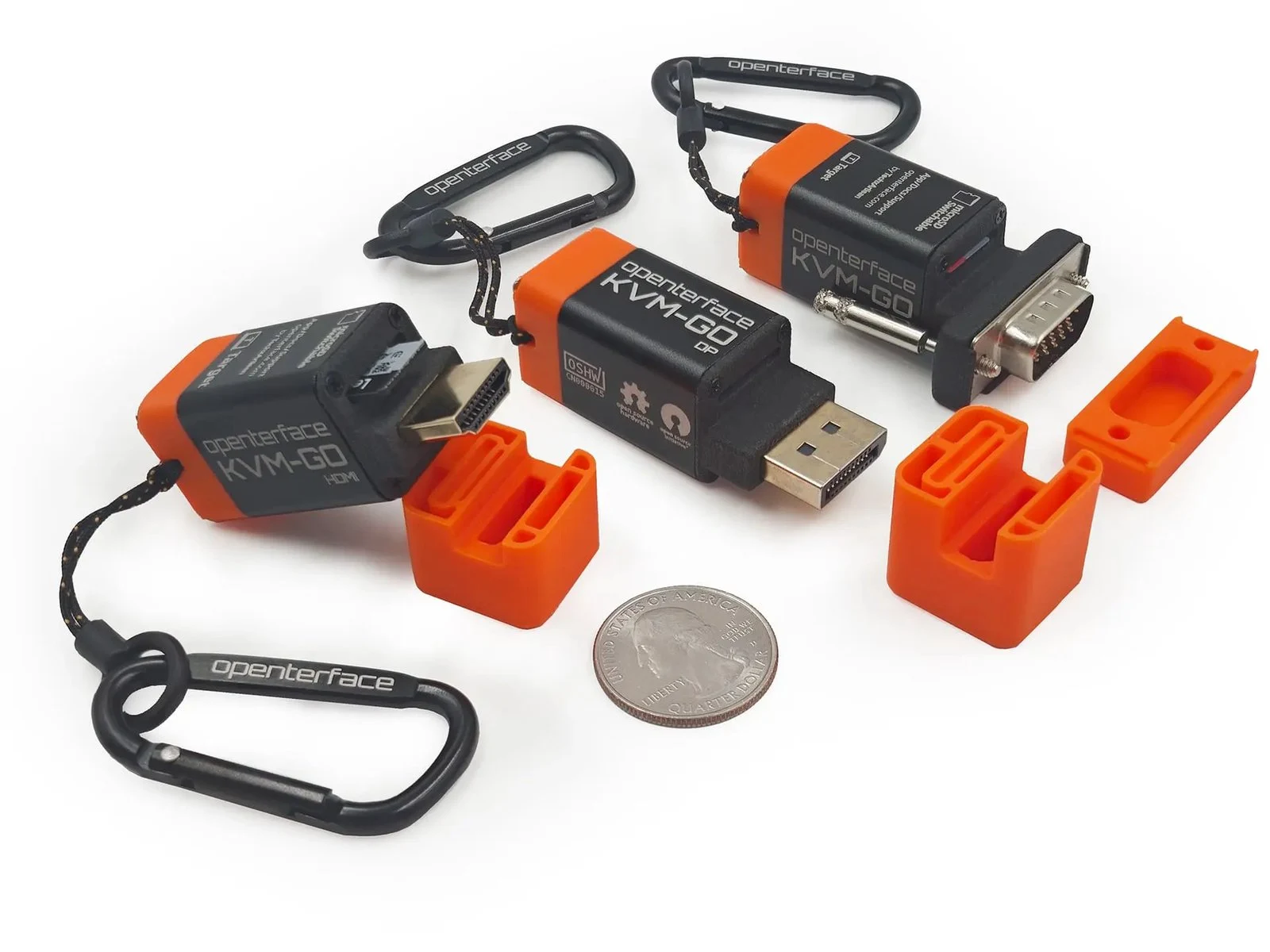
    3. KVM-GO features a 4K, 60Hz mode, HDMI, DisplayPort, VGA options, and a Micro SD card slot for OS and driver installations.
    4. Openterface promotes an open-source approach, making hardware schematics and source code publicly available on platforms like Github.
    5. The KVM-Go is priced at $119, appealing to customers through its open-source features and reduced cable clutter, despite being pricier than some alternatives.


    A KVM enables you to control a computer from a distance by linking a Keyboard, Video, and Mouse (KVM) from another device, allowing you to manage the target remotely.

    Unique Features of KVMs

    Even though it may seem like VNC or Remote Desktop, KVMs stand out because they work without needing installed software. This means they can access the BIOS of the remote computer.

    With this capability, you can restart a system if the OS freezes, adjust BIOS settings, and even reinstall the operating system from afar.

    Product Launch and Success

    The Mini-KVM was the first product introduced by Openterface and it raised $461,555 on Crowd Supply. Following that achievement, the KVM-GO is now available on the same platform and has already surpassed its funding goals.

    The KVM-Go has good specifications, featuring an experimental 4K, 60Hz mode, along with HDMI, DisplayPort, and VGA options. It also includes a Micro SD card slot for storing various operating systems and drivers that can be installed using the device. The administration software is compatible with Windows, Linux, MacOS, and Android.

    Open-Source Advantage

    Openterface sets its products apart from the competition through their open-source approach. Once everything is finalized, all hardware schematics, PCB layouts, and 3D models will be made publicly available. Additionally, the source code for various applications will be accessible via Github, covering MacOS, Windows, and Linux.

    There’s no shortage of KVM options, ranging from DIY solutions with Raspberry Pi to ready-made ones like the Gl-iNet Comet, which you can find on Amazon. The KVM-Go starts at $119, which is a bit pricier than some competitors, but its open-source feature and reduced cable mess may attract customers.

    Source:
    Link


  • DIY Engineer 3D-Prints Open-Source Musical Instrument

    DIY Engineer 3D-Prints Open-Source Musical Instrument

    Key Takeaways

    1. Brady Y. Lin has created a new open-source instrument called Stradex, building on his previous work with the 8-bit Arduino Violin.
    2. The instrument uses a Raspberry Pi Pico 2 microcontroller and a 16-bit ADS1115 ADC for analog input sampling.
    3. It features a linear potentiometer with over 32,000 discrete values for pitch control and four pressure-sensitive buttons for volume modulation.
    4. The Stradex instrument operates on MIDI, offering a wide range of sound options.
    5. All parts were 3D-printed at home, and resources for the project are available on his GitHub page.


    Brady Y. Lin, a music YouTuber, has revealed his latest creation to the public, and it’s open source this time. This new instrument is a step up from the “8-bit Arduino Violin” he crafted four years ago when he had less experience with electronics.

    Technical Details

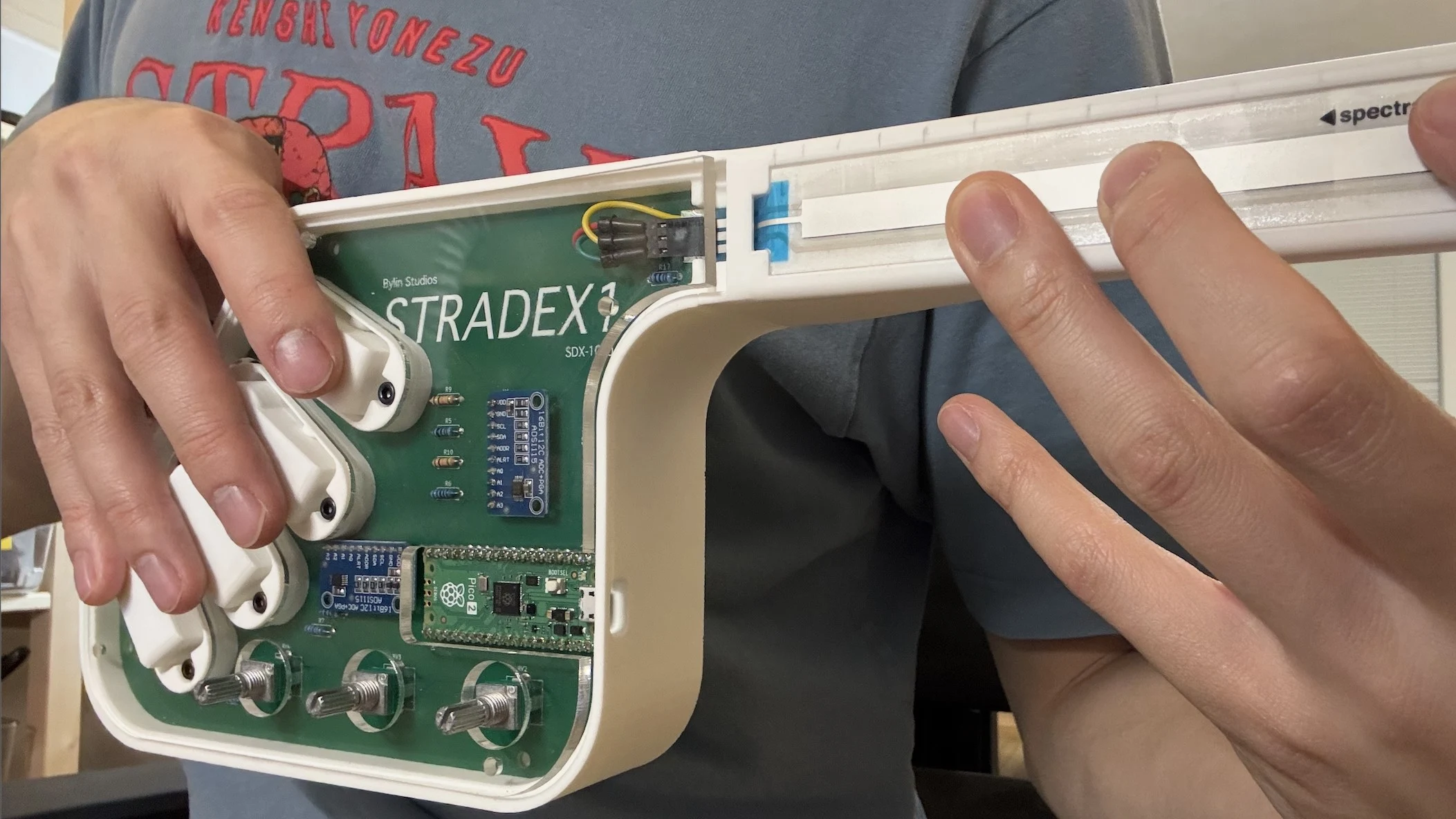
    For this new instrument, he utilized the Raspberry Pi Pico 2 as the preferred microcontroller. Alongside it, he incorporated a 16-bit ADS1115 ADC for sampling the analog inputs. The neck of the instrument features a linear potentiometer with over 32,000 discrete values, enabling a seamless pitch control.

    Unique Features

    Additionally, he included four pressure-sensitive buttons, corresponding to the four strings of a violin, on the bout. This design allows him to modulate the volume by simply adjusting the pressure applied. The instrument operates on MIDI (Musical Instrument Digital Interface), which opens up a variety of sound options.

    Creation Process

    All parts of the body were 3D-printed at home, and he has named the instrument Stradex, with the first version labeled as Stradex1. As previously noted, the project is open source, and you can find the necessary resources on his GitHub page.

    Before starting this venture, he had already created several other projects, such as a harp-playing robot, a MIDI-driven drum, the 8-bit Arduino violin, a PC gaming controller, and more.

    Source:
    Link


  • openSUSE Leap 16.0: New Installer and Easy Migration Options

    openSUSE Leap 16.0: New Installer and Easy Migration Options

    Key Takeaways

    1. openSUSE has a legacy of over 40 years, originating from SUSE Linux in Germany.
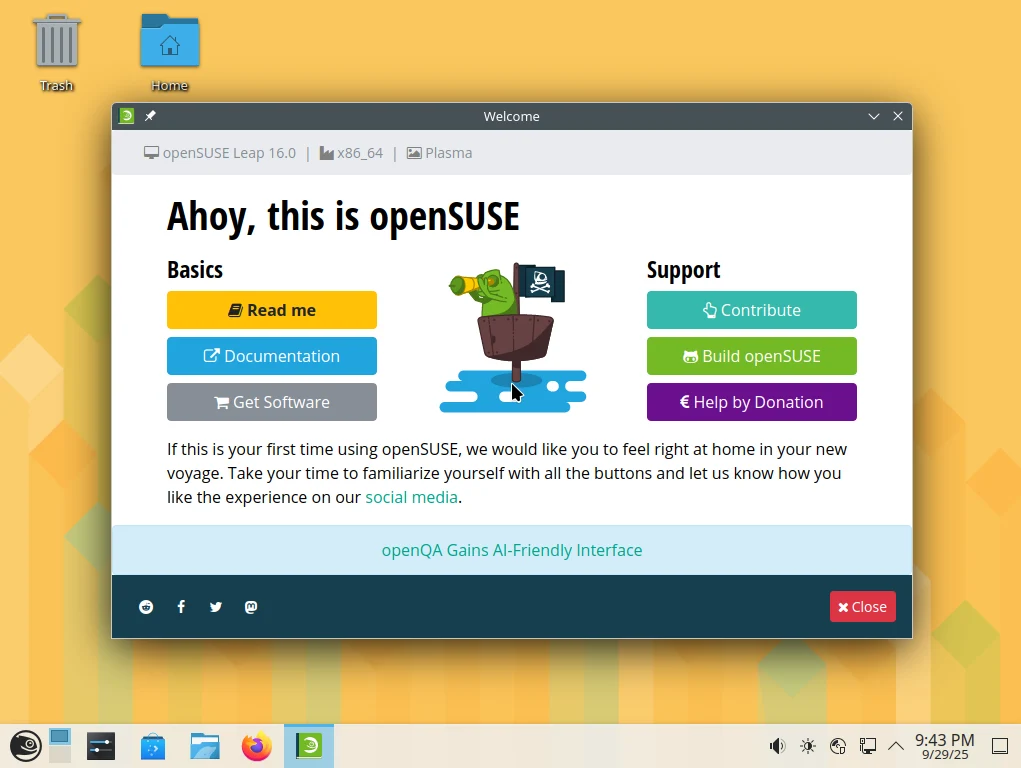
    2. The latest update, openSUSE Leap 16.0, offers enhanced maintenance and security support, alongside a redesigned installer and new software stack.
    3. Future minor releases will focus on automation, containerization, system tools, and hardware encryption.
    4. The openSUSE team is dedicated to improving user experience and innovation with each release.
    5. Leap 17 is expected to be released in 2032, continuing the platform’s evolution.


    With a legacy spanning more than forty years, the initial version of SUSE Linux from Germany laid the foundation for today’s openSUSE, which has been active since late December 2006. This open-source, RPM-based operating system is supported by the openSUSE team, who also developed and continue to manage related tools like Snapper, Portus, KIWI, and the Open Build Service. The stable release known as Leap has recently seen a significant update, bringing it to version 16.0.

    New Features and Improvements

    Thanks to this latest update, openSUSE Leap is entering a new phase. The official release notes highlight that openSUSE Leap 16.0 “brings an unparalleled maintenance and security support cycle,” along with a redesigned installer, a new software stack, and easier migration procedures. Other notable features include:

    Looking ahead, the upcoming minor releases of Leap 16 will focus on enhancing automation, containerization, system tools, and hardware encryption. If all goes well, Leap 17 is anticipated to be released in 2032.

    Future Developments

    The openSUSE team aims to continue improving the user experience with each release. The commitment to innovation and support ensures that users can rely on the platform for both personal and professional use. As the open-source community grows, so does the potential for exciting new features and updates in the coming years.

    Source:
    Link


  • Discover DeepSeek V3.1 AI: Faster and Smarter for Free

    Discover DeepSeek V3.1 AI: Faster and Smarter for Free

    Key Takeaways

    1. DeepSeek-V3.1 is a new AI model that was launched in December 2024 and is now among the top ten powerful AI models globally.

    2. The model was trained using less computing power and at a lower cost, featuring a hybrid design that combines fast non-thinking and more deliberative thinking capabilities.

    3. DeepSeek-V3.1 is available for free under the open-source MIT license, but specific hardware requirements apply for different model sizes.

    4. Performance improvements include enhanced coding capabilities and better scores on several AI benchmarks compared to previous models.

    5. The model supports a 128K token window, and API access pricing will be adjusted post-September 5, 2025, while users can interact with the AI at no cost.


    DeepSeek has introduced DeepSeek-V3.1, a new iteration of its innovative AI model that was first launched in December 2024 and quickly became one of the top ten most powerful AI models globally.

    Training Breakthroughs

    The company amazed everyone by revealing how it trained this model using significantly less computing power and at a lower expense compared to rival models. This new version operates as a hybrid AI, blending a quicker non-thinking model recognized from DeepSeek V3 with a more deliberative thinking model that was characteristic of DeepSeek R1.

    Accessibility and Requirements

    The new DeepSeek AI LLM model can be downloaded for free under the open-source MIT license. Users who wish to try out the complete 671B DeepSeek-V3.1 model need to have a minimum of 720 GB of available storage (or 170GB for the 1-bit quantized variant). For the smallest quantized model, a robust GPU with at least 24 GB of memory is required, like the Nvidia 5090 GPU with 32 GB of memory available on Amazon.

    Performance Enhancements

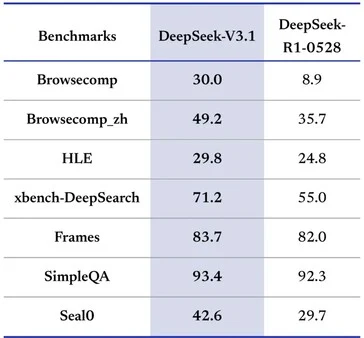
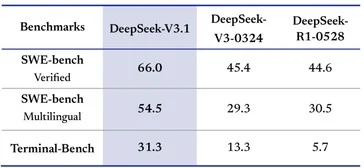
    According to results from the SWE-bench test, the updated DeepSeek-V3.1 model enhances the coding capabilities compared to the previous non-thinking V3 and thinking R1 models. It also achieves better scores across various AI benchmarks in thinking mode than the former R1 model, including xbench-DeepSearch, SimpleQA, and FRAMES AI benchmarks.

    The V3.1 AI features a 128K token window, and the API access pricing will be streamlined after September 5, 2025, reflecting its hybrid model. Users can engage with the DeepSeek-V3.1 AI at no cost.

    Source:
    Link


  • DIY Raspberry Pi Zero Turns Into Pocket iPod-Style Player

    DIY Raspberry Pi Zero Turns Into Pocket iPod-Style Player

    Key Takeaways

    1. A Reddit user is developing a handheld digital audio player (DAP) using a Raspberry Pi Zero, aiming to blend simplicity with modern features.
    2. The latest model features a custom PCB, click-wheel interface, improved power management, and consumes less than 1 watt with a battery life of 10-14 hours.
    3. Music is loaded via a microSD card, with potential future support for additional SD slots, USB transfers, or wireless syncing.
    4. The software runs on a lightweight Raspberry Pi OS Lite, with plans to switch to a minimal Linux setup for faster boot times and ongoing development in Python.
    5. The developer is open to community feedback, planning to enhance design and features while committing to long-term support and open sourcing the project.


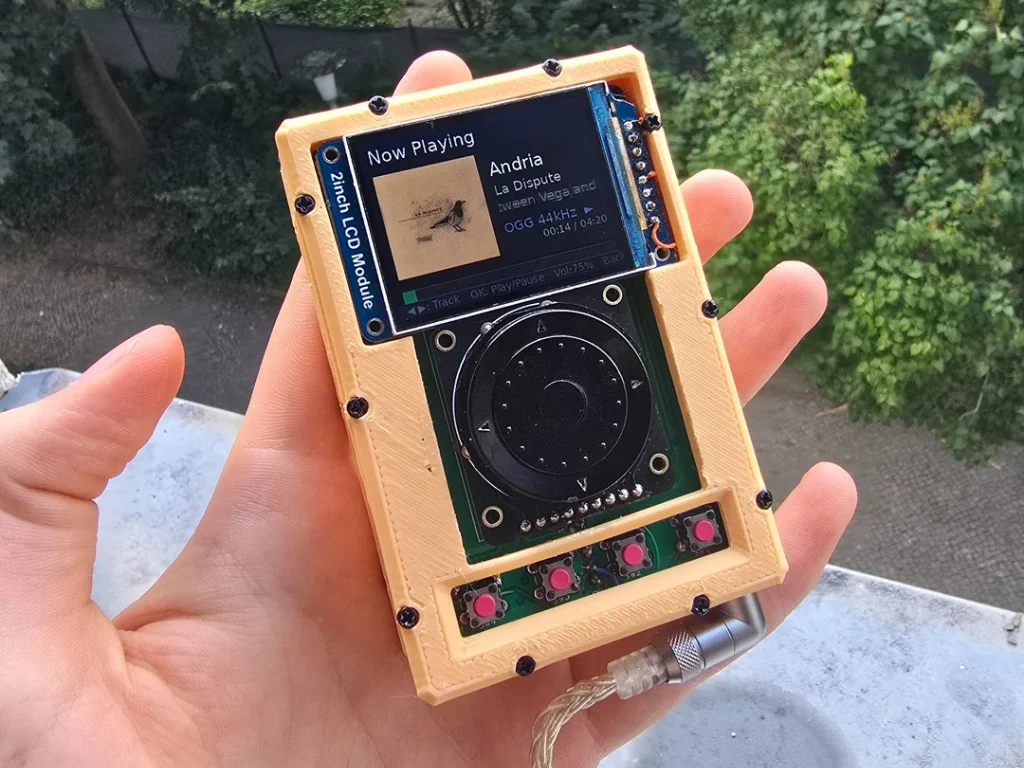
    A Reddit user known as u/Der6FingerJo is working on a handheld digital audio player (DAP) that uses a Raspberry Pi Zero. Their goal is to combine the straightforwardness of the iPod Classic with the adaptability of a modern music device. What started as a large 3D-printed prototype has now transformed into a second, sleeker version featuring a click-wheel interface, better power management, and a neater circuit board design. The exciting part is that the developer plans to open source both the hardware and software once the project becomes stable.

    Latest Specifications

    The newest model includes a custom PCB with modules for a small color display, a rotary encoder click wheel, a 5V boost converter, a Li-Po charger, and a PCM5102 DAC. The user has focused heavily on power efficiency: with Wi-Fi turned off, underclocked processing, and a dimmed display, the Raspberry Pi system consumes less than 1 watt. With a 4,000mAh battery, the device is predicted to last between 10 and 14 hours on a single charge, which is quite close to the playtime of commercial devices like the FiiO M21 (currently $329.99 on Amazon). Music is loaded via the same microSD card that contains the system firmware, but future versions might introduce a second SD slot, USB transfer options, or wireless syncing.

    Software Development

    On the software front, the player operates on a lightweight version of Raspberry Pi OS Lite, but there are plans to switch to a minimal Linux setup like Buildroot for quicker boot times. Development is mainly being done in Python, with assistance from AI coding tools. The creator intends to first enhance a local music library system before looking into streaming integration, as the Pi Zero’s Wi-Fi is not very strong, and offline playback is more appealing overall.

    The project has already received a lot of feedback from the community, and it’s evident from the responses that this input has influenced design decisions. Suggestions from users have included tactile navigation, better connectors, and features like FM radio or even e-ink displays. It’s encouraging to see that the developer remains receptive to new ideas and is planning for long-term support through comprehensive documentation and open sourcing.


  • New TRMNL X Large Waterproof Smart E-Ink Display Launches

    New TRMNL X Large Waterproof Smart E-Ink Display Launches

    Key Takeaways

    1. The TRMNL X is a larger, improved version of the original e-ink display, designed for home and office use.
    2. It features a 10.3-inch display with a resolution of 1,872 x 1,404, supporting 16 shades of gray and quick refresh rates.
    3. The device supports touch gestures, includes an accelerometer, and offers extensive customization through open-source firmware and multiple plugins.
    4. It comes with a 5,000 mAh battery that lasts three months on a single charge and is available for pre-order at $189.00.
    5. The TRMNL X will ship before the end of 2025 and offers various frame colors and optional accessories for enhanced functionality.


    The TRMNL X smart e-ink display has been announced. This new device is a larger and improved version of the original TRMNL display, which successfully raised funds in 2024 and became available for purchase in June 2025. It is crafted for use at home or in the office, capable of displaying various information such as news updates, weather forecasts, sports scores, and your daily calendar.

    Specifications and Features

    The TRMNL X features a 10.3-inch (~262 mm) e-ink display with a resolution of 1,872 x 1,404 and supports 16 shades of gray. A complete refresh takes about 1.2 seconds, while a partial refresh is quicker at 200 ms. The device introduces touch gesture support, an integrated accelerometer, and a Qwiic connector. Notably, the brand’s logo is no longer visible on the front, and support for portrait mode is reportedly coming soon.

    Versatile and Modifiable

    This device is aimed at tech enthusiasts, operating on TRMNL’s open-source firmware, and includes screws that make it easy to open and modify. It is compatible with both 2.4 and 5 GHz Wi-Fi, and offers eight different dashboard layouts along with more than 80 plugins, such as Google Calendar, ChatGPT, YouTube, Reddit, and Shopify. Although there is no official integration with Home Assistant, user demonstrations of this have surfaced in forums. The latest version includes a stand, a magnetic power mount with USB-C charging, and is claimed to be waterproof. Additionally, the standard 5,000 mAh battery is expected to provide three months of use on a single charge.

    You can now reserve your TRMNL X for $189.00/£145.00/€166.95, with a recommended retail price of $219.00/£168.00/€166.95. The company has mentioned that shipping will occur before the end of 2025, although they have not specified an exact date. The website assures customers that they may cancel their order and obtain a refund “at any time.” There are six frame colors available: black, white, clear, sage, gray, and faux wood. Additionally, optional accessories include a 7,000 mAh battery upgrade priced at $10/£8.00/€8.95 and the Clarity Kit, which features the battery upgrade, Developer Edition device, and a charging cable for $35/£27.00/€21.95.

    Conclusion

    In summary, the TRMNL X represents a significant upgrade over its predecessor, offering a range of features tailored for both casual users and tech enthusiasts. With its stylish design and robust functionality, it’s positioned to meet various needs in modern homes and offices.

    Source:
    Link


  • Group Conducts DDoS Attacks on BYOND to Demand Open-Source Release

    Group Conducts DDoS Attacks on BYOND to Demand Open-Source Release

    Key Takeaways

    1. BYOND is facing a persistent DDoS attack that disrupts its website and hub services.
    2. A group named “FOSS Brethren of BYOND” claims responsibility for the attack, demanding the open-sourcing of BYOND’s engine.
    3. BYOND’s lead developer, LummoxJR, has stated he will not comply with the demands of the attackers.
    4. Users have found workarounds to access BYOND services despite the ongoing attacks.
    5. The situation raises ethical questions about the use of digital coercion and the distinction between activism and malicious attacks.


    The game development platform BYOND, which is popular for its community-created multiplayer games like Space Station 13, is currently experiencing a persistent distributed denial-of-service (DDoS) attack. This attack has significantly disrupted the platform’s website and hub services, and efforts to mitigate the situation are still underway, as reported by Massively Overpowered.

    Attackers’ Claims

    A Reddit thread that has been pinned states that a group calling themselves the “FOSS Brethren of BYOND” has taken credit for the attack. They have released a manifesto that demands the open-sourcing of BYOND’s engine. Moderator Spevacus has confirmed that the lead developer, LummoxJR, “will not be complying” with these demands.

    Message from the Attackers

    Massively Overpowered has also shared that the attackers sent out a warning stating:

    “Attacks on BYOND servers are a symptom of your obstinance… We demand you voluntarily side with progress.”

    In a recent update for developers, LummoxJR acknowledged the ongoing attacks, stating:

    “Well, that happened. And it’s still happening.”

    He encouraged users to support BYOND through SubscribeStar and Patreon, and mentioned that he is allowing long-form updates to be shared outside the BYONDiscord server. Players have been finding ways around the issues by using direct IP launching (byond://IP:PORT) and the Ctrl + O function within the client. One player noted:

    “If you go to BYOND and do Ctrl + O… you can enter the IP address.”

    Ethical Concerns

    This situation brings up larger questions about the ethics surrounding digital coercion and the unclear lines between activism and malicious attacks in the context of open-source discussions.

    BYOND official site (Note: The site may be occasionally unavailable due to the active DDoS attacks, as acknowledged in this community update)

    Source:
    Link

  • Proxmox Mail Gateway 8.2: SpamAssassin 4.0.1 and New Features

    Proxmox Mail Gateway 8.2: SpamAssassin 4.0.1 and New Features

    Key Takeaways

    1. Proxmox Mail Gateway is essential for organizations due to the increasing volume of email threats.
    2. The latest version, Proxmox Mail Gateway 8.2, is based on Debian 12.9 and offers kernel versions 6.8 and 6.11.
    3. It provides anti-spam and anti-virus features for mail servers in a straightforward manner.
    4. Although open-source, it offers premium support and access to the Enterprise Repository, starting at 180 euros per host per year.
    5. Users can seek additional assistance through the Proxmox Support Forum.


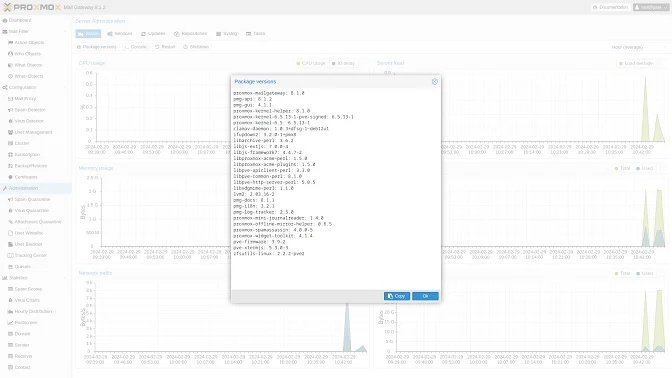
    Since the volume of threats carried by email is on the rise every single day, a solution like Proxmox Mail Gateway isn’t just good to have; it’s essential. This open-source solution, originating from Austria, is aimed at organizations of all sizes and offers a straightforward method to implement and deploy anti-spam and anti-virus features on mail servers. Proxmox Mail Gateway 8.2, based on Debian 12.9 “Bookworm” and launched yesterday, defaults to the newer 6.8 kernel version, while users also have the option to choose 6.11 if they prefer.

    Features of Proxmox Mail Gateway 8.2

    Along with the kernel versions mentioned earlier, Proxmox Mail Gateway 8.2 comes packed with several important features. The necessary downloadable content for setting up Proxmox Mail Gateway is available on this page, and alternate ISO downloads can be found here. Even though it is an open-source solution, Proxmox Mail Gateway offers premium support and access to the Enterprise Repository. The subscriptions start at 180 euros for each host per year, providing support for an unlimited number of users and domains.

    Source:
    Link