Tag: E Ink Display

  • SwitchBot Weather Station: Daily Reports, Calendar Alerts & Smart Control

    SwitchBot Weather Station: Daily Reports, Calendar Alerts & Smart Control

    Key Takeaway

    – E Ink weather station with smart home control via Alexa/Apple/Google/Matter
    – 7.5-inch B&W display, 5,000 mAh battery for wireless use anywhere in the home
    – Syncs with up to three external sensors for CO2, temperature, humidity
    – Smart calendar for up to 5 family members (Google, iCloud, Outlook, Yahoo)
    – AI-powered daily tips, motivational quotes, and alarm clock with snooze


    New Smart Home Weather Station Released

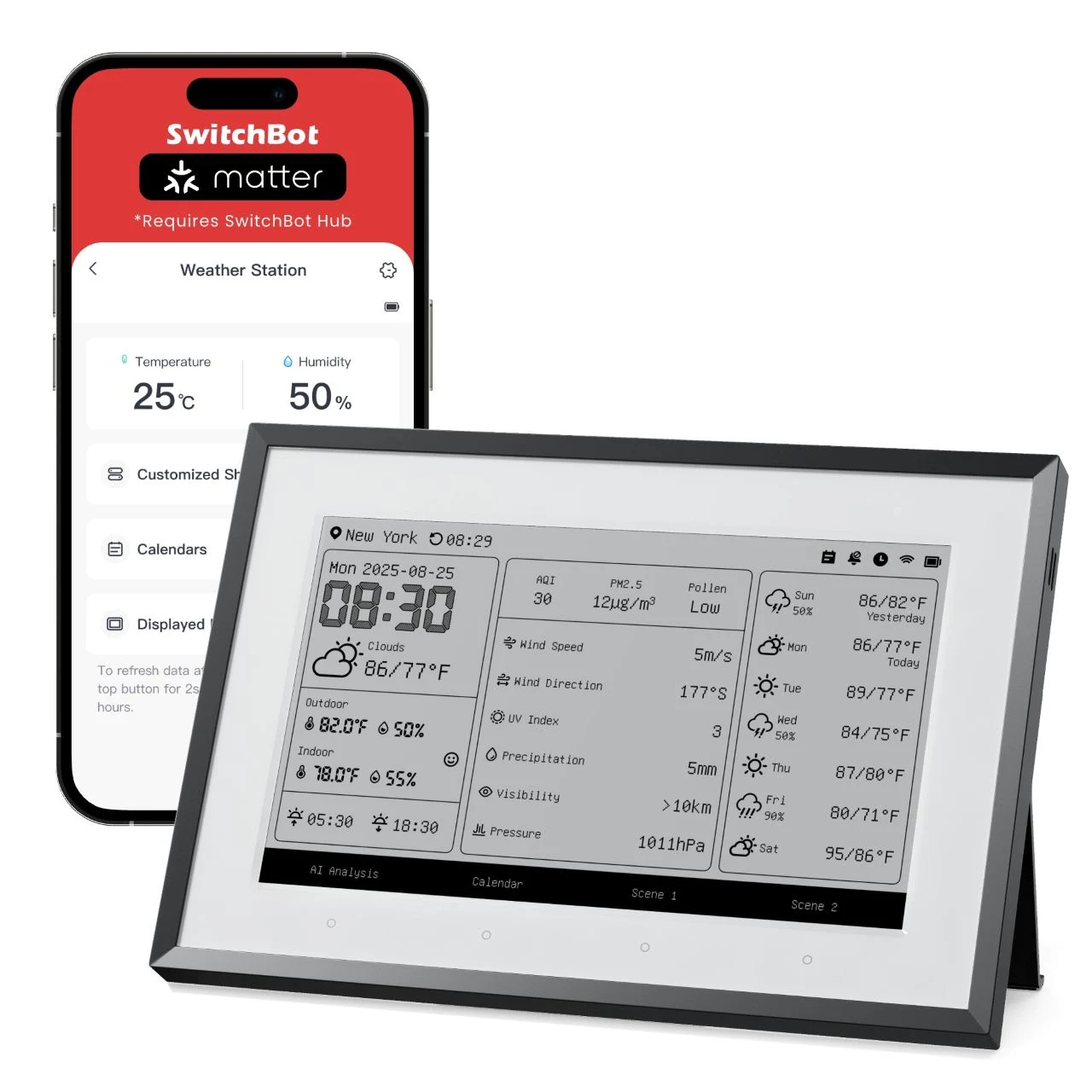
    SwitchBot has released the Weather Station, an E Ink contraption that shows weather data, calendar events and lets you control smart home gadgets. The unit can controll a smart home by using Alexa, Apple Home, Google Home, or a Matter-compatible SwitchBot Hub via a tap or even automatically based on sensor data. It basicly works like a hub for your daily schedual.

    Display and Power Specs

    The Weather Station spots a 7.5-inch black-and-white E Ink display with a resolution of 800 x 480 pixels and includes a backlight. The device is powered by a 5,000 mAh lithium battery that enables wireless use from any place inside a residence, so you don’t need to plug it in all the time. This gives alot of flexibilty on where you put it in your house.

    • Screen size: 7.5 inches
    • Resolution: 800×480 pixels
    • Backlight: included
    • Battery capacity: 5,000 mAh

    Atmospheric Data and Sensors

    Atmospheric data gets pulled from online sources or external sensors that the company sells, for example the SwitchBot Meter Pro which measures CO2 levels, temperature, and humidity. You can connect up to three such monitors to the Weather Station at once. It also gets info from the web if you dont buy extra gear.

    Calender Integration and Alarm Features

    The device has a smart calendar that can show events for upto five family members, with information synced from personal Google, iCloud, Outlook or Yahoo calendars. Users can get reminded of events with alarms, and the Weather Station can also work as a standard bedside alarm clock with a snooze function. Thats pretty handy for busy familys.

    Built-in AI offers daily outing suggestions based on the current weather and can show motivational quotes to help you start the day on a good note, like a little cheerleader on your desk.

    Pricing Details

    The Weather Station is avalible for $109.99 from the SwitchBot website or from Amazon.

  • T-Deck Max: $110 E-Ink Smartphone Connects for Free

    T-Deck Max: $110 E-Ink Smartphone Connects for Free

    Key Takeaway

    – ESP32-S3-based, hobbyist-friendly device aimed at tinkering rather than a ready-to-use smartphone experience.
    – Supports LoRa for long-range, low-data transmission (with optional 4G) and includes GPS for location sharing.
    – 3.1″ e-ink display, built-in microphone/speaker, keyboard, microSD slot; Arduino/PlatformIO development supported.
    – Suitable for use cases like personal emergency signaling on large sites, with LoRa repeaters extending range.
    – Detachable/expandable with additional sensors/actuators; typical street price around $110.


    Overview and Target Audience

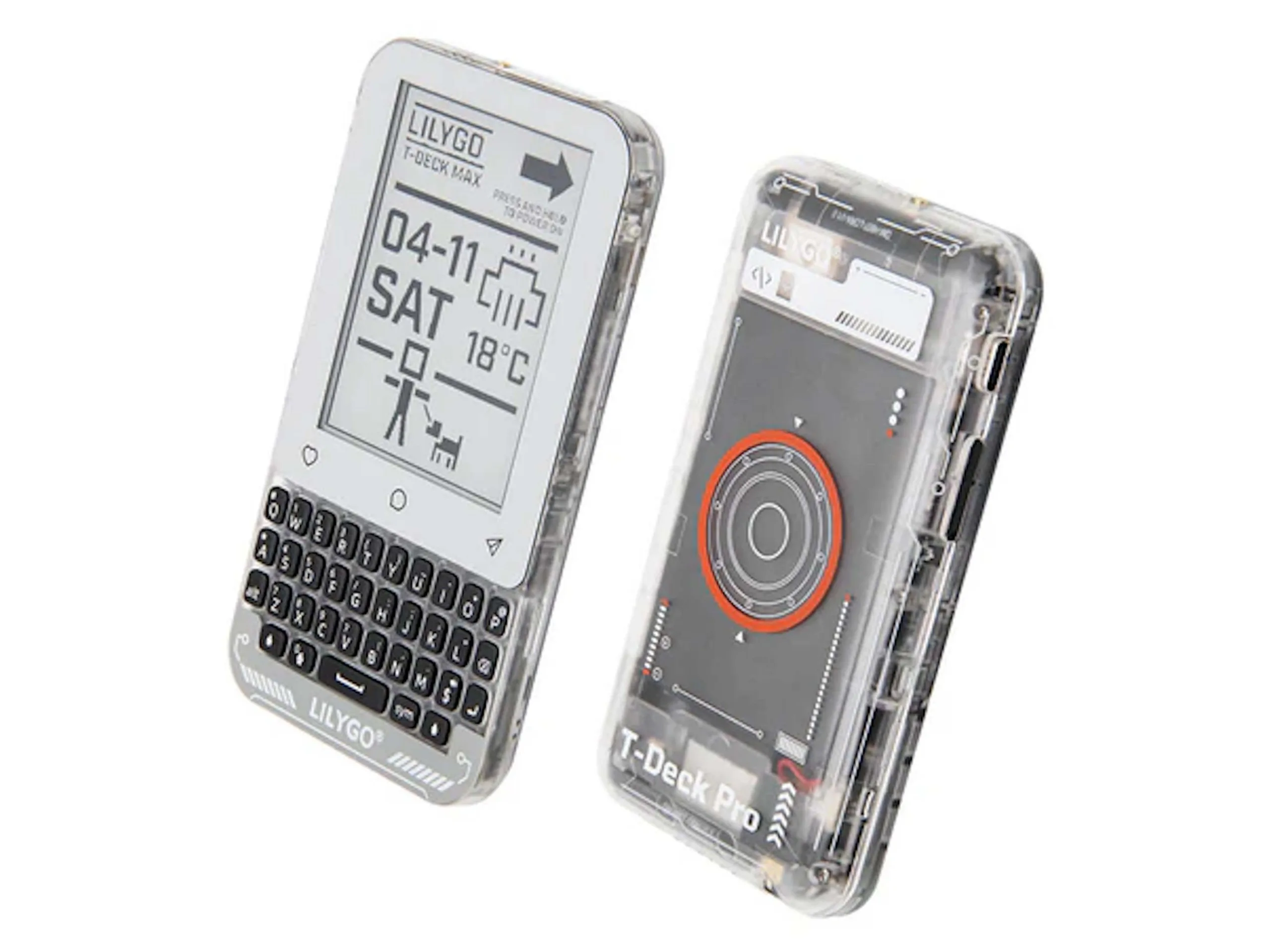
    The T-Deck Max is described as a new mobile device, or at least a new version of LilyGo’s T-Deck. It can broadly be approached like a smartphone, although the system does not run Android and is not necessarily a fully preconfigured product that is ready for end users out of the box. Instead, the model is likely aimed more at tinkerers. An ESP32-S3 is used as the main board, which limits performance. In practical terms, the system could be used to exchange data or messages.

    Unique Capabilities

    This opens up possibilities that a regular smartphone does not offer. The LilyGo T-Deck Max supports LoRa, which can be used to transmit relatively small amounts of data entirely independently of a cellular network. A GPS module is included, so location data can also be transmitted. This means the T-Deck Max could potentially be used on a large factory site as a personal emergency signaling device, for example. LoRa repeaters can then extend the effective range between such handhelds. A 4G connection is optionally available.

    Hardware and Display

    It uses a 3.1-inch display with a resolution of 320 x 240 pixels. The screen is based on an e-ink panel and should not consume much power. Additional sensors and actuators can be connected, and there is a microSD card slot. A microphone and speaker are already included, and programming can also be done using the Arduino or PlatformIO IDE. A keyboard is included, which should make it relatively easy to enter text directly. The T-Deck Max is listed by the manufacturer for around $110, and previous T-Deck models have also become available at some specialized retailers.

    Pricing and Compatibility

    The article notes that the T-Deck Max is listed by the manufacturer for around $110, and mentions that earlier T-Deck models have appeared at some specialized retailers. It also highlights compatibility with Arduino or PlatformIO IDEs for development, suggesting a flexible ecosystem despite the device not being a full consumer-ready smartphone.


    Sources

  • LightInk E-ink Smartwatch: Solar, LoRa & GPS, 10 Months Battery

    LightInk E-ink Smartwatch: Solar, LoRa & GPS, 10 Months Battery

    Key Takeaway

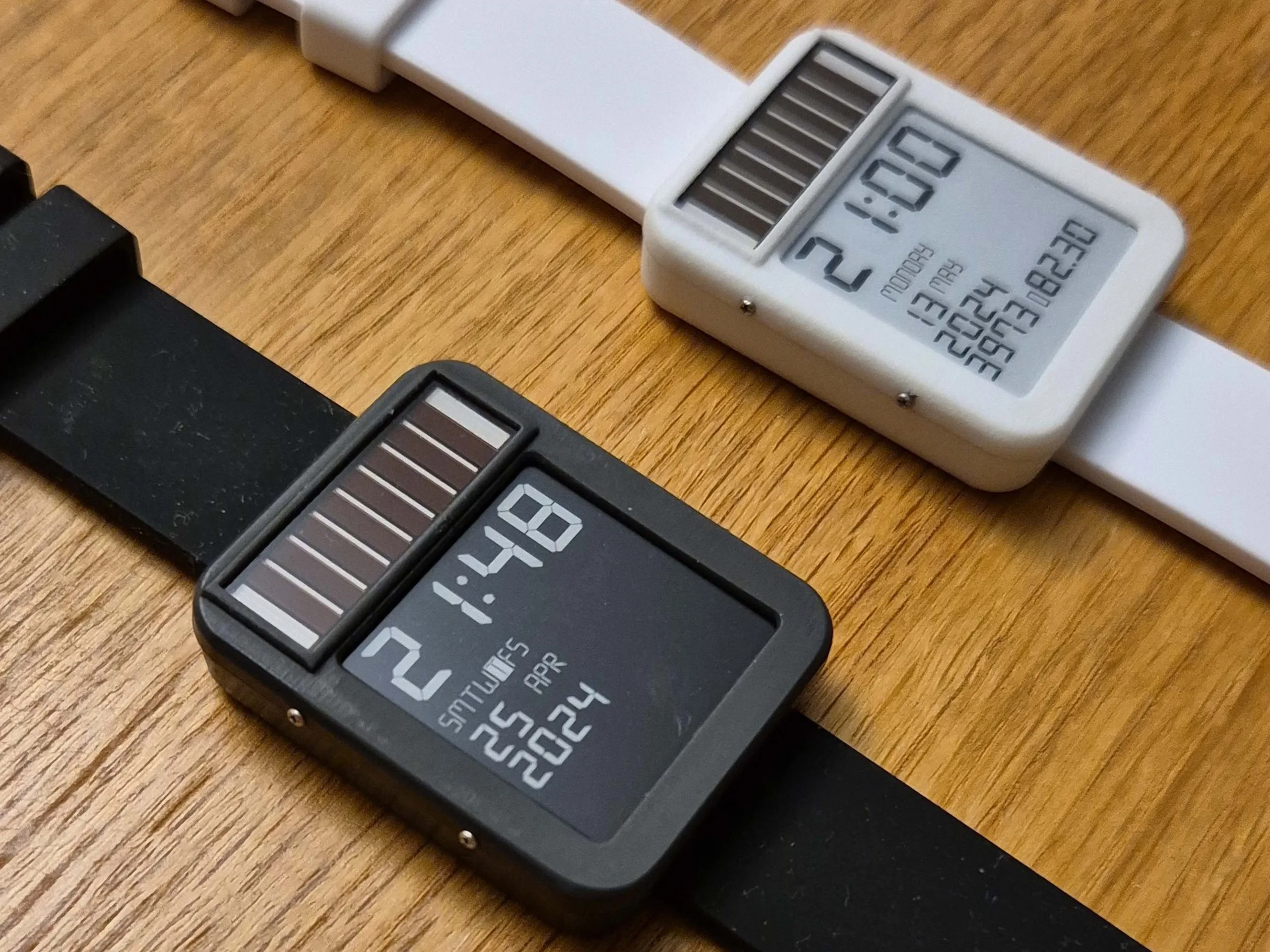
    – LightInk is a visible, DIY solar-powered smartwatch that differs from commercial models by exposing the solar panel and requiring user assembly and custom components.
    – It aims for long battery life (up to ~10 months on a 100mAh cell) but sacrifices some features (no accelerometer) to save power.
    – Key tech: E Ink display readable in sunlight with backlight, LoRa support, GPS, speaker, and no companion app yet, placing it between a wristwatch and a smartwatch.

    Introductory glance at solar-powered wearables

    Solar-powered smartwatches are still niche products in the overall market, though that does not mean such watches do not exist. The best-known models are probably Garmin Fenix smartwatches such as the Garmin Fenix 8 that we reviewed back when it launched. On these smartwatches, the solar panel is more or less invisibly integrated into the display.

    What makes LightInk stand out

    The so-called LightInk takes a different approach. On this smartwatch, the solar panel is clearly visible and separated from the display. There is another major difference, as the LightInk is not a commercially available product but comes from the DIY scene and therefore cannot simply be bought. Instead, interested users have to assemble the watch themselves. A detailed guide is available. In most cases, users have to have a circuit board manufactured by a service provider, own or have paid access to a 3D printer, and be able to do some soldering.

    Performance and design tradeoffs

    The LightInk is designed to offer several months of battery life. More specifically, up to 10 months should be possible with the 100mAh battery. There is no accelerometer because it would simply consume too much power. However, LoRa is supported, it uses an E Ink display that remains readable in sunlight and also has a backlight for use in the dark, and there is a speaker as well. GPS is available, but there is no companion app yet, which means the LightInk sits somewhere on the boundary between a regular wristwatch and a smartwatch, at least in this respect.

    Sources
  • Innovative Laptop Design Features E Ink Notepad in Palm Rest

    Innovative Laptop Design Features E Ink Notepad in Palm Rest

    Key Takeaways

    1. Compal has introduced the Compal AI Book, featuring a unique E Ink display on the palm rest instead of a traditional trackpad.
    2. The E Ink display allows users to view notifications, notes, and to-do lists, even when the laptop is powered off.
    3. It supports touch and stylus input, enabling it to function as a digital notepad and can flip outwards to act like a tablet.
    4. The “AI Book” name does not indicate significant AI features; it simply showcases AI-generated content, which any display can do.
    5. The AI Book remains a concept, with no specific details on specifications or release timeline, but it shows potential for future use.


    Compal has unveiled several captivating laptop concepts over the years, including the modular Adapt X and the Infinite laptop which features a rollable screen, among others. While these remain only ideas for now, they are still fascinating and might come to life in the future.

    The New Concept: Compal AI Book

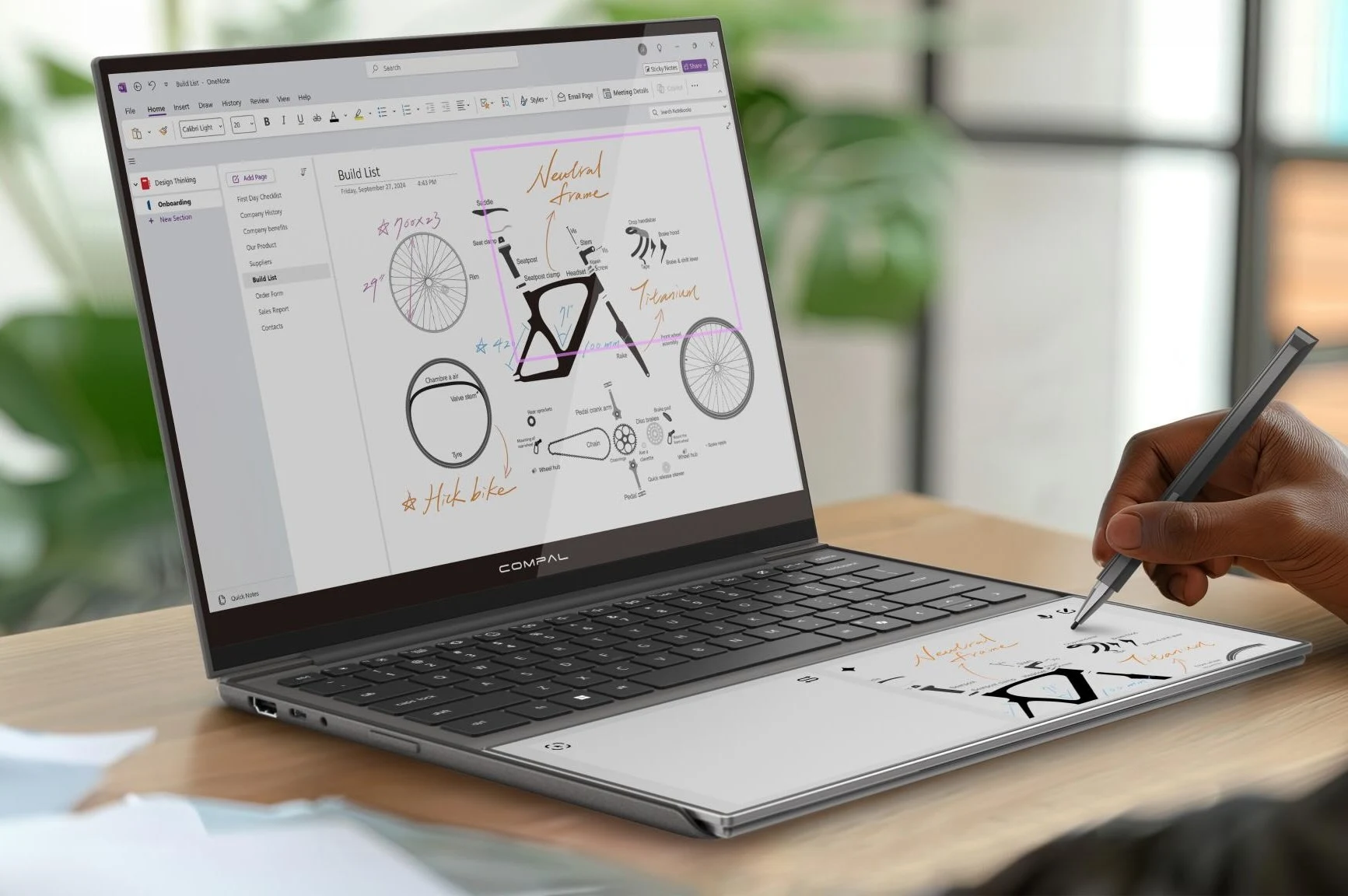
    The latest creation from Compal is the Compal AI Book. Even though the name suggests a focus on AI, the laptop’s standout feature is actually its innovative palm rest area. Instead of the typical trackpad found on most laptops, Compal has equipped the AI Book’s palm rest with a complete E Ink display.

    Unique Features of the E Ink Display

    What makes this E Ink palm rest even more intriguing is that it extends beyond the laptop’s main display while in clamshell mode. This allows users to quickly view notifications, notes, to-do lists, and other information. As noted by Liliputing, the E Ink displays have the benefit of not needing to refresh, meaning users can keep static content visible even when the laptop is powered off.

    The E Ink display also includes touch and stylus support, turning it into a digital notepad when needed. Additionally, it has a hinge that allows it to flip outwards when the laptop is closed, enabling it to serve as a sort of tablet.

    AI Branding and Future Prospects

    For those wondering about the “AI Book” label, it’s worth mentioning that AI isn’t used in any significant way. Compal has stated that the AI branding was included because the laptop can showcase AI-generated content, which seems a bit ridiculous since any display can do that.

    As this is merely a concept, specific details about the system’s specifications remain unknown, along with any timeline for when it might become a reality. Nonetheless, the concept shows promise and could appeal to users who find it useful. Meanwhile, if you’re in the market for a laptop, the Lenovo ThinkPad E16 Gen 3 is currently available on Amazon, with a notable 39% discount.

    Source:
    Link


  • Pixel Duo Smartphone: Dual Front Displays with E-Ink Panel

    Pixel Duo Smartphone: Dual Front Displays with E-Ink Panel

    Key Takeaways

    1. IPS and OLED screens provide smooth video playback, bright colors, and high contrast, while e-ink displays are energy-efficient and easier on the eyes.
    2. The Pixel Duo concept smartphone features a 3.5-inch IPS display and a 5.2-inch e-ink display, combining both technologies in one device.
    3. The e-ink display is ideal for reading e-books, even though it only shows content in grayscale.
    4. The dual-screen setup allows users to run multiple applications simultaneously, enhancing the overall user experience.
    5. The Pixel Duo is designed for long battery life, as most apps will operate on the e-ink display, but it is currently only a concept with no plans for commercial release.


    An IPS panel or OLED screen, like the one found on the Apple iPhone 17, offers smooth video playback and animations, bright colors, and a very high level of contrast. However, e-ink displays are much more energy-efficient and gentler on the eyes, which is why they are mainly used in e-book readers.

    Combining Display Technologies

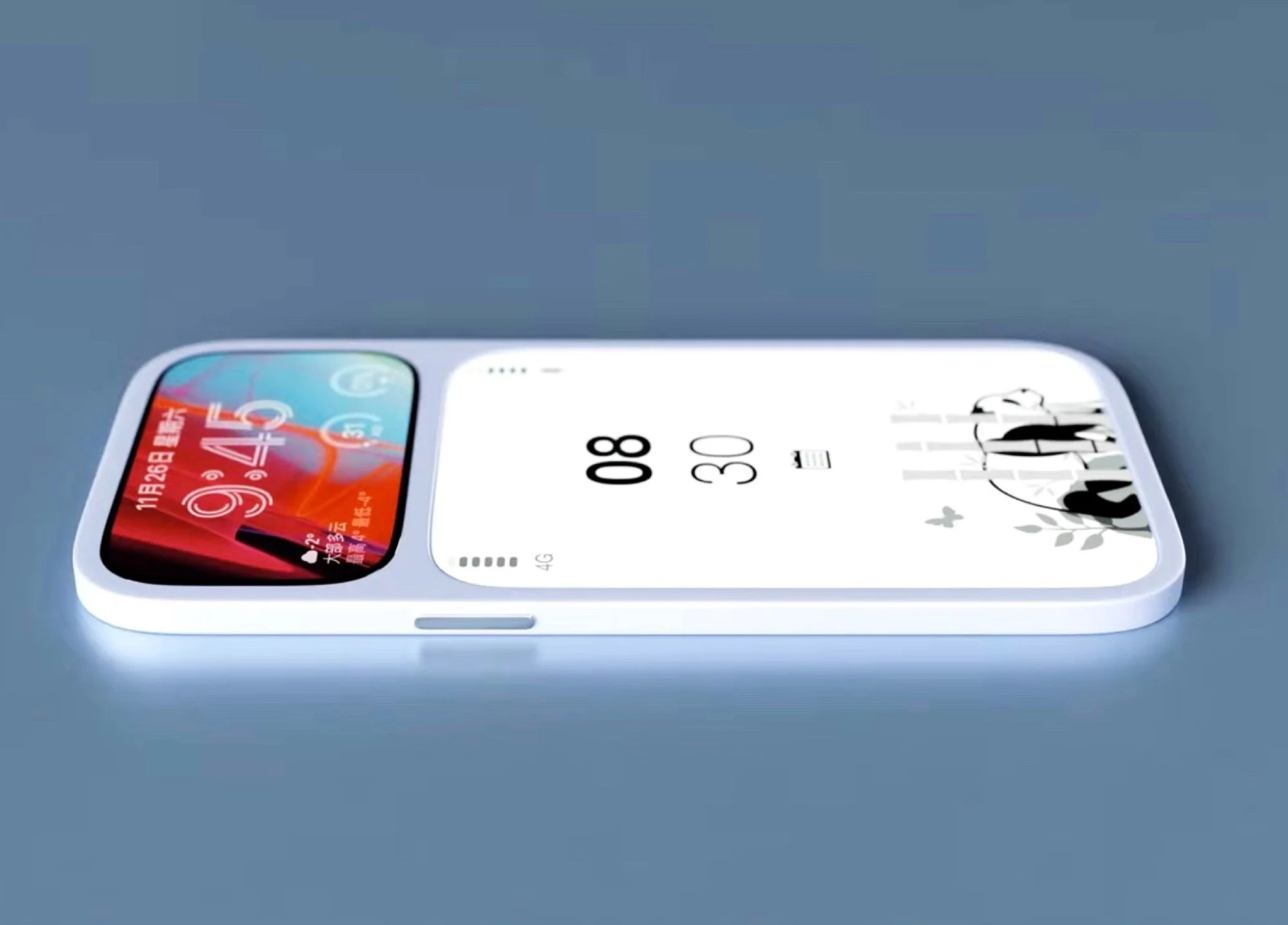
    The Pixel Duo concept smartphone illustrates how both types of displays can be integrated into a single device. At the top portion of the front, there is a 3.5-inch IPS screen with a resolution of 1280 x 800 pixels and a refresh rate of 120Hz. Below this is a 5.2-inch e-ink display, featuring a resolution of 1300 x 838 pixels and a pixel density of 300 PPI. Although this e-ink screen can only show content in grayscale, it is considered ideal for reading e-books.

    Enhanced User Experience

    On the other hand, the LCD display provides a smoother experience for watching videos, utilizing the rear camera, or browsing the internet, even though the screen size is relatively small. This dual-screen setup aims to allow users to run multiple applications at the same time. For instance, music controls could be visible on the IPS screen while a book is displayed below.

    The LCD is also capable of showing the time and various widgets. Since most apps will run on the larger e-ink display, the Pixel Duo is expected to have a very long battery life. As of now, this device remains a concept smartphone with no plans for its commercial release.

    Source:
    Link


  • Affordable iPhone Accessory with Versatile E-Ink Display

    Affordable iPhone Accessory with Versatile E-Ink Display

    Key Takeaways

    1. E-ink displays are easy to read in bright light but have slower response times.
    2. The Reetle SmartInk I is an e-ink display designed to attach to iPhones (models 14-17).
    3. It connects wirelessly via Wi-Fi or Bluetooth and installs like a regular phone case.
    4. The small 3.97-inch screen can display various information and record voice memos for AI transcription.
    5. The Reetle SmartInk I is currently crowdfunding on Kickstarter, with prices starting at $120 and shipments expected by February 2026.


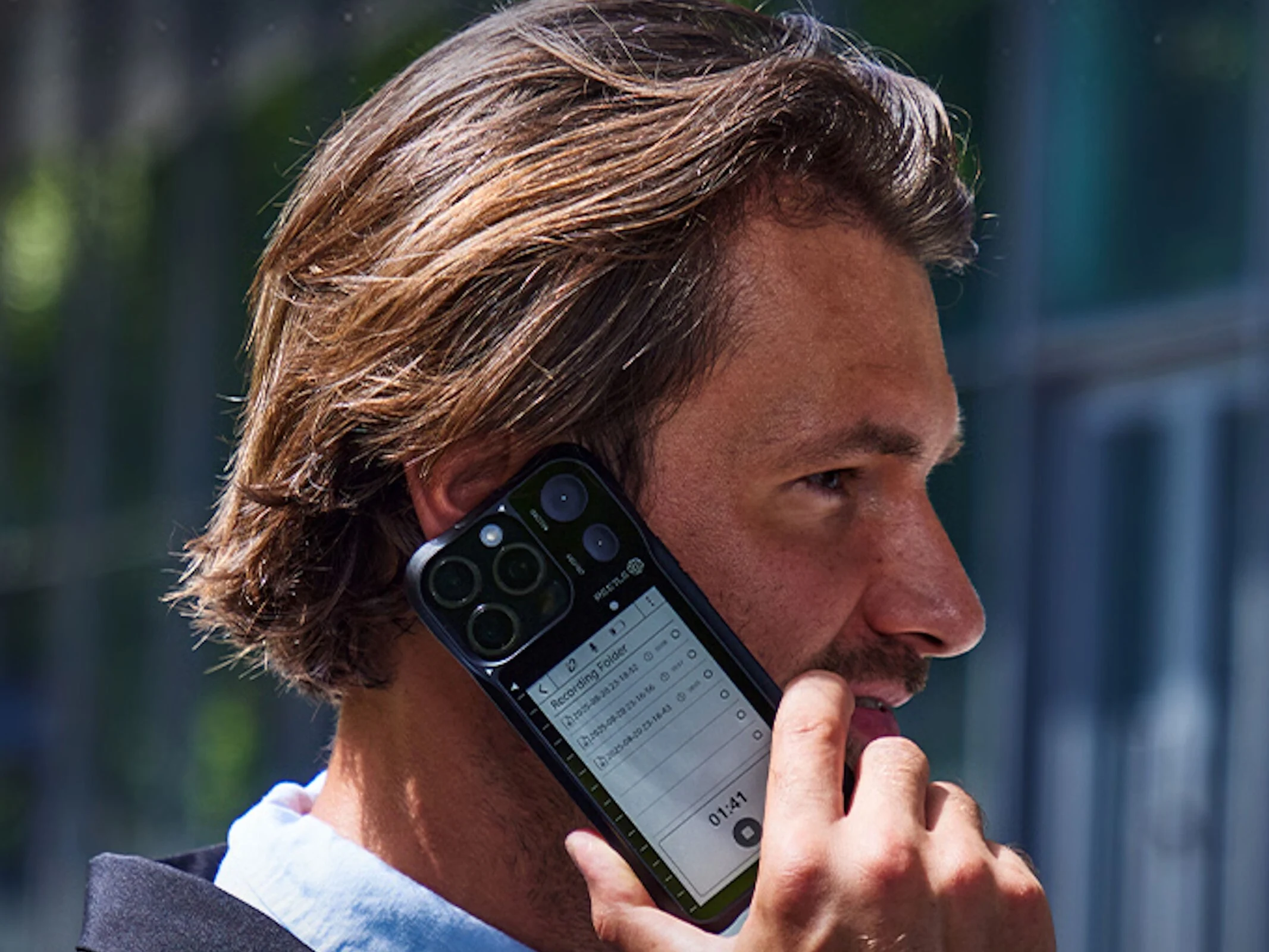
    E-ink displays are better than other types of screens in some ways, like being easy to read in bright light without needing a backlight. But, they do have some downsides, such as slower response times. This means that e-ink displays are great for certain situations. The Reetle SmartInk I is an e-ink display made to attach to the iPhone and might be helpful in various scenarios. It’s simple to install, as it fits on just like a regular phone case. It works with iPhone models 14 through 17 and connects wirelessly either through Wi-Fi or Bluetooth using an app, so no cables are needed.

    Compact and Versatile Design

    The screen measures only 3.97 inches, making it quite small, and has a resolution of 480 x 800 pixels. Besides displaying e-books, it can also show different kinds of information, such as QR codes and boarding passes. Users can even record voice memos with a button press, and AI will transcribe and summarize them. The device is powered by a 300 mAh battery, which can last up to 10 hours on a single charge. A wireless charger comes with it in the box, too.

    Crowdfunding and Availability

    At the moment, the Reetle SmartInk I is looking for funding on Kickstarter, with prices starting at about $120. If everything goes as planned, backers should receive their shipments by February 2026. As with many crowdfunding projects, there are financial risks involved for those who back it. Interestingly, this is the first time Reetle has launched a project on Kickstarter.

    Source:
    Link


  • Customizable Minimalistic E-Book Reader with E-Ink Display

    Customizable Minimalistic E-Book Reader with E-Ink Display

    Key Takeaways

    1. The Open Book Touch is a customizable e-reader developed by the maker community and will be sold through a CrowdSupply campaign.
    2. It is powered by an ESP32-S3 chipset, suitable for reading e-books but not as powerful as modern computer processors.
    3. The device features built-in WiFi and Bluetooth for wireless connectivity and can be programmed using Arduino and CircuitPython.
    4. It has compact dimensions (3.0 x 4.65 x 0.38 inches) and weighs around 3 oz, with a 4.26-inch display at a resolution of 480 x 800 pixels.
    5. The Open Book Touch includes a front light with adjustable color settings, a microSD card slot for storage, and a 1,800mAh battery for decent usage time.


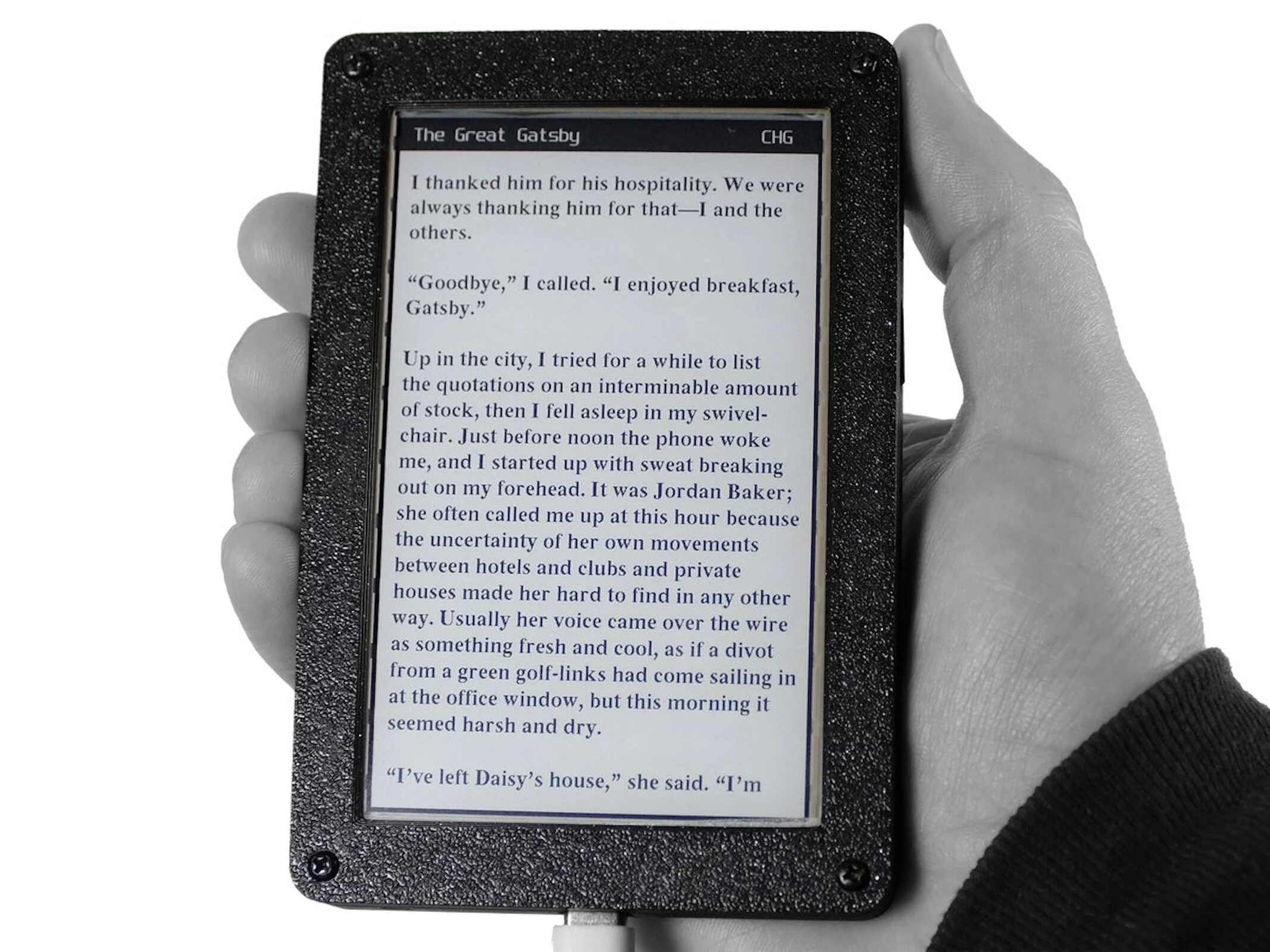
    Devices featuring e-ink displays come in many shapes and sizes, each with unique designs. Certain models are fully functional tablets equipped with e-ink screens, offering more than just reading e-books. These gadgets typically operate on Android and can be found at stores like Amazon. The recently unveiled Open Book Touch is a very simple e-reader that allows for extensive personalization.

    Open Book Touch Overview

    This initiative hails from the maker community and will be sold through a CrowdSupply campaign, although the exact price has not yet been disclosed. The e-book reader is driven by an ESP32-S3, a chipset commonly used in various development boards. While it doesn’t match the performance of a modern AMD or Intel APU, it is definitely adequate for reading e-books. The chip includes built-in WiFi and Bluetooth, enabling wireless connections. Additionally, the device can be programmed using Arduino and CircuitPython, allowing users to develop their own projects.

    Specifications and Features

    The Open Book Touch has dimensions of 3.0 x 4.65 x 0.38 inches and weighs approximately 3 oz. It boasts a small 4.26-inch display with a resolution of 480 x 800 pixels. The screen is also equipped with a front light that offers both cool and warm white settings. Furthermore, the device includes a microSD card slot for storing e-books and other compatible files. Finally, the integrated battery has a capacity of 1,800mAh, ensuring decent usage time.

    Source:
    Link


  • Onyx Boox Palma: Compact E Ink Smartphone with Color Display and LTE

    Onyx Boox Palma: Compact E Ink Smartphone with Color Display and LTE

    Key Takeaways

    1. The upcoming Boox Palma model will feature a color screen and built-in LTE modem, enhancing its functionality.
    2. Specific details about features, pricing, and release date for the new model are still unconfirmed by the manufacturer.
    3. The current Boox Palma 2 has a 6.13-inch E Ink display, Android OS, and a fingerprint sensor for easy unlocking.
    4. E Ink technology has limitations in color range and animation capabilities compared to LCD or OLED displays.
    5. The new Boox Palma could redefine pocket-sized devices, appealing to users seeking both e-reading and smartphone features.


    The Onyx Boox Palma 2 has quickly become one of the top choices for pocket-sized e-readers. Recently, The Verge had a sneak preview of an upcoming model from Boox Palma, which boasts two major enhancements: a color screen and an LTE modem built right in. There’s also an opening above the display that could potentially accommodate a speaker, turning the e-reader into something resembling a smartphone.

    Awaiting Confirmation on Specs

    So far, the manufacturer has not revealed any specifics about the features, pricing, or when we can expect the next version of the Boox Palma to hit the market. The new device appears to be about the same size as the current Boox Palma 2, which has a 6.13-inch display, making it smaller than a lot of smartphones out there. The Palma 2 runs on Android, which allows users to download third-party applications, and the fingerprint sensor on the lock button provides a fast and easy way to unlock the device. The E Ink display is designed to be easily readable even in bright sunlight, and it also includes a front light for nighttime reading.

    Limitations of E Ink Technology

    While modern E Ink screens are great, they don’t show nearly as many colors as LCD or OLED displays, and they can only handle animations and videos with some limitations. This might make the new Boox Palma smartphone ideal for those who want to limit distractions from social media applications. However, it seems that this model does not include a selfie camera, and there is still uncertainty about whether features like an NFC chip for contactless payments will be part of the package.

    The Future of E-Readers

    The Verge is keeping an eye on this exciting development in the e-reader market, as the Boox Palma could set a new standard for what pocket-sized devices can do. With its innovative features and compact design, it has the potential to attract a range of users looking for both e-reading and smartphone capabilities.

    Source:
    Link


  • DIY Dual-Screen E-Reader That Looks Like a Real Book

    DIY Dual-Screen E-Reader That Looks Like a Real Book

    Key Takeaways

    1. A Reddit user created a dual-screen e-reader that folds in half, featuring two e-paper displays for a more book-like experience.
    2. The e-reader uses an ESP32S-3 chip and has two 5.83-inch e-paper screens, along with dual 1,300 mAh batteries for extended use.
    3. It boasts low energy consumption, allowing the device to last over a month on a single charge due to its efficient components.
    4. The design includes an SD card slot, physical navigation buttons, and a USB-C port, while being sleek and protective without a case.
    5. The software is still basic, relying on custom code for ePUB parsing, text rendering, and the user interface.


    E-reader makers frequently say that their E Ink screens are the ideal substitute for traditional paper books. Yet, one major distinction between e-readers and real books is that the screen merely replicates a single “page.” This can sometimes give off a vibe similar to reading a brochure instead of an actual book.

    Innovative Design

    Luckily, an individual has devised a unique idea for a dual-screen e-reader that folds in half, showcasing two e-paper screens when opened. This brilliant idea comes from a Reddit user known as Spacerower, who began looking for solutions after he broke the screen on his older e-reader.

    Not finding an e-reader that met all his needs, he decided to create one on his own. This led to the development of the dual-screen e-reader. It features an ESP32S-3 chip and includes two 5.83-inch e-paper displays. Moreover, there are two 1,300 mAh batteries included, so it’s not just the screens that come in pairs.

    Power Efficiency

    E-paper displays are recognized for their very low energy consumption. When you pair this with the efficient ESP32-S3 chip and its 7 µA deep sleep mode, the device can last over a month on a single charge without any issues.

    Additionally, the e-reader comes equipped with an SD card slot for saving books and other materials, some physical buttons for navigation and page turning, and a USB-C port for charging. The device is relatively sleek, with each side measuring just 8 mm thick. When closed, it measures 16 mm. A significant advantage of this dual-screen design is that the displays are protected, meaning it doesn’t require a case for safeguarding.

    Software Limitations

    However, there are some drawbacks regarding the software. The maker confesses in the Reddit discussion that the software is still quite basic. Currently, the e-reader uses custom code for ePUB parsing, text rendering, and the user interface.

    Source:
    Link


  • E Ink Display with 75 Hz Refresh Rate: Modos Features

    E Ink Display with 75 Hz Refresh Rate: Modos Features

    Key Takeaways

    1. Modos Paper Monitor features E Ink screens in 6-inch and 13.3-inch sizes with a 75 Hz refresh rate, suitable for moving images.
    2. The monitors are open hardware, allowing for custom configurations, appealing to engineers and designers.
    3. The 13.3-inch model has a resolution of 1,600 x 1,200 pixels, while the 6-inch model has a resolution of 1,448 x 1,072 pixels.
    4. Users can connect via HDMI or USB-C, but the monitors do not support touch functionality or backlighting.
    5. The 6-inch Dev Kit costs $199 and the 13.3-inch version costs $599, with expected delivery in January 2026, but no guarantee of fulfillment due to crowdfunding risks.


    Modos Paper Monitor is an E Ink screen available in two different sizes: 6 inches and 13.3 inches. What stands out about it is the impressive refresh rate of 75 Hz, which is pretty rare for E Ink displays and should be good enough for showing moving images. However, a significant downside is that these monitors can’t show colors. On the flip side, their design as an open hardware e-paper monitor allows for multiple configurations, making it attractive to engineers, product designers, programmers, and similar professionals.

    Specifications of the Displays

    The larger 13.3-inch model boasts a resolution of 1,600 x 1,200 pixels, while the smaller 6-inch model has a resolution of 1,448 x 1,072 pixels. The CrowdSupply campaign isn’t offering finished products but is instead providing developer kits that include a motherboard and the display itself. Users can transmit image content through HDMI or USB-C, and the motherboard features an FPGA controller. This is essentially open hardware, which means users can make a lot of custom changes on their own, and it claims to be compatible with macOS, Windows, and Linux. Nonetheless, there are some restrictions that potential buyers need to think about before buying, like the absence of touchscreen support and backlighting.

    Pricing and Delivery Information

    The price for the 6-inch Modos Paper Dev Kit is set at $199, while the 13-inch version costs $599. The expected delivery date is January 2026. Given that this is a crowdfunding initiative, there is no assurance that backers will actually receive their orders.

    Source:
    Link