
Key Takeaways
1. KVMs allow remote control of computers without needing installed software, enabling access to BIOS settings and system restarts.
2. The Mini-KVM raised $461,555 on Crowd Supply, leading to the successful launch of the KVM-GO, which has exceeded its funding goals.
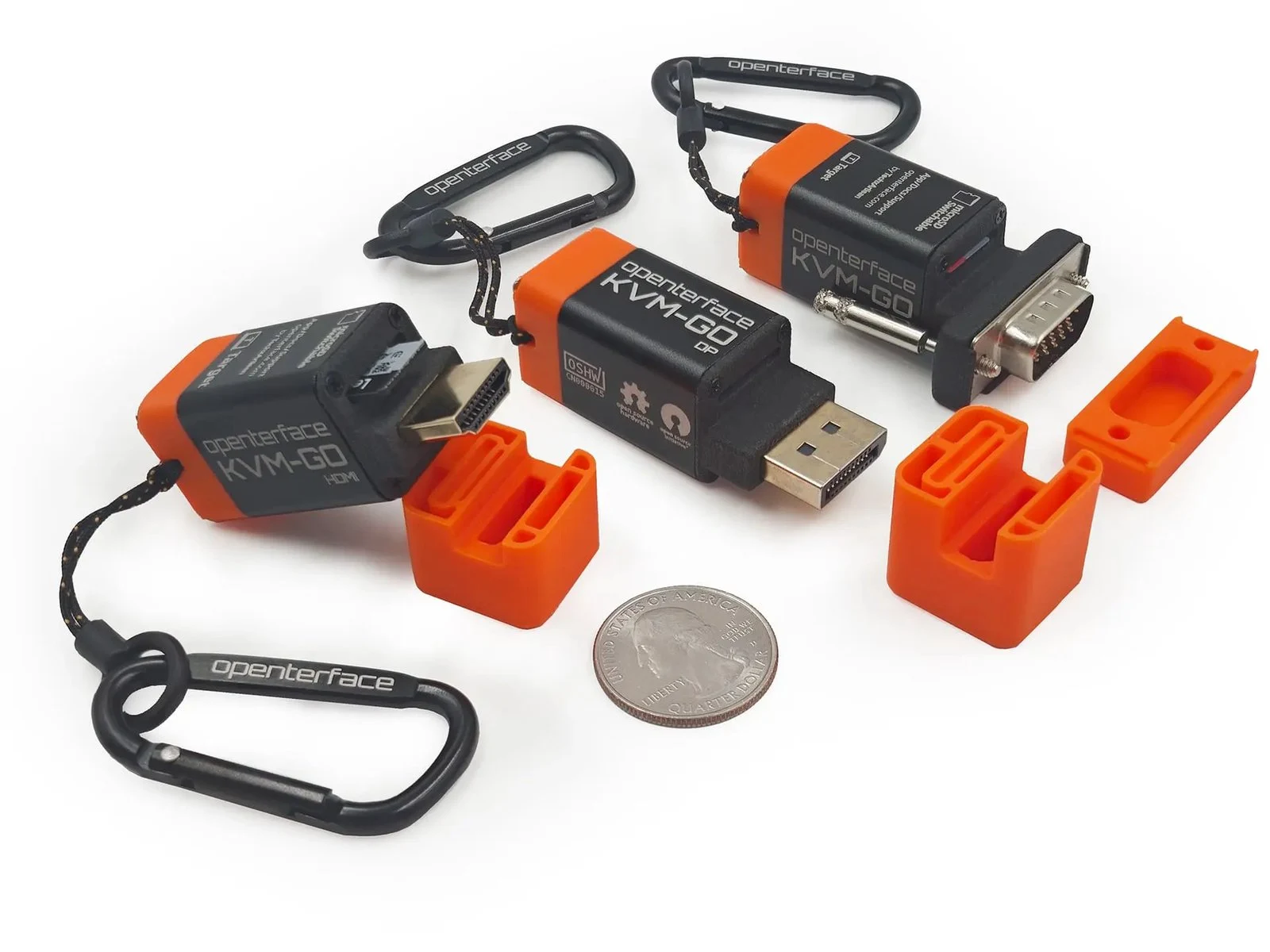
3. KVM-GO features a 4K, 60Hz mode, HDMI, DisplayPort, VGA options, and a Micro SD card slot for OS and driver installations.
4. Openterface promotes an open-source approach, making hardware schematics and source code publicly available on platforms like Github.
5. The KVM-Go is priced at $119, appealing to customers through its open-source features and reduced cable clutter, despite being pricier than some alternatives.
A KVM enables you to control a computer from a distance by linking a Keyboard, Video, and Mouse (KVM) from another device, allowing you to manage the target remotely.
Unique Features of KVMs
Even though it may seem like VNC or Remote Desktop, KVMs stand out because they work without needing installed software. This means they can access the BIOS of the remote computer.
With this capability, you can restart a system if the OS freezes, adjust BIOS settings, and even reinstall the operating system from afar.
Product Launch and Success
The Mini-KVM was the first product introduced by Openterface and it raised $461,555 on Crowd Supply. Following that achievement, the KVM-GO is now available on the same platform and has already surpassed its funding goals.
The KVM-Go has good specifications, featuring an experimental 4K, 60Hz mode, along with HDMI, DisplayPort, and VGA options. It also includes a Micro SD card slot for storing various operating systems and drivers that can be installed using the device. The administration software is compatible with Windows, Linux, MacOS, and Android.
Open-Source Advantage
Openterface sets its products apart from the competition through their open-source approach. Once everything is finalized, all hardware schematics, PCB layouts, and 3D models will be made publicly available. Additionally, the source code for various applications will be accessible via Github, covering MacOS, Windows, and Linux.
There’s no shortage of KVM options, ranging from DIY solutions with Raspberry Pi to ready-made ones like the Gl-iNet Comet, which you can find on Amazon. The KVM-Go starts at $119, which is a bit pricier than some competitors, but its open-source feature and reduced cable mess may attract customers.
Source:
Link