
Key Takeaways
1. G-Sync Pulsar Breakthrough: Nvidia’s G-Sync Pulsar is a significant advancement for PC gaming, offering superior motion clarity compared to traditional displays.
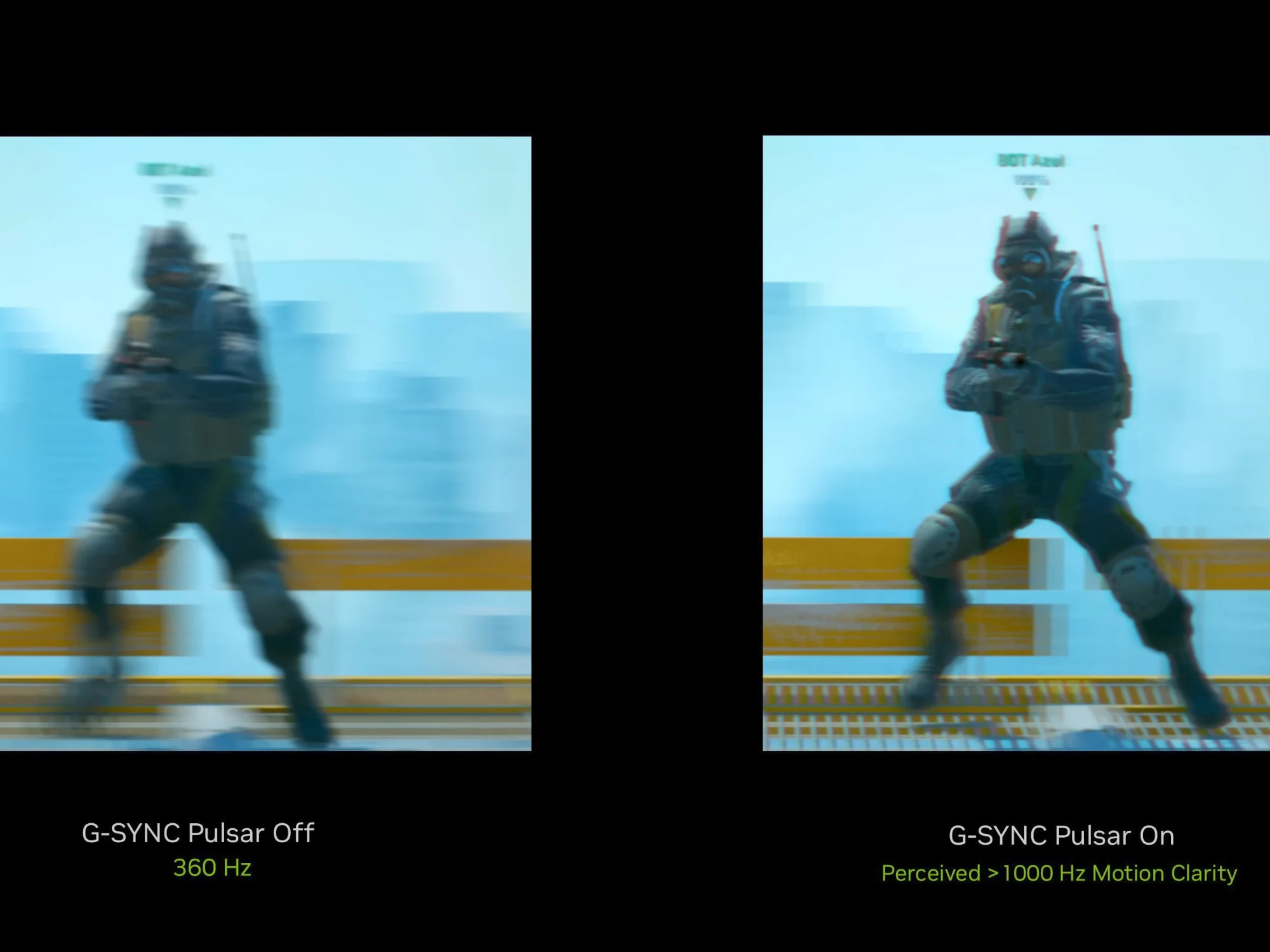
2. Motion Clarity Advantage: G-Sync Pulsar provides 3-4 times better motion clarity on IPS panels, addressing issues found in previous technologies and enhancing the gaming experience.
3. Current Limitations: The technology is restricted to supported Nvidia GPUs on Windows 11, with no current support for Linux or MacOS, and is only compatible with IPS panels.
4. Future Potential: There is hope for broader adoption, including potential support for OLED displays, which could elevate G-Sync Pulsar as the preferred standard for gaming monitors.
5. Ongoing Developments: Nvidia is working on firmware updates to lower the G-Sync Pulsar threshold to 60 Hz, which is essential for games capped at that framerate.
CES 2026 was a bit of a letdown for people not deeply involved in AI developments, but Nvidia’s G-Sync Pulsar has emerged as a significant breakthrough for the future of PC gaming. G-Sync Pulsar stands out for gamers, especially since much of the hardware showcased focused more on AI features than improving gaming performance. According to various reliable benchmarks and reviews, Nvidia’s G-Sync Pulsar provides the clearest motion quality we’ve seen since CRT monitors, which is a big deal for serious gamers. Nvidia claims it’s like multiplying FPS by four, but that’s more relevant to flat panels and could be seen as just marketing talk—but what’s really happening is far more fascinating, in my view.
OLED Monitors vs. G-Sync Pulsar
For a long time, OLED monitors have been seen as the best option for gaming displays, boasting pixel response times similar to CRTs, along with infinite contrast and rich colors, unlike IPS panels. However, OLED technology has its limitations due to being a flat panel and functioning as a “sample & hold” display. The per-pixel lighting, while beneficial, has its downsides. Using Black Frame Insertion can reduce sample & hold blur, but it also causes noticeable flickering and can dim the brightness, which is a disadvantage compared to IPS panels. Before G-Sync Pulsar, OLED already outshined TN, IPS, and VA panels in motion clarity and contrast thanks to its near-perfect pixel response time. Still, each frame was rendered as a separate image, resulting in significant motion blur at the same refresh rates.
The Innovation of G-Sync Pulsar
G-Sync Pulsar addresses the motion clarity issue for IPS displays by employing the unified backlight of IPS panels in a technique known as backlight strobing. While backlight strobing isn’t a new idea, achieving it alongside seamless variable refresh rate (VRR) implementation is a novel development. This strobing technique resembles CRT scanlines, meaning sections of the screen refresh continuously rather than all at once. It may appear chaotic in videos, but to the human eye, it produces the sharpest motion clarity ever on a flat panel. Indeed, G-Sync Pulsar can deliver 3-4 times better motion clarity on an IPS panel compared to one without it, significantly reducing the input framerate needed for clear motion. Unfortunately, OLED’s per-pixel backlighting, while great for contrast, does not work with the G-Sync Pulsar approach.
Limitations and Future Prospects
While motion clarity is vital, increasing true native FPS also helps lower input lag. For years, the flat panel market has considered raising FPS as the only solution to improve motion clarity, needing a rapid pixel response time for those advantages. That’s why TN panels were the go-to choice in eSports before Fast IPS became common in late 2019/2020, and why IPS displays were gradually phased out of high-end gaming monitors by OLEDs until G-Sync Pulsar changed the game.
However, G-Sync Pulsar has its restrictions. It’s currently limited to supported Nvidia GPUs running on Windows 11, with no announced support for Linux or MacOS. Moreover, even though IPS panels have worse contrast compared to OLEDs, G-Sync Pulsar is strictly tied to IPS panels right now. There’s hope that OLEDs might eventually support this technology; the Blur Busters CRT beam simulator shader, which works with 240Hz+ OLEDs, operates on a similar principle but at the cost of high GPU usage. For monitor support of this tech to be ideal, widespread adoption in OLEDs would make G-Sync Pulsar the gold standard for gaming displays.
Current Challenges and Future Improvements
As of now, G-Sync Pulsar only works with content at 75 Hz or higher, which is problematic for games capped at 60 FPS due to emulation or design choices, such as fighting games like Street Fighter 6 or Tekken 8. Thankfully, Digital Foundry has confirmed that Nvidia is developing a firmware update for G-Sync Pulsar monitors that will lower the Pulsar threshold to 60 Hz. However, this also means that if the framerate drops below that target in any game, the sample & hold blur will return. Like Richard Leadbetter from Digital Foundry and Mark Rejhon from Blur Busters, I believe it’s essential to reduce the floor to 60 Hz for retro gaming and certain 60 FPS genres.
In conclusion, while it isn’t flawless yet, nothing is perfect—and even in its current form, it represents a significant leap over existing gaming displays. A future with G-Sync Pulsar bringing CRT-level motion clarity to IPS panels is on the horizon, and eventually, this technology may extend to other GPU makers, operating systems, and display types. I hope that day comes soon, as an avid player of retro, fighting, and stylish action games, all of which would gain tremendously from this—along with popular eSports titles. I see this technology as a major challenge for AMD and Intel as they move into the next generation of display tech; for their GPUs to remain competitive with Nvidia, they will likely need to offer similar capabilities to G-Sync Pulsar, just as G-Sync opened the door for widespread VRR support and DLSS made GPU vendor upscaling mainstream.
Source:
Link

Leave a Reply