Tag: NVIDIA

  • Huawei to Boost AI Chip Efficiency by Masking GPU Differences

    Huawei to Boost AI Chip Efficiency by Masking GPU Differences

    Key Takeaways

    1. Huawei plans to introduce AI infrastructure technology to improve management of various chips, including its Ascend series and Nvidia’s chips.

    2. The new software solution aims to increase AI chip utilization from 35% to 70%, effectively doubling the efficiency of AI data center clusters.

    3. Huawei is competing with Nvidia and other Western companies for AI computing power, focusing on quantity to offset quality due to restrictions on high-performance chips.

    4. The strategy of commoditizing AI resources emphasizes the need for power to support numerous data centers instead of just focusing on individual chip capabilities.

    5. Huawei’s upcoming announcement at the AI Container Application Forum may showcase how software can enhance performance despite hardware limitations.


    Huawei is expected to reveal a sophisticated AI infrastructure technology that aims to streamline the management of various chips, including its own Ascend series and those from Nvidia.

    Boosting AI Chip Efficiency

    This software-driven solution is projected to elevate the utilization rate of AI chips from the current average of 35% to 70%, effectively doubling the efficiency of the AI data center clusters. By masking the differences in hardware, this approach enhances resource allocation for AI training and inference tasks.

    Competing on a Global Scale

    As the leading AI chip developer in China, Huawei is at the center of the ongoing battle for AI computing power supremacy against Nvidia and other significant Western GPU companies. While it may be difficult to match Nvidia’s cutting-edge Blackwell AI chip architecture with existing production capabilities in China, Huawei is pursuing strategies that focus on increasing quantity to compensate for quality.

    Due to restrictions on acquiring high-performance chips from Nvidia, which are both pricey and politically sensitive, China is making efforts to commoditize AI computing resources. Huawei has been grouping its numerous lower-end Ascend GPUs to operate open-source AI models, like DeepSeek, which require significantly less computing power compared to ChatGPT or Google’s Gemini, yet still manage to deliver similar performance levels.

    A Shift in AI Strategy

    This strategy of commoditizing AI appears to be effective currently, as it shifts the competition towards the power needed to support numerous AI data centers, rather than solely on chip capabilities or individual large language models (LLMs). For example, TikTok’s parent company ByteDance is leveraging the most popular chatbot in China, which also happens to be the largest consumer of AI computing power. Its daily demand has surged from 4 trillion tokens last year to over 30 trillion tokens now, closely rivaling Google’s consumption of 43.2 trillion tokens per day.

    The upcoming announcement of Huawei’s integrated AI infrastructure control at the 2025 AI Container Application Implementation and Development Forum on November 21 could further exemplify China’s tactic of “using software enhancements to compensate for inferior hardware.”

    It remains uncertain how Huawei aims to achieve a doubling of the AI chip optimization rate through infrastructure control improvements that can harmonize resources across different types of GPUs, such as its Ascend chips, Nvidia’s Blackwell, and those from other manufacturers, to boost the overall efficiency of computing clusters.


    Source:
    Link


  • Nvidia RTX Pro 6000 Worth $10,000 Rendered Useless by Broken PCIe

    Nvidia RTX Pro 6000 Worth $10,000 Rendered Useless by Broken PCIe

    Key Takeaways

    1. A GPU owner’s RTX Pro 6000 became useless after a PCIe connector board broke during transit.
    2. The main PCB and GPU chip remained intact, but Nvidia does not sell replacement PCIe boards.
    3. NorthbridgeFix criticized Nvidia for creating a modular design without providing spare parts.
    4. The RTX Pro 6000 lacks third-party designs, limiting user options for alternatives.
    5. Users must remove the GPU before transporting their workstation to avoid costly damage.


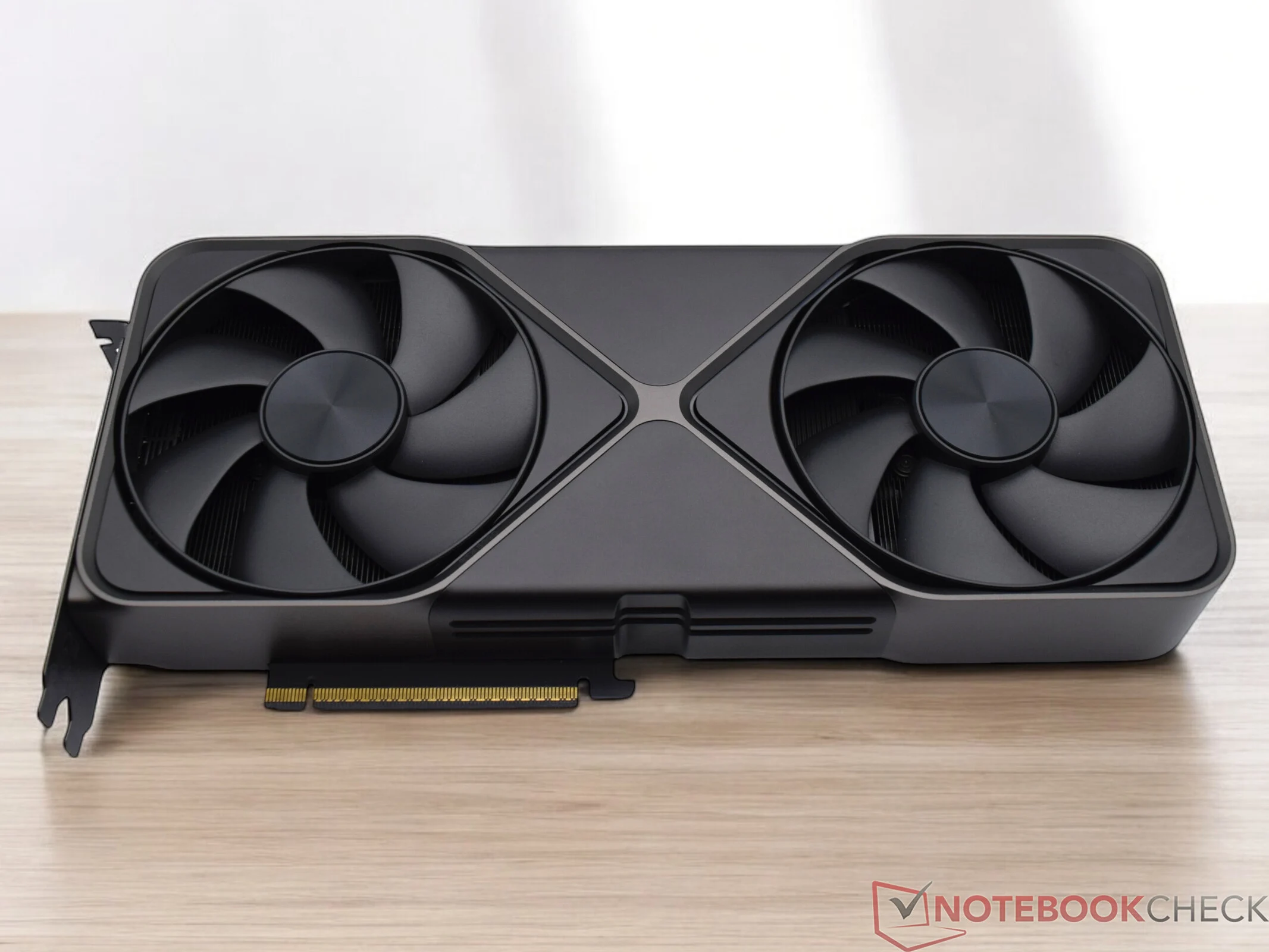
    A PC enthusiast faced a tough reality when one of the flaws of Nvidia’s pricey professional GPU became evident. An RTX Pro 6000 turned into a $10,000 useless object after the PCIe connector board on the Nvidia Blackwell-based GPU broke during transit.

    The Damage is Done

    YouTube repair expert NorthbridgeFix displayed the damaged component, and it might sound familiar since he previously criticized the RTX 5090 Founders Edition for having a similar modular PCIe board structure.

    In this latest episode of high-end hardware issues, the RTX Pro 6000 owner shipped their system without taking out the expensive GPU. Unfortunately, the heavy GPU caused the PCIe to snap in half.

    A Twist of Fate

    Ironically, the main PCB and GPU chip were unharmed. Still, the PCIe board was beyond repair. The key issue here is that Nvidia does not offer replacement boards for sale, which means that while the rest of the card is operational, it can’t be used without the PCIe.

    NorthbridgeFix voiced his disappointment regarding Nvidia’s decision to create a detachable connector module without making spare parts available. He believes this undermines the purpose of having a modular design.

    Limited Options for Users

    The RTX Pro 6000 lacks add-in board (AIB) partners or unique editions, which sets it apart from GeForce models. Consequently, unlike those GPUs, users don’t have the opportunity to choose third-party designs. Therefore, it is critical for owners to remove the card before moving their workstation, to prevent a potential loss of $10,000.


    Source:
    Link


  • GeForce RTX 50 Super Refresh Development Reportedly Canceled

    GeForce RTX 50 Super Refresh Development Reportedly Canceled

    Key Takeaways

    1. Nvidia’s rumored RTX 50 Super series may include the RTX 5080 Super, RTX 5070 Ti Super, and RTX 5070 Super.
    2. Reports suggest the RTX 50 Super series has been scrapped due to shortages of 3 GB GDDR7 modules.
    3. The RTX 50 Super series was never officially confirmed by Nvidia; it was based on speculation.
    4. Current GPU prices may increase because of memory shortages, impacting Nvidia’s production plans.
    5. AMD’s upcoming RDNA 4 GPUs are expected to remain unaffected as they will use GDDR6 VRAM.


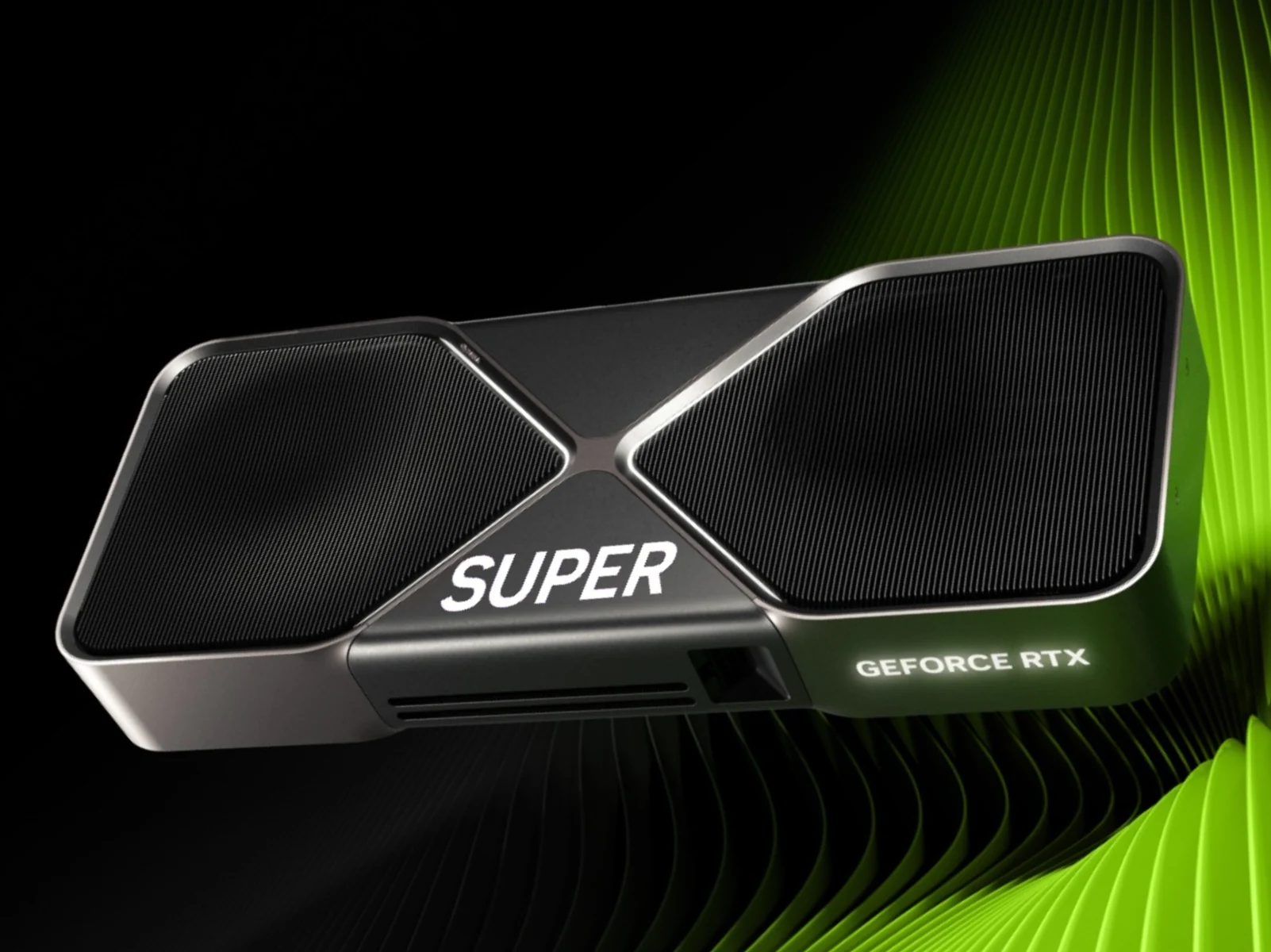
    Multiple speculations about Nvidia’s rumored RTX 50 Super refresh have popped up in recent weeks. This lineup would supposedly feature at least three models: the RTX 5080 Super, RTX 5070 Ti Super, and RTX 5070 Super. Initially, these GPUs were set to debut at CES 2026, promising a significant VRAM upgrade. However, a new report now suggests that they might have been completely scrapped.

    Rumor Mill Spins

    According to Uniko’s Hardware on X, Nvidia has abandoned the mid-cycle refresh due to severe shortages of 3 GB GDDR7 modules. This development isn’t too surprising considering the recent skyrocketing prices for DRAM. Still, it’s worth noting that the RTX 50 Super series was never officially confirmed or teased by Nvidia, existing only in speculation.

    Price Increases Ahead

    The leak indicates that current GPUs might also see a price increase due to the mentioned memory shortages. This could also explain why Nvidia is reducing production of the RTX 5090 Founders Edition. Even AMD had some upcoming RDNA 4 desktop GPUs planned, but they should remain relatively unaffected as they’re expected to use the previous generation’s GDDR6 VRAM modules.

    Conclusion

    In summary, the situation surrounding Nvidia’s RTX 50 Super series is quite fluid, with shortages and price hikes potentially changing the landscape. As always, it’s wise to keep an eye on official announcements, which have yet to materialize from Nvidia itself.

    Source:
    Link


  • SK Hynix Supplies DRAM, NAND, HBM Chips to Nvidia Amid Rising AI Demand

    SK Hynix Supplies DRAM, NAND, HBM Chips to Nvidia Amid Rising AI Demand

    Key Takeaways

    1. SK hynix’s production capabilities for DRAM, NAND, and HBM are fully booked through 2026, driven by a significant order from Nvidia.
    2. The company reported a Q3 2025 profit of $8 billion, a 62% increase from the previous year, largely due to HBM3E chip sales to Nvidia.
    3. SK hynix now holds over 50% of the global HBM market, significantly outpacing competitors Samsung and Micron.
    4. The company plans to ramp up production of HBM4 memory by late 2025, which promises enhanced bandwidth and energy efficiency for future AI processors.
    5. The demand for HBM is rapidly increasing, with predictions estimating the global HBM market to reach $43 billion by 2027, highlighting the critical role of memory manufacturers in the AI infrastructure.


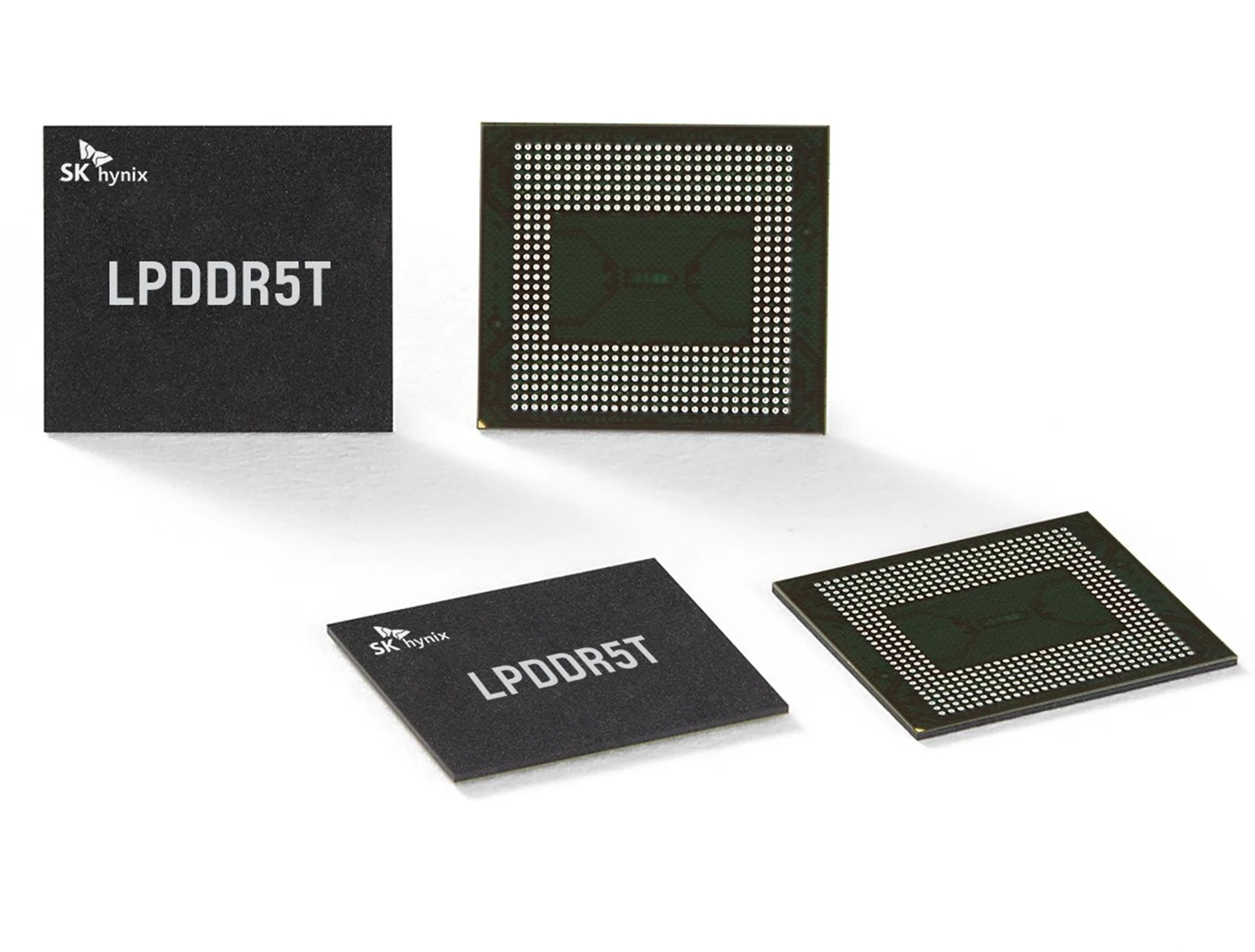
    SK hynix has recently revealed that its production capabilities for DRAM, NAND, and high-bandwidth memory (HBM) are completely booked through 2026. This accomplishment is largely attributed to a significant order from Nvidia. The world’s largest company by market cap relies on SK hynix’s HBM semiconductors, such as the H100 and B200 models, to power its AI processors.

    Financial Success

    SK hynix experienced a remarkable Q3 2025, reporting a profit of $8 billion (₩11.4 trillion), which is a 62% increase from the previous year. Revenue rose by 39% to ₩22.4 trillion, primarily driven by sales of HBM3E chips that Nvidia purchased for their data center GPUs. Consequently, SK hynix’s market value now surpasses that of its rivals.

    Market Dominance

    According to TrendForce, SK hynix now dominates over 50% of the global HBM market, while competitors Samsung and Micron hold about a quarter each. The company’s recent financial performance illustrates how closely linked the AI hardware ecosystem is becoming, with Nvidia’s leading position in GPUs significantly boosting SK hynix’s exceptional performance.

    “We have completely sold out our DRAM, NAND, and HBM capacity for the upcoming year,” remarked Kim Kyu-hyun, the head of DRAM marketing at SK hynix. He also mentioned that clients have already booked manufacturing slots up to 2026. This means SK hynix will be mostly unable to accept new orders next year.

    Future Production Plans

    The company is gearing up to ramp up production of its HBM4 memory by late 2025. If successfully implemented, it promises a significant enhancement in both bandwidth and energy efficiency. The next-gen chips are anticipated to be crucial for Nvidia’s forthcoming AI processors and supercomputing platforms.

    SK hynix has also entered into supply agreements with OpenAI for its planned Stargate supercomputer project. This initiative is projected to more than double the industry’s total HBM needs.

    Changing Landscape

    The strong performance of SK hynix indicates a broader shift in the tech landscape. Memory manufacturers are now vital players in AI infrastructure. “Demand for HBM is growing at a rapid pace, making it challenging for supply to keep up in the near future,” stated Kim Ki-tae, head of HBM sales and marketing.

    Citi Research predicts that the global HBM market will reach US$43 billion by 2027. The partnership between SK hynix and Nvidia positions both companies at the forefront of the AI semiconductor surge, while Samsung and Micron are left scrambling to catch up.

    Source:
    Link


  • Nvidia Invests $1 Billion in Nokia for AI and 6G Innovation

    Nvidia Invests $1 Billion in Nokia for AI and 6G Innovation

    Key Takeaways

    1. Nvidia plans to invest $1 billion in Nokia, acquiring a 2.9% ownership stake to enhance AI networking technologies, including AI-RAN and 6G development.
    2. Nokia will issue approximately 166 million new shares to Nvidia, using the funds for AI connectivity and general business needs.
    3. The partnership will focus on joint development of AI networking solutions, integrating Nokia’s tech into Nvidia’s future AI infrastructure designs.
    4. T-Mobile U.S. will manage and test AI-RAN technologies in collaboration with Nokia and Nvidia, aiming for efficient network performance enhancements.
    5. This collaboration positions Nokia as a key player in AI-native networks and prepares both companies for advancements in the telecom industry and 6G technology.


    U.S. chip maker Nvidia has revealed plans to put $1 billion into Nokia, giving it a 2.9 percent ownership in the Finnish telecom giant. The deal, valued at $6.01 per share, represents a strategic investment aimed at accelerating the development of AI networking technologies, including AI-RAN (Radio Access Network) and 6G tech.

    Share Issuance and Future Goals

    As part of this agreement, Nokia will issue 166,389,351 new shares to Nvidia, with a standard closing consideration. The funds raised will be used to enhance trusted connectivity in the AI supercycle as well as for general business needs. The partnership goes beyond just financial investment; Nokia aims to improve its 5G and 6G RAN software to leverage Nvidia’s advanced AI architecture, paving the way for smarter and more flexible networks. Additionally, the collaboration will extend to networking solutions for data centers, where Nokia seeks to expand its presence in AI and cloud infrastructure markets.

    Joint Development of AI Solutions

    Both companies shared in a joint statement that they will work together on AI networking solutions and may integrate Nokia’s data center switching and optical tech into future AI infrastructure designs by Nvidia.

    In a bid to enhance this partnership, T-Mobile U.S. will play a role in managing and testing the AI-RAN technologies amid ongoing 6G advancements. The planned trials aim to demonstrate efficiency and performance enhancements through AI-driven network optimization, expected to roll out next year. Justin Hotard, Nokia’s President and CEO, highlighted the significance of this partnership by stating:

    “The next phase in telecom isn’t merely an upgrade from 5G to 6G—it’s a complete redesign of the network to provide AI-powered connectivity that can process intelligence from the data center all the way to the edge. Our collaboration with Nvidia, along with their investment in Nokia, will hasten AI-RAN innovation to make an AI data center accessible to everyone.”

    Industry Transformation and Future Deployments

    Hotard further added that Nokia is collaborating with Nvidia, Dell Technologies, and T-Mobile U.S. to launch the first AI-RAN deployment in T-Mobile’s network. “We’re excited to lead this industry transformation alongside Nvidia, Dell Technologies, and T-Mobile U.S. Our initial AI-RAN implementations in T-Mobile’s network will ensure that America maintains its lead in the advanced connectivity required for AI,” he mentioned.

    Jensen Huang, the Founder and CEO of Nvidia, remarked that this partnership is crucial for national infrastructure and tech supremacy. “Telecommunications represents an essential national infrastructure—the digital nervous system of our economy and security. Built on Nvidia CUDA and AI, AI-RAN will transform telecommunications—a generational platform shift that will enable the United States to reclaim its global leadership in this vital tech sector,” Huang stated.

    “Together with Nokia and the U.S. telecom ecosystem, we’re sparking this revolution, empowering operators to create intelligent, adaptive networks that will define future global connectivity.”

    This investment will position Nokia as a significant contender in the race to develop AI-native networks and prepare for 6G, while also giving Nvidia a foothold in the telecom industry, which is crucial for scaling its AI computing platforms.

    Source:
    Link


  • Nvidia RTX 5090 Founders Edition Teardown Reveals Fragile Design

    Nvidia RTX 5090 Founders Edition Teardown Reveals Fragile Design

    Key Takeaways

    1. Nvidia’s RTX 5090 Founders Edition has a complex internal design with multiple interconnected boards, increasing repair difficulty.
    2. The FPC connector used to connect the GPU to the PCIe slot is fragile and can easily be damaged during disassembly or installation.
    3. A technician found bent and broken pins on the FPC connector, likely caused by improper handling while installing custom water blocks.
    4. The card’s heavy weight adds to the challenges of servicing it, making it prone to further issues during repairs.
    5. Northridge Fix advises against water-cooling or modifying the RTX 5090 Founders Edition due to the risk of irreparable damage.


    Nvidia’s top-of-the-line RTX 5090 Founders Edition has come under fire from the repair experts at Northridge Fix. This well-known electronics repair shop and YouTube channel shared their analysis of a malfunctioning unit, expressing serious concerns about its internal structure.

    Issues with Dual RTX 5090 Cards

    The technician looked at two RTX 5090 graphics cards that were brought in by a customer who had installed custom water blocks. One card, an ASUS variant, was fixed by simply putting back the standard cooler. Unfortunately, the other one, a Founders Edition, turned out to be a real headache.

    During the disassembly, it became clear that Nvidia opted for a design featuring multiple interconnected boards instead of a single printed circuit board (PCB). The GPU connects to the PCIe slot via a thin, flexible printed circuit (FPC) connector.

    Fragility Concerns

    The technician pointed out that the FPC connector is quite fragile. Even a slight misalignment or too much bending while taking it apart could lead to disaster for the tiny pins, causing them to bend or snap. If damaged, the GPU will not send out any signal, even if the voltage rails and other circuits seem normal.

    Using a powerful microscope, the repair technician found that one pin on the FPC connector was bent, while another was completely broken. He believed this damage likely occurred during the installation of the water block.

    Repair Challenges

    Unfortunately, the technician could not find a replacement connector, so he had to conclude that the card was beyond repair.

    Aside from the fragile connector, Northridge Fix also criticized the card’s overly complex internal design. Disassembling the Founders Edition 5090 involved dealing with numerous screws, brackets, and tiny parts, which increased the risk of failure points.

    Another major concern was the card’s heavy weight, making it difficult to service. The technician commented, “The 5090 is really heavy, and when you add in delicate joints among key components, you’re just inviting problems.”

    Northridge Fix recommended that fans steer clear of water-cooling or altering the RTX 5090 Founders Edition. The absence of replacement connectors means that even a minor error could turn the GPU into a useless brick.

    Source:
    Link


  • Tech Companies’ Debt Reaches $1.35 Trillion Amid AI Boom

    Tech Companies’ Debt Reaches $1.35 Trillion Amid AI Boom

    Key Takeaways

    1. The debt of the largest tech firms has quadrupled over the last decade, reaching approximately $1.35 trillion.
    2. The surge in debt is largely driven by aggressive investments in AI infrastructure to meet rising demand for AI services.
    3. Companies like Oracle are accumulating significant debt, with a debt-to-equity ratio indicating they owe much more than their equity value.
    4. The shift towards AI requires costly physical infrastructure, often consuming potential profits and leaving many companies in debt without sufficient revenue.
    5. There are significant risks in the tech sector, as rapid investments in AI may lead to challenges for financially weaker companies if funding slows down.


    The A.I. bubble has grown into a massive entity that might be ready to burst.

    A recent study by QUICK FactSet indicates that the interest-bearing debt of the 1,300 largest tech firms globally has increased four times over the last decade, as reported by Nikkei Asia. This results in total loans, bonds, and other liabilities amounting to around $1.35 trillion.

    The AI Race and Its Consequences

    The surge in debt is believed to be linked to the competitive race in artificial intelligence (AI). As companies strive to meet the rising demand for AI services, they are also investing heavily in the costly hardware and infrastructure needed to support these services.

    Certain companies are heavily in debt. For instance, Oracle has committed to a $500 billion investment in AI infrastructure in collaboration with OpenAI over the next four years, but it currently has debts exceeding $111 billion. This amount is more than double what Oracle owed a decade ago. Consequently, the company’s debt-to-equity ratio (DTE) is now at 4.6, indicating that for every dollar of shareholder equity, the company owes $4.6.

    Shifting Financial Dynamics

    This surge in debt is a stark contrast to the tech landscape from ten years ago, where tech firms primarily relied on software assets that usually generated solid profits. The recent shift towards AI, along with its need for physical infrastructure, has consumed the potential profits from many AI-focused tech companies. Essentially, those investing heavily in AI are often not yet making profits. They are accumulating significant debts without their revenues sufficiently covering them.

    This approach to debt impacts not just AI developers but also those indirectly involved. For instance, Nikkei mentions that Nvidia is “preferentially supplying [CoreWeave] with graphics processing units.” CoreWeave, which offers cloud-based AI services, needs powerful silicon for its operations and is taking on considerable debt to support this. The company’s DTE ratio stands at 3.8, putting it and Nvidia in a precarious position should CoreWeave face financial difficulties. If CoreWeave struggles, Nvidia’s business would also be adversely affected.

    Risks Ahead in the Tech World

    Yoshinori Shigemi from Fidelity International, as cited by Nikkei, believes that this business model could lead to significant challenges within the tech sector. He stated:

    “Companies are rapidly making upfront investments to ensure they are not left out of the AI boom. While funding is flowing well right now, a bottleneck could spell disaster for financially weak companies.”

    Running a business on leverage is often a gamble with high risks and potentially high rewards. It will soon become clear which side of this bet the tech industry will land on.

  • TSMC Boosts 2nm Chip Production and U.S. Expansion Amid AI Race

    TSMC Boosts 2nm Chip Production and U.S. Expansion Amid AI Race

    Key Takeaways

    1. TSMC is set to begin mass production of its 2nm process, N2, in 2025, ahead of its original 2030 timeline.
    2. The company reported a revenue increase of over 40% in Q3 2025, driven by demand for AI technology and high-end smartphones.
    3. TSMC plans to invest $42 billion in expanding its manufacturing capabilities in Taiwan and abroad in 2025.
    4. The Arizona plant is being upgraded for 2nm production, aiming to become a major semiconductor center outside Asia.
    5. TSMC targets to produce around 100,000 wafers per month from its Arizona facility, supporting U.S. efforts for more domestic chip production.


    TSMC is getting ready for the worldwide competition in the semiconductor field. The chip maker has shared that it will begin mass production of its 2nm process, known as N2, sooner than it originally planned.

    Production Timeline Adjustments

    TSMC aims to kick off production of its N2 node in 2025, with a gradual increase in output anticipated for 2026. This change brings the schedule ahead by several years from the initial target of 2030. Executives at the company have indicated that early yields are looking good. They have already commenced work on a better version called N2P, which is set to be released in late 2026.

    Financial Growth Driven by AI

    This accelerated timeline follows TSMC’s impressive Q3 2025 results. The semiconductor giant reported revenues of $33.1 billion, which is more than a 40 percent increase compared to the same time last year. TSMC’s success has been largely fueled by the demand for AI technology and high-end smartphones, with substantial orders coming from clients like Nvidia and Apple.

    Expansion Plans in Manufacturing

    The company is also set to invest heavily in boosting its manufacturing capabilities, both in Taiwan and abroad, with a significant $42 billion allocated for this purpose in 2025.

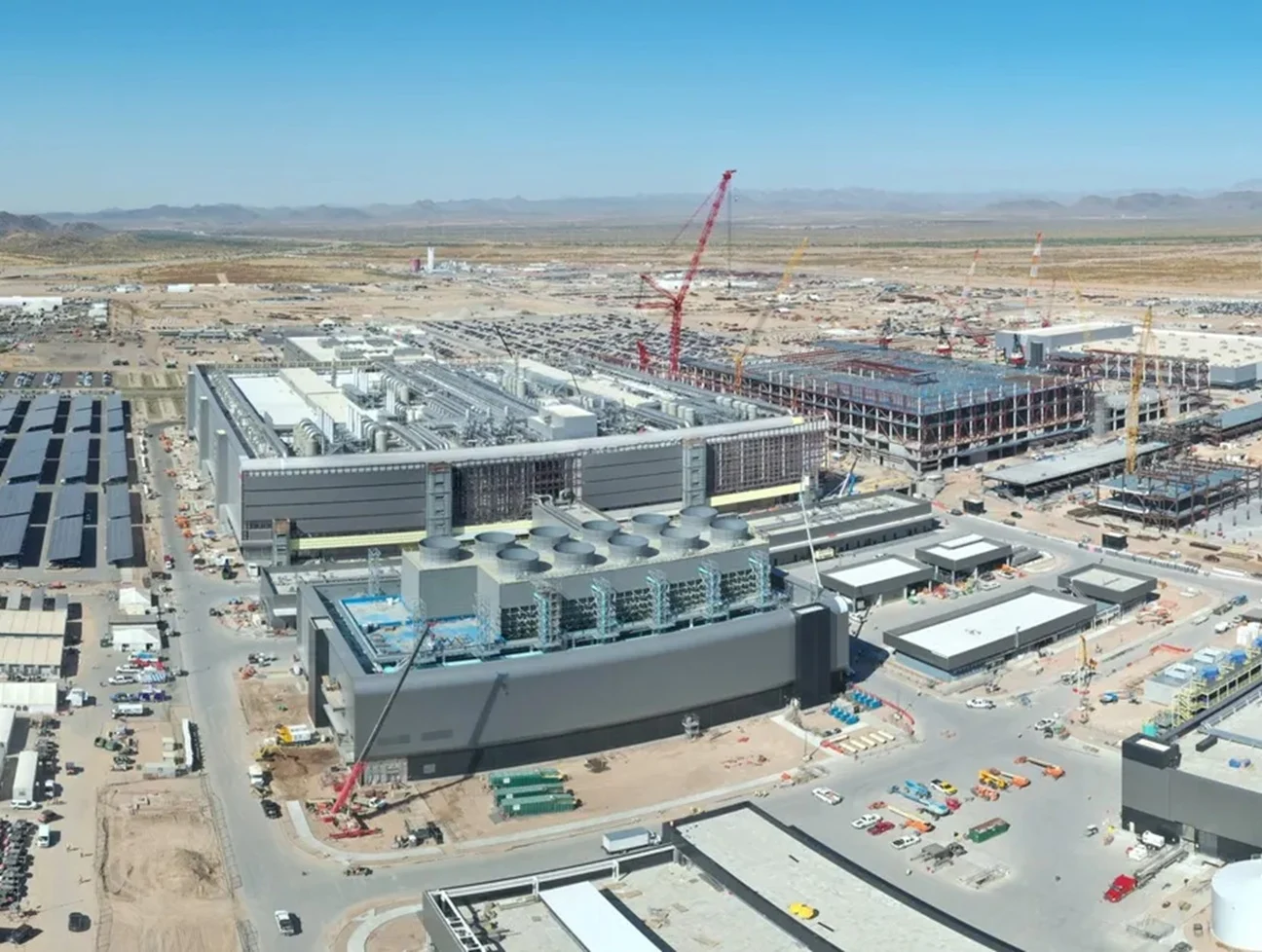
    TSMC has also shared news regarding its Arizona plant. The facility is undergoing upgrades from 3 nm and 4 nm technology to accommodate 2 nm production. This site is expected to be ready for future A16-class manufacturing. TSMC believes this plant could become one of the leading semiconductor centers outside Asia, targeting a 30 percent share of the company’s next-generation output.

    Arizona Production Goals

    The plan is to produce approximately 100,000 wafers each month from the Arizona facility. TSMC is working on establishing the necessary infrastructure for packaging, testing, and suppliers, and is currently exploring options for acquiring additional land. This expansion comes at a crucial time as the United States strives for more domestic chip production and aims to lessen its dependence on foreign manufacturers.

    The competition remains fierce in the global AI and national security arena, but TSMC is positioning itself to lead the charge in the development of next-generation semiconductors for advanced computing.

    Source:
    Link


  • Nintendo Switch 2 to Feature Two Versions of Nvidia DLSS

    Nintendo Switch 2 to Feature Two Versions of Nvidia DLSS

    Key Takeaways

    1. The Nintendo Switch 2 will feature NVIDIA’s DLSS technology, including both a standard version and a lighter, performance-oriented version called “DLSS Light.”
    2. The standard DLSS mode closely matches the PC version, enhancing graphics quality but is limited to games upscaling to 1080p.
    3. “DLSS Light” offers a crisper image and can upscale beyond 1080p, but may show drawbacks during fast movements or intense action.
    4. The Switch 2 is the first portable console to natively support NVIDIA’s AI-driven upscaling technology, promising advancements in handheld gaming graphics.
    5. Nintendo’s collaboration with NVIDIA could lead to significant improvements in graphics standards for portable consoles, depending on how first-party developers optimize their games.


    Nintendo is gearing up to release its next-generation console, the Switch 2, which is equipped with various versions of NVIDIA’s latest DLSS (Deep Learning Super Sampling) technology. A recent analysis by tech expert Alex Battaglia from Digital Foundry reveals that the console supports two types of DLSS: a standard version and a lighter, performance-oriented alternative tailored to the unique hardware constraints of the hybrid handheld device.

    In-Depth Analysis of DLSS Performance

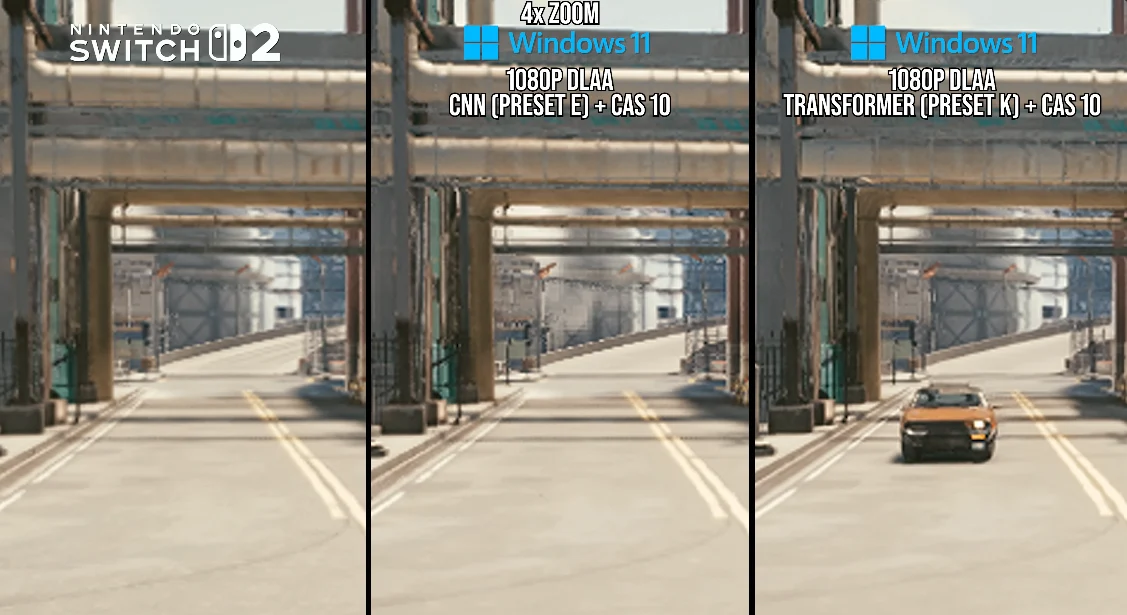
    In his comprehensive review, Battaglia looked into how DLSS performs in upcoming Switch 2 games that are currently either in development or testing phases, such as Cyberpunk 2077, Street Fighter 6, Hogwarts Legacy, Star Wars Outlaws, The Touryst, and Fast Fusion. His research indicated that the conventional DLSS mode operates nearly the same as the PC version’s CNN-based model, providing enhanced anti-aliasing during movement, smoother transitions during camera shifts, and a more consistent overall image. Nonetheless, this more robust model is presently restricted to games that upscale to a 1080p resolution, hinting at its higher processing requirements.

    Exploring the “DLSS Light” Option

    The alternate version, referred to as “DLSS Light,” is a more streamlined and less demanding implementation. It delivers a crisper still image and can upscale beyond 1080p, although its drawbacks become noticeable during camera movements or intense action sequences. In these moments, it temporarily turns off certain reconstruction methods and exposes unrefined pixels. Even with these compromises, this variant is said to use about half the frame-time of the full model, making it significantly more appropriate for high-resolution upscaling within the power limits of the Switch 2.

    To back up his results, Battaglia consulted an unnamed developer who is knowledgeable about the console’s DLSS setup, and this source confirmed that both versions are available in the development environment. This information implies that the Switch 2’s GPU can handle multiple DLSS formats, which could allow developers to select the configuration that best aligns with their game’s performance goals.

    A New Era for Handheld Gaming

    The Switch 2 is set to be the first portable gaming device that will natively support NVIDIA’s AI-driven upscaling technology, representing a significant advancement in how portable systems manage demanding graphics. Up to this point, only third-party developers have utilized DLSS on the device, likely due to the fact that Nintendo’s internal engines have not incorporated it yet. However, once Nintendo’s first-party developers start optimizing their games for the hardware, the outcomes could redefine the standards for graphics in portable consoles.

    It’s still uncertain whether “DLSS Light” will become the go-to standard for the Switch 2 or remain an option for select titles. But one thing is undeniable: Nintendo and NVIDIA are creating significant buzz with their collaboration, pushing boundaries in the gaming industry.

    Source:
    Link


  • GeForce RTX 50 Super Release Date Rumors Delay Launch Further

    Key Takeaways

    1. The Nvidia GeForce RTX 50 Super graphics cards are expected to be released in 2026, not 2025.
    2. The potential release window for the RTX 50 Super models is between March and May 2026.
    3. Nvidia might announce the RTX 50 Super GPUs at CES 2026 without specific pricing or release dates.
    4. The RTX 50 Super series will include the RTX 5070 Super, RTX 5070 Ti Super, and RTX 5080 Super, with upgrades in VRAM and higher TDP.
    5. Pricing for the RTX 50 Super models is likely to be similar to the current non-Super cards due to improved market conditions.


    The talk about the Nvidia GeForce RTX 50 Super release date has really heated up recently. Ever since the first whispers of a launch in Q4 2025 popped up earlier this year, there have been mixed reports on when exactly the RTX 5070 Super, RTX 5070 Ti Super, and RTX 5080 Super will hit the shelves. Currently, it seems more probable that these RTX 50 Super graphics cards won’t debut in 2025 but rather in 2026.

    Potential Release Window

    Benchlife has provided an update on the matter, suggesting that the RTX 50 Super could be released sometime between March and May 2026. This timeline would put the launch in the late first quarter or early second quarter of 2026. Additionally, the outlet has pointed out that no AIB partner has received a “project opening notice” from Nvidia, which strongly indicates that a 2025 launch is out of the question.

    Speculation on Announcements

    If we were to guess, Nvidia might announce the GeForce RTX 50 Super GPUs at CES 2026 without giving any specifics on pricing or release dates. This would be a smart move to create excitement around the RTX 50 Super cards, leading up to a formal release of the three models at the end of Q1 or the beginning of Q2 2026.

    Specifications and Pricing

    In terms of specifications, leaks have suggested that the RTX 50 Super series will feature three GPUs: the RTX 5070 Super, the RTX 5070 Ti Super, and the RTX 5080 Super. Besides a 4% increase in CUDA cores for the RTX 5070 Super, the main upgrades over the standard GeForce RTX 50 series cards will likely be an increase in VRAM and a higher TDP.

    Luckily for consumers, Nvidia is anticipated to keep the pricing of the RTX 50 Super models similar to that of the non-Super cards. We think this decision isn’t due to Nvidia’s newfound generosity, but rather because market conditions have improved, making it easier to purchase GeForce GPUs like the RTX 5070 at their MSRP.

    Source:
    Link