
Key Takeaways
1. The Nintendo Switch 2 will feature NVIDIA’s DLSS technology, including both a standard version and a lighter, performance-oriented version called “DLSS Light.”
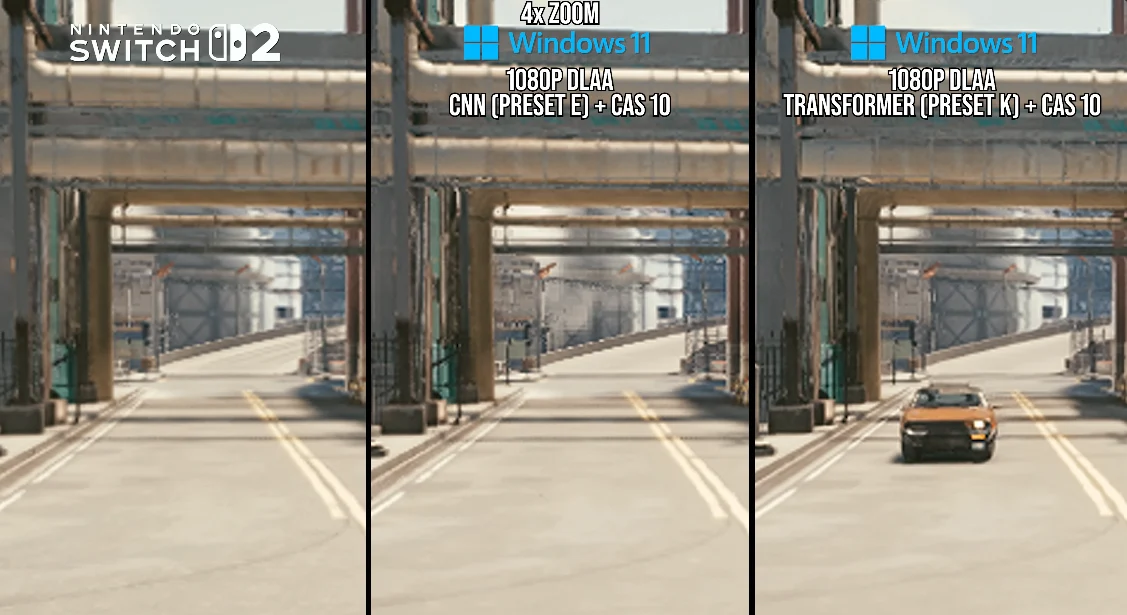
2. The standard DLSS mode closely matches the PC version, enhancing graphics quality but is limited to games upscaling to 1080p.
3. “DLSS Light” offers a crisper image and can upscale beyond 1080p, but may show drawbacks during fast movements or intense action.
4. The Switch 2 is the first portable console to natively support NVIDIA’s AI-driven upscaling technology, promising advancements in handheld gaming graphics.
5. Nintendo’s collaboration with NVIDIA could lead to significant improvements in graphics standards for portable consoles, depending on how first-party developers optimize their games.
Nintendo is gearing up to release its next-generation console, the Switch 2, which is equipped with various versions of NVIDIA’s latest DLSS (Deep Learning Super Sampling) technology. A recent analysis by tech expert Alex Battaglia from Digital Foundry reveals that the console supports two types of DLSS: a standard version and a lighter, performance-oriented alternative tailored to the unique hardware constraints of the hybrid handheld device.
In-Depth Analysis of DLSS Performance
In his comprehensive review, Battaglia looked into how DLSS performs in upcoming Switch 2 games that are currently either in development or testing phases, such as Cyberpunk 2077, Street Fighter 6, Hogwarts Legacy, Star Wars Outlaws, The Touryst, and Fast Fusion. His research indicated that the conventional DLSS mode operates nearly the same as the PC version’s CNN-based model, providing enhanced anti-aliasing during movement, smoother transitions during camera shifts, and a more consistent overall image. Nonetheless, this more robust model is presently restricted to games that upscale to a 1080p resolution, hinting at its higher processing requirements.
Exploring the “DLSS Light” Option
The alternate version, referred to as “DLSS Light,” is a more streamlined and less demanding implementation. It delivers a crisper still image and can upscale beyond 1080p, although its drawbacks become noticeable during camera movements or intense action sequences. In these moments, it temporarily turns off certain reconstruction methods and exposes unrefined pixels. Even with these compromises, this variant is said to use about half the frame-time of the full model, making it significantly more appropriate for high-resolution upscaling within the power limits of the Switch 2.
To back up his results, Battaglia consulted an unnamed developer who is knowledgeable about the console’s DLSS setup, and this source confirmed that both versions are available in the development environment. This information implies that the Switch 2’s GPU can handle multiple DLSS formats, which could allow developers to select the configuration that best aligns with their game’s performance goals.
A New Era for Handheld Gaming
The Switch 2 is set to be the first portable gaming device that will natively support NVIDIA’s AI-driven upscaling technology, representing a significant advancement in how portable systems manage demanding graphics. Up to this point, only third-party developers have utilized DLSS on the device, likely due to the fact that Nintendo’s internal engines have not incorporated it yet. However, once Nintendo’s first-party developers start optimizing their games for the hardware, the outcomes could redefine the standards for graphics in portable consoles.
It’s still uncertain whether “DLSS Light” will become the go-to standard for the Switch 2 or remain an option for select titles. But one thing is undeniable: Nintendo and NVIDIA are creating significant buzz with their collaboration, pushing boundaries in the gaming industry.
Source:
Link

Leave a Reply