Tag: NVIDIA

  • Nvidia Revenue Soars 56% Yearly Despite Demand Concerns

    Nvidia Revenue Soars 56% Yearly Despite Demand Concerns

    Key Takeaways

    1. Nvidia’s Q2 revenue reached $46.7 billion, a 6% increase from Q1 and a 56% increase year-over-year.
    2. The company’s income for the quarter was $26.4 billion, up 41% from Q1 and 59% from the previous year, with a gross margin of 72.4%.
    3. The data center sector generated $41.1 billion in revenue, driven by demand for accelerated computing platforms in AI applications.
    4. Nvidia anticipates Q3 revenues of $54 billion, despite challenges from H20 chip export restrictions to China.
    5. CEO Jensen Huang is optimistic about the AI industry’s growth, predicting $3 trillion to $4 trillion in infrastructure investment by the decade’s end.


    Nvidia has released its financial results for the second quarter (Q2) of the fiscal year 2026, showing growth across many key metrics. The company achieved a remarkable revenue of $46.7 billion, marking a 6% increase from the previous quarter and a staggering 56% growth compared to last year.

    Income and Margins

    The income for the quarter reached $26.4 billion, reflecting a rise of 41% from Q1 and a 59% increase year-over-year. The gross margin improved to 72.4% in Q2, which is an 11.9-point jump from Q1; however, it remains below the 75.1% recorded in Q2 of fiscal year 2025.

    The financial results indicate a “cooling” trend in quarterly revenue variation, contrasting with the previous double-digit fluctuations. The data center sector continues to dominate revenue streams, contributing $41.1 billion in Q2, an increase of 5% from the last quarter. This growth is driven by heightened demand for accelerated computing platforms utilized in large language models, recommendation systems, and generative AI applications.

    Future Projections

    “We are steadily enhancing our Blackwell architecture, which saw a 17% growth sequentially, including our latest architecture, Blackwell Ultra,” the company stated in a commentary by the CFO.

    Nvidia acknowledged facing challenges due to restrictions on exporting H20 chips to China, noting a $4 billion drop in sales of this chip compared to Q1.

    Looking ahead to the third quarter, Nvidia anticipates revenues of $54 billion, factoring in the ongoing halt on H20 chip shipments to China. Jensen Huang, Nvidia’s CEO, mentioned that the company is open to sharing a portion of Blackwell chip sales from China with the U.S. government in exchange for an export license to the Asian market.

    Industry Outlook

    After the financial results were shared, Huang expressed optimism regarding the industry’s growth and dismissed fears about a slowdown in the AI boom and a resulting decline in chip demand. He stated, “we see $3 trillion to $4 trillion in AI infrastructure investment by the end of the decade.”

    Source:
    Link


  • Nvidia Jetson Thor: 2,070 TFLOPS for Robots with On-Device AI

    Nvidia Jetson Thor: 2,070 TFLOPS for Robots with On-Device AI

    Key Takeaways

    1. High Performance: The Jetson Thor series offers up to 2,070 FP4 tera-operations per second and 128 GB of memory, significantly outperforming AGX Orin with 7.5 times the AI computing power and 3.5 times better energy efficiency.

    2. Powerful Specifications: Equipped with a Blackwell GPU and a 14-core Arm CPU, Jetson Thor allows for seamless execution of multiple AI tasks related to language, vision, and control without slowdowns.

    3. Compact and Efficient Design: Despite its powerful capabilities, Thor maintains a compact design, doubling the power range of earlier models to support real-time multi-AI workflows and safe human-machine interaction.

    4. Versatile Applications: The module supports edge-class generative models and is suited for low-latency applications like humanoid robots, agricultural automation, and surgical assistance, facilitating a smooth transition from development to production.

    5. Ethical Considerations: The enhanced capabilities of Thor raise concerns about potential misuse in autonomous systems and the impact on employment, highlighting the need for strong safeguards, oversight, and accountability.


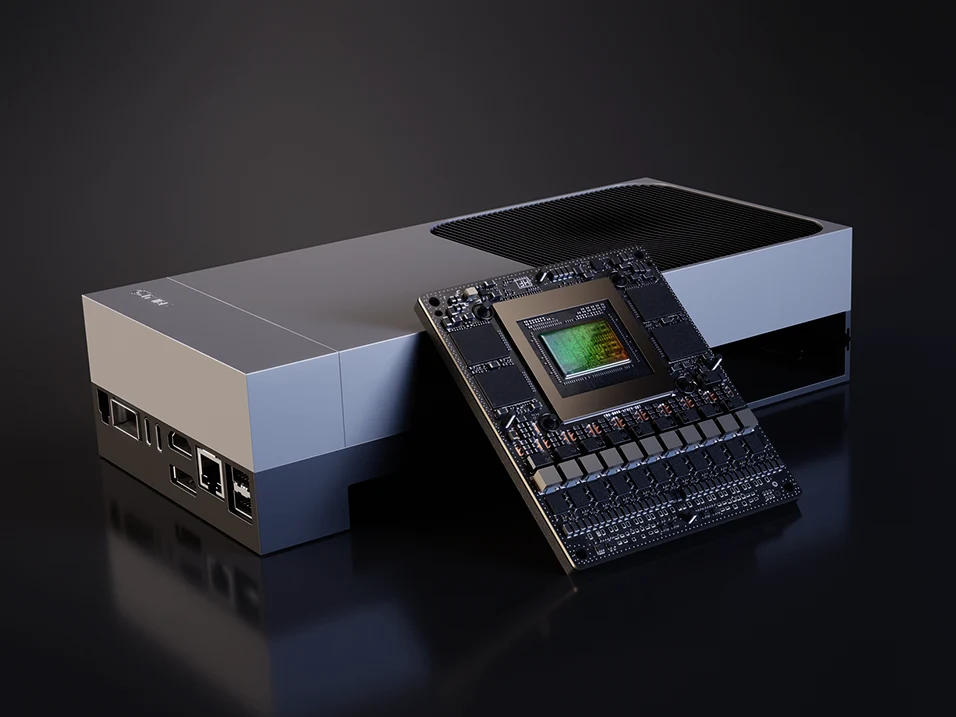
    Nvidia has introduced the Jetson Thor series, which focuses on “physical AI” through compact modules comparable to laptops. These modules can handle up to 2,070 FP4 tera-operations per second and come with 128 gigabytes of memory, all while operating within a power range of 40 to 130 watts. Nvidia presents Thor as a major improvement over AGX Orin, boasting about 7.5 times the AI computing power and 3.5 times better energy efficiency. This allows robots to execute complex models locally without depending on cloud services.

    Powerful Specifications

    The Jetson AGX Thor includes a Blackwell GPU paired with a 14-core Arm CPU, which provides excellent memory bandwidth and clock speeds. These features make it possible for robots to run various AI tasks related to language, vision, and control at the same time without experiencing any slowdowns.

    Compact and Efficient Design

    Maintaining the small size of earlier Jetson models, Thor doubles the power range of Orin to achieve its performance goals. Nvidia aims to support real-time multi-AI workflows, enhancing the ability of machines to interact safely with humans.

    Nvidia has announced that production modules and development kits for the new Jetson platform are already available. Notable early users include Amazon, Meta, John Deere, OpenAI, and Boston Dynamics. Agility Robotics is planning to use Thor in its sixth-generation Digit humanoid aimed at warehouse tasks, while Boston Dynamics is developing a new version of Atlas to work with Thor. The pricing is set at $2,999 for each Jetson Thor T5000 module when ordered in 1,000-unit batches, and $3,499 for AGX Thor development kits.

    Versatile Applications

    Nvidia refers to this chip as a “robot brain,” and the description fits perfectly: it enables edge-class generative models, large language models, and high-throughput vision to work together on a single module. This capability opens up applications that need low latency, such as humanoid robots, agricultural automation, and surgical assistance, where timing is crucial and missing a frame could lead to errors.

    The main advantage is evident: teams can swiftly move from the development phase to production, using the same software for both perception and planning. Nevertheless, there are considerable risks. The increased power of Thor could potentially enhance autonomous systems for both beneficial and harmful purposes, as demonstrated by Jetson Orin in conflict regions. The effect on employment is unclear; while some jobs may remain, tasks might become more monotonous. Strong safeguards, vigilant oversight, and clear accountability are vital as these technologies continue to evolve.

    Source:
    Link


  • Nvidia Launches Photonics Switches for Scalable AI Networks

    Nvidia Launches Photonics Switches for Scalable AI Networks

    Key Takeaways

    1. Nvidia launched Spectrum-X Photonics Ethernet and Quantum-X Photonics InfiniBand switches to enhance data center connectivity using light technology, targeting AI factories and reducing energy consumption.

    2. Scaling up data center performance is challenging due to signal loss in copper connections, which can reach around 22 decibels, increasing power requirements and failure risks.

    3. Co-packaged optics (CPO) improve efficiency by placing optical engines next to switch chips, reducing electrical loss to about four decibels and power usage per port to around nine watts, leading to significant gains in energy efficiency and signal quality.

    4. Spectrum-X Photonics offers high bandwidth for Ethernet networks, achieving up to 400 Tb/s in large configurations, while Quantum-X Photonics focuses on 800 Gb/s InfiniBand connections, featuring liquid cooling and in-network computing capabilities.

    5. Nvidia’s future plans include advancing optical technology through stages, aiming for higher speeds and lower latencies, and collaborating with various companies to streamline manufacturing and enable scalable networks with millions of GPUs.


    Nvidia is on a mission to change how data centers connect by using light technology. In March 2025, they launched the Spectrum-X Photonics Ethernet and Quantum-X Photonics InfiniBand switches. These devices are made to link extensive “AI factories” located in various areas and support millions of GPUs while cutting down energy consumption and expenses. The main goal is to combine optical engines with switch chips, which helps in removing unnecessary electrical components.

    The Challenge of Scaling Up

    Scaling up is quite a big challenge. Once speeds reach 800 gigabits per second or higher, copper connections between servers and switches start to hinder performance. Signals weaken as they make their way through boards and connectors. This loss occurs even before the signal gets to the optical module. Nvidia mentions that this loss is around 22 decibels on 200-gigabit channels. As a result, more power is required, with each port consuming roughly 30 watts. Additional components also heighten the chances of failures.

    Innovations with Co-packaged Optics

    Co-packaged optics, or CPO, transforms this arrangement. By positioning the optical engine right next to the switch chip, signals are sent to the fiber almost instantly. This setup minimizes electrical loss to about four decibels and cuts down power use per port to around nine watts. Nvidia claims that, when scaled up, this method delivers roughly 3.5 times better energy efficiency, over 60 times improved signal quality, 10 times greater resilience due to fewer active components, and around 30 percent quicker setup time, since there’s less to construct and keep running.

    Spectrum-X Photonics for Ethernet

    For Ethernet applications, Spectrum-X Photonics is targeted at large, multi-tenant networks. Nvidia states it provides about 1.6 times more bandwidth per area than traditional Ethernet. The options include configurations such as 128 ports at 800 Gb/s or 512 ports at 200 Gb/s, achieving a total of 100 Tb/s. Larger configurations can expand to 512 ports at 800 Gb/s or up to 2,048 ports at 200 Gb/s, reaching a total of 400 Tb/s.

    Quantum-X Photonics for InfiniBand

    Focusing on InfiniBand, Quantum-X Photonics centers around 800 Gb/s connections and employs liquid cooling, which uses liquid coolant to dissipate heat. Its leading switch features 144 ports and can manage 115 Tb/s of data. It also incorporates in-network computing, allowing data processing within the network, rated at 14.4 trillion floating-point operations per second. The system utilizes Nvidia’s latest SHARP (Scalable Hierarchical Aggregation and Reduction Protocol) technology to speed up group tasks across the network.

    Future Plans and Partnerships

    Nvidia asserts that this new generation is twice as fast and five times more scalable for AI networks compared to the last one. The scalability improvement is closely tied to TSMC’s COUPE platform and modern packaging techniques. In the first stage, optical engines in OSFP modules will achieve 1.6 Tb/s. The second stage will introduce co-packaged optics on the motherboard, with capabilities of 6.4 Tb/s. The third stage aims for 12.8 Tb/s within processor packages, which will further minimize latency and energy usage. Nvidia plans to roll out CPO-based Quantum-X switches in early 2026 and Spectrum-X Photonics later that year, both featuring liquid cooling.

    Nvidia is collaborating with several companies, including TSMC, Coherent, Corning, Fabrinet, Foxconn, Lumentum, SENKO, SPIL, Sumitomo Electric, TFC, and others for manufacturing, optics, and assembly. The aim is to eliminate thousands of individual components from large clusters, accelerate setup, and enable networks with a million GPUs without excessive power usage.

    Source:
    Link


  • Nvidia’s Rubin Architecture Taped Out with Six Chips at TSMC

    Nvidia’s Rubin Architecture Taped Out with Six Chips at TSMC

    Key Takeaways

    1. Nvidia has taped out six unique Rubin architecture chips, currently being tested at TSMC for trial production.
    2. The redesign includes CPUs, various GPU versions, an upgraded NVLink switch, networking silicon, and a silicon-photonics processor, marking a significant architectural overhaul.
    3. The Rubin R100 GPUs will feature next-generation HBM4 stacks, improving bandwidth and power delivery compared to HBM3E.
    4. The Rubin platform is designed to meet the growing demands of large data centers for AI workloads, with enhanced software tools for developers.
    5. Nvidia plans to launch the Rubin chip family around 2026, with Rubin Ultra following in the next year, depending on TSMC’s production readiness.


    Nvidia’s chief executive, Jensen Huang, shared exciting news during his recent trip to Taiwan. He announced that the company has successfully taped out six unique Rubin architecture chips. Currently, these chips are at TSMC, where they are being tested and getting ready for trial production.

    Major Architecture Changes

    This development signifies a complete redesign of the architecture, moving beyond the usual small GPU updates. Instead of merely enhancing the GPU, this overhaul includes CPUs, various GPU versions, an upgraded NVLink switch, networking silicon, and a silicon-photonics processor to allow for optical connections at the rack level. For the first time, Nvidia will use a chiplet design, taking advantage of TSMC’s cutting-edge 3nm N3P process node with CoWos-L packaging. The architecture is designed with a larger 4x reticle, which is an increase from the Blackwell’s 3.3x reticle size.

    Advanced Features and Performance

    The new Rubin R100 GPUs are set to feature next-generation HBM4 stacks, with specially designed base dies to support enhanced bandwidth and power delivery at larger scales compared to the current HBM3E. This new platform is anticipated to be a significant advancement, similar to the leap Hopper made in computational power. Testing for thermal performance, power usage, and interconnect efficiency has already begun.

    Future Plans and Launch Timeline

    The Rubin platform is aimed at satisfying the increasing demands of large data centers as AI workloads continue to grow. Nvidia is also enhancing its software tools, enabling developers to utilize the new features and connections immediately.

    Nvidia is targeting a launch for the Rubin chip family around 2026, with Rubin Ultra following in the subsequent year. However, this timeline is contingent on TSMC’s production capabilities and readiness. During his visit, Huang expressed gratitude towards TSMC staff for their critical contribution to the Rubin project.

    Source:
    Link


  • FugakuNEXT: Japan’s $740M Supercomputer Targets Zetta-Scale with Nvidia

    FugakuNEXT: Japan’s $740M Supercomputer Targets Zetta-Scale with Nvidia

    Key Takeaways

    1. FugakuNEXT will be Japan’s first flagship supercomputer to use GPUs as accelerators, aiming for 600 exaFLOPS performance by 2030.
    2. The supercomputer will have a development budget of approximately JP¥110 billion ($740 million) and is set to be operational at RIKEN’s Kobe campus.
    3. It aims for over a hundred times the application performance of the existing Fugaku, leveraging a five-fold hardware enhancement and significant software optimizations.
    4. Powered by Fujitsu’s FUJITSU-MONAKA-X CPUs and Nvidia-designed GPU accelerators, it will utilize advanced memory technologies for efficient CPU-GPU interconnectivity.
    5. FugakuNEXT will support research in earthquake simulation, manufacturing optimization, and climate modeling, promoting Japan’s semiconductor independence and international collaboration.


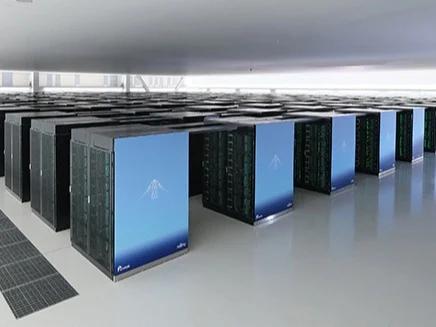
    RIKEN, Fujitsu, and Nvidia have teamed up to create the FugakuNEXT supercomputer, marking the first time a Japanese flagship system will use GPUs as accelerators. This new machine is intended to succeed Japan’s current Fugaku supercomputer, which is ranked 7th in the world. The development budget for FugakuNEXT is about JP¥110 billion, which is roughly $740 million based on current currency rates. It is planned to be operational at RIKEN’s Kobe campus by 2030.

    Performance Goals

    The FugakuNEXT aims for a remarkable 600 exaFLOPS in FP8 precision (sparse) and is projected to be the first supercomputer to achieve “zetta-scale” performance, boasting an application performance increase of over a hundred times compared to the existing Fugaku. This significant boost is expected to come from a five-fold enhancement in hardware and ten to twenty times improvement through software optimizations. The system is also planned to maintain its efficiency within a power envelope of 40MW.

    Cutting-Edge Technology

    Fujitsu’s upcoming FUJITSU-MONAKA-X CPUs, which will follow the still-in-development MONAKA CPU, will power the new supercomputer. Nvidia will be responsible for designing the GPU accelerators, incorporating high-bandwidth integration and NVLink Fusion technology for efficient CPU-GPU interconnectivity. A mix of advanced memory technologies and modern connection systems will be used to create a Hybrid AI-HPC platform that merges simulation and AI functionalities.

    Future Applications

    FugakuNEXT will operate on an “AI for Science” platform aimed at automating research processes, with applications in areas like earthquake simulation, manufacturing optimization, and climate modeling. This project showcases Japan’s strategic move towards semiconductor independence, promoting international collaboration with the US Department of Energy, while also working to cultivate a global AI-HPC ecosystem.

    The foundational design for the supercomputer is anticipated to be finalized by 2025, with the detailed design stage commencing in 2026. System operations are projected to kick off around 2030. To assist in early software development, a virtual cloud environment known as ‘Virtual Fugaku’ will be made available, which may include future integration of quantum computing to enhance QC-HPC capabilities.

    Source:
    Link


  • SoftBank Stake Sparks Intel Foundry Deal Speculation

    SoftBank Stake Sparks Intel Foundry Deal Speculation

    Key Takeaways

    1. SoftBank plans to acquire $2 billion in Intel shares, aiming for a 2% ownership stake, and is exploring potential partnerships related to Intel’s contract chipmaking division.

    2. The US government is considering converting some CHIPS Act grants into a 10% non-voting equity stake in Intel, but this proposal faces skepticism regarding its legality.

    3. Intel has struggled to utilize its manufacturing capacity effectively since opening its fabs to external clients in 2021, leading to concerns about its advanced process technologies.

    4. SoftBank’s broader strategy focuses on developing AI infrastructure, with past collaborations and investments in companies like OpenAI and Nvidia, while shifting from Intel to TSMC for AI accelerator projects.

    5. Despite SoftBank’s investment signaling confidence in Intel’s leadership, the company still faces challenges in the competitive AI market and continues to lose ground to AMD in PCs and servers.


    SoftBank is looking to acquire approximately $2 billion worth of Intel shares, which represents around a 2 percent ownership stake. This comes after Masayoshi Son had discussions with chief executive Lip-Bu Tan about the potential purchase of the US company’s contract chipmaking division. According to sources with knowledge of the situation, discussions included possibilities ranging from joint ventures to minority investments, leaving the door open for a future agreement regarding Intel Foundry.

    CHIPS Act Evaluations

    In a separate development, Washington is reviewing the possibility of turning some CHIPS Act grants into a 10 percent, non-voting equity stake in Intel. Analysts have responded to this proposal with skepticism, raising questions regarding its legality. Commerce Secretary Howard Lutnick stated that this plan aligns with President Trump’s perspective that taxpayers deserve equity in exchange for federal assistance.

    Intel’s Manufacturing Challenges

    Since opening its fabs to external clients in 2021, Intel has faced difficulty in utilizing its capacity, despite significant capital expenditures. The expenses associated with new facilities and financial struggles have led Tan to caution that Intel might pull back from its most advanced process technologies. Internally, the company remains its own largest customer, and the success of technologies like 18A and 14A depends on securing outside contracts.

    SoftBank’s Broader Strategy

    For Son, forming a foundry partnership fits into a larger strategy aimed at creating comprehensive AI infrastructure. SoftBank has investments in OpenAI and Nvidia, owns Arm, and is spearheading the $500 billion Stargate data-center initiative in the US. The group considered collaborating with Intel on an AI accelerator in 2024 but switched to TSMC after losing confidence in Intel’s output and performance. Additionally, SoftBank acquired Graphcore for its accelerator technology. TSMC continues to lead in cutting-edge production and is increasing output in Arizona for clients like Nvidia and Apple.

    SoftBank presents its investment in Intel as a sign of faith in Tan’s ability to turn the company around. “Masa and I have been working together for a long time, and I value the trust he has in Intel,” Tan remarked. However, Intel still lags behind Nvidia in the AI sector and continues to lose market share to AMD in both PCs and servers, which puts ongoing pressure on its performance.

    Source:
    Link


  • Nvidia Launches Blackwell Accelerators for China Amid Export Limits

    Nvidia Launches Blackwell Accelerators for China Amid Export Limits

    Key Takeaways

    1. Nvidia is developing new accelerators for China based on its Blackwell design, aiming to outperform the current H20 while complying with U.S. export limits.

    2. New models include the B30A single-die version and the RTX 6000D, which focus on inference and professional graphics. Test samples are expected to be delivered to Chinese clients in September, pending regulatory approvals.

    3. The products are designed to meet U.S. export regulations, with the RTX 6000D achieving a memory bandwidth just under the 1.4 TB limit.

    4. President Trump suggested allowing smaller components for China and proposed a revenue-sharing model with the U.S. government, raising concerns about maintaining U.S. AI technology advantages.

    5. Nvidia aims to retain Chinese developers to prevent a shift to local competitors like Huawei, despite security concerns from Chinese authorities regarding Nvidia’s hardware.


    Nvidia is said to be working on new accelerators specifically for China, based on its Blackwell design. These devices are intended to outperform the current H20 while still adhering to U.S. export limits, as reported by insiders mentioned by Reuters. This initiative highlights the ongoing tensions over access to AI hardware in the U.S.-China tech landscape.

    New Models in Development

    There are indications of several new models being developed. One of them, a single-die version known as B30A, is expected to offer about half the raw computing power of the dual-die B300 while retaining its high-bandwidth memory and NVLink connectivity. Nvidia is looking to deliver test samples to Chinese clients as soon as September, provided they get the necessary regulatory approvals. There is also another Blackwell variant, the RTX 6000D, which aims to focus on inference and professional graphics applications.

    Compliance with Export Restrictions

    The technical features of these products seem to be designed with U.S. export regulations in mind. According to Reuters, the RTX 6000D uses standard GDDR memory and achieves a memory bandwidth of 1,398 GB/s, just under the 1.4 TB limit established in April. The single-die setup of the B30A will also inherently limit its throughput and capability compared to the B300. The initial shipments of the RTX 6000D to selected Chinese customers are expected in September.

    Recently, President Donald Trump suggested the possibility of allowing smaller next-gen components for China and proposed that 15 percent of revenue from China-sourced chips from Nvidia and AMD go to the U.S. government. Legislators from both parties have expressed concerns that even limited accelerator availability could diminish the United States’ advantage in artificial intelligence technology.

    Importance of the Chinese Market

    Nvidia believes that it needs to retain Chinese developers within its ecosystem to avoid a shift toward local competitors. Huawei has made significant progress, with some of its models nearing Nvidia’s computational capabilities, although experts still identify weaknesses in software and memory bandwidth. Meanwhile, Chinese state media have raised security concerns regarding Nvidia’s hardware, and government officials have warned businesses against purchasing the H20, complicating Nvidia’s sales strategy.

    Nvidia maintains that it regularly assesses its product lineup “to be ready to compete within the boundaries set by governments,” and emphasizes that all its products are provided with full authorization for “beneficial commercial use.” The company got the green light in July to resume H20 sales after a sudden halt in April, with China contributing 13 percent of Nvidia’s revenue in the previous fiscal year, underscoring the significance of this market.

    Source:
    Link


  • Nvidia App Beta Adds Global DLSS Overrides for RTX 4000 GPUs

    Nvidia App Beta Adds Global DLSS Overrides for RTX 4000 GPUs

    Key Takeaways

    1. Nvidia is simplifying DLSS feature activation across all compatible games using global toggles in the Nvidia App.
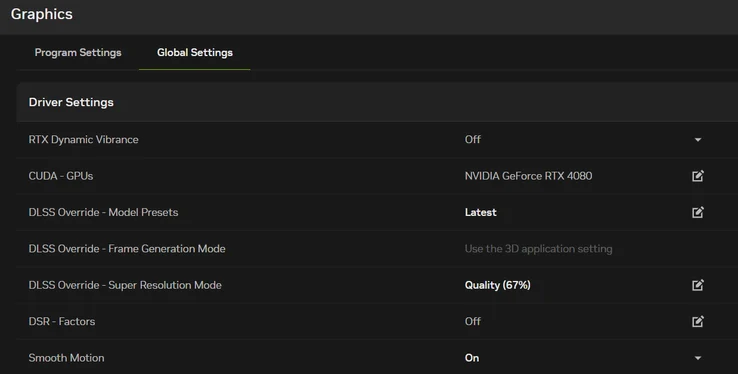
    2. The beta version of the Nvidia App now supports Smooth Motion on RTX 4000 GPUs, previously only available on RTX 5000 cards.
    3. Users must update to GeForce Game Ready Driver version 581.08 and opt-in for the beta version via the Nvidia App settings.
    4. The DLSS override toggle allows gamers to enable new DLSS features globally instead of for each game individually.
    5. The new feature generates an extra frame between two rendered frames and is compatible with various upscalers, but only for DX 11, DX 12, and Vulkan games.


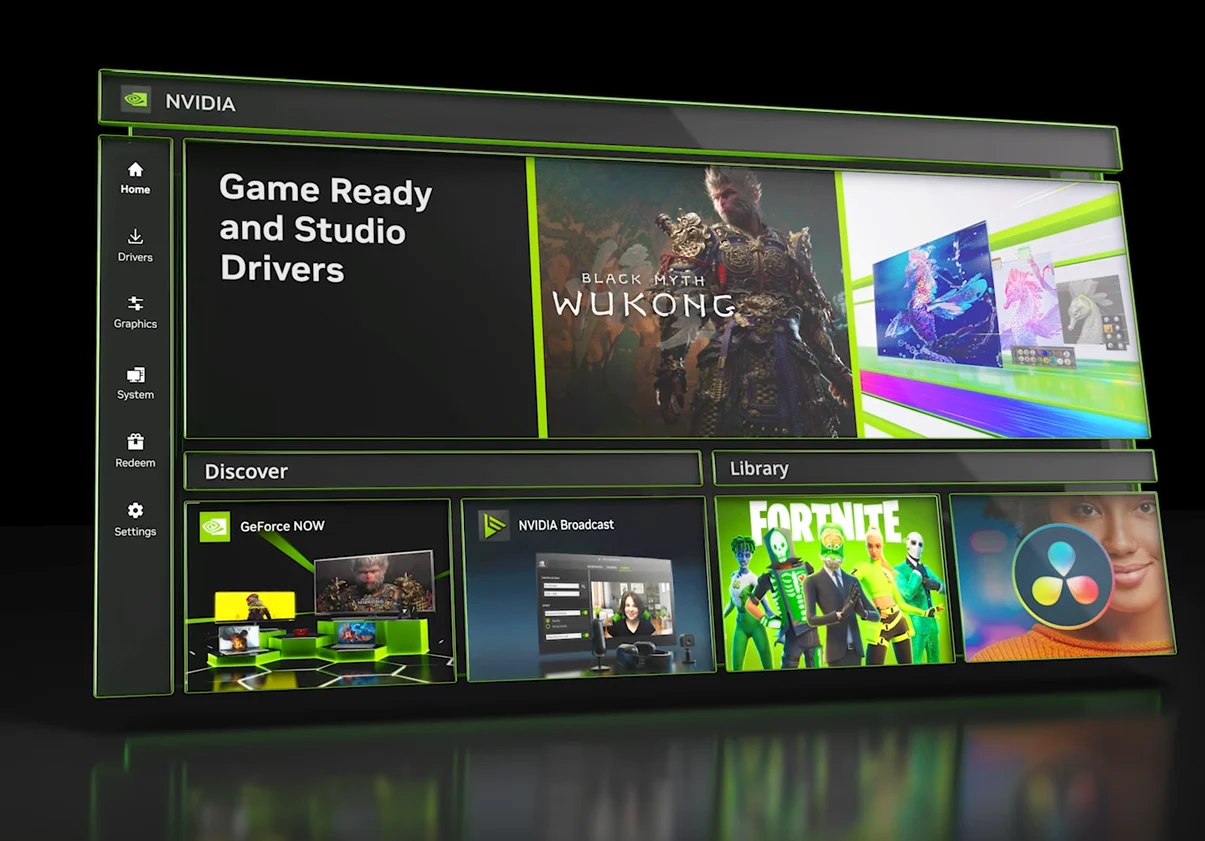
    Nvidia is simplifying the process of enabling DLSS features for all compatible games through the Nvidia App by introducing various global toggles. Furthermore, the latest beta version of the Nvidia App has rolled out support for Smooth Motion on RTX 4000 GPUs, a feature that was previously exclusive to RTX 5000 cards.

    Update Requirements

    To utilize these new capabilities, users must update their GeForce Game Ready Driver to version 581.08. They also need to opt-in for the beta version from the Nvidia App by navigating to Settings > About. A stable non-beta version is set to be released next week and will update automatically.

    DLSS Overrides

    With the introduction of the DLSS override toggle in Graphics > Global Settings, gamers can now enable the newest DLSS features across all supported titles (including future releases) instead of adjusting settings for each game individually. Here’s a brief overview of the global overrides that are available for activation:

    Users can conveniently check the status of their DLSS overrides through the Alt + Z overlay by going to Statistics > Statistics View > DLSS.

    Additional Features

    This new feature is particularly beneficial for titles that lack DLSS Frame Generation, as it generates an extra frame between two already rendered frames. It can also be activated from the Global Graphics Settings tab and functions without any upscalers. It is compatible with DLSS Super Resolution, FSR, or XeSS. However, please note that it is only applicable to DX 11, DX 12, and Vulkan games. Additionally, users must ensure that Hardware-accelerated GPU Scheduling is enabled in the Windows 11 Display settings.

    Source:
    Link


  • Nvidia Cuts RTX 50 Prices by Up to 10% in Europe, Save EUR 230

    Nvidia Cuts RTX 50 Prices by Up to 10% in Europe, Save EUR 230

    Key Takeaways

    1. Nvidia is launching the RTX 50 Super series soon, featuring lower prices and more VRAM, leading to high demand.
    2. The RTX 5090, RTX 5080, and RTX 5070 have had their prices cut by at least 9% in Europe, making them more affordable.
    3. The RTX 5090’s price dropped from EUR 2,320 to EUR 2,099, while the RTX 5080 and RTX 5070 saw reductions to EUR 1,059 and EUR 589, respectively.
    4. The price cuts may be due to the Euro’s strength against the USD or Nvidia’s attempt to clear existing stock for the new RTX 50 Super series.
    5. Gamers in Europe benefit from these price reductions, which address the typically higher costs of PC components in the region.


    We recently mentioned that Nvidia is planning to launch the RTX 50 Super series in the next few months, featuring lower prices and additional VRAM. However, because the RTX 50 Super cards are expected to offer better price-to-performance ratios, demand is likely to be high. This means that securing something like the RTX 5080 Super might not be so simple. But for those in Europe, waiting for the RTX 50 Super GPUs may not be necessary, as Nvidia has announced price cuts for three RTX 50 series cards specifically for the European market.

    Price Changes for RTX 50 Series

    The GPUs affected by this price change are the RTX 5090, RTX 5080, and RTX 5070. Each of these graphics cards is now priced at least 9% lower than before, with the RTX 5090 experiencing the largest drop. Its new price is EUR 2,099, down from EUR 2,320, which is a 9.9% reduction. The RTX 5080 now costs EUR 1,059, reflecting a decrease of 9.4%, while the RTX 5070 has dropped to EUR 589, a 9.2% reduction. Other RTX 50 models, such as the RTX 5070 Ti and the RTX 5060 Ti, have not had their prices changed.

    Possible Reasons for the Adjustments

    Nvidia hasn’t provided a clear explanation for these price changes, but VideoCardz suggests that it may be linked to the Euro’s strong performance against the USD. Over the past six months, the Euro has appreciated around 10%, which could be a significant factor behind Nvidia’s decision to lower the prices of the RTX 50 series cards.

    On the other hand, Nvidia might also be trying to clear out existing stock to make way for the new RTX 50 Super series. The initial scarcity of the RTX 50 series appears to have mostly ended, as availability has significantly improved. The previously hard-to-find RTX 5090 is now readily available on sites like Amazon. Similarly, other models such as the RTX 5070 and RTX 5060 Ti are also easily obtainable at their official MSRPs.

    Good News for Gamers

    Regardless of the actual reasons behind the recent price reductions for the RTX 50 series, this is certainly positive news for gamers in Europe, who often face higher prices for PC components compared to their counterparts in the US.

    Source:
    Link


  • Nvidia Unveils Voice-Driven NPCs and RTX Remix at Gamescom

    Nvidia Unveils Voice-Driven NPCs and RTX Remix at Gamescom

    Key Takeaways

    1. Nvidia is launching an on-device ACE speech pipeline and RTX Remix particle system at Gamescom, aimed at enhancing modding for 165 classic games.
    2. The ACE speech pipeline will be used in the upcoming game “The Oversight Bureau,” allowing for fast, context-based character dialogues without menus.
    3. RTX Remix is an open-source toolkit that enables modders to edit particle effects in older games, integrating with popular tools like Adobe Substance 3D.
    4. The Remix particle editor allows customization of various particle attributes, and a $50,000 Remix Mod Contest highlights community projects.
    5. The future success of these tools depends on their adoption by development teams and modders in both current and upcoming remasters.


    Two fresh updates from Nvidia are making their debut at Gamescom: an on-device ACE speech pipeline and a RTX Remix particle system. These tools are designed to provide modders with editable and physically-accurate particles across 165 classic games. Both of these innovations are set to launch in September.

    ACE Speech Pipeline

    Nvidia’s generative AI toolkit, ACE, is being utilized in an upcoming dialogue-intensive puzzle game called The Oversight Bureau, developed by Iconic Interactive. In this game, players converse with characters; the speech-to-text technology feeds into Iconic’s narrative engine, which then picks pre-recorded lines that match the situation. This process operates locally on RTX PCs and aims for response times under one second. It allows the original writing to remain central while giving players a way to carry on conversations without needing menus or dialog wheels. The Oversight Bureau is scheduled for release later this year and will be available for play at Nvidia’s B2B suite during Gamescom.

    RTX Remix Particle System

    In addition, Nvidia is introducing RTX Remix, its open-source remastering toolkit. This initiative is boosting community efforts to support older games and includes integration with popular art tools such as Adobe Substance 3D. Also launching in September is a Remix particle editor for 165 classic titles that previously didn’t have one. Modders will have the ability to modify appearance, size, quantity, emission, turbulence, and gravity, along with lighting that aligns with path-traced scenes. Recent community contributions feature glow and emit effects, and increased format support. Nvidia’s $50,000 Remix Mod Contest at Gamescom highlighted projects like Painkiller RTX. If you’re curious, you can explore all mod submissions on ModDB.com.

    Future Adoption

    The key question now is how widely these tools will be adopted. It remains to be seen how many development teams will integrate ACE into their narrative systems and how swiftly modders will implement the new particle tools into both current and upcoming remasters.

    Source:
    Link