
Key Takeaways
1. FugakuNEXT will be Japan’s first flagship supercomputer to use GPUs as accelerators, aiming for 600 exaFLOPS performance by 2030.
2. The supercomputer will have a development budget of approximately JP¥110 billion ($740 million) and is set to be operational at RIKEN’s Kobe campus.
3. It aims for over a hundred times the application performance of the existing Fugaku, leveraging a five-fold hardware enhancement and significant software optimizations.
4. Powered by Fujitsu’s FUJITSU-MONAKA-X CPUs and Nvidia-designed GPU accelerators, it will utilize advanced memory technologies for efficient CPU-GPU interconnectivity.
5. FugakuNEXT will support research in earthquake simulation, manufacturing optimization, and climate modeling, promoting Japan’s semiconductor independence and international collaboration.
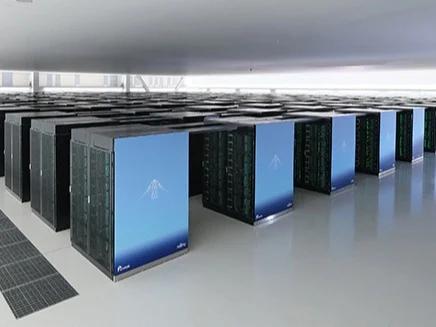
RIKEN, Fujitsu, and Nvidia have teamed up to create the FugakuNEXT supercomputer, marking the first time a Japanese flagship system will use GPUs as accelerators. This new machine is intended to succeed Japan’s current Fugaku supercomputer, which is ranked 7th in the world. The development budget for FugakuNEXT is about JP¥110 billion, which is roughly $740 million based on current currency rates. It is planned to be operational at RIKEN’s Kobe campus by 2030.
Performance Goals
The FugakuNEXT aims for a remarkable 600 exaFLOPS in FP8 precision (sparse) and is projected to be the first supercomputer to achieve “zetta-scale” performance, boasting an application performance increase of over a hundred times compared to the existing Fugaku. This significant boost is expected to come from a five-fold enhancement in hardware and ten to twenty times improvement through software optimizations. The system is also planned to maintain its efficiency within a power envelope of 40MW.
Cutting-Edge Technology
Fujitsu’s upcoming FUJITSU-MONAKA-X CPUs, which will follow the still-in-development MONAKA CPU, will power the new supercomputer. Nvidia will be responsible for designing the GPU accelerators, incorporating high-bandwidth integration and NVLink Fusion technology for efficient CPU-GPU interconnectivity. A mix of advanced memory technologies and modern connection systems will be used to create a Hybrid AI-HPC platform that merges simulation and AI functionalities.
Future Applications
FugakuNEXT will operate on an “AI for Science” platform aimed at automating research processes, with applications in areas like earthquake simulation, manufacturing optimization, and climate modeling. This project showcases Japan’s strategic move towards semiconductor independence, promoting international collaboration with the US Department of Energy, while also working to cultivate a global AI-HPC ecosystem.
The foundational design for the supercomputer is anticipated to be finalized by 2025, with the detailed design stage commencing in 2026. System operations are projected to kick off around 2030. To assist in early software development, a virtual cloud environment known as ‘Virtual Fugaku’ will be made available, which may include future integration of quantum computing to enhance QC-HPC capabilities.
Source:
Link


Leave a Reply