Tag: NVIDIA

  • China’s Non-Technical Firms Look to Nvidia Amid Escalating US-China Technology Conflict

    China’s Non-Technical Firms Look to Nvidia Amid Escalating US-China Technology Conflict

    Chinese Firms Acquiring Nvidia GPUs Amid US-China Tech Conflict

    Several non-tech Chinese firms are turning to Nvidia graphics processing units (GPUs) to bolster their artificial intelligence (AI) capabilities amidst the intensifying tech war between Washington and Beijing. This trend highlights the wider impact of geopolitical tensions on the global technology landscape.

    L&A Design's Strategic Move

    Shenzhen-listed landscape designer L&A Design recently announced a significant investment of 435 million yuan (US$60.5 million) to acquire up to 128 units of Nvidia servers with high-performance GPUs through a subsidiary. The move aims to enhance the company's AI capabilities and navigate the complexities arising from the US-China tech conflict. The purchase will be completed in two phases, with 64 servers expected by 2023 and the remaining servers by the end of 2024, facilitated by Shenzhen Runxin Supply Chain.

    Market Response and Nvidia's Adaptations

    Following the announcement, L&A Design's stock price surged by the daily limit of 20%, indicating investor confidence in the strategic decision. In response to US sanctions, Nvidia has modified its chips, creating the A800 and H800 variants tailored for Chinese clients. However, subsequent controls in October restricted the sale of these modified chips to China, prompting companies like L&A Design to seek alternative sources for their AI development needs.

    Diversification Beyond Tech Firms

    L&A Design is following in the footsteps of Lotus Health, a powdered flavor maker, which previously disclosed a deal to purchase Nvidia H800 GPU-based servers from Chinese server maker H3C. This growing trend highlights the broader impact of the US-China tech conflict on industries beyond the traditional technology sector.

    Global Impact on Nvidia

    As US export restrictions affect Nvidia's lower computing power AI chip products designed for the Chinese market, the company anticipates a significant hit to its fourth-quarter earnings. With over 90% of China's $7 billion market for AI chips, Nvidia faces challenges from both established players and emerging Chinese chip designers.

    Chinese Chip Designers Challenge Nvidia's Dominance

    In response to the challenges faced by Nvidia, Chinese chip designers, including major players like Huawei and Tencent, are aggressively entering the AI chip market. Huawei's Ascend 910B chip and Tencent's Zixiao AI inference chip are positioned as alternatives, with Tencent actively promoting its offerings to attract Nvidia's clients.

    Market Opportunity Amid Restrictions

    Despite potential challenges in winning orders due to production capacity constraints, Chinese chip designers view the current situation as an opportunity. US export curbs inadvertently fuel China's self-development capability, with Chinese tech giants prioritizing sustainability over performance and building AI ecosystems without relying on US chips.

    In essence, the rush of non-tech Chinese firms towards Nvidia GPUs signals a broader reshaping of the global AI landscape, driven by geopolitical tensions and the pursuit of technological self-sufficiency.

  • Upcoming Dates Revealed for NVIDIA GeForce RTX 40 Super Series

    Upcoming Dates Revealed for NVIDIA GeForce RTX 40 Super Series

    Information Leak Unveils Exciting Features of Nvidia’s Upcoming GeForce RTX 40 Super Series Graphics Cards

    Scheduled Announcement Date: January 8, 2024

    Nvidia is gearing up to unveil the RTX 4070 Super, 4070 Ti Super, and 4080 Super during CES on January 8, 2024. Here are the release dates for each:

    • RTX 4070 Super: January 17,
    • 4070 Ti Super: January 24,
    • 4080 Super: January 31.

    Anticipated Enhancements

    Expect significant performance upgrades with these new graphics cards:

    • RTX 4070 Super and 4070 Ti Super are projected to be 14-15% faster than their predecessors,
    • RTX 4080 Super will see a 3-5% speed enhancement.

    Nvidia’s recent foray into the Vietnamese market hints at promising future endeavors.

    Accessible High-Quality Gaming

    The Super series intends to deliver premium gaming experiences at affordable price points, particularly when compared to the RTX 4090. Nvidia’s focus is on empowering gamers and providing exceptional gameplay experiences.

    Keep an eye out for further updates as we near January 2024 and the official launch of the GeForce RTX 40 Super series graphics cards!

  • Nvidia Aims to Expand Tech Presence in Vietnam, Accelerating Growth in Local Chip Sector

    Nvidia Aims to Expand Tech Presence in Vietnam, Accelerating Growth in Local Chip Sector

    Nvidia, a leading name in the semiconductor industry, has announced plans to establish a significant presence in Vietnam, reflecting the country’s increasing importance in the global tech landscape. This move goes beyond expanding Nvidia’s geographical footprint; it represents a commitment to nurturing local talent and fostering an ecosystem that supports semiconductor development and digitalization.

    A Boost for the Local Semiconductor Industry

    By setting up a centre in Vietnam, Nvidia aims to attract global experts and boost the local semiconductor industry. The company recognizes Vietnam’s pivotal role in the global chip assembly sector, with Intel’s largest factory located in the country. Now, Vietnam is looking to expand its capabilities by venturing into chip design and potentially manufacturing, taking advantage of shifting trade dynamics between the United States and China.

    Collaborations and Advancements

    Nvidia’s investment in Vietnam currently stands at $250 million. This investment is expected to bring about collaborations with Vietnamese tech firms and authorities, with the goal of advancing semiconductor technology in various domains. These collaborations will focus on areas such as cloud computing, automotive, and healthcare, leveraging artificial intelligence.

    Vietnam’s Growing Prominence in the Tech World

    The choice of Vietnam as a hub for Nvidia’s expansion is a testament to the nation’s growing prominence in the tech world. In addition to its strategic location, Vietnam offers a pool of talent and an environment conducive to technological advancements. Nvidia sees this move as not just a business expansion, but also as an investment in the future of the semiconductor industry and a recognition of Vietnam’s potential as a key player in this field.

  • NVIDIA’s RTX Technology Achieves Impressive 500-Game Milestone

    NVIDIA’s RTX Technology Achieves Impressive 500-Game Milestone

    Nvidia's RTX technology has reached a significant milestone by now supporting over 500 games and applications. Since its introduction in 2018, RTX has evolved from a specialized feature to a fundamental aspect of gaming experiences. This includes cutting-edge features such as ray tracing, AI, and upscaling, which have revolutionized gaming visuals.

    RTX has played a crucial role in the development of new games that incorporate high-tier graphics. Ray tracing and Deep Learning Super Sampling (DLSS) are the foundational elements of RTX technology. Currently, 380 games utilize ray tracing or DLSS to some extent. However, only two games, Alan Wake 2 and Cyberpunk 2077, fully exploit the capabilities of path ray tracing and DLSS 3.5 with ray reconstruction. These games showcase stunning visual enhancements, especially when played on powerful graphics cards like the RTX 4090.

    In 2018, Nvidia made a significant shift from the GTX to the RTX series, solidifying its commitment to ray tracing as the future of graphic technology. However, the initial adoption of ray tracing was slow, partly due to its demanding nature on GPUs. To address this, Nvidia introduced DLSS, an AI-driven upscaling technology that enhances performance, particularly when ray tracing is enabled.

    Initially, the inclusion of RTX features in games required significant resources from developers, which raised concerns about the widespread adoption of these technologies. Nevertheless, RTX has firmly established itself in the gaming world. The progression from DLSS 1 to DLSS 2, and now DLSS 3 with Frame Generation, showcases Nvidia's continuous innovation. With competitors like AMD introducing similar technologies, frame generation is expected to become a standard feature in PC gaming.

    The impact of RTX technology extends beyond high-end gaming setups. Graphics cards like the RTX 4060 and RTX 4060 Ti greatly benefit from DLSS, which can significantly improve frame rates, ensuring these cards remain relevant for years to come. This boost in performance is crucial, especially for demanding future titles like GTA 6, which is anticipated to be played on a wide range of Nvidia's RTX series, from older to newer models.

  • Chinese Website Removes Nvidia’s RTX 4090

    Chinese Website Removes Nvidia’s RTX 4090

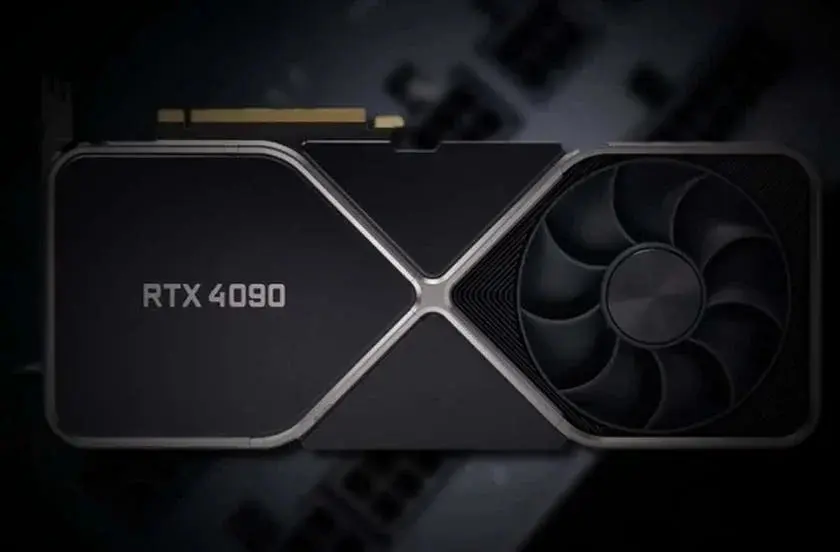
    As the news of the ban on RTX 4090 cards spread throughout the Chinese tech market, Nvidia has taken the card completely off its website. This sudden action has raised concerns about the availability and future supply of this highly sought-after gaming card in China.

    Disappearance of the RTX 4090 from official websites

    The RTX 4090, renowned for its top-of-the-line graphics processing capabilities, is part of Nvidia’s GeForce RTX 40 series. Its sudden disappearance from the official websites has caused unease among Chinese gamers and tech enthusiasts. This move comes at a time when there is already a tight supply in China, which can be attributed to the card’s high performance in graphics applications.

    US export controls and withdrawal speculation

    The situation is further complicated by recent US export controls that impose stricter regulations on the export of advanced graphics chips to China. This has led to speculation that the RTX 4090 might face withdrawal due to these new rules. In addition to this, several of Nvidia’s major hardware partners in China have also removed the RTX 4090 from their online stores, adding to the concerns.

    Resilient demand and availability through unofficial channels

    Despite these challenges, the RTX 4090 can still be found on e-commerce platforms and unofficial channels, although at inflated prices. The availability of the card through these channels indicates a strong demand for the product, despite the regulatory hurdles.

    Significance beyond gaming and data center chip concerns

    Interestingly, the significance of the RTX 4090 extends beyond gaming in China. It plays a crucial role in supporting advanced applications such as autonomous driving, highlighting its importance in various technology sectors. However, the main concern in China still revolves around Nvidia’s data center chips, which are facing surging prices and supply issues.

    Nvidia’s response and development of new data center GPUs

    In response to these challenges, Nvidia is adapting by developing new data center GPUs specifically for the Chinese market. The company plans to ship the first batch of these new GPUs by the end of the year. This strategic move aims to address the supply issues and rising prices faced by data center chips in China.

    Conclusion

    The ban on RTX 4090 cards in China has caused Nvidia to remove the product from its official website, raising concerns about its availability and future supply. The US export controls and withdrawal speculation have further intensified the situation. However, the card can still be found through unofficial channels, indicating a resilient demand. Nvidia is also developing new data center GPUs to address the supply issues faced by its data center chips in China. It remains to be seen how these developments will shape the future of the RTX 4090 in the Chinese market.

    Source: 1, 2

  • Breaking Boundaries: NVIDIA and AMD Set to Unveil ARM-Based Processors for PCs

    Breaking Boundaries: NVIDIA and AMD Set to Unveil ARM-Based Processors for PCs

    In a groundbreaking move, tech giants NVIDIA and AMD are gearing up to launch ARM-based chips for PCs, marking a significant stride in the ongoing rivalry with Intel. This bold venture promises a new horizon of performance and efficiency in the computing realm.

    Embracing the ARM Architecture

    Traditionally, the PC market has been dominated by x86 architecture, primarily from Intel. However, the winds of change are blowing, as NVIDIA and AMD step into the realm of ARM-based chips. ARM’s architecture is renowned for its efficiency and low power consumption, making it a preferred choice for mobile devices. Transitioning this technology to the PC sector signifies a monumental shift, potentially offering consumers more efficient, cooler, and quieter computing solutions.

    NVIDIA’s foray into ARM-based PC chips poses a major new challenge to Intel, which has long held a stronghold on the PC market. As per a recent report from Reuters, NVIDIA’s commitment to developing ARM-based chips is now official, and the tech behemoth aims to diversify its chip offerings, reducing the reliance on the x86 architecture.

    The Competitive Landscape

    The move by NVIDIA and AMD comes at a critical juncture where the battle for market share in the chip industry is intensifying. Intel, once the unrivaled champion in the chip-making realm, now faces fierce competition. The incoming ARM-based chips from NVIDIA and AMD are rumored to hit the market by 2025, according to insights from The Verge. This timeline sets the stage for an exhilarating race in innovation and market positioning among the chip-making titans.

    Moreover, the collaborative effort between NVIDIA and AMD as reported by VideoCardz, highlights a remarkable coalition aimed at disrupting the status quo in the chip industry. The united front presents a formidable challenge to Intel and heralds a new era of processor technology, marked by enhanced efficiency and potentially lower costs for consumers.

    Future Implications

    The shift to ARM-based chips signifies more than just a technical evolution; it’s a pivotal movement in the chip industry’s landscape. The success of these ventures could potentially redraw the competitive boundaries, offering a fresh narrative in the ongoing saga of processor technology evolution.

    Intel, with its rich legacy in the chip industry, is bound to respond to this new challenge, and as such, the next couple of years will be brimming with innovation and strategic moves that could reshape the PC processor market in profound ways.

    The anticipation surrounding the ARM-based chips from NVIDIA and AMD is palpable, and the tech community is keenly watching the developments as they unfold.


    Sources: Reuters, VideoCardz, The Verge

  • NVIDIA TensorRT on Windows: A Major Leap for AI Performance on Consumer PCs

    NVIDIA TensorRT on Windows: A Major Leap for AI Performance on Consumer PCs

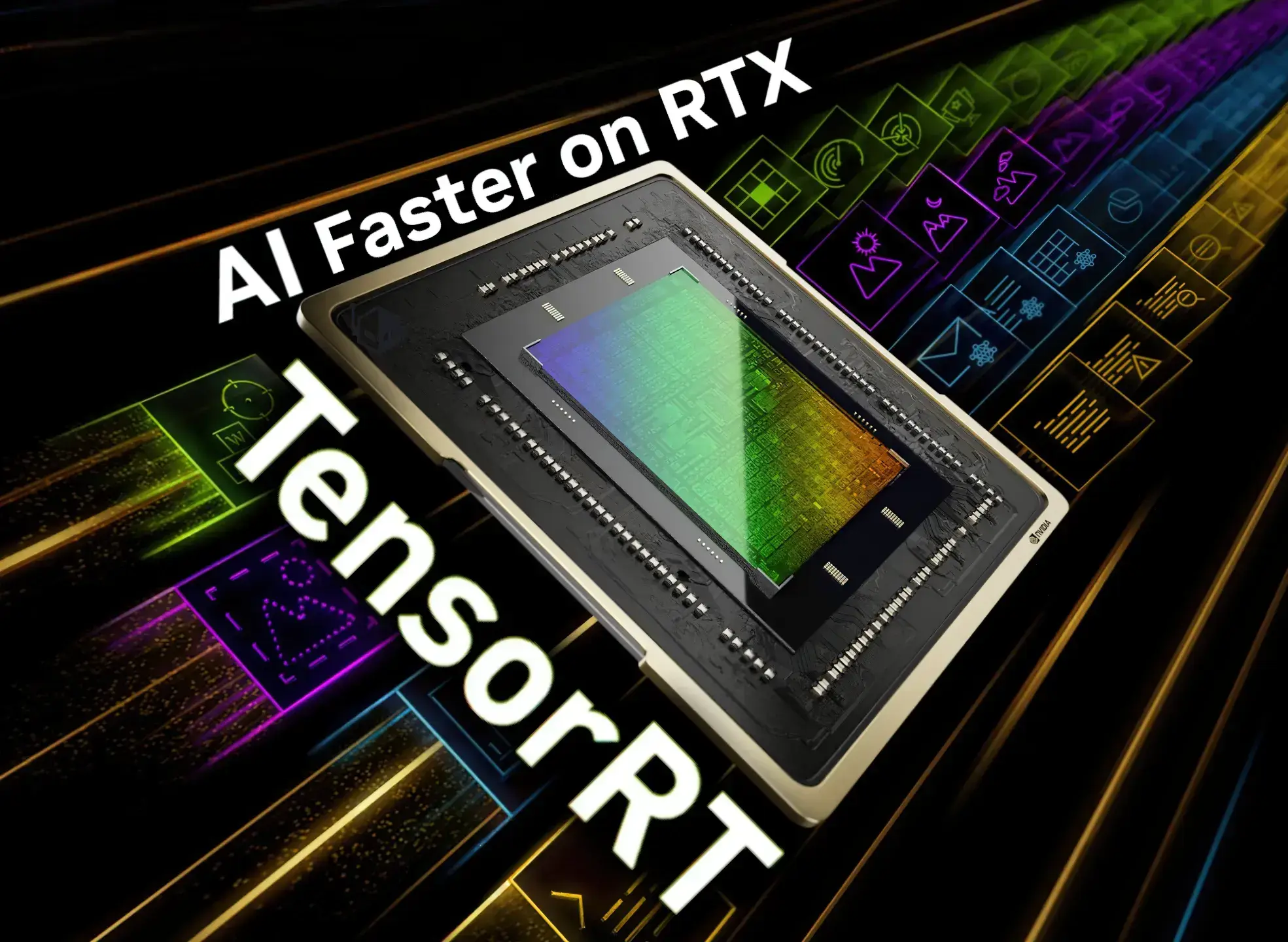
    In recent times, artificial intelligence (AI) has emerged as a driving force in the tech sphere, enabling a plethora of applications that were once considered futuristic. However, the real power of AI comes to the forefront when backed by robust hardware capable of handling the demanding computational loads. NVIDIA, a trailblazer in GPU technology, has made a significant stride in bridging this gap with the introduction of TensorRT Low Level Memory (LLM) on Windows, aimed at bolstering AI performance on consumer PCs.

    Enhanced AI Performance

    With TensorRT LLM, NVIDIA has crafted a pathway for superior AI performance, making it more accessible for Windows users. Previously, the optimization of AI workloads was a domain chiefly navigated by data centers and high-performance computing environments. The new deployment now extends these capabilities to consumer PCs, unleashing a new realm of possibilities for developers and everyday users alike. This advancement is particularly beneficial for those leveraging NVIDIA’s GeForce RTX and RTX Pro GPUs, as it promises a substantial performance boost.

    The key to this enhanced performance lies in the TensorRT LLM’s ability to effectively manage memory usage during AI computations. By minimizing memory footprint and reducing latency, it ensures smoother and faster execution of AI workloads. This is particularly crucial for real-time applications where any delay could be detrimental.


    Stable Diffusion and RTX Improvements

    Alongside the TensorRT LLM, NVIDIA has also unveiled Stable Diffusion technology. This feature aids in refining the rendering of realistic images, a boon for gamers and professionals involved in graphic design. Moreover, the recent update also brought forth improvements in RTX Video Super Resolution, which significantly enhances video quality without a noticeable hit on performance.

    Seamless Integration and Future Prospects

    The integration of TensorRT LLM on Windows is a seamless process, requiring minimal setup. Furthermore, with the release of the NVIDIA GeForce 545.84 WHQL driver, users are treated to an array of additional enhancements including better stability and performance boosts.

    NVIDIA’s continual innovations underscore its commitment to pushing the boundaries of what’s possible with AI on consumer PCs. As AI continues to intertwine with daily life, the importance of having robust and efficient hardware cannot be overstated. The advent of TensorRT LLM on Windows is a testament to NVIDIA’s vision of fostering a conducive environment for AI development, making it an exciting time for tech enthusiasts and professionals in the AI domain.

    With the release of TensorRT LLM on Windows, NVIDIA has not only set a new benchmark in AI performance for consumer PCs but has also paved the way for a future where sophisticated AI applications can be run smoothly on personal computers.

    Sources:

  • Unveiling the Secrets of NVIDIA RTX 4070 and 4080 Super GPUs: A Blend of Power and Performance

    Unveiling the Secrets of NVIDIA RTX 4070 and 4080 Super GPUs: A Blend of Power and Performance

    NVIDIA has always been at the forefront of GPU technology, continuously pushing the boundaries to provide better performance and more powerful graphics processing units. The recent buzz around NVIDIA’s RTX 4070 and 4080 Super GPUs only cements this legacy further. Let’s dive into the leaked information and rumors swirling around these upcoming tech marvels.

    A ‘Super’ Refresh in the Offing

    NVIDIA is reportedly planning a “SUPER” refresh for its RTX 40 series lineup, with the spotlight on the RTX 4070 and 4080 models. This refresh seems to follow the tradition of the ‘Super’ branding, which was first introduced with the RTX 20-series​1​. The leaks suggest that this move might bring about significant upgrades including increased VRAM capacity, higher clock speeds, enhanced memory bandwidth, and a boost in total graphics power (TGP). Specifically, the speculated specifications hint at the RTX 4070 Super boasting 12GB GDDR6X VRAM, the RTX 4080 Super with 20GB GDDR6X VRAM, and the RTX 4070 Ti Super having 16GB GDDR6X VRAM​2​.

    Anticipated Specifications and Performance

    Although the exact specifications remain under wraps, the tech community is brimming with anticipation. It’s rumored that these Super variants could see a substantial uplift in performance, making them a worthy upgrade for enthusiasts and professionals alike. The RTX 4080 Super and RTX 4070 Super models are expected to be revealed and released simultaneously, offering an upgraded version of the existing RTX 40 series GPUs​3​. Moreover, there’s a possibility that the RTX 4080 Super or RTX 4080 Ti might carry the RTX 4090’s AD102 GPU die with a power rating below 450W, hinting at a blend of power and efficiency​4​.

    Skepticism and Optimism Intertwined

    While the excitement is palpable, it’s crucial to take these leaks with a grain of salt. The ‘Super’ branding was notably absent in the RTX 30 series, and the unique naming convention for the RTX 4070 Ti Super is unlike NVIDIA’s usual branding practices. Despite the skepticism, the leaks have ignited hope among gamers and professionals for higher VRAM capacities and better performance. The addition of three more members to the GeForce RTX 40 “Ada Lovelace” GPU family, including the purported RTX 4080 SUPER and RTX 4070 Super models, is eagerly awaited by the tech community​5​.

    The rumored Super refresh of NVIDIA’s RTX 4070 and 4080 GPUs is stirring the waters in the tech world. Although the exact launch date remains elusive, the potential upgrades in VRAM and overall performance make these models a topic of hot discussion among enthusiasts. As we inch closer to a possible reveal, the anticipation only grows stronger, with many waiting to see how NVIDIA will once again redefine the benchmarks of graphical performance.

    GRAPHICS CARDGPU SKUGPU CORESTMUS / ROPSCLOCK SPEED (BOOST)VRAM / BUSBANDWIDTHTGPPRICE (LAUNCH MSRP)LAUNCH
    GeForce RTX 4090Ada Lovelace AD102-30016384512 / 1762520 MHz24 GB GDDR6X / 384-bit1008 GB/s450W$1599 US12th October 2022
    GeForce RTX 4080 SUPERAda Lovelace AD102TBDTBDTBD20 GB GDDR6X? / 320-bitTBDTBD$1199 US?2024
    GeForce RTX 4080Ada Lovelace AD103-3009728320 / 1122510 MHz16 GB GDDR6X / 256-bit736 GB/s320W$1199 US16th November 2022
    GeForce RTX 4070 Ti SUPERAda Lovelace AD103TBDTBDTBD16 GB GDDR6X? / 256-bitTBDTBD$799 US?2024
    GeForce RTX 4070 TiAda Lovelace AD104-4007680240 / 802610 MHz12 GB GDDR6X /192-bit504 GB/s285W$799 US5th January 2023
    GeForce RTX 4070 SUPERAda Lovelace AD103TBDTBDTBD12 GB GDDR6X? / 192-bitTBDTBD$599 US?2024
    GeForce RTX 4070Ada Lovelace AD104-2505888184 / 642475 MHz12 GB GDDR6X / 192-bit504 GB/s200W$599 US13th April 2023
    GeForce RTX 4060 Ti 16 GBAda Lovelace AD106-3504352136 / 482535 MHz16 GB GDDR6 /128-bit288 GB/s165W$499 US18th July 2023
    GeForce RTX 4060 Ti 8 GBAda Lovelace AD106-3504352136 / 482535 MHz8 GB GDDR6 / 128-bit288 GB/s160W$399 US24th May 2023
    GeForce RTX 4060Ada Lovelace AD107-400307296 / 482460 MHz8 GB GDDR6 / 128-bit272 GB/s115W$299 US29th June 2023

    Sources:

  • NVIDIA Blackwell B100 GPUs: The Future of AI Acceleration Takes Shape

    NVIDIA Blackwell B100 GPUs: The Future of AI Acceleration Takes Shape

    The rapid advancements in Artificial Intelligence (AI) have propelled the necessity for more robust and efficient graphical processing units (GPUs). Coming to the forefront of this evolution is NVIDIA with its upcoming Blackwell B100 GPUs. This new generation of GPUs, slated for a release in Q2 2024, aligns with NVIDIA’s historical biennial rhythm of unveiling novel GPU architectures, promising a significant leap forward​1​​2​.

    Accelerating the Pace

    NVIDIA has reportedly expedited the launch of its Blackwell B100 GPUs from Q4 to Q2 2024, a move catalyzed by the burgeoning demand in AI solutions​1​​3​. This acceleration is expected to fortify NVIDIA’s dominion in the AI GPU market, where it already commands over 90% share. The timely release of B100 GPUs, alongside the enduring demand for its predecessor, the A100 accelerators, underscores NVIDIA’s relentless pursuit of catering to the evolving needs of AI applications.

    NVIDIA Blackwell B100 GPUs: The Future of AI Acceleration Takes Shape
    Blackwell B100

    Harnessing Advanced Memory Technology

    A significant highlight of the Blackwell B100 GPUs is the integration of SK Hynix’s High Bandwidth Memory (HBM3e), earmarked for mass production by SK Hynix. The HBM3e DRAM technology is poised to be a game-changer in bolstering the performance of the GPUs, thereby amplifying the GPUs’ capability in handling complex neural networks​1​​4​​3​. Furthermore, the collaboration between NVIDIA and SK Hynix underscores a strategic alliance aimed at pushing the boundaries of GPU memory technology.

    Innovating for the Future

    The incorporation of the TSMC 3 nm process technology in the Blackwell B100 GPUs is emblematic of NVIDIA’s unyielding commitment to spearhead innovation in the GPU arena​5​. Moreover, speculative assertions suggest that the Blackwell GPUs might feature up to 33% more cores, thereby significantly enhancing the computational power essential for AI and High-Performance Computing (HPC) applications​6​.

    The Blackwell B100 GPUs are part of NVIDIA’s broader endeavor to stay ahead of the curve in delivering cutting-edge GPUs that are in sync with the growing demands of AI and HPC applications. As the AI landscape continues to evolve at a breakneck pace, the Blackwell B100 GPUs are poised to be a pivotal part of this ever-evolving narrative.


    Source Links: