Tag: NVIDIA

  • Nvidia Claims H20 Export Ban Didn’t Slow China’s AI Advancement

    Nvidia Claims H20 Export Ban Didn’t Slow China’s AI Advancement

    Key Takeaways

    1. U.S. export controls on H20 data-center GPUs have not effectively slowed China’s AI development and may have reduced U.S. influence in the tech sector.
    2. Significant advancements in China’s AI have continued despite U.S. restrictions, with gray-market channels successfully importing high-end Nvidia GPUs.
    3. Nvidia’s value lies in its integrated platform, encompassing its software stack and not just individual chips, making reverse engineering less effective.
    4. Reports of $1 billion in smuggled Nvidia accelerators suggest that demand has shifted to non-traditional trade routes, questioning the effectiveness of broad export restrictions.
    5. The criticized “diffusion rule” weakened U.S. soft power by improperly categorizing certain countries, emphasizing the need for a global presence to maintain U.S. technology leadership.


    Nvidia has recently shared an op-ed written by Aaron Ginn, who is a co-founder of Hydra Host. In it, Ginn argues that the U.S. export controls on H20 data-center GPUs have not been effective in slowing down China’s AI development. Instead, he claims these controls have diminished U.S. influence in the tech field. Nvidia supported Ginn’s argument in a post on X, stating that Washington’s stance has “stifled U.S. economic and technology leadership.” They also provided a link to his article in the Wall Street Journal.

    Chinese Advancements Unhindered

    Ginn points out that the pause on H20 from April to July 2025 did not stop significant advancements in China. He mentions the strong demand for these GPUs and suggests that gray-market channels have been successful in bringing high-end Nvidia GPUs into China, despite the restrictions. Furthermore, he highlights that advancements made by companies like Z.AI and the launch schedule of DeepSeek show that China’s AI development continued using hardware beyond H20-class components, regardless of U.S. regulations.

    The Value of Nvidia’s Platform

    According to Ginn, Nvidia’s strength isn’t just in any one chip, but rather in its entire integrated platform. He explains that the true value lies in its software stack, including CUDA and other related tools, which are closely linked to its hardware development. Without this software stack, an Nvidia accelerator would simply be an expensive piece of silicon with limited functionality. Focusing on a single GPU as something that can be easily reverse-engineered overlooks the years of work in architecture, firmware, drivers, and ongoing developer support that contribute to its value.

    Market Dynamics and Policy Implications

    Ginn also refers to reports indicating that Chinese purchasers allegedly smuggled around $1 billion worth of Nvidia accelerators over a three-month period. This suggests that demand has merely shifted to non-traditional trade routes. If this is accurate, it implies that broad restrictions are not very effective and that U.S. export limitations might actually be encouraging parallel markets.

    He continues by criticizing the now-repealed “diffusion rule,” which he believes mistakenly categorized countries like Portugal and Switzerland along with conflict zones such as Yemen and Ukraine when it came to GPU access. In his perspective, this rule weakened U.S. soft power and its economic influence. Nvidia’s public statements also seem to support the idea that maintaining a global presence for its “full-stack” platform is crucial for sustaining U.S. leadership in technology.

    Source:
    Link


  • Nvidia GeForce RTX 5090D V2 Pricing Surprises Gamers

    Nvidia GeForce RTX 5090D V2 Pricing Surprises Gamers

    Key Takeaways

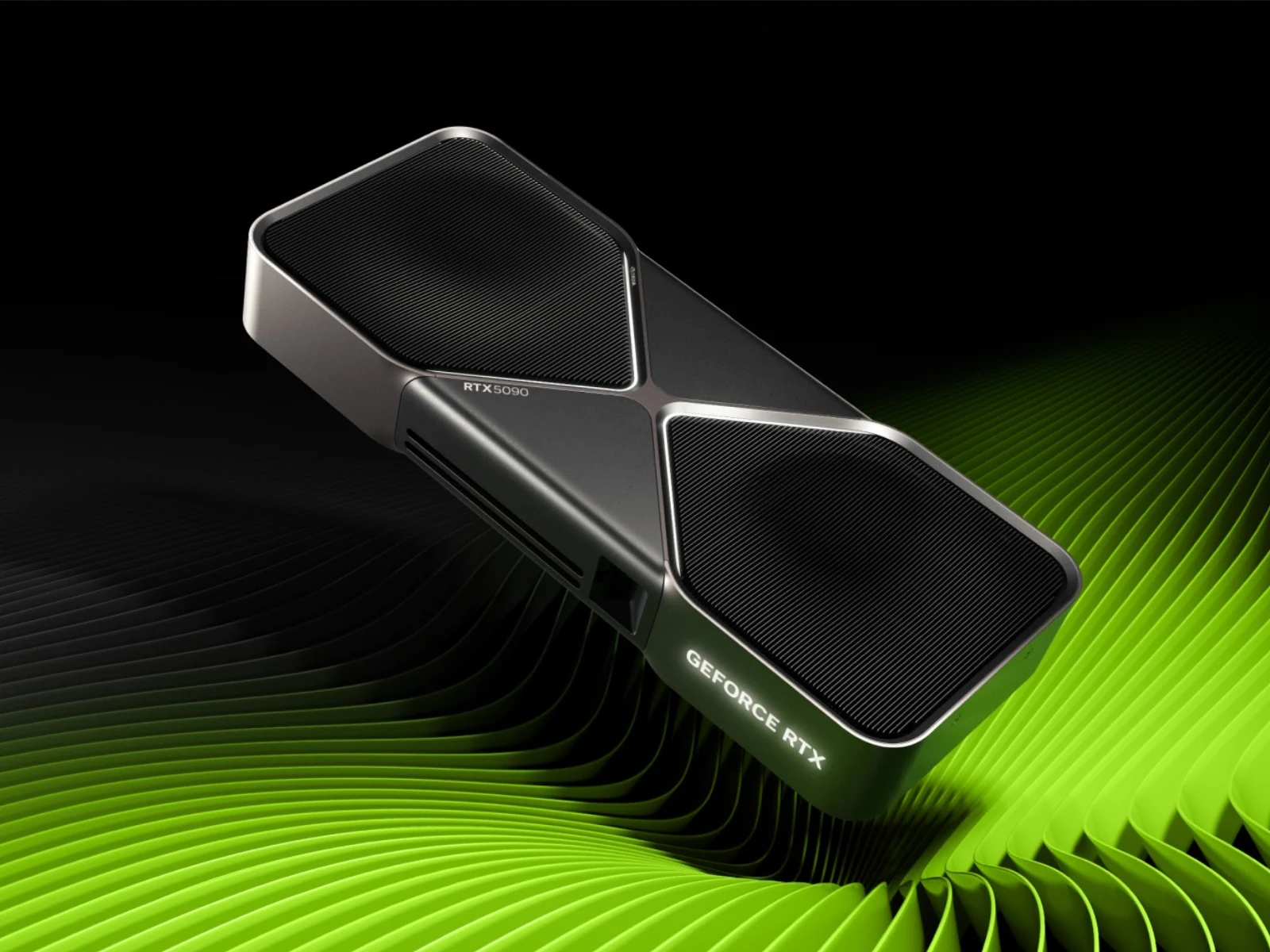
    1. Nvidia is releasing the GeForce RTX 5090D V2, a scaled-back version of the original GeForce RTX 5090D.
    2. The RTX 5090D V2 will have 24 GB of GDDR7 VRAM, operating at 28 Gbps, with a 384-bit memory bus for lower bandwidth.
    3. It will feature the GB202-240 GPU setup, with 21,760 CUDA cores and a 575 W TDP, similar to previous models.
    4. The RTX 5090D V2 will be priced around CNY 16,499 (approximately $2,296), despite its reduced specifications.
    5. Initial retail listings indicate availability in China later this week, with prices from CNY 20,699 to CNY 24,999 ($2,881 to $3,480) from AIB partners.


    Nvidia is about to introduce an updated version of the GeForce RTX 5090D soon. This new model, known as the GeForce RTX 5090D V2, is actually a scaled-back variant of the earlier GeForce RTX 5090. Unlike its predecessor, the original GeForce RTX 5090D shared the same core components as the standard GeForce RTX 5090, which is currently priced at $2,399 on Amazon.

    Specifications Overview

    Recent leaks indicate that the GeForce RTX 5090D V2 will feature a reduction to 24 GB of VRAM. However, this VRAM will still utilize GDDR7 technology, operating at 28 Gbps. Nvidia seems to be restricting the memory bus to 384-bit, leading to a lower memory bandwidth compared to the 1,792 GB/s available in other RTX 5090 models.

    GPU Configuration Details

    Moreover, the GeForce RTX 5090D V2 is expected to come with the GB202-240 GPU setup, which is a step down from the GB202-250 and GB202-300 configurations found in the GeForce RTX 5090D and the GeForce RTX 5090, respectively. Nevertheless, it appears that the 21,760 CUDA cores, 2,375 5th-generation Tensor cores, and a 575 W TDP from the previous models will still be present.

    Market Availability and Pricing

    In summary, the GeForce RTX 5090D V2 is set to be a lesser version of the existing GeForce RTX 5090 and GeForce RTX 5090D. Despite this, initial retail listings suggest that the new variant will be available in China later this week, with a price range between CNY 20,699 and CNY 24,999 (approximately $2,881 to $3,480) from add-in board (AIB) partners like Colorful. Interestingly, Nvidia aims to price the V2 at the same CNY 16,499 (around $2,296) MSRP as the original GeForce RTX 5090D, despite the technical distinctions that set the two apart.

    Source:
    Link


  • Nvidia Rejects US Chip Export Proposal: No Backdoors or Spyware

    Nvidia Rejects US Chip Export Proposal: No Backdoors or Spyware

    Key Takeaways

    1. Nvidia received a request from the Chinese cyberspace authority to clarify concerns about national security threats related to their chips.
    2. Nvidia firmly denies having “backdoors” in their chips that could allow remote access or control.
    3. The company opposes U.S. proposals for government backdoors and argues they would create vulnerabilities that hackers could exploit.
    4. Nvidia cites the failed Clipper Chip program from the 1990s as a lesson against implementing government backdoors in hardware.
    5. The company distinguishes between user-controlled software features and inherent hardware flaws, maintaining there are no security compromises in their products.


    Last week, it was reported by Reuters that the Chinese cyberspace authority officially requested Nvidia to clarify their position, expressing concerns about potential national security threats. In response, a representative from Nvidia stated, “Nvidia does not have ‘backdoors’ in our chips that would give anyone a remote way to access or control them.”

    Nvidia’s Stance on U.S. Proposals

    In a recent blog entry, Nvidia has voiced its disapproval of suggestions made by U.S. lawmakers while also addressing the worries raised by China’s cyberspace regulator. The blog post, which is named “No Backdoors, No Kill Switches, No Spyware,” explains that incorporating such measures would turn into a “gift to hackers and hostile actors,” leading to risky vulnerabilities that are easy to exploit. Nvidia likened this concept to “buying a car where the dealership keeps a remote control for the parking brake,” deeming it an excessive reaction that could jeopardize U.S. economic and national security.

    Historical Context and Lessons Learned

    The chip manufacturer pointed to the unsuccessful Clipper Chip program from the 1990s as a significant example, arguing that the endeavor to implement government backdoors within hardware resulted in centralized weaknesses and eroded user confidence. This historical context reinforces their stance against any measures that could compromise security.

    Differentiating Hardware from Software

    Furthermore, Nvidia dismissed any parallels drawn with smartphone features like “remote wipe,” clarifying that these are user-controlled software options rather than inherent and unmanageable flaws in hardware. In closing, the company emphasized that intentionally compromising essential infrastructure should never be a tactic employed by the government, firmly reaffirming their position: “There are no back doors in Nvidia chips. No kill switches. No spyware.”

    Source:
    Link


  • Samsung HBM3E Demand Surges, Pressuring Prices and Margins

    Samsung HBM3E Demand Surges, Pressuring Prices and Margins

    Key Takeaways

    1. Samsung is increasing HBM3E production faster than market demand, which may lower prices temporarily.
    2. Rising contract prices for standard DRAM will narrow profit margins between HBM3E and regular memory.
    3. Competitors like SK Hynix and Micron are producing 12-stack HBM3E, risking inventory buildup before demand rises.
    4. Samsung’s semiconductor division profits have dropped 94% year-on-year, prompting cost cuts to regain Nvidia’s business.
    5. Samsung is considering price cuts to compete, with future market dominance depending on cost and yield rather than just bandwidth.


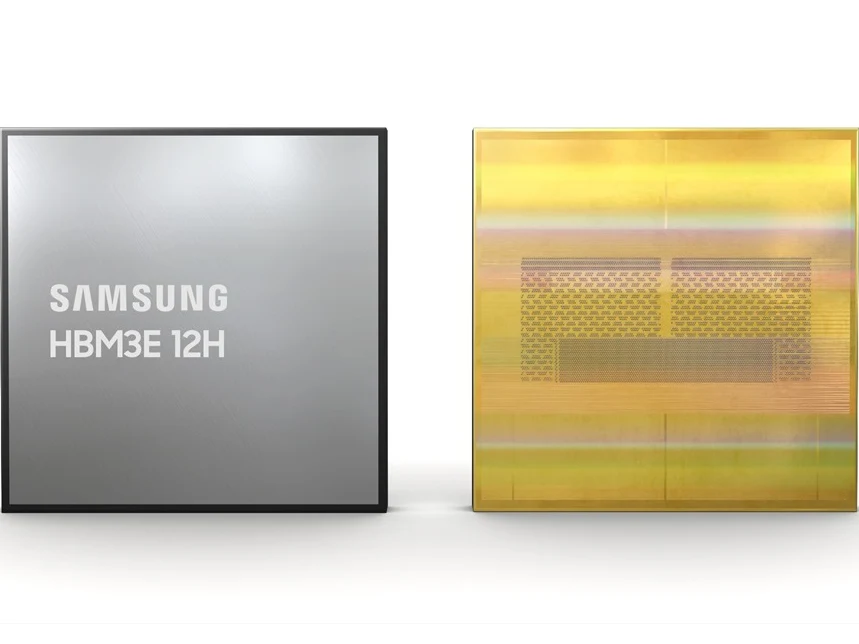
    Samsung informed investors that the production of the fifth-generation HBM3E is increasing quicker than the demand in the market, which the company believes “will affect market prices for the time being.”

    Profitability Concerns

    Management pointed out that the rising contract prices for regular DRAM are going to narrow the previously large profit margin between HBM3E and standard memory in the second half of the year. This will limit the potential for increased margins, even with a rise in volumes.

    Customer Shift and Competitive Landscape

    This alert comes at a time when clients like Nvidia and AMD are moving towards the 12-stack HBM3E for their next-gen AI accelerators. Other competitors, including SK Hynix and Micron, are already producing this denser version in large amounts, which increases the risk of inventory accumulation before the anticipated demand surge happens.

    Internally, Samsung’s semiconductor division is facing challenges: its quarterly operating profit has plummeted by 94 percent year-on-year to 400 billion Korean won ($287 million) due to export controls and inventory adjustments affecting the results. To stop this decline, the company is cutting HBM3E production costs in hopes of regaining Nvidia’s business that has mostly shifted to SK Hynix.

    Growth in Memory Revenue

    Memory revenue has seen an 11 percent increase compared to Q1 as HBM3E shipments have risen. Samsung intends to boost production of 128 GB DDR5, 24 GB GDDR7, and 8-gen V-NAND by the end of the year. A deal worth $16.5 billion to manufacture Tesla’s next-gen AI6 chips in Texas should also help stabilize foundry usage, although new 15 percent US tariffs on Korean products cast a shadow over the demand forecast.

    Price Concessions and Market Dynamics

    Sources within the industry mention that Samsung has proposed price cuts. Meanwhile, Nvidia is confirming its 12-layer stacks, indicating that market dominance in the next cycle may depend more on cost and yield rather than just bandwidth. If Samsung can achieve high-yield and lower-cost production ahead of its competitors, the company might regain some market share in the profitable AI-memory sector—however, any error could deepen the oversupply issue that is currently pressuring HBM3E prices.

    Source:
    Link

  • Apple and Nvidia Eye Intel’s 14A Node as Potential Clients

    Apple and Nvidia Eye Intel’s 14A Node as Potential Clients

    Key Takeaways

    1. Samsung Foundry struggles with stable yields for SF2, leading companies to prefer TSMC for advanced chip production.
    2. Apple and Nvidia are considering Intel’s 14A node for future products, with mass production expected in 2028.
    3. TSMC continues to meet Apple’s current chip needs, with upcoming products transitioning between N3P and N2 nodes.
    4. Nvidia plans to use a custom TSMC 3 nm variant for its next-gen AI chips, while Intel’s 14A may be reserved for specific lower-end GPUs.
    5. TSMC and Intel are the main contenders for 1.4 nm production, as Samsung may withdraw from this competition, and Rapidus could emerge as a 2 nm alternative.


    With Samsung Foundry facing challenges in achieving stable yields for SF2, TSMC remains the primary choice for many companies needing advanced chips. However, rising wafer costs may push some firms to consider other options for their chip production. Major players like Apple and Nvidia are now eyeing a lesser-known contender in the semiconductor foundry scene: Intel.

    Potential Shift to Intel

    According to a recent research note from industry analysts, as reported by Reuters, Nvidia and Apple may shift to Intel’s 14A node for upcoming products. Intel’s timeline indicates that 14A is not expected to begin risk production until 2027, with mass production slated for 2028, assuming there are no additional delays. These speculations are not entirely fresh, as previous reports suggested Apple might utilize Intel’s 18A for certain chips.

    Apple and TSMC

    Currently, TSMC is fulfilling Apple’s immediate chip requirements, with the A19 and M5 series being produced on TSMC’s N3P node. In 2026, the A20 and M6 will move to N2, likely staying there for about a year alongside the A21/M7. However, it seems that only the Apple M8 could transition to 14A, while the A22 is expected to remain with TSMC.

    Nvidia’s Future Plans

    As for Nvidia, its upcoming Rubin architecture is projected to use a tailored TSMC 3 nm variant (probably 3N) for its AI chips and RTX 60 series desktop GPUs, anticipated to launch around 2027 if Nvidia’s plans hold. The successor to Rubin, the Feynman architecture, set for 2028, could potentially utilize Intel’s 14A. Yet, Nvidia isn’t entirely abandoning TSMC, as 14A will only be designated for certain ‘low-end’ GPUs.

    TSMC’s next-gen N2 successor, A14, is not expected to debut until 2028, making it premature to predict which original equipment manufacturers (OEMs) will adopt it. Samsung might withdraw from the 1.4 nm competition due to its renewed efforts to make SF2 more appealing to OEMs. This leaves TSMC and Intel as the two foundries capable of 1.4 nm production, although the Japanese company Rapidus may also present itself as a possible 2 nm alternative by that time.

    Source:
    Link

  • Win the Asus ROG Strix Scar 16 Laptop with RTX 5080 GPU

    Win the Asus ROG Strix Scar 16 Laptop with RTX 5080 GPU

    Key Takeaways

    1. Nvidia is giving away a high-end gaming laptop, the Asus ROG Strix Scar 16, to one lucky winner and a friend.
    2. No Terms and Conditions are provided, leaving entry eligibility and country restrictions unclear.
    3. There is no specified end date for the giveaway, so it’s best to enter as soon as possible.
    4. The laptop features an Nvidia GeForce RTX 5080 GPU, Intel Core Ultra 9 275HX CPU, 16-inch 2.5K display, 32 GB RAM, and 2x 2TB SSDs.
    5. Performance reviews highlight impressive gaming capabilities but note that the laptop can be very loud under heavy use.


    Nvidia has just launched its newest giveaway, and this time they’re offering something really exciting: a complete gaming laptop! This isn’t just any laptop; it’s a powerful ROG Strix Scar 16 from Asus. One fortunate gamer, along with a friend, has the chance to win this high-end device. To join in on the fun, make sure to check out the instructions on Nvidia’s post on X.

    Missing Details

    Typically, Nvidia provides Terms and Conditions for their giveaways, but this time they’re not included. This means it’s unclear who can actually enter the giveaway, as many are often limited to certain countries. Additionally, there seems to be no specified end date for the contest, so it’s advisable to enter as soon as possible.

    Laptop Specifications

    The Asus ROG Strix Scar 16 comes equipped with Nvidia’s GeForce RTX 5080 laptop GPU. While other specs aren’t detailed in the giveaway announcement, a quick look at Asus’ own website shows that it features an Intel Core Ultra 9 275HX CPU, a 16-inch 2.5K mini-LED display with a refresh rate of 240 Hz, 32 GB of DDR5-5600 RAM, and 2x 2TB NVMe SSDs set up in RAID 0 configuration.

    Performance Review

    In our evaluation of the ROG Strix Scar 16, which had a slightly different setup (using an RTX 5090 GPU instead of the RTX 5080), we were impressed by its colorful OLED screen, outstanding gaming performance, and easy access for upgrades. However, one downside is that the laptop can become extremely loud when under heavy usage, and this issue is likely to be present in various models too.

    Source:
    Link

  • TSMC Q2 Revenue Soars 38.6% to $31.8 Billion, Sets Record

    TSMC Q2 Revenue Soars 38.6% to $31.8 Billion, Sets Record

    Key Takeaways

    1. TSMC reported record revenue of NT$933.79 billion ($31.81 billion) for April-June, a 38.6% increase from last year, and net profits rose by 60.7% to NT$398.27 billion ($13.57 billion).

    2. The company achieved strong financial metrics with a gross margin of 58.6%, operating margin of 49.6%, and net margin of 42.7%, largely driven by advanced nodes, with 74% of wafer revenue from processes of 7 nanometers or finer.

    3. Demand for AI and high-performance computing significantly contributed to TSMC’s success, with management expecting third-quarter revenue to rise between $31.8 billion and $33.0 billion, a potential 40% year-on-year increase.

    4. Risks include potential U.S. semiconductor tariffs, a projected 12% increase in the Taiwan dollar in 2025, and softer iPhone sales, which could affect profitability in the December quarter.

    5. Despite geopolitical uncertainties and currency fluctuations, TSMC remains a critical player in the generative AI supply chain, with strong customer orders and a capital expenditure plan of $38-42 billion.


    TSMC has reported its best performance ever in the April-June timeframe, with revenue climbing 38.6 percent from last year to reach NT$933.79 billion ($31.81 billion). This surge in revenue also propelled net profits up by 60.7 percent, bringing it to NT$398.27 billion ($13.57 billion). Diluted earnings stood at NT$15.36, which is equivalent to $2.47 per American depositary receipt.

    Strong Financial Metrics

    The company saw an expansion in gross margins to 58.6 percent, while the operating margin was recorded at 49.6 percent, and the net margin at 42.7 percent—figures that are quite rare among major chip manufacturers. Advanced nodes played a critical role in this success: 3-nanometer wafers accounted for 24 percent of quarterly sales, 5-nanometer made up 36 percent, and 7-nanometer contributed 14 percent. This means that processes of 7 nanometers or finer represented a significant 74 percent of wafer revenue.

    Positive Outlook Amid Challenges

    Wendell Huang, the Chief Financial Officer, attributed this success to the “continued strong AI and high-performance computing demand.” Meanwhile, C.C. Wei, the Chief Executive, mentioned that Nvidia’s newly approved H20 shipments to China is “very positive news” for both companies. These factors led to a 17.8 percent increase in Q2 revenue compared to the previous quarter, even with a stronger Taiwan dollar.

    Looking ahead, management anticipates third-quarter revenue to be between $31.8 billion and $33.0 billion, which is as much as a 40 percent increase year-on-year. However, they have adjusted their gross margin forecast lower to a range of 55.5-57.5 percent and operating margin to 45.5-47.5 percent. The full-year revenue forecast has been upgraded to approximately 30 percent growth in U.S.-dollar terms. However, the appreciation of the Taiwan dollar and the initial expenses related to new fabs in Arizona and Japan could pressure profitability.

    Risks and Future Considerations

    Possible semiconductor-specific tariffs in the U.S., a projected 12 percent increase in the Taiwan dollar in 2025, and softer iPhone sales pose risks for the December quarter. Despite these issues, TSMC has maintained its capital expenditure plan at $38-42 billion and reports that customer orders remain strong. Company stocks, which surged by about 80 percent last year, have only increased by 5 percent year-to-date due to concerns surrounding policy and currency fluctuations.

    In the current landscape, TSMC is a key player in the generative AI supply chain, and for the time being, the demand for its cutting-edge production capabilities significantly overshadows macroeconomic and geopolitical uncertainties. Whether tariffs and exchange-rate issues will impact the firm’s leading margins will likely become clearer as 2025 approaches.

    Source:
    Link

  • Nvidia Preview Driver Adds Frame Generation for Unsupported RTX 40 Games

    Nvidia Preview Driver Adds Frame Generation for Unsupported RTX 40 Games

    Key Takeaways

    1. Nvidia’s frame generation technology significantly enhances frame rates for gamers with older hardware, often doubling them without major quality loss.
    2. The new preview driver version 590.26 introduces Smooth Motion for RTX 40 series GPUs, enabling frame generation for games without native support.
    3. Users must create a developer account on Nvidia’s developer site to access and download the preview driver, as it’s not available through regular updates.
    4. Impressive frame rate boosts have been reported, with up to 100% increase in some games like Company of Heroes 3 using the RTX 4090 with Smooth Motion.
    5. The preview driver may contain bugs, and the timeline for its final release on the Nvidia App is currently unknown.


    The discussion about Nvidia’s frame generation and the concept of ‘fake frames’ continues, but one thing is certain: the technology is remarkable. Gamers who have older hardware and have faced challenges running games are finding they can significantly increase their frame rates—sometimes more than double—without sacrificing much in terms of quality. Yet, it’s important to note that not every game is compatible with frame generation, and initially, only RTX 50 series GPUs could enable it for games that lacked support. That has changed now.

    New Driver for RTX 40 Series

    Nvidia has unveiled its preview driver version 590.26, which introduces Smooth Motion for RTX 40 series graphics cards. This new feature acts as a driver-level frame generation system, allowing improved frame rates in games that do not have native frame generation support. Previously exclusive to RTX 50 series cards, a user on the Guru3D forums discovered that this option is now accessible for RTX 40 series cards via the Nvidia App.

    To try this preview driver, users cannot simply get it as a regular update from the Nvidia App. Instead, they must create a developer account on the Nvidia developer site. The only requirement is to provide an organization or university name to set up the account. Once that’s done, the latest driver can be downloaded and installed. After successful installation, those with RTX 40 series GPUs should find the Smooth Motion setting available in the Nvidia App.

    Impressive Frame Rate Boosts

    According to Videocardz, they observed a doubling of the frame rate in Company of Heroes 3 when using an RTX 4090 with Smooth Motion activated. Meanwhile, PCGamer tested Smooth Motion on an RTX 4080 Super while playing Peak and Sons of the Forest, noting a 52 FPS increase in the first game and a 30 FPS boost in the second.

    However, it’s worth mentioning that there may be some bugs present when using the preview driver across any generation of RTX cards. It remains uncertain when this driver will be released as a final version via the Nvidia App for the general audience. Still, this is exciting news for those who own RTX 40 series GPUs.

    Source:
    Link


  • Jensen Huang: Export Controls Boost China’s AI Chip Development

    Jensen Huang: Export Controls Boost China’s AI Chip Development

    Key Takeaways

    1. Nvidia’s GPUs are vital for AI applications, impacting technologies from chatbots to self-driving cars.
    2. CEO Jensen Huang believes limiting China’s access to tech has failed and advocates for global distribution of American technology.
    3. Collaboration with Chinese engineers is essential for maintaining U.S. tech leadership, as blocking them could speed up local innovation in China.
    4. Huang downplays security risks, asserting that China has its own supercomputers and doesn’t rely on Nvidia for military advancements.
    5. Emphasizing the counterproductive nature of embargoes, Huang suggests that innovation should replace barriers in the U.S.–China tech competition.


    Nvidia’s worth briefly exceeded $4 trillion last week, highlighting how its GPUs are essential for artificial intelligence tasks, which range from chatbots to self-driving cars. However, CEO Jensen Huang believes that the efforts by Washington to limit China’s access to these processors have largely failed. He shared with CNN’s Fareed Zakaria, “Taking away technology from someone is more of a tactic than a goal—and this tactic wasn’t effective towards achieving the actual goal.” Huang argues that keeping the U.S. at the forefront relies on distributing an “American tech stack” globally instead of tightening export restrictions.

    Importance of Collaboration

    Huang emphasizes the crucial role China plays in the worldwide AI growth, pointing out that around half of the global AI engineers come from China. He insists that for American tech to stay as the benchmark, these developers need to work with U.S. hardware and software. If they are blocked, engineers in China will simply speed up their development of local alternatives, which will close the gap in innovation and lessen U.S. influence in the tech realm.

    Security Concerns

    There are concerns among security advocates that these same chips might be used by the People’s Liberation Army, but Huang downplays this risk. He maintains that competing militaries prefer not to depend on each other’s supply chains and that China has its own supercomputers already. “They don’t require Nvidia’s chips… to enhance their military,” he stated.

    This statement comes after a bipartisan group of U.S. senators wrote to Huang, asking him to avoid collaboration with companies connected to China’s defense industry. Over the last three administrations, the U.S. has imposed stricter export regulations on advanced GPUs, leading to a black market for higher-bandwidth versions. Even though these grey-market components lack firmware updates and support for enterprise software, they still make their way into Chinese data centers, highlighting the challenges of enforcement.

    The Backfire of Embargoes

    Huang, mirroring remarks from Microsoft’s co-founder Bill Gates, cautions that sweeping embargoes can often have counterproductive effects. He compares them to China’s recent restrictions on rare-earth minerals, which triggered a push in the U.S. for self-sufficiency. “If it occurs to us, it should also happen to them,” he remarked, positioning the U.S.–China AI competition as an unavoidable yet mutually advantageous rivalry—one that should be won through quicker innovation instead of erecting taller barriers.

    Source:
    Link

  • Steam Beta Introduces Long-Awaited Customization Features

    Steam Beta Introduces Long-Awaited Customization Features

    Key Takeaways

    1. Valve introduced new customization options in the beta version of the Steam client, benefiting Steam Deck users.
    2. The accessibility menu allows separate UI size adjustments, high-contrast mode, reduced animations, and improved screen reader compatibility.
    3. In-game overlay improvements address high-DPI settings but some users experience crashes or black screens with NVIDIA graphics cards.
    4. User feedback is largely positive, especially for the scalable UI, but concerns remain about overlay issues and Big Picture mode.
    5. Users are requesting additional features, such as CPU temperature displays and enhanced gyro support, which have not yet been addressed.


    On June 7 and 8, Valve introduced fresh updates for the beta version of the Steam client, providing a lot more options for customization. These enhancements also benefit Steam Deck users (currently priced at €457 on Amazon), as it is anticipated that the new features will seamlessly transition to SteamOS without significant alterations.

    New Accessibility Features

    The latest accessibility menu enables users to modify the UI size separately from Windows scaling, which is a great aid for individuals with visual impairments or those using large monitors. Additionally, a special section includes various beneficial options: a high-contrast mode for better readability, diminished animations to lessen distractions (particularly suited for those with sensory sensitivities), and UI annotations that improve the compatibility with screen readers. Collectively, these updates make Steam more user-friendly and easier to navigate.

    In-Game Overlay Improvements

    The in-game overlay has been fine-tuned for high-DPI settings, fixing problems like font issues and cut-off display elements. However, not everything is working perfectly. Some players have faced crashes or black screens while using the overlay with NVIDIA graphics cards—though the audio continues to function, the screen stays dark. A Steam admin mentioned that this problem is not due to Valve’s beta update but stems from the NVIDIA driver itself.

    User Feedback and Suggestions

    In the comments on the update, many users have applauded the new features, particularly the scalable UI. Yet, some criticism persists. Issues with the overlay, ongoing problems in Big Picture mode, and requests for features like a CPU temperature display or better gyro support have not been resolved yet.

    Source:
    Link