Tag: GPU

  • Prestige 16 2026 Runs Cyberpunk 2077 1080p Ultra at 45+ FPS Without Gaming Laptop

    Prestige 16 2026 Runs Cyberpunk 2077 1080p Ultra at 45+ FPS Without Gaming Laptop

    Key Takeaway

    1. The new Arc B390 GPU in the 2026 MSI Prestige 16 AI+ C3MTG significantly outperforms the previous year’s Arc 140T, with up to 80% gains in gaming performance.
    2. The Arc B390 enables modern titles to run at 1080p with most settings on High, showcasing impressive integrated GPU capability.
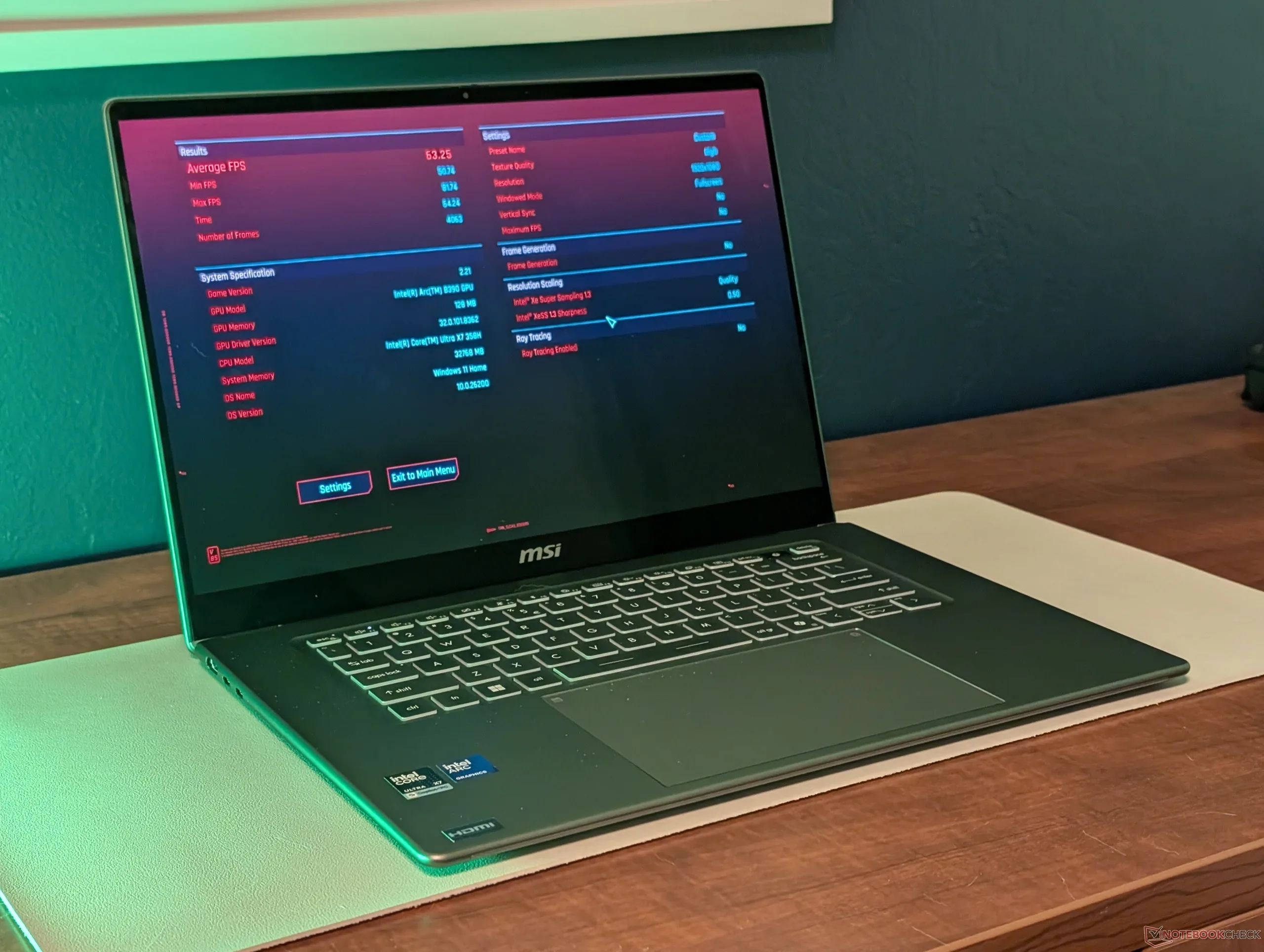
    3. Enabled XeSS upscaling can further boost gaming performance, such as increasing Cyberpunk 2077 FPS from 45 to 63.
    4. Both the 2025 and 2026 models operate under similar power envelopes (~60W), despite large performance differences.

    Upgrading Graphics Performance: From Arc 140T to Arc B390

    Last year’s Prestige 16 2025, equipped with the Arc 140T GPU, was already decent, but the new Arc B390 in the latest Panther Lake processors really makes a big difference, performance wise. This new integrated GPU allows gamers to enjoy modern titles at 1080p with high settings most of the time, which is quite remarkable for integrated graphics chips.

    Performance Leap in the 2026 Prestige 16 AI+ C3MTG

    The newest MSI Prestige 16 AI+ C3MTG for 2026 features the latest Arc B390 graphics, replacing the previous Arrow Lake options. When compared, the newer model easily beat the older 2025 version by up to 80%, depending on the game. That’s a big step up considering the Arc 140T is only about a year old. Our comparison graphs clearly illustrate how much more powerful the new GPU is, making it a compelling choice for users.

    Enhanced Gaming With XeSS Upscaling

    If the games support XeSS upscaling technology, the performance gets even better. For instance, in Cyberpunk 2077 on 1080p Ultra settings with XeSS Quality enabled, the average frame rate jumps from 45 to 63 FPS. That’s a significant improvement and makes gameplay much smoother, providing a better gaming experience overall.

    Power Consumption and Efficiency

    Interestingly, despite the performance gap, both the 2025 and 2026 models run under similar power limits. Playing Cyberpunk 2077 on both systems would use just over 60 W of power, demonstrating that the newer model’s increased performance doesn’t come with higher power demands. This balance between power and performance is important for users wanting efficiency without sacrificing performance.

    Sources
    • Nvidia RTX 5090 Works on macOS with Tiny Corp’s Custom Driver

      Nvidia RTX 5090 Works on macOS with Tiny Corp’s Custom Driver

      Key Takeaway

      1. A new open-source driver from Tiny Corp enables Nvidia Blackwell GPUs to connect with macOS Macs via Thunderbolt 5 or USB4, reintroducing Nvidia hardware into the Mac ecosystem.
      2. The setup currently uses a custom kernel extension and Tiny Grad compiler, resulting in lower performance compared to native Metal or CUDA solutions.
      3. While performance is modest now, the project holds significant potential for future optimization, especially in improving kernel efficiency for heavy compute tasks.

      Apple and Nvidia had a fallout many years ago, which left Mac users without official GPU support. This break up killed CUDA support on macOS, making developers and researchers turn to Apple’s Metal framework. But now, a new open-source driver from Tiny Corp has changed the game, reintroducing Nvidia Blackwell hardware to the Mac environment.

      Introduction to the Tiny GPU Project

      The project utilizes a special kernel extension called Tiny GPU. It permits external GPUs such as the RTX 5090, with its 32 GB VRAM, to connect directly with Apple Silicon Macs over Thunderbolt 5 or USB4. This significant tech advancement bypasses the need for virtual machines, streamlining the connection process. In a demo shown by Alex Ziskind, the RTX 5090 successfully paired with a Mac Mini M4 Pro, which retails at approximately $1399 on Amazon, featuring 24 GB RAM and 512 GB storage (note: price may vary).

      Performance and Current Limitations

      Though the connection is stable, the current software is still in early phases. The driver is dependent on the Tiny Grad compiler rather than native Metal or CUDA, leading to noticeable performance limitations during heavy calculation tasks. When testing with the Llama 3.1 8B model, the setup managed about 7.48 tokens each second. While offering compatibility benefits, it’s considerably slower than the native Metal-based Llama CPP, which is nearly ten times faster on similar hardware, Alex explains.

      Future Potential and Usage

      Nonetheless, the major value of this project lies in its future prospects for optimization. The main bottleneck now isn’t the Thunderbolt 5 cable—which transfers model weights efficiently—but the efficiency of automatically generated kernels. For simple chat functions, the Blackwell setup performs quite well, providing time-to-first-token speeds that are three to four times quicker than native Metal solutions.

      Installation and Practical Use

      The setup involves approving a system extension and running a Docker-based compiler pipeline. Although this isn’t yet a replacement for streamlined Metal workflows, it marks the first operational solution in years. It offers a promising glimpse into future possibilities for Nvidia GPU support on macOS.

      Alex Ziskind discusses this project extensively on his YouTube channel, demonstrating its potential and progress.


      Sources

    • Lisuan Extreme LX 7G106: Fastest DX12 Gaming GPU with 12GB VRAM

      Lisuan Extreme LX 7G106: Fastest DX12 Gaming GPU with 12GB VRAM

      Key Takeaways

      1. Lisuan Technology, a new Chinese firm, was founded by former S3 Graphics employees and aims to create GPU alternatives to Nvidia and AMD for the Chinese market.

      2. The latest product launch includes the G100 series GPUs, specifically the gaming model Extreme LX 7G106, available for pre-order starting March 17, 2026.

      3. The Extreme LX 7G106 GPU features 12 GB GDDR6 memory, a 192-bit memory bus, and is built on 6 nm technology, targeting mid-range performance.

      4. The gaming GPU claims compatibility with demanding games and supports advanced APIs like DX12 and Vulkan 1.3, though direct performance comparisons with Nvidia or AMD are not provided.

      5. Lisuan is also developing workstation and server GPUs, including the LX Ultra and LX PRO, with broad CPU and operating system compatibility, supporting both Windows and Linux.


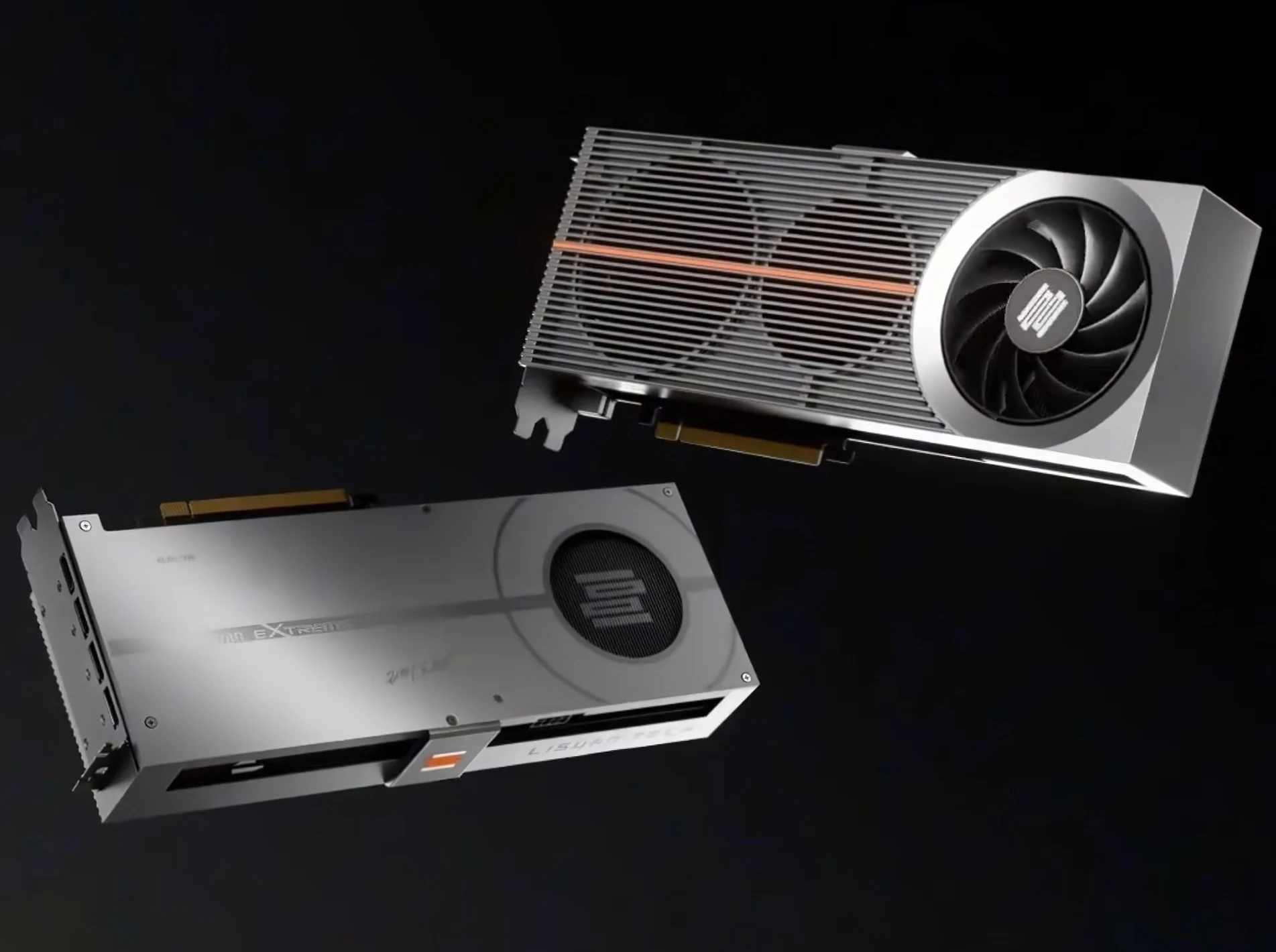
      Lisuan Technology is a relatively new Chinese firm that was established in Shanghai five years ago by three previous staff members from the well-known S3 Graphics, a GPU manufacturer that was very popular in the 1990s. With significant funding from both private and state enterprises in China, Lisuan Tech began creating GPUs aimed at providing alternatives to Nvidia and AMD specifically for the Chinese market. Their latest generation of GPUs, the G100 series, has recently been launched within China, featuring a gaming version along with several workstation and server models.

      Gaming Model Details

      The gaming version is called Extreme LX 7G106 and is expected to be available starting June 18 of this year, with pre-orders launching on March 17, as stated in the latest announcement for AWE 2026. Initially, it will be available for order on JD.com, but Lisuan has plans to eventually sell their models worldwide.

      Technical Specifications

      Currently, the technical specifications are somewhat vague; however, this gaming-focused GPU, built on 6 nm technology, is equipped with 12 GB GDDR6 memory and a 192-bit memory bus. It also has 192 texture mapping units (TMUs), 96 render output processors (ROPs), and a maximum total graphics power (TGP) of 225 W, making it likely a mid-range option at best. The card occupies three slots and includes a cooling mechanism with three fans. In terms of connectivity, it lacks HDMI ports but offers four DisplayPort 1.4a connections.

      Lisuan asserts that the GPU can handle demanding modern games such as Cyberpunk 2077, Black Myth: Wukong, and Resident Evil 4 Remake, in addition to other well-known Steam games like Baldur’s Gate 3 and titles from the Horizon series. However, the company has not yet provided any direct performance comparisons against Nvidia or AMD products. The GPU’s compatibility is backed by support for advanced APIs including DX12, Vulkan 1.3, OpenGL 4.6, and OpenCL 3.0.

      Workstation and Server Solutions

      For the workstation and server sectors that require AI hardware, Lisuan is also working on specialized options like the LX Ultra and LX PRO cards, which come with 24 GB VRAM, as well as the LX MAX that features 12 GB of VRAM.

      All of these new LX cards boast broad CPU compatibility, accommodating models from Intel, AMD, Hygon, Loongson, Phytium, and Zhaoxin. Furthermore, operating system support is extended to include both Windows and Linux-based systems such as UOS, Ubuntu, and Kylinsoft.

      Source:
      Link


    • Matrox Luma Pro: Intel Arc A380 GPU Supports 8 x 5K Displays

      Matrox Luma Pro: Intel Arc A380 GPU Supports 8 x 5K Displays

      Key Takeaways

      1. Matrox has launched the Luma Pro A380 Octal graphics card, designed for professional environments with eight display outputs.
      2. The card features dual Intel Arc A380E GPUs, each with 6 GB of GDDR6 VRAM and 8 cores based on the Xe HPG microarchitecture.
      3. It includes eight mini DisplayPort 2.0 ports, supporting up to eight external displays at a maximum 5K resolution.
      4. Users can install two Luma Pro cards in one system for a total of 16 display outputs, ideal for control centers and financial trading floors.
      5. The card is cooled by a single fan and is currently available, though pricing details for consumers are not disclosed.


      Matrox has introduced a new graphics card featuring an impressive eight display outputs in Japan. This card is not meant for everyday users; it’s crafted specifically for professional and enterprise environments, such as financial trading floors and control centers.

      Details on the Card

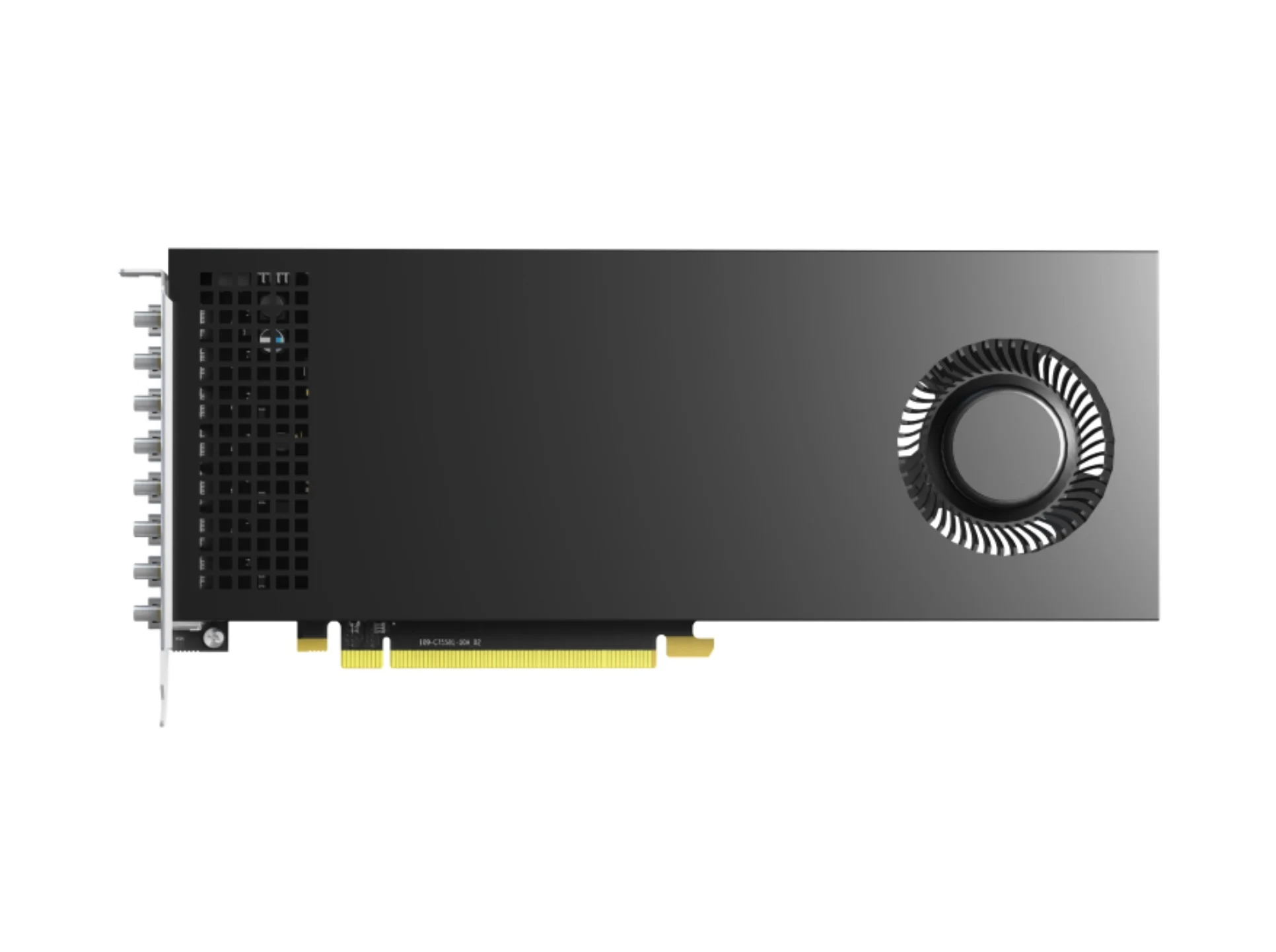
      Named the Luma Pro A380 Octal, this GPU includes dual Intel Arc A380E GPUs, which are the embedded version of the A380 and share almost the same specifications. Each card is equipped with 6 GB of GDDR6 VRAM operating on a 96-bit bus and utilizes 8 cores based on the Xe HPG microarchitecture.

      Video Output Capabilities

      As previously mentioned, this single-slot card boasts a total of eight video outputs, which is likely the reason behind the “octal” name. It solely features mini DisplayPort 2.0 ports (UHBR10), allowing the Luma Pro to connect up to eight external displays at a maximum 5K resolution.

      Additionally, users can install two of these Luma Pro cards in a single system, enabling support for as many as 16 displays. GDM highlighted that this capability is beneficial for control and monitoring applications, financial systems, and expansive display walls.

      Cooling and Availability

      The card is cooled by a single fan, which might seem insufficient, but should suffice given Matrox’s 130-watt power rating. The Luma Pro Octal is already on the market, though pricing information might not be available for general consumers. Regular users likely won’t require such extensive video output and would be better off with a Radeon 9070 XT consumer GPU, which is currently priced at $800 on Amazon.

      GDM, as noted by VideoCardz, pointed out these features.

      Source:
      Link


    • Intel Arc Celestial dGPU Struggles Amid Nvidia Partnership, B770 Lives

      Intel Arc Celestial dGPU Struggles Amid Nvidia Partnership, B770 Lives

      Key Takeaways

      1. Intel’s high-end Arc Battlemage B770 GPU is still in development and expected to launch this quarter.
      2. The Arc B770 will not support PCIe 5.0 and may have performance inconsistencies, particularly with frame pacing.
      3. The GPU is expected to have 32 Xe cores and a 256-bit wide bus, aiming for performance similar to the RTX 4070 but facing challenges.
      4. Intel may cancel its future GPU projects, including the Celestial and Druid series, indicating a potential end to their desktop GPU line.
      5. The Arc Battlemage B580 was positively received, highlighting the need for Intel to continue developing new desktop GPUs.


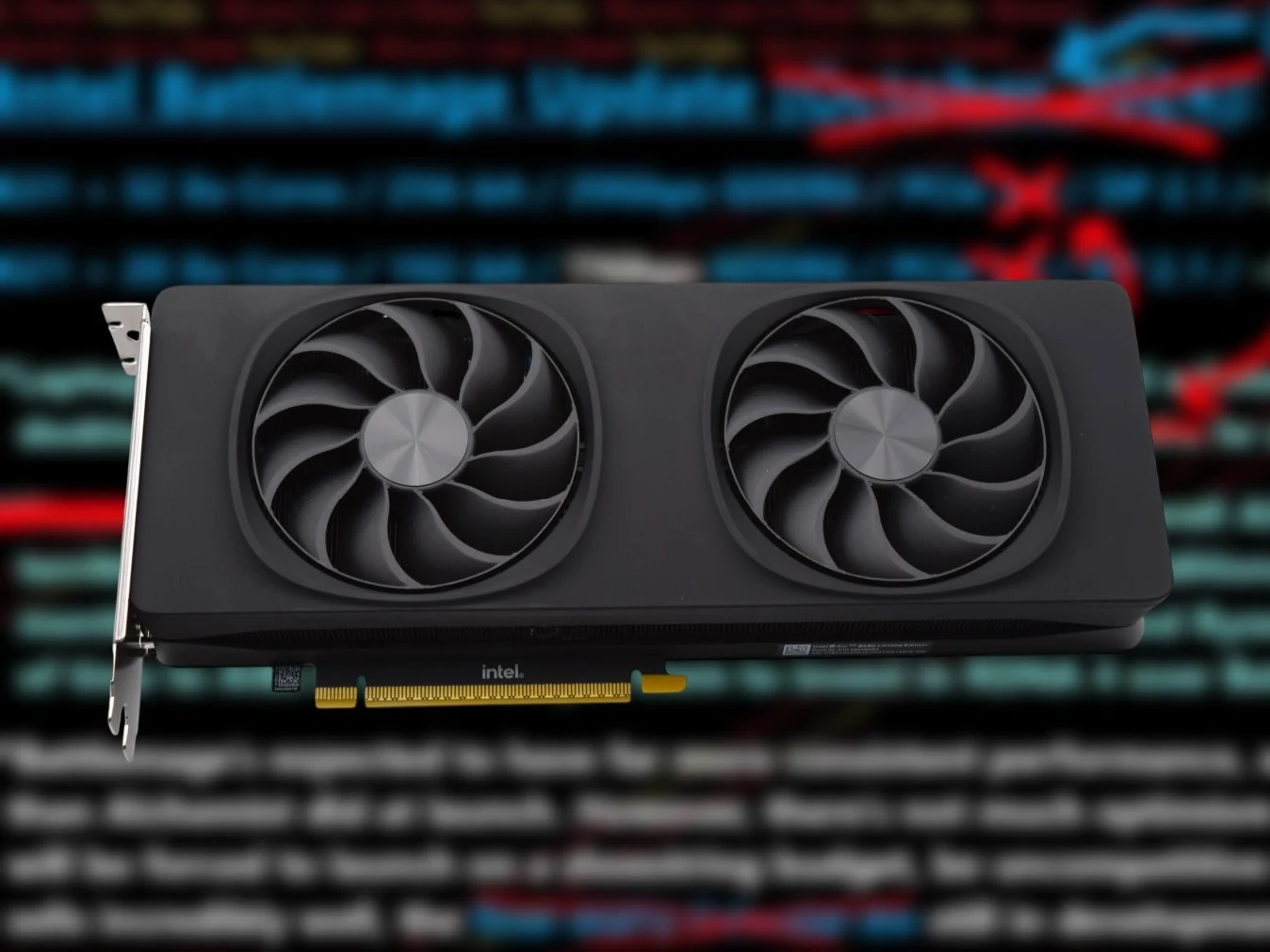
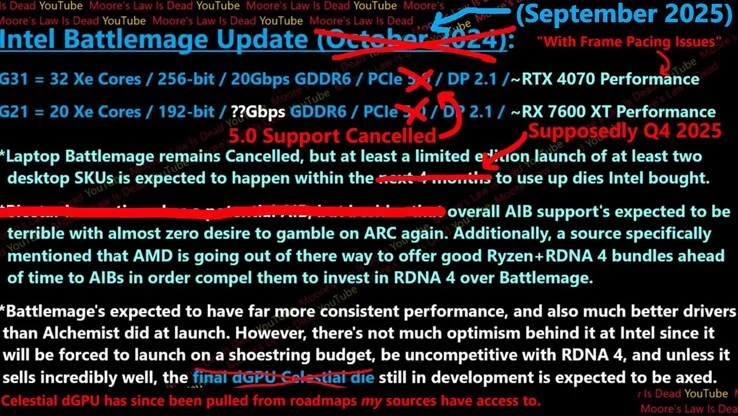
      While there hasn’t been much news about Intel’s high-end Arc Battlemage B770 desktop GPU in quite a while, it seems the GPU is still in the works and expected to launch this quarter. This info comes from Moore’s Law Is Dead, confirming earlier leaks from May 2025.

      Latest Specs and Features

      The recent leak from MLID also shares updates on the Intel x Nvidia Hammer Lake and Titan Lake APUs, providing some interesting specifications for the Arc B770. Interestingly, the latest details suggest that the Intel Arc B770 will not support PCIe 5.0, which is a change from what was previously mentioned in October 2024. Additionally, there are claims of performance inconsistencies, particularly with issues related to frame pacing.

      Even though MLID asserts that the Arc B770 will still have 32 Xe cores and a 256-bit wide bus, it seems this card may deliver a performance similar to that of the RTX 4070 while facing challenges like choppy performance and limited availability. Even more disappointing is the possibility that the Arc B770 could be Intel’s final desktop GPU.

      Future of Intel GPUs

      According to sources from MLID, Intel has removed the Celestial dGPU from its future plans. This suggests that the desktop Arc Celestial cards might be scrapped altogether. If Intel goes ahead and cancels Arc Celestial, along with future GPU projects like Arc Druid, it would signal an end to what has been a rocky and often directionless venture in the GPU market.

      We sincerely hope that Intel continues to develop and launch new desktop GPUs, as the Arc Battlemage B580 was a refreshing addition to a struggling GPU market when it was released (Available on Amazon).

      Source:
      Link


    • Nvidia GeForce RTX 5090D V2 Pricing Surprises Gamers

      Nvidia GeForce RTX 5090D V2 Pricing Surprises Gamers

      Key Takeaways

      1. Nvidia is releasing the GeForce RTX 5090D V2, a scaled-back version of the original GeForce RTX 5090D.
      2. The RTX 5090D V2 will have 24 GB of GDDR7 VRAM, operating at 28 Gbps, with a 384-bit memory bus for lower bandwidth.
      3. It will feature the GB202-240 GPU setup, with 21,760 CUDA cores and a 575 W TDP, similar to previous models.
      4. The RTX 5090D V2 will be priced around CNY 16,499 (approximately $2,296), despite its reduced specifications.
      5. Initial retail listings indicate availability in China later this week, with prices from CNY 20,699 to CNY 24,999 ($2,881 to $3,480) from AIB partners.


      Nvidia is about to introduce an updated version of the GeForce RTX 5090D soon. This new model, known as the GeForce RTX 5090D V2, is actually a scaled-back variant of the earlier GeForce RTX 5090. Unlike its predecessor, the original GeForce RTX 5090D shared the same core components as the standard GeForce RTX 5090, which is currently priced at $2,399 on Amazon.

      Specifications Overview

      Recent leaks indicate that the GeForce RTX 5090D V2 will feature a reduction to 24 GB of VRAM. However, this VRAM will still utilize GDDR7 technology, operating at 28 Gbps. Nvidia seems to be restricting the memory bus to 384-bit, leading to a lower memory bandwidth compared to the 1,792 GB/s available in other RTX 5090 models.

      GPU Configuration Details

      Moreover, the GeForce RTX 5090D V2 is expected to come with the GB202-240 GPU setup, which is a step down from the GB202-250 and GB202-300 configurations found in the GeForce RTX 5090D and the GeForce RTX 5090, respectively. Nevertheless, it appears that the 21,760 CUDA cores, 2,375 5th-generation Tensor cores, and a 575 W TDP from the previous models will still be present.

      Market Availability and Pricing

      In summary, the GeForce RTX 5090D V2 is set to be a lesser version of the existing GeForce RTX 5090 and GeForce RTX 5090D. Despite this, initial retail listings suggest that the new variant will be available in China later this week, with a price range between CNY 20,699 and CNY 24,999 (approximately $2,881 to $3,480) from add-in board (AIB) partners like Colorful. Interestingly, Nvidia aims to price the V2 at the same CNY 16,499 (around $2,296) MSRP as the original GeForce RTX 5090D, despite the technical distinctions that set the two apart.

      Source:
      Link


    • Steam Introduces New Metrics for In-Game Performance Overlay

      Steam Introduces New Metrics for In-Game Performance Overlay

      Key Takeaways

      1. Steam has introduced a new real-time FPS graph for monitoring game performance.
      2. Users can view detailed stats on CPU usage, GPU usage, and RAM usage.
      3. The feature allows comparison of FPS with DLSS turned on and off.
      4. Access the feature in the ‘In Game’ tab under ‘Overlay Performance Monitor’ in Steam settings.
      5. Currently, the feature is only fully available for Windows users, and some older GPUs may not provide accurate data.


      Steam has introduced a new and useful feature to its client, building on the native photo and video capture tool that was launched last year. Users can now check detailed stats about their game’s performance via a real-time FPS graph, alongside information on CPU usage, GPU usage, and RAM usage. You can even see an FPS comparison with DLSS turned on and off.

      Understanding Your Game’s Performance

      This new addition is perfect for figuring out how many ‘fake’ frames your GPU is generating. If you prefer a simpler view with less information, that option is also available. To start using this feature, go to the ‘In Game’ tab in your Steam settings and find the ‘Overlay Performance Monitor’ section. It’s important to note that this feature is accessible to all Steam users. Valve has released a blog that details how each metric functions.

      A Shift from Third-Party Tools

      Previously, players had to depend on third-party software for such insights, but you will still need those apps to gather data that Steam’s overlay doesn’t cover. Keep in mind, though, that the complete range of data is currently only available for Windows users, and some older or ‘non-standard’ GPUs may not provide precise information. However, this feature is a wonderful enhancement to Steam’s already extensive array of user-friendly tools.

      Source:
      Link


    • RTX 5070 Ti Super Leaks: Increased VRAM Details Revealed

      RTX 5070 Ti Super Leaks: Increased VRAM Details Revealed

      Key Takeaways

      1. The RTX 5070 Ti Super is an upgraded version of the RTX 5070 Ti, acting as a bridge to the rumored RTX 5080 Super.
      2. It features 8,960 CUDA cores, the same as the RTX 5070 Ti, but comes with 24 GB of 28 Gbps GDDR7 VRAM, a 50% increase in capacity.
      3. The anticipated TDP for the RTX 5070 Ti Super is around 350 Watts.
      4. The additional VRAM is expected to enhance performance at 4K resolutions compared to the non-Super versions.
      5. The release date for the RTX 50 Super refresh is uncertain, with suggestions pointing to CES 2026, prompting potential buyers to wait due to upcoming AMD RDNA 4 variants.


      Information about a new Nvidia GPU has surfaced online, thanks to the well-known leaker @Kopite7Kimi. This time, we are looking at the RTX 5070 Ti Super. As suggested by its name, it serves as an upgraded version of the RTX 5070 Ti that was released earlier this year. In terms of specifications, it acts as a bridge between the RTX 5070 Ti and the rumored RTX 5080 Super.

      Specifications and Features

      The RTX 5070 Ti Super (PG147-SKU55) is powered by a GB203-350-A1 GPU featuring 8,960 CUDA cores, which is identical to its predecessor, the regular RTX 5070 Ti. Nevertheless, it is expected to launch with 24 GB of 28 Gbps GDDR7 VRAM, a significant capacity boost of 50%. Additionally, the TDP for the RTX 5070 Ti Super is anticipated to be around 350 Watts.

      Performance Expectations

      Initially, the RTX 5070 Ti Super and RTX 5080 Super will maintain the same position in Nvidia’s lineup as their non-Super versions. However, the additional VRAM is likely to provide a noticeable jump in performance at 4K resolutions, leading some to argue that the non-Super models should have launched with this amount of VRAM from the beginning.

      Release Timeline and Market Considerations

      The exact date for Nvidia’s announcement of the RTX 50 Super refresh remains uncertain. However, Benchlife (via Videocardz) suggests that it might not be released until CES 2026. Regardless, anyone looking to buy a new GPU may want to wait a little longer, as AMD is also planning to introduce ‘stronger’ RDNA 4 variants in the near future.

      Source:
      Link

    • Intel Arc B770 16GB GPU Still in Development and Not Scrapped

      Intel Arc B770 16GB GPU Still in Development and Not Scrapped

      Key Takeaways

      1. Intel’s high-end graphics card, the Arc B770, faced delays and uncertainty regarding its release date due to complications with its die.
      2. A trusted leaker suggests that the Arc B770 is still in development, with new Battlemage GPUs discovered, possibly including the B770.
      3. The Arc B770 may be revealed at Computex 2025, coinciding with AMD’s showcase of the RX 9060 XT.
      4. Expected specifications for the Arc B770 include an Intel G31 GPU with up to 32 Xe cores and 16 GB of GDDR6 VRAM, positioning it to compete with high-end Nvidia cards.
      5. Proper pricing and availability will be crucial for Intel to establish a greater presence in the GPU market, especially given ongoing supply issues with Nvidia and AMD products.


      Last year, YouTuber Moore’s Law is Dead reported that Intel’s high-end graphics card, the Arc B770, faced delays without a set date due to complications with its die. Some sources even suggested that it might have been completely shelved. Although there have been some Intel GPUs that were not officially announced appearing sporadically online, none have turned into real products. However, a recent leak from X hints that Intel might soon have something to share with us.

      New Hopes for the Arc B770

      According to OneRaichu, a trusted leaker, the Arc B770 is still in the works. Recently, three new Battlemage GPUs were discovered in the PCIe database, and this could likely include the B770. The other two GPUs are expected to be for workstation use, with one rumored to have 24 GB of VRAM. These graphics cards might be revealed during Computex 2025, which takes place from May 20 to 23, coinciding with AMD’s planned showcase of the RX 9060 XT.

      Specifications of the Arc B770

      To refresh your memory, the Arc B770 was expected to come with an Intel G31 GPU featuring up to 32 Xe cores and 16 GB of GDDR6 VRAM on a 256-bit bus. With these specifications, it should be able to compete with the GeForce RTX 4070 Ti Super and possibly even the RTX 4080 in some situations.

      If the pricing is set correctly, the Arc B770 could help Intel gain much-needed market presence, and now would be a good moment to launch it since Nvidia and AMD GPUs are often hard to find at their retail prices. Of course, the biggest hurdle will be availability, as even four months after its release, the Arc B580 still remains quite scarce.

      Source:
      Link


    • Intel Xe2 Battlemage GPUs Face Tough Competition from Nvidia

      Intel Xe2 Battlemage GPUs Face Tough Competition from Nvidia

      Key Takeaways

      1. Intel’s Arc Battlemage B580 and B570 GPUs received positive reviews for their performance and competitive pricing.
      2. Anticipation for the Arc B770 GPU was high among gamers looking for affordable high-end options.
      3. Recent reports indicate that the development of the Arc B770 GPU may have been completely cancelled.
      4. The B770 was expected to feature 16 GB of VRAM and up to 32 Intel Xe2 GPU cores, aiming to compete with high-end Nvidia GPUs.
      5. There are rumors of a potential 24 GB Intel Battlemage card targeted at creative professionals, despite the cancellation of the B770.


      Intel’s Arc Battlemage B580 and B570 GPUs made a notable impact when they were released not long ago. Our review of the B580 showcased its impressive performance at a price that is much more appealing than what AMD and Nvidia have offered up till now. This positive reception heightened anticipation for the upcoming Battlemage B770 GPU, especially for gamers seeking high-end PC gaming options without breaking the bank.

      Rumors of Cancellation

      However, recent reports suggest that Intel’s Arc B770 GPU may have been completely cancelled. According to frequent hardware insider, @jaykihn0 on X, when questioned about the Battlemage G31, the leaker stated that it has been “dead” since the third quarter of 2024. This indicates that the development of the high-end Intel GPU was halted in late 2024, at least for consumer purposes. Previous reports hinted that the B770 was already “doomed” even before its planned launch.

      Specifications and Implications

      The Arc B770 was expected to feature 16 GB of VRAM and could have included as many as 32 Intel Xe2 GPU cores. If these leaks are accurate, it would mean that Intel is entirely bypassing the high-end GPU sector in 2025. Nonetheless, there are rumors of a 24 GB Intel Battlemage card that might be aimed at creative professionals.

      Prior leaks suggested that the Intel Arc B770 could have competed with the Nvidia GeForce RTX 4080, positioning it against the newer Nvidia GeForce RTX 5070 Ti in the high-end market.

      Source:
      Link