
Tag: export controls

  • TSMC Nanjing Fab to Lose U.S. Export License Waiver by 2025

    TSMC Nanjing Fab to Lose U.S. Export License Waiver by 2025

    Key Takeaways

    1. The U.S. will revoke TSMC’s Validated End User (VEU) status for its Nanjing factory starting December 31, 2025, requiring individual licensing for shipments.
    2. This change may lead to delays in production, as suppliers must apply for U.S. licenses for tools and materials, with a “presumption of denial” increasing the risk of further delays.
    3. TSMC’s Nanjing facility contributes about 3% of its overall capacity and primarily produces older-generation chips, which could be disrupted by the loss of VEU status.
    4. The U.S. is tightening export controls by revoking VEU status for companies like Samsung and SK Hynix, reflecting a broader strategy to close export control loopholes.
    5. TSMC may face challenges in replacing advanced equipment and requalifying processes at the Nanjing fab, potentially impacting production yields and speed.


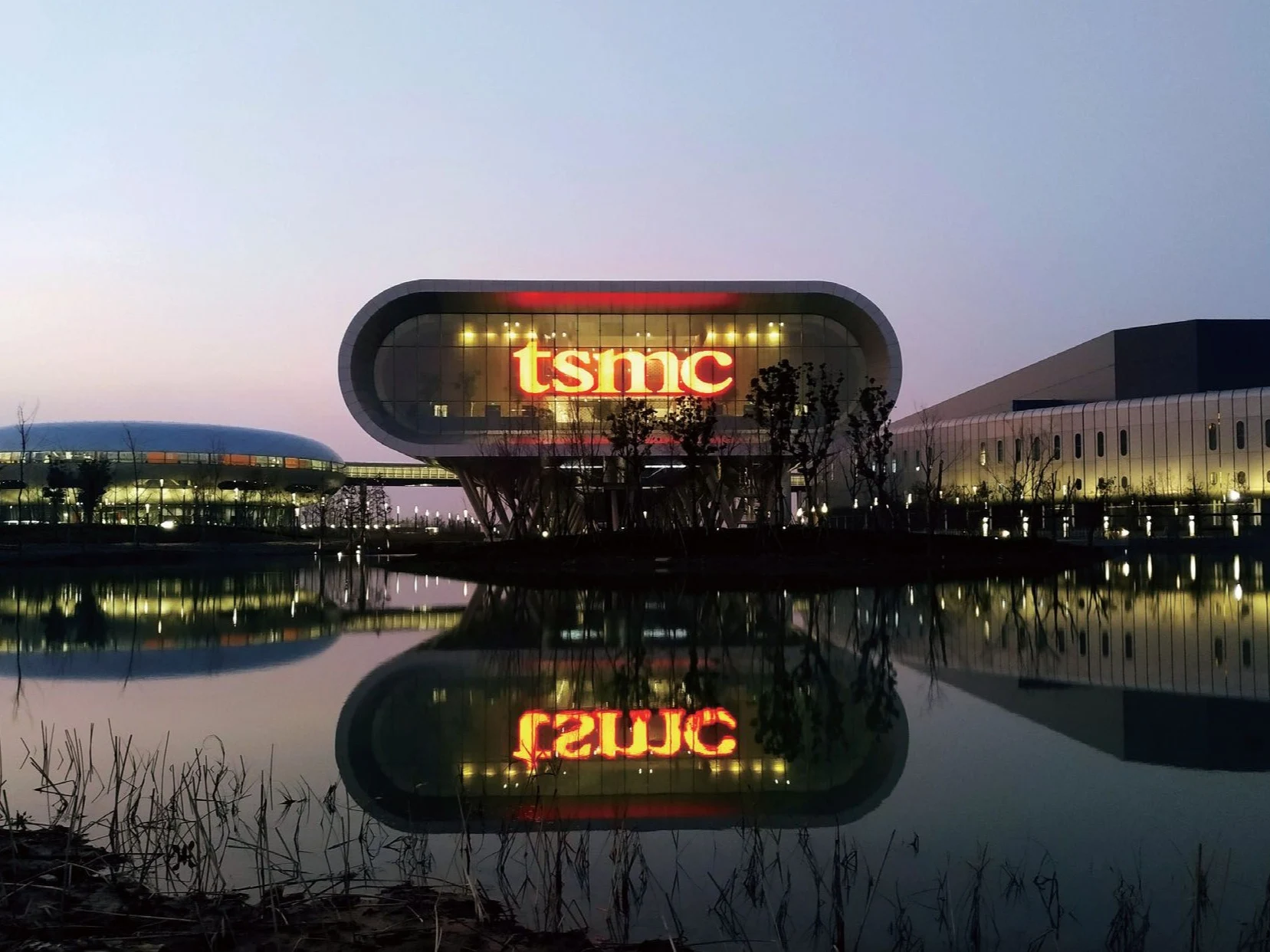
    Washington has decided to take away TSMC’s Validated End User (VEU) status for its factory in Nanjing, starting December 31, 2025. This change means that U.S.-controlled shipments to the Chinese facility will no longer have blanket approvals. TSMC has announced that they are “evaluating the situation” and are currently discussing matters with the U.S. government. The goal for TSMC is to keep operations at the Nanjing fab running smoothly without any interruptions. It’s worth mentioning that this represents a change in policy that tightens regulations, not an immediate closure.

    Impact on Supply Chain

    Without the VEU status, suppliers will now need to apply for individual U.S. licenses for tools, spare parts, and specific chemicals that are headed to Nanjing. This could lead to possible delays in production. The decision-making process might come with a “presumption of denial,” which raises the risk of further delays if approvals are not received on time. Previous revocations for companies like Samsung and SK Hynix have resulted in about 1,000 license requests each year. Although TSMC’s situation was not listed in the Federal Register, the outcome remains the same: there will be an increased need for licensing.

    Nanjing Fab Details

    According to Taiwan’s MOEA, TSMC’s Nanjing facility accounts for roughly three percent of the company’s overall capacity. Production at this site began in 2018 and contributed a minor portion of revenue in the past year. The nodes affected include 16-nanometer/12-nanometer FinFET and 28-nanometer-class logic, with the latter being older but still relevant when shipped from U.S.-controlled suppliers. While the Nanjing fab still produces older-generation chips, it depends on advanced equipment for etching, deposition, metrology, and lithography, and losing VEU status could disrupt its operations.

    Similar Moves by the U.S.

    This action is similar to the U.S. revoking VEU status for Samsung and SK Hynix’s facilities in China, which is part of Washington’s strategy to close “export control loopholes.” Although TSMC has a smaller presence in China compared to Samsung or SK Hynix, the impact on the company is likely to be less severe. However, the timing of license approvals still creates uncertainty.

    It seems improbable that TSMC would be able to swap its tools for equipment manufactured in China, especially for lithography needs. Even if they manage to find replacements, the Nanjing fab would have to requalify its processes, which could influence production yields and speed. Should production slow down, Chinese foundries like SMIC and Hua Hong might be able to take over some orders, assuming they have enough capacity to do so.

    Source:
    Link


  • Jensen Huang: Export Controls Boost China’s AI Chip Development

    Jensen Huang: Export Controls Boost China’s AI Chip Development

    Key Takeaways

    1. Nvidia’s GPUs are vital for AI applications, impacting technologies from chatbots to self-driving cars.
    2. CEO Jensen Huang believes limiting China’s access to tech has failed and advocates for global distribution of American technology.
    3. Collaboration with Chinese engineers is essential for maintaining U.S. tech leadership, as blocking them could speed up local innovation in China.
    4. Huang downplays security risks, asserting that China has its own supercomputers and doesn’t rely on Nvidia for military advancements.
    5. Emphasizing the counterproductive nature of embargoes, Huang suggests that innovation should replace barriers in the U.S.–China tech competition.


    Nvidia’s worth briefly exceeded $4 trillion last week, highlighting how its GPUs are essential for artificial intelligence tasks, which range from chatbots to self-driving cars. However, CEO Jensen Huang believes that the efforts by Washington to limit China’s access to these processors have largely failed. He shared with CNN’s Fareed Zakaria, “Taking away technology from someone is more of a tactic than a goal—and this tactic wasn’t effective towards achieving the actual goal.” Huang argues that keeping the U.S. at the forefront relies on distributing an “American tech stack” globally instead of tightening export restrictions.

    Importance of Collaboration

    Huang emphasizes the crucial role China plays in the worldwide AI growth, pointing out that around half of the global AI engineers come from China. He insists that for American tech to stay as the benchmark, these developers need to work with U.S. hardware and software. If they are blocked, engineers in China will simply speed up their development of local alternatives, which will close the gap in innovation and lessen U.S. influence in the tech realm.

    Security Concerns

    There are concerns among security advocates that these same chips might be used by the People’s Liberation Army, but Huang downplays this risk. He maintains that competing militaries prefer not to depend on each other’s supply chains and that China has its own supercomputers already. “They don’t require Nvidia’s chips… to enhance their military,” he stated.

    This statement comes after a bipartisan group of U.S. senators wrote to Huang, asking him to avoid collaboration with companies connected to China’s defense industry. Over the last three administrations, the U.S. has imposed stricter export regulations on advanced GPUs, leading to a black market for higher-bandwidth versions. Even though these grey-market components lack firmware updates and support for enterprise software, they still make their way into Chinese data centers, highlighting the challenges of enforcement.

    The Backfire of Embargoes

    Huang, mirroring remarks from Microsoft’s co-founder Bill Gates, cautions that sweeping embargoes can often have counterproductive effects. He compares them to China’s recent restrictions on rare-earth minerals, which triggered a push in the U.S. for self-sufficiency. “If it occurs to us, it should also happen to them,” he remarked, positioning the U.S.–China AI competition as an unavoidable yet mutually advantageous rivalry—one that should be won through quicker innovation instead of erecting taller barriers.

    Source:
    Link