Tag: NVIDIA

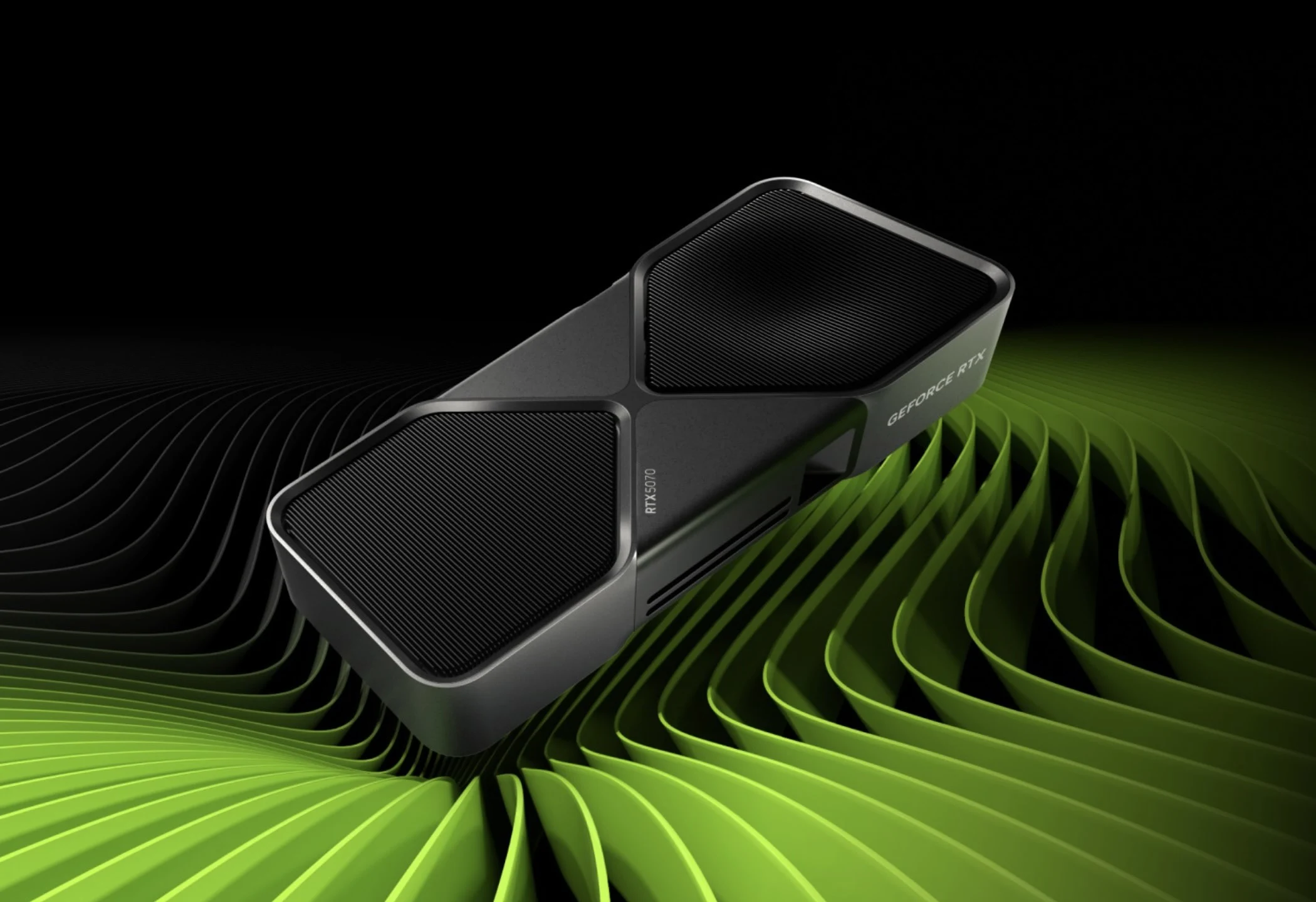
  • Nvidia Lowers RTX GPU Voltages in New Driver Update, Reducing Performance

    Nvidia Lowers RTX GPU Voltages in New Driver Update, Reducing Performance

    Key Takeaways

    1. Nvidia’s driver version 595.59 caused decreased GPU performance and fan detection issues, leading to its withdrawal and a problematic replacement, version 595.71.

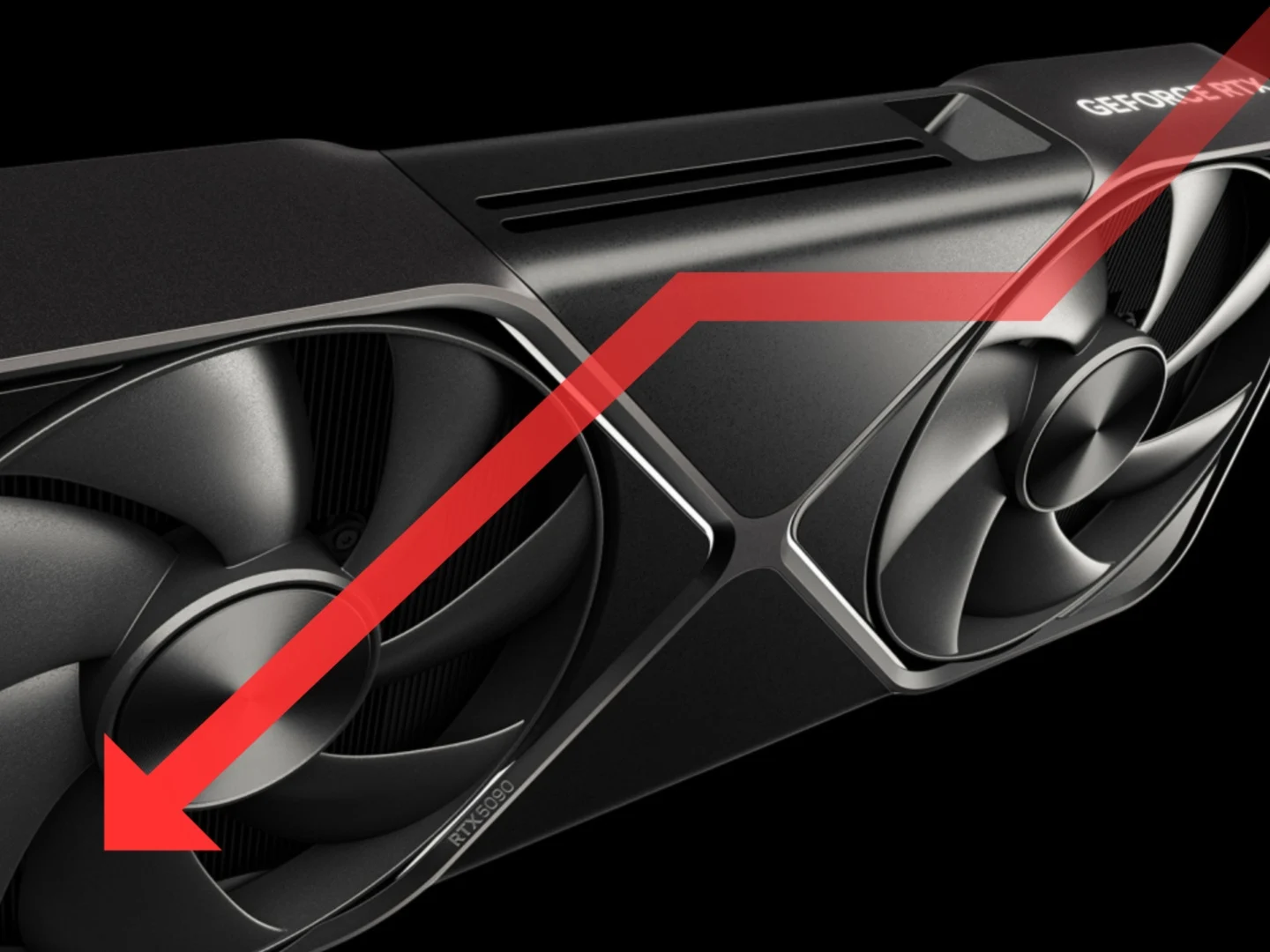
    2. The new driver version 595.71 has introduced a voltage lock on certain GPUs, including the RTX 5090, RTX 4090, RTX 4080 Super, and RTX 4070 Ti Super.

    3. Performance tests show that the voltage levels drop significantly under both stock and overclocked settings, limiting the core clock speeds of affected GPUs.

    4. Comparisons by Wccftech reveal that the new driver results in lower voltage and clock speeds compared to previous drivers, even with manual overclocking.

    5. Nvidia’s voltage restrictions appear to be a response to reports of melted connectors, intended to prevent damage but resulting in reduced overall performance.


    Nvidia has been facing challenges lately following the release of the Resident Evil Requiem Game Ready Drivers. The driver version 595.59, which was intended to enhance GPU performance for the game, unfortunately led to decreased performance and issues with GPU fan detection. In response, Nvidia pulled the problematic drivers and issued an updated version, but this new release appears to have brought its own set of problems.

    Voltage Lock Concerns

    According to Bang4BuckPC Gamer on YouTube, the new driver version 595.71 has introduced a voltage lock on certain GPUs. Although the complete list of affected GPUs has not been fully assessed, it’s confirmed that the RTX 5090 is among those impacted. Users of the RTX 4090, RTX 4080 Super, and RTX 4070 Ti Super are also reporting similar issues with the latest drivers.

    Performance Tests Reveal Issues

    In a recent video, the YouTuber revealed that after upgrading their Asus TUF Gaming GeForce RTX 5090 OC Edition to the new driver, the voltage levels dropped at both stock and overclocked settings. Notably, the GPU initially reached a voltage of 1.055V to 1.060V at stock settings. However, when a 150 MHz overclock was applied, while the clock speed increased as expected, the voltage fell to 1.045V to 1.050V. With a further 300 MHz overclock, the voltage dipped below 1V (0.990V), yet the core clock stayed below 3,000 MHz. It appears that the voltage has been capped at under 1V, which restricts clock speeds from surpassing 3,000 MHz even with overclocking.

    Additional Testing by Wccftech

    Wccftech conducted their own tests with an MSI GeForce RTX 5090 SUPRIM X and found comparable results. With an earlier driver and some manual overclocking, the GPU operated at 1.020V to 1.030V, achieving core clock speeds up to 3,030 MHz. However, after switching to the new driver with the same overclock settings, the GPU couldn’t exceed 3,000 MHz, and the voltages fell to 1.005V – 1.010V. Even in stock configuration, the GPU showed lower voltages with the new driver compared to the previous one.

    Reason Behind Voltage Limits

    It seems Nvidia may have introduced these voltage restrictions due to reports of melted connectors. This change is likely aimed at limiting the maximum voltage through the 16-pin connectors, theoretically reducing the risk of connector burns or GPU damage. Unfortunately, this solution negatively impacts overall performance.


    Source:
    Link



  • Nvidia Game Ready 595.71 Driver Released, Issues for RE Requiem Players

    Nvidia Game Ready 595.71 Driver Released, Issues for RE Requiem Players

    Key Takeaways

    1. Nvidia launched the Game Ready 595.59 driver to enhance GeForce GPUs for Resident Evil Requiem, but it caused new issues for many RTX users.
    2. Due to user complaints, Nvidia removed the 595.59 driver and introduced the 595.71 driver to address the problems.
    3. The 595.71 driver fixes bugs related to GPU fan detection and performance instability from the previous version.
    4. Some players, however, report new performance issues and lower FPS after updating to the 595.71 driver.
    5. Users have encountered crashes and voltage problems in Resident Evil Requiem after installing the 595.71 driver, prompting some to revert to older versions.


    Nvidia has recently launched its Game Ready 595.59 driver. This driver was designed to enhance GeForce GPUs for the new Resident Evil Requiem, which was released just a few days back. However, instead of making things better, this update created new issues for lots of RTX users. Some users reported problems with fan detection, while others experienced unstable performance.

    Nvidia’s Response

    In response to the growing complaints, Nvidia took down the 595.59 driver and started to develop a new one. They have now introduced Game Ready driver 595.71, which aims to address the problems that arose from the previous version.

    Fixes and Ongoing Issues

    The official patch notes for 595.71 state that it fixes bugs linked to hardware monitoring tools not recognizing all GPU fans. It also resolves the issue where one or more fans stopped working after upgrading to the earlier driver. These problems were commonly reported with 595.59. Nevertheless, some players of Resident Evil Requiem are experiencing new performance issues after the update.

    User Experiences

    One player using an RTX 4080 Super reported that with the driver 576.88, they achieved about 110 FPS in Resident Evil Requiem. However, after switching to 595.71, their FPS dropped to about 91. They also observed that the GPU power draw decreased from approximately 310W to around 260-270W.

    In another case, a user with an RTX 4090 said that after updating to 595.71 and turning on DLSS in Resident Evil Requiem, the game crashed immediately. However, reverting to an older driver solved the problem. When they tried reinstalling 595.71 for testing, they encountered the same issue again. On the platform X, several other users have mentioned experiencing voltage problems and performance drops after installing the new driver.

    Source:
    Link


  • T-Mobile and Nvidia Promote Open-Source AI for 6G Technology

    T-Mobile and Nvidia Promote Open-Source AI for 6G Technology

    Key Takeaways

    1. Nvidia is forming partnerships with T-Mobile, Nokia, and SoftBank to influence 6G standards towards AI and open-source solutions.
    2. The company emphasizes that 6G networks must be more efficient and capable of supporting AI applications, unlike 5G, which focused primarily on voice and data.
    3. Future 6G modems should be software-controlled and easily updatable, allowing AI software to manage data traffic effectively.
    4. Nvidia aims to support AI startups with its open-source hardware and software as part of the 6G mobile standard.
    5. The success of Nvidia’s efforts is uncertain, given the mixed results of previous consortia and potential compatibility issues with existing hardware.


    Nvidia is making moves to enter the telecommunications hardware space by promoting open-source solutions for the upcoming 6G mobile connectivity standard.

    Consortium Formation

    The company is forming a partnership with T-Mobile, Nokia, and SoftBank, aiming to ensure that future 6G networks can handle advanced AI applications. As it gears up for the next generation of 6G networks, Nvidia seeks to shape the standards to favor its interests, emphasizing AI and pushing for open-source hardware and software.

    AI Integration and Efficiency

    Nvidia’s success is closely tied to the spread of AI across various sectors, from self-driving vehicles to robotics, and anything else that could require extensive AI data centers. As per Ronnie Vasishta, who leads Nvidia’s telecom strategy, the 6G networks must be significantly more efficient due to the limited radio spectrum available for new uses. He mentions, “Networks will provide intelligence, not just for people on their devices, but for machines too,” contrasting this with the current 5G networks which were designed primarily for voice and data, without consideration for AI applications.

    Future of 6G Modems

    The 6G modems should operate on general-purpose computers and be controlled by software, making them easy to update. Nvidia insists that AI software needs to manage data traffic, enabling rapid adaptation to changes in AI capabilities and usage scenarios. The company believes that the 6G mobile standard could revolutionize connectivity applications, and it wants to be equipped with open-source hardware and software to support AI startups that might emerge in the future.

    However, modern phones like the Samsung Galaxy S26 Ultra, currently available at 25% off on Amazon, utilize modems from well-established manufacturers like Qualcomm, which already showcase their AI capabilities.

    Uncertain Future

    It’s uncertain whether Nvidia’s self-interested efforts will succeed. Previous consortia have yielded varied results, sometimes delaying the rollout of next-gen telecom technologies and resulting in hardware that lacks compatibility. Nvidia has a mixed history with open-source projects, indicating it may be trying to carve a niche in a new market while navigating potential challenges.

    Source:
    Link


  • Nvidia Warns GPU Supply Will Remain Unstable for Now

    Nvidia Warns GPU Supply Will Remain Unstable for Now

    Key Takeaways

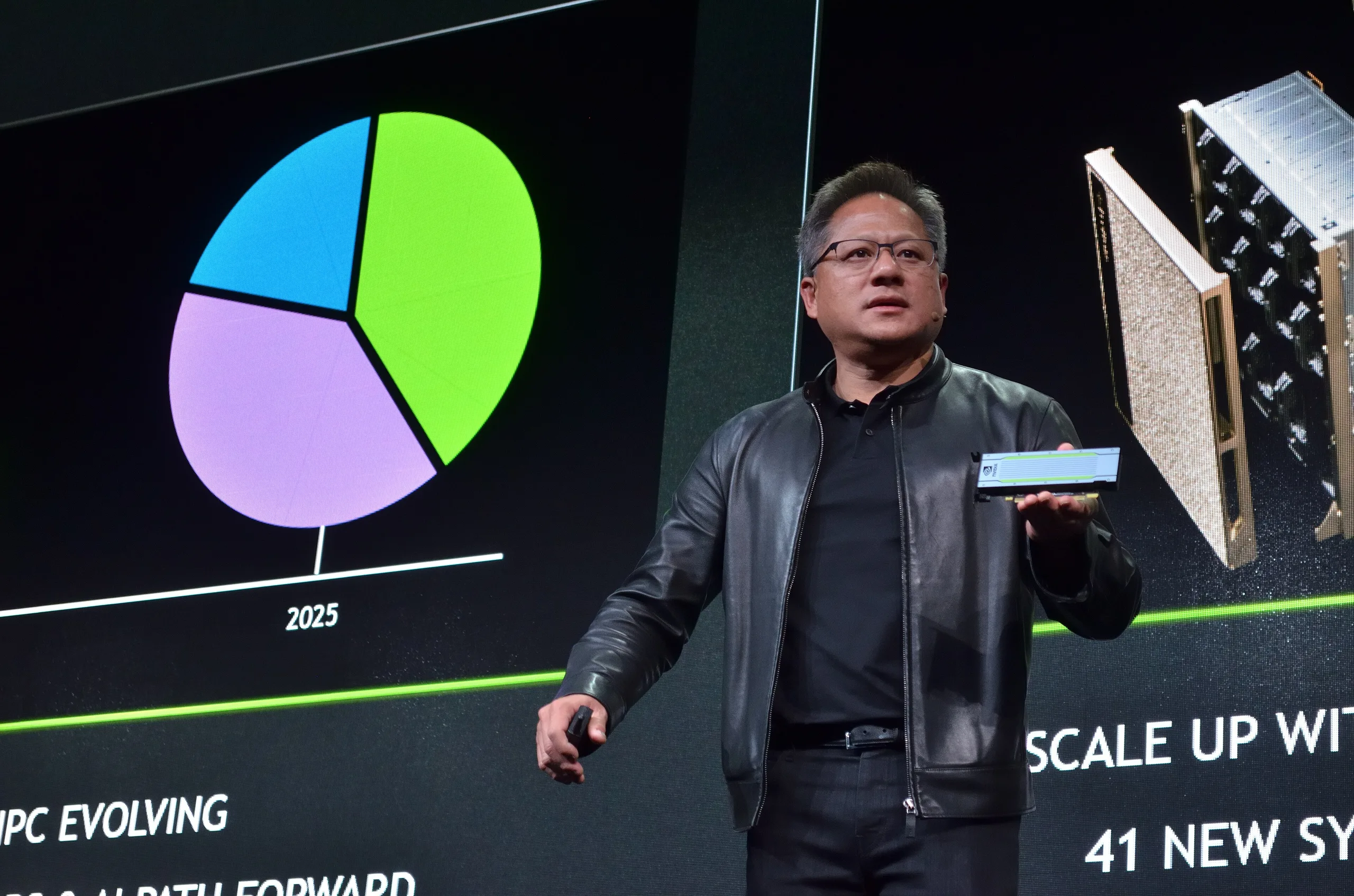
    1. Nvidia’s CEO, Jensen Huang, indicates that supply of gaming hardware will remain “tight” for the next few quarters.
    2. The focus of Nvidia may shift towards the more profitable data center market, affecting gaming hardware availability.
    3. Prices for components like DDR5 RAM have surged significantly, with some increasing up to five times in the last year.
    4. Recent trends show that while prices can drop temporarily, they will likely remain above MSRP long-term.
    5. Significant improvements in production capacity or a decrease in data center demand are needed for gaming hardware prices to become more affordable.


    Gaming hardware has been experiencing significant shortages for what seems like ages, resulting in unbelievable price increases. Gamers holding out for some good news are now faced with disappointing information directly from Nvidia’s CEO.

    Supply Outlook

    Jensen Huang has stated that supply will continue to be “tight” for the next few quarters. Looking further ahead, the future remains quite unclear. This is understandable, given how quickly the industry is changing to meet the demands of the data center market.

    A Grim Future

    Regardless, the situation looks rather bleak for the near future. Nvidia is a publicly traded entity and is likely to shift focus to whichever sector proves to be the most lucrative. At the moment, this sector is the data center.

    With supply expected to remain limited, prices will likely continue to be out of reach for many consumers. For example, DDR5 RAM has surged in price over the past several months, increasing by up to five times within the last year. Nonetheless, there has been a minor reduction since January, suggesting that there is indeed a point where consumers will stop paying inflated prices.

    Price Fluctuations

    A similar trend was observed in Japan with the AMD Radeon RX 9060 and 9070 gaming GPUs. After reaching record highs in January, demand plummeted and prices followed, dropping by nearly 20% in about a month.

    That being said, prices are expected to remain significantly above MSRP for the foreseeable future, even if occasional small drops and enticing retail offers appear. Unless a major event occurs that decreases data center demand, or significantly boosts production capacity, assembling a gaming rig will likely continue to be quite expensive.

    Source:
    Link


  • Nvidia’s New Chips Set to Surprise the World with Major Announcement

    Nvidia’s New Chips Set to Surprise the World with Major Announcement

    Key Takeaways

    1. Nvidia’s CEO Jensen Huang announced a new chip launch at the GPU Technology Conference (GTC) in March 2026, focusing on artificial intelligence rather than gaming graphics.
    2. Discussions on Reddit suggest the new chip may be part of the Vera Rubin generation, which is expected to utilize high bandwidth memory (HBM4) to enhance AI model efficiency.
    3. A recent meeting with SK Hynix highlights the importance of advanced memory technology, as HBM4 is crucial for AI accelerators in data centers.
    4. The success of the Rubin generation will depend not only on HBM4 but also on advanced packaging and integration techniques to connect the memory with the processor effectively.
    5. If introduced, the Rubin generation is likely to target data centers and large AI systems, shifting Nvidia’s focus further away from consumer gaming graphics cards.


    Nvidia’s CEO Jensen Huang recently revealed an upcoming chip launch at the GPU Technology Conference (GTC), which is scheduled for March 16 to 19, 2026, in San José. In a chat with the Korea Economic Daily, he hinted at processors that “will surprise the world.” Although Huang did not go into specifics about the new hardware, it’s evident that the emphasis will be on artificial intelligence, moving away from gaming or standard consumer graphics cards.

    Speculation on Reddit

    On Reddit, discussions about Nvidia’s big reveal are buzzing. A lot of users are betting on the new Vera Rubin generation being the frontrunner. Just before his interview with the Korea Economic Daily, Huang had a meeting with SK Hynix, a prominent memory manufacturer from South Korea. He referred to the meeting as a “celebratory dinner with the world’s leading memory semiconductor team.” SK Hynix stands out as a major supplier of high bandwidth memory (HBM) and is making strides in developing HBM4. High memory bandwidth and low latency are crucial for AI accelerators in data centers, meaning advanced HBM technology is vital for the next-gen AI hardware.

    The Importance of HBM4

    The Rubin generation is seen as Nvidia’s next big architecture for this area. Analysts in the industry predict that Rubin will utilize HBM4 at scale for the first time, aiming to remove bandwidth limitations and enhance large AI model efficiency. However, HBM4 is not the only important element. Advanced packaging and system-level integration also play a significant role. Often, the main challenge is not the memory chip itself but how effectively it connects to the processor. If Nvidia rolls out new integration techniques in this sector, the technological impact could be as game-changing as the shift to HBM4.

    Looking Ahead

    Given the timing of Huang’s interview, his meeting with SK Hynix, and the announcement of the major chip reveal, it seems that Rubin combined with HBM4 is the most likely scenario. Some analysts have mentioned possible Rubin derivatives, like specialized inference versions. Others are speculating about a sneak peek of the more distant Feynman architecture, though that is generally viewed as unlikely. One key takeaway for consumers is that, if Nvidia does introduce the Rubin generation, it will most likely target data centers and large AI systems instead of new gaming graphics cards. All signs point to Nvidia continuing its focus on AI infrastructure.

    Source:
    Link


  • Nvidia 580.126.18 Linux Driver Released for Kernel 6.19 Fixes

    Nvidia 580.126.18 Linux Driver Released for Kernel 6.19 Fixes

    Key Takeaways

    1. Nvidia has released version 580.126.18 of its Linux display driver as a maintenance update, focusing on compatibility with Linux kernel v6.19.
    2. The update addresses a kernel module build problem, ensuring the Nvidia driver installs correctly as the kernel is updated.
    3. Users who frequently update their kernels may face module build failures without this update, making it important for maintaining driver functionality.
    4. The update is designated as the current Production Branch release, and may be distributed through various Linux distribution repositories.
    5. A system reboot is typically required after installation or updating to ensure the new kernel module is loaded and operational.


    Nvidia has released a new recommended Linux display driver version: 580.126.18. This version is now featured on Nvidia’s Unix driver webpage as the latest in the Production Branch, alongside various newer beta and feature tracks.

    Maintenance Update

    In essence, this update isn’t packed with new features. Instead, it serves as a maintenance release aimed at ensuring that Nvidia’s proprietary Linux stack remains functional and installs seamlessly as the kernel gets updated.

    According to reports from third-party sources referencing Nvidia’s release notes, the primary change in 580.126.18 involves a single line: it addresses a kernel module build problem with Linux kernel v6.19.

    Importance of Compatibility

    This is significant because Nvidia’s driver depends on kernel modules that need to compile correctly, either through Nvidia’s .run installer or via your distribution’s DKMS workflow. When the kernel modifies an internal interface, out-of-tree modules like those from Nvidia might not build properly until the company provides a patch for compatibility.

    Users on distributions that quickly adopt new kernels (or those who manually update to newer kernels) are at a higher risk of encountering module build failures. If you’ve upgraded to kernel 6.19 and your Nvidia driver installation or update fails during module compilation, then 580.126.18 is designed to fix that issue.

    Automatic Rebuilds

    Many distributions will automatically rebuild the Nvidia kernel module when a new kernel is released. However, if a DKMS rebuild fails after a kernel update, you might end up without a functioning graphics driver until you either upgrade to a compatible version or revert the kernel.

    If your existing kernel and driver combination is stable and you’re not experiencing any install or build errors, there’s no urgent need to rush to this update—it mainly serves as a compatibility patch for a specific kernel transition.

    Nvidia has designated 580.126.18 as the current Production Branch release on its Unix driver page. For those looking to download directly, Nvidia’s public driver directory lists the x86_64 installer options for version 580.126.18, including both the standard package and a “no-compat32” variant, along with checksum files. The timestamps in the directory indicate that these files were uploaded on February 11, 2026.

    Distribution Timing

    Many users will receive this update via their distribution’s repositories, with timing depending on the packaging process and the repository track in use. Nvidia’s own Linux driver release thread also confirms that 580.126.18 is the current version in the production branch.

    Typically, after installing or updating, a reboot is necessary to ensure that the updated kernel module is loaded and operational.

    Nvidia’s Linux driver stream is usually divided into several tracks, with “Production Branch” being the stable and recommended option highlighted on its Unix driver page, while the “New Feature Branch” and beta versions may progress more rapidly.

    So if you’re searching for a reliable driver and have just encountered a kernel 6.19 build issue, 580.126.18 is the solution that Nvidia is currently recommending for production users.

    Source:
    Link


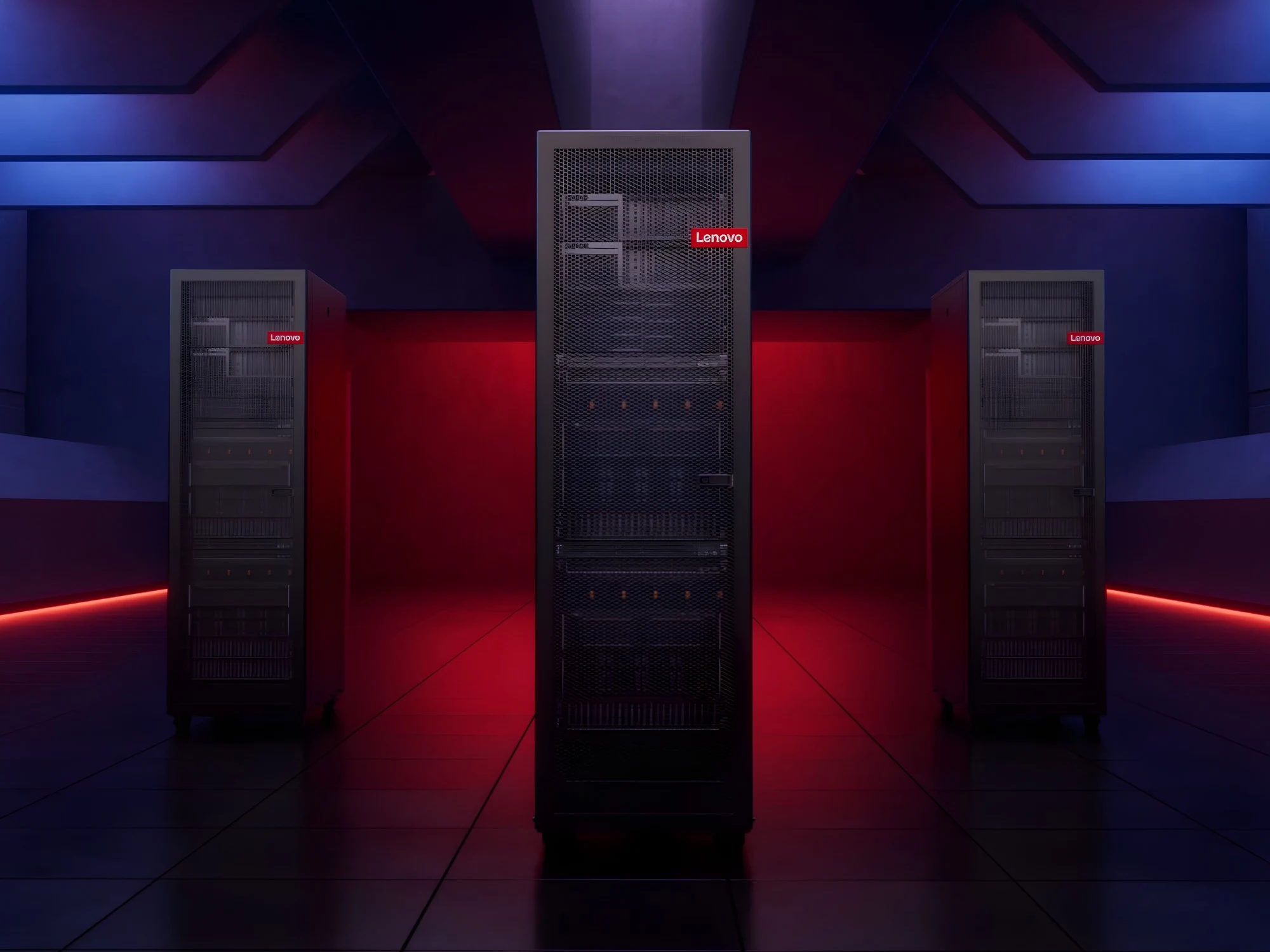
  • Lenovo Warns Buyers: Act Fast for Lowest Prices Amid Memory Shortage

    Lenovo Warns Buyers: Act Fast for Lowest Prices Amid Memory Shortage

    Key Takeaways

    1. Memory costs are expected to keep rising, prompting Lenovo’s President to advise customers to purchase quickly.
    2. Demand for AI server infrastructure remains strong, with current prices likely to be the lowest for the next 6 to 12 months.
    3. Price quotes can change rapidly, and stock availability is a significant concern for customers.
    4. Larger organizations face delays in completing orders, leading to reduced purchases or less desirable alternatives.
    5. Laptop prices may soon increase due to decreasing component inventories, making discounts less common.


    Despite the increase in memory costs, several manufacturers of laptops, desktops, and servers have been careful not to scare their customers. Nevertheless, Ryan McCurdy, the North American President for Lenovo, shared a clear view of the ongoing situation. He believes that the costs for components will keep rising. In a discussion with CRN, he emphasized that partners should consider making their purchases as soon as they can.

    AI Server Demand Stays Strong

    McCurdy pointed out that the need for AI server infrastructure is not showing any signs of letting up. Because of this constant demand, the company is urging customers to act quickly. He mentioned to the tech news outlet that the current prices are at the lowest they will be for the next 6 to 12 months.

    Sadly, some customers are discovering that the prices they get quoted can change in less than 12 hours. A systems integrator shared with CRN that the availability of stock is just as significant a worry as the pricing. His company attempted to secure a substantial number of GPU-accelerated servers from Dell, only to find out that they had sold out later that very same day.

    Challenges for Larger Customers

    Other big customers, such as schools and organizations, are also having trouble finishing their orders on time. Ideally, these transactions would be completed right away, but the entire process could take weeks. Consequently, Lenovo partners are either purchasing less equipment or opting for alternatives that are not as desirable.

    The memory shortage is also affecting smaller clients who are looking to buy laptops or desktops. McCurdy believes that deals with suppliers have positioned Lenovo in a “better spot than many to manage this situation.” However, DRAM makers like Samsung and SK Hynix are hesitant to agree on fair long-term contracts.

    Pricing and Discounts May Change

    In many instances, laptops produced by major brands have not seen a price increase compared to months ago. However, this is expected to change as component inventories decrease. Buyers might find that discounts are harder to come by, and laptop promotions may end sooner than they anticipated.

    Putting together a custom PC while keeping to a budget can be an even tougher challenge. Ultimately, prebuilt systems will start to mirror the higher prices for memory and the inflated costs of Nvidia GPUs or SSDs.

    Source:
    Link


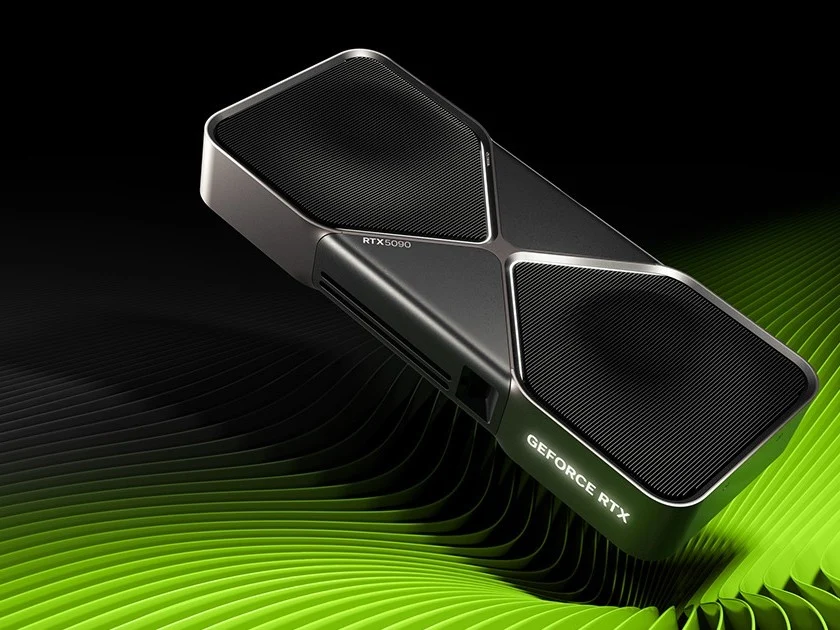
  • Nvidia to Launch High-End Gaming Graphics Card in Late 2026

    Nvidia to Launch High-End Gaming Graphics Card in Late 2026

    Key Takeaways

    1. Nvidia will not release new gaming GPUs in 2026, focusing instead on datacenter and AI products due to a memory shortage.
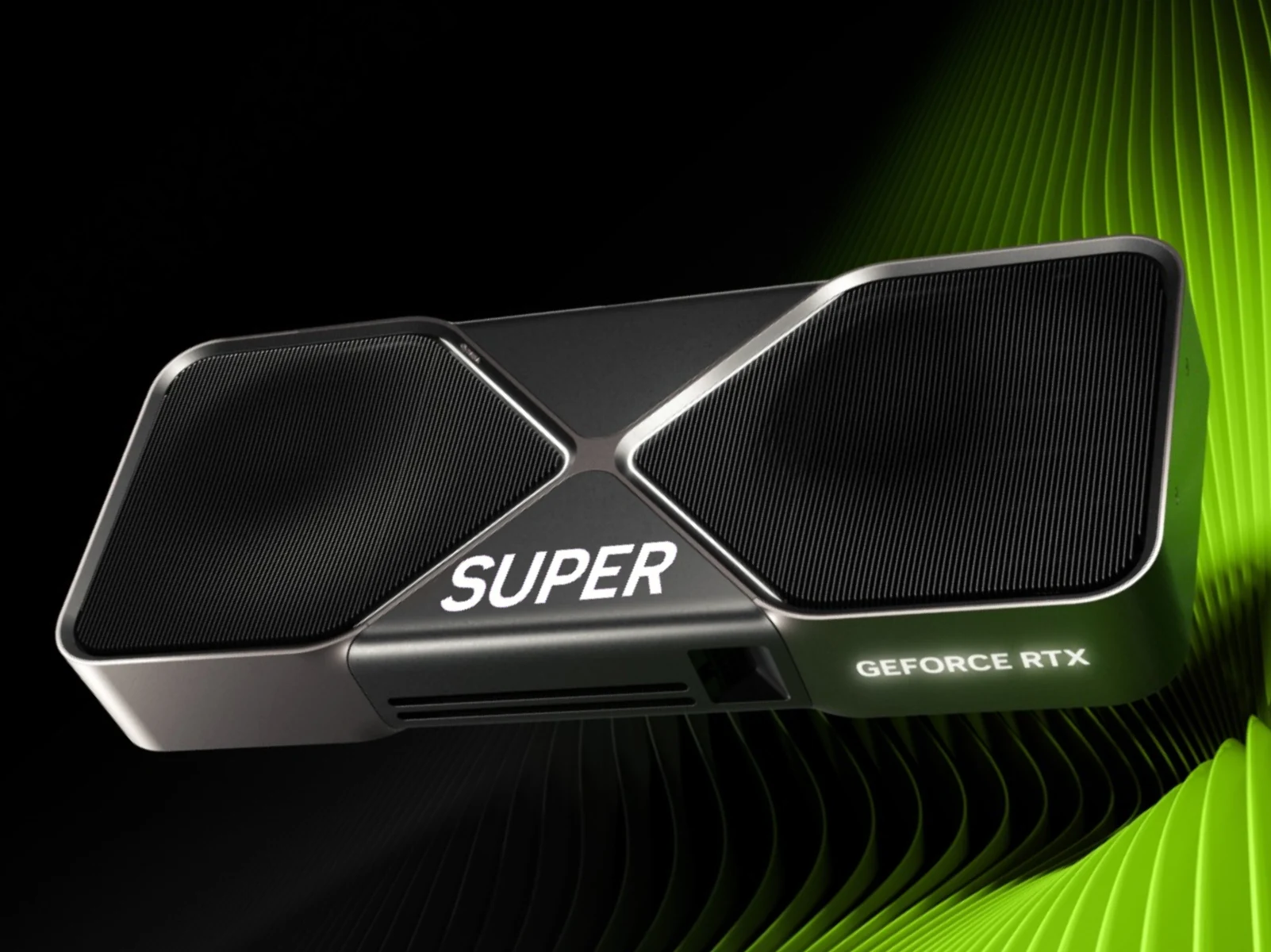
    2. A high-end GPU, possibly the RTX 5090 Ti, may be released in Q3 2026, but it’s not part of the RTX 50 Super lineup.
    3. The RTX 5090 Ti is expected to feature a GB203 chip with 24,064 CUDA cores, an increase from the RTX 5090’s 21,760.
    4. There may be limited performance improvements with the RTX 5090 Ti, and overheating could be an issue due to higher power demands.
    5. The RTX 4090 Ti was never released, raising doubts about the RTX 5090 Ti’s launch and the future of Titan-class cards in Nvidia’s lineup.


    Earlier this month, a report indicated that Nvidia doesn’t plan to introduce any new gaming GPU in 2026, including the frequently discussed RTX 50 Super refresh. This decision is reportedly due to Nvidia shifting its focus towards datacenter and AI products, alongside an ongoing memory shortage. Nevertheless, sources from Overclockers suggest otherwise. Supposedly, at least one high-end SKU is set to be released around Q3 2026.

    Upcoming High-End GPU

    The report clarifies that this new model isn’t part of the RTX 50 Super lineup. It seems to be positioned above the RTX 5090, hinting it could debut as an RTX 5090 Ti. Details on its specifications are scarce, but it’s believed that a complete, uncut GB203 chip with 24,064 CUDA cores (compared to 21,760 on the RTX 5090) might be the only feasible option. An increase in VRAM appears unlikely, as most gaming scenarios typically do not require more than the 32 GB that the standard RTX 5090 provides.

    Uncertain Future for RTX 5090 Ti

    That being said, there’s a strong possibility that the rumored RTX 5090 Ti may never actually release. For one, the additional CUDA cores might not lead to a significant performance improvement, and the increased power demands could cause overheating issues—something that’s still a concern for high-end Nvidia GPUs. Its predecessor, the RTX 4090 Ti, never came to fruition, and there’s no evident reason for Nvidia to reintroduce Titan-class cards, especially since competitors are still working to catch up with its xx80-class models.

    Source:
    Link


  • Nvidia GeForce RTX 50 Super Refresh and RTX 60 Series Delayed

    Nvidia GeForce RTX 50 Super Refresh and RTX 60 Series Delayed

    Key Takeaways

    1. The RTX 50 Super series has been delayed, with speculation of possible cancellation by Nvidia.
    2. The RTX 60 series, originally set for late 2027, is now expected to launch in 2028 or later due to resource allocation for AI hardware.
    3. Nvidia may reduce production of current RTX 50 models, particularly affecting the 16 GB RTX 5060 Ti and RTX 5070 Ti.
    4. The only Nvidia GPU with 16 GB of VRAM could be the GeForce RTX 5080, likely at a high price.
    5. AMD is expected to offer reasonably priced 16 GB gaming GPUs, like the Radeon RX 9070 XT and RX 9060 XT, while Intel’s Arc B770 is only a rumor.


    A lot of talks from last year (2025) hinted that Nvidia was set to unveil its RTX 50 Super series at CES 2026. Sadly, Nvidia didn’t share much for consumers and instead concentrated on AI developments. According to a new report from The Information (via Reddit), those who are planning to purchase a new Nvidia GPU in 2026 might be let down.

    Delays in the RTX 50 Super Lineup

    It seems that the entire RTX 50 Super series has been delayed to an unknown date. At this stage, it’s fair to think Nvidia might have canceled it. The main goal of this refresh was to boost the VRAM on the current Blackwell graphics cards. Given the shortage of memory, Nvidia may struggle to keep prices reasonable.

    Impact on the Next-Gen RTX 60 Series

    Consequently, the upcoming RTX 60 series gaming GPUs, based on the Rubin architecture, have also been affected. Originally scheduled for a late 2027 release, they are now expected to debut in 2028 or even later. Right now, Nvidia is concentrating all its resources on addressing its large backlog of AI hardware.

    Changes in Production Plans

    The report goes on to say that Nvidia might reduce the production of current RTX 50 models. This supports earlier speculations that suggested the same, with the 16 GB RTX 5060 Ti and RTX 5070 Ti being the first to feel the impact. Essentially, the only Nvidia GPU with 16 GB will be the GeForce RTX 5080—and it will probably come with a steep price tag.

    In the end, the only reasonably priced gaming GPUs with 16 GB of VRAM are likely to come from AMD, including the Radeon RX 9070 XT and Radeon RX 9060 XT. There’s also Intel’s rumored Arc B770, which has the same memory capacity, but as of now, it only exists in rumors.

    Source:
    Link


  • Nvidia CEO Jensen Huang Doubts OpenAI Investment for ChatGPT

    Nvidia CEO Jensen Huang Doubts OpenAI Investment for ChatGPT

    Key Takeaways

    1. Nvidia’s potential $100 billion investment in OpenAI is largely paused due to internal doubts and skepticism within the company.
    2. CEO Jensen Huang has raised concerns about OpenAI’s business discipline and clarified that the initial agreement was non-binding.
    3. Talks have shifted from a large-scale infrastructure deal to a potential equity investment in the tens of billions as OpenAI seeks ongoing funding.
    4. OpenAI faces intensified competition from Google and Anthropic, affecting its growth and need for computing resources.
    5. The halted agreement could impact OpenAI’s plans to go public by 2026, as it navigates liabilities and competition for essential technology.


    In September, Nvidia revealed it would possibly invest up to $100 billion in OpenAI. However, recent news from the Wall Street Journal indicates that this initiative is largely paused. The project, which CEO Jensen Huang had previously called “the largest computing project in history,” aimed for Nvidia to create a computing capacity of no less than 10 gigawatts and to offer financial backing for OpenAI to rent the essential chips.

    Internal Doubts at Nvidia

    Insiders have shared that skepticism within Nvidia hindered negotiations from moving forward past the initial stages. Jensen Huang has reportedly communicated to peers in the industry that the original letter of intent was non-binding and has expressed private concerns regarding what he sees as a lack of discipline in OpenAI’s business strategies.

    Reevaluating the Partnership

    Currently, both companies are rethinking the nature of their partnership. Rather than pursuing a large-scale infrastructure agreement, talks are now centered around a traditional equity investment from Nvidia, potentially in the tens of billions of dollars, as part of OpenAI’s ongoing funding effort. This hesitation is partly due to mounting competitive pressures: Google’s Gemini has slowed ChatGPT’s growth and raised internal concerns, while Anthropic’s “Claude Code” also poses a threat to market share. Moreover, Nvidia is adopting a dual approach and has already pledged up to $10 billion in investments towards Anthropic, which competes with OpenAI.

    The Stakes for OpenAI

    For OpenAI, which is hoping to go public by the end of 2026, the halted agreement is a blow to its quest for essential computing resources. OpenAI CEO Sam Altman had earlier indicated liabilities amounting to $1.4 trillion, causing worry among investors given the company’s income.

    Nonetheless, finalizing an agreement remains crucial for both parties: Nvidia seeks to avoid allowing OpenAI to lag behind rivals like Google or Anthropic, who are increasingly depending on their own chipsets like TPUs or Amazon’s Trainium, rather than utilizing Nvidia’s GPUs. Additionally, reports suggest that Amazon is also in talks for its own investment in OpenAI, which could reach up to $50 billion.

    Source:
    Link