
Key Takeaways
1. Nvidia’s driver version 595.59 caused decreased GPU performance and fan detection issues, leading to its withdrawal and a problematic replacement, version 595.71.
2. The new driver version 595.71 has introduced a voltage lock on certain GPUs, including the RTX 5090, RTX 4090, RTX 4080 Super, and RTX 4070 Ti Super.
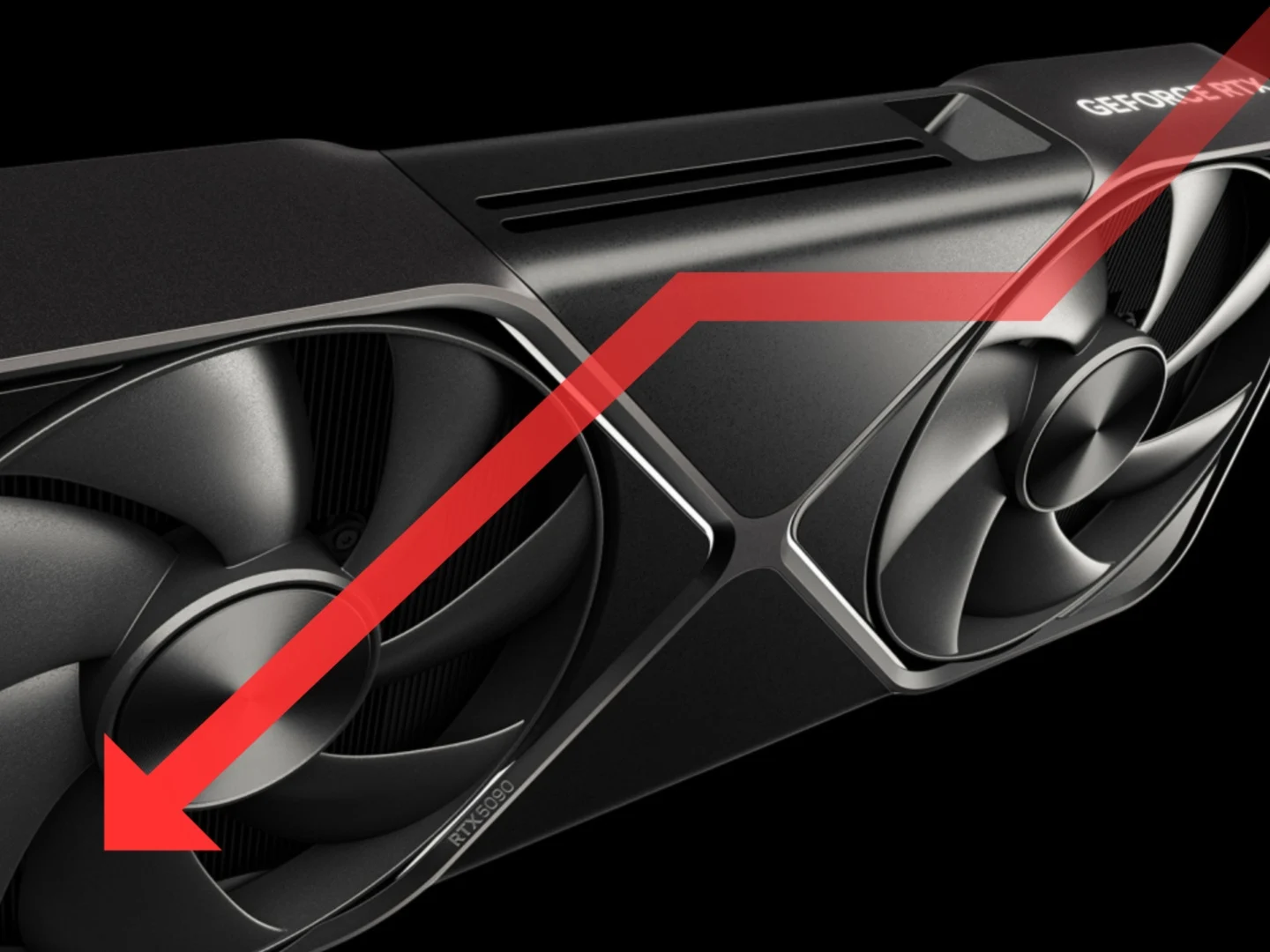
3. Performance tests show that the voltage levels drop significantly under both stock and overclocked settings, limiting the core clock speeds of affected GPUs.
4. Comparisons by Wccftech reveal that the new driver results in lower voltage and clock speeds compared to previous drivers, even with manual overclocking.
5. Nvidia’s voltage restrictions appear to be a response to reports of melted connectors, intended to prevent damage but resulting in reduced overall performance.
Nvidia has been facing challenges lately following the release of the Resident Evil Requiem Game Ready Drivers. The driver version 595.59, which was intended to enhance GPU performance for the game, unfortunately led to decreased performance and issues with GPU fan detection. In response, Nvidia pulled the problematic drivers and issued an updated version, but this new release appears to have brought its own set of problems.
Voltage Lock Concerns
According to Bang4BuckPC Gamer on YouTube, the new driver version 595.71 has introduced a voltage lock on certain GPUs. Although the complete list of affected GPUs has not been fully assessed, it’s confirmed that the RTX 5090 is among those impacted. Users of the RTX 4090, RTX 4080 Super, and RTX 4070 Ti Super are also reporting similar issues with the latest drivers.
Performance Tests Reveal Issues
In a recent video, the YouTuber revealed that after upgrading their Asus TUF Gaming GeForce RTX 5090 OC Edition to the new driver, the voltage levels dropped at both stock and overclocked settings. Notably, the GPU initially reached a voltage of 1.055V to 1.060V at stock settings. However, when a 150 MHz overclock was applied, while the clock speed increased as expected, the voltage fell to 1.045V to 1.050V. With a further 300 MHz overclock, the voltage dipped below 1V (0.990V), yet the core clock stayed below 3,000 MHz. It appears that the voltage has been capped at under 1V, which restricts clock speeds from surpassing 3,000 MHz even with overclocking.
Additional Testing by Wccftech
Wccftech conducted their own tests with an MSI GeForce RTX 5090 SUPRIM X and found comparable results. With an earlier driver and some manual overclocking, the GPU operated at 1.020V to 1.030V, achieving core clock speeds up to 3,030 MHz. However, after switching to the new driver with the same overclock settings, the GPU couldn’t exceed 3,000 MHz, and the voltages fell to 1.005V – 1.010V. Even in stock configuration, the GPU showed lower voltages with the new driver compared to the previous one.
Reason Behind Voltage Limits
It seems Nvidia may have introduced these voltage restrictions due to reports of melted connectors. This change is likely aimed at limiting the maximum voltage through the 16-pin connectors, theoretically reducing the risk of connector burns or GPU damage. Unfortunately, this solution negatively impacts overall performance.
Source:
Link
Leave a Reply