Tag: Resident Evil Requiem

  • Capcom Addresses Resident Evil Requiem DLSS 5 Backlash: We Got the Design Right

    Capcom Addresses Resident Evil Requiem DLSS 5 Backlash: We Got the Design Right

    Key Takeaway

    1. Fans’ strong positive reaction to Grace Ashcroft’s original character design suggests Capcom nailed her look and affirmed her as a fan favorite.
    2. The backlash against Nvidia’s DLSS 5 featuring a heavily altered, more “glamorous” version of Grace was seen by the development team as validation of the original design’s success.
    3. Capcom’s team feels confident that the original character design resonated well with fans, viewing the criticism of the DLSS 5 tech demo as a sign they achieved a convincing and relatable character portrayal.

    Capcom’s Response to the Backlash Over Requiem

    Capcom Division 1, the team behind Resident Evil 7, Village, remakes, and the recent hit Requiem, is kinda happy with the recent drama around Grace Ashcroft’s look in DLSS 5. They see it as a win. During a talk with Eurogamer, Requiem’s director, Koshi Nakanishi, said he was pretty pleased about the fans pushing back hard on Nvidia’s tech demo showcasing DLSS 5. He believes fans who love the original design of Grace Ashcroft felt like Capcom hit the mark from the beginning, giving him a kinda reassurance that the characters they create are appreciated, despite his worries.

    Fan Reactions and Character Design

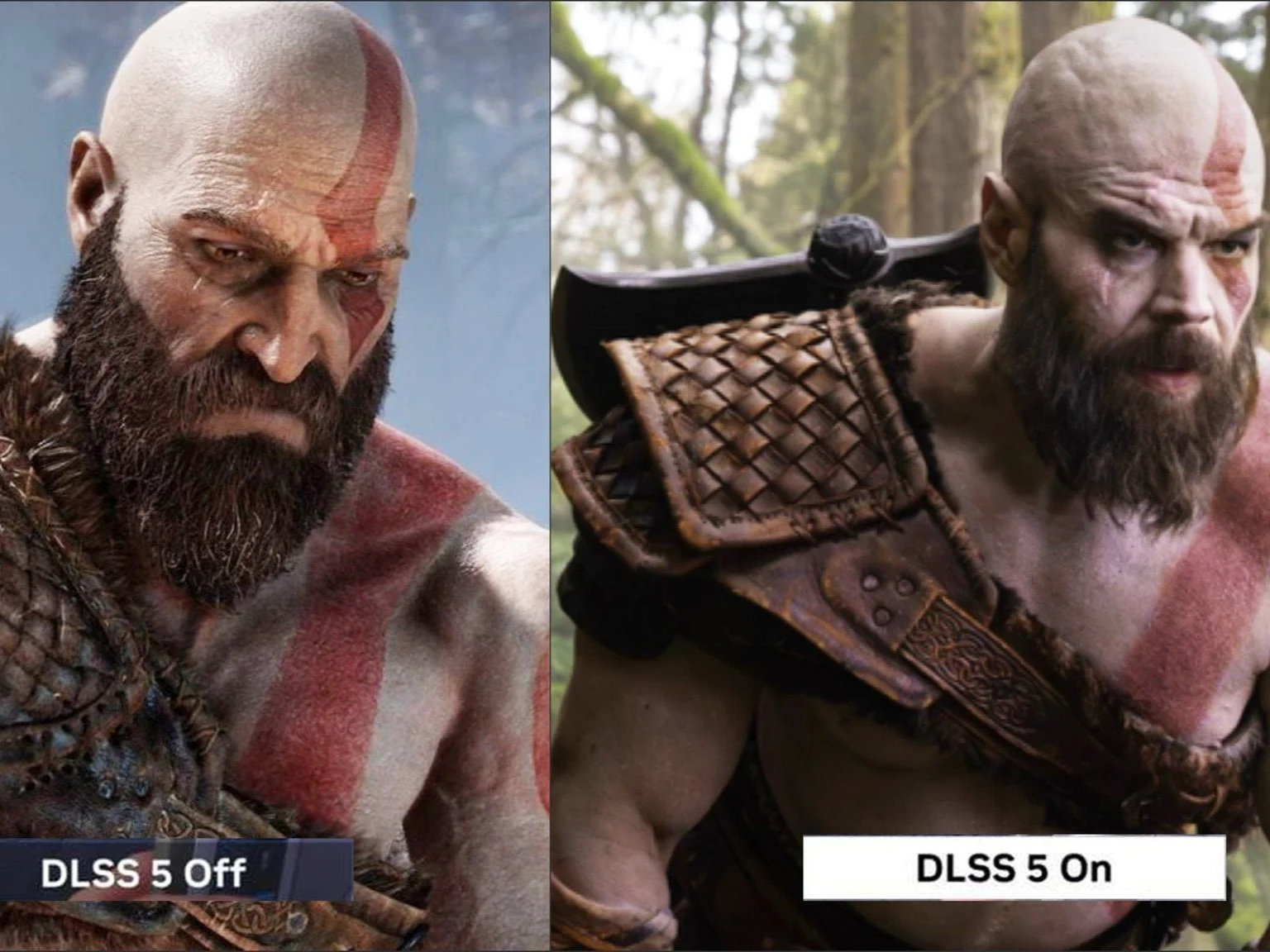
    • Fans had mixed feelings about Nvidia’s version of Grace Ashcroft, which featured a super sharp face, different eyes, and fuller lips, giving her a glam look much like the kind seen on Instagram.
    • The tech demo was shown after the game was out, on February 27, 2026, making it recent. Nvidia showed side-by-side shots of Leon S. Kennedy and Ashcroft with their new neural-rendering tech.
    • The reaction was loud, with many fans feeling like DLSS 5’s update was not fitting. Nvidia’s CEO Jensen Huang initially said fans were “completely wrong,” but later apologized or at least clarified, saying the tech lets designers keep artistic control, though he also criticized “generative AI slop.”

    Design Success and Fan Satisfaction

    Capcom’s team, especially Nakanishi and producer Masato Kumazawa, felt good about how Grace was received. They thought her character design was spot on and appreciated how her expressive face shows what she’s going through emotionally. They mentioned, “She’s very emotionally expressive about the fear she goes through, being thrust into this intense experience, and because she’s so relatable, you root for her.” It’s like they got her just right, and fans seem to agree, here. Kumazawa added that many players actually liked her original look and didn’t want it changed, so that proves they nailed her design and made her a favorite fast.

    Sources
  • Resident Evil Requiem Producer Teases Epic DLC: Sharpen Your Tomahawks

    Resident Evil Requiem Producer Teases Epic DLC: Sharpen Your Tomahawks

    Key Takeaway

    1. The first DLC for Resident Evil: Requiem is a mini-game that unlocks after completing the main story.
    2. The mini-game is expected to be released in May and is similar to Resident Evil 4 Remake’s Mercenaries mode, focusing on combat.
    3. Players are encouraged to finish the main story during Golden Week to time their experience with the mini-game’s release.
    4. An additional story-focused DLC, potentially involving Chris Redfield, is in development and will be released later.
    5. The mini-game is nearing the end of its development stage.

    Resident Evil Requiem’s Upcoming DLC Exciting Fans

    The producers are urging players to finish Resident Evil: Requiem before next week, since a mini-game DLC is soon to release. This is especially perfect during Japan’s Golden Week, which is coming up. Its a ideal time to completes the main game and prepares for new content, likely much like RE4’s Mercenaries mode.

    Insights from the Developers

    Koshi Nakanishi and Masato Kumazawa shared some interesting details during an interview with Denfaminicogamer. They discussed how the game is progress, future plans, and what fans can expect from DLC. This come fresh after Nakanishi announced the mini-game was in development, scheduled for release in May.

    How and When to Play the Mini-Game

    Nakanishi revealed that players can only access the mini-game after they beat the main story at least once. Kumazawa suggested that players should aim to finish the main game during Golden Week (April 28 to May 6). He advised, “This mini-game unlocks only after completing the main story, so it’s a good idea to try finishing it during Golden Week.”

    The Mini-Game’s Focus and Gameplay

    The mini-game is said to amplify Requiem’s combat system. Its similar to Resident Evil 4’s Mercenaries mode, providing extra action for players. Nakanishi explained, “It’s based on the main battles from the game, but those who finish the main story and want more fun will love it. Get ready and stay tuned.”

    Beyond the Mini-Game DLC

    While the mini-game is nearing completion, there’s also talk of a story-focused DLC. This might involve Chris Redfield, either before or after the story in Resident Evil Requiem. But keep in mind, details are still uncertain and should be taken with caution.

    What We Know About Future Content

    Nakanishi said briefly, “The story DLC is in full production now, so stay excited. The mini-game is almost ready to go, and more details will be released soon.” Fans are eager to see what comes next, especially with such promising updates on the horizon.

    Sources
  • Resident Evil Requiem Has Its Performance Boosted by Denuvo Crack Amid DRM Threats

    Resident Evil Requiem Has Its Performance Boosted by Denuvo Crack Amid DRM Threats

    Key Takeaway

    1. Irdeto’s DRM software, including Denuvo, has been swiftly bypassed, with a cracked version of Resident Evil Requiem surfacing just over 5 weeks after release.
    2. The hypervisor bypass method complicates DRM removal but may expose users to security risks and becomes easier to implement over time.
    3. Cracked versions often improve game performance and reduce system resource strain, highlighting drawbacks of DRM on system efficiency.
    4. The quick defeat of Denuvo suggests a potential shift in the effectiveness of anti-piracy measures for newer game releases.

    The Rise of Cracked DRM and Its Impact

    Denuvo has famously protected many big games from pirates but now folks are claiming it ain’t as invincible as once thought. It’s kinda wild how just over a month after the launch of Resident Evil Requiem, a cracked version was already surfacing online. Not just that, but testing shows that Denuvo might be slowing down your game’s performance too. Everyone’s talking about how these anti-piracy measures might be more trouble than they’re worth.

    The Speed of the Crack

    What makes this situation even more interesting is how quick it all happened. Usually, hackers spend months or even years cracking old games, but this time it was done way faster. A recent report talks about how hacker groups like voices38 have sped up the process a lot. They’ve even created tools that work across different titles, making it easier to bypass protections like Denuvo and Irdeto’s DRM. If companies don’t act fast, new releases like RE9 could be targeted too, making piracy even more widespread.

    Methods of Circumventing Security

    One way hackers bypass these protections is through hypervisor exploits. Instead of hacking code directly, they trick the system into thinking the game has the right permissions. This tech pushes the boundaries, but it’s not without risks. Gamers might need to tweak their Windows settings, which could expose them to potential threats. And, from what I’ve seen, it looks like hacking this way might only become easier over time, making the security even less reliable.

    Performance and Resource Drain

    Another thing, Denuvo’s not just about preventing piracy, it also messes with game performance. Some players have noticed that turning the DRM off can increase FPS by around 5%. YouTuber ChillyWillMD even measured that removing it reduces system memory usage and frees up VRAM. The result? Games run smoother in some scenes, especially when heavy graphical effects like path tracing are used. Still, not everyone might notice the difference if their system isn’t a beast, and some big companies like Capcom aren’t losing sleep since their latest game sold well already.

    Looking Ahead

    All this shows that the game piracy scene is evolving fast, with hackers finding new ways to get around even the toughest DRM protections. No doubt, we might see more cracked versions pop up shortly after new games hit the market. It’s a game of cat and mouse, but gamers and developers will probably need to adapt for the future. Companies might have to rethink their security strategies, and players will just have to stay vigilant about their system safety.

  • DLSS 5 Faces Backlash for AI Integration in Video Games

    DLSS 5 Faces Backlash for AI Integration in Video Games

    Key Takeaways

    1. Nvidia’s DLSS 5 enhances in-game lighting using machine learning, significantly improving photorealism but altering game aesthetics.
    2. Character rendering in games like Resident Evil Requiem and Starfield is noticeably affected, leading to concerns about characters appearing unrecognizable.
    3. Community reactions to DLSS 5 have been largely negative, with criticisms focusing on the loss of artistic integrity and character depth.
    4. DLSS 5 processes lighting without changing character models, but the lighting effects can drastically shift the game’s visual style.
    5. Developers may gain more control over output with DLSS 5, but there are concerns it could lead to lower-quality games if misused.


    At GTC 2026, Nvidia unveiled DLSS 5, the latest version of Deep Learning Super Sampling (DLSS). This new technology is designed to enhance in-game lighting using machine learning, aiming to elevate photorealism significantly. The demonstrations reveal a noticeable improvement in lighting when DLSS 5 is activated. These adjustments appear to enhance photorealism by accentuating specular highlights, showcasing the true quality of game assets, but also, to many players’ frustration, drastically altering the game’s overall aesthetic.

    Impact on Character Rendering

    In Resident Evil Requiem, Digital Foundry illustrates how DLSS 5 takes Capcom’s already impressive character rendering to the next level. However, the differences are so pronounced that Grace, the main character of RE Requiem, seems almost unrecognizable. Similar ground-breaking improvements are evident in Starfield, where character designs verge on photorealism. Yet, this shift in character appearance introduces the same unsettling feeling as AI-generated images often do.

    Community Reactions

    Much of the online discussion about DLSS 5 has been overwhelmingly negative, with initial responses being quite intense. Some critics refer to it as “AI slop,” while others mourn the chaos it brings to artistic integrity. Gamers Nexus described the transformation of Grace as “an AI-generated dating profile picture used to scam an old person in another country,” expressing disappointment that the character lacks “any character or soul.”

    Confusion Over Changes

    This is where things become a bit perplexing. Digital Foundry mentions that DLSS 5 solely processes lighting information and does not alter assets, including character models. Thus, any changes in character designs or artwork stem entirely from the “enhanced” lighting effects. Nevertheless, it is clear that the lighting adjustments in DLSS 5 do more than merely apply a photorealism filter.

    For example, The Elder Scrolls IV: Oblivion Remastered appears almost like an entirely different game when DLSS 5 is used. The update transforms the game’s formerly warm aesthetic into a colder, more high-contrast visual style.

    Developer Control and Concerns

    It is worth noting that some people may be overreacting, as the final version of DLSS 5 is expected to provide developers with greater control over the final image output. However, this reaction is understandable, considering how often modern game developers have disappointed gamers. For instance, DLSS was meant to resolve performance issues, yet many games still launch in incomplete and subpar conditions. There’s a fear that DLSS 5 might become just another tool for studios to reduce genuine effort, potentially leading to lower quality games.

    On a positive note, there is hope that Nvidia is listening to this critical feedback, which could mean a more polished version of DLSS 5 will be available by Fall 2026.

    Source:
    Link


  • Sony Adds PSSR 2.0 Support for 11 New PS5 Pro Games

    Sony Adds PSSR 2.0 Support for 11 New PS5 Pro Games

    Key Takeaways

    1. Sony has launched PSSR 2.0 technology for the PS5 Pro, enhancing image quality and performance.
    2. The first game to utilize PSSR 2.0 is Resident Evil Requiem.
    3. More games will support PSSR 2.0, including Crimson Desert upon release and patches for Assassin’s Creed Shadows and Cyberpunk 2077.
    4. The new PS5 system software update begins rolling out on March 16 at 10 AM PT, but availability may vary by user.
    5. Users can manually check for the update in the Settings menu if it doesn’t appear automatically.


    Sony has recently enhanced its PlayStation Spectral Super Resolution (PSSR) tech on the PS5 Pro by launching the upgraded PSSR 2.0 version. The first game to utilize this new technology was Resident Evil Requiem, showcasing how it could elevate the image quality and performance on the console. Now, Sony has announced that more titles will also support this improved feature.

    Expanded Game Support

    In a recent post on the PlayStation Blog, Sony shared that the newest update for the PS5 system software includes broader support for PSSR 2.0. The games that can now benefit from this upgrade are as follows:

    In addition to these titles, Sony has said that Crimson Desert will also be compatible with PSSR 2.0 upon its release. Meanwhile, both Assassin’s Creed Shadows and Cyberpunk 2077 will get a patch in the upcoming weeks to enable support for the enhanced PSSR.

    Update Rollout Details

    Sony indicated that the new PS5 system software update will begin rolling out today, March 16, at 10 AM PT, but it will be deployed gradually. This means that some users could receive it later than others. The company also suggests that users manually check for the update through the Settings menu if it doesn’t appear automatically. However, over the next few days, all PS5 Pro users should receive the update.

    Source:
    Link


  • Resident Evil Requiem Becomes Fastest-Selling Game on Steam & PS

    Resident Evil Requiem Becomes Fastest-Selling Game on Steam & PS

    Key Takeaways

    1. Record-Breaking Launch: Resident Evil Requiem sold 5 million copies within five days of its release, making it the fastest-selling title in the franchise’s history.

    2. High Player Engagement: The game reached a peak of 344,214 concurrent players on Steam shortly after launch, significantly surpassing Resident Evil Village’s peak of 106,631.

    3. Daily Active Players: Over 2.2 million players engage with Resident Evil Requiem daily across platforms like PlayStation 5, Xbox Series, and Steam.

    4. Visual Excellence: The game is praised for its graphics, being considered one of the best-looking modern games available.

    5. Platform Availability: Resident Evil Requiem is available only on Xbox Series consoles, PlayStation 5/5 Pro, Nintendo Switch 2, and Steam, excluding older consoles like Xbox One and PS4.


    Capcom has really knocked it out of the park with Resident Evil Requiem. The game was released to rave reviews on February 27, and it’s off to a fantastic start. SteamDB shows that the game reached an all-time high of 344,214 players playing at the same time on Steam nine days ago. In comparison, Resident Evil Village only had a peak of 106,631 concurrent players on the platform.

    Sales Milestone

    Resident Evil Requiem appears to be selling quite well. Capcom shared on March 5 that it shipped 5 million copies of Resident Evil Requiem just five days after its launch on February 27. This makes Resident Evil Requiem the fastest-selling title in the franchise’s history.

    Platform Estimates

    While Capcom didn’t give specific numbers for each platform, Alinea Analytics has shared its own estimates regarding sales across platforms. Their early estimates suggest that Capcom sold:

    The analysis also indicates that the Nintendo Switch 2 and physical sales together represent about 0.8 to 1 million copies. Furthermore, Alinea mentioned that over 2.2 million players engage with Resident Evil Requiem daily on platforms like PlayStation 5, Xbox Series, and Steam.

    Graphics and Availability

    Resident Evil Requiem is a visual masterpiece. Digital Foundry considers it to be among the best-looking modern games available. Unsurprisingly, it is only accessible on Xbox Series consoles, PlayStation 5/5 Pro, Nintendo Switch 2, and Steam. Unfortunately, the Xbox One, PS4, and the original Switch users are out of luck.

    If you’re playing on a PC or gaming laptop, the recommended system requirements for Resident Evil Requiem are:

    These basic requirements are designed for 1080p gameplay upscaled from 720p. In order to play the game at 1440p or 4K, you will need significantly more powerful graphics cards.

    Source:
    Link


  • Resident Evil Requiem PS5 Patch Disables Ray Tracing Downgrade

    Resident Evil Requiem PS5 Patch Disables Ray Tracing Downgrade

    Key Takeaways

    1. Digital Foundry praised the performance of Resident Evil Requiem on PS5 Pro but noted a decline in ray tracing quality after a March 4 patch.
    2. The update aimed to fix graphical issues but led to player dissatisfaction due to visual artifacts and a loss of realistic reflections in Raccoon City.
    3. John Linneman from Digital Foundry criticized the effectiveness of the new denoiser, suggesting it was inadequate for the open-world environment.
    4. Mixed player reactions emerged, with some appreciating the cleaner visuals while many lamented the loss of vibrant lighting and reflections.
    5. The impact of the update on the Steam version remains uncertain, with reports of lighting issues prompting some players to disable ray tracing.


    Digital Foundry has given high marks to the performance of Resident Evil Requiem on PS5 Pro in a recent review. Nevertheless, the once impressive ray tracing seems to have vanished in Raccoon City. A recent patch attempted to fix the noisy visuals, but the tech site sees this as a major step back.

    The Impact of the March 4th Update

    Players started to notice the alterations after Capcom released an update on March 4. This patch was meant to resolve various graphical issues across several platforms. Ray traced global illumination (RTGI) can create lifelike reflections, but it may also bring about some unwanted effects. Gamers expressed their dissatisfaction with visual artifacts in certain locations, which hampered image sharpness.

    Insights from Digital Foundry

    In a podcast exclusive to Patreon, John Linneman from Digital Foundry discussed the changes in Resident Evil Requiem. He mentioned that a denoiser was put in place to lessen the grainy effects that ray tracing can produce, particularly noticeable in Leon’s segments of Raccoon City. However, Linneman thinks that this post-processing solution isn’t sufficient for the challenging open-world settings, leading Capcom to react.

    Mixed Reactions from Players

    Sadly, both Linneman and many fans are not happy with the outcome. The streets in the PS5 Pro Enhanced version of the game now appear flat, missing the realistic reflections that once made them vibrant. The lighting effects previously brought energy to the otherwise lackluster city ambiance. Many users on Reddit share this view, with one user, Resevil67, commenting on how the “graphics took a big hit there compared to the Grace parts.”

    Conversely, some players are not as concerned about the update and appreciate the tidier visuals. Nonetheless, Digital Foundry contends that Capcom should have offered an option to disable ray tracing. The developers might have opted for a quick fix instead of tackling the more challenging task of improving the denoiser.

    Uncertain Effects on the Steam Version

    It’s still not clear how the update has impacted the Steam version, but there are claims of strange lighting issues. Some players have chosen to turn off ray tracing, hoping Capcom will implement enhancements in the future.

    For fans of RTGI, apart from Raccoon City, much of the survival horror experience remains intact. Plus, there are numerous benefits to the PS5 Pro Enhanced edition, with the improved PSSR still in operation. Resident Evil Requiem is the first title on the console to utilize this upgraded upscaling, enhancing overall performance.

    Source:
    Link


  • Resident Evil Requiem Unsupported on Steam Deck Despite Good Performance

    Resident Evil Requiem Unsupported on Steam Deck Despite Good Performance

    Key Takeaways

    1. Valve categorizes games for Steam Deck as Verified, Playable, Unsupported, or Unknown to assist users in gauging performance before purchase.
    2. Resident Evil Requiem is labeled as Unsupported, indicating potential launch or performance issues, but it is found to be quite playable with minor tweaks.
    3. Performance tests show that indoor scenes can exceed 60 FPS on the Steam Deck with minimal modifications, while outdoor settings are more challenging.
    4. Adjusting graphics settings can significantly improve gameplay, achieving up to 80 FPS in indoor scenes with lifted frame rate caps.
    5. The reliability of Valve’s verification process is questionable, as some Verified titles have performance issues, while some Unsupported titles may run well with adjustments.


    Valve has a system to help users of Steam Deck figure out how well a game works on the device before they make a purchase. Games are categorized as Verified, Playable, Unsupported, or Unknown based on their performance. This should ideally assist gamers in determining whether a title will function smoothly. Nevertheless, the system isn’t always reliable, and Resident Evil Requiem is a recent example of this issue.

    Resident Evil Requiem’s Status

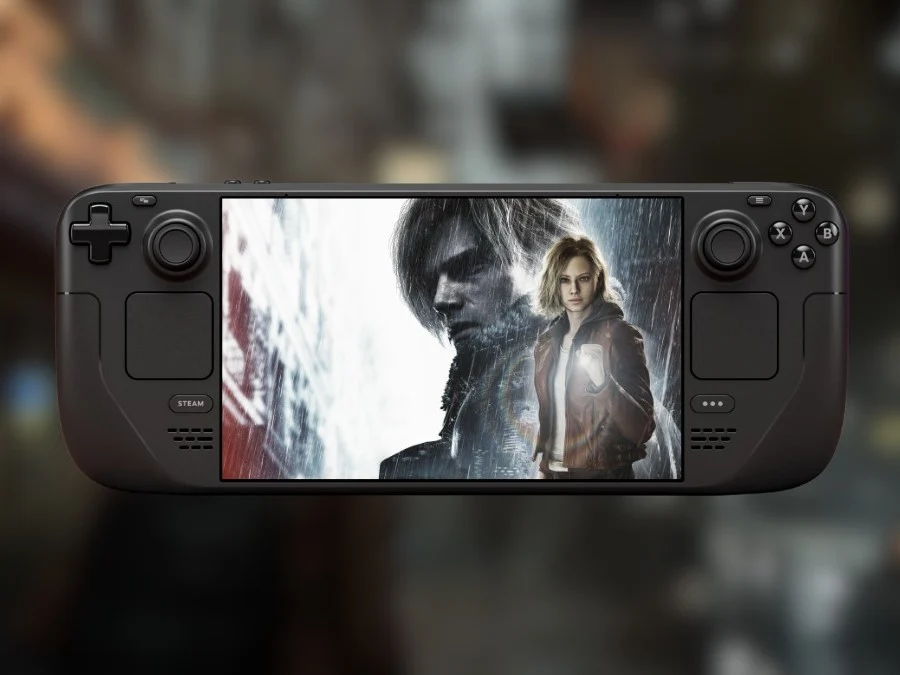
    Currently, Resident Evil Requiem is labeled as Unsupported on the Steam Deck. Generally, this label indicates that the game either fails to launch on the device or has significant performance or compatibility issues. However, the team at SteamDeckHQ ran tests on the game using Valve’s handheld and discovered that it is indeed quite playable.

    Performance Insights

    SteamDeckHQ noted that the game performs surprisingly well without extensive modifications. They mentioned that indoor settings run much smoother and can even achieve over 60 FPS on the Steam Deck with minimal effort. On the other hand, outdoor settings are more challenging, particularly in the initial segment where players navigate as Leon outside.

    The game automatically utilizes FSR 1 and limits the frame rate to 30 FPS on the Steam Deck. Nevertheless, tweaking a few options can greatly enhance the gameplay experience. For example, by using mostly low graphics settings, switching to FSR 3.1.5 on Balanced or Quality, and adjusting texture filtering to 16x anisotropic, players can achieve a notably smoother performance.

    Adjustments and Results

    With these adjustments, they managed to target 45 FPS at a 90Hz refresh rate on the Steam Deck OLED while keeping HDR active. The power consumption during gameplay varied from 16W to 18W, which is quite acceptable for a handheld device. When the frame rate cap was lifted, indoor scenes could even reach about 80 FPS, although this increased power usage to over 22W. From these findings, it’s clear that Resident Evil Requiem may not meet the standards for the Verified label, but it certainly feels more like Playable than Unsupported.

    This scenario brings to light a persistent problem with Valve’s verification process. Some titles labeled as Verified still face performance issues, while others marked as Unsupported can run well with minor tweaks. A prime example is Borderlands 4, which boasts a Verified badge yet has faced criticism for its poor performance on the handheld. So, it’s advisable to look at user feedback and gameplay analyses rather than just depending on Valve’s system when considering a purchase.

    Source:
    Link


  • Resident Evil Requiem: 100 FPS on Android Flagship via Emulation

    Resident Evil Requiem: 100 FPS on Android Flagship via Emulation

    Key Takeaways

    1. Cross-Platform Performance: Resident Evil Requiem runs effectively on unsupported platforms like MacBooks and Linux, showcasing its broad compatibility.

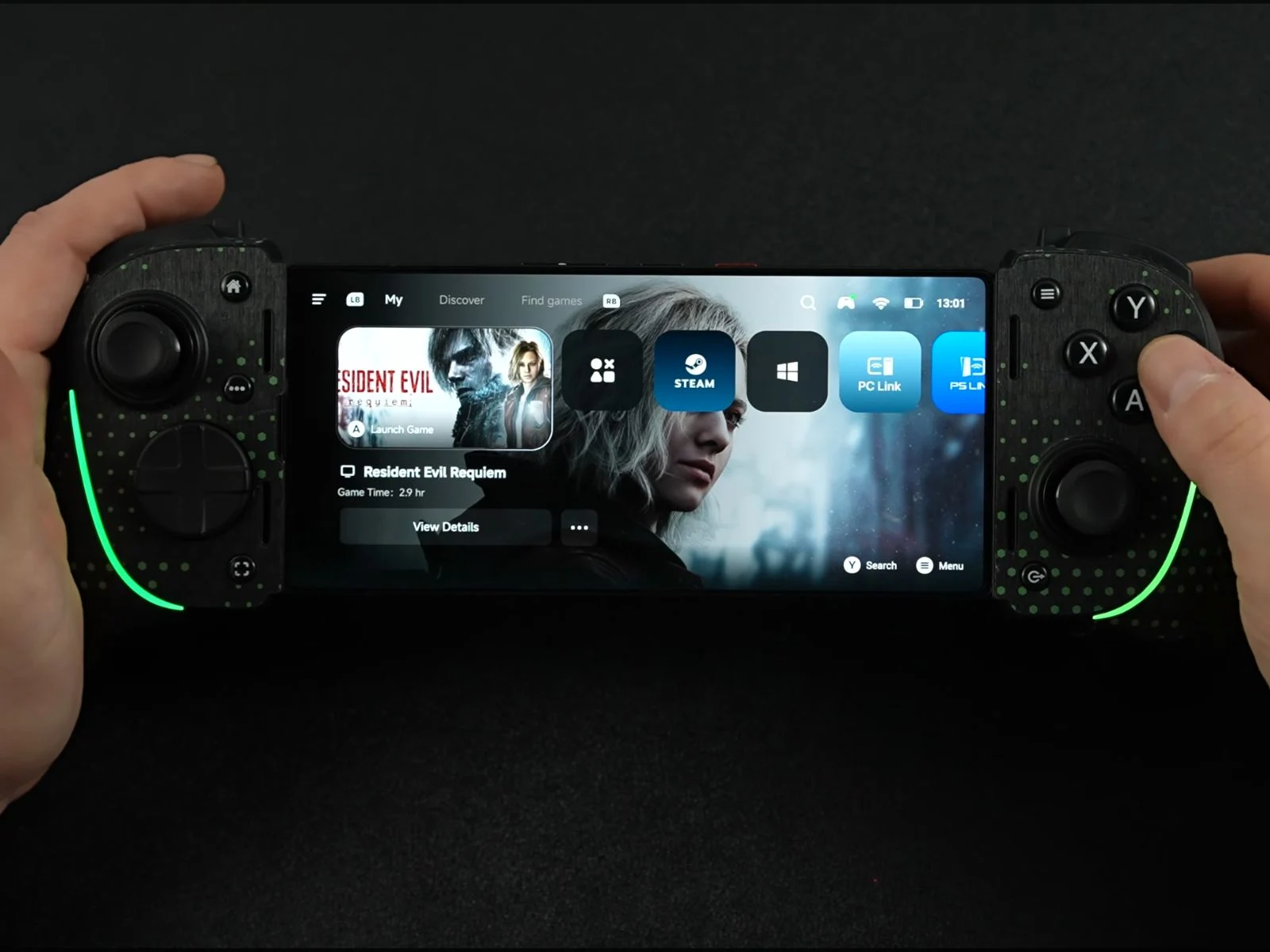
    2. Android Emulation Success: The game has been successfully emulated on an Android smartphone (RedMagic 11 Pro) using the GameHub application, allowing direct play without cloud gaming.

    3. Variable Performance: Frame rates vary significantly; indoor scenes often achieve 60-70 FPS, while outdoor areas can drop to around 40-45 FPS due to increased graphical demand.

    4. Memory Requirements: The tested device with 16 GB of RAM is crucial for smooth emulation, while devices with 8 GB may struggle, and those with 12 GB might face limitations.

    5. Future of ARM Gaming: The advancements in ARM devices may lead to improved x86-to-ARM translation tools, potentially benefiting future gaming platforms like Valve’s upcoming ARM initiatives.


    Capcom’s latest entry, Resident Evil Requiem, has just made its debut on both PC and consoles, yet early tests are already revealing its capabilities on platforms not officially supported. For example, the game has been observed to run effectively on MacBooks, despite a lack of a dedicated macOS version, and it has also performed well on a widely-used Linux distribution.

    Android Emulation Test

    In a new experiment shared by the YouTube channel ETA Prime, the PC version of the game has been demonstrated running on an Android smartphone through emulation. The testing took place on the RedMagic 11 Pro, a device we gave a favorable review to last year. This smartphone is equipped with the powerful Snapdragon 8 Elite Gen 5 processor. Instead of utilizing cloud gaming or streaming, the game is emulated directly via the GameHub application, which allows users to run Steam games on their Android devices.

    The results from the tests indicate that the game starts up with minimal configuration and can achieve 720p resolution with low settings, utilizing AMD FidelityFX Super Resolution (FSR 3.1) in Performance mode. The frame generation feature was turned off due to stability concerns during the tests, but the GameHub does offer optional super-resolution scaling.

    Performance Insights

    When it comes to performance on the Red Magic 11 Pro, it varied significantly based on the scene. Indoor locations, which are prevalent in the game, performed remarkably well, with frame rates frequently reaching the 60-70 FPS mark when the cap is removed. In tighter spaces, the frame rate even soared to as high as 100 FPS.

    However, outdoor areas proved to be more challenging. In expansive settings with more graphics and action, the performance dipped to around 40-45 FPS. The testing was done using the phone’s “Rise” performance mode to enhance CPU and GPU speeds. Even though the device is equipped with a cooling fan and liquid cooling system, prolonged use still leads to thermal throttling. Emulating PC games can be very taxing for mobile devices, and the Snapdragon chip can consume more than 20 watts while attempting to sustain performance.

    Memory Considerations

    Memory is also a crucial factor in this setup. The Red Magic device tested comes with 16 GB of RAM, which seems to be necessary for running modern PC games through emulation efficiently. The creator mentions that devices with only 8 GB of RAM might face difficulties, while those with 12 GB could work but may still face limitations depending on the specific game.

    Although this configuration is far from a substitute for handheld PCs like the Steam Deck or ROG Ally, the findings highlight the rapid advancements in ARM devices. The creator also hints that future ARM-based gaming platforms, such as Valve’s anticipated ARM hardware initiatives, might speed up the development of improved x86-to-ARM translation tools.

    Source:
    Link


  • Resident Evil Requiem Achieves ~70 FPS on Apple Silicon

    Resident Evil Requiem Achieves ~70 FPS on Apple Silicon

    Key Takeaways

    1. Game Availability: Capcom’s Resident Evil Requiem is released for PC and consoles, but Mac users are still waiting for an official macOS version.

    2. Performance on Older Apple Silicon: Older Apple Silicon chips (M1 and M2) struggle with the game, often crashing due to lack of hardware mesh shader support.

    3. Positive Results on Newer Devices: On the M3 Max MacBook Pro, the game runs at about 70 FPS at 1080p with default settings, demonstrating good performance without upscaling.

    4. Enhanced Indoor Performance: Indoor scenes show improved performance, achieving 73-75 FPS, and better results are seen at 1440p with MetalFX Quality upscaling.

    5. Affordable Device Performance: The budget-friendly MacBook Air with the M4 chip can run the game at 60 FPS with lower settings and upscaling adjustments, showcasing playable performance on less powerful hardware.


    Capcom’s Resident Evil Requiem has now been released for PC and consoles, and we’ve also seen how it performs on Linux. However, Mac users are still in anticipation of an official macOS version. Despite this, testing from Andrew Tsai’s YouTube channel reveals that the game can actually run on Apple Silicon devices with CrossOver 26, offering playable performance on the latest chips.

    Performance on Older Chips

    Testing indicates that older Apple Silicon chips like the M1 and M2 struggle with Resident Evil Requiem, crashing during startup. The tester proposes that this might be due to the absence of hardware mesh shader support, a crucial feature that the game seems to need quite a lot.

    Better Results on Newer Machines

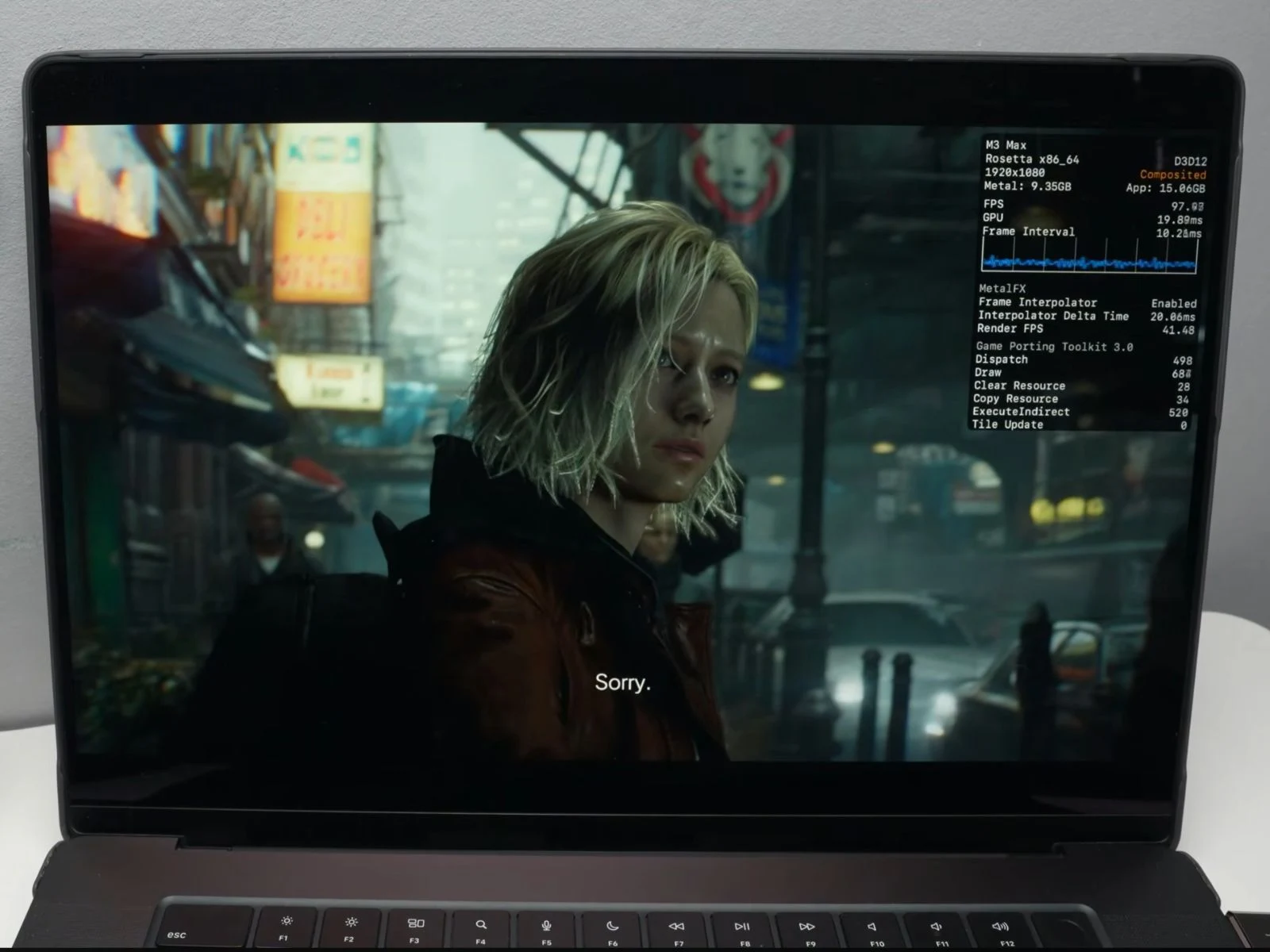
    For newer devices, results are much more encouraging. The game was tested on an M3 Max MacBook Pro equipped with 48 GB of unified memory and a 40-core GPU through CrossOver 26. At native 1080p with default graphics settings, MetalFX turned off and frame generation disabled, the system maintained approximately 70 FPS in an open street area, demonstrating that the hardware can manage the game without relying on upscaling techniques. The overlay indicates the title operates through Apple’s Game Porting Toolkit layer with around 14 ms frame times, while consuming about 10.5 GB of GPU memory.

    Indoor Performance and Upscaling Tests

    When it comes to indoor scenes, the performance is even more impressive, reaching about 73-75 FPS, with frame times sitting near 13-14 ms.

    In a different test at 1440p using MetalFX Quality upscaling, the game runs at roughly 50 FPS, with frame times close to 19-20 ms. MetalFX is set to Quality, rendering internally at 1708 × 960 before scaling to 2560 × 1440, while frame generation remains turned off. The overlay also shows GPU memory usage of around 11.2 GB and application memory at about 17.2 GB.

    Enhanced Performance with Frame Generation

    Activating frame generation delivers a noticeable boost in performance. In the same 1440p MetalFX Quality setting, the game runs at approximately 87 FPS, with frame times around 11-12 ms. The overlay also indicates a render FPS of about 34-35 FPS, meaning the actual rendered frames are lower and frame generation effectively increases the displayed frame rate. GPU memory usage increases slightly to around 13.1 GB, while application memory reaches about 19.3 GB.

    Running on More Affordable Devices

    On the more budget-friendly MacBook Air with the M4 chip, the game can still function with some tweaks. The game was adjusted to 1080p with the lowest graphics settings, while enabling MetalFX Ultra Performance upscaling and frame generation. Under these conditions, the game achieves around 60 FPS, with frame times near 16 ms. The overlay also shows a render FPS of approximately 31-32 FPS, suggesting that frame generation helps elevate the final frame rate. GPU memory usage is around 5.3 GB, while application memory is about 9.1 GB.

    Andrew also illustrates the complete process of setting up CrossOver 26 and running the game on a Mac, so be sure to check out the full video linked below for additional details.

    Source:
    Link