Category: Computers

  • Asus Zenbook S16 with AMD Ryzen 400: A Strong Intel Alternative

    Asus Zenbook S16 with AMD Ryzen 400: A Strong Intel Alternative

    Key Takeaways

    1. The Asus Zenbook S16 features upgraded Ryzen AI 400 series processors, specifically the Ryzen AI 9 465, enhancing overall performance.
    2. The laptop’s power limits have been increased, resulting in improved maximum performance, though fan noise can be noticeable in high-performance mode.
    3. Intel’s new Panther Lake processors provide solid performance, but don’t significantly outperform the Zen 5 chip in everyday tasks.
    4. Intel’s new Arc B390 iGPU shows a 70% improvement in GPU performance, making it more appealing for gaming users.
    5. The Zenbook S16 is recommended for users not focused on gaming, as it offers comparable features to Intel’s latest processors without significant differences.


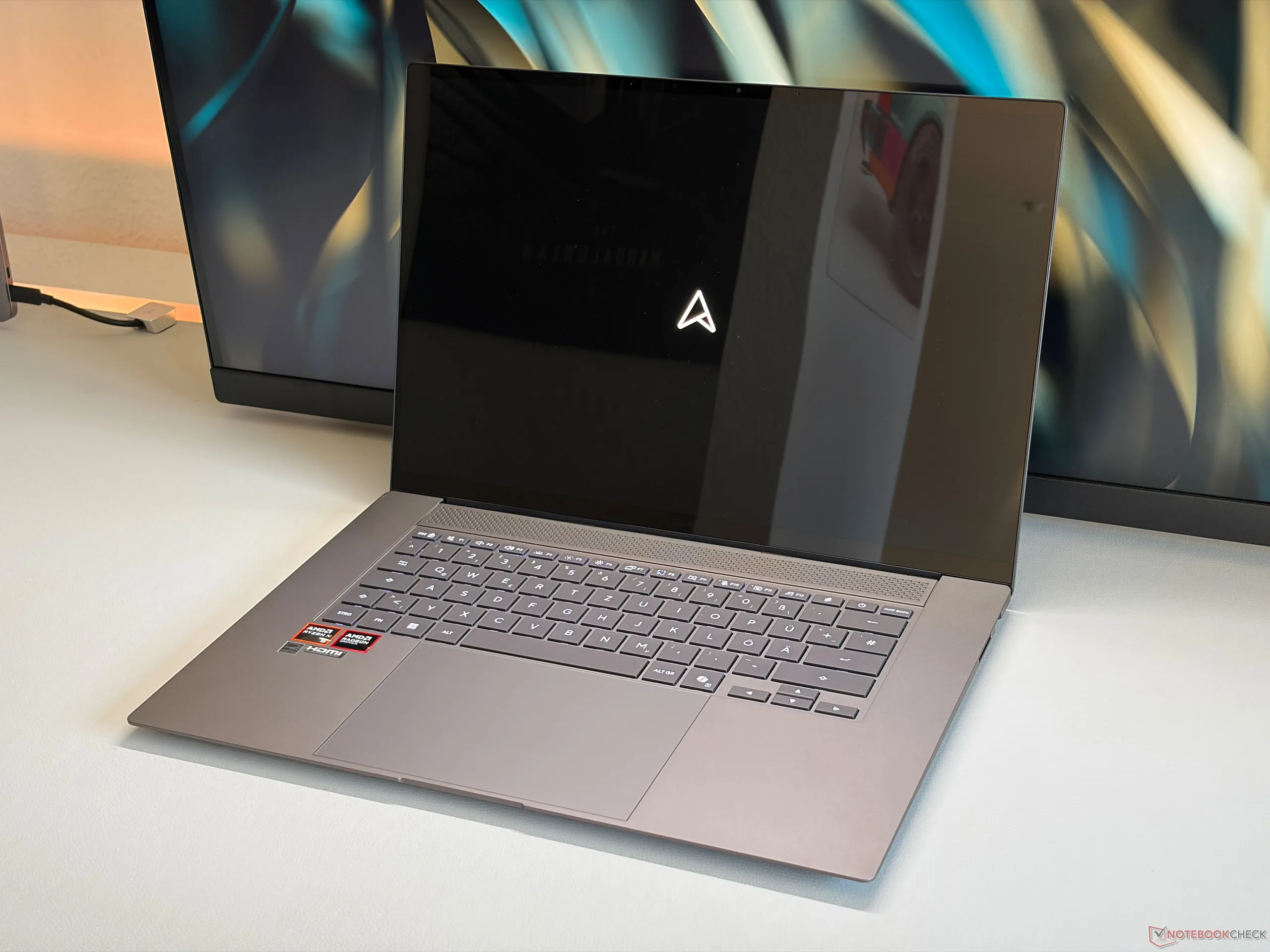
    The Asus Zenbook S16 is a sleek 16-inch laptop that boasts top-notch components. For the year 2026, Asus has upgraded the processors to the Ryzen AI 400 series from AMD. Our test model featured the speedy Ryzen AI 9 465, paired with the integrated Radeon 880M iGPU and 32 GB of RAM, which now performs at a higher speed than previous versions. In our evaluation of the new AMD chip (Gorgon Point), we noted that the overall architecture with the Zen 5 cores has not changed, but the clock speeds have seen a slight boost.

    Enhanced Performance

    Asus managed to boost the power limits, resulting in improved maximum performance when compared to the older model, which was equipped with either the Ryzen AI 9 HX 370 or the Ryzen AI 9 365. However, when you switch to performance mode and push the system to its limits, the fan noise becomes quite noticeable compared to the earlier version. In everyday usage, this high-performance scenario is rare, and the other two power settings operate much more quietly; for instance, silent mode produces just a faint hum.

    Intel’s Latest Offerings

    Recently, Intel released its new Panther Lake processors, which we’ve already evaluated. The two CPUs, Core Ultra X9 388H and Core Ultra X7 358H, also deliver solid CPU performance, but there isn’t a significant performance edge over the Zen 5 chip during daily tasks. The main distinction lies in the new Intel GPU. While AMD and Intel were fairly even last year, Intel has managed to enhance the GPU performance of its new Arc B390 iGPU by approximately 70%.

    Gaming and Recommendations

    This means that the latest Intel processors are particularly appealing for gaming. However, if gaming isn’t your focus, we can confidently suggest the Zenbook S16 with the Ryzen AI 400 processor, as there aren’t any substantial differences in features (both processors also fulfill the requirements for Microsoft’s Copilot+ certification).


  • China’s Historic Recovery of Long March-10 Rocket Booster

    China’s Historic Recovery of Long March-10 Rocket Booster

    Key Takeaways

    1. China successfully retrieved the first-stage booster of the Long March-10 from the South China Sea, marking a significant advancement in reusable rocket technology.
    2. The retrieval followed a crucial low-altitude verification test, demonstrating the booster’s ability to control its descent and land safely.
    3. The Chinese space agency also conducted a flight test for the Mengzhou crewed spacecraft, supporting China’s goal of lunar missions by 2030 and near-Earth space station operations.
    4. The Long March-10 rocket is a heavy-lift vehicle designed to carry at least 27 tons, while the modified Long March-10A features a reusable first-stage booster optimized for lighter missions.
    5. The Long March-10A is tailored for regular spaceflights, capable of carrying up to 14 tons and supporting missions to the Tiangong space station.


    China has successfully done its first maritime recovery of a launch vehicle part, pulling the first-stage booster of the Long March-10 out of the South China Sea. This important event is a big step for the country in creating reusable rocket technologies, a skill that is only currently being used in the United States.

    Successful Retrieval

    The retrieval on Friday came just after a vital low-altitude verification test that took place earlier that week. In this test, the booster used its engines and grid fins to control its return to Earth, landing safely in a marked maritime area.

    Key Developments in Space Exploration

    The space agency also conducted a maximum dynamic pressure escape flight test for the Mengzhou crewed spacecraft system. Both the Long March-10 rocket and the Mengzhou spacecraft are essential to China’s goal of sending humans to the moon by 2030. They also help with ongoing missions for near-Earth space stations.

    Launch Vehicle Program Details

    The launch vehicle program has two main configurations to satisfy these mission needs. The regular Long March-10 is a heavy-lift rocket that stands 92.5 meters (303.5 feet) tall and weighs 2,189 metric tons. It has a core booster and side boosters, built to carry at least 27 tons to a trajectory between Earth and the moon.

    In contrast, the near-Earth missions use the modified Long March-10A. This shorter version measures 67 meters (220 feet) and weighs 740 tons, featuring the fully reusable first-stage booster that was recently recovered from the ocean. This model, optimized for the Tiangong space station, can carry up to 14 tons, making it better suited for regular spaceflights.

    Xinhua.

    Source:
    Link


  • Acer Announces Price Increase for Products Starting February 20

    Acer Announces Price Increase for Products Starting February 20

    Key Takeaways

    1. The tech sector is experiencing a significant memory shortage, causing rising prices for RAM, SSDs, and GPUs.
    2. Acer plans to increase prices for its PC products starting on February 20, 2026, with purchases before February 19 remaining at current prices.
    3. The price rise is attributed to increasing costs for memory and SSDs, affecting products sold through Acer’s official online store.
    4. It is uncertain if the price hike will be global or limited to Japan, as the announcement was made via Acer’s Japanese account.
    5. Products likely to see price increases include laptops, tablets, and pre-built gaming PCs, while peripherals are expected to remain unaffected.


    The tech sector is facing a serious memory shortage, with prices for RAM, SSDs, and GPUs rising sharply in recent months due to high demand and limited supply. Many brands have already adjusted their prices, and Acer is set to follow suit.

    Upcoming Price Increase Announcement

    Acer announced on its Predator Gaming JPN X account that it will be increasing the prices of its PC products starting on February 20, 2026. Customers have a brief opportunity to purchase items at current prices, as any buys made before February 19 will remain unaffected.

    Reasons Behind the Price Rise

    In their post, Acer cited increasing costs for memory and SSDs as the primary factors for this change. The company mentioned that it will update prices for products sold through its official online store, while also indicating that some items might not see any price change.

    Uncertainty About Global Impact

    Currently, it’s unclear if this price hike will be global or limited to Japan. Since the announcement was made via Acer’s Japanese account, it’s possible the increase is specific to that region. However, considering the widespread memory shortage, it wouldn’t be surprising to see similar price adjustments in other countries.

    While the specific products affected by this increase are not yet known, it’s reasonable to assume that items containing RAM or storage—like laptops, tablets, and pre-built gaming PCs—will see price increases. Peripherals are likely to be unaffected, as they do not rely on memory or storage components.

    Source:
    Link


  • Acemagic N3A: Affordable Mini PC and NAS Hybrid with 6 Drive Slots

    Acemagic N3A: Affordable Mini PC and NAS Hybrid with 6 Drive Slots

    Key Takeaways

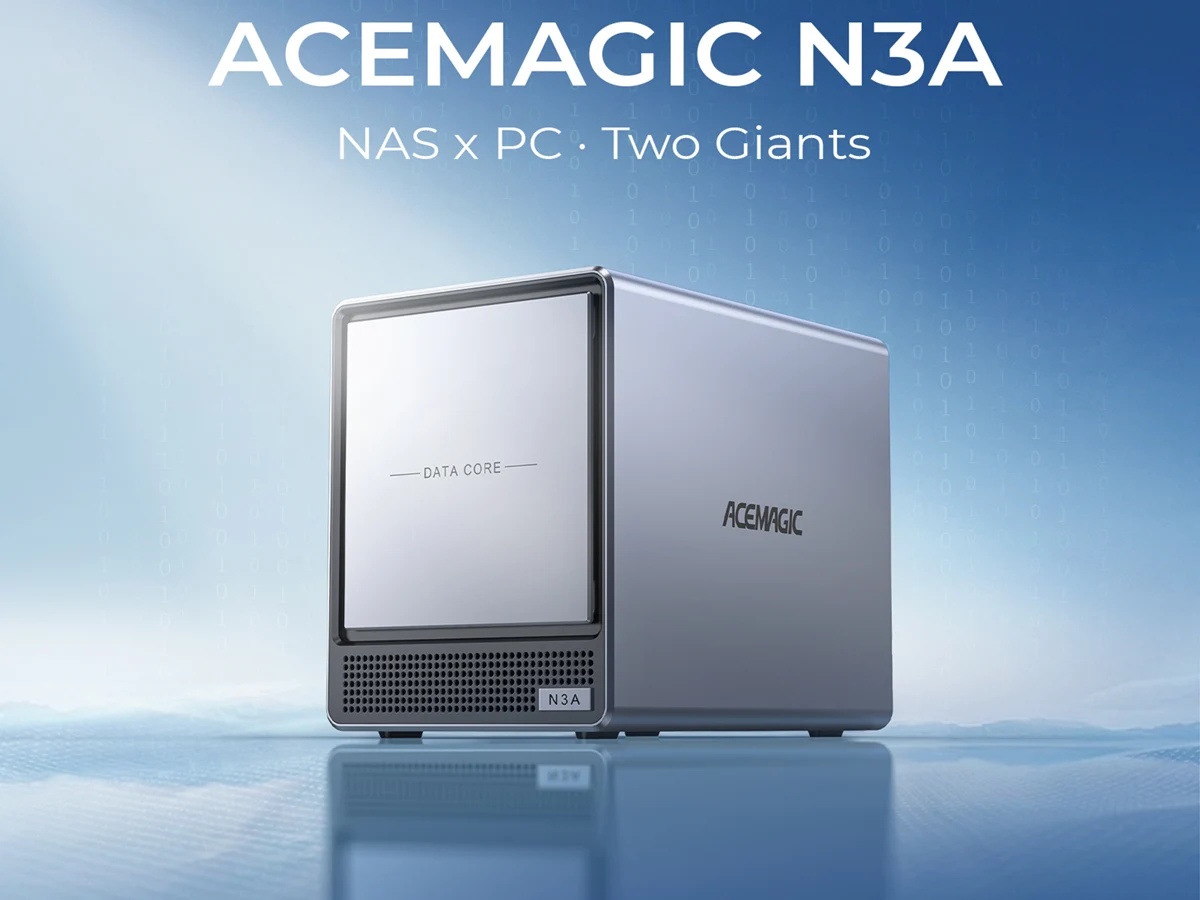
    1. Acemagic’s N3A combines features of a mini PC and a NAS, with a focus on NAS functionality.
    2. The device includes four SATA drive bays for large-capacity HDDs and two M.2 SSD slots for high-speed storage.
    3. It supports up to 64GB of DDR4 RAM in dual-channel configuration and features Gigabit Ethernet for seamless connectivity.
    4. The N3A is powered by an AMD Ryzen 7 3750H processor, suitable for everyday tasks and NAS usage.
    5. Details on the operating system and availability are not specified, but a budget-friendly price is expected due to the older hardware.


    Acemagic has launched several new systems, with the N3A being one of them. This device combines features of a mini PC and a NAS, but it appears that the company has focused more on the NAS aspect than the mini PC side.

    Drive Bays and Storage Options

    Specifically, the N3A comes with four SATA drive bays and two M.2 SSD slots. The SATA bays can accommodate “large-capacity” 3.5-inch HDDs (like the 8TB WD Red NAS HDD, available for $194.99 on Amazon), while the M.2 slots can be filled with NVMe drives to enhance caching or meet high-speed storage demands.

    Memory and Connectivity

    It can support up to 64GB of DDR4 RAM working in dual-channel configuration, which Acemagic claims allows enough capacity for demanding tasks. With its Gigabit Ethernet connection, the Acemagic N3A aims to ensure seamless access for multiple devices and easy file sharing across different platforms.

    Processor and Operating System

    Inside, the N3A is powered by an AMD Ryzen 7 3750H, a 4-core processor from the Picasso series. Although this CPU is somewhat dated, it is still capable of efficiently managing everyday tasks. It should also perform well for those intending to utilize the mini PC as a NAS.

    In the announcement, Acemagic did not specify if the N3A would come with a tailored NAS-centric operating system. However, the company did suggest that it would feature numerous ports, including one for a 4K 60Hz display output. There hasn’t been any information on when this hybrid mini PC will be available for purchase, but a formal launch is anticipated shortly. As for pricing, considering the older AMD APU, the system is likely to come with a budget-friendly price tag.

    Source:
    Link


  • Acemagic Retro X5: Powerful AMD APU & eGPU Support Launched

    Acemagic Retro X5: Powerful AMD APU & eGPU Support Launched

    Key Takeaways

    1. Acemagic’s new mini PC, inspired by the classic NES, is priced at CNY 6,499 (approximately $941) and launched in China in February 2026.
    2. The Acemagic X5 features modern hardware, including the AMD Ryzen AI 9 HX 370 processor and Radeon 890M integrated graphics.
    3. It supports up to 128GB of DDR5 RAM and 4TB of PCIe 4.0 storage, along with an advanced cooling system for optimal performance.
    4. The mini PC offers various connectivity options, including WiFi 7, Bluetooth 5.4, USB4 for external GPUs, and quad-display output.
    5. A global launch for the Acemagic X5 is expected soon, as indicated by hints on their international website.


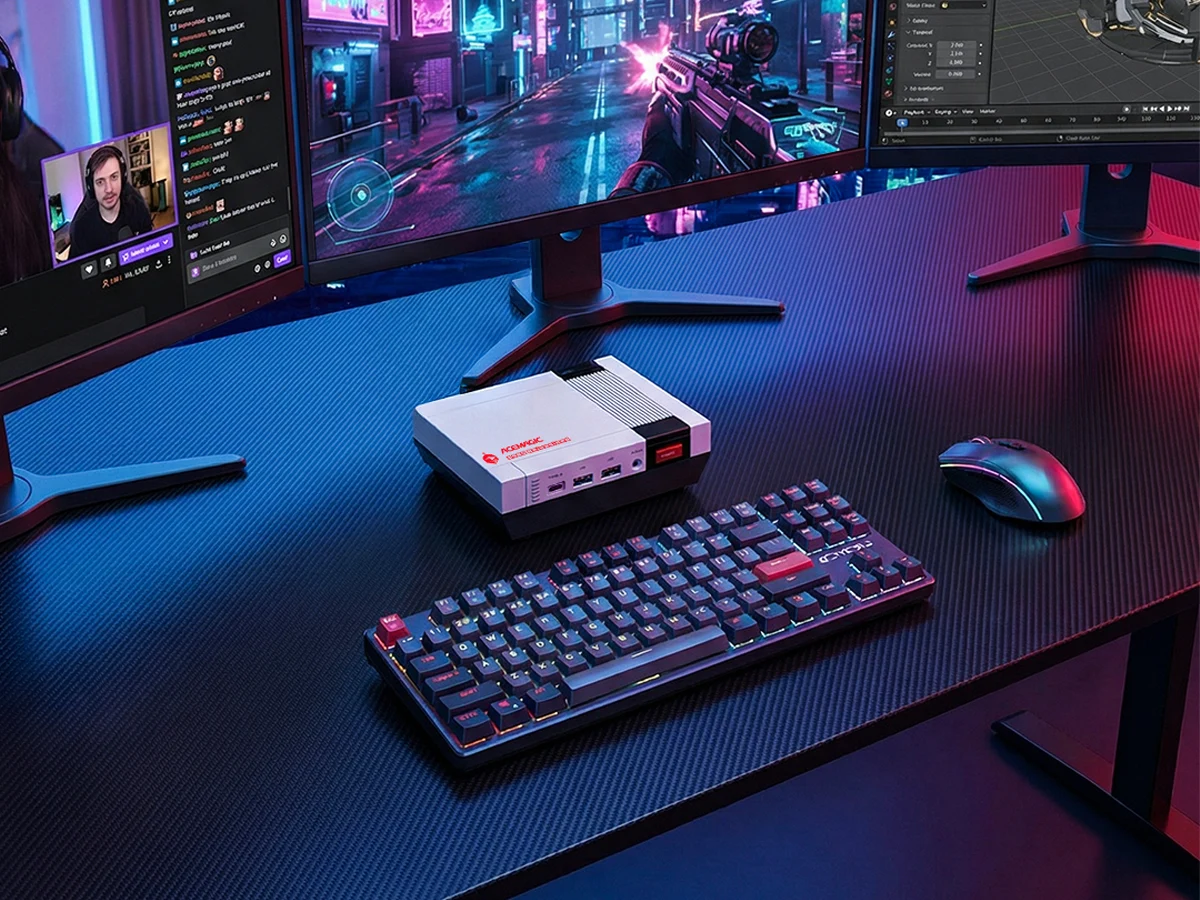
    Acemagic has unveiled a new mini PC that resembles the classic NES. This device, which first appeared in February 2026, is now on sale in China, with the starting price set at CNY 6,499, equivalent to roughly $941.

    Modern Specs in a Retro Shell

    Despite its nostalgic NES-like design, the internal hardware is far from outdated. The Acemagic X5 is equipped with the AMD Ryzen AI 9 HX 370, a high-performance choice from the Strix Point series. It features the impressive Radeon 890M, which is AMD’s top integrated graphics solution, just below the Strix Halo range.

    Impressive Storage and Cooling Features

    This APU can support a maximum of 128GB of DDR5 RAM along with 4TB of PCIe 4.0 storage. The brand emphasizes that the mini PC includes a sophisticated cooling system designed to maintain optimal temperatures during heavy usage and gaming.

    Connectivity Options Galore

    There’s also a solid array of connectivity options. Specifically, the configuration of ports includes WiFi 7 and Bluetooth 5.4 for wireless connections. Additionally, the USB4 port enables the mini PC to work with external GPUs (the Aoostar AG02 eGPU dock is currently priced at $219 on Amazon). Other notable features are support for quad-display output, 100W Power Delivery, and a compact design. While Acemagic has not yet announced when the Retro X5 will be available worldwide, they have already hinted at its release in a blog post on their international website, implying that a global launch is imminent.

    Acemagic on JD.

    Source:
    Link


  • Supply Issues and Price Increases for CPUs Due to Critical Materials

    Supply Issues and Price Increases for CPUs Due to Critical Materials

    Key Takeaways

    1. Multiple manufacturers contribute to the production of preassembled computers, affecting the supply chain.
    2. T-Glass is a crucial fiberglass cloth used in processor manufacturing to prevent circuit board warping.
    3. Even small distortions in circuit boards can lead to complete chipset failure.
    4. T-Glass is mainly produced by Nitto Boseki, creating a supply challenge due to high demand and limited production capacity.
    5. Rising prices and potential supply issues have led industry leaders, including Apple, to consider direct negotiations with T-Glass manufacturers.


    When consumers purchase a preassembled computer, it’s evident that multiple manufacturers play a role in the process. In fact, countless businesses contribute to the production at various levels of the supply chain, whether that’s providing silicon dioxide for making semiconductors or manufacturing the plastic coating on unique screws. Although it might be feasible to change suppliers for certain parts, a report from The Wall Street Journal indicates that this isn’t the case for a crucial material required in processor production.

    The Role of T-Glass

    The specific material in question is a delicate fiberglass cloth utilized as a film in processor manufacturing and other applications. This substance, referred to as T-Glass, has a mechanical role in ensuring that circuit boards do not warp. Even minor distortions can lead to total chipset failure, such as when solder joints break or electrical connections fail. These distortions might occur due to external pressure and heat, which are almost inevitable in the production process. The report clarifies that T-Glass is employed in the substrate rather than within the semiconductor itself.

    Supply Challenges Ahead

    As noted in the previously mentioned report, T-Glass is primarily manufactured by one company, Nitto Boseki. There’s a strong demand for this material that is not matched by a quick increase in production capacity, leading to rising prices. It’s uncertain whether this will have a major impact on product pricing, but it could potentially result in significant supply challenges. These worries seem to be substantial enough that The Wall Street Journal reports that prominent industry figures, including Apple and T-Glass manufacturers, have at least contemplated direct discussions and negotiations.

    Source:
    Link


  • Intel Nova Lake Power Consumption Leak: 496W PL2, 854W PL4

    Intel Nova Lake Power Consumption Leak: 496W PL2, 854W PL4

    Key Takeaways

    1. The flagship Intel Nova Lake-S processor may draw over 700 W during full multi-core use, with a PL2 power limit exceeding 400 W.
    2. Power limit specifications for Nova Lake-S include PL1 at 150 W, PL2 at 496 W, PL3 at 498 W, and PL4 at 854 W.
    3. Conflicting reports exist, with some leakers suggesting the power limits may not apply to the 52-core model but rather to the 42-core variant.
    4. Intel’s upcoming processors, including Nova Lake, are expected to have significantly higher power requirements compared to previous generations.
    5. Official announcements regarding Intel’s next-gen processors are still months away, so leaked specifications should be viewed with caution.


    Thanks to a steady stream of leaks and rumors, we’re learning quite a bit about Intel’s upcoming Nova Lake desktop processors, particularly their expected power limits. Recently, it was reported that the flagship 52-core Nova Lake-S could draw over 700 W during full multi-core use. Additional reports have indicated that the PL2 power limit for these Nova Lake-S chips also exceeds 400 W.

    Power Limit Specifications Revealed

    Leaker HXL has shared a table with details about the PL1, PL2, PL3, and PL4 power limits for Nova Lake-S. According to the leaker, these numbers apply to the dual-compute-tile Nova Lake-S K-series models, which feature up to 52 cores.

    From the leaked power limit data, it’s evident that the dual-compute-tile Intel Nova Lake desktop CPUs require significant power. The PL1 is set at 150 W, while PL2, PL3, and PL4 are 496 W, 498 W, and 854 W respectively. This makes the high-end Intel Core Ultra 400 series look extremely power-hungry. For example, the Intel Arrow Lake Core Ultra 9 285K has a PL1 of 125 W and a PL2 of 250 W. Meanwhile, the notorious 14th-gen Core i9-14900K, which runs at 6 GHz, shares the same PL1 and PL2 values as the Core Ultra 9 285K.

    Conflicting Information from Other Leakers

    However, another leaker, Jaykihn, has disputed HXL’s claims, referring to the leaked Nova Lake power limits as “outdated,” a sentiment echoed by UNIKO’s Hardware. More intriguingly, Jaykihn suggests that these figures may not pertain to the flagship 52-core Core Ultra 9 but rather to the 42-core Core Ultra 7 Nova Lake SKU, which includes 14 P-cores, 24 E-cores, and 4 LP E-cores.

    In essence, it’s possible that Intel has adjusted, maybe even reduced, the power limits for the Core Ultra 7 variant to align more closely with our expectations for Arrow Lake CPUs.

    That being said, it’ll be several months before we hear any official announcements regarding the next-gen Intel processors. Therefore, it’s wise to approach the leaked Nova Lake specifications, including power limits, with caution.

    Source:
    Link


  • Asus Launches ExpertBook B5 G2 Laptops with Intel Panther Lake

    Asus Launches ExpertBook B5 G2 Laptops with Intel Panther Lake

    Key Takeaways

    1. Lightweight Design: The ExpertBook B5 G2 is a slim laptop for business users, available in 14-inch and 16-inch sizes, weighing about three pounds.

    2. Processor Upgrade: The laptop features newer Intel Core Ultra Series 3 processors, with options up to Core Ultra 7 366H, enhancing performance for AI tasks and multitasking.

    3. Display Options: Users can choose between 2560 x 1600 and 1920 x 1200 resolutions on 16:10 matte IPS displays, with brightness up to 400 nits and an optional touch screen.

    4. Enhanced Battery Life: The battery life has improved to up to 19 hours, despite keeping the same capacity as the previous model.

    5. Security and Connectivity: Includes advanced security features, AI tools, Wi-Fi 7, MIL-STD-810H durability, and multiple ports like Thunderbolt 4, HDMI, and USB-A.


    Last month, Asus introduced three new ExpertBook laptops aimed at businesses, featuring the ExpertBook B3 G2 with AMD Gorgon Point and the ExpertBook Ultra equipped with Intel’s high-end Panther Lake Core Ultra X9 and X7 processors, which we had an opportunity to test. Now, they’re launching an additional model meant to take the place of last year’s ExpertBook B5.

    Lightweight Design for Professionals

    The latest ExpertBook B5 G2 is a slim laptop designed for business users. It is available in both 14-inch and 16-inch variants, with a starting weight of about three pounds, making it slightly heavier than the 2.2-pound ExpertBook Ultra. This time, Asus has replaced the Intel Core Ultra Series 2 processors found in the older model with the newer Series 3 versions, which can go up to a Core Ultra 7 366H. Featuring up to 50 TOPS on the NPU and as much as 64GB of DDR5 RAM, this model should handle local AI tasks and multitasking with ease.

    Familiar Look with Upgrades

    Besides the CPU enhancement, not many features have been altered. The design remains quite similar, and users can still select between 2560 x 1600 and 1920 x 1200 resolutions for both screen sizes. These displays are 16:10 matte IPS with TÜV Rheinland eye protection, offering brightness levels up to 400 nits. An optional touch display is now available as well. Asus also claims improved battery life, stretching up to 19 hours compared to the previous 15 hours, despite the battery capacity staying the same.

    Security and Connectivity Features

    As a laptop aimed at business professionals, security and AI functionalities are emphasized. Asus has stated that the ExpertBook B5 G2 features a NIST SP 800-193-compliant BIOS, TPM 2.0, dual BIOS support, and fingerprint login for enhanced security. It also includes Copilot integrated, along with extra AI tools in the Asus MyExpert suite. Other notable features comprise Wi-Fi 7, MIL-STD-810H durability, and a wide array of ports, such as Thunderbolt 4, HDMI, and USB-A.

    The 14-inch (B5405CAA) and 16-inch (B5605CAA) models have been posted on the Asus website; however, details regarding pricing and availability are currently absent.

    Source:
    Link


  • Corsair Updates DDR5 RAM Packaging to Fight Counterfeit Modules

    Corsair Updates DDR5 RAM Packaging to Fight Counterfeit Modules

    Key Takeaways

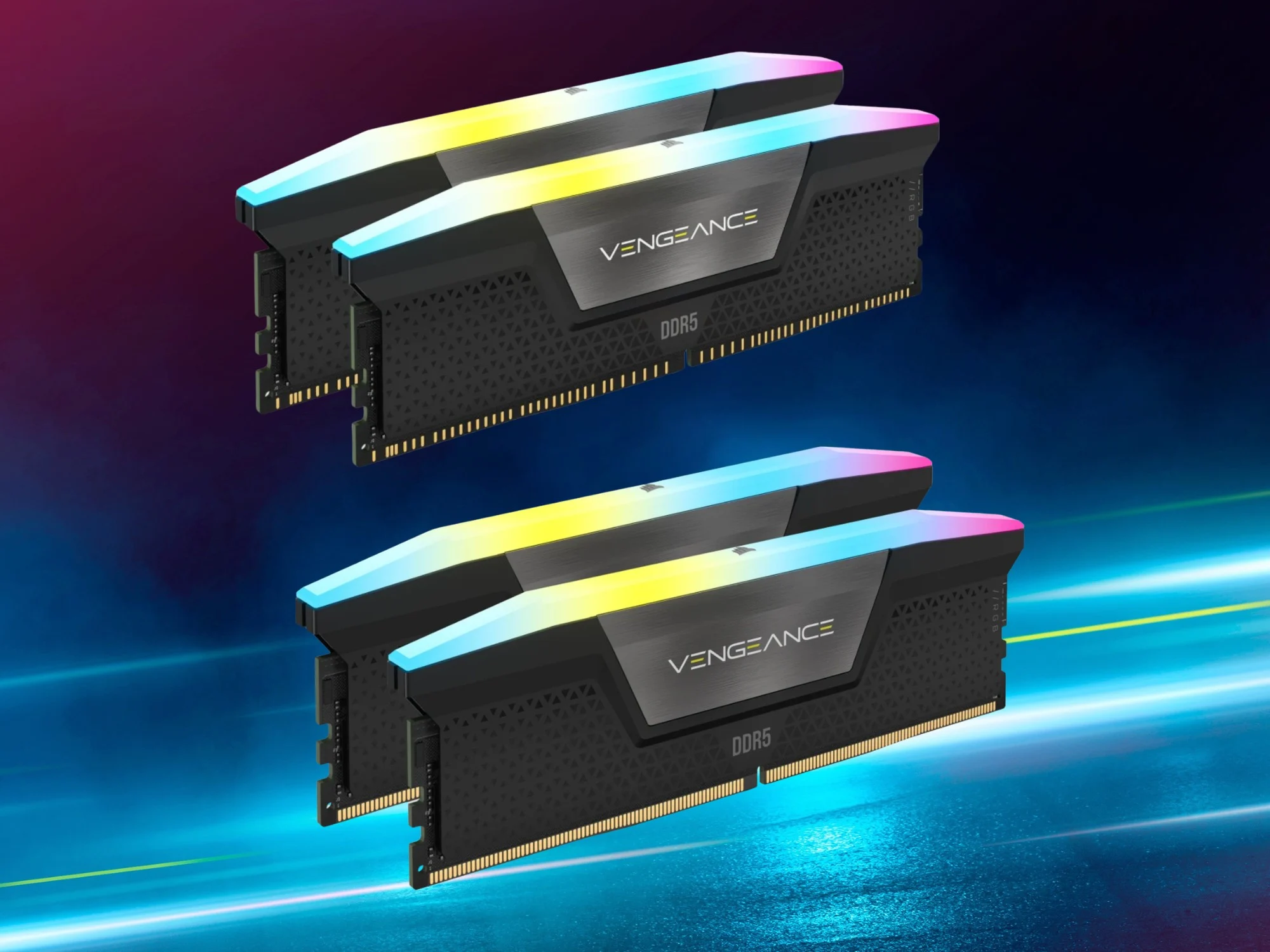
    1. Corsair is introducing new plastic clamshell packaging with tamper-proof labels for its Vengeance DDR5 RAM to help customers identify genuine products and reduce return fraud.

    2. The new packaging maintains ESD protection for safe shipping and uses recycled materials, aligning with Corsair’s environmental commitment.

    3. Fraud is a significant issue for Corsair, particularly with RGB Light Enhancement kits, as dishonest sellers exploit high memory prices for profit.

    4. Buyers can identify fake DDR4 and DDR5 RAM by examining the number of pins and the gap at the connecting points, along with checking the product labels for authenticity.

    5. Corsair has faced controversy over pricing during the memory shortage, including canceling orders and raising prices shortly after offering coupons to affected customers.


    Whenever a crisis hits, some people find ways to take advantage of it. Right now, with memory prices soaring, Corsair is fighting back against fake DDR5 RAM. The company shared on its blog that it’s changing the packaging for its Vengeance line. This new design is meant to help customers easily spot genuine DRAM and reduce return fraud.

    New Packaging Design

    Before this change, Corsair Vengeance memory was sold in cardboard boxes that didn’t show the product inside. Now, the company is moving to a plastic clamshell that has a tamper-proof label. All the modules in the Vengeance DDR5 series, including both standard and RGB models, will have this new packaging.

    The blog post emphasizes that the new containers continue to offer ESD protection to guard against damage while shipping. Additionally, they use recycled materials, which supports Corsair’s commitment to being environmentally friendly.

    The Challenge of Fraud

    Fraud is a big issue for Corsair, especially with its Light Enhancement kits. These RGB sticks fill empty slots on motherboards but don’t really offer any additional benefits. Some dishonest sellers have exploited the high memory prices to make a profit with these kits. Although Amazon may restock inventory after returns, Corsair’s RMAs have also faced similar issues with mixes.

    It can be tricky to tell the difference between real and fake DDR4 and DDR5 RAM. If buyers take a closer look, they should notice fewer pins and larger gaps at the connecting points. The labels on the components should provide information that helps in spotting counterfeits.

    Price Controversies

    Even though Corsair is trying to help consumers, it might have taken advantage of the memory shortage itself. In one case, it canceled orders for DDR5 kits, citing a pricing error. While the company did offer coupons to those affected, prices went up shortly afterward.

    It appears they employed a similar strategy with prebuilt gaming PCs that depend on increasingly pricey SSDs and memory. With AI data centers consuming these components, DRAM prices might not stabilize until 2027 or beyond. Even with the new packaging in place, scammers will keep finding ways to trick retailers with fake memory.

    Source:
    Link


  • Asus Unveils MX Master 4 Rival with Swappable Switches and Battery Life

    Asus Unveils MX Master 4 Rival with Swappable Switches and Battery Life

    Key Takeaways

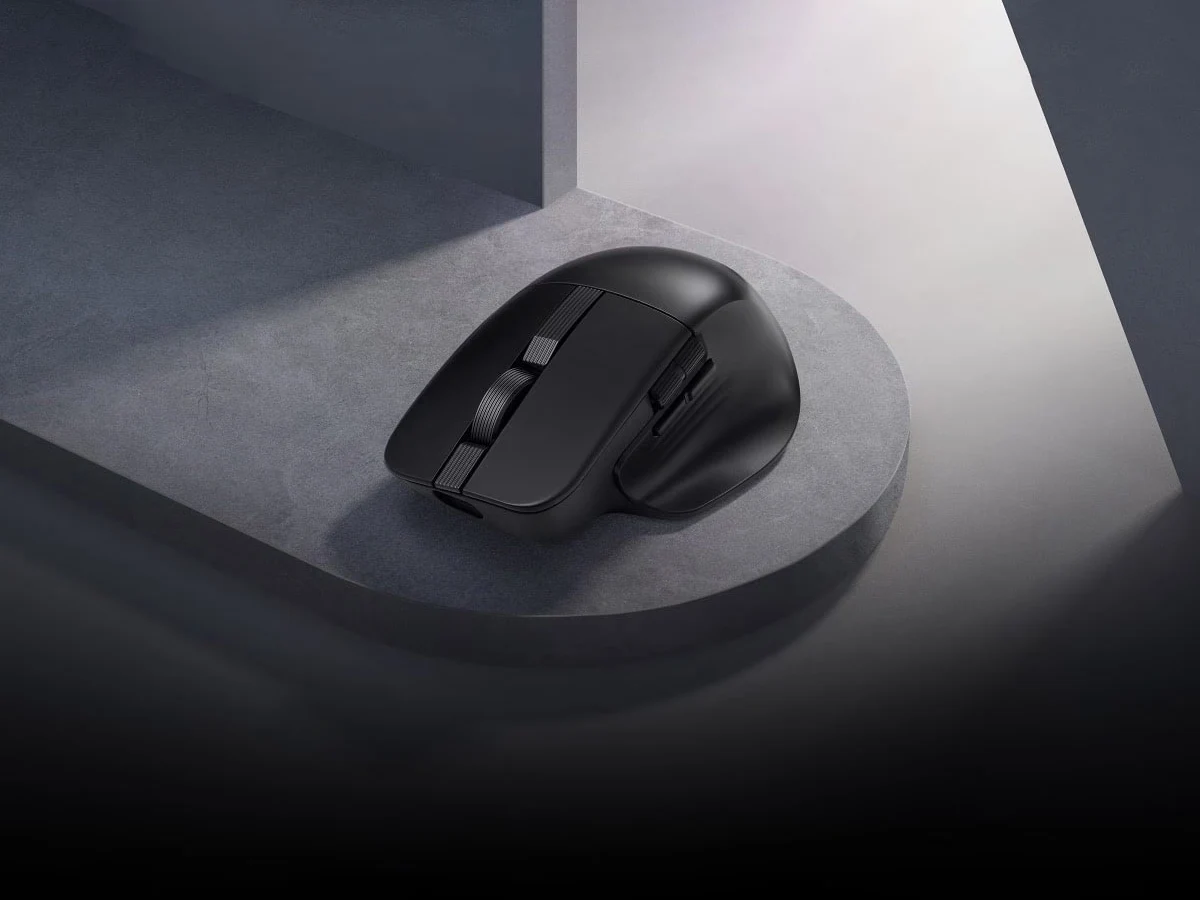
    1. Asus has launched the ProArt Mouse MD301 as a competitor to the Logitech MX Master 4, available for CNY 599 (around $86.8) in China.
    2. The ProArt MD301 is lighter at 99.7 grams compared to the Logitech MX Master 4, which weighs 150 grams, with an ergonomic design for comfort.
    3. It features a larger 800 mAh battery providing up to 180 days of usage, significantly longer than the MX Master 4’s 650 mAh battery offering 70 days.
    4. The ProArt MD301 has swappable switches that can endure up to 80 million clicks, promising “unmatched accuracy and precision.”
    5. The mouse includes six programmable buttons, three connectivity modes, and supports fast charging via USB-C, with a global launch expected soon.


    Asus has unveiled a competitor to the Logitech MX Master 4 at CES 2026, named the ProArt Mouse MD301. The company recently showcased this wireless mouse again, and it is now available for purchase in China.

    Pricing and Availability

    With the promotional pricing, the ProArt MD301 can be bought for CNY 599, which is approximately $86.8. This is more cheaper than the usual price of the MX Master 4 in China, which is CNY 899, roughly $130 (or $120 if you check Amazon). Also, when comparing the two, Asus’ new mouse is lighter than Logitech’s latest productivity offering.

    Specifications and Design

    According to the specifications, the ProArt MD301 has a weight of 99.7 grams, whereas the Logitech MX Master 4 weighs in at 150 grams. This lightweight build, along with its ergonomic design, is claimed to help the wireless mouse fit comfortably in your hand, providing a nice grip.

    Battery Life and Performance

    Even though the Asus mouse is lighter, it actually contains a bigger battery. Specifically, it features an 800 mAh battery, which is said to deliver up to 180 days of usage on a single charge. In contrast, the MX Master 4 has a 650 mAh battery, with a maximum runtime of 70 days.

    Unique Features

    A standout feature of the ProArt MD301 is its swappable switches. The Push-Fit sockets support both micro and optical switches, with Asus mentioning that the included switches can endure up to 80 million clicks. While the specifics of the sensor inside are not disclosed, the company guarantees “unmatched accuracy and precision.”

    Additional Features

    Moreover, the mouse possesses six programmable buttons, three modes of connectivity, and supports fast charging via USB-C. While Asus has not revealed when it will be available worldwide, it is anticipated that an international launch will happen soon.

    Source:
    Link