
Key Takeaways
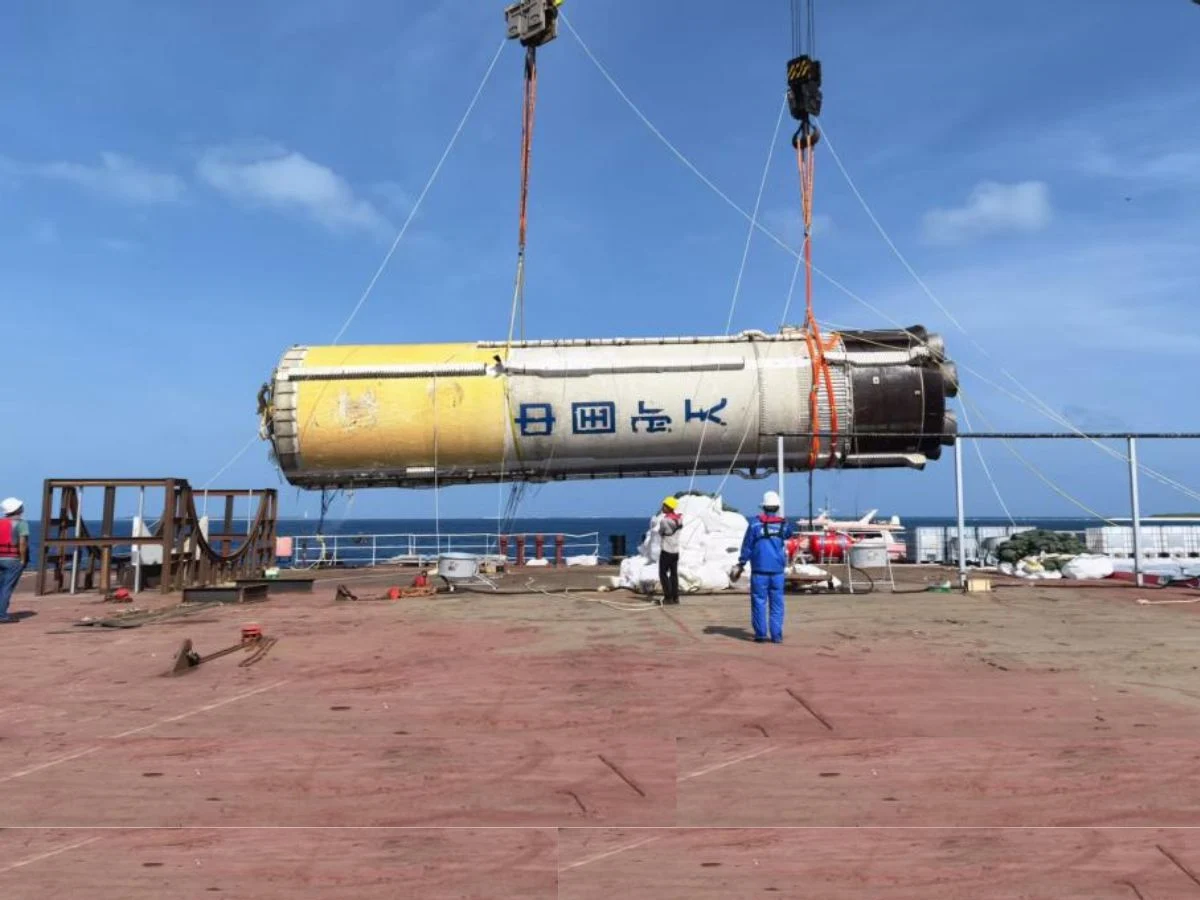
1. China successfully retrieved the first-stage booster of the Long March-10 from the South China Sea, marking a significant advancement in reusable rocket technology.
2. The retrieval followed a crucial low-altitude verification test, demonstrating the booster’s ability to control its descent and land safely.
3. The Chinese space agency also conducted a flight test for the Mengzhou crewed spacecraft, supporting China’s goal of lunar missions by 2030 and near-Earth space station operations.
4. The Long March-10 rocket is a heavy-lift vehicle designed to carry at least 27 tons, while the modified Long March-10A features a reusable first-stage booster optimized for lighter missions.
5. The Long March-10A is tailored for regular spaceflights, capable of carrying up to 14 tons and supporting missions to the Tiangong space station.
China has successfully done its first maritime recovery of a launch vehicle part, pulling the first-stage booster of the Long March-10 out of the South China Sea. This important event is a big step for the country in creating reusable rocket technologies, a skill that is only currently being used in the United States.
Successful Retrieval
The retrieval on Friday came just after a vital low-altitude verification test that took place earlier that week. In this test, the booster used its engines and grid fins to control its return to Earth, landing safely in a marked maritime area.
Key Developments in Space Exploration
The space agency also conducted a maximum dynamic pressure escape flight test for the Mengzhou crewed spacecraft system. Both the Long March-10 rocket and the Mengzhou spacecraft are essential to China’s goal of sending humans to the moon by 2030. They also help with ongoing missions for near-Earth space stations.
Launch Vehicle Program Details
The launch vehicle program has two main configurations to satisfy these mission needs. The regular Long March-10 is a heavy-lift rocket that stands 92.5 meters (303.5 feet) tall and weighs 2,189 metric tons. It has a core booster and side boosters, built to carry at least 27 tons to a trajectory between Earth and the moon.
In contrast, the near-Earth missions use the modified Long March-10A. This shorter version measures 67 meters (220 feet) and weighs 740 tons, featuring the fully reusable first-stage booster that was recently recovered from the ocean. This model, optimized for the Tiangong space station, can carry up to 14 tons, making it better suited for regular spaceflights.
Xinhua.
Source:
Link
Leave a Reply