Category: Computers

  • ESP32-P4 SBC with HDMI, Ethernet, 4 USB Ports, and More

    ESP32-P4 SBC with HDMI, Ethernet, 4 USB Ports, and More

    Key Takeaways

    1. New Development Board: Olimex has launched the ESP32-P4-PC, a compact development board (90 × 60 mm) featuring HDMI output, Ethernet, and multiple USB ports.

    2. Enhanced Features: The board includes a MIPI DSI/CSI interface, 10/100Mbit Ethernet with optional PoE, four USB 2.0 ports, JTAG for debugging, and a UEXT port for expansion.

    3. Integrated HDMI: It is the first development board with an integrated HDMI port using the LT8912B converter chip, eliminating the need for external graphics support.

    4. Power Supply and UPS: Powered via USB-C with a built-in battery charging circuit, it can operate from a battery and switch to it seamlessly if USB power fails.

    5. Open Source and Availability: The board is open-source with design resources on GitHub, available for pre-order at €24.95, shipping starting on February 23, 2026.


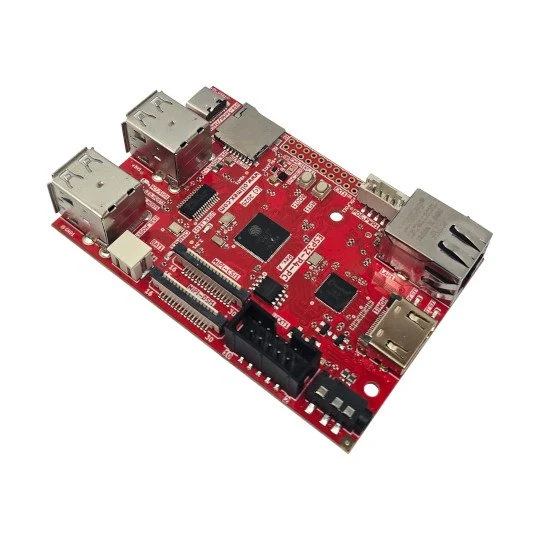
    Olimex, a company from Bulgaria, has introduced the Olimex ESP32-P4-PC, a fresh development board that utilizes the ESP32-P4 SoC. True to its “PC” designation, it comes equipped with HDMI output, Ethernet access, and various USB ports, all packaged in a compact size of 90 × 60 mm.

    Upgrade from Previous Models

    This new board appears to be a step up from the earlier ESP32-SBC-FabGL, which was intended to run the FabGL library for VGA display and simulate older systems using Intel’s 8080 and 8086 processors. However, the latest board is centered around the ESP32-P4 MCU and offers native HDMI output through an LT8912B MIPI-to-HDMI converter chip. This makes it the first development board to feature an integrated HDMI port without needing any external graphics support.

    Rich Features Included

    Notable specifications of this board consist of a MIPI DSI/CSI interface for displays and cameras, a 3.5mm audio jack, 10/100Mbit Ethernet with optional PoE, four USB 2.0 ports, and a 20-pin GPIO header. It also features JTAG for debugging and a UEXT port for further expansion, along with programming buttons for boot and reset. Power is supplied through the USB-C port, which also includes a built-in battery charging circuit, allowing it to operate from a battery. Furthermore, the battery circuit has external power sensing, enabling the board to function as an uninterruptible power supply (UPS) right out of the box. If the USB-C power fails, it can seamlessly switch to a LiPo cell without rebooting the MCU.

    Connectivity and Availability

    One aspect that’s lacking is wireless connectivity, which can be easily integrated via the UEXT port. The board is open-source, and all design resources, including schematics and the user manual, are accessible on GitHub.

    The company positions this as a “PC-like” board, but it’s not intended to replace Linux-based Single Board Computers (SBCs) such as Raspberry Pi, Orange Pi, or Banana Pi. With a 400MHz dual-core RISC-V processor, it can handle basic real-time tasks like 1080p H.264 video processing and showing 2D GUIs, but it isn’t capable of running desktop-level applications. This board should be seen as a high-end embedded platform, suitable for industrial HMIs, smart displays, or media-focused IoT gateways where HDMI and reliable wired connections are prioritized over full PC capabilities.

    The Olimex ESP32-P4-PC is now available for pre-order for €24.95 on the company’s website, with shipping expected to start on February 23, 2026.

    Source:
    Link



  • Japanese Toilet Maker to Profit from Ongoing Memory Shortage

    Japanese Toilet Maker to Profit from Ongoing Memory Shortage

    Key Takeaways

    1. Toto, a Japanese luxury toilet manufacturer, is emerging as a key player in the semiconductor industry due to its innovative ‘chuck’ technology.
    2. The ‘chuck’ technology allows ceramics to withstand extremely low temperatures, making it suitable for cryogenic etching of silicon wafers, crucial for NAND chip production.
    3. This cryogenic etching method may become essential as new technologies like CFET develop, offering an alternative to traditional manufacturing processes.
    4. Palliser Capital highlights that Toto has a competitive advantage of at least five years, positioning it well amid a memory supply shortage.
    5. Ceramics are vital in semiconductor manufacturing and packaging, valued for their thermal conductivity, electrical insulation, chemical durability, and mechanical strength.


    With the recent surge in AI impacting nearly every aspect of the semiconductor industry, investors are always on the lookout for fresh sectors that might turn out to be the ‘next big thing’. Palliser Capital (H/T Financial Times) has discovered a surprising contender in Toto, a Japanese firm known for producing luxury toilets, which seems to be sitting on a treasure trove.

    Innovative Technology

    Toto’s unique ‘chuck’ technology enables ceramics to endure extremely low temperatures, which makes it perfect for cryogenic etching of silicon wafers. This process is crucial in the production of NAND chips used for memory and storage, as it effectively creates deep grooves and vertical structures in the silicon wafers. Traditionally, logic processes like those used by TSMC for CPU and GPU manufacturing often depend on the older Bosch method, yet the cryogenic method may become essential with the arrival of newer technologies like CFET.

    Competitive Edge

    Palliser Capital suggests that Toto has a competitive edge of at least five years and could benefit from the ongoing memory supply shortage. Ceramics already play a significant role in semiconductor manufacturing and packaging due to their impressive thermal conductivity, electrical insulation, chemical durability, and mechanical strength.

    Source:
    Link


  • Ugreen Launches Upgraded Nexode 200W Charger for Fast Charging

    Ugreen Launches Upgraded Nexode 200W Charger for Fast Charging

    Key Takeaways

    1. The Ugreen Nexode 200W Charger has been improved to address issues with inconsistent power levels and overheating from earlier versions.
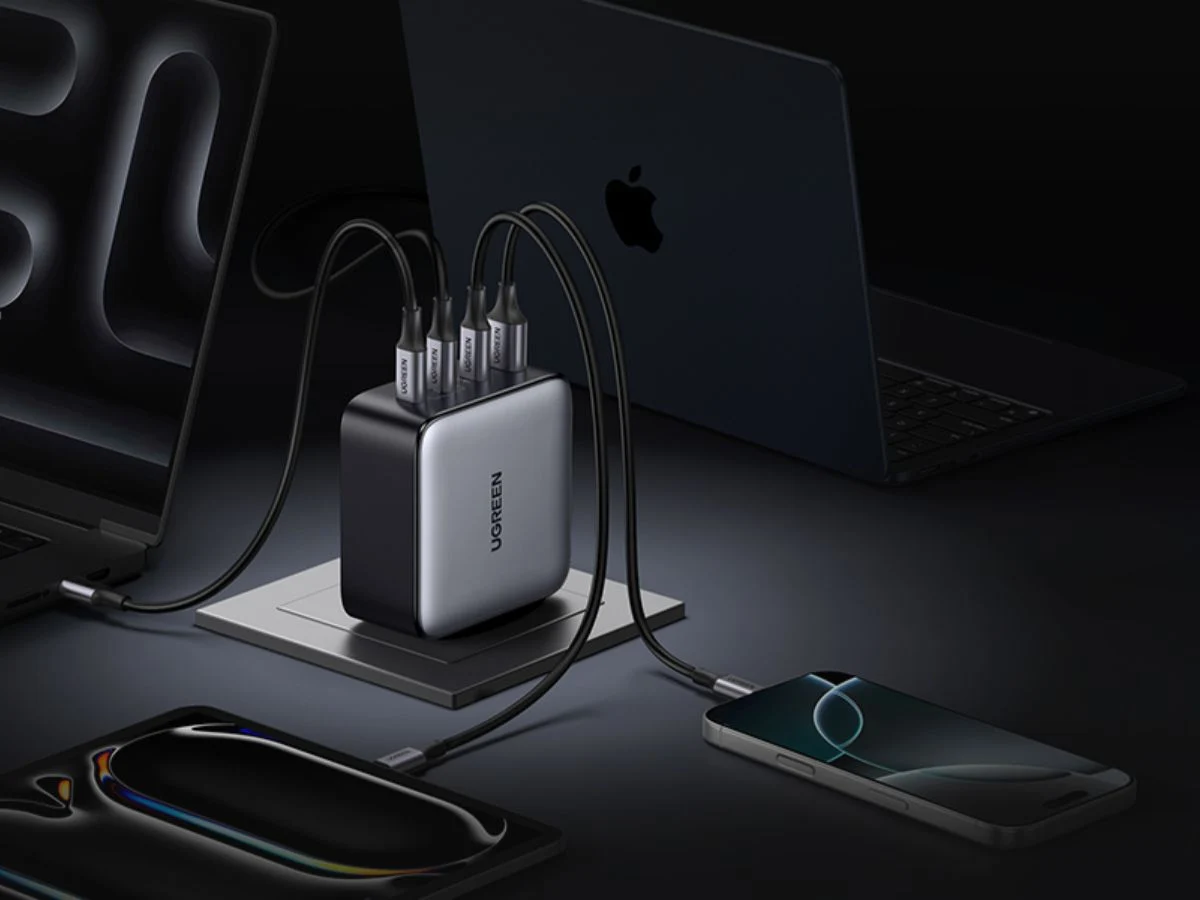
    2. The charger features four ports: three USB-C (140W, 100W, 30W) and one USB-A (22.5W), allowing for efficient multi-device charging.
    3. It can charge a MacBook Pro 16” to 50% in under thirty minutes and supports simultaneous charging of two devices at 100W each.
    4. The compact design uses GaN technology and measures 76 x 76 x 36 mm, available in silver and black.
    5. Pricing varies across Europe, with the charger costing €79.99 in the Netherlands and Germany, while it is priced at €99.99 in Spain and France.


    A new version of the Ugreen Nexode 200W Charger is now available in Europe. This device first came out in 2025, but earlier versions had issues with inconsistent power levels and overheating.

    Updated Features and Optimization

    Ugreen has introduced an improved model of the Nexode 200W Charger. Although the product details on Amazon don’t show any specific changes, the company has stated that they have made enhancements to the charger in collaboration with Reddit user u/N8falke.

    Specifications and Charging Capabilities

    The Nexode 200W Charger has a total of four ports: three USB-C and one USB-A. The first USB-C port provides 140W, the second one offers 100W, and the third delivers 30W, while the USB-A port gives out 22.5W. Ugreen claims that the 140W output allows for charging a MacBook Pro 16” to 50% in less than thirty minutes. Additionally, with a maximum output of 200W, you can charge two devices simultaneously at 100W each. This compact charger, made with GaN technology, measures 76 x 76 x 36 mm (about 3.0 x 3.0 x 1.4 inches) and comes in a sleek silver and black design.

    Pricing Across Europe

    In regions such as the Netherlands and Germany, the upgraded Ugreen Nexode 200W Charger is priced at €79.99 at retailers like Amazon. In contrast, it costs more in countries like Spain and France, where it’s listed at €99.99. Additionally, some shoppers may find in-page discount vouchers available on Amazon.

    Source:
    Link


  • Affordable 8-Core ARM SBC with Dual Gigabit Ethernet Launches

    Affordable 8-Core ARM SBC with Dual Gigabit Ethernet Launches

    Key Takeaways

    1. The DShanPi-A1 is a new single-board computer available on AliExpress, with a mid-range model priced at about $83.
    2. It features the Rockchip RK3576 SoC, an 8-core architecture, and a Mali-G52 MC3 GPU, offering strong performance with over 1,200 points in Geekbench 6.
    3. The base model includes 6 GB of LPDDR4 RAM but lacks built-in storage, with upgraded models offering 8 GB of RAM and 64 GB of eMMC storage.
    4. It has additional features like a mini HDMI input for video streaming and a microSD slot for expanded storage options.
    5. The DShanPi-A1 is positioned lower in performance compared to the RK3588 boards, such as the OrangePi CM5, which has a higher benchmark score and price.


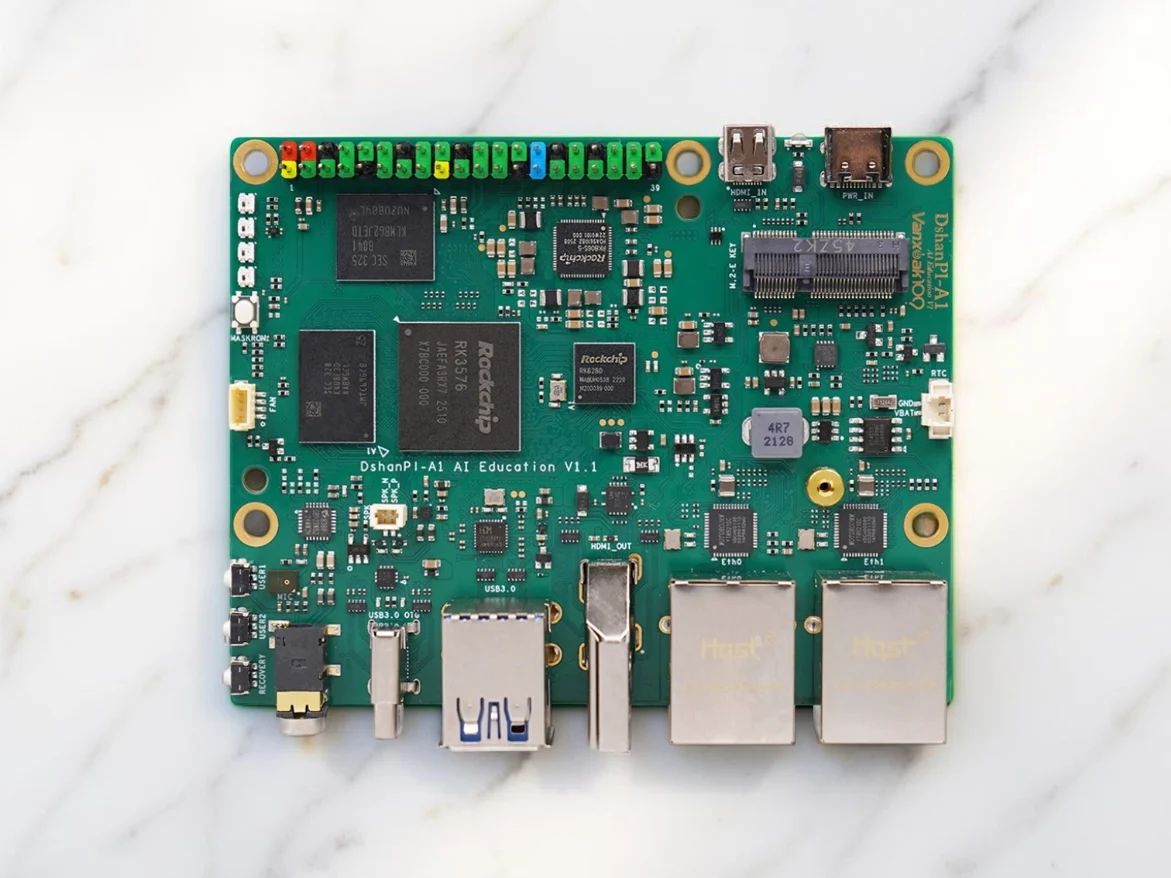
    A new single-board computer has been launched, named the DShanPi-A1. This board is currently for sale on AliExpress, with the mid-range model priced at about $83. There are also higher-priced models that offer increased memory and storage options.

    Specifications and Performance

    The DShanPi-A1 is equipped with the same system-on-chip (SoC) as the Bit-brick K1 Pro, which we mentioned not long ago. It uses the Rockchip RK3576, a popular choice in many SBCs, featuring an 8-core architecture that includes four Cortex-A72 and four Cortex-A53 cores. Additionally, it has an integrated Mali-G52 MC3 GPU and a 6 TOPS (INT8) neural processing unit (NPU). The performance is expected to be quite good, as the RK3576 typically achieves over 1,200 points in the multicore section of Geekbench 6.

    Comparisons with Other Models

    However, the RK3576 cannot compete with the RK3588 found in boards like the OrangePi CM5, which is currently priced at $129 on Amazon and scores over 3,000 points in the same benchmark.

    In the base model, it has 6 GB of LPDDR4 RAM, but it lacks any built-in storage. There are upgraded versions that come with 8 GB of RAM and 64 GB of eMMC storage. Additionally, lower-tier options with 2 GB and 4 GB of RAM can be found at third-party sellers. The input/output options include:

    Additional Features

    Notably, the mini HDMI input port lets the SBC serve as a video stream capture device, which is a great feature. There’s also a microSD slot included, which is certainly a plus. For more information on the DShanPi-A1 SBC, interested buyers can check its official Wiki page for further details.

    Source:
    Link


  • Apple Expected to Unveil 7+ New Devices Before 2026 Event

    Apple Expected to Unveil 7+ New Devices Before 2026 Event

    Key Takeaways

    1. Apple will host its ‘Special Apple Experience’ event on March 4, 2026, at 14:00 UTC in New York.
    2. Over six new devices are rumored for release, including the Studio Display 2, refreshed iPads, and new MacBook Pro models.
    3. The event may not feature a grand showcase; new products might be announced through press releases between March 2 and March 4.
    4. The iPhone 17e is expected to be announced first on March 2, replacing the iPhone 16e.
    5. New iPads could launch on March 3, and a budget MacBook may debut in bright colors like yellow, green, and blue.


    Earlier this week, Apple shared some early information regarding its first launch event for 2026. Titled a ‘Special Apple Experience’ on Monday, details about the event still haven’t appeared on Apple’s newsroom or main website. Nevertheless, multiple sources, including Mark Gurman, claim that the event is set for 14:00 UTC on March 4 in New York.

    Rumored Devices

    At present, more than six new devices are being speculated, such as the Studio Display 2, refreshed iPads, and new versions of the MacBook Pro 14 and MacBook Pro 16 (currently priced at $2,379 on Amazon). However, both Gurman and John Gruber from Daring Fireball have suggested that the upcoming event may not be as extensive or exciting as previously thought.

    Upcoming Announcements

    Instead of a grand showcase, the duo anticipates that Apple will roll out new products through press releases between March 2 and March 4. The Special Apple Experience is expected to provide a chance for select media to engage with these new devices before they are shipped. Presently, both insiders believe that the iPhone 17e will be announced first on March 2 as a replacement for the iPhone 16e.

    iPad and MacBook Releases

    It seems that the launches for the iPads and MacBooks will occur on different days too, with Gruber suggesting that new iPads might be released on March 3. Interestingly, Weibo leaker Instant Digital has mentioned that the color scheme in Apple’s teaser reflects the shades in which its ‘budget’ MacBook will be offered. Therefore, the first Apple A series MacBook could possibly make its debut in yellow, green, and blue colors to set it apart from the MacBook Air and MacBook Pro.

    Source:
    Link


  • Nvidia 580.126.18 Linux Driver Released for Kernel 6.19 Fixes

    Nvidia 580.126.18 Linux Driver Released for Kernel 6.19 Fixes

    Key Takeaways

    1. Nvidia has released version 580.126.18 of its Linux display driver as a maintenance update, focusing on compatibility with Linux kernel v6.19.
    2. The update addresses a kernel module build problem, ensuring the Nvidia driver installs correctly as the kernel is updated.
    3. Users who frequently update their kernels may face module build failures without this update, making it important for maintaining driver functionality.
    4. The update is designated as the current Production Branch release, and may be distributed through various Linux distribution repositories.
    5. A system reboot is typically required after installation or updating to ensure the new kernel module is loaded and operational.


    Nvidia has released a new recommended Linux display driver version: 580.126.18. This version is now featured on Nvidia’s Unix driver webpage as the latest in the Production Branch, alongside various newer beta and feature tracks.

    Maintenance Update

    In essence, this update isn’t packed with new features. Instead, it serves as a maintenance release aimed at ensuring that Nvidia’s proprietary Linux stack remains functional and installs seamlessly as the kernel gets updated.

    According to reports from third-party sources referencing Nvidia’s release notes, the primary change in 580.126.18 involves a single line: it addresses a kernel module build problem with Linux kernel v6.19.

    Importance of Compatibility

    This is significant because Nvidia’s driver depends on kernel modules that need to compile correctly, either through Nvidia’s .run installer or via your distribution’s DKMS workflow. When the kernel modifies an internal interface, out-of-tree modules like those from Nvidia might not build properly until the company provides a patch for compatibility.

    Users on distributions that quickly adopt new kernels (or those who manually update to newer kernels) are at a higher risk of encountering module build failures. If you’ve upgraded to kernel 6.19 and your Nvidia driver installation or update fails during module compilation, then 580.126.18 is designed to fix that issue.

    Automatic Rebuilds

    Many distributions will automatically rebuild the Nvidia kernel module when a new kernel is released. However, if a DKMS rebuild fails after a kernel update, you might end up without a functioning graphics driver until you either upgrade to a compatible version or revert the kernel.

    If your existing kernel and driver combination is stable and you’re not experiencing any install or build errors, there’s no urgent need to rush to this update—it mainly serves as a compatibility patch for a specific kernel transition.

    Nvidia has designated 580.126.18 as the current Production Branch release on its Unix driver page. For those looking to download directly, Nvidia’s public driver directory lists the x86_64 installer options for version 580.126.18, including both the standard package and a “no-compat32” variant, along with checksum files. The timestamps in the directory indicate that these files were uploaded on February 11, 2026.

    Distribution Timing

    Many users will receive this update via their distribution’s repositories, with timing depending on the packaging process and the repository track in use. Nvidia’s own Linux driver release thread also confirms that 580.126.18 is the current version in the production branch.

    Typically, after installing or updating, a reboot is necessary to ensure that the updated kernel module is loaded and operational.

    Nvidia’s Linux driver stream is usually divided into several tracks, with “Production Branch” being the stable and recommended option highlighted on its Unix driver page, while the “New Feature Branch” and beta versions may progress more rapidly.

    So if you’re searching for a reliable driver and have just encountered a kernel 6.19 build issue, 580.126.18 is the solution that Nvidia is currently recommending for production users.

    Source:
    Link


  • Samsung Announces Galaxy Book6 and Book6 Ultra Pricing and Release

    Samsung Announces Galaxy Book6 and Book6 Ultra Pricing and Release

    Key Takeaways

    1. Galaxy Book6 series pricing starts at €1,149 (around $1,365) in most Eurozone countries, with a base price of €1,049 in Germany.
    2. The UK pricing for the 14-inch Galaxy Book6 is £949 (about $1,285), featuring a Core Ultra 5 325 processor, 16 GB RAM, and 256 GB storage.
    3. Galaxy Book6 Pro models begin at £1,399 and €1,799 (around $2,135), with the Ultra model featuring an Nvidia GeForce RTX 5060 GPU.
    4. Availability will expand to Belgium, Denmark, France, Italy, Ireland, the Netherlands, Norway, Sweden, and Spain, with plans for more markets in April.
    5. Pre-orders start on February 25, with shipping beginning on March 11.


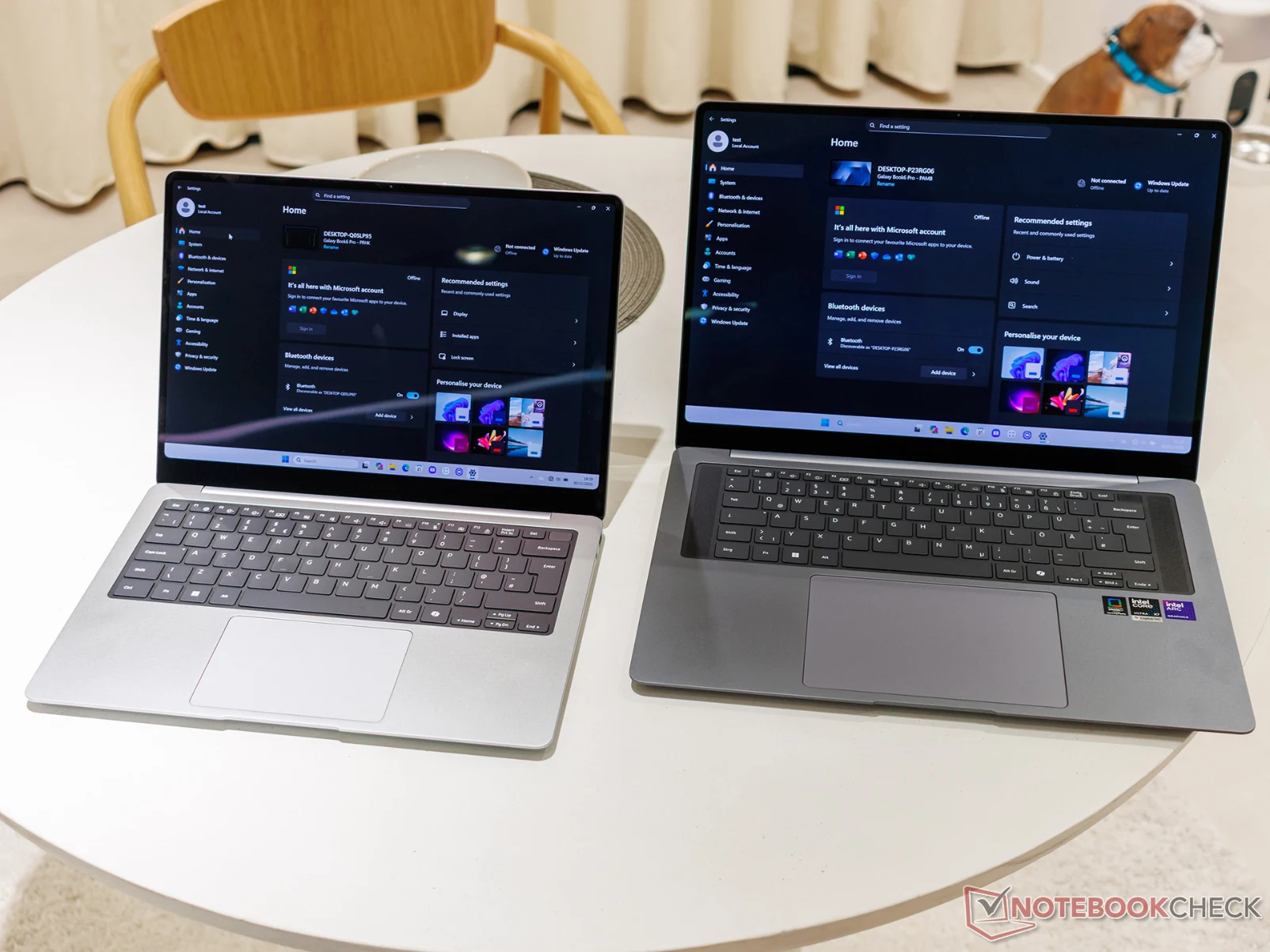
    Samsung has announced the prices for the Galaxy Book6 series in additional markets. To recap, at the beginning of the month, we shared pricing details for various Galaxy Book6, Galaxy Book6 Pro, and Galaxy Book6 Ultra models during a hands-on review of all three laptops. Basically, the starting price for this series was set at €1,049 (around $1,425) in Germany.

    Price Adjustments Across Eurozone

    However, Samsung has provided an update indicating that most Eurozone countries will see Galaxy Book6 models priced starting from €1,149 (approximately $1,365) and higher. In the UK, the 14-inch Galaxy Book6 is set to take the place of the Galaxy Book5, priced at £949 (about $1,285). This model appears to be powered by a Core Ultra 5 325 processor, featuring 16 GB of RAM and 256 GB of storage. There will also be Core Ultra 7 355 options available, along with configurations that include up to 32 GB of RAM and 1 TB of storage. Notably, Eurozone versions will start with a minimum of 512 GB of storage, even for their base models.

    Galaxy Book6 Pro and Ultra Specs

    On the other hand, the Galaxy Book6 Pro lineup will begin at a price of at least £1,399 and €1,799 (around $2,135). It seems that the previously announced Intel-only models of the Galaxy Book6 Ultra won’t be available right away. Instead, Samsung plans to launch this competitor to the MacBook Pro 16 (currently priced at $2,379 on Amazon) exclusively equipped with an Nvidia GeForce RTX 5060 laptop GPU.

    Future Availability and Pre-Orders

    The company has also confirmed that Germany and the UK will be joined by Belgium, Denmark, France, Italy, Ireland, the Netherlands, Norway, Sweden, and Spain for availability. Samsung aims to extend its reach to more markets come April. Pre-orders are set to start on February 25, coinciding with the launch of the Galaxy Buds4 and Galaxy S26 series. However, the shipping for these pre-orders won’t begin until March 11. The initial pricing for the models is listed as follows:

    – Galaxy Book6
    – Galaxy Book6 Pro
    – Galaxy Book6 Ultra

    Source:
    Link


  • Mysterious Object Reduces Brightness of Distant Star, Say Astronomers

    Mysterious Object Reduces Brightness of Distant Star, Say Astronomers

    Key Takeaways

    1. ASASSN-24fw is a star twice the size of our Sun, located 3,200 light years away, experiencing a significant brightness drop over 200 days.
    2. The cause of the dimming is unclear, but theories suggest it may involve a brown dwarf with large rings or a Jupiter-sized exoplanet.
    3. ASASSN-24fw is surrounded by debris from ancient collisions involving exoplanets.
    4. Future research will utilize the Very Large Telescope to determine the star’s age and composition.
    5. Further dimming of ASASSN-24fw’s brightness is expected in about 42 or 43 years, with findings to be published in the ‘Monthly Notices of the Royal Astronomical Society.’


    ASASSN-24fw is a star that measures twice the size of our Sun, situated 3,200 light years away from our planet. For many years, scientists believed this star was a stable entity, but its brightness has dropped over a span of 200 days, marking one of the longest declines ever observed. The specific cause of this dimming remains unclear, though several theories have emerged.

    New Theories on Brightness Decline

    Recent research suggests that this dimming could be linked to a brown dwarf encircled by massive, saucer-shaped rings that stretch more than 26 million kilometers. A brown dwarf is classified as a substellar object with a mass ranging from 13 to 75 times that of Jupiter, often seen as a star that didn’t fully form.

    Possible Influences on ASASSN-24fw

    In addition to the brown dwarf theory, astronomers also propose that a Jupiter-sized exoplanet might be behind this brightness drop. While the source of this celestial object is still not clearly defined, it is known that ASASSN-24fw is enveloped by debris made up of gas and dust, remnants from ancient collisions involving exoplanets.

    Future Research Plans

    As a result, further investigations will take place using the Very Large Telescope to uncover the star’s precise age and its makeup. This research could provide answers to many outstanding questions, especially since a future dimming of its brightness is anticipated in about 42 or 43 years.

    Source:
    Link


  • Asus ExpertBook B3 G2: 16-Core Intel CPU & 96GB DDR5 RAM

    Asus ExpertBook B3 G2: 16-Core Intel CPU & 96GB DDR5 RAM

    Key Takeaways

    1. The Asus ExpertBook B3 G2 is available in both 14-inch and 16-inch sizes, powered by an Intel Core Ultra 7 366H CPU.
    2. The Intel Core Ultra 7 366H features a total of 16 cores, promising high multicore performance comparable to AMD’s Ryzen 9 7940HX.
    3. Display options include a 1080p 60 Hz screen and a 1600p 144 Hz display, with the latter covering 100% of the sRGB color spectrum.
    4. The laptop supports up to 96 GB of DDR5-5600 RAM and has dual M.2 slots for storage, with one slot supporting PCIe 5.0.
    5. Additional features include a spill-resistant keyboard, WiFi 6E/7, a 5 MP IR camera, and dual speakers, but no dedicated GPU is included.


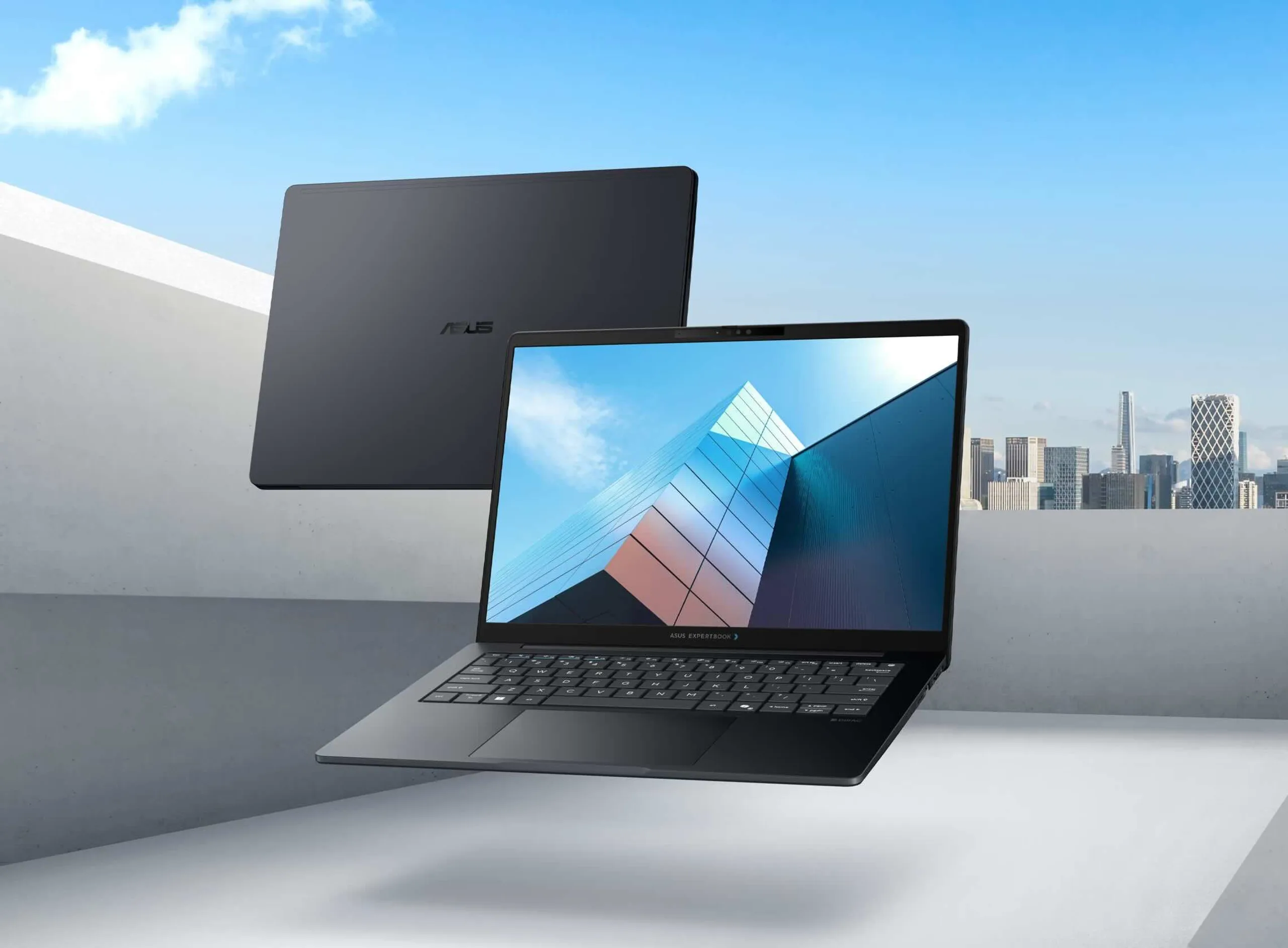
    Alongside the AMD-powered version, Asus has introduced a new edition of the ExpertBook B3 G2 for Intel fans. This model runs on an Intel Core Ultra 7 366H CPU, and it comes in both 16-inch and 14-inch sizes, offering a great variety of features, including displays with high refresh rates.

    Performance Insights

    The Intel Core Ultra 7 366H “Panther Lake” contains 16 cores, which includes 4 P-cores, 8 E-cores, and 4 low-power E-cores. According to Geekbench reports, its multicore performance should be comparable to that of the Ryzen 9 7940HX and AMD’s new Ryzen AI 9 HX 370. Essentially, users can expect excellent CPU performance with this advanced configuration, leaving little room for dissatisfaction.

    Display and Memory Options

    In addition to the Core Ultra 7 366H, the ExpertBook B3 G2 will offer several CPU alternatives. Both the 16-inch and 14-inch models come with two display choices: a 1080p 60 Hz screen boasting a peak brightness of 300 nits, and a 1600p 144 Hz display that claims to cover 100% of the sRGB color spectrum, achieving a peak brightness of 400 nits. Notably, the 14-inch version will also have a touch-enabled 1080p display option.

    Memory is catered for by up to 96 GB of DDR5-5600 RAM. As for storage, there will be an M.2 2280 PCIe 5.0 slot and another M.2 2280 PCIe 4.0 slot, with the latter accommodating a 1 TB Crucial P310, which is currently priced at $165 on Amazon. Neither variant offers a dedicated GPU, so users will depend on the 4-core Xe3 iGPU. The I/O options are as follows:

    Additional Features

    The Asus ExpertBook B3 G2 lineup also includes dual speakers, a spill-resistant keyboard, WiFi 6E/7, a 5 MP IR camera, and TPM 2.0 support. As of now, the pricing and availability information remains uncertain.

    Asus via Facebook, TechPowerUp

    Source:
    Link


  • Asus Halts Sales of Certain Laptops and PCs After Nokia Ruling

    Asus Halts Sales of Certain Laptops and PCs After Nokia Ruling

    Key Takeaways

    1. Asus has suspended its operations in Germany, including its official website and online store, due to a court injunction related to a patent dispute with Nokia.
    2. Acer has also halted direct sales of affected laptops and PCs in Germany, while Hisense has secured a licensing agreement.
    3. The court ruling affects specific products using HEVC technology, which are currently unavailable for direct purchase from Asus.
    4. After-sales support, including warranty services, will continue for affected products in Germany.
    5. Asus is exploring additional legal options to resolve the situation, but the duration of the sales suspension remains uncertain.


    After a court decision in Munich, Asus has released a statement detailing how it will affect its operations in Germany. The Munich I Regional Court issued a temporary injunction concerning a patent disagreement with Nokia. This ruling also impacted Acer and Hisense, with Hisense already having secured a licensing agreement.

    Acer’s Response

    In contrast, Acer has recently declared that it has halted the direct sales of the impacted laptops and PCs in Germany, and Asus has now taken similar actions. Asus mentioned that this injunction has caused the suspension of their official website and online store in Germany.

    Products Affected

    The company has clarified that the ruling, referenced under case no. 7 O 4102/25, pertains to specific products. These products incorporate HEVC technology and will not be available for purchase directly from Asus at this time. However, third-party sellers can still offer their existing stock, but it is unlikely that new inventory will arrive soon (like the Vivobook 18 M1807HA, currently priced at €899 on Amazon.de).

    After-Sales Services

    Asus further assures that after-sales support will continue to function in Germany. This includes warranty services for the products affected by the ruling.

    Regarding prior reports, the Munich court determined that neither Asus nor Acer fulfilled the requirements of a willing FRAND licensee. This framework outlines fair, reasonable, and non-discriminatory licensing agreements, prompting the court to grant injunctive relief.

    Future Legal Actions

    Returning to Asus’ statement, the company has indicated that it is exploring additional legal avenues to resolve the situation. However, it hasn’t provided specific information on how long the sales suspension will remain in effect, as this will likely hinge on the results of licensing discussions.

    Asus via: TechPowerUp

    Source:
    Link