Category: Computers

  • Asus ProArt Keyboard KD300: New 65% Wireless Keyboard Launch

    Asus ProArt Keyboard KD300: New 65% Wireless Keyboard Launch

    Key Takeaways

    1. Compact and Slim Design: The ProArt Keyboard KD300 measures 26.8 mm in height and features RX Red Low-Profile optical switches for efficient typing.

    2. Versatile Connectivity Options: It supports Bluetooth, 2.4 GHz wireless, and wired connections, with the ability to remember up to five devices.

    3. User-Friendly Features: The keyboard includes a touch panel for adjusting lighting and managing media playback, with customizable options via Asus’ Gear Link software.

    4. Impressive Battery Life: The keyboard can last up to 16 months on a single charge, making it highly convenient for users.

    5. Pricing and Availability: The ProArt Keyboard KD300 is priced at CNY 999 (around $145) in China, with international availability and pricing to be confirmed by Asus.


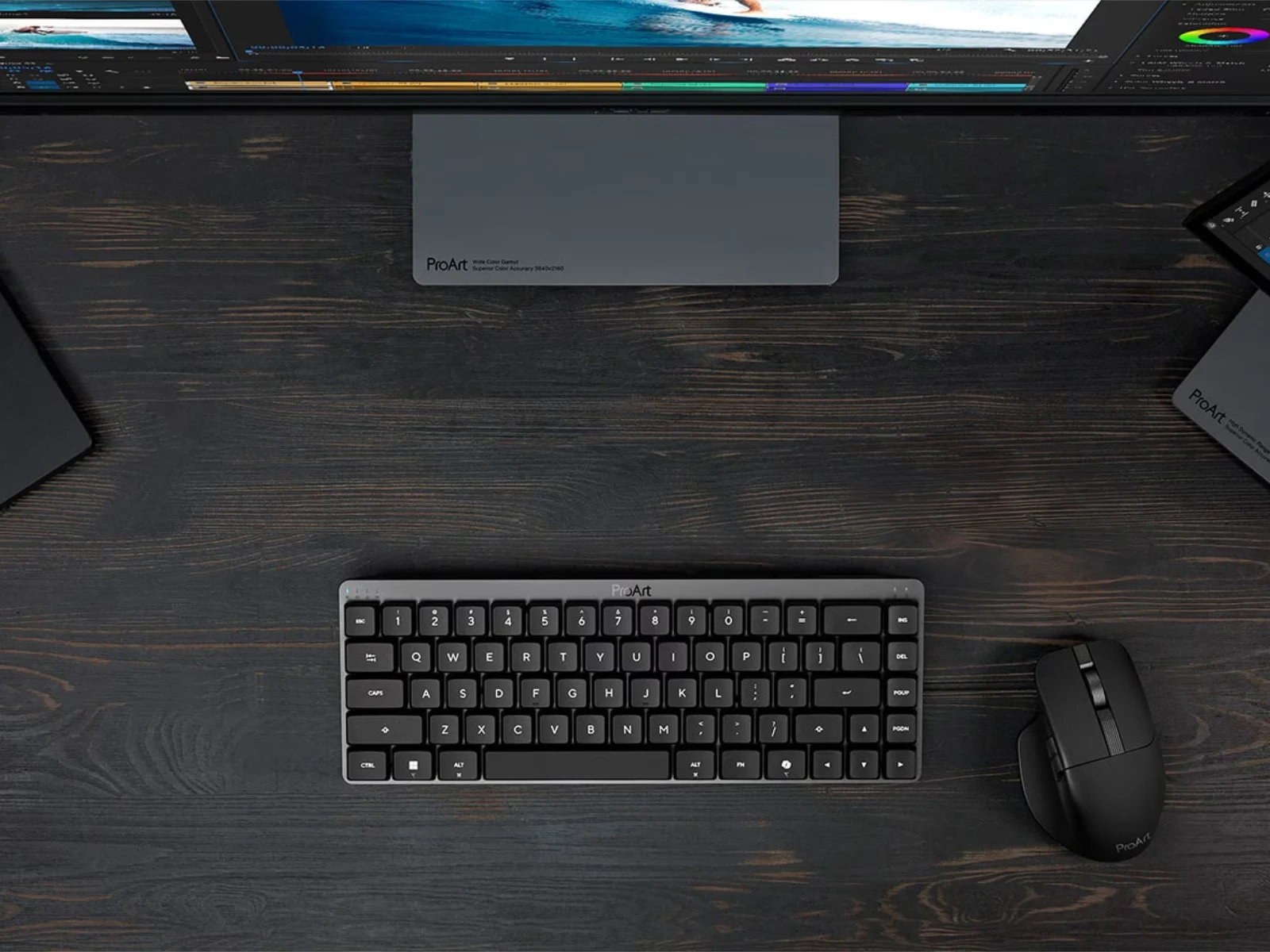
    Asus has just launched the ProArt Keyboard KD300. This keyboard was first introduced in January and is a 65% wireless model that showcases a sophisticated design, much like other items in the ProArt series. Because of this, the ProArt Keyboard KD300 could be a great choice for anyone looking for a fancier option compared to Logitech’s MX Keys Mini, which is currently priced at $99.99 on Amazon.

    Compact and Efficient Design

    To summarize, the ProArt Keyboard KD300 is designed to be compact and slim, measuring only 26.8 mm in height. Asus has included its RX Red Low-Profile optical switches in this wireless keyboard, which provide a 1.0 mm actuation and offer up to 55 g feedback for each key. Additionally, the keyboard supports two different tilt angles and includes silicone dampening to minimize echo and noise while typing.

    Versatile Connectivity Options

    In addition, the ProArt Keyboard KD300 features Bluetooth, 2.4 GHz wireless, and wired connectivity, allowing it to remember up to five devices at once. The back of the keyboard includes a touch panel that lets users adjust lighting and manage media playback. These functionalities can also be tweaked using Asus’ Gear Link software.

    Impressive Battery Life

    Furthermore, Asus claims that the ProArt Keyboard KD300 can last for up to 16 months on a single charge. The price for this keyboard is set at CNY 999 (approximately $145) in China. However, global pricing and availability details are still to be confirmed. Nonetheless, Asus has mentioned that they plan to make it available internationally. For additional information, check out the company’s website.

    Source:
    Link



  • AI-Driven Shortages Could Bankrupt Consumer Electronics Firms

    AI-Driven Shortages Could Bankrupt Consumer Electronics Firms

    Key Takeaways

    1. Significant shortages of RAM and NAND memory are expected to persist until 2030 or 2035, impacting the consumer electronics sector.
    2. Smaller and medium-sized companies may struggle or shut down due to strict payment conditions from foundries and declining smartphone sales.
    3. Prices for eMMC memory have surged dramatically, rising from $1.5 to over $20, and nearly $30 in the automotive sector for an 8 GB chip.
    4. The mass production of Nvidia’s 10 million Vera Rubin units could consume 20% of global NAND production capacity by 2026, exacerbating existing supply issues.
    5. Phison is launching the aiDAPTIV+ middleware solution to reduce reliance on costly memory by utilizing affordable Flash memory for AI-driven applications.


    In a recent chat on the ChenTalkShow, Phison’s CEO, Chien-Cheng Pan, shared a troubling forecast for the consumer electronics sector, driven by an unprecedented demand for AI hardware that has led to significant shortages.

    RAM and NAND Shortages

    Pan emphasized that the shortages of RAM and NAND memory are critical issues that will create major challenges for many companies in the consumer electronics field over the next few years. He predicts that these essential components will likely remain in short supply until 2030 or even 2035, given the current production limitations. Foundries are now requiring three-year pre-payments, which could pose significant difficulties for some businesses.

    Impact on Smaller Companies

    As a result, many smaller and medium-sized firms may have to abandon certain product lines or completely close their doors due to the stringent payment conditions set by foundries. This year, the smartphone market is expected to experience a decline of 200-250 million units, with the PC and TV sectors also facing some effects but to a lesser extent. The smartphone segment will be more heavily impacted, as RAM and storage make up over 20% of the total material costs. In contrast, the server and data center arena will find the situation more manageable, with memory and storage comprising only 5-6% of their expenses.

    Price Surge in eMMC Memory

    Even the less expensive eMMC memory, which was previously priced at $1.5 for an 8 GB chip, is now seeing a dramatic rise in demand, pushing prices well above $20, and nearly $30 for the automotive market for the same capacity.

    Pan further elaborated that the situation could escalate significantly once Nvidia begins mass production of the anticipated 10 million Vera Rubin units. Each Vera Rubin board necessitates over 20 TB of SSD storage and requires up to 576 GB of RAM. With the RAM market already facing challenges, the SSD market is also expected to see similar price hikes, as the demand from the 10 million Vera Rubin units alone could consume 20% of the global NAND production capacity by 2026.

    aiDAPTIV+ Middleware Solution

    In response to the rising demand for AI-driven DRAM and NAND memory, Phison is introducing a middleware solution called aiDAPTIV+. This innovative technology merges minimal DRAM capacity with specialized Flash memory. It essentially shifts the burden of costly HBM and GDDR memory to more affordable Flash memory, reducing the need for numerous high-cost and power-intensive GPU cards. The optimized middleware can expand GPU memory by an additional 320GB for PCs and up to 8TB for workstations and servers through aiDAPTIVCache.

    Source:
    Link


  • Asus Zenbook S16: Sleek Design & Perfect for Daily Tasks

    Asus Zenbook S16: Sleek Design & Perfect for Daily Tasks

    Key Takeaways

    1. Sleek and Durable Design: The Asus Zenbook S16 features a slim design (1.1-1.3 cm thick, 1.5 kg) with a durable metal-ceramic chassis available in dark grey and white.

    2. Enhanced Performance: Powered by the AMD Ryzen AI 9 465, the laptop provides improved performance, but fan noise can be an issue when using full power.

    3. Upgraded OLED Display: The new touch-capable OLED display offers bright visuals (up to 1100 nits in HDR) and precise color profiles, suitable for photo editing.

    4. Battery Life: The laptop has an enlarged battery, providing impressive runtimes of around 13 hours, although competitors may offer longer battery life.

    5. Pricing: Priced at €1799, the Zenbook S16 is a premium option that delivers high quality for daily tasks, though it may not be the most affordable choice.


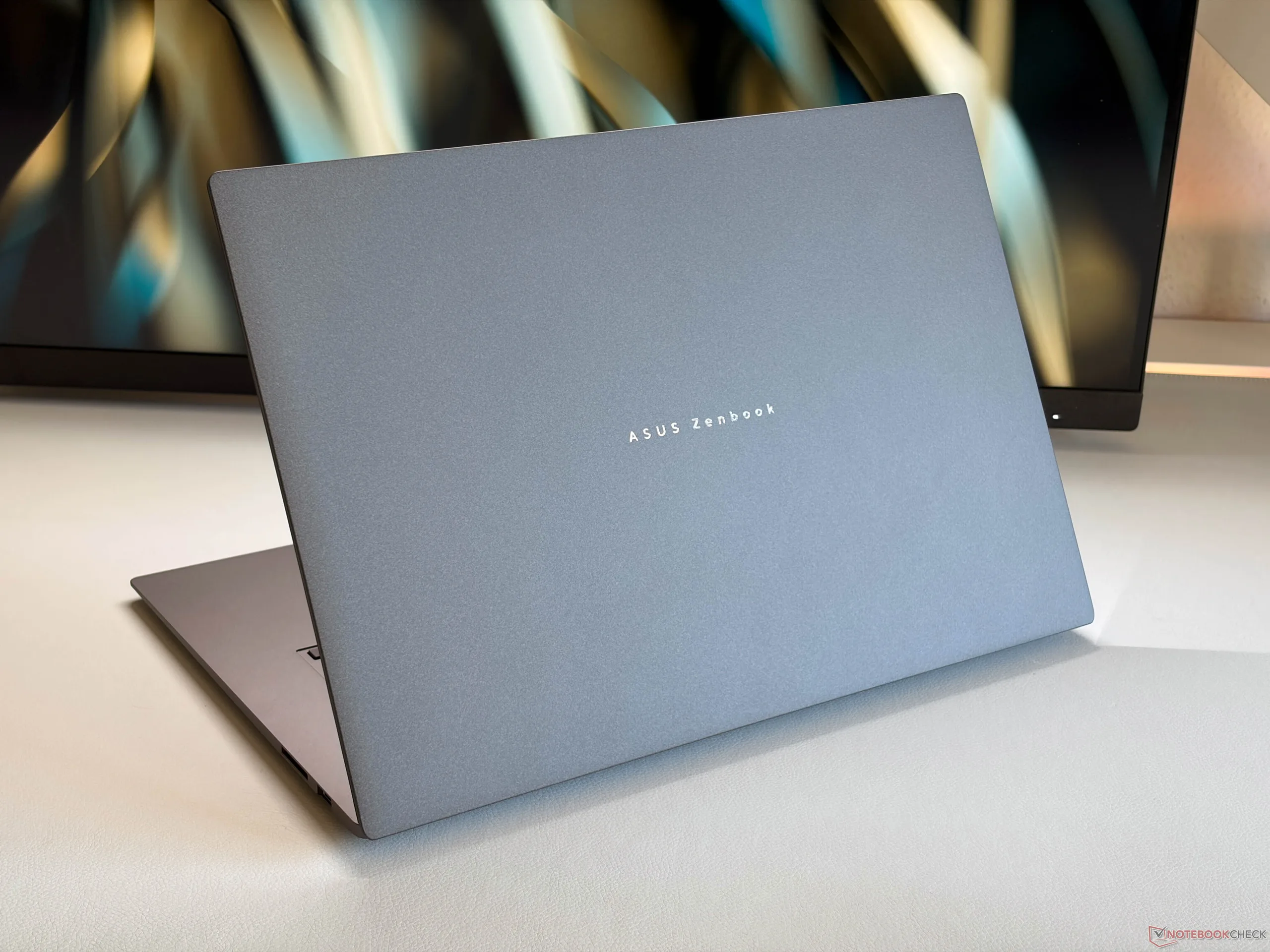
    If you value the aesthetics of your new laptop, the latest Asus Zenbook S16 is worth considering. This 16-inch laptop features a sleek design, measuring just 1.1-1.3 cm in thickness and weighing 1.5 kg, making it comparable to the slightly smaller Apple MacBook Air 15. You won’t have to sacrifice quality, as the durability of the metal-ceramic chassis is remarkable and pleasing to the touch. Our review model comes in a dark grey hue, which looks fantastic, but there is also a white option available. Even with a key travel of only 1.1 mm, the keyboard provides a surprisingly comfortable typing experience.

    Enhanced Performance

    This laptop is powered by the new AMD Ryzen AI 9 465, which is only a minor upgrade from last year’s version. However, with faster memory and increased power limits, the performance is marginally improved. If you need full power, be aware that the fans can get quite noisy. For everyday use, we suggest opting for one of the quieter power profiles, where the fan noise is significantly reduced.

    Improved Visuals

    Asus has also upgraded the OLED display, which now supports touch capabilities. While bright surfaces may appear slightly grainy when viewed closely, this shouldn’t be a major concern at a typical viewing distance. The brightness has been enhanced, reaching about 1100 nits in HDR mode, more than doubling the previous level. As usual, Asus provides precise color profiles for sRGB and P3, making it suitable for photo editing. However, we would appreciate a quick SD-Express card reader.

    In terms of other features, it’s tough to find significant drawbacks. The memory remains soldered, and only one SSD can be installed, a limitation due to the slim design. On the plus side, the battery has been slightly enlarged, offering impressive runtimes (13 hours in our Wi-Fi test). While there are competitors with Intel’s Lunar Lake platform that boast even longer battery life, the performance should meet the needs of most users.

    Pricing and Value

    With a price tag of €1799, the Zenbook S16 isn’t the most affordable option, but it delivers an excellent, high-quality device for all your daily activities. For more in-depth details, check out our full review of the new Asus Zenbook S16.

  • Intel 4 Xe3 GPU Benchmarks Show Over 50% Slower Performance

    Intel 4 Xe3 GPU Benchmarks Show Over 50% Slower Performance

    Key Takeaways

    1. Panther Lake processors offer two main options: Panther Lake-U (Core Ultra 7 355) and Panther Lake-H (Core Ultra X7 358H).
    2. There is a significant performance gap, with the Core Ultra 7 355 lagging behind the Core Ultra X7 358H by up to 60% in gaming benchmarks.
    3. In real gaming scenarios, the Core Ultra 7 355 often underperforms compared to older GPUs like the Arc 140V, but stays competitive with the two-year-old Arc 8.
    4. The Core Ultra 7 355 is adequate for gaming at 900p or 1080p on low settings but is not the best choice for GPU-intensive tasks.
    5. Power consumption during gaming is similar across the Core Ultra 7 355, Core Ultra X7 358H, and older GPUs like the Arc 140V, despite differences in performance.


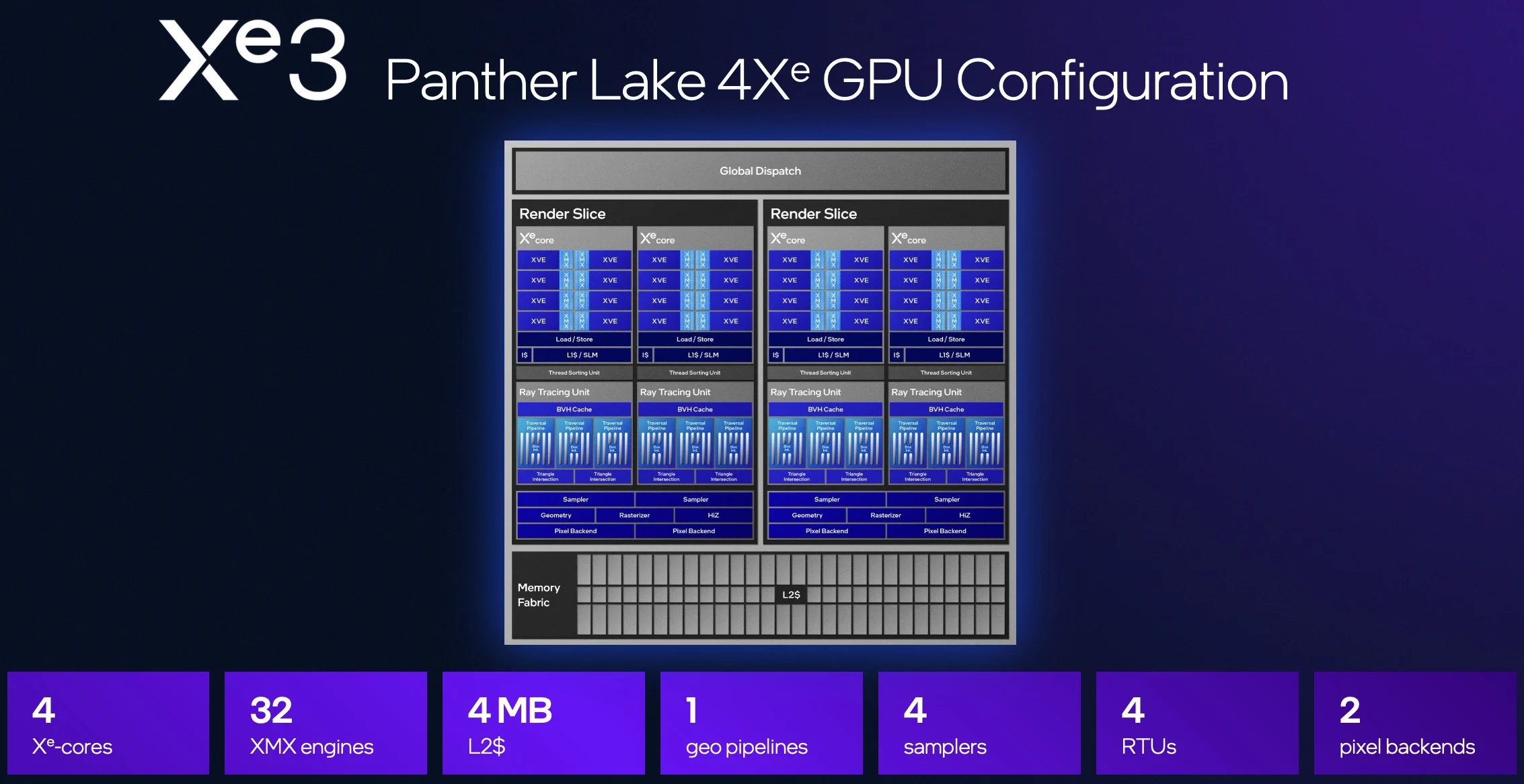
    Laptops equipped with Panther Lake processors have started shipping after their introduction at CES 2026 last month. Customers can pick from two primary CPU options: Panther Lake-U, like the Core Ultra 7 355, or Panther Lake-H, like the Core Ultra X7 358H. After testing both alternatives, it’s important for users to make an informed choice since the performance gaps between Panther Lake-U and -H can be larger than one might think.

    Performance Gaps

    Similar to what we noted when assessing their raw CPU capabilities, the Core Ultra 7 355 can lag significantly behind the Core Ultra X7 358H in gaming performance, sometimes by as much as 60 percent according to 3DMark benchmarks. Overall performance lags behind last year’s Arc 140V/140T, sitting somewhere between the Xe 96 EUs and the two-year-old Arc 8.

    Gaming Experience

    The pattern holds steady when running real games where our test unit, the Core Ultra 7 XPS 14, would often fall short of the Arc 140V in most GPU-heavy scenarios but remains within 10 percent of the Arc 8. It serves as a competent GPU for playing demanding titles like Cyberpunk 2077 at 900p or 1080p on low settings, although we strongly suggest opting for the Core Ultra X7 or even the rival Radeon 890M for tasks that are more GPU-intensive.

    Power Consumption Insights

    When it comes to power usage, one might think that the Core Ultra 7 355 would consume less power during gaming due to its newer architecture compared to CPUs with the Arc 140V or Arc 8. Unfortunately, that’s not the reality, as power consumption while playing Cyberpunk 2077 on the Dell XPS 14 Core Ultra 7, XPS 14 Core Ultra X7, and Lenovo ThinkPad T14 Gen 6 remains very close, with just a few watts separating them despite their significant performance disparities.

  • K1 Pro: Fast Raspberry Pi 5 Alternative with Dual NVMe SSDs

    K1 Pro: Fast Raspberry Pi 5 Alternative with Dual NVMe SSDs

    Key Takeaways

    1. The Bit-Brick K1 Pro is a compact single-board computer (3.54 x 3.15 inches) with multiple M.2 slots for SSDs and WiFi cards, but lacks built-in WiFi and Bluetooth.
    2. It supports 4K resolution at 120Hz via HDMI 2.1 and includes MIPI-DSI and MIPI-CSI for display and camera interfaces.
    3. The board is powered by an RK3576 SoC with eight Cortex-A72 cores and a neural processing unit offering 6 TOPS (INT8), with memory options of 4GB to 8GB LPDDR4X.
    4. External storage can be connected through USB 3.0, and the board includes a USB-C power input and a 40-pin GPIO header, operating in extreme temperatures (-40° to 185°F).
    5. The Bit-Brick K1 Pro is available on AliExpress starting at around $160, with potential additional costs for shipping and import duties, and warranty enforcement may be challenging.


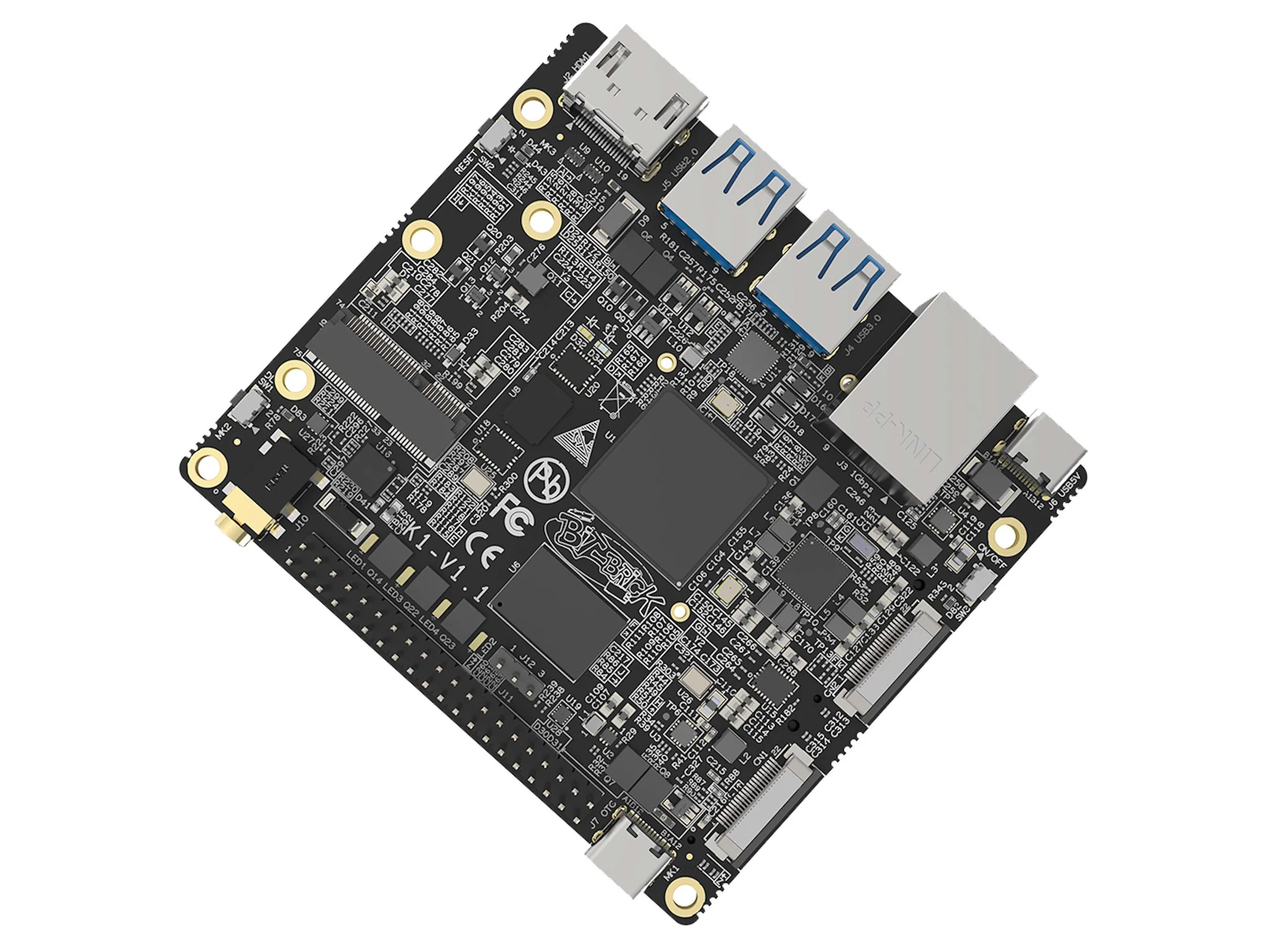
    The Bit-Brick K1 Pro is a fresh single-board computer that’s not just for connecting sensors and actuators, thanks to its diverse range of connectivity options. The board measures 3.54 x 3.15 inches and comes equipped with several M.2 slots—two Key-M and one Key-E, to be precise. These slots can fit M.2-2280 SSDs and WiFi cards. However, it’s worth noting that the SBC does not come with built-in WiFi or Bluetooth capabilities. Instead, users can connect to wired networks through Gigabit Ethernet.

    Connecting Displays

    For display purposes, the board features HDMI 2.1, which allows for 4K resolution at 120Hz, along with MIPI-DSI. While MIPI-DSI might not be of great interest to the average user, it is quite recognizable among makers. The same goes for MIPI-CSI, which is designed for camera interfaces. Depending on what you need, images can even be processed instantly with AI. The RK3576 SoC comes with eight Cortex-A72 CPU cores and has a neural processing unit that offers 6 TOPS (INT8). Additionally, users can choose between 4GB to 8GB of LPDDR4X memory, and the onboard eMMC storage options range from 32GB to 64GB.

    Storage and Power Options

    You can hook up external storage using USB 3.0, and there’s also USB 2.0 available for other accessories and input devices. The USB-C port serves as the power source for this alternative to the Raspberry Pi 5. Plus, the SBC is equipped with a 40-pin GPIO header, and it operates effectively in temperatures ranging from -40° to 185°F. Currently, the Bit-Brick K1 Pro is up for grabs on AliExpress, with prices starting around $160, though keep in mind that shipping costs and possible import duties might apply. Customers should also be cautious, as warranty rights may not be easily enforceable.

    AliExpress, Bit-Brick

    Source:
    Link


  • Affordable 12.9-inch Apple MacBook Launching in March with Colors

    Affordable 12.9-inch Apple MacBook Launching in March with Colors

    Key Takeaways

    1. Apple is developing a budget-friendly MacBook priced lower than the current 13-inch MacBook Air ($850).
    2. The new MacBook will have a smaller screen and use an A-series chip from an older iPhone model.
    3. The build quality will be high, featuring an aluminum body instead of plastic, thanks to a new manufacturing method.
    4. The budget MacBook will be available in various “playful” colors to attract students and younger consumers.
    5. A launch is anticipated in March, with rumors of an A18 Pro chip, a 12.9-inch display, and a price likely below $800.


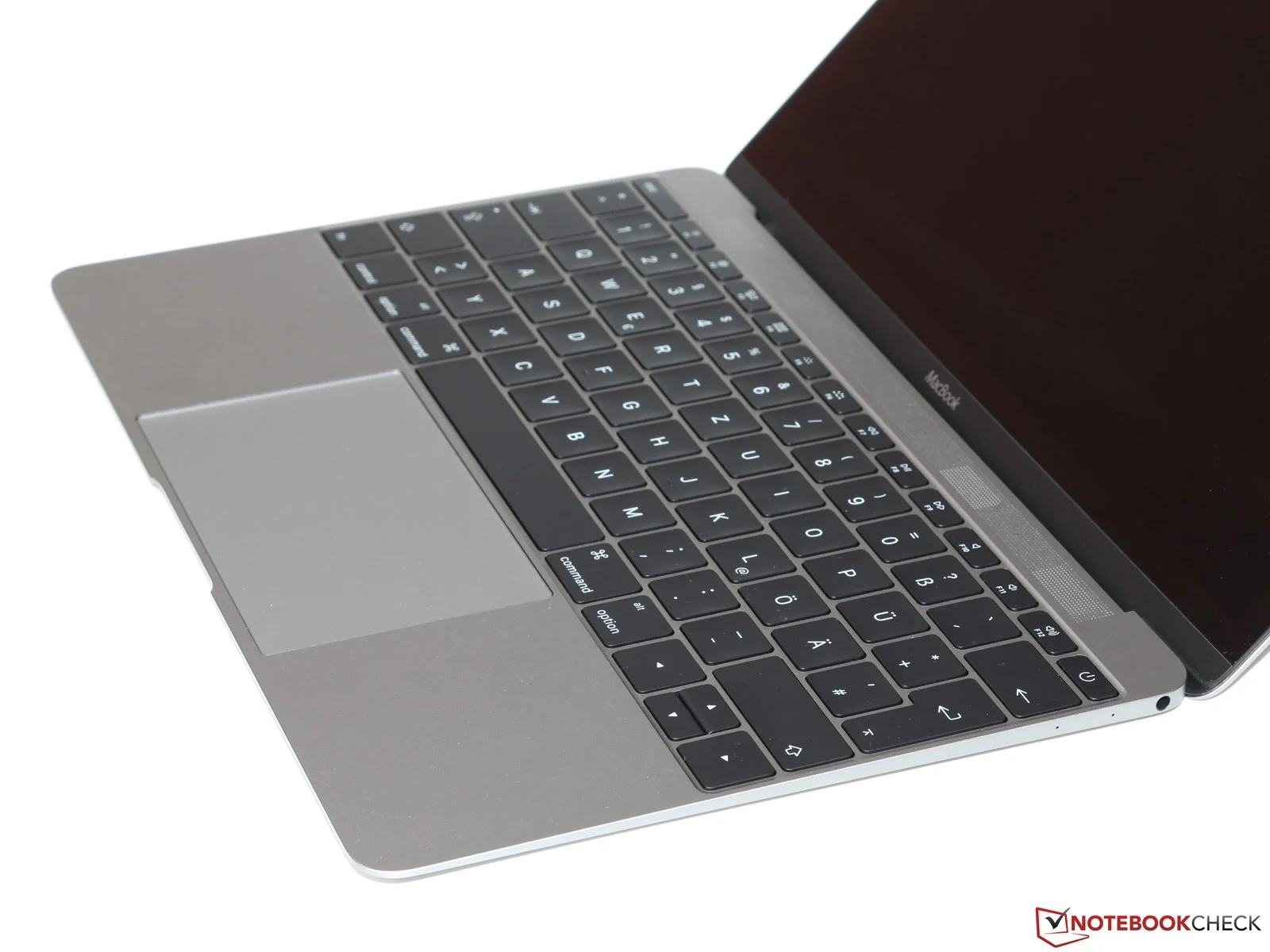
    It is well-known that Apple has been developing a budget-friendly MacBook for a while now. This new model will be priced lower than the current 13-inch MacBook Air, which is available for $850 on Amazon. The budget MacBook will feature a smaller screen and will be powered by an A-series chip from an older iPhone model.

    Build Quality Assurance

    Recent information from Bloomberg’s Mark Gurman suggests that Apple will not compromise on the quality of the build. While the lower price may lead some to think that it would be made of plastic, that is not the case. Instead, the affordable MacBook will maintain an aluminum body, thanks to a new manufacturing method developed by Apple that speeds up production and reduces costs.

    Color Options for Appeal

    Mark also notes that the budget MacBook will come in a variety of “playful” colors, aimed at attracting students and younger consumers. The colors being tested include light blue, light yellow, pink, classic silver, and dark gray; however, Mark mentions that not all of these shades may make it to the final product. Nevertheless, offering different colors will likely broaden the product’s appeal.

    With a launch anticipated in March, the budget MacBook is poised to be an exciting new device. Although Mark did not provide detailed specifications, there are industry rumors suggesting it will feature an A18 Pro chip, a 12.9-inch IPS display, and a price that will probably not go over $800.

    Source:
    Link


  • Banana Pi Launches WiFi 7 Router Boards with 10 Gigabit LAN

    Banana Pi Launches WiFi 7 Router Boards with 10 Gigabit LAN

    Key Takeaways

    1. Banana Pi has launched the BPI-R4 Pro, adding to its BPI-R4 lineup, which includes the BPI-R4 and BPI-R4 Lite.
    2. The BPI-R4 Pro is available globally in two configurations: 4E and 8X, with the 8X featuring 10 Gigabit ports.
    3. Both models are powered by a MediaTek MT7988A processor with four ARM Cortex-A73 cores and come with 4 GB and 8 GB of DDR4 RAM, respectively.
    4. Each model includes 8 GB of eMMC storage, a microSD card slot, and multiple M.2 slots for expansion.
    5. The pricing for the 8X version is $218 from Banana Pi and $229.99 from retailers like Amazon.


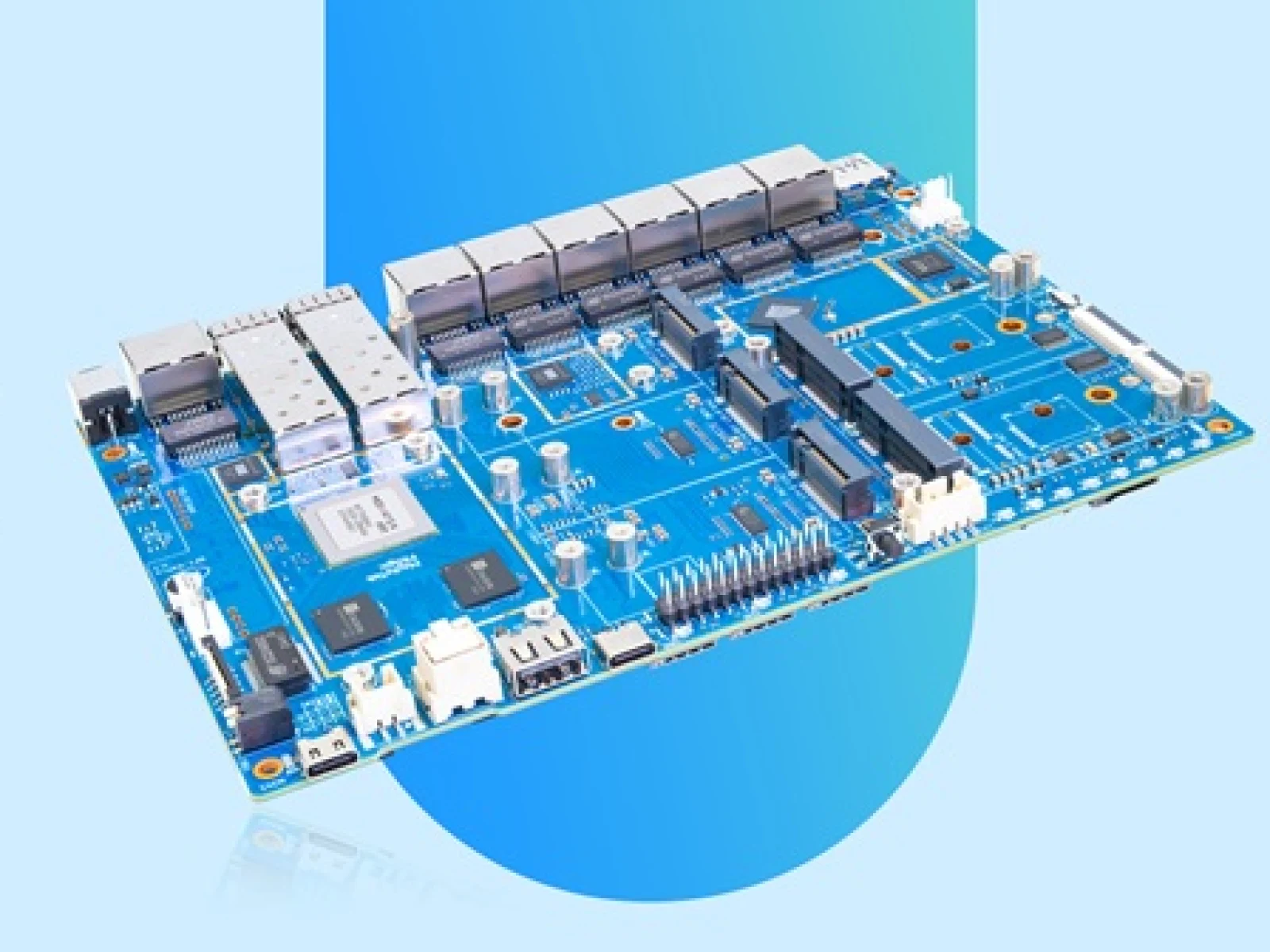
    Banana Pi has unveiled the new addition to its BPI-R4 lineup. To provide some context, the BPI-R4 was introduced in November 2023, and the BPI-R4 Lite followed in August 2025. Just before this release, Banana Pi showcased the BPI-R4 Pro, which runs OpenWRT 24.10, boasting multiple Ethernet ports and support for WiFi 7.

    Global Availability

    Now, the company is making the BPI-R4 Pro available worldwide in two different configurations. The 4E and 8X models are quite alike in most respects but have some key differences. For example, the 8X variant is unique in offering 10 Gigabit ports for both LAN and WAN connections, whereas the BPI-R4 Pro 4E utilizes 2.5 Gigabit ports instead.

    Specifications Breakdown

    Additionally, both the 4E and 8X models come with 4 GB and 8 GB of DDR4 RAM, respectively. On the other hand, both BPI-R4 Pro versions are powered by a MediaTek MT7988A processor, which includes four ARM Cortex-A73 cores running at 1.8 GHz, along with 8 GB of eMMC flash storage, a microSD card slot, and several M.2 slots for B-Key and M-Key expansions.

    The 8X version of the BPI-R4 Pro is priced at $218 directly from Banana Pi. Alternatively, it can also be found through other retailers on Amazon for $229.99. For additional details on the latest router board, you can check out Banana Pi’s wiki.

    Source:
    Link


  • Asus and Acer Face Laptop Sales Ban in Germany Over Nokia Patent

    Asus and Acer Face Laptop Sales Ban in Germany Over Nokia Patent

    Key Takeaways

    1. Asus and Acer have halted direct sales of certain laptops and desktops in Germany due to a ruling by the Munich I Regional Court regarding patent disputes with Nokia.

    2. The court found that Acer and Asus did not comply with FRAND guidelines, which require fair, reasonable, and non-discriminatory licensing terms.

    3. Acer is exploring legal options and has temporarily stopped sales, while Asus has not issued a public statement but has taken its online store offline.

    4. The injunction affects the manufacturers, allowing existing stock to be sold through retailers, but future replenishment may face challenges.

    5. This case is part of a pattern, as other companies like Amazon and OnePlus have also faced sales bans in Germany after losing patent disputes with Nokia.


    Following a recent decision made by the Munich I Regional Court, Asus and Acer have stopped the direct sale of certain laptops and desktop computers in Germany. This action comes after a legal dispute with Nokia concerning standard-essential patents linked to the H.265 video codec, also known as HEVC.

    Court’s Findings

    According to the court, Acer and Asus did not comply as willing licensees under the FRAND guidelines. The FRAND framework stands for fair, reasonable, and non-discriminatory licensing terms. Based on the court’s conclusion, an injunctive relief has been granted.

    Company Responses

    In a statement to PC Welt, Acer acknowledged that it has temporarily halted direct sales of the impacted products in Germany. The company mentioned that it is looking into legal alternatives and considering further steps to resolve the situation. Products that are not affected by the ruling are still available for purchase through the official store. Asus has not yet issued a public statement, but HardwareLuxx pointed out that its official German online store is currently offline for “service enhancements.”

    Retailer Impact

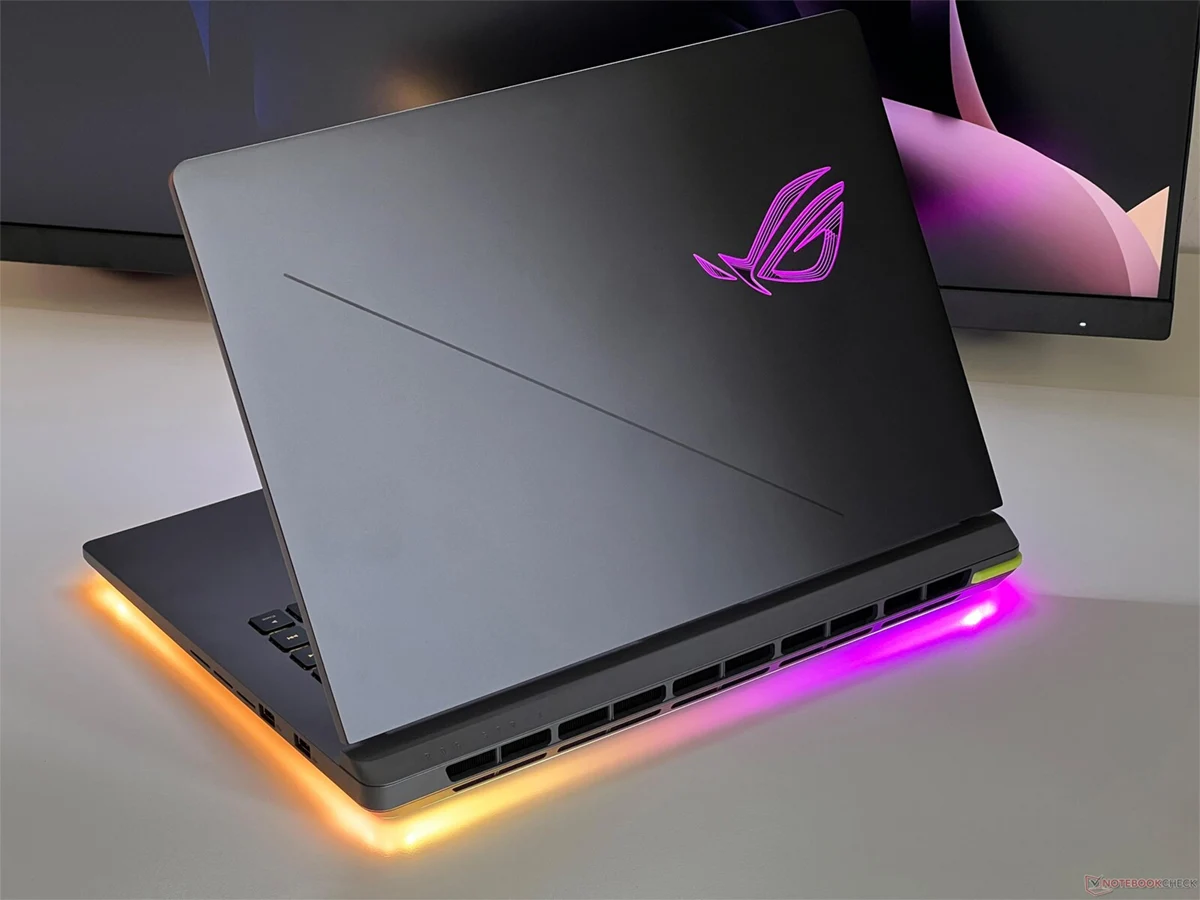
    It’s important to note that the injunction targets the manufacturers rather than third-party sellers (ROG Strix G18 G814FP currently €2,399 on Amazon.de). This means that existing stock can still be sold through retail channels, however, the replenishment of these stocks may encounter disruptions if direct shipments are paused.

    Previous Cases

    Furthermore, this isn’t the first instance where a patent dispute loss against Nokia has led to a sales ban. For instance, Amazon lost a legal case in 2024 and had to alter its Fire TV Sticks. Similarly, OnePlus faced a sales ban in Germany in 2023 after losing a patent dispute with Nokia.

    After the ruling, Nokia indicated that it is pursuing fair compensation for the use of its technology. The company has also shown a willingness to continue discussions with both Asus and Acer. Nokia’s announcement also referenced Hisense, which has obtained a license in associated proceedings.

    Source:
    Link


  • Core Ultra 7 355 Benchmarks Fall Short of Core Ultra X7

    Core Ultra 7 355 Benchmarks Fall Short of Core Ultra X7

    Key Takeaways

    1. The 2026 Dell XPS 14 offers two processor options: Core Ultra 7 and Core Ultra X7, with significant performance differences.
    2. The Core Ultra 7 355 is 30 to 50 percent slower than the Core Ultra X7 358H during multi-threaded tasks.
    3. Despite being a newer model, the Core Ultra 7 355 has similar power draw to the Core Ultra X7 and previous generation processors.
    4. The performance gap between the two processors does not result in a proportional reduction in power consumption.
    5. The Core Ultra 7 355’s performance-per-watt is noticeably lower compared to the Core Ultra X7 358H.


    The 2026 Dell XPS 14 is now available for purchase, allowing buyers to select between the Core Ultra 7 or the Core Ultra X7 Panther Lake processors. We recently had the opportunity to examine both models, and it’s important to note that the lower-priced Core Ultra 7 configuration presents a significant performance gap that potential customers should consider.

    Performance Discrepancies

    According to our comparison charts, the new U-series Core Ultra 7 355 in the XPS 14 is about 30 to 50 percent slower than the Core Ultra X7 358H during multi-threaded tasks. The more significant performance drop is especially evident in the first minute of CPU stress tests, where the Core Ultra X7 can take advantage of its higher Turbo Boost capabilities compared to the U-series model. Even after factoring in any throttling, the 30 percent difference is still quite substantial.

    Processor Comparison

    When we look at overall performance, the Core Ultra 7 355 is more comparable to the previous generation Lunar Lake Core Ultra 7 258V, but it shows slightly lower NPU TOPS performance. Many might think that the Core Ultra 7 355 would operate with a lower power draw than the Core Ultra X7 or the Core Ultra 7 258V since Panther Lake-U is slower and more recent than Panther Lake-H. Sadly, this assumption doesn’t hold true. For instance, when using CineBench R23 xT on an external monitor, the Core Ultra 7 XPS 14 requires nearly the same power as the Core Ultra X7 XPS 14 and the Lenovo ThinkPad T14 Gen 6 once Turbo Boost speeds have leveled off.

    Power Draw Insights

    This means that the 30 percent performance gap does not translate into a 30 percent reduction in power consumption, leading to a noticeable decrease in performance-per-watt when comparing the Core Ultra 7 355 and Core Ultra X7 358H.

  • China Launches 7 Satellites from Sea with Commercial Rocket

    China Launches 7 Satellites from Sea with Commercial Rocket

    Key Takeaways

    1. China successfully launched the Smart Dragon-3 (SD-3) rocket from the sea near Yangjian, Guangdong Province on February 12.
    2. The SD-3 rocket carried seven satellites, showcasing its capability for multiple satellite launches and flexibility for diverse missions.
    3. Launching multiple satellites together is a cost-effective option, appealing to the commercial sector.
    4. One of the satellites onboard was Pakistan’s PRSC-EO2, the country’s second homegrown Earth observation satellite.
    5. This launch signifies a key milestone in China-Pakistan space collaboration and may lead to further partnerships in the future.


    On Thursday, February 12, at 8:37 PM UTC (which is 2:37 PM in Beijing), China successfully launched a Smart Dragon-3 (SD-3) rocket from the sea. The rocket took off from the waters near Yangjian in Guangdong Province, located in South China. The offshore launch was executed by the Taiyuan Satellite Launch Center.

    Rocket’s Capabilities

    The SD-3 rocket carried with it seven satellites. This marks the fourth instance where the rocket has completed a commercial launch mission involving multiple satellites. Such capability highlights the rocket’s flexibility in accommodating various payloads and its potential to support diverse missions. Additionally, launching multiple satellites together is a more economical option, making it attractive to the commercial sector.

    Significance of PRSC-EO2

    Among the satellites onboard the SD-3 was Pakistan’s PRSC-EO2, which represents the country’s second homegrown Earth observation satellite. This satellite is designed to gather remote sensing data to enhance Pakistan’s Earth observation skills. PRSC-EO2 will aid the nation in tasks such as mapping land, monitoring the environment and natural disasters, as well as safeguarding natural resources.

    Future Collaborations

    The launch of PRSC-EO2 via a Chinese rocket stands as a significant milestone in the collaboration between China and Pakistan in the realm of space. This successful endeavor may pave the way for additional partnerships in the future.

    Source:
    Link