Tag: WiFi 7

  • iQoo launches flagship tablet with 4K display and powerful chipset

    iQoo launches flagship tablet with 4K display and powerful chipset

    Key Takeaway

    – High-end specifications: 13.2″ 4K+ LCD with 144Hz, Snapdragon 8 Elite Gen 5, up to 16GB RAM and 512GB storage, 13,000mAh battery, WiFi 7, and DC dimming.
    – Camera and video: 8 MP front camera and 13 MP rear camera; runs OriginOS 6 (Android-based).
    – Availability and pricing: launched in China with four memory variants ranging from CNY 4,499 to 6,699; global availability not yet confirmed.


    Overview

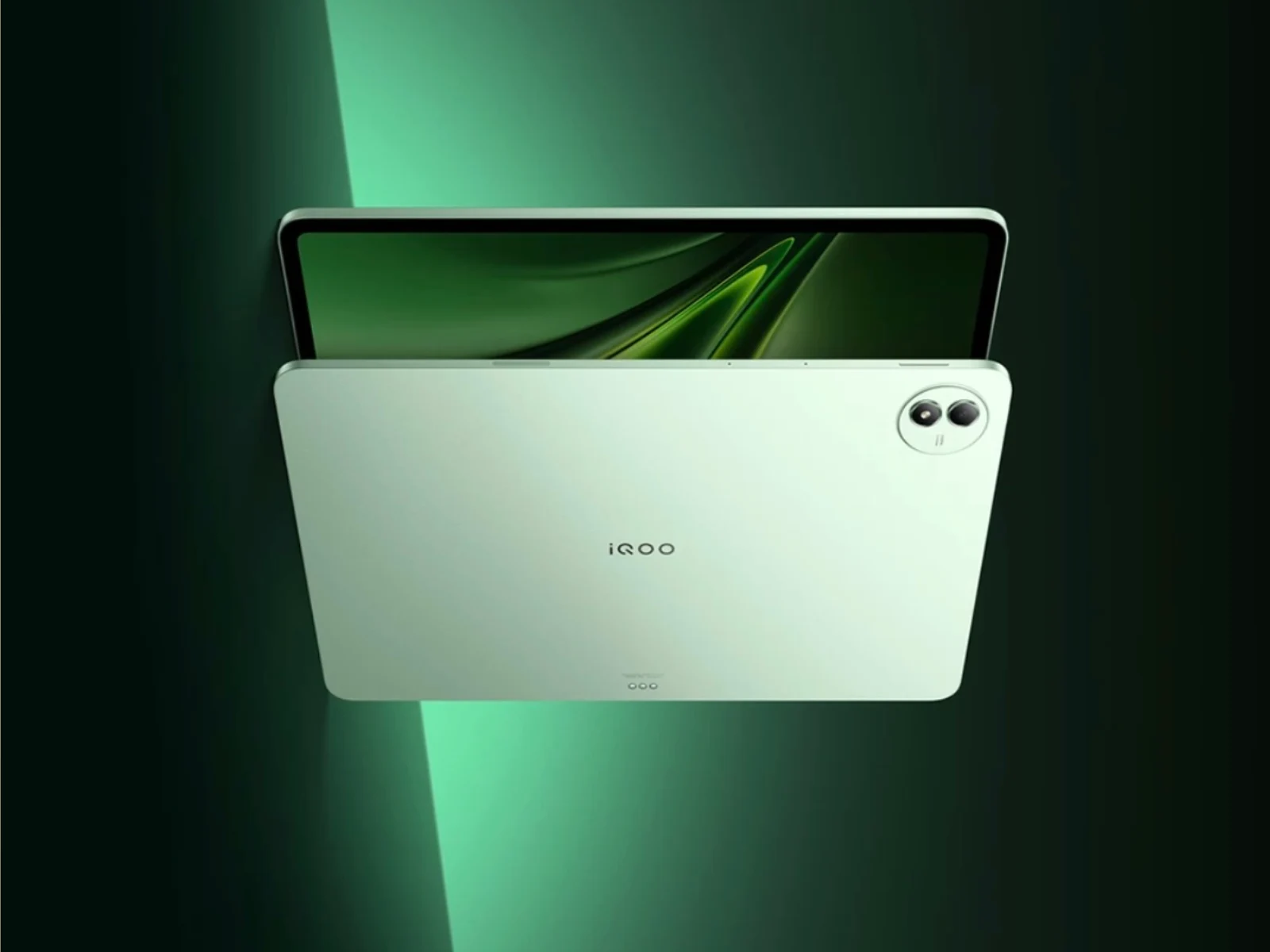
    iQoo has introduced a new tablet in China. The iQoo Pad 6 Pro is the company’s top-of-the-line Android tablet, succeeding last year’s Pad 5 Pro. There are certain pricing and specification details that are essential and must be kept intact as described here, even while we present this in a new format. The device aims to appeal to users seeking a high-performance slate with a large display and strong power metrics.

    Display and Build

    The iQoo Pad 6 Pro features a 13.2-inch LCD panel advertised with a “4K” resolution and a 144Hz refresh rate. The display supports 1,200 nits of peak brightness and DC dimming, which helps with comfortable viewing in bright environments and reduces flicker in dim settings. The tablet is 6.18mm thick and weighs 663 grams, offering a sturdy feel without being overly bulky for long sessions.

    Performance and Hardware

    Under the hood, the tablet is powered by the Snapdragon 8 Elite Gen 5 chipset with LPDDR5X RAM and UFS 4.1 storage. For context, the Snapdragon 8 Elite Gen 5 is Qualcomm’s flagship chipset based on a 3nm process, powering devices including the Lenovo Legion Tab Gen 5. This combination should deliver strong multitasking and gaming capabilities, with faster memory and storage access for demanding apps and titles.

    Camera, Battery, and Connectivity

    The iQoo Pad 6 Pro gets an 8 MP front camera and a 13 MP rear camera. The tablet houses a 13,000mAh battery. Connectivity features include WiFi 7 and Bluetooth 5.4, which promise improved wireless performance and potential stability for wireless peripherals and streaming. On the software side, the device runs OriginOS 6, based on Android, offering a customized experience alongside core Android features.

    Body, Color Options, and Availability

    The tablet is available in silver, gray, and green color options. More details are available on Vivo’s official website. In China, the iQoo Pad 6 Pro is available in four memory configurations: 8GB/256GB, 12GB/256GB, 12GB/512GB, and 16GB/512GB. These variants retail for CNY 4,499 (~$661), CNY 4,999 (~$734), CNY 5,799 (~$852), and CNY 6,699 (~$984), respectively. At the time of writing, the company has not confirmed global availability of the tablet.

    • Model: iQoo Pad 6 Pro
    • Display: 13.2-inch LCD, 4K resolution, 144Hz, 1,200 nits, DC dimming
    • SoC: Snapdragon 8 Elite Gen 5
    • RAM/Storage: up to 16GB/512GB, LPDDR5X and UFS 4.1
    • Camera: 8 MP front, 13 MP rear
    • Battery: 13,000mAh
    • Connectivity: WiFi 7, Bluetooth 5.4
    • OS: OriginOS 6 (Android-based)
    • Weight and thickness: 663 grams, 6.18 mm
    • Availability: China, four memory configurations with prices listed above

    Sources

  • GMKtec AMD-Powered Gaming Mini PC with OCuLink Port

    GMKtec AMD-Powered Gaming Mini PC with OCuLink Port

    Key Takeaway

    – EVO-X3 is teased as an upgraded version of EVO-X2 with a larger chassis and new I/O, including an OCuLink port, high-speed USB4 ports, and WiFi 7.
    – Likely powered by Ryzen AI Max+ 495 (rumored), suggesting a noticeable performance boost over the EVO-X2’s Ryzen AI Max+ 395.
    – Dual PCIe 4.0 slots for expanded storage and overall emphasis on high-end connectivity and expansion at a premium price.


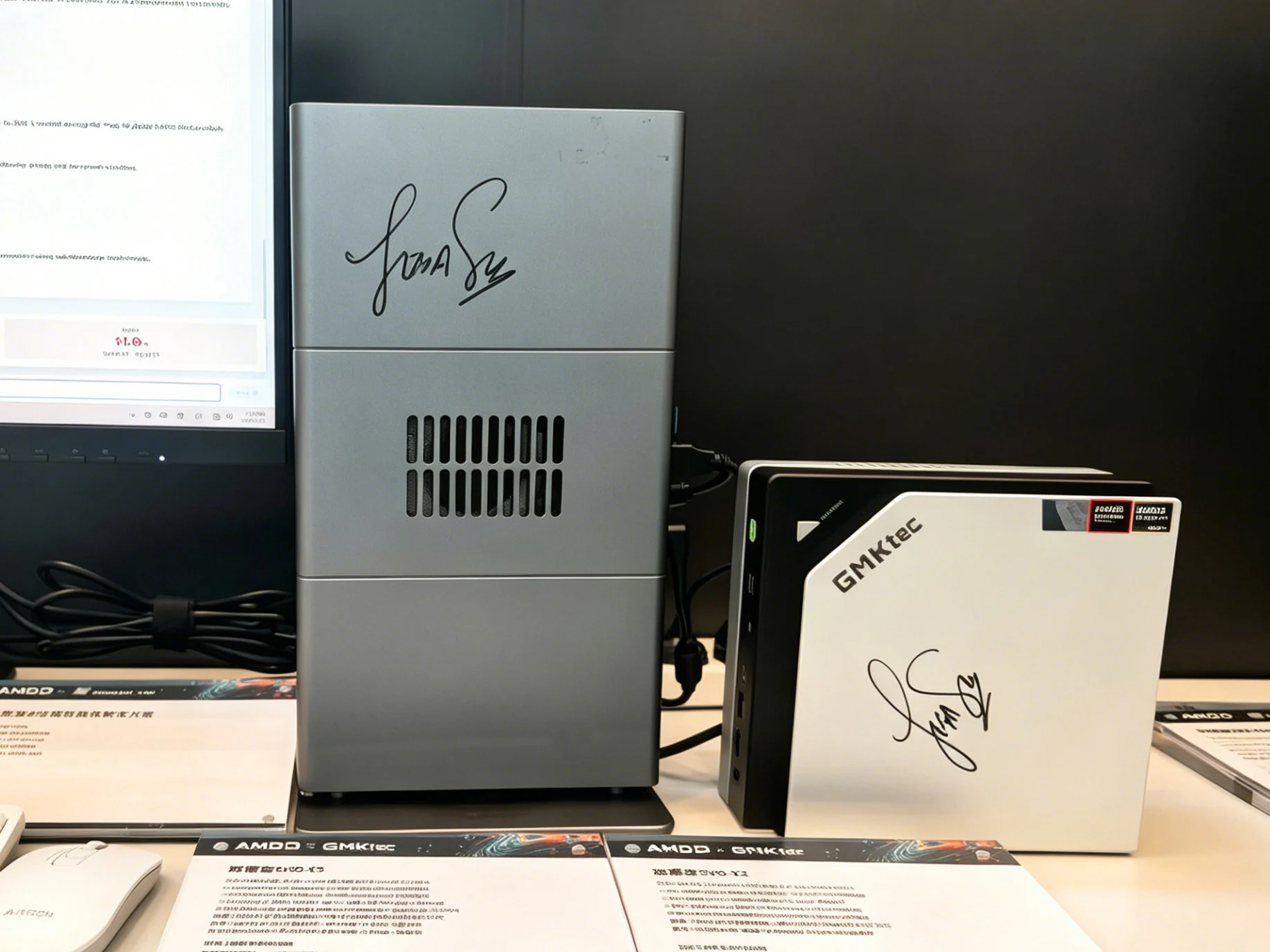
    GMKtec has shown off a new mini PC named EVO-X3 during the AMD AI Developer Day 2026 in China, with only one image released and limited details shared. The official blog hinted that it would be an upgraded version of the EVO-X2, suggesting improvements on the previous model rather than a complete rebuild.

    Overview and teased upgrade

    GMK EVO-X2 previously arrived as one of the early mini PCs to feature the top-end Ryzen AI Max+ 395 APU, which included the Radeon 8060S iGPU. This integrated graphics solution was reported to rival the gaming performance of Nvidia RTX 4070 Laptop GPU in certain scenarios, a claim that impressed enthusiasts seeking compact power. The EVO-X3 is expected to continue that tradition by offering an enhanced processing unit, with speculation pointing toward the Ryzen AI Max+ 495 as a possible core.

    Possible specs and features

    In official communications, GMKtec confirmed the EVO-X3 will include an OCuLink port, a feature missing from the current EVO-X2. Additionally, the device is promised to come with high-speed USB4 ports, WiFi 7, and dual PCIe 4.0 expansion slots to support extra storage. The existence of these elements signals a focus on connectivity and expansion, aligning with expectations for a future-proof mini PC.

    The photographed render shows a larger chassis for the EVO-X3 relative to the EVO-X2, implying improved cooling, space for higher-end components, or both. Pricing remains undisclosed, but it’s noted that the EVO-X2 launched at a higher price due to its premium internals, and GMKtec has previously increased the EVO-X2 price after global availability.

    Design and positioning

    The single image teased by GMKtec depicts a design shift toward a more substantial enclosure, which could reflect enhanced thermals and potential performance headroom. While it’s common for mini PCs to trade compactness for greater cooling, the EVO-X3’s prospective upgrades suggest GMKtec is targeting power users who demand sustained performance from a compact form factor.

    • OCuLink port inclusion signals an emphasis on fast external connections.
    • WiFi 7 readiness points to better wireless performance in dense environments.
    • Dual PCIe 4.0 slots offer expandable storage options for demanding workloads.

    Market expectations

    The EVO-X3’s arrival comes amid a crowded field of compact workstations and gaming mini PCs. If the EVO-X3 pairs the rumored Ryzen AI Max+ 495 with robust cooling and enhanced IO, it could appeal to professionals and enthusiasts who want a capable box for content creation, AI workloads, or portable game streaming. Pricing remains a key variable that will influence its reception among buyers who already saw the EVO-X2 fluctuate in cost after introduction.

    Sources
  • Affordable Xiaomi WiFi 7 Router with 8-Antenna Setup Launched

    Affordable Xiaomi WiFi 7 Router with 8-Antenna Setup Launched

    Key Takeaway

    1. Xiaomi’s BE7200 Pro offers high-speed dual-band WiFi 7 up to 7,200Mbps with AI-powered network management and Mesh coverage.
    2. It features 8 high-gain antennas and an 8-channel amplifier for strong wall penetration and reliable connectivity.
    3. Powered by Qualcomm NPro A7 chipset, it supports up to 600 devices and includes five 2.5GbE ports.
    4. The router lacks NAS capabilities but provides advanced child protection, anti-hacking features, and a sleek design.
    5. Currently available in China for around $176, with no confirmed global release.

    Introduction to Xiaomi’s New WiFi 7 Router

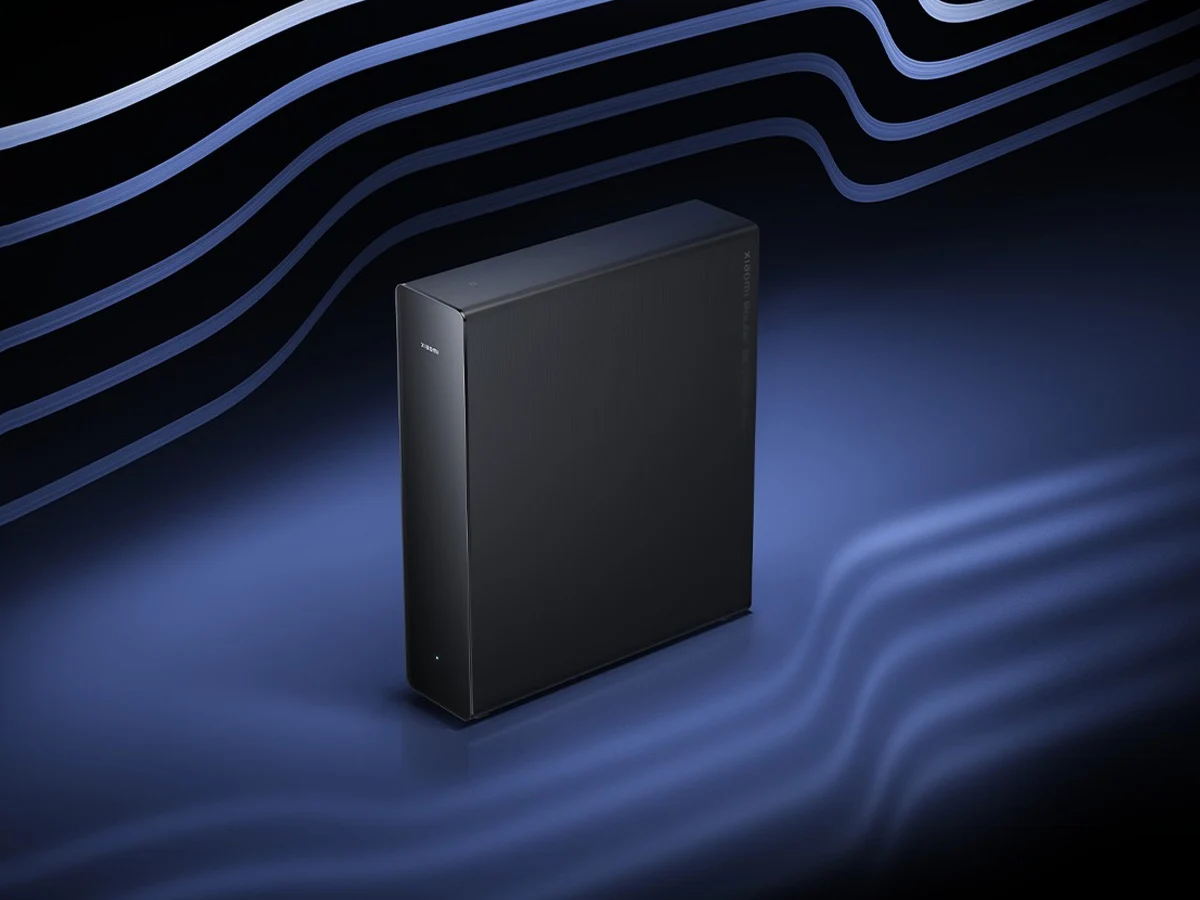
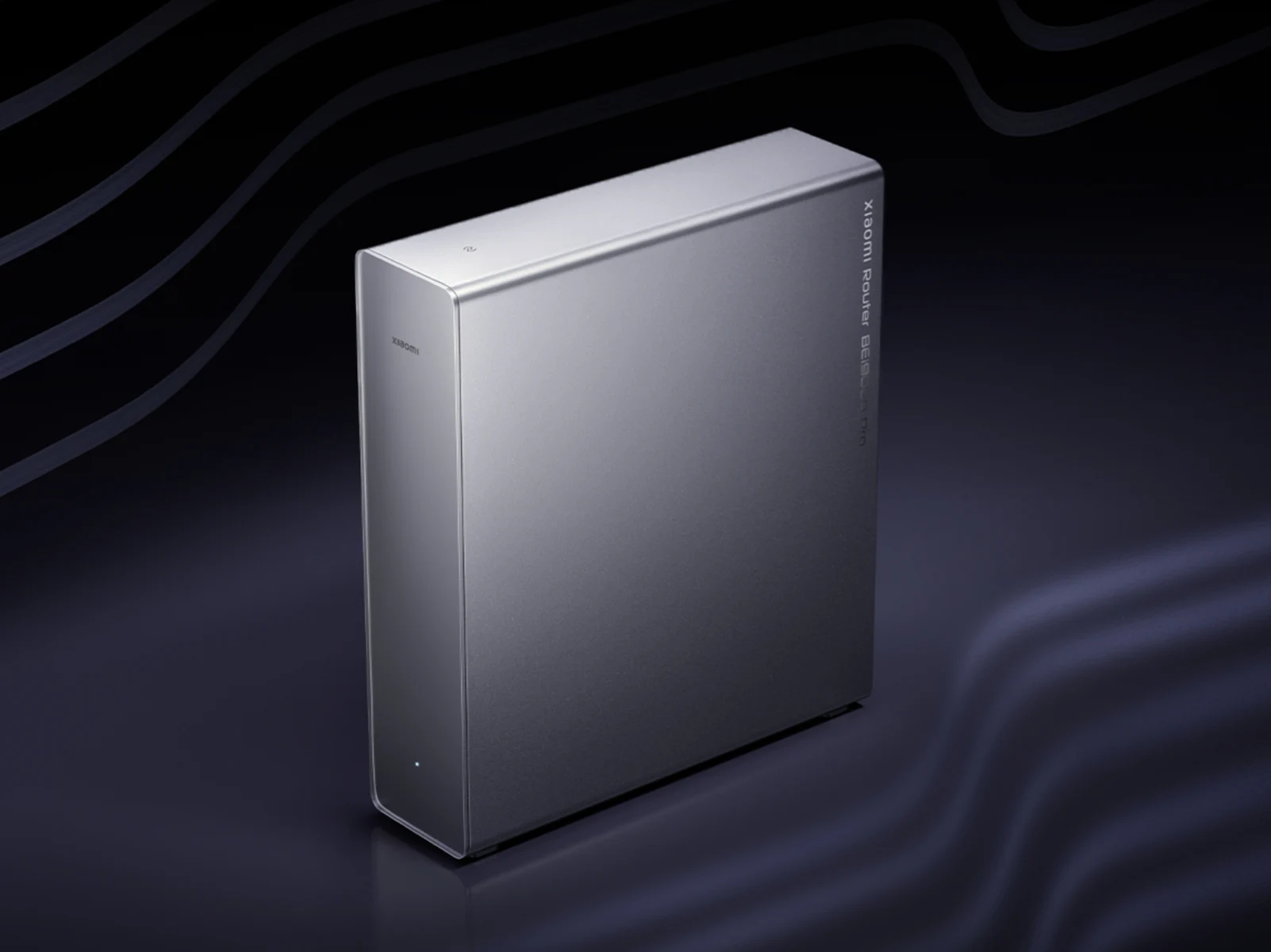
    Xiaomi has revealed its latest WiFi 7 router named the BE7200 Pro, being targeted mainly at the Chinese market. This device is more budget-friendly compared to the higher-end BE19000 Pro that they launched earlier in Europe, which features some more advanced functions like NAS but does not include in this model. Despite that, the specs it manages to offer are quite impressive in this price range. The innovative design and features demonstrate Xiaomi’s effort to make high-speed internet accessible for more users.

    Design and Connectivity

    The router comes with 8 high-gain antennas that are specially designed to boost signal strength and penetration. Paired with an 8-channel signal amplifier, Xiaomi claims it can better reach through walls and obstructions, ensuring a strong and stable internet connection even in tough environments. Its appearance is modern and sleek, fitting well into a home or office setup. The device’s hardware includes a Qualcomm NPro A7 WiFi chipset, combined with 1GB of RAM and 512MB of flash storage, providing robust performance and room for future upgrades.

    Performance and Features

    For speed, Xiaomi asserts the BE7200 Pro can achieve a dual-band transfer rate of up to 7,200Mbps. This makes streaming 8K videos a real possibility thanks to the powerful 5GHz band. It also incorporates artificial intelligence to dynamically allocate bandwidth for different devices and activities, ensuring a smooth online experience. Additionally, the AI Mesh feature helps extend the coverage across your entire house, avoiding dead zones and weak spots in WiFi.

    Additional Specifications and Price

    This fetching router is characterized by five 2.5GbE ports, which support fast wired connections. Users can also connect devices with a 6-foot Ugreen Cat 8 Ethernet cable, costing around $6.99, which is included in the package or available separately. The device prioritizes security with advanced child protection measures and anti-hacking features, making it a safe choice for family households. It is currently sold in China for CNY 1,199, approximately $176, though there’s no official info whether Xiaomi plans to bring it to other regions any time soon.

    Sources
  • Apple MacBook Air Update: M5 SoC, Double Storage, WiFi 7

    Apple MacBook Air Update: M5 SoC, Double Storage, WiFi 7

    Key Takeaways

    1. Performance Upgrade: The MacBook Air now features the M5 chip, offering 20% faster CPU performance and 30% improved graphics, especially for AI tasks compared to the M4.

    2. Connectivity Enhancements: It includes WiFi 7 and Bluetooth 6, with doubled storage speeds and a base model featuring 512 GB of storage.

    3. Display Specifications: The display remains the same with 13.6″ and 15.3″ IPS LCD panels, 500 nits brightness, but lacks higher refresh rates and mini LED backlighting.

    4. Pricing Structure: The starting price is $1,099 for the 13″ model with an 8-core GPU; the 15″ model costs an additional $200, with options for up to 32 GB RAM and 4 TB SSD.

    5. Pre-order and Availability: Pre-orders are open, with expected delivery starting on March 11, 2026.


    The MacBook Air has been upgraded with the M5 chip, aligning it with the other models in Apple’s MacBook lineup. It’s not surprising that the design remains unchanged from its previous versions.

    Performance Boost

    With a 10-core architecture made up of 4 performance cores and 6 efficiency cores, the M5 SoC delivers about 20% more speed than the earlier M4 in CPU tests. In terms of graphics, users can expect a 30% overall enhancement, particularly in AI-related tasks, thanks to new neural accelerators added to each GPU core. Apple claims a remarkable 4x boost in AI performance when compared to the M4.

    Connectivity and Storage

    In addition, the MacBook Air now includes WiFi 7 and Bluetooth 6, attributed to the new N1 chip. Like the MacBook Pro, storage speeds have doubled, with the base model featuring 512 GB of storage—twice as much as before. The pricing for the entry-level models has also seen an update.

    Display and Pricing

    The screens remain unchanged, featuring the same 13.6″ and 15.3″ IPS LCD panels as earlier models. Apple asserts a peak brightness of 500 nits and supports the DCI-P3 color range. However, higher refresh rates and mini LED backlighting are not available, which is expected.

    The starting price for the base 13″ MacBook Air is now set at $1,099, which includes a less powerful M5 SoC with an 8-core GPU, 16 GB of RAM, and 512 GB of storage. The 15″ model, equipped with the full M5 SoC and the same RAM and storage, has an additional cost of $200. Customers have the option to upgrade to a maximum of 32 GB of RAM and a 4 TB SSD. Color choices remain unchanged, including Sky Blue, Silver, Midnight, and Starlight.

    Pre-orders are currently open, with delivery expected to start on March 11, 2026.

    Source:
    Link


  • Xiaomi BE19000 Pro: Global Launch of WiFi 7 Router with NAS

    Xiaomi BE19000 Pro: Global Launch of WiFi 7 Router with NAS

    Key Takeaways

    1. Xiaomi introduced several products including the Xiaomi 17, Xiaomi 17 Ultra, Leica Leitzphone, Xiaomi Pad 8, and Xiaomi Pad 8 Pro at a recent international launch event.
    2. The Router BE19000 Pro was added to Xiaomi’s global website, representing the global version of the previously launched BE10000 Pro in China.
    3. The Router BE19000 Pro features twelve antennas, amplifiers, and WiFi 7 connectivity, promising peak transfer speeds of up to 18,656 Mbps.
    4. It includes dual 10 Gigabit Ethernet ports and an M.2 2280 slot for network-attached storage (NAS) functionality, along with a USB 3.0 port for file sharing.
    5. Pricing and availability for the Router BE19000 Pro have not yet been announced by Xiaomi.


    Xiaomi held a large international launch event over the weekend. Leading up to MWC 2026 this week in Barcelona, the event highlighted the Xiaomi 17, Xiaomi 17 Ultra, Leica Leitzphone, Xiaomi Pad 8, and Xiaomi Pad 8 Pro, among various other gadgets. To note, these products are already available for purchase in several countries.

    New Product Announcement

    But the company isn’t stopping with just these launches. Now, it has added the Router BE19000 Pro to its global website. This router appears to be the global version of the BE10000 Pro that was introduced last September in China.

    Router Features

    As illustrated in the graphic below, the Router BE19000 Pro is equipped with twelve antennas and amplifiers and features WiFi 7 connectivity. Competing with other Wi-Fi 7 routers like the Netgear Orbi 970 series (curr. $799 on Amazon), the Router BE19000 Pro is capable of delivering peak transfer speeds of up to 18,656 Mbps across dedicated 2.4 GHz, 5 GHz, and 6 GHz bands.

    Additionally, Xiaomi has incorporated dual 10 Gigabit Ethernet ports and an M.2 2280 slot in the Router BE19000 Pro, enabling it to function as network-attached storage (NAS). Alternatively, there’s also a USB 3.0 port for file sharing through a thumb drive. More information can be found on Xiaomi’s global website. However, the company has yet to announce pricing or when it will be available.

    Source:
    Link


  • Banana Pi Launches WiFi 7 Router Boards with 10 Gigabit LAN

    Banana Pi Launches WiFi 7 Router Boards with 10 Gigabit LAN

    Key Takeaways

    1. Banana Pi has launched the BPI-R4 Pro, adding to its BPI-R4 lineup, which includes the BPI-R4 and BPI-R4 Lite.
    2. The BPI-R4 Pro is available globally in two configurations: 4E and 8X, with the 8X featuring 10 Gigabit ports.
    3. Both models are powered by a MediaTek MT7988A processor with four ARM Cortex-A73 cores and come with 4 GB and 8 GB of DDR4 RAM, respectively.
    4. Each model includes 8 GB of eMMC storage, a microSD card slot, and multiple M.2 slots for expansion.
    5. The pricing for the 8X version is $218 from Banana Pi and $229.99 from retailers like Amazon.


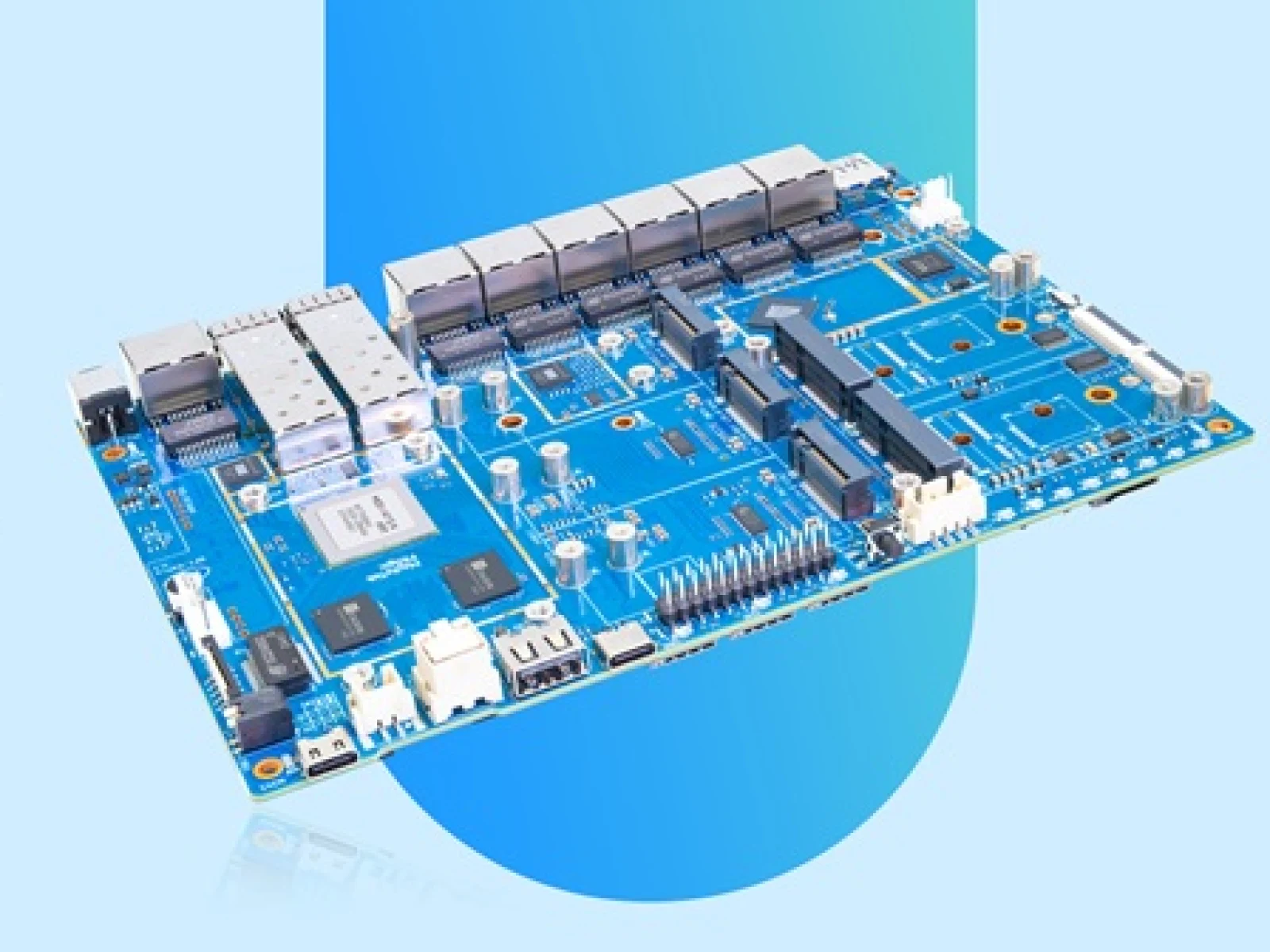
    Banana Pi has unveiled the new addition to its BPI-R4 lineup. To provide some context, the BPI-R4 was introduced in November 2023, and the BPI-R4 Lite followed in August 2025. Just before this release, Banana Pi showcased the BPI-R4 Pro, which runs OpenWRT 24.10, boasting multiple Ethernet ports and support for WiFi 7.

    Global Availability

    Now, the company is making the BPI-R4 Pro available worldwide in two different configurations. The 4E and 8X models are quite alike in most respects but have some key differences. For example, the 8X variant is unique in offering 10 Gigabit ports for both LAN and WAN connections, whereas the BPI-R4 Pro 4E utilizes 2.5 Gigabit ports instead.

    Specifications Breakdown

    Additionally, both the 4E and 8X models come with 4 GB and 8 GB of DDR4 RAM, respectively. On the other hand, both BPI-R4 Pro versions are powered by a MediaTek MT7988A processor, which includes four ARM Cortex-A73 cores running at 1.8 GHz, along with 8 GB of eMMC flash storage, a microSD card slot, and several M.2 slots for B-Key and M-Key expansions.

    The 8X version of the BPI-R4 Pro is priced at $218 directly from Banana Pi. Alternatively, it can also be found through other retailers on Amazon for $229.99. For additional details on the latest router board, you can check out Banana Pi’s wiki.

    Source:
    Link


  • Asus ExpertCenter PN55: New AMD Mini PC with 96GB RAM

    Asus ExpertCenter PN55: New AMD Mini PC with 96GB RAM

    Key Takeaways

    1. Asus launched the ExpertCenter PN55 at CES 2026, featuring the AMD Ryzen AI 400 series.
    2. The new mini PC includes the XDNA 2 NPU with up to 55 TOPs of AI performance and supports up to 96 GB of DDR5 RAM.
    3. The design is similar to the previous PN54 model, remaining compact and smaller than the NUC 16 Pro.
    4. Connectivity options include WiFi 7, Bluetooth 5.4, and support for quad 4K displays.
    5. Pricing and availability details are yet to be announced.


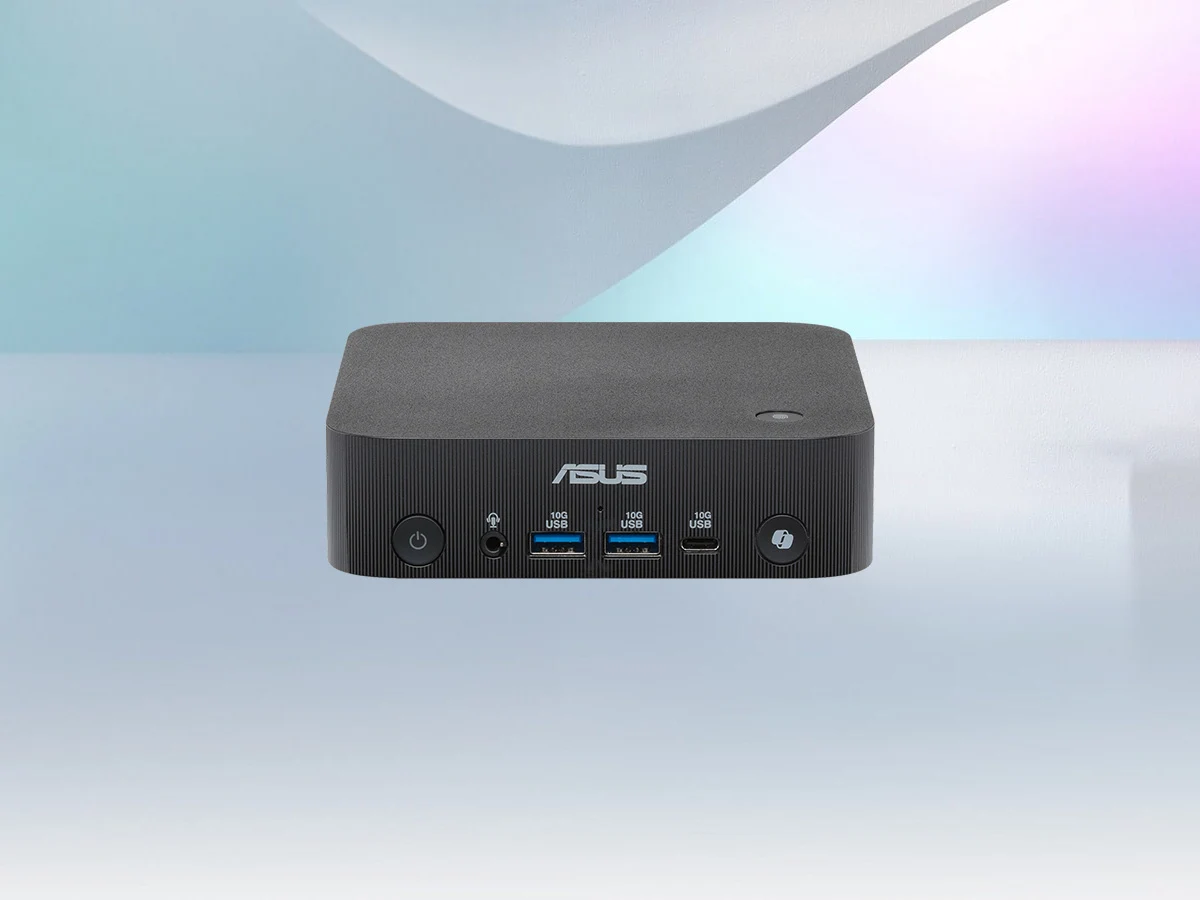
    Asus has officially launched the ExpertCenter PN55 during CES 2026, marking it as an updated model of the previous PN54 released last year. This compact mini PC features the AMD Ryzen AI 400 series, with the highest configuration boasting an unspecified AI 9 HX processor, which is expected to deliver solid performance thanks to the Radeon 890M integrated GPU.

    Processor Insights

    It’s important to mention that the Ryzen AI 400 series isn’t entirely fresh; they’re essentially rebranded versions of the Strix Point APUs. Therefore, there won’t be a notable jump in performance compared to its predecessor, which is a barebone model equipped with an AI 7 350, currently priced at $660.99 on Amazon.

    Enhanced AI Capabilities

    Despite this, Asus has emphasized the new mini PC’s XDNA 2 NPU, which can reach up to 55 TOPs of AI performance. It also supports a maximum of 96 GB of DDR5 RAM operating at 5,600 MHz. Although the Asus ExpertCenter PN55 remains compact, it offers a good variety of ports for connectivity, ensuring users have enough options.

    Design and Features

    In terms of aesthetics, the design hasn’t changed much from the ExpertCenter PN54, and it remains smaller than the NUC 16 Pro which is powered by the Intel Panther Lake processors. Additional features mentioned during the brief CES 2026 presentation include WiFi 7, Bluetooth 5.4, and the ability to support quad 4K displays. Asus has yet to share specifics regarding pricing and availability, but these details are expected to be announced shortly.

  • Ubiquiti Launches Dream Router 5G Max with Tri-Band WiFi

    Ubiquiti Launches Dream Router 5G Max with Tri-Band WiFi

    Key Takeaways

    1. Ubiquiti has launched the Dream Router 5G Max, which features an integrated 5G cellular modem and supports WiFi across three frequency bands: 2.4 GHz, 5 GHz, and 6 GHz (WiFi 7 standard).
    2. The router includes four RJ45 ports and an SFP slot for fiber-optic connections, but technical specifications and multi-gigabit support details are not fully disclosed.
    3. It supports both traditional SIM cards and eSIMs, allowing users to choose between redundancy, failover, or using cellular as the main connection.
    4. The device runs on Unifi OS, allowing the use of Unifi applications, and includes a microSD card slot for storage, along with a status display for network information.
    5. The Dream Router 5G Max is currently not available for sale, and its price and release date have not been announced.


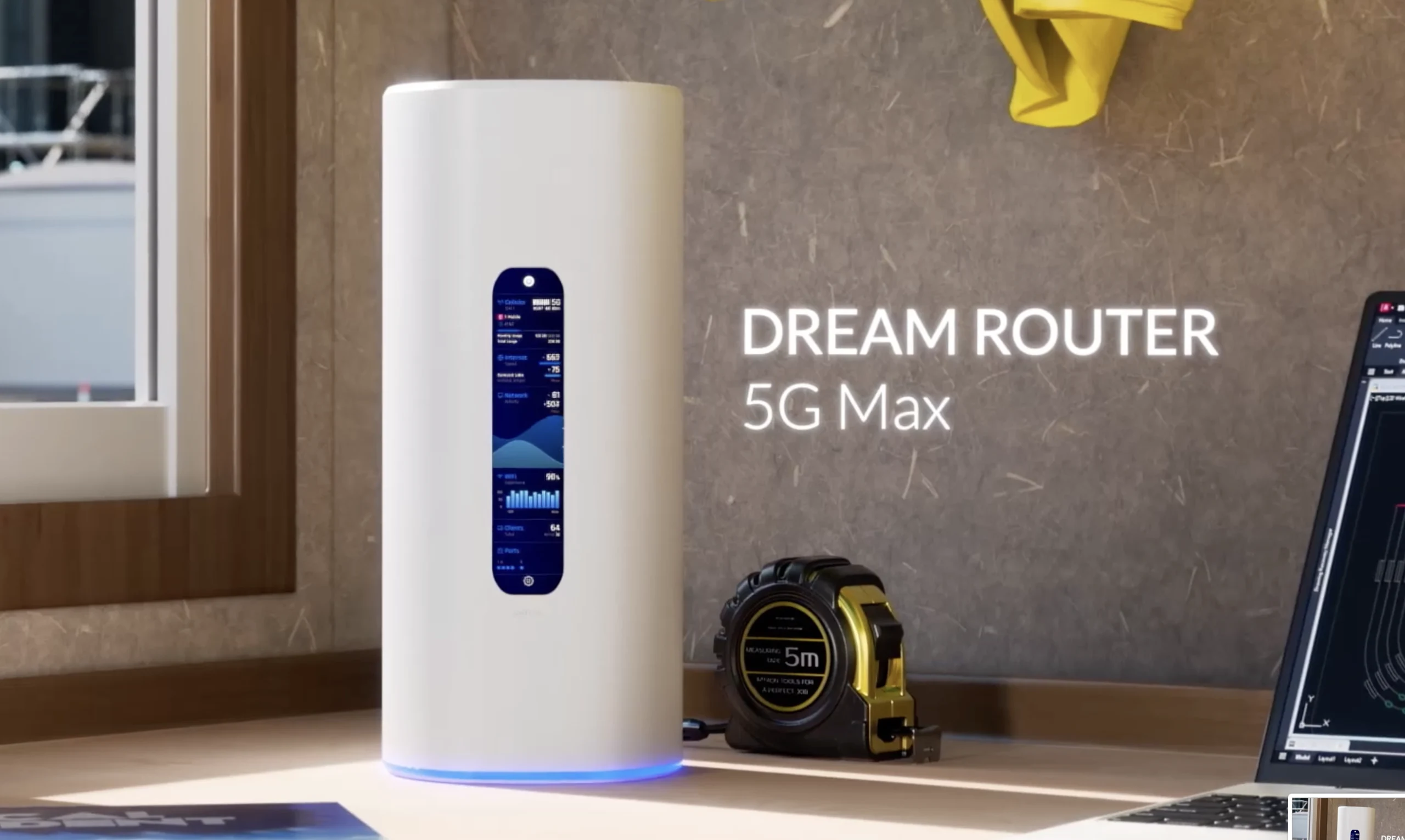
    Ubiquiti has unveiled a fresh WiFi router that features an integrated 5G cellular modem. This new device, named the Dream Router 5G Max, comes packed with a variety of appealing functionalities. Notably, it can establish a WiFi network across three frequency bands: 2.4 GHz, 5 GHz, and 6 GHz. The 6 GHz band is part of the WiFi 7 standard, also referred to as 802.11ax.

    Technical Specs and Features

    Currently, Ubiquiti hasn’t disclosed many technical specifications, but from the pictures, it appears the 5G router includes four RJ45 ports. It’s still uncertain if these ports support multi-gigabit connections (802.11bz). A noteworthy feature is the SFP slot located at the back, which allows for the connection of fiber-optic cables. However, users will need to buy a compatible transceiver separately.

    Cellular Support and Functionality

    As the name suggests, the Ubiquiti Dream Router 5G Max is designed to support the 5G cellular standard. Additionally, this device accommodates both traditional SIM cards and eSIMs. Ubiquiti has stated that users can choose whether to use these cellular connections for redundancy or failover, or as their main connection.

    Additional Features and Availability

    Since this device operates on Unifi OS, it can run Unifi applications. It includes a microSD card slot for file storage or video recordings. Moreover, a status display shows various information about the network connection, such as signal quality, current throughput, and total data usage.

    The Dream Router 5G Max has just been revealed and is not yet available for sale. Unlike other recent 5G products, this router isn’t listed on the brand’s official online store. Therefore, both the price and release date are still a mystery for now.

    Source:
    Link


  • Netgear Nighthawk 5G M7: Mobile 5G Hotspot with WiFi 7 and eSIM

    Netgear Nighthawk 5G M7: Mobile 5G Hotspot with WiFi 7 and eSIM

    Key Takeaways

    1. The Netgear Nighthawk 5G M7 combines a 5G modem with a WiFi 7 chipset, offering speeds up to 3.6 Gbps and supporting up to 32 connected devices.
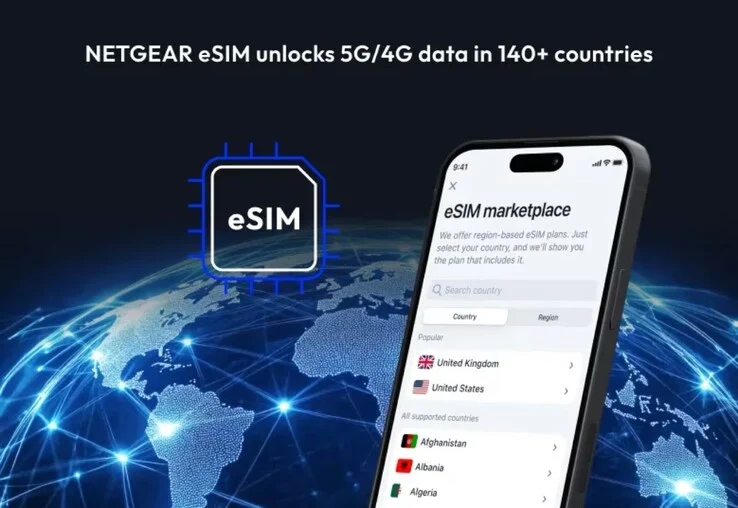
    2. It is globally compatible, working with 5G networks in over 140 countries, and allows users to choose between a nano SIM or eSIM.
    3. The mobile hotspot features a 3,850mAh battery lasting up to ten hours and a 2.4-inch display showing connection status, data usage, and battery level.
    4. It includes a smartphone app compatible with both iOS and Android, featuring an eSIM marketplace and data/battery monitoring.
    5. The Netgear Nighthawk 5G M7 will be released in January 2026 at a price of $499, making it a more affordable option than the M7 Pro, which costs about $699.


    The Netgear Nighthawk 5G M7 is a new device that aims to deliver both power and versatility. This American company has combined a 5G modem with a WiFi 7 chipset, allowing for speeds that can reach up to 3.6 Gbps. This mobile hotspot can connect as many as 32 devices at once.

    Global Compatibility

    Netgear claims that the Nighthawk 5G M7 works with 5G networks in over 140 countries. Users can opt for a nano SIM or an eSIM for connectivity. The smartphone app that comes with it is compatible with both Apple iPhone and Android devices. This app includes an eSIM marketplace, making it easier to find the best plan for your next journey. Additionally, it provides information on remaining data and the battery status of the mobile hotspot.

    Battery and Display Features

    The Nighthawk 5G M7 has a battery that lasts up to ten hours and sports a 3,850mAh battery that can be charged using USB-C. Unlike the pricier M7 Pro, which has a larger display, the M7 features a smaller 2.4-inch screen showing connection status, data usage, and battery level. Its dimensions are about 5.7 x 3.3 x 0.67 inches, weighing around 8.5 oz, making it slightly bigger than a standard smartphone. For those who need it, two Ethernet ports can be added through a separately sold adapter.

    Pricing and Release Info

    The Netgear Nighthawk 5G M7 (MH7150) is set to be released in January 2026 at a price of $499. This is a more affordable option compared to the older Nighthawk M7 Pro, which is currently priced at about $699 on Amazon.


    Source:
    Link


  • Asus RT-BE58 Go: Compact WiFi 7 Router for Versatile Connectivity

    Asus RT-BE58 Go: Compact WiFi 7 Router for Versatile Connectivity

    Key Takeaways

    1. Compact Design: The Asus RT-BE58 Go measures 3.9 x 4.4 x 1.4 inches and features two external antennas, connecting to smartphones via USB tethering or using WISP mode for public networks.

    2. High-Speed Connectivity: This WiFi 7 router offers data transfer speeds of up to 688 Mbps on the 2.4 GHz band and 2,882 Mbps on the 5 GHz band, powered through USB Type-C.

    3. Versatile Usage Options: It includes a 2.5 Gbps WAN port and a 1 Gbps Ethernet port, and can function as an access point, repeater, or part of an AIMesh network.

    4. Wide Coverage: The router can cover approximately 1,800 square feet and support over 150 simultaneous device connections.

    5. Special Network Features: It allows the creation of separate networks for different user groups, such as iOS devices, children, or customers.


    If you’re looking for more than just a smartphone hotspot, you can find mobile routers from different brands on Amazon and other stores. These routers are great for giving internet access to many devices while you’re on the move. Asus has introduced a new option in this space, the RT-BE58 Go, which works well not just on the road but also at home.

    Compact Design and Functionality

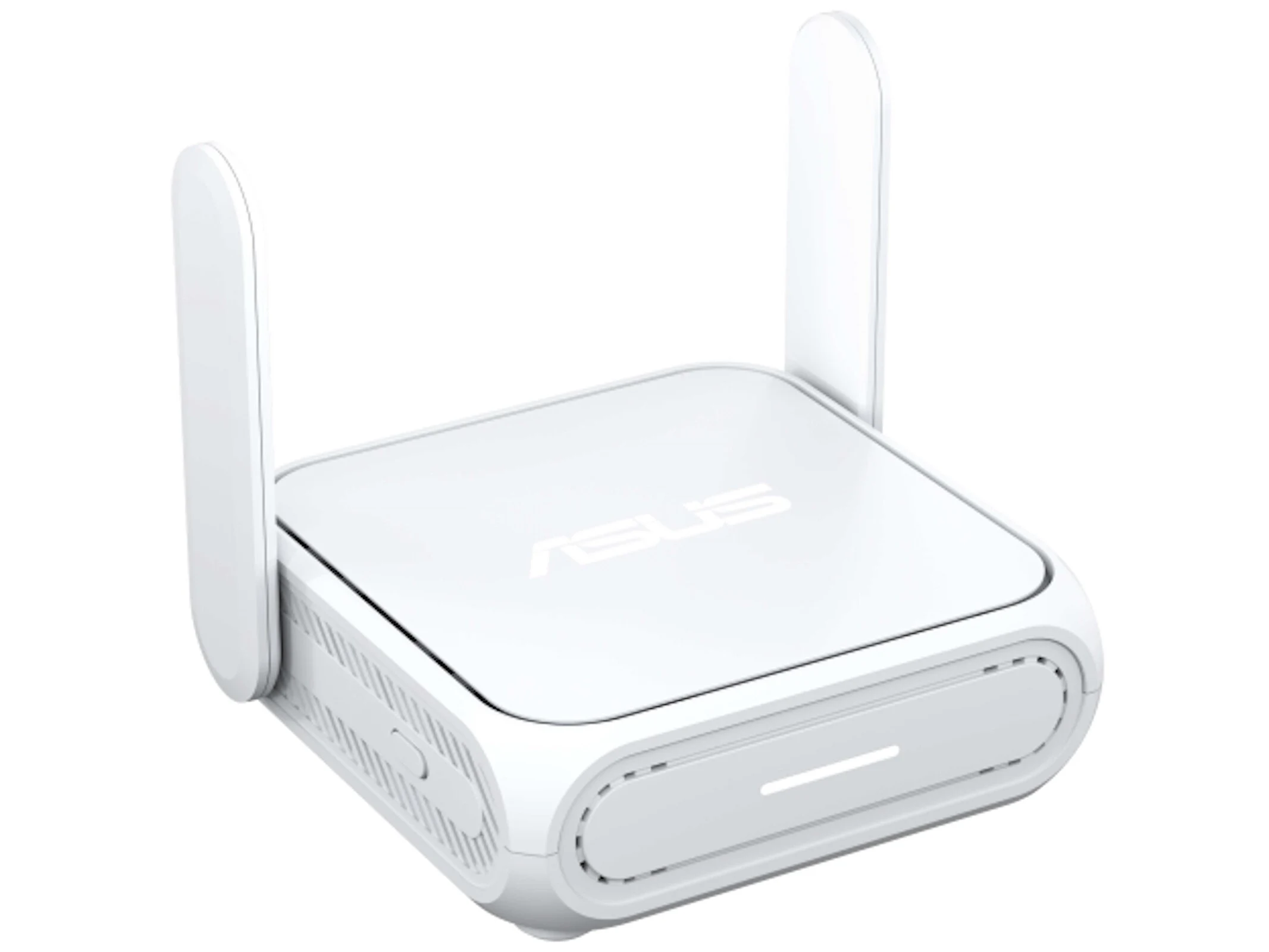
    The router has small dimensions of 3.9 x 4.4 x 1.4 inches and includes two external antennas. However, it can’t connect to cellular networks by itself. When you’re out and about, it connects to your smartphone via USB tethering. It can also function in WISP mode in public networks to create a personal hotspot. At home, you can hook it up to a modem using Ethernet.

    Impressive Speed and Connectivity

    This WiFi 7 router doesn’t support the 6 GHz band. It boasts advertised data transfer speeds of up to 688 Mbps on the 2.4 GHz band and 2,882 Mbps on the 5 GHz band. The RT-BE58 is powered through USB Type-C, making it compatible with power banks for ease of use.

    Versatile Usage Options

    The WAN port supports a bandwidth of 2.5 Gbps, while there’s also a 1 Gbps Ethernet port available. Additionally, the Asus router can act as an access point, repeater, or part of an AIMesh network. It can cover an area of approximately 1,800 square feet and can handle simultaneous connections for over 150 devices. It also provides the option to set up a separate network for iOS devices, children, or customers in a store, for example. At the moment, there are no specific details on pricing or availability.

    Source:
    Link