Tag: Oculink

  • GMKtec AMD-Powered Gaming Mini PC with OCuLink Port

    GMKtec AMD-Powered Gaming Mini PC with OCuLink Port

    Key Takeaway

    – EVO-X3 is teased as an upgraded version of EVO-X2 with a larger chassis and new I/O, including an OCuLink port, high-speed USB4 ports, and WiFi 7.
    – Likely powered by Ryzen AI Max+ 495 (rumored), suggesting a noticeable performance boost over the EVO-X2’s Ryzen AI Max+ 395.
    – Dual PCIe 4.0 slots for expanded storage and overall emphasis on high-end connectivity and expansion at a premium price.


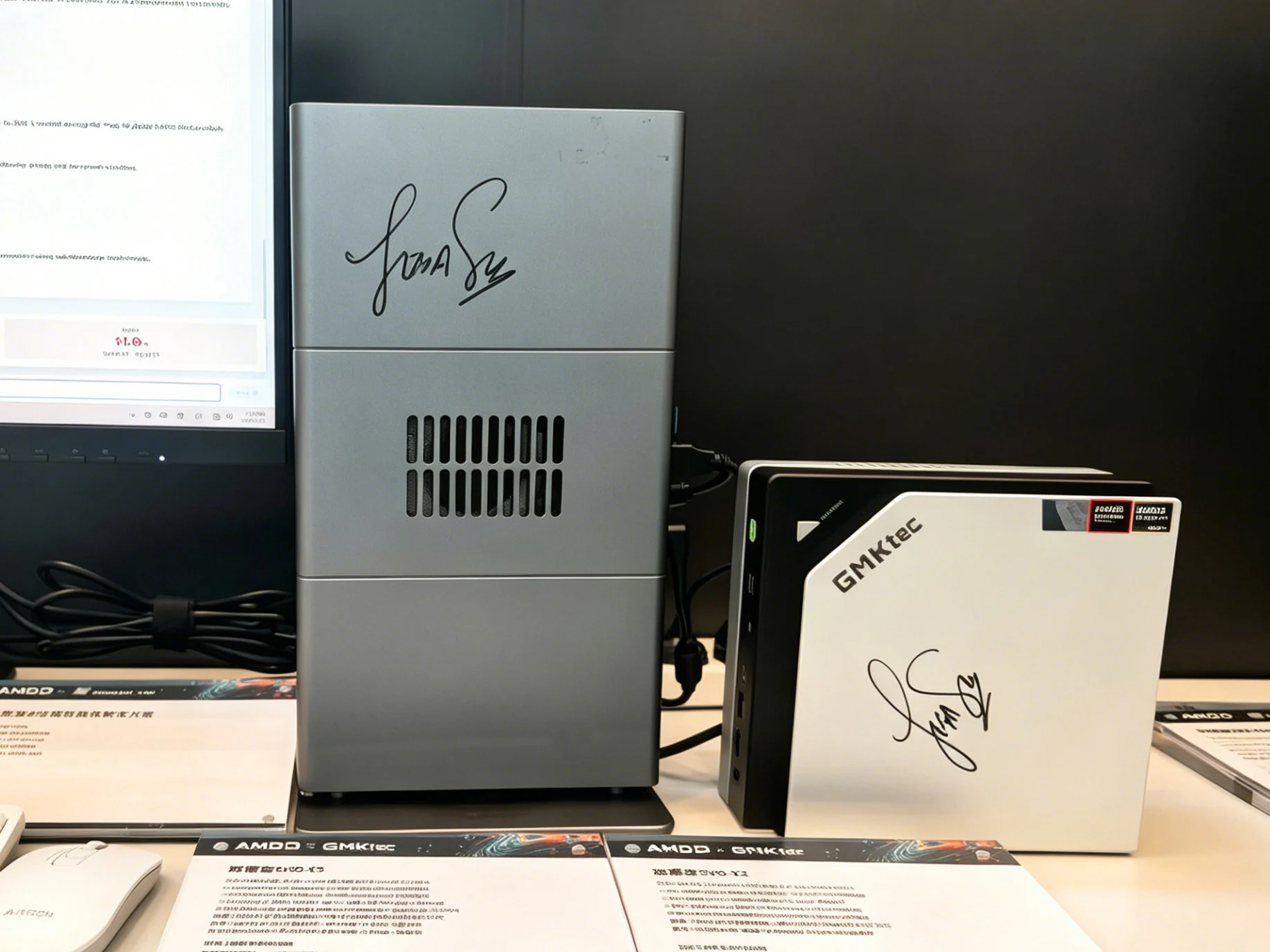
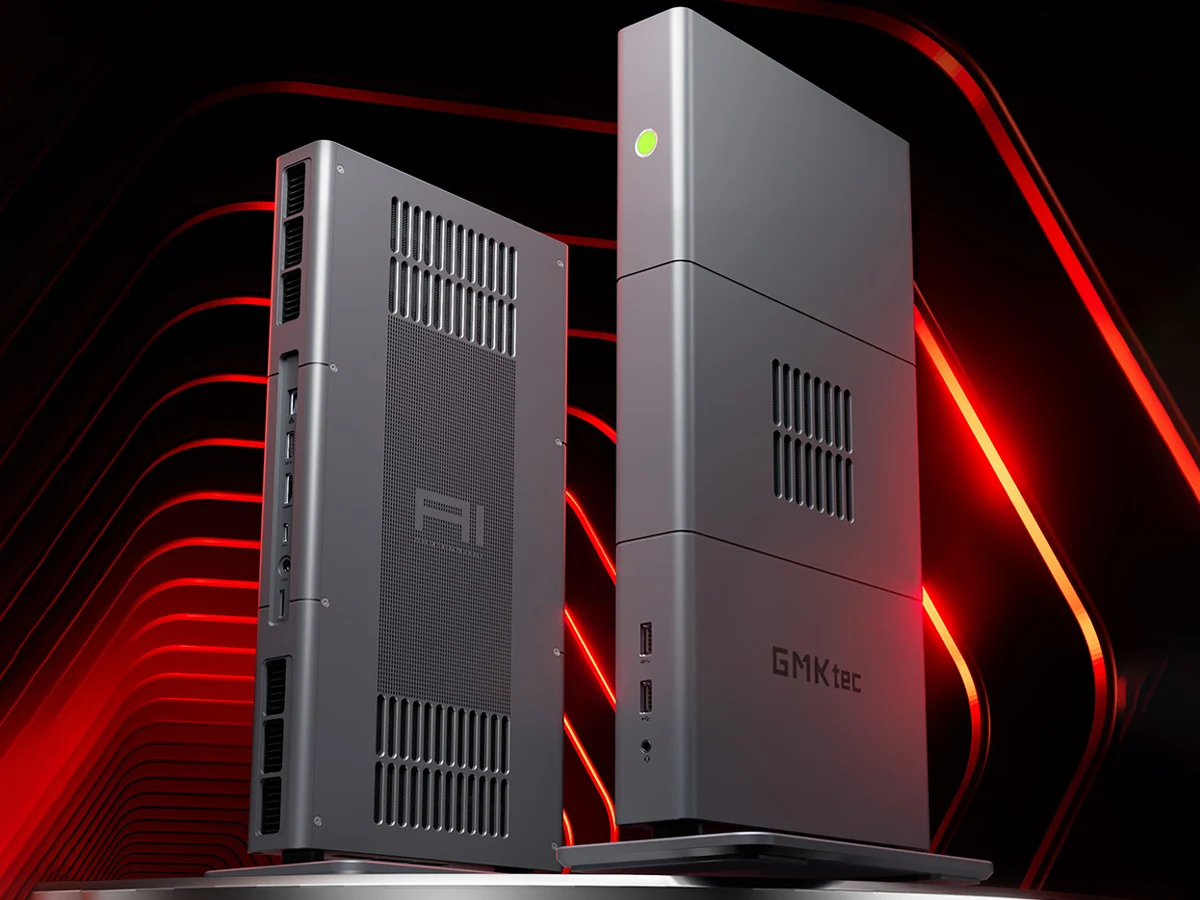
    GMKtec has shown off a new mini PC named EVO-X3 during the AMD AI Developer Day 2026 in China, with only one image released and limited details shared. The official blog hinted that it would be an upgraded version of the EVO-X2, suggesting improvements on the previous model rather than a complete rebuild.

    Overview and teased upgrade

    GMK EVO-X2 previously arrived as one of the early mini PCs to feature the top-end Ryzen AI Max+ 395 APU, which included the Radeon 8060S iGPU. This integrated graphics solution was reported to rival the gaming performance of Nvidia RTX 4070 Laptop GPU in certain scenarios, a claim that impressed enthusiasts seeking compact power. The EVO-X3 is expected to continue that tradition by offering an enhanced processing unit, with speculation pointing toward the Ryzen AI Max+ 495 as a possible core.

    Possible specs and features

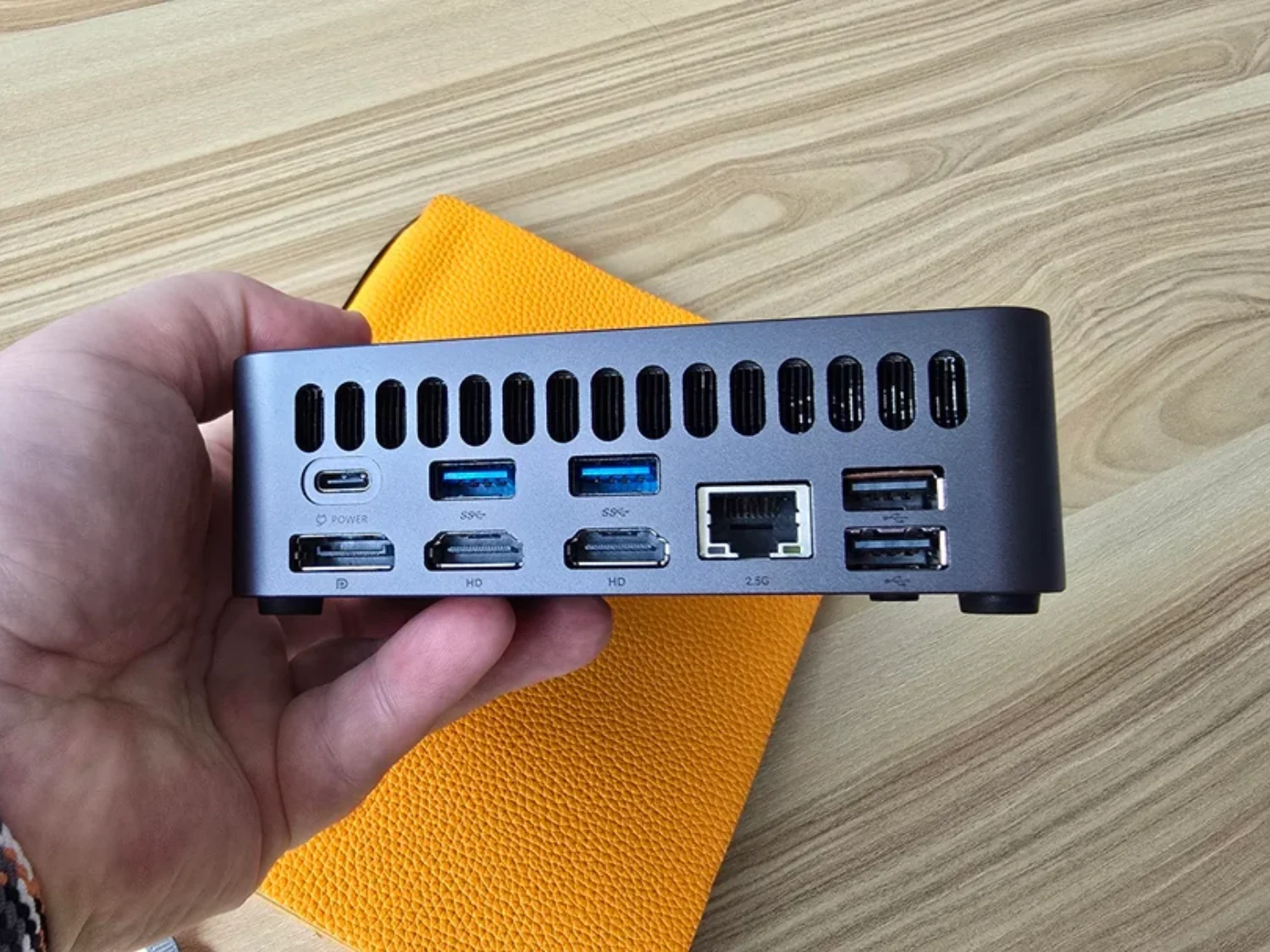
    In official communications, GMKtec confirmed the EVO-X3 will include an OCuLink port, a feature missing from the current EVO-X2. Additionally, the device is promised to come with high-speed USB4 ports, WiFi 7, and dual PCIe 4.0 expansion slots to support extra storage. The existence of these elements signals a focus on connectivity and expansion, aligning with expectations for a future-proof mini PC.

    The photographed render shows a larger chassis for the EVO-X3 relative to the EVO-X2, implying improved cooling, space for higher-end components, or both. Pricing remains undisclosed, but it’s noted that the EVO-X2 launched at a higher price due to its premium internals, and GMKtec has previously increased the EVO-X2 price after global availability.

    Design and positioning

    The single image teased by GMKtec depicts a design shift toward a more substantial enclosure, which could reflect enhanced thermals and potential performance headroom. While it’s common for mini PCs to trade compactness for greater cooling, the EVO-X3’s prospective upgrades suggest GMKtec is targeting power users who demand sustained performance from a compact form factor.

    • OCuLink port inclusion signals an emphasis on fast external connections.
    • WiFi 7 readiness points to better wireless performance in dense environments.
    • Dual PCIe 4.0 slots offer expandable storage options for demanding workloads.

    Market expectations

    The EVO-X3’s arrival comes amid a crowded field of compact workstations and gaming mini PCs. If the EVO-X3 pairs the rumored Ryzen AI Max+ 495 with robust cooling and enhanced IO, it could appeal to professionals and enthusiasts who want a capable box for content creation, AI workloads, or portable game streaming. Pricing remains a key variable that will influence its reception among buyers who already saw the EVO-X2 fluctuate in cost after introduction.

    Sources
  • Ugreen LinkStation eGPU Dock Launches with USB4 and 850W PSU

    Ugreen LinkStation eGPU Dock Launches with USB4 and 850W PSU

    Key Takeaways

    1. Ugreen’s LinkStation eGPU dock offers both USB-C and OCuLink connections, with notable performance features.
    2. It connects via a 40 Gbps USB4 interface and supports Thunderbolt 4 and 3, alongside a high-speed 64 Gbps OCuLink option.
    3. The dock includes an integrated 850 W 80 Plus Gold power supply, making it easy to use with high-performance GPUs.
    4. It has a semi-open aluminum design for better airflow but lacks M.2 slot and Ethernet port compared to competitors.
    5. The Ugreen LinkStation eGPU dock is priced at $449.99 and supports GPUs up to 370 mm in length and four slots in thickness.


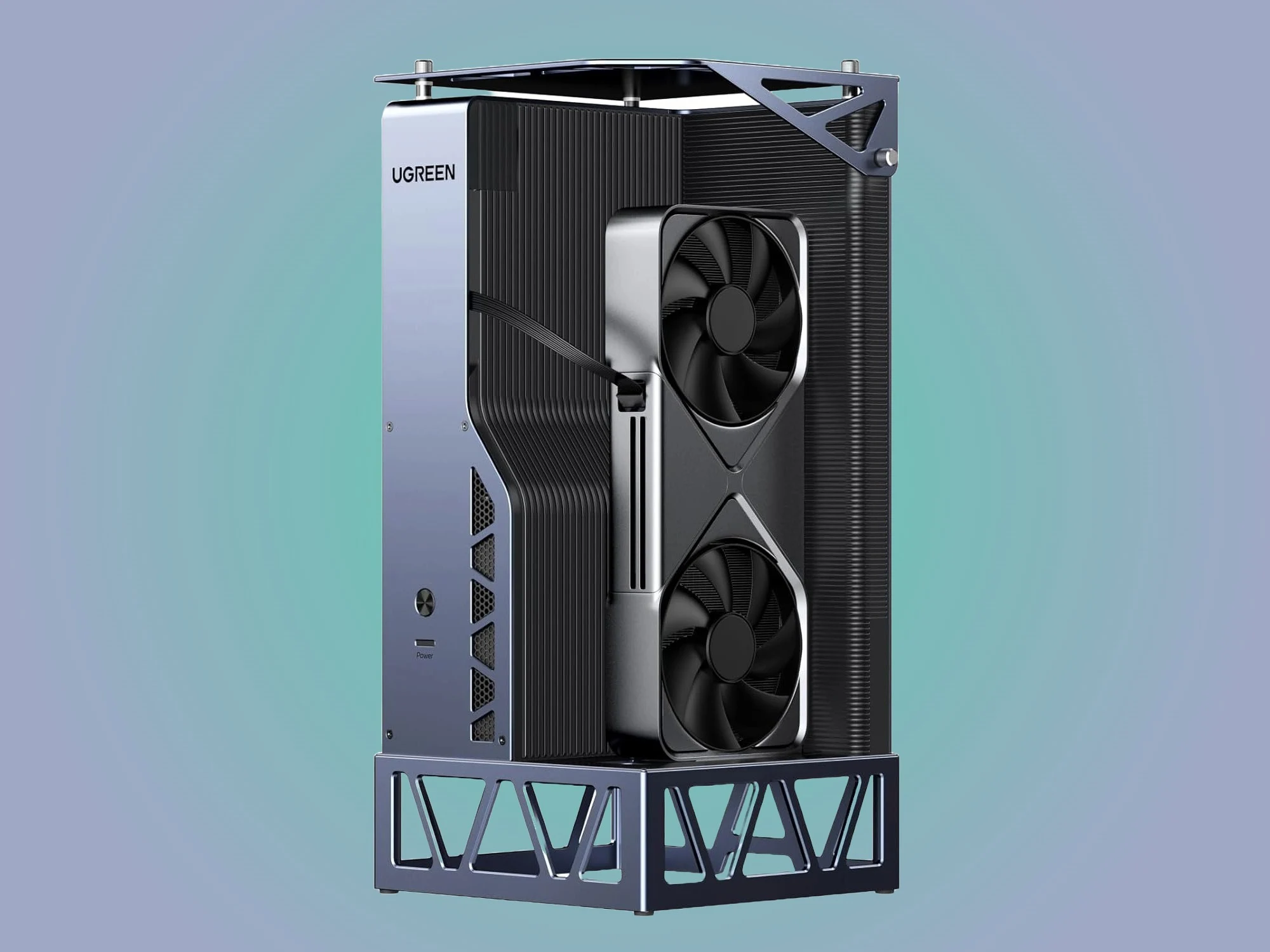
    Ugreen has introduced the LinkStation eGPU dock in the United States. This enclosure first appeared in China towards the end of last year and stands out as one of the few options that provide both USB-C and OCuLink connections, albeit with some limitations.

    Connectivity Options

    The LinkStation interfaces with laptops and handheld consoles through a 40 Gbps USB4 connection, which is also compatible with Thunderbolt 4 and Thunderbolt 3. For those seeking peak performance, it offers OCuLink with an impressive 64 Gbps PCIe 4.0 x4 bandwidth, making it particularly suitable for mini PCs such as the Minisforum X1 Pro-470.

    Power Supply and GPU Support

    A significant feature is the integrated 850 W 80 Plus Gold power supply, allowing users to only need to provide a graphics card. In contrast, the newly launched Minisforum DEG2 eGPU Dock (currently priced at $254.99 on Amazon) features OCuLink and a quicker 80 Gbps Thunderbolt 5 port, but lacks a built-in power supply. Nevertheless, with 12V-2×6 and PCIe 8-pin connectors, the LinkStation can easily support high-performance GPUs like the RTX 5090, RTX 4090, and RTX 4080, accommodating cards up to 370 mm in length and four slots in thickness.

    Design and Limitations

    The enclosure is designed with a semi-open aluminum chassis to enhance airflow and includes a low-RPM ATX 3.1 PSU fan. However, in contrast to the Minisforum DEG2, it does not feature an M.2 slot or an Ethernet port. Connectivity options are restricted to OCuLink and USB4, with the latter capable of delivering up to 100 W of power to the host device. The Ugreen LinkStation eGPU dock is currently available on Amazon for $449.99.


  • UGREEN Unveils 850W Gold-Rated Power Supply Graphics Card Dock

    UGREEN Unveils 850W Gold-Rated Power Supply Graphics Card Dock

    Key Takeaways

    1. UGREEN’s LinkStation Graphics Card Expansion Dock allows users to connect full-sized desktop graphics cards to laptops and handheld gaming consoles.
    2. The dock features two connection options: an Oculink port for 64Gbps data transfer and a USB4 port for 40Gbps, with reverse charging capabilities.
    3. It supports large graphics cards up to 370mm in length and has a removable top cover for additional space, with an internal 850W power supply.
    4. Benchmark tests show the dock provides strong performance, achieving 30,164 points with an RTX 5090 compared to 34,508 points on a desktop.
    5. The LinkStation is priced at 2,299 yuan (approximately $325) and includes a one-year warranty.


    UGREEN has made a name for itself with its chargers and accessories, but now it’s branching out into the realm of computer hardware with their latest product, the LinkStation Graphics Card Expansion Dock. This innovative dock allows users to attach a full-sized desktop graphics card to a laptop or handheld gaming console. Its design is semi-open and made from aluminum, promoting good airflow, and it comes with a built-in power supply rated at 850W for efficient performance.

    Connection Options

    The LinkStation provides two connection options to accommodate different devices and performance requirements. One of the methods is the Oculink port, which delivers impressive data transfer speeds of 64Gbps, ensuring a speedy and stable connection. Additionally, it has a USB4 port that operates at 40Gbps and can reverse charge up to 100W to keep your laptop powered while in use. Included in the package are both a 0.8m USB4 cable and a 0.5m Oculink cable, giving you everything you need to set it up right away.

    Compatibility and Power Supply

    This dock is designed to house large graphics cards measuring up to 370mm in length from popular brands such as NVIDIA, AMD, and Intel. If your graphics card exceeds the standard dimensions, the top cover can be removed to provide extra space. The internal power supply conforms to ATX 3.1 standards and is capable of supporting high-performance cards like the NVIDIA 40 and 50 series graphics cards.

    UGREEN has shared some benchmark results to highlight how the dock performs compared to a typical desktop setup. In a Port Royal test, an RTX 5090 graphics card achieved a score of 34,508 points on a desktop; however, when the same card was connected to a laptop through the LinkStation’s Oculink port, it scored 30,164 points. This shows that while a direct motherboard connection remains faster, the Oculink connection still provides a high level of performance for external setups.

    Pricing and Availability

    Weighing in at 5.08kg, the dock is currently available for purchase in China at a price of 2,299 yuan, which is approximately $325. This price also includes a one-year warranty, ensuring peace of mind for buyers.

    Source:
    Link


  • 3D-Printed Console PC with Laptop Motherboard and 7900 XTX GPU

    3D-Printed Console PC with Laptop Motherboard and 7900 XTX GPU

    Key Takeaways

    1. A member of the Framework community created an innovative console using a Framework 13 mainboard and a DIY Oculink eGPU setup, highlighting open hardware culture.
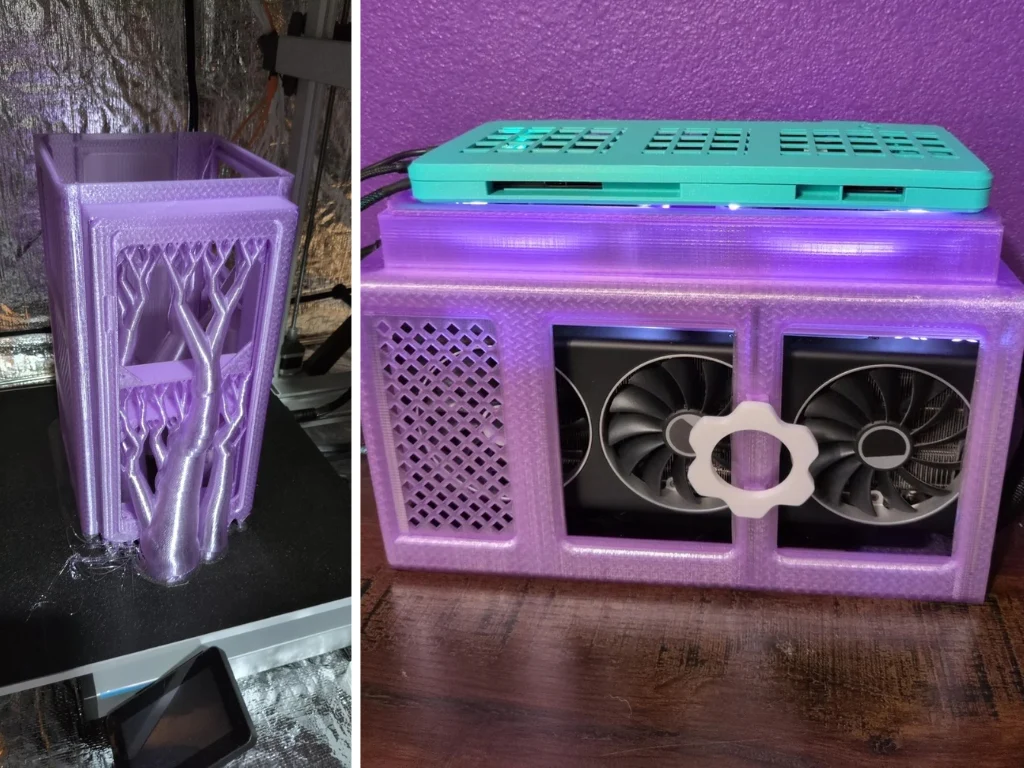
    2. The project utilizes a Framework Ultra 7 165H mainboard with a 7900XTX GPU and features a custom 3D-printed, actively-cooled case.
    3. The setup achieves about 90% of expected GPU performance compared to traditional desktop PCIe slots and allows for easy portability with a removable mainboard “cartridge.”
    4. The creator documented challenges faced during the build, such as bandwidth limits and material heat resistance, contributing to the learning process.
    5. This project exemplifies the modularity and experimentation possible within the Framework ecosystem, encouraging personal engineering and component combination.


    One member of the Framework community has transformed a collection of “mystery box” mainboards into a truly innovative console creation. This individual combined a Framework 13 mainboard with a DIY Oculink eGPU setup, encasing it all in a 3D-printed shell. The degree of modularity and experimentation shown here goes beyond a simple hardware modification. It’s a project that embodies the spirit of open hardware culture, showcasing the vast potential of the Framework platform.

    The Starting Point

    This project kicked off with a Framework Ultra 7 165H mainboard, sourced from a mystery box, paired with a 7900XTX GPU through a DEG1 Oculink dock, which is currently priced at $99.99 on Amazon. The entire setup is contained within a customized, actively-cooled case that the creator developed and printed, going through several iterations of 3D models and print trials to reach the end result. A Corsair 850W PSU provides the power needed, while active cooling on the mainboard and three 120mm fans for the GPU ensure everything stays stable.

    Performance and Modularity

    The creator has thoroughly tested the build using Fedora and Bazzite OS, based on Steam Deck, for both desktop and living-room gaming. The mainboard connects through M.2 to Oculink, utilizing PCIe gen 4 x4. In actual gaming scenarios, the GPU performance reportedly achieves about 90% of what you would expect from a conventional desktop PCIe slot.

    What stands out is how the mainboard and GPU are placed in different 3D-printed enclosures. This fresh design allows for easy removal of the mainboard “cartridge,” making it portable.

    Documenting the Journey

    The build log reveals some interesting real-world issues, such as bandwidth limits found on older 12th-gen mainboards compared to newer models, the difficulties of working with PETG and ASA filaments for heat resistance, and the need for precise airflow adjustments for effective cooling. The user has meticulously recorded all the processes (you can check out the initial builds here and here), from fine-tuning firmware and cooling for the mainboard to ensuring the eGPU enclosure keeps the powerful 7900XTX under control.

    Even though this isn’t a commercially available product, it illustrates the kind of personal engineering that’s very attainable in a Framework ecosystem, where components like mainboards, adapters, OSes, and GPUs can be freely combined.

    Source:
    Link