
Tag: Intel Core Ultra 5 226V

  • Ninkear M8_226V Mini PC: OCuLink & USB4 Spotted

    Ninkear M8_226V Mini PC: OCuLink & USB4 Spotted

    Key Takeaway

    – OCuLink and USB4 are now included, addressing previous connectivity gaps.
    – Powered by Intel Core Ultra 5 226V (Lunar Lake) with 16 GB non-upgradeable on-package RAM.
    – Compact 128×128 mm chassis with front-mounted OCuPort for easier eGPU access.
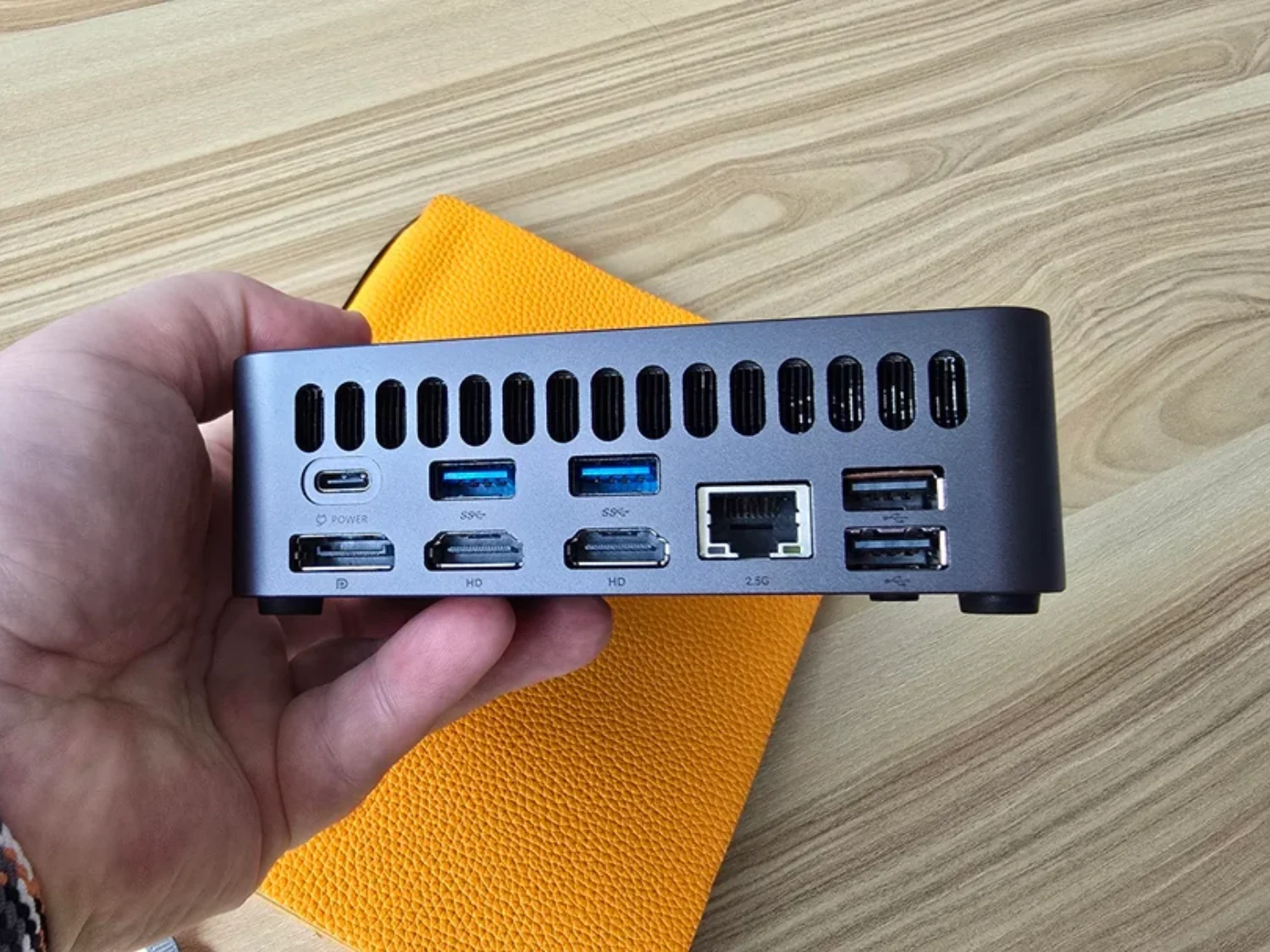
    – Rear panel features dual HDMI, DisplayPort, 2.5GbE, and additional USB-A ports.
    – Still an engineering sample with no pricing or release date announced.


    A pre-release engineering sample of the Ninkear M8_226V has surfaced on r/MiniPCs. The original poster gave us a detailed look at what looks like a Lunar Lake upgrade to the brands existing M8 platform — and with a connectivity loadout that is honestly quite impressive, especially for its size class. When we reviewed the Ninkear M8 earler this year, we flagged the absence of USB4 and OCuLink as big gaps. This Lunar Lake variant ships with both of them.

    Core Specifications and Chipset Details

    The M8_226V is powered by Intel’s Core Ultra 5 226V, a Lunar Lake chip that was built on TSMC’s 3 nm node. It packs 4 Lion Cove P-cores and 4 Skymont E-cores alongside Intel’s Arc 130V iGPU, a 40 TOPS NPU, and 16 GB of on-package LPDDR5x-8533 RAM — that last point being a key caveat, as Lunar Lake’s on-package memory is not upgradeable at all. The chip has a base TDP of 17 W with boost headroom up to 37 W, which would make it great for a compact, passively-manageable chassis without too much thermal stress.

    Physical Dimensions and Port Configuration

    At 128×128 mm and approximately 675 g, the M8_226V shares its footprint with the existing AMD-powered M8. What’s different is the port layout — and it’s the most interesting part of this particular design. The front panel has an OCuLink port alongside USB4. This combination allows eGPU connectivity with way more bandwidth then Thunderbolt alone could provide. Having OCuLink on the front rather than the rear is an unusual choice, but it should make enclosure attachment and removal considerably less awkward for users with big hands. The rear panel adds two HDMI outputs, a DisplayPort, 2.5GbE, and additional USB-A ports for legacy devices.

    Hands-on photos also show the internals pretty clearly — a single M.2 slot is visible alongside the large SoC heat spreader, and the bottom label confirms 20V/5A power delivery which gives a maximum of 100 W. No pricing or release date has been announced yet. The poster has added that this is purely an engineering sample with full testing still pending, so we shouldnt expect retail units anytime soon.
    Sources
  • Chuwi CoreBook Air 226V: Intel SoC & Thunderbolt MacBook Alternative

    Chuwi CoreBook Air 226V: Intel SoC & Thunderbolt MacBook Alternative

    Key Takeaway

    – Intel Core Ultra 5 226V with 16 GB LPDDR5X RAM and a 512 GB PCIe 3.0 SSD (upgradeable via a single M.2 2280 slot; PCIe 4.0 capable lanes).
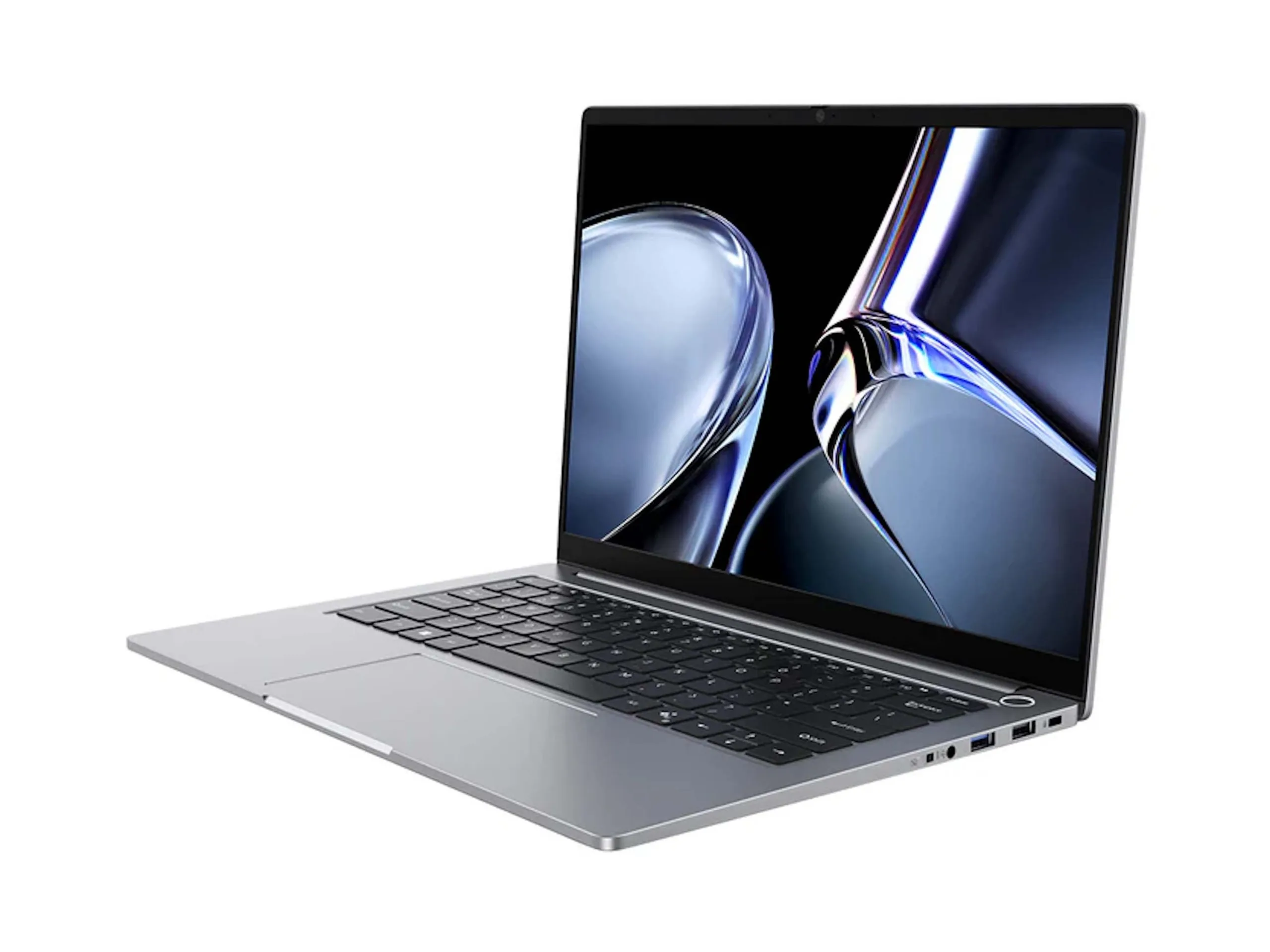
    – 14-inch 2880×1800 IPS display at 90 Hz, compact 312.9×22.5×16.8 mm chassis, ~1 kg weight.
    – Connectivity: dual Thunderbolt 4 (PD, displays, potential external GPU), plus USB 3.2 Gen 2, USB 2.0, USB 2.0, HDMI 2.0, 3.5 mm jack; Wi‑Fi 6E.
    – Pre-order price $859 with shipping starting around May 21; PCIe 3.0 internal SSD at launch.
    – Notable form factor/feature set trade-offs: strong IO and portability with Thunderbolt 4, but reliance on PCIe 3.0 SSD performance and AMD-less configuration.

    The CoreBook Air is a device that has likely crossed the eyes of many readers who keep tabs on its lineage, and this update keeps that familiarity alive. Yet there’s a fresh twist here, because Chuwi has introduced CoreBook Air 226V, choosing an Intel-based SoC rather than the AMD path some expected. It houses the Intel Core Ultra 5 226V, paired with 16 GB of LPDDR5X RAM and a 512 GB SSD. The SSD can be replaced thanks to a single M.2 2280 slot, and the existing drive is PCIe 3.0 while the slot supports four PCIe 4.0 lanes. The configuration is shown as the sole option, currently available for preorder at a price of $859, with shipping slated to begin on May 21.

    Design and Display

    The chassis measures 312.9 x 22.5 x 16.8 millimeters, presenting a compact footprint for a 14-inch panel. Its display is an IPS panel with a 2,880 x 1,800 resolution and a 90 Hz refresh rate, which should offer smooth visuals in everyday tasks and light gaming. The build keeps the weight around the 1 kg mark, which could make it a portable companion for travel and commutes. The overall design language remains conservative, echoing previous iterations while integrating the new Intel-based internals.

    Connectivity and Ports

    On the connectivity front, you get two Thunderbolt 4 ports, which deliver fast data transfer, USB Power Delivery for charging, and the ability to connect external displays or even a discrete GPU in theory. In addition to that, there is one USB 3.2 Gen 2 port, one USB 3.0 (Gen 1) Type-A, one USB 2.0 port, HDMI 2.0, and a 3.5 mm audio jack. Wi-Fi 6E is supported, ensuring better wireless performance in congested environments. A 2-megapixel webcam is included for video calls, rounding out the core feature set for everyday use.


    Sources

  • Chuwi AuBox X1 Mini PC: 97 TOPS Performance & USB PD Adapter

    Chuwi AuBox X1 Mini PC: 97 TOPS Performance & USB PD Adapter

    Key Takeaways

    1. The Chuwi AuBox X1 mini PC features an Intel Core Ultra 5 226V processor with high AI performance of 97 TOPS, but has non-upgradable 16GB LPDDR5X RAM.
    2. It includes a 512GB PCIe 3.0 SSD that can be upgraded through two M.2 slots, one supporting PCIe 5.0 and the other PCIe 4.0.
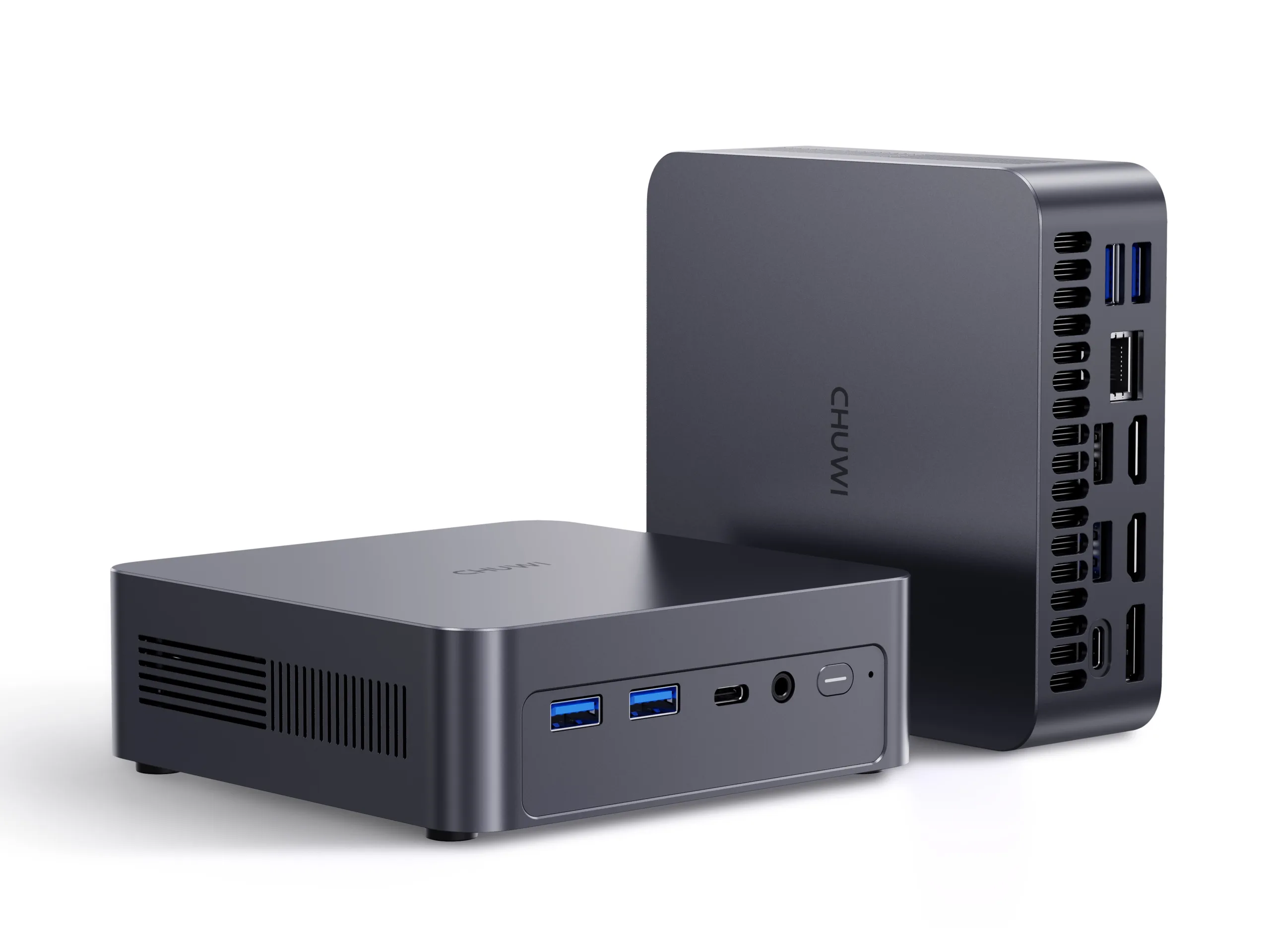
    3. The mini PC offers extensive connectivity options, including USB4, multiple USB ports, DisplayPort 1.4, and dual HDMI 2.1 ports, supporting 4K resolution at 144Hz.
    4. Wireless connectivity is robust with WiFi 6E and Bluetooth 5.3, while a 2.5 GbE port is available for wired networks.
    5. The compact design measures about 5 x 5 x 1.6 inches, can be mounted with VESA mounts, and is priced between $600 to $700, with a release expected in late March.


    We’ve talked before about Chuwi, the Chinese company that offers a wide variety of devices. Their latest release, the AuBox X1, is a new mini PC that is being marketed as a Copilot+ PC, making it ideal for local AI tasks.

    Powerful Performance

    This compact desktop is driven by the Intel Core Ultra 5 226V, boasting an AI performance of 97 TOPS, with 40 TOPS generated by the NPU. However, the 16GB LPDDR5X RAM might be a limitation since it is soldered into the device and cannot be upgraded. On the other hand, the 512GB PCIe 3.0 SSD is user-friendly, as it can be expanded or swapped out through two M.2 2280 slots. One slot provides PCIe 5.0 with 4 lanes, while the other connects through PCIe 4.0 with 2 lanes.

    Connectivity Options

    OCuLink isn’t available on this model. Nevertheless, the mini PC does come with a variety of ports. It features USB4 with speeds up to 40 Gbps, alongside USB 3.2 Gen 2, four USB 3.2 Gen 1 ports, and one USB 2.0. The USB4 video output supports 4K resolution at 144Hz, but the AuBox X1 also includes DisplayPort 1.4 and two HDMI 2.1 ports. There’s no need for a traditional barrel plug, as it uses USB PD with a 100W adapter for power.

    Additional Features

    For wireless connectivity, it supports WiFi 6E and Bluetooth 5.3, while wired networks can utilize the 2.5 GbE connection. This compact mini PC has dimensions of approximately 5 x 5 x 1.6 inches, can be mounted using VESA mounts, and is projected to hit the market in late March, with a price range of $600 to $700.