
Key Takeaways
1. A member of the Framework community created an innovative console using a Framework 13 mainboard and a DIY Oculink eGPU setup, highlighting open hardware culture.
2. The project utilizes a Framework Ultra 7 165H mainboard with a 7900XTX GPU and features a custom 3D-printed, actively-cooled case.
3. The setup achieves about 90% of expected GPU performance compared to traditional desktop PCIe slots and allows for easy portability with a removable mainboard “cartridge.”
4. The creator documented challenges faced during the build, such as bandwidth limits and material heat resistance, contributing to the learning process.
5. This project exemplifies the modularity and experimentation possible within the Framework ecosystem, encouraging personal engineering and component combination.
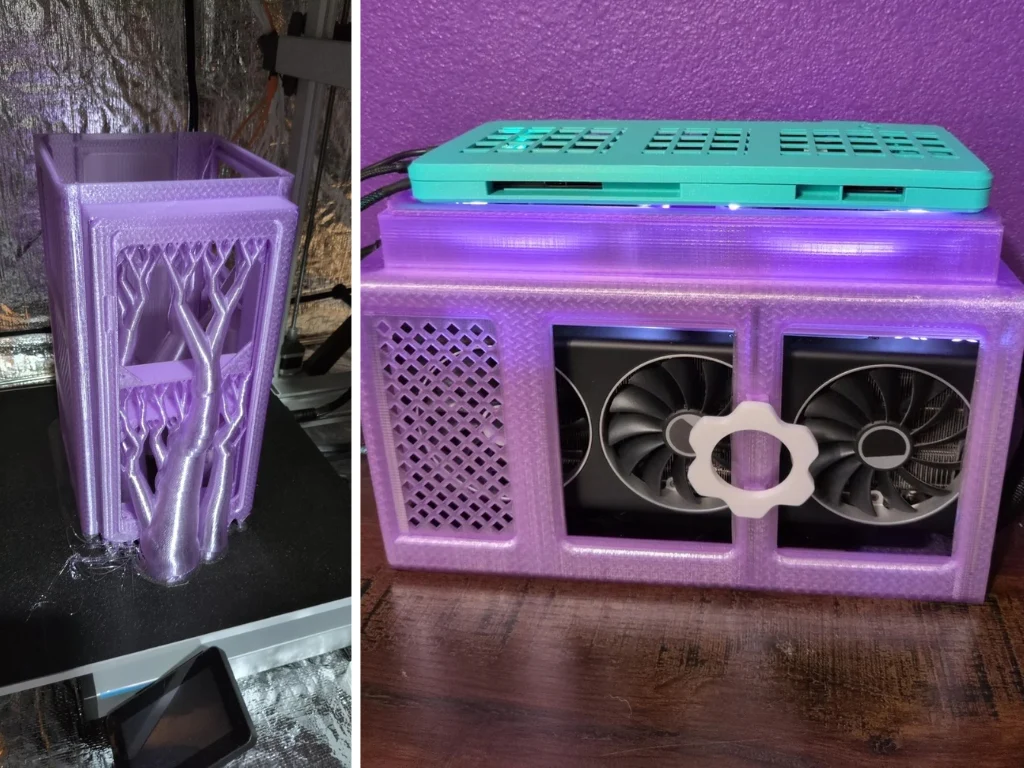
One member of the Framework community has transformed a collection of “mystery box” mainboards into a truly innovative console creation. This individual combined a Framework 13 mainboard with a DIY Oculink eGPU setup, encasing it all in a 3D-printed shell. The degree of modularity and experimentation shown here goes beyond a simple hardware modification. It’s a project that embodies the spirit of open hardware culture, showcasing the vast potential of the Framework platform.
The Starting Point
This project kicked off with a Framework Ultra 7 165H mainboard, sourced from a mystery box, paired with a 7900XTX GPU through a DEG1 Oculink dock, which is currently priced at $99.99 on Amazon. The entire setup is contained within a customized, actively-cooled case that the creator developed and printed, going through several iterations of 3D models and print trials to reach the end result. A Corsair 850W PSU provides the power needed, while active cooling on the mainboard and three 120mm fans for the GPU ensure everything stays stable.
Performance and Modularity
The creator has thoroughly tested the build using Fedora and Bazzite OS, based on Steam Deck, for both desktop and living-room gaming. The mainboard connects through M.2 to Oculink, utilizing PCIe gen 4 x4. In actual gaming scenarios, the GPU performance reportedly achieves about 90% of what you would expect from a conventional desktop PCIe slot.
What stands out is how the mainboard and GPU are placed in different 3D-printed enclosures. This fresh design allows for easy removal of the mainboard “cartridge,” making it portable.
Documenting the Journey
The build log reveals some interesting real-world issues, such as bandwidth limits found on older 12th-gen mainboards compared to newer models, the difficulties of working with PETG and ASA filaments for heat resistance, and the need for precise airflow adjustments for effective cooling. The user has meticulously recorded all the processes (you can check out the initial builds here and here), from fine-tuning firmware and cooling for the mainboard to ensuring the eGPU enclosure keeps the powerful 7900XTX under control.
Even though this isn’t a commercially available product, it illustrates the kind of personal engineering that’s very attainable in a Framework ecosystem, where components like mainboards, adapters, OSes, and GPUs can be freely combined.
Source:
Link
Leave a Reply