Tag: M5 SoC

  • Apple M5 SoC in MacBook Air 13 Consumes 7-8 Watts in Games

    Apple M5 SoC in MacBook Air 13 Consumes 7-8 Watts in Games

    Key Takeaways

    1. The MacBook Air 13 features a slightly slower M5 SoC with 8 GPU cores, compared to the 10 GPU cores in larger models.
    2. The MacBook Air operates without a fan, which can lead to performance dips under heavy workloads, stabilizing around 8 Watts.
    3. During gaming, power consumption is low, dropping between 6.9 and 7.2 Watts while still achieving playable frame rates.
    4. The MacBook Air 13 is noted as the most efficient laptop tested, with overall power usage, including the display, at just 19 Watts.
    5. Lowering graphics settings and using MetalFX upscaling allows for a smoother gaming experience in demanding titles while avoiding throttling.


    We recently had a chance to check out the new Apple MacBook Air 13, featuring the base configuration powered by the M5 SoC. Unlike the 15-inch version of the MacBook Air or the MacBook Pro 14 with the M5, the base Air 13 comes with a slightly slower M5 SoC, which has 8 GPU cores rather than the 10 found in its larger counterparts. Despite this, the performance remains impressive, and we were especially amazed by its efficiency during our gaming tests, where the SoC consumed only 7 to 8 Watts.

    Performance Under Load

    The MacBook Air operates without a fan, meaning its performance can dip under heavy workloads, causing the M5 to stabilize at around 8 Watts during combined tasks. You might think the processor holds steady at this range (7-8W) while gaming, but that’s not entirely true. For instance, while playing Cyberpunk 2077, the SoC’s consumption drops to between 6.9 and 7.2 Watts, which is still below the maximum of 8 Watts. This power level allows for a frame rate of 19.6 fps at 1080p with ultra settings, and this performance remains consistent even after an hour of play. If you lower the graphics settings a bit and utilize MetalFX upscaling, you can enjoy a smooth gaming experience in demanding titles like Cyberpunk 2077 or Baldur’s Gate 3, with power usage ranging from 7.5 to 7.8 Watts, all while avoiding throttling.

    Efficiency and Comparison

    This efficiency makes the compact MacBook Air stand out as the most efficient laptop in our records by a significant margin, without falling into unplayable frame rates. For the entire system, including the display, we measured just 19 Watts, which again showcases its efficiency. On the other hand, the M5 SoC with 10 GPU cores in the actively cooled MacBook Pro 14 isn’t as efficient but does provide a boost in gaming performance.
     

  • Apple MacBook Air Update: M5 SoC, Double Storage, WiFi 7

    Apple MacBook Air Update: M5 SoC, Double Storage, WiFi 7

    Key Takeaways

    1. Performance Upgrade: The MacBook Air now features the M5 chip, offering 20% faster CPU performance and 30% improved graphics, especially for AI tasks compared to the M4.

    2. Connectivity Enhancements: It includes WiFi 7 and Bluetooth 6, with doubled storage speeds and a base model featuring 512 GB of storage.

    3. Display Specifications: The display remains the same with 13.6″ and 15.3″ IPS LCD panels, 500 nits brightness, but lacks higher refresh rates and mini LED backlighting.

    4. Pricing Structure: The starting price is $1,099 for the 13″ model with an 8-core GPU; the 15″ model costs an additional $200, with options for up to 32 GB RAM and 4 TB SSD.

    5. Pre-order and Availability: Pre-orders are open, with expected delivery starting on March 11, 2026.


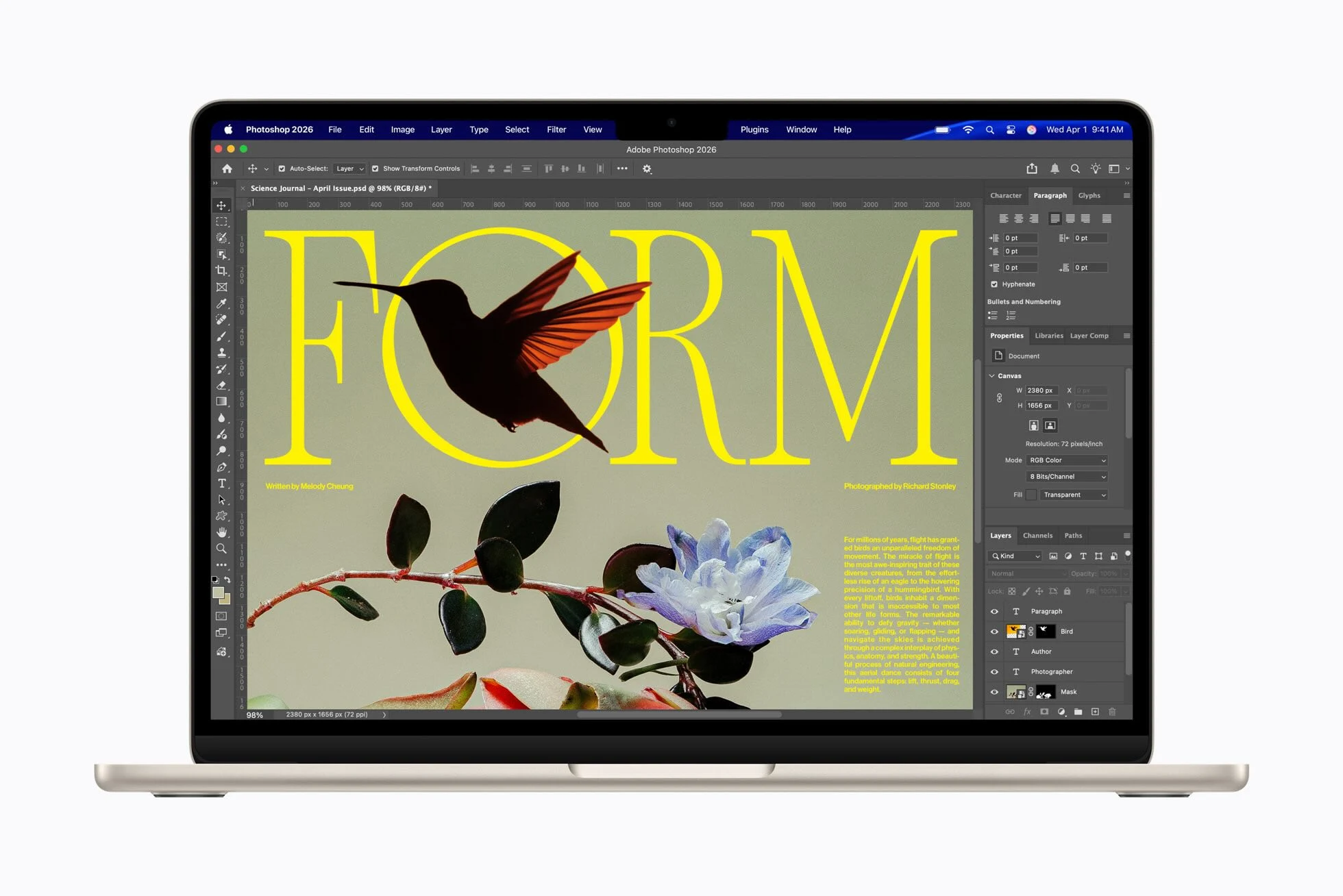
    The MacBook Air has been upgraded with the M5 chip, aligning it with the other models in Apple’s MacBook lineup. It’s not surprising that the design remains unchanged from its previous versions.

    Performance Boost

    With a 10-core architecture made up of 4 performance cores and 6 efficiency cores, the M5 SoC delivers about 20% more speed than the earlier M4 in CPU tests. In terms of graphics, users can expect a 30% overall enhancement, particularly in AI-related tasks, thanks to new neural accelerators added to each GPU core. Apple claims a remarkable 4x boost in AI performance when compared to the M4.

    Connectivity and Storage

    In addition, the MacBook Air now includes WiFi 7 and Bluetooth 6, attributed to the new N1 chip. Like the MacBook Pro, storage speeds have doubled, with the base model featuring 512 GB of storage—twice as much as before. The pricing for the entry-level models has also seen an update.

    Display and Pricing

    The screens remain unchanged, featuring the same 13.6″ and 15.3″ IPS LCD panels as earlier models. Apple asserts a peak brightness of 500 nits and supports the DCI-P3 color range. However, higher refresh rates and mini LED backlighting are not available, which is expected.

    The starting price for the base 13″ MacBook Air is now set at $1,099, which includes a less powerful M5 SoC with an 8-core GPU, 16 GB of RAM, and 512 GB of storage. The 15″ model, equipped with the full M5 SoC and the same RAM and storage, has an additional cost of $200. Customers have the option to upgrade to a maximum of 32 GB of RAM and a 4 TB SSD. Color choices remain unchanged, including Sky Blue, Silver, Midnight, and Starlight.

    Pre-orders are currently open, with delivery expected to start on March 11, 2026.

    Source:
    Link


  • Apple iPad Pro May Face Long Wait for Major Updates Amid Competition

    Apple iPad Pro May Face Long Wait for Major Updates Amid Competition

    Key Takeaways

    1. The iPad Pro is not expected to have significant updates soon, particularly in bezel size.
    2. Apple will likely focus on minor upgrades, mainly with the introduction of the new M6 chip.
    3. The current iPad Pro features the advanced M5 SoC, which is still impressive.
    4. The iPad Pro has an excellent OLED Retina display, maintaining high quality.
    5. Recent buyers of the iPad Pro should feel satisfied with their purchase for now.


    If recent information shared by well-known tipster Instant Digital is accurate, it looks like Apple’s top-end iPad, the iPad Pro, won’t see any significant updates in the near future.

    Bezels and Competition

    According to Instant Digital, Apple isn’t planning to change the bezel size around the iPad Pro’s screen anytime soon. This is somewhat disappointing, especially since rival Android devices already have very slim bezels, making the iPad Pro, priced at $800 on Amazon, appear rather outdated.

    Expected Upgrades

    Nonetheless, minor upgrades are still likely, mainly focusing on the chips. The current iPad Pro is powered by the impressive M5 SoC, which is the latest technology from Apple. With the M6 chip expected to launch later this year, it’s quite probable that it will be included in the iPad Pro before long.

    Display Quality

    The iPad Pro boasts an amazing OLED Retina display that performs exceptionally well, as highlighted in our detailed review of the device. Given that a significant update isn’t anticipated in the near future, those who have already purchased the iPad Pro shouldn’t feel any regret about their choice for quite some time.

    Instant Digital via Weibo

    Source:
    Link


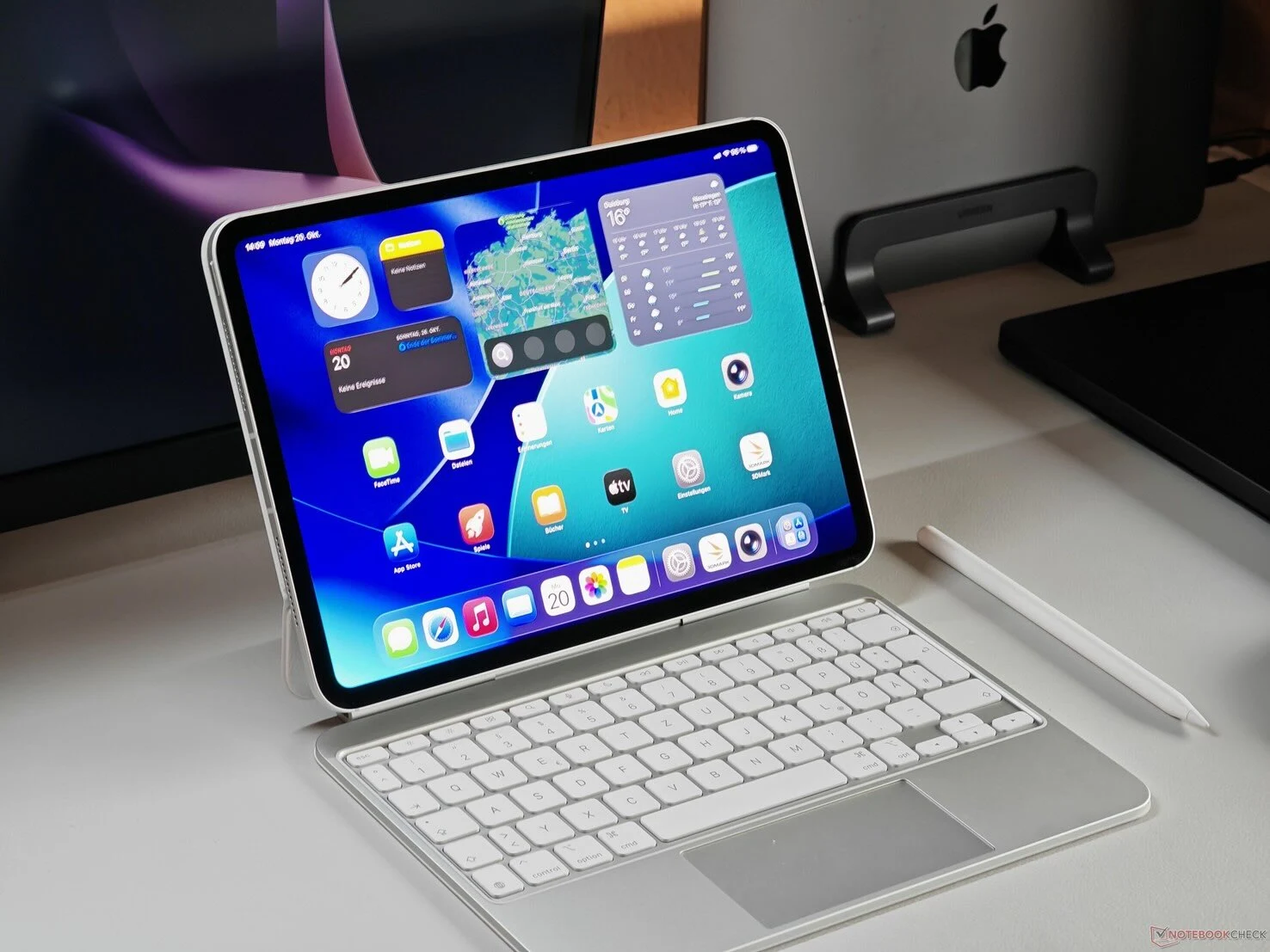
  • iPad Pro M5: Laptop Replacement with Accessories and 5G Benefits

    iPad Pro M5: Laptop Replacement with Accessories and 5G Benefits

    Key Takeaways

    1. The Apple iPad Pro with the M5 chip outperforms many lightweight laptops, raising questions about its potential to replace MacBooks.
    2. Optional 5G connectivity enhances portability, allowing users to stay connected without relying on public Wi-Fi or phone data.
    3. iPadOS 26 has made significant strides towards macOS, improving user navigation, multitasking, and file management.
    4. Productivity can be maximized with a keyboard and trackpad, like Apple’s Magic Keyboard, which offers a MacBook-like experience.
    5. The iPad Pro may not suit everyone due to its cost and specific needs, but it offers powerful features and options for those it fits.


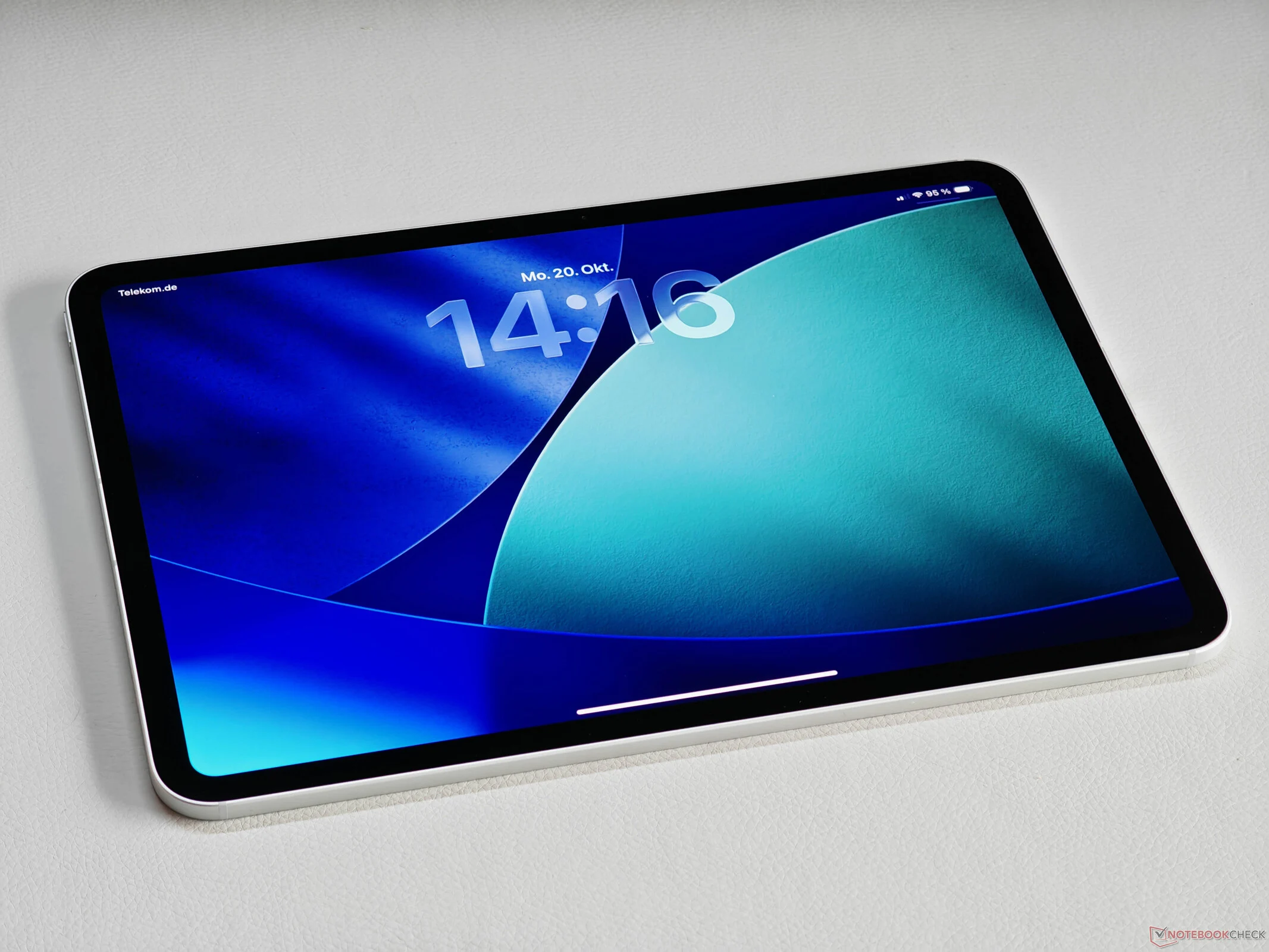
    We recently took a closer look at the latest Apple iPad Pro featuring the M5 chip, and it’s a really impressive device. Even with its passive cooling, this compact tablet outperforms many lightweight laptops. This leads many folks to ponder if the iPad Pro could actually take the place of a MacBook or regular laptop. The optional 5G connectivity is a game changer, especially for those on the go who might otherwise have to depend on public Wi-Fi or their phone’s data. Being connected at all times is super handy. While some business laptops do come with 5G, it’s still not very common in most other devices.

    Operating System Developments

    A clear limitation, of course, is the operating system. However, iPadOS 26 has made significant improvements that bring it closer to macOS 26. This starts with the looks—though that can be subjective—and extends to how you navigate the system. All applications now feature a user-friendly navigation style and can be rearranged on the screen. Space can be quite tight, especially on the smaller 11-inch iPad Pro, but multitasking has seen notable enhancements. A default menu bar has also been introduced, making it reminiscent of macOS. The file management system is effective, and transferring files to and from external drives is straightforward, provided they are formatted correctly.

    Enhancing Productivity

    To truly maximize productivity with the iPad, a keyboard and trackpad are essential. Apple’s Magic Keyboard, while pricey, functions exceptionally well. The typing feel is quite similar to that of a MacBook, and using a cursor to navigate iPadOS 26 is very user-friendly. For routine tasks such as emailing, using web apps, or working with the Office suite, the overall experience closely mirrors that of a MacBook. Plus, let’s not overlook the robust creative applications that work seamlessly with the Apple Pencil.

    That said, the iPad Pro might not be the ideal choice for everyone, and the overall cost can add up, particularly with certain upgrades. If the iPad Pro meets all your needs, though, you’ll find it to be a very powerful option, complete with optional 5G connectivity and a matte screen alternative.


  • Apple M5: Faster Performance with Shorter Battery Life in Daily Use

    Apple M5: Faster Performance with Shorter Battery Life in Daily Use

    Key Takeaways

    1. The Apple M5 SoC is the latest silicon used in the iPad Pro and base MacBook Pro 14 models.
    2. Performance is excellent, but Wi-Fi battery life is slightly reduced compared to previous models due to increased power draw from the M5 chip.
    3. The M5 chip operates on a third-generation 3 nm manufacturing process, leading to higher power consumption with increased clock speeds.
    4. Devices with passive cooling may face more challenges in performance compared to those with active cooling, like the MacBook Pro.
    5. Future M6 chips are expected to be built on a 2 nm process, which may further impact performance and efficiency.


    Apple’s M5 SoC represents the newest version of the company’s silicon. Both iPad Pro variants and the base MacBook Pro 14 model come equipped with this advanced chip. We’ve already conducted reviews on the iPad Pro 11 and the MacBook Pro 14, and also made comparisons between the new M5 and its competitors from AMD, Intel, and Qualcomm in our detailed analysis. This comparison focused on both performance and efficiency.

    Performance Insights

    It’s no surprise that the performance is top-notch; the previous M4 chip was already quite powerful. However, we did observe that the Wi-Fi battery life seems to be slightly reduced compared to earlier models, affecting both the new iPad Pro and the MacBook Pro. All other components remain the same, so this change must be linked to the processor. A more careful examination indicates that the M5 chip draws more power due to its increased clock speeds, in both single-core and multi-core tasks. This can be particularly noticeable during daily use, which often involves brief bursts of high demand. While the difference is not massive, it accumulates over extended usage.

    Manufacturing Process and Cooling Challenges

    Clearly, Apple has moved into the third generation of the 3 nm manufacturing process, and higher clock speeds generally necessitate comparatively higher power consumption. Given these increased consumption rates, devices like the iPad Pro and the forthcoming MacBook Air, which utilize passive cooling, may face more challenges. The performance gap between these devices and those with active cooling, like the MacBook Pro, could be wider than what we saw with the current M4 models. We are really looking forward to seeing how the next M6 generation will perform, as they are likely to be the first chips built on a 2 nm process.

    For further details, be sure to check out our analysis of the new M5 SoC, along with our reviews of the iPad Pro 11 and the MacBook Pro 14.

  • Apple M5 MacBook Pro May Miss 2025 Launch Deadline

    Apple M5 MacBook Pro May Miss 2025 Launch Deadline

    Key Takeaways

    1. The M5 SoC for MacBook Pros is now expected to be released in 2026, contrary to earlier rumors of a 2023 launch.
    2. The A20 Pro SoC for the iPhone 18 Pro series will transition to a new manufacturing process that may reduce costs and improve efficiency.
    3. Confusion exists around Apple’s upgrade cycles, with M-series chips not following the same timeline as A-series chips.
    4. The M4 MacBook Pro remains a viable option for those needing a new laptop soon, as the M5 models likely won’t offer significant upgrades.
    5. The M2 Pro and Max chips had a 15-month gap from their predecessors, while the M3 Pro and Max were released just 9 months later, indicating inconsistent release patterns for M-series chips.


    There is no doubt that many Mac users are eagerly waiting for the M5 SoC, which is anticipated to be released in the last quarter of this year. However, while earlier rumors suggested that the MacBook Pro would get the M5 upgrade this year, a new update from a trusted source suggests otherwise.

    Changes in Chip Technology

    In his latest newsletter, Ming-Chi Kuo mentioned that the A20 Pro SoC, expected in the iPhone 18 Pro series, will move from TSMC’s InFO (Integrated Fan-Out) to WMCM (Wafer Multi-Chip Module). This change will incorporate the underfill and molding processes, which could help reduce material costs and streamline “process steps” to enhance yields. Kuo also pointed out that the M5 chips are not likely to make the transition to WMCM and will instead be used in the “2026” MacBook Pros.

    Implications for MacBook Pro Release

    Kuo’s reference to the upcoming MacBook Pro models as 2026 versions likely signifies that he believes these products won’t launch this year. Mark Gurman previously indicated that MacBook Pros equipped with M5 chipsets would debut by the end of this year, though he mentioned last month that Apple was “considering” delaying the laptops to early 2026.

    Confusion Surrounding Upgrade Cycles

    As always, Apple’s upgrade timeline for MacBooks is puzzling. The M2 Pro and Max versions arrived 15 months after the M1 Pro and Max, while the M3 Pro and Max were released just 9 months following their predecessors. The high-end M4 SoCs reverted to a 12-month cycle, and it now seems that the high-end M5 chips will surpass that 12-month timeframe once again. Given Apple’s strict adherence to a 12-month cycle for A-series SoCs, it raises questions why the M-series chips are treated any differently.

    For those who urgently need a new laptop, it may not be a big loss to purchase an M4 MacBook Pro instead, as the M5 MacBook Pros are unlikely to have significant design or external upgrades. The M4 MacBook Pro is currently priced at $1,299 on Amazon.

    Source:
    Link


  • M5 iPad Pro 11-inch and 13-inch Displays Enter Mass Production

    M5 iPad Pro 11-inch and 13-inch Displays Enter Mass Production

    Key Takeaways

    1. Last year’s iPad Pro featured the M4 chip, slim design, and outstanding OLED displays, receiving positive reviews.
    2. The upcoming iPad Pro is expected to have incremental upgrades, including the new M5 SoC and reduced bezels.
    3. Displays for the 11-inch and 13-inch iPad Pro models have begun mass production, involving suppliers Samsung and LG.
    4. The M5 iPad Pro may launch in October, following Apple’s typical timeline for new product releases.
    5. Information about the upcoming iPad Pro should be taken cautiously, though it appears credible based on industry buzz.


    Last year’s iPad Pro, which was powered by the M4 chip, marked one of the most significant upgrades to Apple’s flagship tablet in recent times. With its impressively slim design, a robust desktop-class system-on-chip (SoC), and outstanding OLED displays, both reviewers and customers had a lot of good things to say about this product.

    Incremental Changes Ahead

    For the upcoming model, it’s not surprising that Apple is going for slight improvements. Besides the new M5 SoC and reduced bezels, there don’t seem to be any major changes or enhancements planned for this year’s iPad Pro.

    Display Production News

    A new report from DigiTimes Asia, which was noticed by MacRumors, indicates that the displays for both the 11-inch and 13-inch versions of the iPad Pro have begun mass production. The usual suppliers, Samsung and LG, are involved in this process.

    This news aligns with earlier speculations suggesting that the M5 iPad Pro may launch in October, a timeframe when Apple usually unveils new iPads and Macs. The current M4 iPad Pro (currently priced at $919 on Amazon) was revealed in May of last year, suggesting an approximate 18-month update cycle for this line of products.

    Take It With Caution

    Like all reports before a product’s release, it’s wise to take this information lightly. Nonetheless, based on the continuous buzz in the industry, the information seems to be credible enough to consider.