Tag: MacBook Pro

  • Apple & Leaker Hint at MacBook Ultra Details

    Apple & Leaker Hint at MacBook Ultra Details

    Key Takeaway

    – A major MacBook Pro redesign is expected between fall 2026 and spring 2027.
    – The new model is rumored to feature an OLED panel and a touchscreen.
    – A leaker claims the inclusion of a touchscreen is “100% confirmed.”
    – Recent macOS updates include touchscreen-friendly gestures, hinting at the change.
    – The redesign would be the first significant update to the laptop’s fundamental features since 2021.


    A Shift in the Design of Apple’s Pro Laptop

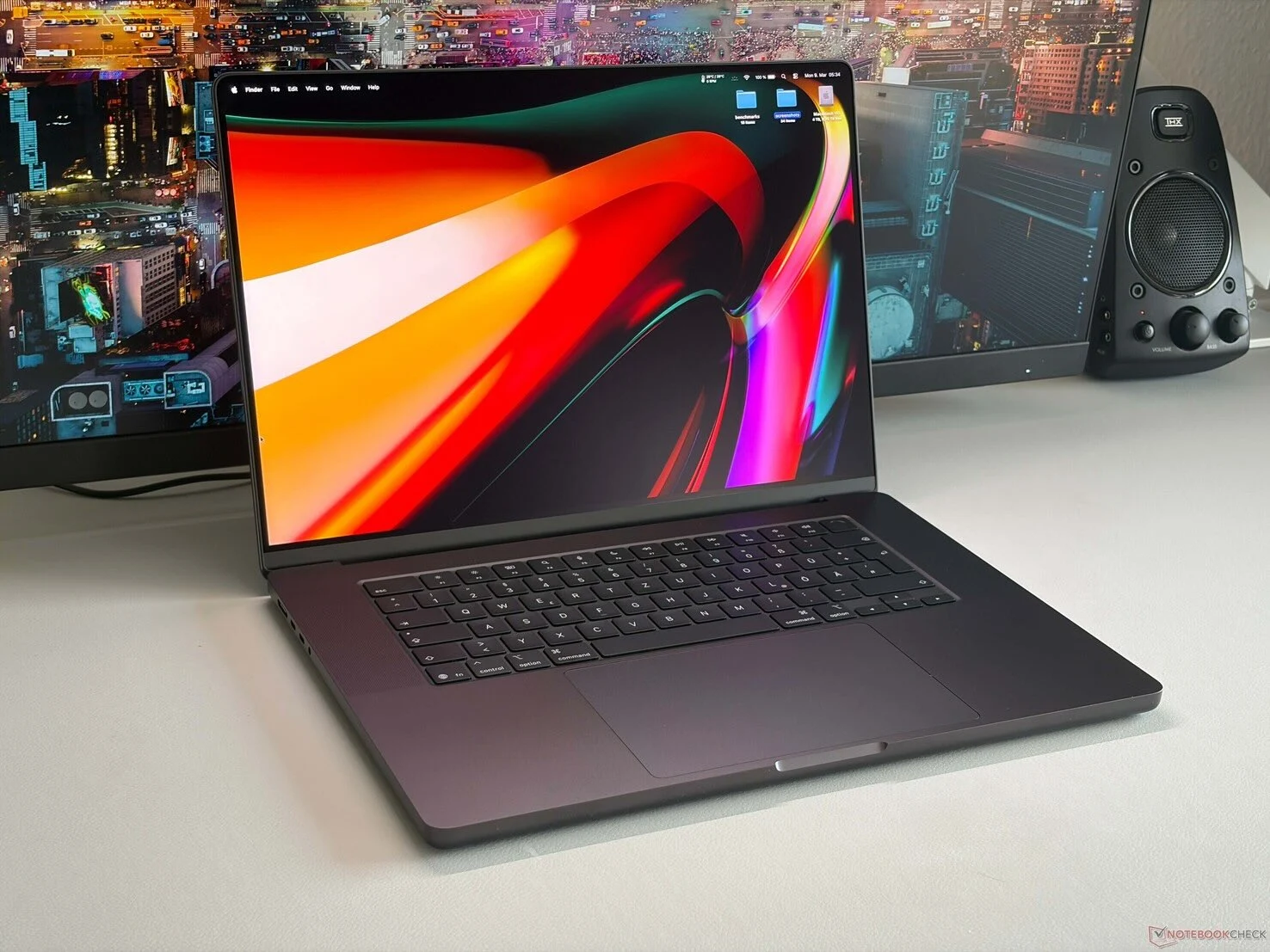
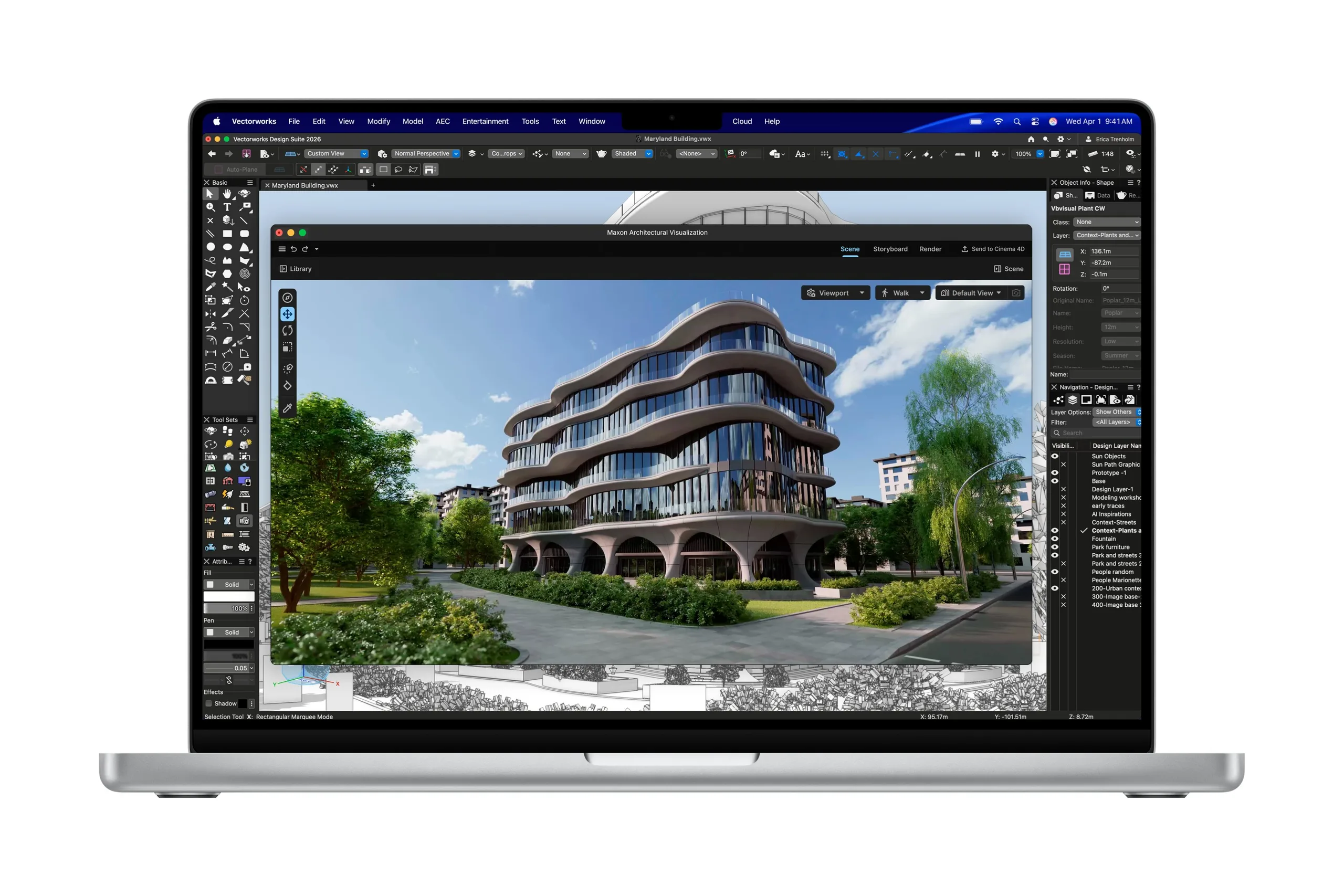
    The current Apple MacBook Pro’s design ($1,549) goes all the way back to the model that came out in October 2021, which had the M1 Pro and M1 Max chips inside. Over the last five years, Apple’s flagship notebook has mainly just gotten new processors, meaning it got faster, but the company hasn’t touched core things like the overall look or the screen itself. This is all supposedly going to change pretty soon, if you believe the rumors floating around.

    New Rumors About a Touchscreen and OLED Panel

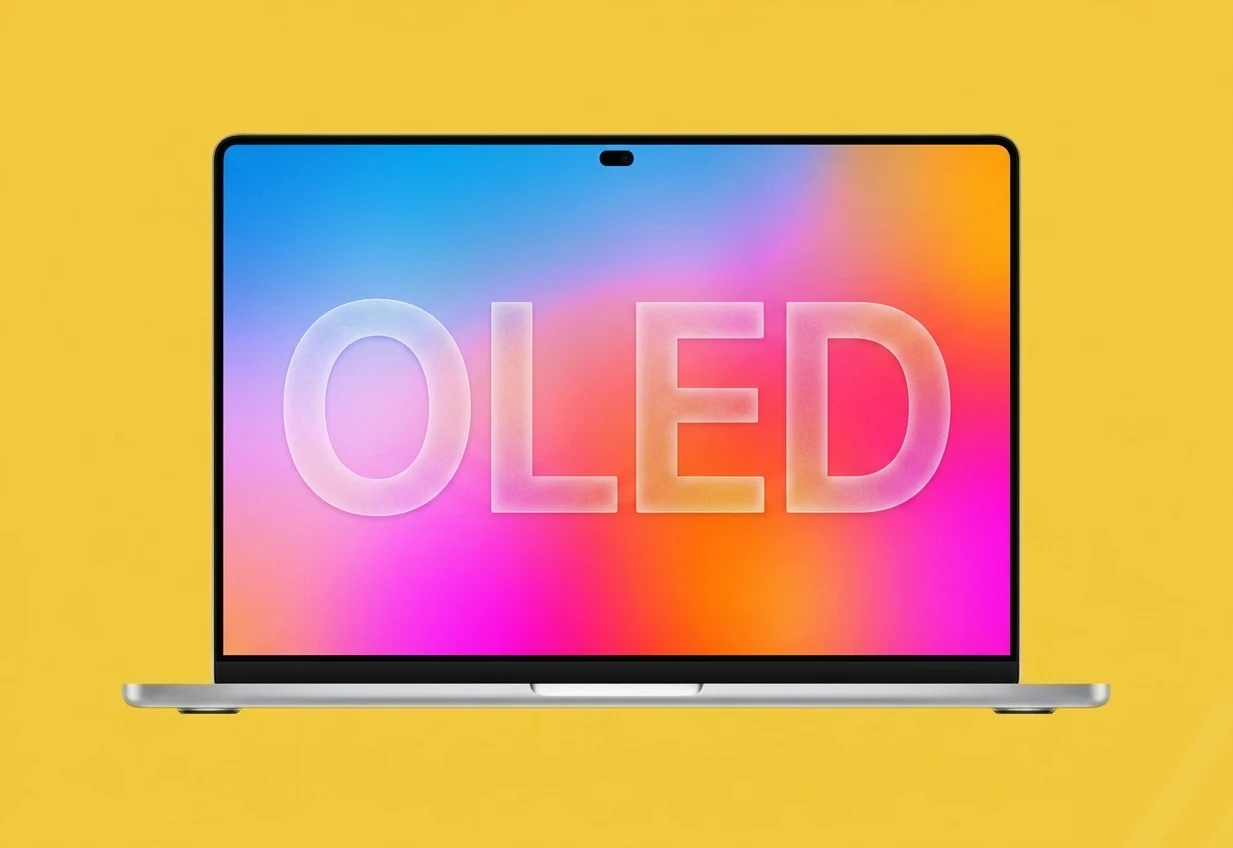
    According to whispers, a MacBook Pro with a totally new design will show up sometime between fall 2026 and spring 2027, and they might even call it the MacBook Ultra. For a while now, people have been saying this machine wont just have an OLED display, but it will also be the very first Mac to ever include a touchscreen. The usually spot-on leaker known as Instant Digital now backs up these claims, stating it’s “100% confirmed” that the next-gen model will indeed have touch capabilities.

    • The notebook could be marketed as the MacBook Ultra.
    • It will supposedly feature an OLED panel alongside the touchscreen.
    • Instant Digital claims the touchscreen is definitely coming.

    Clues Found Within Apple’s Software

    Apple themself have actually left several hints about a Mac with a touchscreen. The new operating system now allows the iPad to be controlled by its own touch when its used as an external monitor through Sidecar, and it even supports simple multitouch gestures. MacRumors dug up two other clues: first, you can refresh Safari webpages by swiping down with your finger, like on an iPhone or iPad. And second, the position and the taller shape of the new Spotlight and Siri windows look wierdly like they were made to fit around something like a Dynamic Island.
  • Surface Laptop Ultra specs, upgrades officially revealed

    Surface Laptop Ultra specs, upgrades officially revealed

    Key Takeaway

    – Nvidia RTX Spark platform with 1 petaflop of AI compute and up to 128GB unified memory for intensive local AI processing
    – Significantly improved thermal system with 2.5x the capacity of the 15-inch Surface Laptop 7th Edition
    – 15-inch mini-LED PixelSense Ultra display with 2,000 nits peak HDR brightness and 262 ppi
    – User-replaceable SSD and larger trackpad, distinguishing it from competitors like the MacBook Pro
    – Slim, lightweight design (under 18mm thick, under 4.5 lbs) with port selection including USB-C, USB-A, HDMI, and SD card reader


    Microsoft Just Dropped New Details About the Surface Laptop Ultra

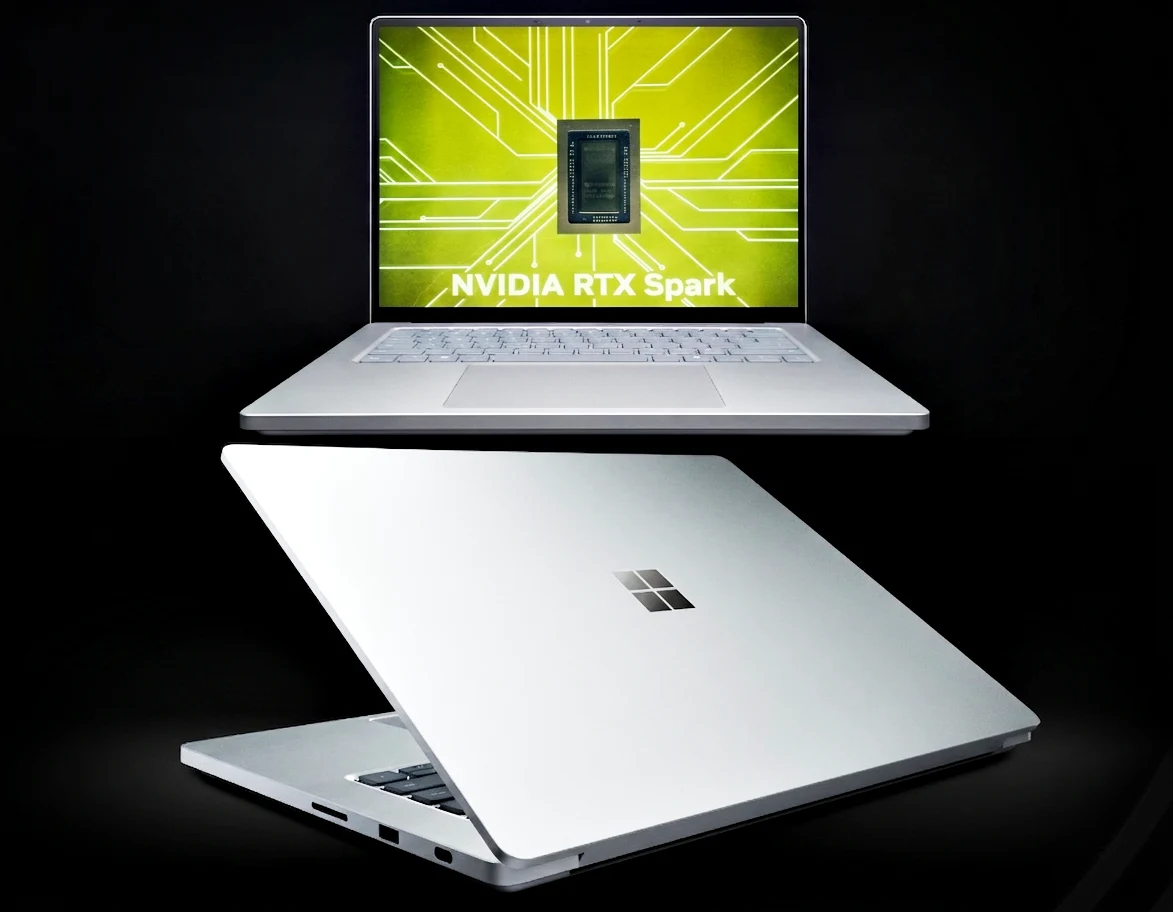
    Microsoft has just revealed everything we didn’t know about the new Nvidia RTX Spark-powered Surface Laptop Ultra, providing a comprehensive look at the hardware and design elements that set its new premium laptop apart from its predecessor and the competition. Based on the specs the company shared, the Laptop Ultra appears to prioritize localized AI processing and modular maintenance, moving away from the more restrictive design language of previous Surface models.

    Core Hardware and the Nvidia RTX Spark Platform

    Of course, at the heart of the laptop is the new Nvidia RTX Spark platform, which aims to handle intensive local workloads by pairing an efficient CPU with an RTX GPU capable of delivering one petaflop of AI compute. To support these demands, the system utilizes up to 128GB of unified memory, enabling users to run larger models directly on-device, which aims to reduce reliance on cloud computing and lower latency.

    Thermal Performance and Display Specifications

    Speaking of performance, thermals have been a frequent point of critique for the Surface line, and Microsoft claims this new model incorporates a thermal system providing up to 2.5 times the capacity of the 15-inch Surface Laptop 7th Edition, likely necessary to manage the higher power of the RTX Spark. As far as the display is concerned, you are looking at a 15-inch mini-LED PixelSense Ultra touchscreen with a 3:2 aspect ratio. It offers a pixel density of 262 ppi and a peak HDR brightness of 2,000 nits, clearly aiming to appeal to pro content creators.

    • 15-inch mini-LED PixelSense Ultra touchscreen
    • 3:2 aspect ratio
    • 262 ppi pixel density
    • 2,000 nits peak HDR brightness

    Design, Ports, and User Replaceable SSD

    You get a choice of two colors (Platinum and Nightfall), while the chassis is less than 18mm thick, weighing under 4.5 pounds, which is in line with Apple’s MacBook Pro 16. To make the whole package lighter, apparently, you get a compact charger designed for easy portability, which Microsoft refuses to show. This might have something to do with the mysterious new USB-C port on the right side of the laptop, which might or might not be magnetic. Speaking of ports, you get three USB-C ports, one USB-A port, HDMI, a headphone jack, and a full-size SD card reader. However, the big news here is something we can’t be taking for granted. The Surface Laptop Ultra has a user-replaceable SSD, which is something you can’t find in competing laptops like Apple’s MacBook Pro. Meanwhile, the trackpad is over 30% larger than previous iterations.

    Market Positioning and Release Window

    All in all, it’s not hard to tell that Microsoft is positioning the Surface Laptop Ultra as the MacBook Pro running Windows 11. From the design, down to the Nvidia chip, the similarities are undeniable. Therefore, the Laptop Ultra is likely going to be judged based on how well it stacks up against the current industry standard in the prosumer laptop market. Pricing, availability, and details on the different SKUs for the Nvidia RTX Spark-powered Surface Laptop Ultra are expected to be announced at a later date. Meanwhile, the actual release is likely to take place in the fall. That said, it won’t be a surprise if reviews of the Surface Laptop Ultra start popping up earlier.

    Stay tuned!

    Sources
  • New 14″ and 16″ OLED MacBook Pro Release Nears

    New 14″ and 16″ OLED MacBook Pro Release Nears

    Key Takeaway

    – OLED transition for 14″ and 16″ MacBook Pro with high manufacturing yields (over 90%, some stages at 95%), enabling faster mass production likely starting mid-2026 to early 2027.
    – Gen 8.6 Samsung OLED line supplies ~2 million panels in 2027, signaling scalable, large-format production for Apple laptops.
    – Panels use tandem two-stack OLED technology with oxide TFT backplanes and hybrid encapsulation, aiming for improved efficiency and durability; one model may introduce touchscreen (MacBook Ultra).


    Apple OLED transition for MacBook Pro on the horizon

    Apple’s transition to OLED for its upcoming 14-inch and 16-inch MacBook Pro lineup has passed a critical manufacturing milestone, say the latest leaked info. The report notes Samsung Display has reportedly achieved yields exceeding 90% on its Gen 8.6 OLED production line, with some stages reaching a “golden yield” of 95%. This high efficiency signals that the technology is ready for stable, large-scale mass production, which is expected to ramp up quickly, with Samsung potentially shipping these panels as early as June 2026.

    Production readiness and timeline

    The OLED displays are destined for future 14-inch and 16-inch MacBook Pro models, with initial supply estimates totaling roughly 2 million units for the year. These panels represent a significant engineering leap over standard smartphone OLEDs. They will utilize the same “tandem two-stack” technology found in the latest iPad Pro, alongside oxide TFT backplanes for improved power efficiency and hybrid encapsulation for enhanced durability. Furthermore, reports suggest that at least one of the upcoming MacBook models will be the first to feature touchscreen capabilities (most likely the rumored MacBook Ultra).

    Launch windows and market expectations

    While initial projections pointed to a late 2026 release, industry-wide chip shortages have reportedly shifted the most likely launch window to early 2027. However, with the latest positive signals, it won’t be a surprise if Apple manages to stick to its typical fall release plans. The Elec

    Sources
  • Apple M5 Max Delivers Smooth AAA Windows Gaming Through Emulation

    Apple M5 Max Delivers Smooth AAA Windows Gaming Through Emulation

    Key Takeaways

    1. The Apple MacBook Pro with the M5 Max SoC is capable of delivering good gaming performance, even if it’s not primarily marketed for gaming.
    2. Andrew Tsai’s tests show that the M5 Max can effectively emulate 20 Windows games using Crossover, with most performing well.
    3. The M5 Max can run demanding AAA games like Cyberpunk 2077 at over 60 FPS at 1440p/ultra settings without upscaling.
    4. While there are few AAA macOS games, the M5 Max’s strength allows for effective emulation of Windows games and likely console games too.
    5. The M5 Max is highlighted for its performance potential, especially for games designed for macOS.


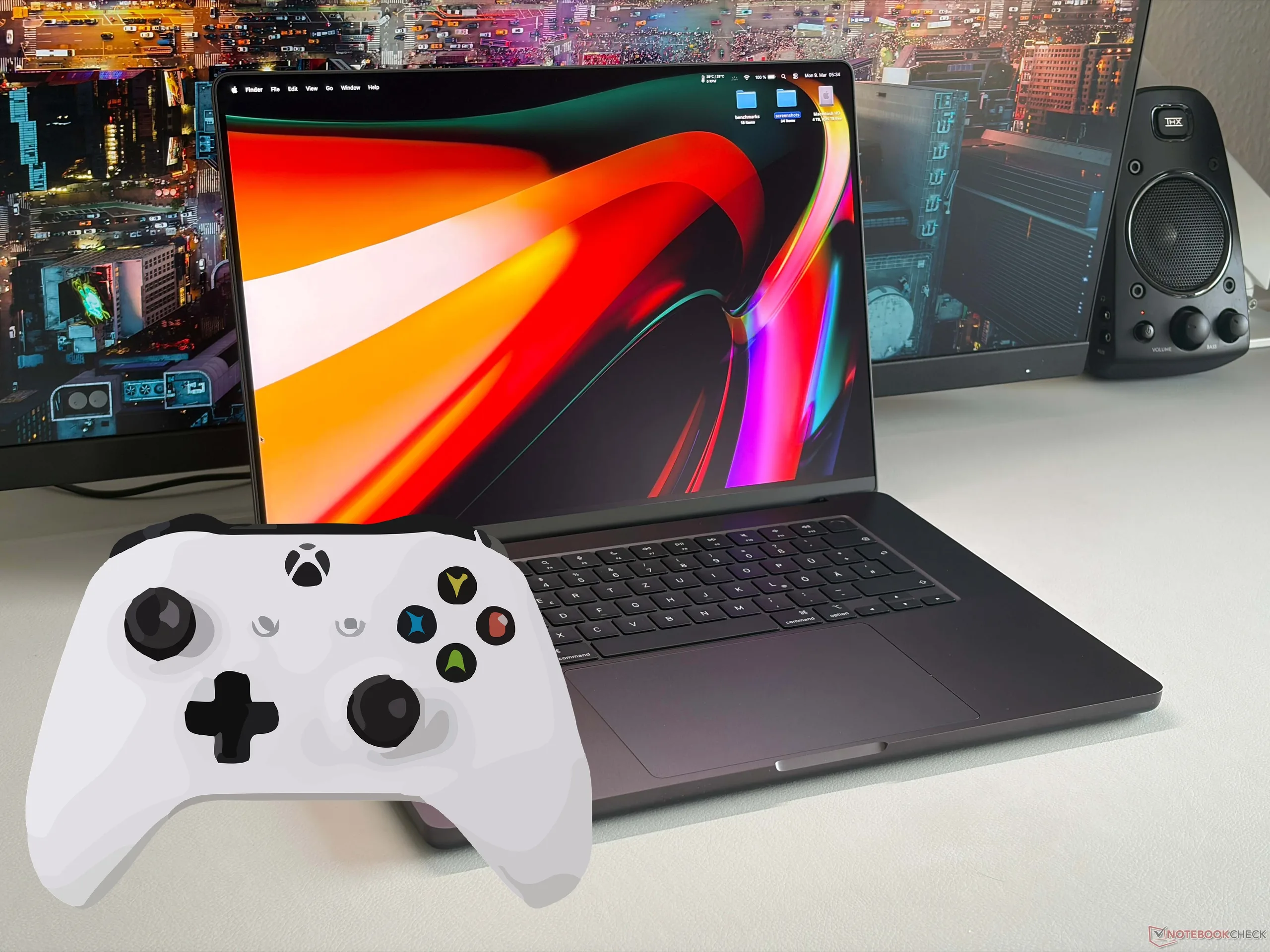
    While not many people are purchasing the Apple MacBook Pro 14 and 16 equipped with the M5 Max SoC specifically for gaming, it’s clear that the M5 Max has the speed necessary for a good gaming experience. A recent test by Andrew Tsai on YouTube demonstrates that the MacBook Pro with the Apple M5 Max can effectively emulate Windows games.

    Performance Testing

    In his tests, Andrew Tsai evaluated 20 Windows games on the Apple M5 Max using Crossover. Most games performed excellently, although a few had some performance issues. The tests included popular titles like Death Stranding 2, Horizon Forbidden West, and Black Myth Wukong, which are known for their demanding graphics.

    Impressive Results

    From Andrew Tsai’s findings, it is evident that the Apple MacBook Pro with the M5 Max is incredibly powerful. The SoC can deliver smooth gameplay on demanding AAA games, even when using a translation layer for emulation.

    It’s worth noting that the M5 Max shines even brighter with games designed for macOS. Our performance review showed that it could run Cyberpunk 2077 at over 60 FPS at 1440p/ultra settings without relying on FSR or MetalFX upscaling.

    Emulation Capabilities

    Even though there are not many AAA macOS games available, the M5 Max is sufficiently robust to emulate Windows games effectively. This also indicates that the M5 Max should manage console emulation quite well. There are several excellent console emulators available for macOS, such as RPCS 3 for PlayStation 3 and Ryujinx/Hydra for Nintendo Switch emulation.

    You can purchase the Apple MacBook Pro 16 with M5 Max on Amazon.

    Andrew Tsai on YouTube, Teaser image source: Andreas Osthoff for Notebookcheck, nicolepineda on Pixabay, edited.

    Source:
    Link


  • Apple M5 Pro & M5 Max Outperform RTX 5090 in PugetBench Tests

    Apple M5 Pro & M5 Max Outperform RTX 5090 in PugetBench Tests

    Key Takeaways

    1. The MacBook Pro lineup excels in multimedia performance, especially for content creators, with significant tests on creative applications.
    2. The M5 Pro processor offers impressive speed, closely rivaling the mobile GeForce RTX 5090 in high-performance laptops.
    3. The M5 Max models show a clear advantage in GPU performance, particularly in the larger MacBook Pro 16, highlighting limitations in the 14-inch model.
    4. The 14-inch MacBook Pro outperforms all Windows competitors of similar size, despite slightly lower performance compared to the 16-inch model.
    5. Competing Windows devices struggle to match the performance of M5 chips in key creative applications, particularly in Photoshop and Premiere Pro.


    Apple’s MacBook Pro lineup is known for being excellent multimedia laptops, especially popular with content creators. Besides our usual benchmarks in reviewing the MacBook Pro 14 featuring the M5 Max and the MacBook Pro 16 equipped with the M5 Pro, we conducted additional tests on creative applications for these models, including the larger MacBook Pro 16 with the M5 Max. We utilized the latest PugetBench benchmarks for Adobe applications like Photoshop, Premiere Pro, Lightroom Classic, and DaVinci Resolve, comparing these results against other contemporary multimedia devices. All devices tested ran the same versions of the apps and benchmarks, ensuring the results are valid for comparison.

    Impressive Performance

    The performance results for the new Apple processors are remarkable, with the M5 Pro being either much quicker or only slightly slower than the mobile GeForce RTX 5090 found in the Asus ProArt P16, which is among the fastest 16-inch Windows multimedia laptops available. The two M5 Max models show a significant advantage, especially when GPU performance is crucial. This highlights the benefits of the larger MacBook Pro 16, confirming once again that the smaller 14-inch model can’t fully utilize the M5 Max’s capabilities, as we previously reported.

    Comparison with Rivals

    While the performance of the 14-inch MacBook Pro may be somewhat lower, it still outshines all other Windows competitors with similar screen sizes. In terms of compact Windows models, the Asus ProArt PX13 featuring the AMD Strix Halo is currently one of the top choices. However, the Ryzen AI Max+ 395 with the Radeon 8060S can only match the M5 chips in Lightroom; it fails to compete in Photoshop, Premiere Pro, or DaVinci Resolve. Similarly, the combination of Intel’s Panther Lake and the mobile RTX 5070 falls short in performance. For more insights, check out our detailed analysis articles on the new M5 Pro and M5 Max chips.


  • Apple’s MacBook Pro Power Adapters: Insufficient for Users

    Apple’s MacBook Pro Power Adapters: Insufficient for Users

    Key Takeaways

    1. Apple’s MacBook Pro line is becoming more powerful, but increased chip performance leads to higher power consumption and cooling challenges, particularly in the 14-inch model.

    2. The MacBook Pro 16 with the M5 Pro can peak at 145 Watts, while the 14-inch M5 Max is limited to 97 Watts, causing significant battery drain during intense usage.

    3. During stress tests, the 14-inch model experienced a 15% battery loss in one hour, even at lower usage scenarios like gaming.

    4. Many compact laptops face power adapter issues, but Apple’s restriction on the 14-inch model’s power input is particularly frustrating for users.

    5. The absence of power adapters in Europe exacerbates the problem, leaving users with limited options for adequate power supply during high-demand tasks.


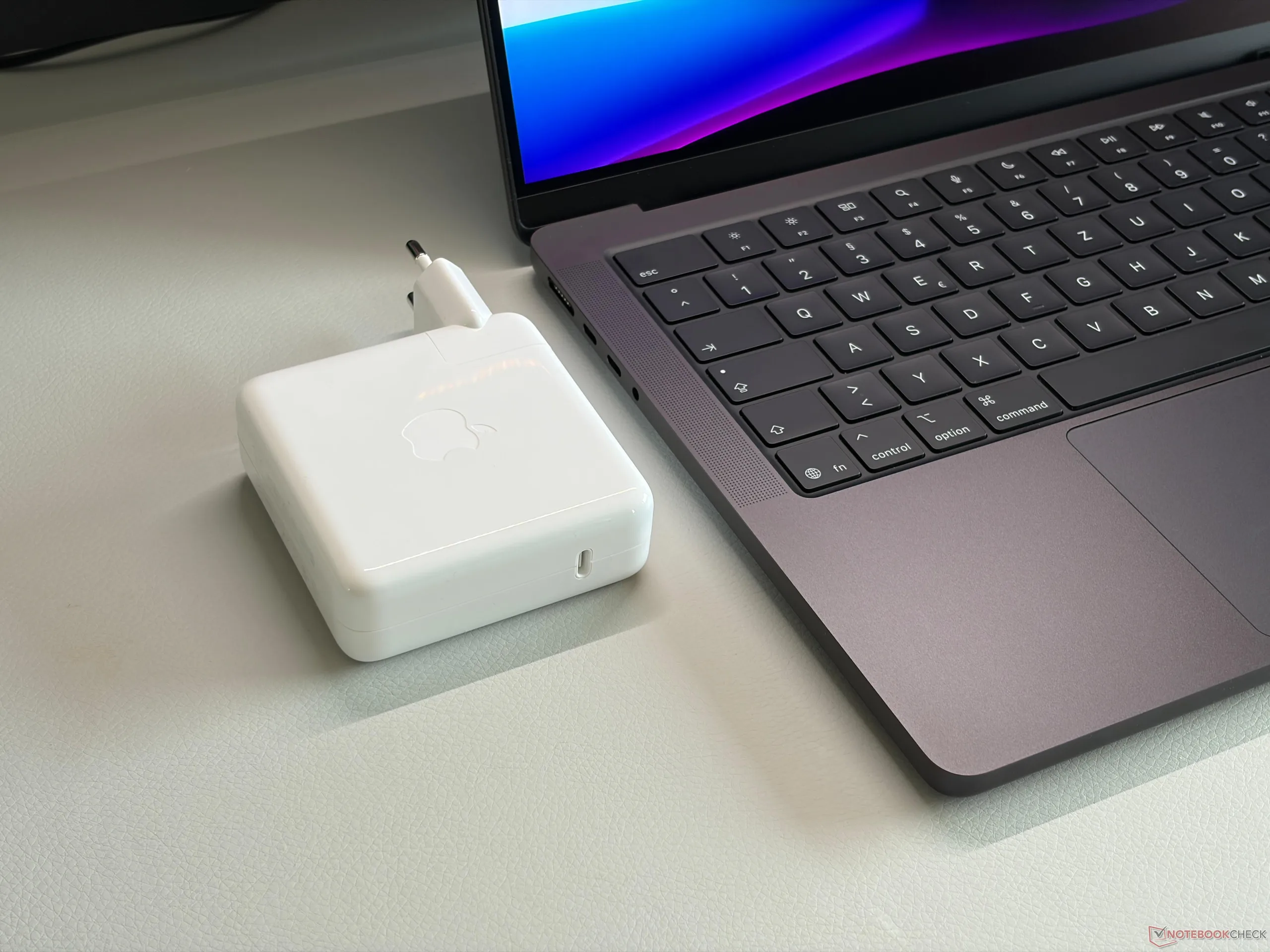
    Apple’s MacBook Pro line is becoming increasingly potent with every new release, but this also means the chips are drawing more power, which presents challenges for the cooling systems. The smaller 14-inch model is particularly impacted, as we noted in our thorough review. Its performance isn’t very consistent, and another issue is the lack of adequate power supply.

    Power Consumption Insights

    In our examination of the MacBook Pro 16 equipped with the M5 Pro and the 140W power adapter, we found that the highest consumption reached 145 Watts, before settling down to 134 Watts. With a more robust power supply unit (PSU), we recorded a peak of 147 Watts. This indicates that during intense usage, the battery must make up for this slight discrepancy (which isn’t massive in this scenario). However, the system shows that the battery is at full charge and isn’t taking in more power, with the MagSafe LED glowing green. Our measuring tool, however, indicates that consumption can peak at 40 Watts and it takes roughly 10 minutes for this to stabilize at a normal idle level again. The situation is notably worse for the 14-inch MacBook Pro with the M5 Max, as the maximum power intake is limited to 97 Watts, regardless of whether you’re using Apple’s 140W adapter or an even more powerful 180W USB-C PSU. This limitation caused a 15% battery drain during our one-hour stress test. While it might be argued that our stress test represents a worst-case scenario, the battery also lost about 10% after playing Cyberpunk 2077 for just an hour at a lower screen brightness. The behavior under continuous workloads is quite peculiar, as the battery percentage remains at 100% for a time before unexpectedly dropping to 96 or 97%.

    Manufacturer Limitations

    The use of inadequate power adapters by manufacturers is a common issue that extends beyond Apple. Particularly, compact laptops with Intel GPUs (which have high short-term power demands) frequently face this problem. What we find frustrating, however, is how Apple addresses this challenge. In brief, during short peak load situations, users may think the battery isn’t depleting and that the power adapters are adequate. It’s also bothersome that Apple intentionally restricts the power input for the smaller 14-inch model to 97 Watts, even when stronger power supplies are utilized. Users of the MacBook Pro with the M5 Max might be inclined to push their systems harder for extended periods or engage in gaming without the battery draining, but this limitation makes it impossible. Especially in Europe, where MacBooks are shipped without power adapters by default, this situation seems quite illogical and is frustrating for users.


  • MacBook Pro to Get Major OLED Upgrade with Touch Support by 2027

    MacBook Pro to Get Major OLED Upgrade with Touch Support by 2027

    Key Takeaways

    1. The next MacBook Pro series may feature OLED displays with touch capabilities for the first time.
    2. Analyst Ming-Chi Kuo predicts the release of these OLED MacBook Pros between late 2026 and early 2027.
    3. Kuo’s timeline aligns with predictions from other insiders like Mark Gurman.
    4. The inclusion of OLED technology could greatly enhance the visual experience for users.
    5. As the release date approaches, more details about the new MacBook Pro are expected to be revealed.


    We have heard a lot about the potential features of Apple’s next MacBook Pro series. Besides the expected upgrades to the SoC, it seems like the MacBook Pro could also introduce OLED displays with touch capabilities for the very first time in its history.

    Analyst Insights

    Well-known analyst Ming-Chi Kuo has shared his predictions for the new Pro laptop. He believes that the next series of OLED MacBook Pros is expected to arrive sometime between late 2026 and early 2027. This timeline aligns with what other insiders, such as Mark Gurman, have also suggested. Additionally, Kuo confirmed that these laptops will come equipped with OLED screens that support touch functionality.

    Future Expectations

    Ming-Chi Kuo’s insights provide an interesting glimpse into what users might expect from future Apple products. The inclusion of OLED technology could significantly enhance the visual experience for users, especially with the added touch capability. As the release date approaches, more details are likely to emerge, and fans of Apple will be eagerly waiting for any updates.

    Source:
    Link


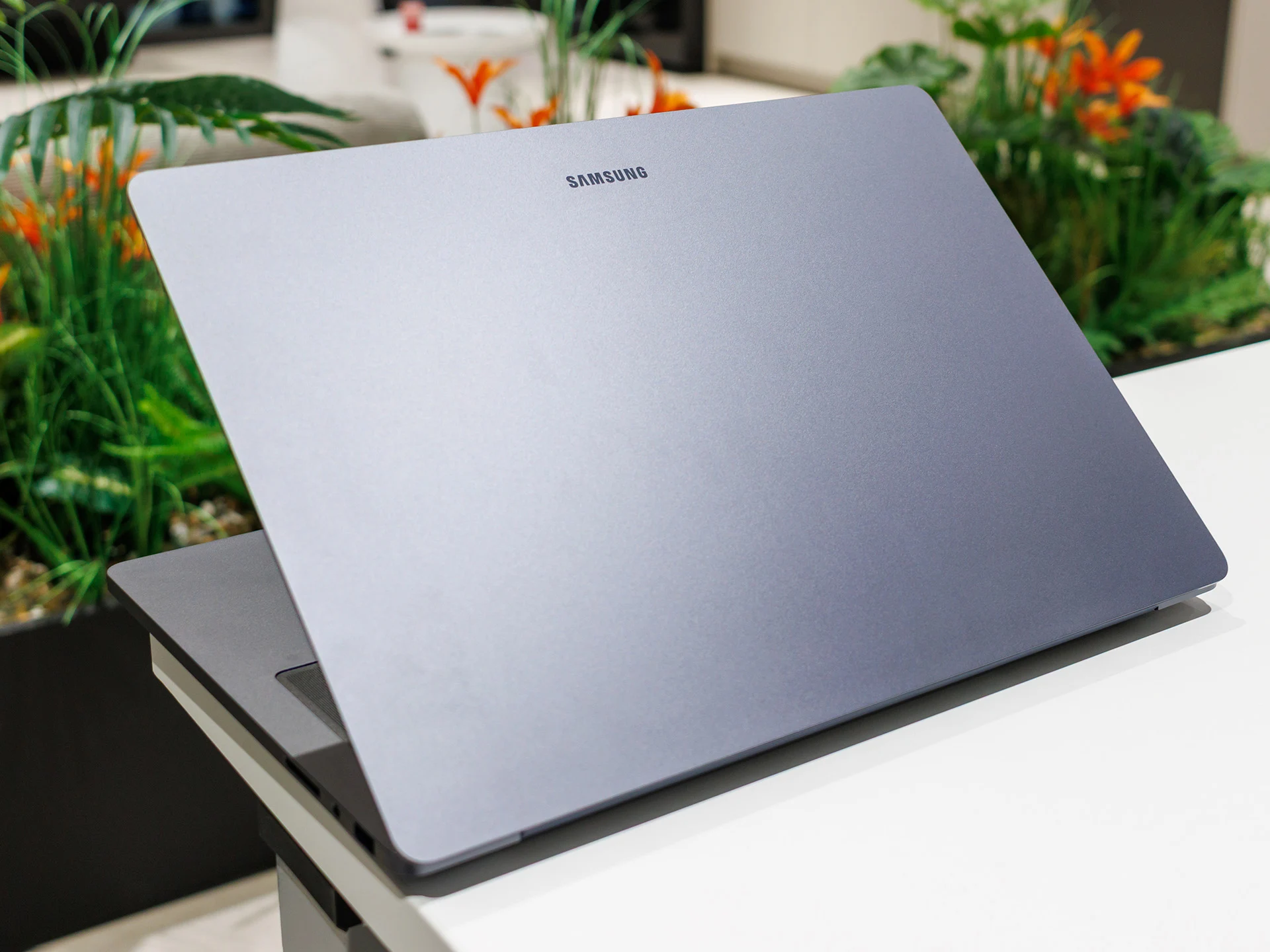
  • Samsung’s New Laptop: A Strong Competitor to Apple MacBook Pro 16

    Samsung’s New Laptop: A Strong Competitor to Apple MacBook Pro 16

    Key Takeaways

    1. Design Changes: The Galaxy Book6 Ultra features a new design inspired by the Apple MacBook Pro 16, with rounded corners and a large haptic trackpad, moving away from the traditional wedge shape.

    2. Build Quality: The aluminum body is high-quality, but the hinges could be sturdier, and the keyboard has shallow key travel, affecting the typing experience.

    3. Performance Specs: The laptop includes soldered RAM options up to 64 GB, supports two M.2-2280 SSDs, and features an impressive GeForce RTX 5070 with an Intel Panther Lake processor.

    4. Display and Battery: The OLED display is not as bright as the MacBook Pro’s Mini-LED screen, but it offers a touchscreen. Battery life is competitive, despite having a smaller battery than Apple’s model.

    5. Sound Quality: The sound system on the Galaxy Book6 Ultra is notably good, enhancing the multimedia experience.


    The Galaxy Book6 Ultra is Samsung’s latest and fastest laptop for multimedia tasks. Unlike its predecessors, the company has moved away from the traditional wedge-shaped design that is still seen in other Galaxy Book6 models. Instead, Samsung seems to have taken a lot of inspiration from the Apple MacBook Pro 16, adopting features like rounded corners, a keyboard layout without a numpad, side speakers, and a large haptic trackpad. Because of these similarities, the Galaxy Book6 Ultra might be mistaken for a MacBook Pro, especially if the logos are removed.

    Build Quality and Design

    The aluminum body of the laptop is high-quality, though the hinges could use a little more stiffness to avoid any wobbling. The keyboard, however, leaves something to be desired due to its shallow key travel, which isn’t the best for typing. There are other options in the 16-inch multimedia laptop category that provide a better typing experience, such as the Asus ProArt P16 and Lenovo Yoga Pro 9i 16.

    Performance and Specifications

    Samsung has opted for soldered RAM, and it appears that certain markets will only have the option for models with 32 GB RAM (with a maximum of 64 GB). However, users can still add two M.2-2280 SSDs, which support PCIe 4.0. The performance of the GeForce RTX 5070 combined with the Intel Panther Lake processor is impressive, and the fan noise remains at a tolerable level. When it comes to brightness, the OLED display on the Galaxy Book6 Ultra does not quite match up to the brightness of the MacBook Pro’s Mini-LED screen, particularly in HDR. On the upside, Samsung does offer a touchscreen, which is not an option for the MacBook. The battery life is also quite competitive, even if its battery is smaller than Apple’s offering. Additionally, the sound system is notably good.

    In conclusion, the Galaxy Book6 Ultra is a strong contender in the multimedia laptop market, offering excellent performance but at a high price point.


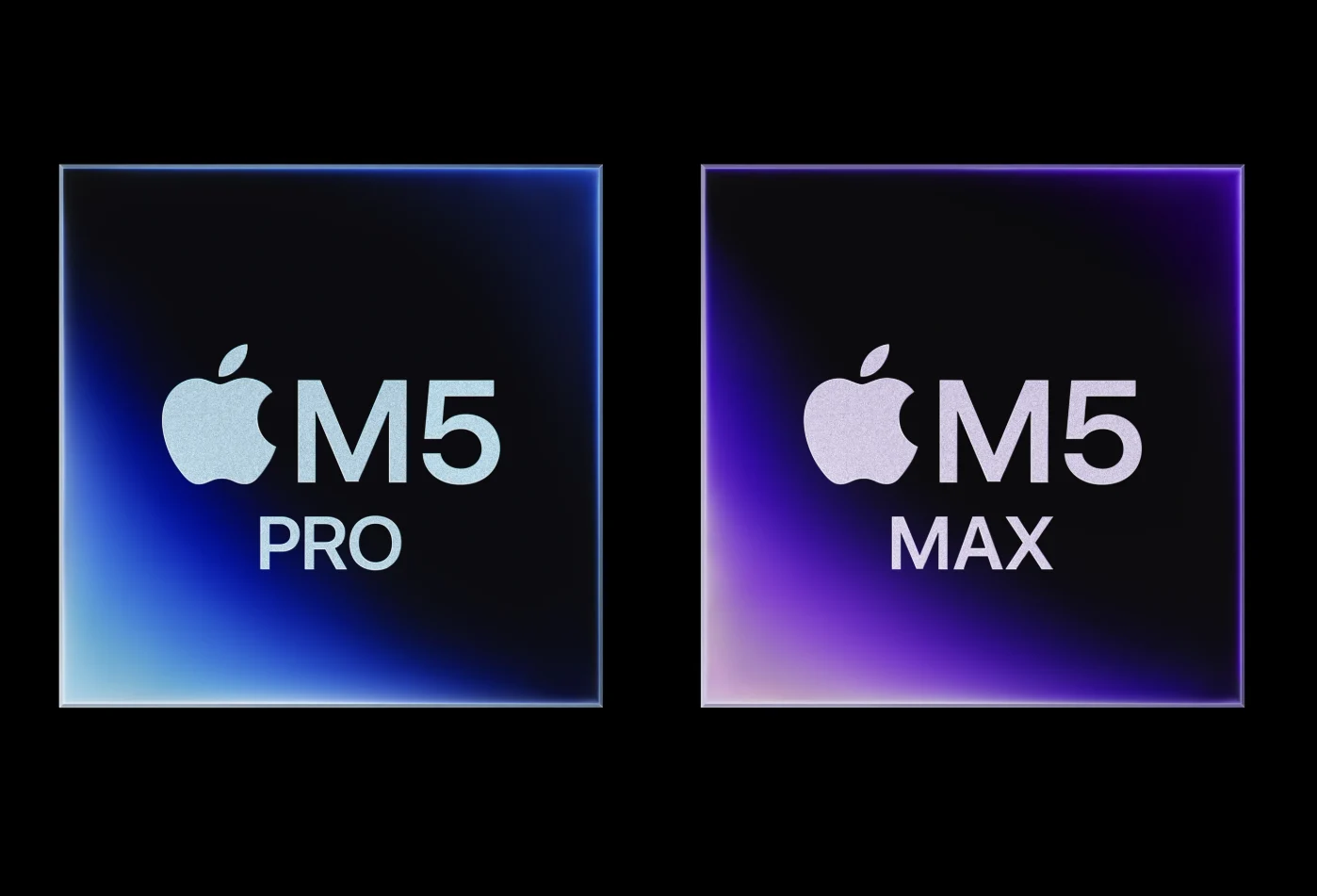
  • M5 Pro and M5 Max MacBook Pro: Enhanced Performance & Storage

    M5 Pro and M5 Max MacBook Pro: Enhanced Performance & Storage

    Key Takeaways

    1. New M5 Pro and M5 Max Chips: The latest MacBook Pro models feature powerful M5 Pro and M5 Max chips with configurations up to 18 cores, improving overall performance by up to 30%.

    2. Graphics Performance Improvements: The M5 Pro maintains a 20-core GPU, while the M5 Max has a 40-core GPU, offering up to 35% better performance in ray tracing tasks.

    3. Enhanced Storage Capabilities: Storage speeds have increased to 14.5 GB/s, with base storage starting at 1 TB for M5 Pro and 2 TB for M5 Max models, alongside rising prices due to NAND flash costs.

    4. Display and I/O Features Remain Unchanged: The 14″ and 16″ Liquid Retina XDR displays and input/output options remain the same as previous models.

    5. Pricing Details: The M5 Pro 14″ starts at $2,199 and the 16″ at $2,699, while M5 Max models start at $3,899, with additional costs for higher RAM and nano-texture display options.


    Apple’s latest 14″ and 16″ MacBook Pro series was missed when the company released the standard M5-powered MacBook Pro last fall. Luckily, the M5 Pro and M5 Max versions have finally made their debut, featuring upgraded SoCs while keeping the same design as before.

    Powerful New Chips

    The M5 Pro and M5 Max chips seem to be quite powerful, at least based on the specifications. Both processors have the capability of having up to an 18-core configuration, which includes six “Super” cores and twelve “Performance” cores. The term “efficiency core” has been eliminated. Apple claims that overall performance could see improvements of up to 30%.

    Graphics and Performance Boosts

    In terms of the GPU, Apple has opted to maintain a 20-core GPU for the M5 Pro and a 40-core GPU for the M5 Max. Apple’s reported performance increases are impressive, showing up to a 35% boost in tasks involving ray tracing. The raw GPU power is expected to be approximately 20% greater. Thanks to the neural accelerators integrated within each core, large language models (LLMs) should perform 3.9x to 4x faster.

    Enhanced Storage and Pricing

    The storage speed has seen significant enhancements, with Apple stating that read speeds can reach 14.5 GB/s. The base storage has been increased as well, with the M5 Pro starting at 1 TB and the M5 Max models beginning at 2 TB. Due to rising costs for NAND flash, the starting prices for these MacBook Pros have also gone up, which will be discussed later.

    With the integration of Apple’s N1 chip, the wireless networking features have improved, finally introducing WiFi 7 and Bluetooth 6 to the premium MacBook Pro series.

    Display and I/O Features

    Most of the other features on the MacBook Pro remain largely unchanged. The 14″ and 16″ Liquid Retina XDR displays still offer the same resolution and features as before, and the input/output options are identical to previous models.

    Pricing Details

    For pricing, the M5 Pro 14″ MacBook Pro begins at $2,199 for the model with a reduced M5 Pro chip (15-core CPU, 16-core GPU), 24 GB RAM, and 1 TB storage. The 16″ MacBook Pro with the complete M5 Pro setup, 24 GB RAM, and 1 TB storage starts at $2,699. As usual, the nano-texture option for the display will add an extra $150.

    The M5 Max 14″ MacBook Pro, equipped with an 18-core CPU and 32-core GPU, 2 TB storage, and 36 GB RAM, starts at $3,899. The 16″ version with the same specs also starts at $3,899. For the un-binned M5 Max model featuring 48 GB RAM and 2 TB storage, customers will need to pay $4,099 for the 14″ and $4,399 for the 16″ models.

    Source:
    Link


  • Samsung Raises Prices on LPDDR5X Memory Modules for Apple

    Samsung Raises Prices on LPDDR5X Memory Modules for Apple

    Key Takeaways

    1. Apple has agreed to a 100% price increase for LPDDR5X chips from Samsung due to the ongoing DRAM shortage.
    2. The initial proposed price hike was 60%, but Apple accepted the 100% increase to secure necessary supplies for production.
    3. The decision reflects the current scarcity of consumer-grade DDR5 chips in the market.
    4. Apple is preparing to launch updated versions of several products, including the MacBook Pro, MacBook Air, and iPad next week.
    5. The new budget-friendly MacBook may be priced higher than expected because of rising component costs.


    The DRAM shortage has impacted many companies. Apple, known for its strong supply chain management, seems to have finally faced a significant challenge, according to a recent report from Korea.

    Price Increase on Chips

    The report indicates that Apple has agreed to an astonishing 100% price increase for LPDDR5X chips from Samsung. For a major player in consumer electronics like Apple, reliance on DRAM suppliers is crucial for maintaining its range of products. Initially, Samsung aimed for a 60% price hike for the LPDDR5X modules essential to all modern Apple Silicon devices. However, they started negotiations with a surprise 100% increase.

    Acceptance of Terms

    In a surprising twist, Apple reportedly accepted the offer immediately. While it might seem like a poor negotiating strategy for Apple, the reality is that with the current scarcity of consumer-grade DDR5, Apple was likely eager to secure the necessary supply and keep its production running smoothly.

    It’s tough to guess what truly happens behind the scenes during such important business talks. The insider’s exact remark (translated) is as follows:

    “At the first negotiation table (to gather opinions at 60%), they first proposed a 100% increase, and Apple immediately accepted it and the price was decided as it was. That’s how much smartphone companies are heating up to secure memory inventory.”

    Upcoming Product Launches

    The company is slated to unveil updated versions of the MacBook Pro, MacBook Air, iPad, and iPad Air next week, in addition to a new budget-friendly MacBook and the iPhone 17e. While these devices are not expected to see significant price increases, the “affordable” MacBook might end up being pricier than Apple anticipated due to changing component costs.

    Source:
    Link