Tag: M5 Max

  • Apple M5 Pro & M5 Max Outperform RTX 5090 in PugetBench Tests

    Apple M5 Pro & M5 Max Outperform RTX 5090 in PugetBench Tests

    Key Takeaways

    1. The MacBook Pro lineup excels in multimedia performance, especially for content creators, with significant tests on creative applications.
    2. The M5 Pro processor offers impressive speed, closely rivaling the mobile GeForce RTX 5090 in high-performance laptops.
    3. The M5 Max models show a clear advantage in GPU performance, particularly in the larger MacBook Pro 16, highlighting limitations in the 14-inch model.
    4. The 14-inch MacBook Pro outperforms all Windows competitors of similar size, despite slightly lower performance compared to the 16-inch model.
    5. Competing Windows devices struggle to match the performance of M5 chips in key creative applications, particularly in Photoshop and Premiere Pro.


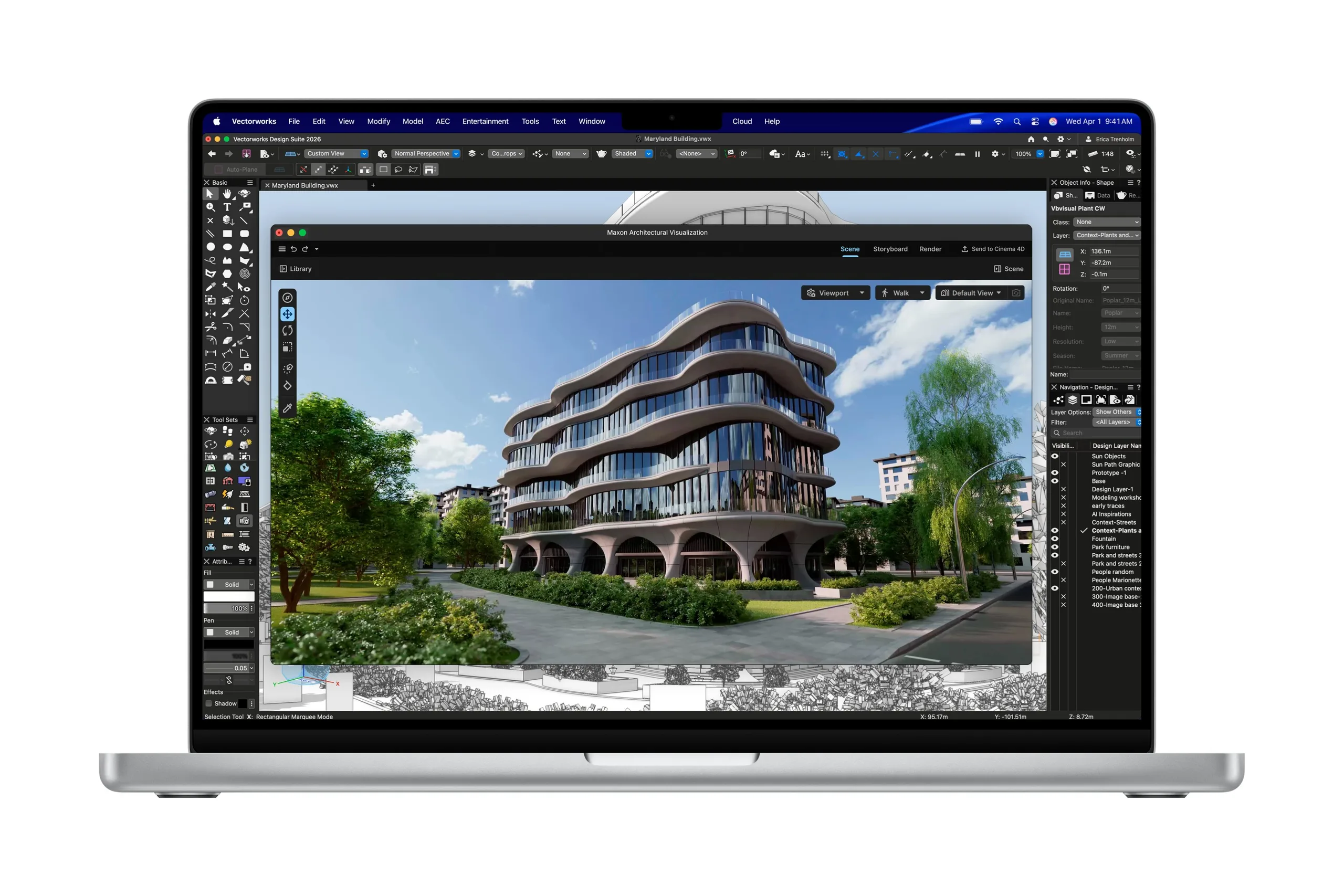
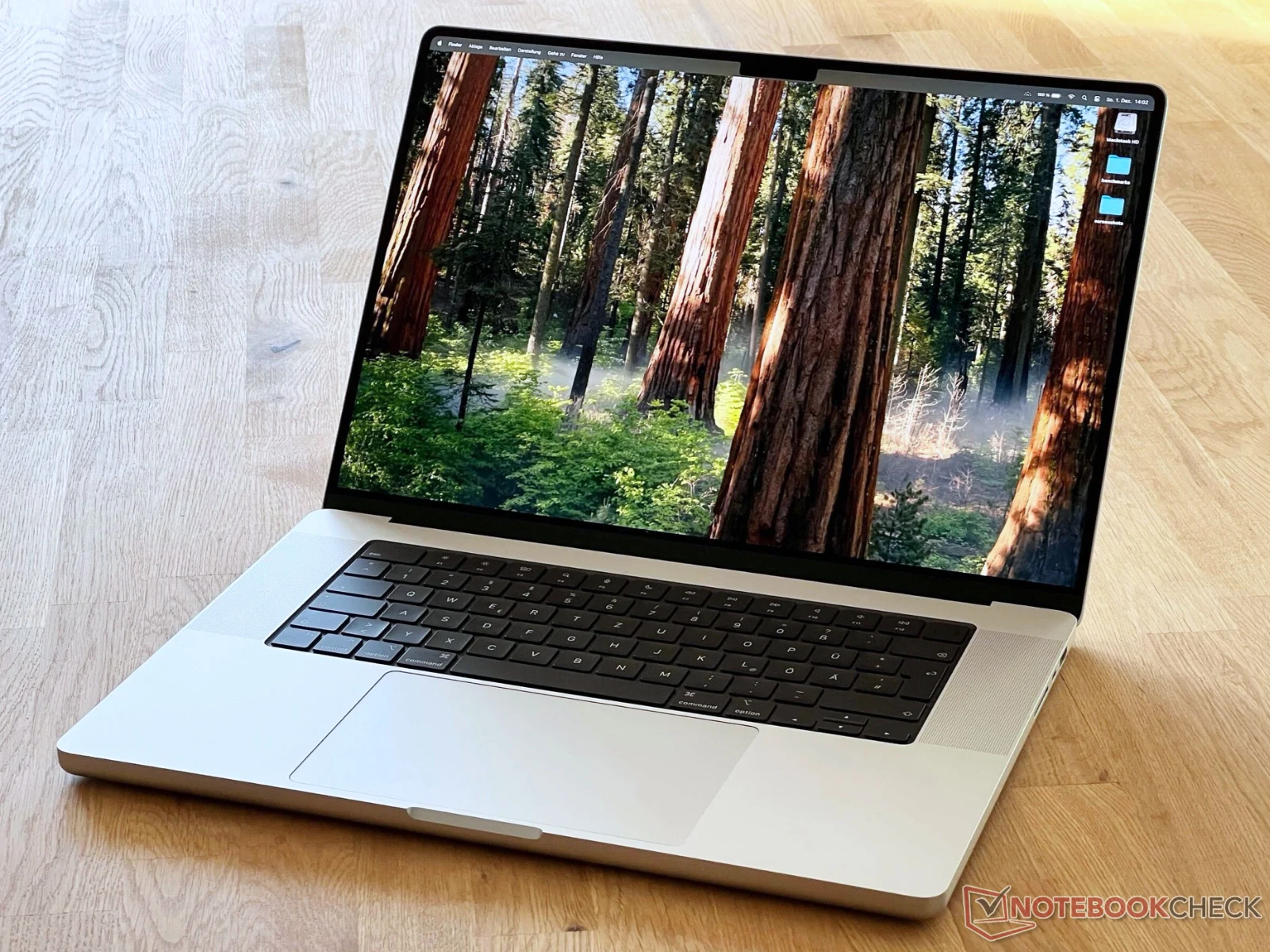
    Apple’s MacBook Pro lineup is known for being excellent multimedia laptops, especially popular with content creators. Besides our usual benchmarks in reviewing the MacBook Pro 14 featuring the M5 Max and the MacBook Pro 16 equipped with the M5 Pro, we conducted additional tests on creative applications for these models, including the larger MacBook Pro 16 with the M5 Max. We utilized the latest PugetBench benchmarks for Adobe applications like Photoshop, Premiere Pro, Lightroom Classic, and DaVinci Resolve, comparing these results against other contemporary multimedia devices. All devices tested ran the same versions of the apps and benchmarks, ensuring the results are valid for comparison.

    Impressive Performance

    The performance results for the new Apple processors are remarkable, with the M5 Pro being either much quicker or only slightly slower than the mobile GeForce RTX 5090 found in the Asus ProArt P16, which is among the fastest 16-inch Windows multimedia laptops available. The two M5 Max models show a significant advantage, especially when GPU performance is crucial. This highlights the benefits of the larger MacBook Pro 16, confirming once again that the smaller 14-inch model can’t fully utilize the M5 Max’s capabilities, as we previously reported.

    Comparison with Rivals

    While the performance of the 14-inch MacBook Pro may be somewhat lower, it still outshines all other Windows competitors with similar screen sizes. In terms of compact Windows models, the Asus ProArt PX13 featuring the AMD Strix Halo is currently one of the top choices. However, the Ryzen AI Max+ 395 with the Radeon 8060S can only match the M5 chips in Lightroom; it fails to compete in Photoshop, Premiere Pro, or DaVinci Resolve. Similarly, the combination of Intel’s Panther Lake and the mobile RTX 5070 falls short in performance. For more insights, check out our detailed analysis articles on the new M5 Pro and M5 Max chips.
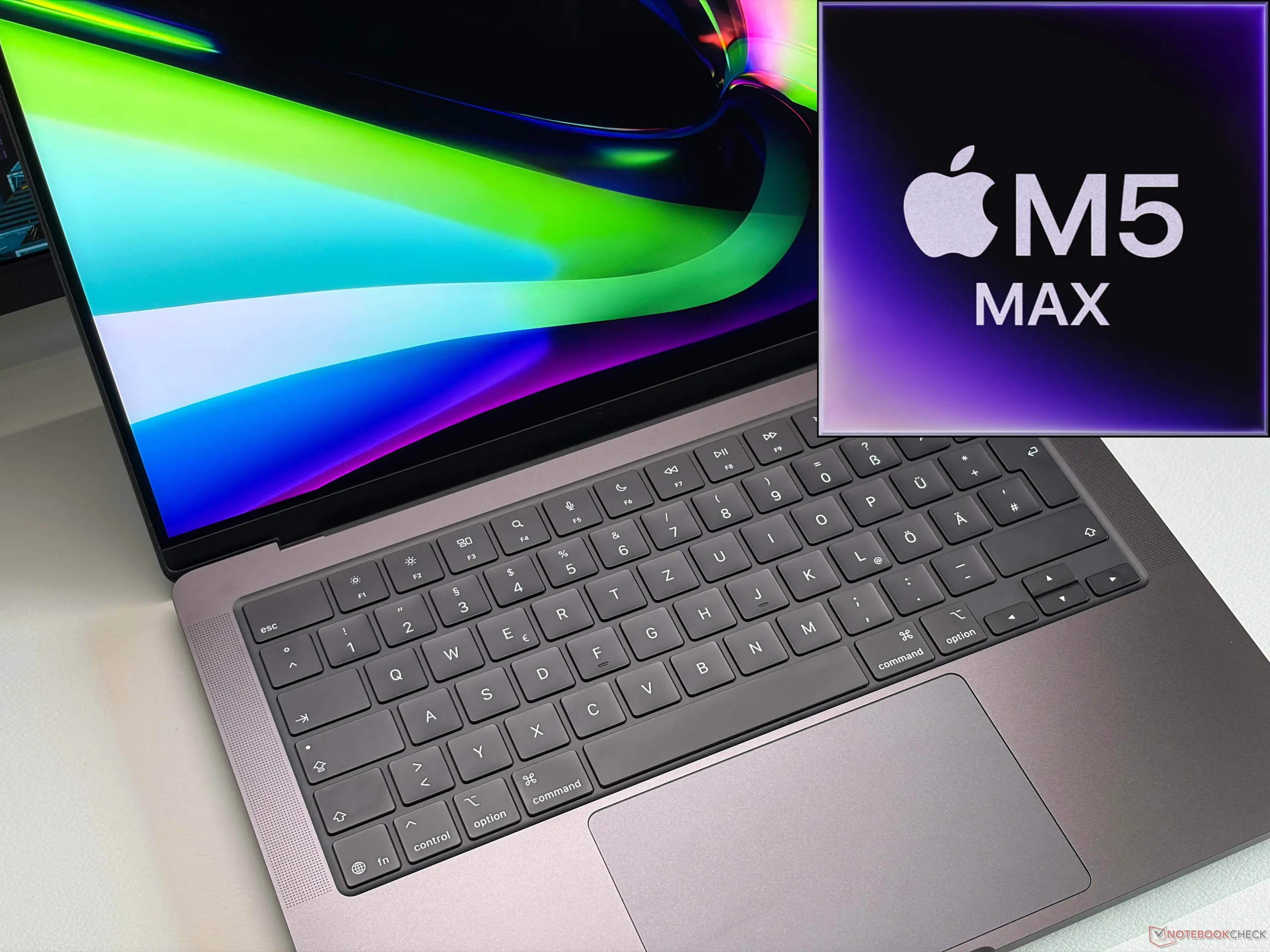
     

  • Apple M5 Max in MacBook Pro 16 is 15% Faster than 14

    Apple M5 Max in MacBook Pro 16 is 15% Faster than 14

    Key Takeaways

    1. The MacBook Pro 14 with the M5 Max shows inconsistent CPU and GPU performance, even in High Power mode, with no significant improvement over the M4 Max.
    2. Initial benchmarks of the MacBook Pro 16 with the M5 Max reveal an 18% performance advantage in CPU compared to both the 14-inch model and the M4 Max.
    3. The MacBook Pro 16 achieves improved performance in quiet Automatic mode, unlike the 14-inch model, where High Performance mode did not enhance single benchmark results.
    4. Graphics performance in the MacBook Pro 16 demonstrates a 12% improvement over the 14-inch model and a 21% lead over the older M4 Max, with stable performance under continuous workloads.
    5. The M5 Max appears to be a better fit for the larger MacBook Pro 16, showing notable performance differences compared to the MacBook Pro 14.


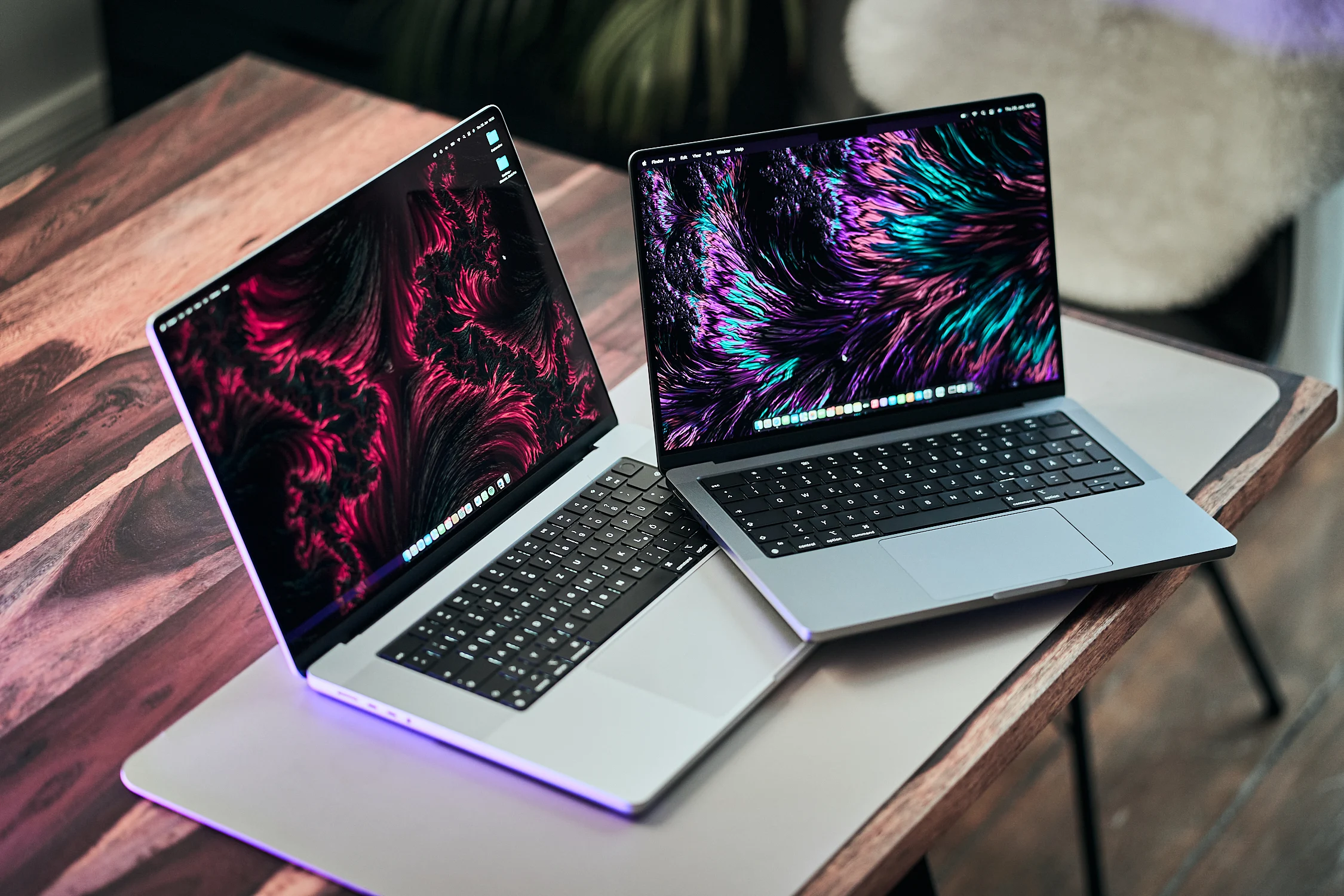
    During our examination of the MacBook Pro 14 featuring Apple’s latest high-performance SoC M5 Max, equipped with the ultra-fast 40-core GPU, we encountered problems with inconsistent CPU performance even while in High Power mode. Additionally, the graphics performance was also not reliable. Our CPU analysis revealed that the CPU performance was not significantly improved compared to the previous M4 Max. We believe that the M5 Max could show better performance in the larger MacBook Pro 16, and now we have a review unit of the MBP 16 with the M5 Max for testing.

    Initial Benchmarks Show Promising Results

    We have conducted some preliminary benchmarks, and the results indicate an improvement in both CPU and GPU performance. Unlike the 14-inch model, we have not detected any of the performance variations experienced previously.

    The Cinebench 2024 multi-core test reveals an 18% advantage for the M5 Max in the MacBook Pro 16 over both the M5 Max in the 14-inch model and the older M4 Max. Notably, the MBP 16 achieves this result even in Automatic mode, which operates much quieter. Although the High Performance mode does not enhance the performance during a single benchmark run, we still intend to investigate whether it influences sustained performance. In one benchmark run, the CPU cores drew 78/65 Watts, which is significantly higher than the MBP 14.

    Graphics Performance Improvements

    The graphics performance has also seen enhancements, as indicated by the current 3DMark Steel Nomad test showing a 12% advantage for the M5 Max in the MBP 16 compared to the M5 Max in the MBP 14, and a 21% lead over the older M4 Max in the MBP 16. We can confidently state that the GPU performance remains stable under continuous workloads, a stark contrast to the smaller model that exhibited declines of -7.4% in High Performance mode and -25% in Automatic mode.

    We will of course carry out more tests, but our initial benchmark findings suggest that the M5 Max is a much more suitable choice for the larger MacBook Pro 16, with a notable performance difference when compared to the MacBook Pro 14.

  • Apple MacBook Pro 14 Struggles with M5 Max Performance Issues

    Apple MacBook Pro 14 Struggles with M5 Max Performance Issues

    Key Takeaways

    1. Apple has launched the M5 Max chip with 18 CPU cores and 40 GPU cores in the MacBook Pro 14, but the power adapter is inadequate.
    2. In stress tests, the M5 Max peaks at 96 Watts briefly, stabilizing around 42 Watts, while the M5 Pro in the MacBook Pro 16 can draw 70W.
    3. CPU and GPU stress tests show a drop in power consumption after initial peaks, with the GPU performance decreasing by about 10% under continuous workloads.
    4. The MacBook Pro 16 is expected to outperform the 14-inch model, better utilizing the M5 Max GPU’s capabilities.
    5. Future M6 chips are anticipated to use a 2 nm manufacturing process, which may require Apple to improve cooling solutions in MacBook designs.


    Apple has introduced its latest powerful chip, the M5 Max, featuring 18 CPU cores and 40 GPU cores, in the compact MacBook Pro 14 that we just took a look at. Our evaluations revealed some problems, and we’ve already mentioned the inadequate power adapter.

    Stress Test Findings

    In our stress tests, the M5 Max (considering both CPU and GPU cores, excluding RAM) peaks at 96 Watts for a short duration of 1-2 seconds. After this burst, the chip drops rapidly to 46 Watts, but it can’t hold this level and eventually stabilizes around 42 Watts. The larger MacBook Pro 16 has an edge in this area, as the M5 Pro can draw 70W during stress tests, which is 66% more. This difference is clearly visible in the chart below (red indicates MacBook Pro 14 M5 Max; yellow represents MacBook Pro 16 M5 Pro).

    CPU and GPU Performance

    When only the CPU or GPU is under stress, similar patterns emerge. The CPU cores can briefly consume up to 75W but then fall back to about 50W. On the other hand, GPU stress can push consumption to 72W, which quickly drops to 55W and eventually stabilizes at 44W, even while using High Power mode. Under continuous workloads, the GPU performance also isn’t consistent, showing a decrease of around 10%. The MacBook Pro 16 seems likely to outperform the 14-inch model and fully showcase the capabilities of the new M5 Max GPU with its 40 cores, which we plan to test soon with a review unit.

    Future Expectations

    The current M5 generation still uses the well-known 3 nm manufacturing process (now in its third generation). We anticipate that the forthcoming M6 chips will transition to the 2 nm process at TSMC, which should enhance efficiency. However, these chips are becoming so powerful that Apple may need to rethink their MacBook designs, incorporating more effective cooling solutions. For more details, refer to our comprehensive review of the MacBook Pro 14 with M5 Max.

  • Apple’s MacBook Pro Power Adapters: Insufficient for Users

    Apple’s MacBook Pro Power Adapters: Insufficient for Users

    Key Takeaways

    1. Apple’s MacBook Pro line is becoming more powerful, but increased chip performance leads to higher power consumption and cooling challenges, particularly in the 14-inch model.

    2. The MacBook Pro 16 with the M5 Pro can peak at 145 Watts, while the 14-inch M5 Max is limited to 97 Watts, causing significant battery drain during intense usage.

    3. During stress tests, the 14-inch model experienced a 15% battery loss in one hour, even at lower usage scenarios like gaming.

    4. Many compact laptops face power adapter issues, but Apple’s restriction on the 14-inch model’s power input is particularly frustrating for users.

    5. The absence of power adapters in Europe exacerbates the problem, leaving users with limited options for adequate power supply during high-demand tasks.


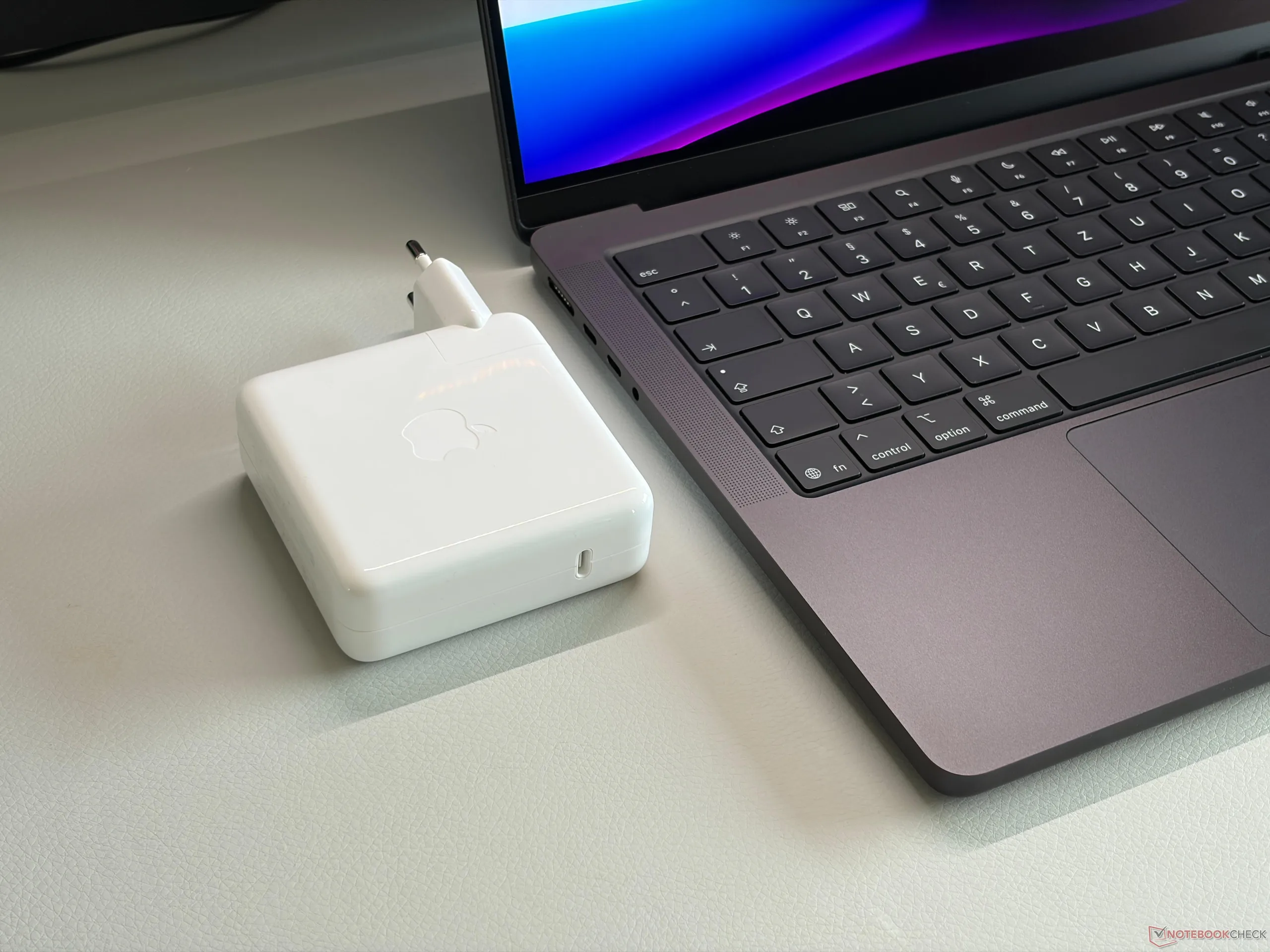
    Apple’s MacBook Pro line is becoming increasingly potent with every new release, but this also means the chips are drawing more power, which presents challenges for the cooling systems. The smaller 14-inch model is particularly impacted, as we noted in our thorough review. Its performance isn’t very consistent, and another issue is the lack of adequate power supply.

    Power Consumption Insights

    In our examination of the MacBook Pro 16 equipped with the M5 Pro and the 140W power adapter, we found that the highest consumption reached 145 Watts, before settling down to 134 Watts. With a more robust power supply unit (PSU), we recorded a peak of 147 Watts. This indicates that during intense usage, the battery must make up for this slight discrepancy (which isn’t massive in this scenario). However, the system shows that the battery is at full charge and isn’t taking in more power, with the MagSafe LED glowing green. Our measuring tool, however, indicates that consumption can peak at 40 Watts and it takes roughly 10 minutes for this to stabilize at a normal idle level again. The situation is notably worse for the 14-inch MacBook Pro with the M5 Max, as the maximum power intake is limited to 97 Watts, regardless of whether you’re using Apple’s 140W adapter or an even more powerful 180W USB-C PSU. This limitation caused a 15% battery drain during our one-hour stress test. While it might be argued that our stress test represents a worst-case scenario, the battery also lost about 10% after playing Cyberpunk 2077 for just an hour at a lower screen brightness. The behavior under continuous workloads is quite peculiar, as the battery percentage remains at 100% for a time before unexpectedly dropping to 96 or 97%.

    Manufacturer Limitations

    The use of inadequate power adapters by manufacturers is a common issue that extends beyond Apple. Particularly, compact laptops with Intel GPUs (which have high short-term power demands) frequently face this problem. What we find frustrating, however, is how Apple addresses this challenge. In brief, during short peak load situations, users may think the battery isn’t depleting and that the power adapters are adequate. It’s also bothersome that Apple intentionally restricts the power input for the smaller 14-inch model to 97 Watts, even when stronger power supplies are utilized. Users of the MacBook Pro with the M5 Max might be inclined to push their systems harder for extended periods or engage in gaming without the battery draining, but this limitation makes it impossible. Especially in Europe, where MacBooks are shipped without power adapters by default, this situation seems quite illogical and is frustrating for users.


  • Nvidia RTX 5060 Laptop Beats Apple M5 Pro in OpenCL Benchmark

    Nvidia RTX 5060 Laptop Beats Apple M5 Pro in OpenCL Benchmark

    Key Takeaways

    1. The Apple M5 Max shows exceptional CPU performance, outpacing competitors and nearing the RTX 5070 Laptop in OpenCL performance.
    2. The M5 Pro achieved a score of 141,000 in the Metal test and 87,155 in OpenCL, aligning with its half GPU core count compared to the M5 Max.
    3. The entry-level Apple M5 with a 10-core GPU scores around 48,000 in OpenCL, making the M5 Pro approximately 81% better.
    4. The M5 Pro demonstrates a 24.3% improvement in OpenCL and a 26% boost in the Metal benchmark compared to its predecessor, the M4 Pro.
    5. Real-world performance varies by workload, and comparing Apple GPUs to Nvidia GPUs in OpenCL may be misleading due to API neglect on macOS.


    Apple’s M5 Max recently appeared on Geekbench, showcasing its outstanding CPU performance and leaving its rivals behind. The 40-core GPU also performed remarkably well, coming close to the RTX 5070 Laptop in OpenCL (which is outdated on macOS) and achieving 88% of the M3 Ultra’s performance in the Metal test.

    M5 Pro Performance

    Now, the M5 Pro has also surfaced in the same benchmark, achieving an impressive score of 141,000 points in the Metal test. In the OpenCL test, which was deprecated on macOS over six years ago, the M5 Pro earned about 87,155 points. Given that this system-on-chip (SoC) has half the GPU cores of the M5 Max, these results align with expectations.

    Comparison with Entry-Level Models

    Additionally, the basic Apple M5 with a 10-core GPU, found in the entry-level MacBook Pro (currently priced at $1,449 on Amazon), scores roughly 48,000 points in the OpenCL test. This means the M5 Pro with its 20-core GPU is approximately 81% better.

    In comparison to its earlier version, the M4 Pro, the M5 Pro shows a remarkable 24.3% improvement in the OpenCL benchmark and an outstanding 26% boost in the Metal benchmark. However, it’s important to point out that Nvidia’s GeForce RTX 5060 Laptop has a significant advantage in the OpenCL test, where the GeForce GPU leads the M5 Pro by about 13%.

    Real-World Performance Factors

    It’s essential to remember that actual performance can differ significantly based on the workload. Comparing an Apple GPU with an Nvidia one in terms of OpenCL performance isn’t entirely fair, as the API has been neglected on the Mac platform. Similarly, comparing Metal scores is also not equitable since it’s a graphics API exclusive to Apple.

    At this moment, we lack 3DMark or GFXBench numbers, but those should be available shortly. For now, it’s clear that Apple’s M5 Pro is poised to deliver impressive performance enhancements over the previous generation.

    Source:
    Link


  • Apple M5 Max 20-Core GPU Impresses in Geekbench Launch

    Apple M5 Max 20-Core GPU Impresses in Geekbench Launch

    Key Takeaways

    1. The Apple M5 Max outperforms nearly all consumer-grade x86 and Arm processors, thanks to its revamped cores and increased core count.
    2. It scored 232,718 points on Geekbench, making it almost as powerful as the M3 Ultra, despite having half the GPU cores.
    3. The M5 Max’s graphics capabilities are strong, with impressive results in OpenCL and Metal tests.
    4. In the OpenCL benchmark, it scored 145,412, comparable to the GeForce RTX 5070 laptop edition, which has higher power requirements.
    5. The M5 Max could potentially rival Nvidia GPUs in gaming performance, particularly in raytracing.


    Apple’s M5 Max has created a buzz on Geekbench, showcasing impressive performance that surpasses nearly every consumer-grade x86 and Arm processor available today. The revamped Super and Middle cores, along with an increased core count, have pushed it beyond the offerings from Intel, AMD, and Qualcomm. Its graphics capabilities are equally strong, as indicated by its results on Geekbench’s OpenCL and Metal tests.

    Performance Highlights

    The M5 Max discussed here is a top-tier model equipped with 20 GPU cores. It achieved a remarkable score of 232,718 points in the benchmark, making it almost as powerful as a fully loaded M3 Ultra, which has double the GPU cores. However, comparing it directly to Nvidia or AMD GPUs wouldn’t be entirely accurate because Metal workloads aren’t fine-tuned for them.

    Competitive Edge

    Fortunately, an OpenCL benchmark provides insight into how the M5 Max stacks up against its competitors, Team Green and Team Red. It scored 145,412 in this test, aligning its performance with that of a GeForce RTX 5070 laptop edition. This performance is commendable, especially considering the RTX 5070 has 36 SMs and requires significantly more power. Moreover, the M5 Max could potentially challenge Nvidia GPUs in gaming due to enhancements in raytracing performance.

    Source:
    Link


  • Apple M5 Pro and M5 Max Specs Leaked: Full Details Revealed

    Apple M5 Pro and M5 Max Specs Leaked: Full Details Revealed

    Key Takeaways

    1. Apple unveiled the M5 Pro and M5 Max chips with limited specs shared at the launch.
    2. The chips use Fusion architecture, which incorporates TSMC’s SoIC-MH 2.5D packaging technology.
    3. Expected performance improvements include up to 10% for single-threaded tasks and 20% for multi-threaded applications.
    4. The GPU in the M5 Pro and M5 Max is projected to be about 25% faster than previous models.
    5. Power consumption is expected to be stable for single-threaded tasks, but will increase under heavy load with more CPU cores.


    Even though Apple officially unveiled the M5 Pro and M5 Max yesterday together with its latest MacBook Pro models, only some of their specs were shared. Typically, these details are confirmed through listings on Geekbench and other benchmarking sites. Nevertheless, a leak from Baidu has now provided insight into the internal components of both chips.

    Architecture Details

    Apple has confirmed that the M5 Pro and M5 Max utilize what they refer to as Fusion architecture. This is essentially TSMC’s SoIC-MH 2.5D packaging technology that links a CPU tile and a GPU tile using high-speed interconnects. In terms of performance, the M5 Pro and M5 Max are expected to deliver up to a 10% improvement in single-threaded workloads, a 20% boost for multi-threaded applications, and the GPU is projected to be around 25% quicker.

    Power Consumption Insights

    Power usage is anticipated to remain relatively stable across generations for single-threaded tasks. However, the additional CPU cores will inevitably cause the M5 Pro and M5 Max to consume more power when all cores are under heavy load.


    Source:
    Link


  • M5 Pro and M5 Max MacBook Pro: Enhanced Performance & Storage

    M5 Pro and M5 Max MacBook Pro: Enhanced Performance & Storage

    Key Takeaways

    1. New M5 Pro and M5 Max Chips: The latest MacBook Pro models feature powerful M5 Pro and M5 Max chips with configurations up to 18 cores, improving overall performance by up to 30%.

    2. Graphics Performance Improvements: The M5 Pro maintains a 20-core GPU, while the M5 Max has a 40-core GPU, offering up to 35% better performance in ray tracing tasks.

    3. Enhanced Storage Capabilities: Storage speeds have increased to 14.5 GB/s, with base storage starting at 1 TB for M5 Pro and 2 TB for M5 Max models, alongside rising prices due to NAND flash costs.

    4. Display and I/O Features Remain Unchanged: The 14″ and 16″ Liquid Retina XDR displays and input/output options remain the same as previous models.

    5. Pricing Details: The M5 Pro 14″ starts at $2,199 and the 16″ at $2,699, while M5 Max models start at $3,899, with additional costs for higher RAM and nano-texture display options.


    Apple’s latest 14″ and 16″ MacBook Pro series was missed when the company released the standard M5-powered MacBook Pro last fall. Luckily, the M5 Pro and M5 Max versions have finally made their debut, featuring upgraded SoCs while keeping the same design as before.

    Powerful New Chips

    The M5 Pro and M5 Max chips seem to be quite powerful, at least based on the specifications. Both processors have the capability of having up to an 18-core configuration, which includes six “Super” cores and twelve “Performance” cores. The term “efficiency core” has been eliminated. Apple claims that overall performance could see improvements of up to 30%.

    Graphics and Performance Boosts

    In terms of the GPU, Apple has opted to maintain a 20-core GPU for the M5 Pro and a 40-core GPU for the M5 Max. Apple’s reported performance increases are impressive, showing up to a 35% boost in tasks involving ray tracing. The raw GPU power is expected to be approximately 20% greater. Thanks to the neural accelerators integrated within each core, large language models (LLMs) should perform 3.9x to 4x faster.

    Enhanced Storage and Pricing

    The storage speed has seen significant enhancements, with Apple stating that read speeds can reach 14.5 GB/s. The base storage has been increased as well, with the M5 Pro starting at 1 TB and the M5 Max models beginning at 2 TB. Due to rising costs for NAND flash, the starting prices for these MacBook Pros have also gone up, which will be discussed later.

    With the integration of Apple’s N1 chip, the wireless networking features have improved, finally introducing WiFi 7 and Bluetooth 6 to the premium MacBook Pro series.

    Display and I/O Features

    Most of the other features on the MacBook Pro remain largely unchanged. The 14″ and 16″ Liquid Retina XDR displays still offer the same resolution and features as before, and the input/output options are identical to previous models.

    Pricing Details

    For pricing, the M5 Pro 14″ MacBook Pro begins at $2,199 for the model with a reduced M5 Pro chip (15-core CPU, 16-core GPU), 24 GB RAM, and 1 TB storage. The 16″ MacBook Pro with the complete M5 Pro setup, 24 GB RAM, and 1 TB storage starts at $2,699. As usual, the nano-texture option for the display will add an extra $150.

    The M5 Max 14″ MacBook Pro, equipped with an 18-core CPU and 32-core GPU, 2 TB storage, and 36 GB RAM, starts at $3,899. The 16″ version with the same specs also starts at $3,899. For the un-binned M5 Max model featuring 48 GB RAM and 2 TB storage, customers will need to pay $4,099 for the 14″ and $4,399 for the 16″ models.

    Source:
    Link


  • Apple Launches M5 Pro and M5 Max with Enhanced Fusion Architecture

    Apple Launches M5 Pro and M5 Max with Enhanced Fusion Architecture

    Key Takeaways

    1. Apple launched the M5 Pro and M5 Max laptop chips, built using TSMC’s N3P process technology.
    2. The M5 Pro features up to 18 CPU cores and a 20-core GPU, while the M5 Max has an 18-core CPU with options for 32-core or 40-core GPUs.
    3. Both chips claim up to a 35% GPU performance boost over the M4 series, with the M5 Max outperforming the M4 Max by up to 20% in general applications.
    4. The M5 Max supports up to 128GB of unified memory with a maximum bandwidth of 614GB/s.
    5. The new chips include Thunderbolt 5.0 compatibility, hardware acceleration for various video codecs, and a 16-core NPU for AI tasks.


    Apple has unveiled its latest top-tier laptop chips, the M5 Pro and M5 Max, after several months since the release of the standard M5 alongside the new iPad Pro model. The company has subtly indicated that both chips are built using TSMC’s N3P process technology. Interestingly, the M5 Pro and M5 Max integrate two N3P chiplets into one unified chip, a design approach we’ve encountered previously with Apple’s Ultra series. This also hints at the potential introduction of an M5 Ultra in the future.

    M5 Pro Specifications

    For the M5 Pro, users can expect up to 18 CPU cores, which includes 12 performance cores (previously called E-cores) and 6 super cores (formerly known as P-cores), complemented by a 20-core GPU. There’s also a lower-spec option featuring 15 CPU cores (10+5) and 16 GPU cores. The M5 Max guarantees an 18-core CPU, which can be paired with either a 32-core or a 40-core GPU. Overall, while there’s an increase in the number of CPU cores, the GPU specs remain largely unchanged on a physical level.

    Performance Claims

    Apple asserts that the M5 Pro and M5 Max deliver up to a 35% performance boost in GPU capabilities over the M4 Pro and M4 Max, particularly in applications utilizing ray tracing. In general-purpose applications, the M5 Max’s GPU reportedly outperforms the M4 Max by up to 20%. Furthermore, the M5 Max can now accommodate up to 128GB of unified memory, achieving a maximum memory bandwidth of 614GB/s.

    Caution on Metrics

    However, it’s important to note that these figures come directly from Apple, so it’s wise to wait for third-party evaluations before forming a conclusion. Apple is likely to maintain its lead in single-core performance, and the additional CPU cores may assist in closing the performance gap with AMD’s Strix Halo. Additionally, the Apple M5 Pro and M5 Max are compatible with Thunderbolt 5.0 ports and feature hardware-accelerated H.264/HEVC, AV1, and ProRes decoding and encoding engines. Apple has also integrated a 16-core NPU to handle AI-driven tasks.

    Source:
    Link


  • Rumored New Apple MacBook Pro Refresh Coming Soon

    Rumored New Apple MacBook Pro Refresh Coming Soon

    Key Takeaways

    1. The MacBook Pro 14 with the M5 chipset is currently available for $1,511 on Amazon and has been on the market since October 2025.
    2. More powerful versions, the M5 Pro and M5 Max, are expected to be released soon, with possible launch dates between February and March 2026.
    3. The new MacBook Pro 16 will feature the same processors as the MacBook Pro 14 and is the first update since November 2024.
    4. Apple has not officially confirmed the release of the new models, but extended lead times for M4 series models suggest an imminent launch.
    5. Future upgrades may include new chipsets, with major redesigns and features like Face ID and an OLED touchscreen expected in late 2026 or early 2027.


    The MacBook Pro 14 featuring Apple’s M5 chipset has been on the market since October 2025, currently priced at $1,511 on Amazon. There are reports that more powerful versions, the M5 Pro and M5 Max, are set to be released soon. Additionally, the new MacBook Pro 16, the first update since November 2024, will come with the same processors as its smaller counterpart.

    Possible Release Dates

    Mark Gurman has indicated in his Power On newsletter that the new MacBook Pro 14 and 16 models might be launched sometime between February and March. He states that Apple plans to align these updates with the macOS 26.3, which just entered its third beta phase last week. In contrast, the leaker known as @ld_vova has hinted that the M5 Pro and M5 Max might come out by the end of February 2.

    No Official Confirmation

    As is typical, Apple has not given any public hints regarding the refresh of its higher-end MacBook Pro line. However, the extended 4-6 week lead times for pricier M4 series models on the Apple Online Store suggest that the launch of M5 Pro and M5 Max is imminent. For this generation, the primary upgrades are expected to center around new chipsets, while redesigns, Face ID, and an OLED touchscreen are projected to be introduced in late 2026 or early 2027.

    Source:
    Link