
Key Takeaways
1. Apple’s MacBook Pro line is becoming more powerful, but increased chip performance leads to higher power consumption and cooling challenges, particularly in the 14-inch model.
2. The MacBook Pro 16 with the M5 Pro can peak at 145 Watts, while the 14-inch M5 Max is limited to 97 Watts, causing significant battery drain during intense usage.
3. During stress tests, the 14-inch model experienced a 15% battery loss in one hour, even at lower usage scenarios like gaming.
4. Many compact laptops face power adapter issues, but Apple’s restriction on the 14-inch model’s power input is particularly frustrating for users.
5. The absence of power adapters in Europe exacerbates the problem, leaving users with limited options for adequate power supply during high-demand tasks.
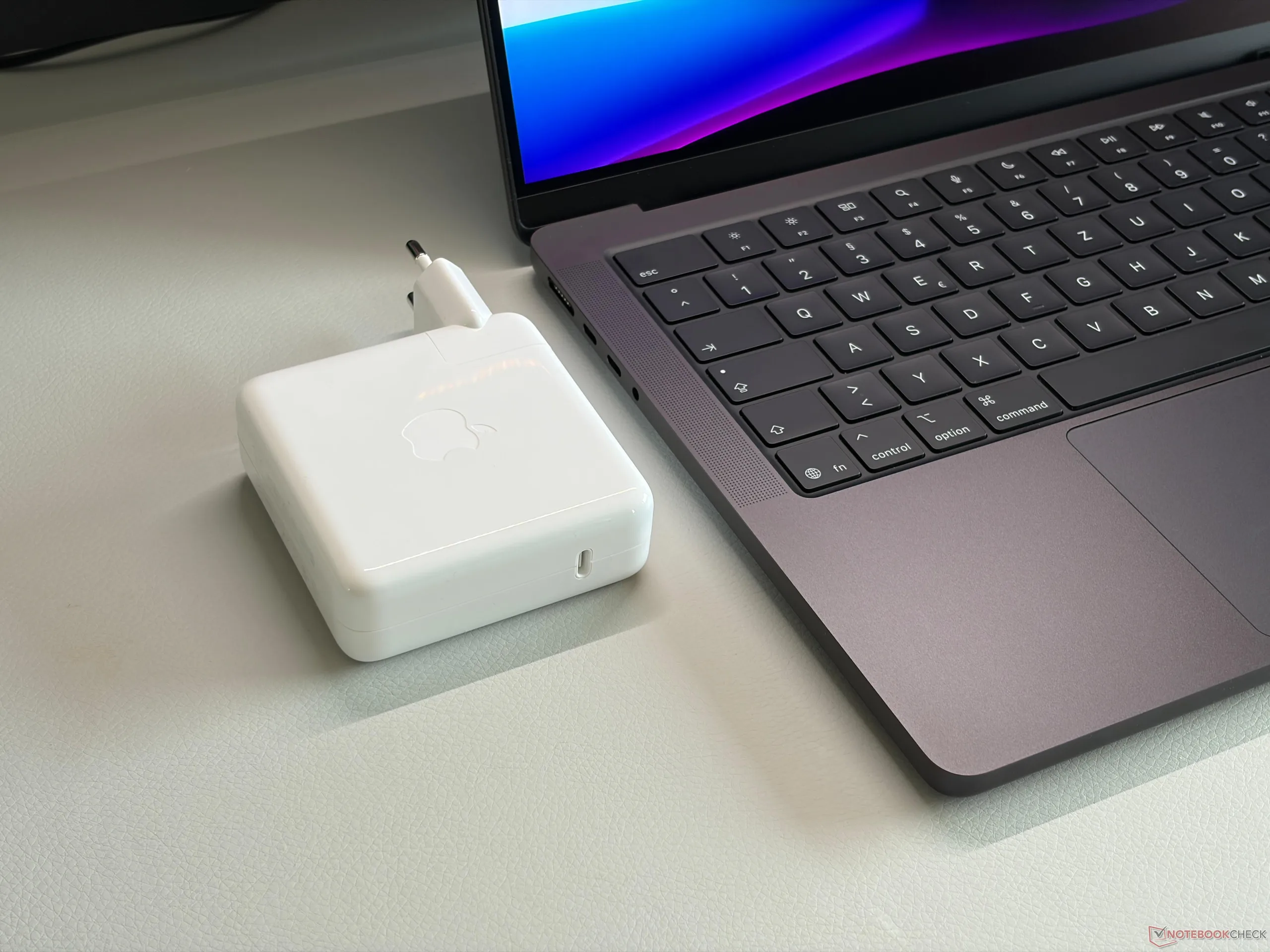
Apple’s MacBook Pro line is becoming increasingly potent with every new release, but this also means the chips are drawing more power, which presents challenges for the cooling systems. The smaller 14-inch model is particularly impacted, as we noted in our thorough review. Its performance isn’t very consistent, and another issue is the lack of adequate power supply.
Power Consumption Insights
In our examination of the MacBook Pro 16 equipped with the M5 Pro and the 140W power adapter, we found that the highest consumption reached 145 Watts, before settling down to 134 Watts. With a more robust power supply unit (PSU), we recorded a peak of 147 Watts. This indicates that during intense usage, the battery must make up for this slight discrepancy (which isn’t massive in this scenario). However, the system shows that the battery is at full charge and isn’t taking in more power, with the MagSafe LED glowing green. Our measuring tool, however, indicates that consumption can peak at 40 Watts and it takes roughly 10 minutes for this to stabilize at a normal idle level again. The situation is notably worse for the 14-inch MacBook Pro with the M5 Max, as the maximum power intake is limited to 97 Watts, regardless of whether you’re using Apple’s 140W adapter or an even more powerful 180W USB-C PSU. This limitation caused a 15% battery drain during our one-hour stress test. While it might be argued that our stress test represents a worst-case scenario, the battery also lost about 10% after playing Cyberpunk 2077 for just an hour at a lower screen brightness. The behavior under continuous workloads is quite peculiar, as the battery percentage remains at 100% for a time before unexpectedly dropping to 96 or 97%.
Manufacturer Limitations
The use of inadequate power adapters by manufacturers is a common issue that extends beyond Apple. Particularly, compact laptops with Intel GPUs (which have high short-term power demands) frequently face this problem. What we find frustrating, however, is how Apple addresses this challenge. In brief, during short peak load situations, users may think the battery isn’t depleting and that the power adapters are adequate. It’s also bothersome that Apple intentionally restricts the power input for the smaller 14-inch model to 97 Watts, even when stronger power supplies are utilized. Users of the MacBook Pro with the M5 Max might be inclined to push their systems harder for extended periods or engage in gaming without the battery draining, but this limitation makes it impossible. Especially in Europe, where MacBooks are shipped without power adapters by default, this situation seems quite illogical and is frustrating for users.
Leave a Reply