
Key Takeaways
1. The MacBook Pro 14 with the M5 Max shows inconsistent CPU and GPU performance, even in High Power mode, with no significant improvement over the M4 Max.
2. Initial benchmarks of the MacBook Pro 16 with the M5 Max reveal an 18% performance advantage in CPU compared to both the 14-inch model and the M4 Max.
3. The MacBook Pro 16 achieves improved performance in quiet Automatic mode, unlike the 14-inch model, where High Performance mode did not enhance single benchmark results.
4. Graphics performance in the MacBook Pro 16 demonstrates a 12% improvement over the 14-inch model and a 21% lead over the older M4 Max, with stable performance under continuous workloads.
5. The M5 Max appears to be a better fit for the larger MacBook Pro 16, showing notable performance differences compared to the MacBook Pro 14.
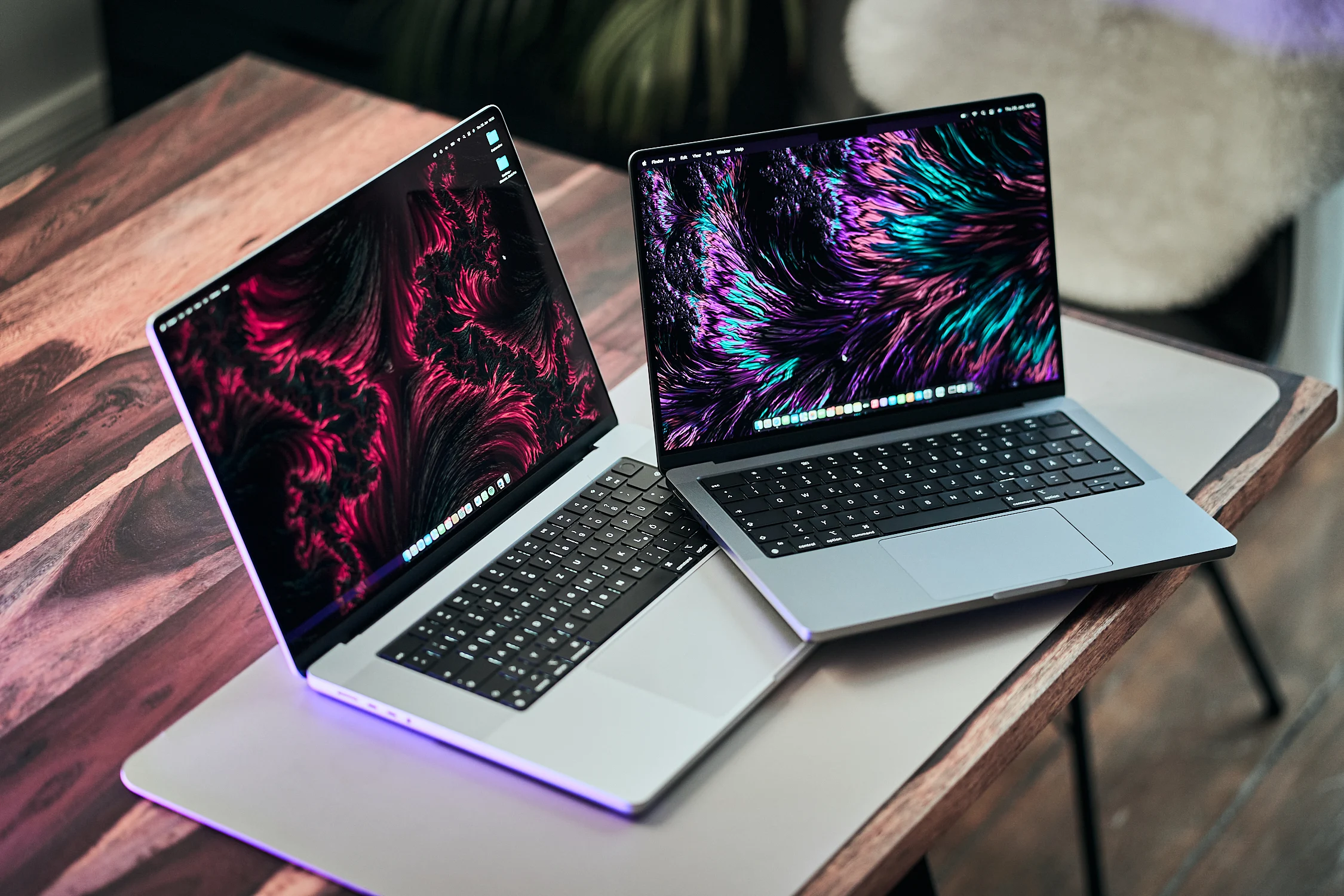
During our examination of the MacBook Pro 14 featuring Apple’s latest high-performance SoC M5 Max, equipped with the ultra-fast 40-core GPU, we encountered problems with inconsistent CPU performance even while in High Power mode. Additionally, the graphics performance was also not reliable. Our CPU analysis revealed that the CPU performance was not significantly improved compared to the previous M4 Max. We believe that the M5 Max could show better performance in the larger MacBook Pro 16, and now we have a review unit of the MBP 16 with the M5 Max for testing.
Initial Benchmarks Show Promising Results
We have conducted some preliminary benchmarks, and the results indicate an improvement in both CPU and GPU performance. Unlike the 14-inch model, we have not detected any of the performance variations experienced previously.
The Cinebench 2024 multi-core test reveals an 18% advantage for the M5 Max in the MacBook Pro 16 over both the M5 Max in the 14-inch model and the older M4 Max. Notably, the MBP 16 achieves this result even in Automatic mode, which operates much quieter. Although the High Performance mode does not enhance the performance during a single benchmark run, we still intend to investigate whether it influences sustained performance. In one benchmark run, the CPU cores drew 78/65 Watts, which is significantly higher than the MBP 14.
Graphics Performance Improvements
The graphics performance has also seen enhancements, as indicated by the current 3DMark Steel Nomad test showing a 12% advantage for the M5 Max in the MBP 16 compared to the M5 Max in the MBP 14, and a 21% lead over the older M4 Max in the MBP 16. We can confidently state that the GPU performance remains stable under continuous workloads, a stark contrast to the smaller model that exhibited declines of -7.4% in High Performance mode and -25% in Automatic mode.
We will of course carry out more tests, but our initial benchmark findings suggest that the M5 Max is a much more suitable choice for the larger MacBook Pro 16, with a notable performance difference when compared to the MacBook Pro 14.
Leave a Reply