Tag: OLED displays

  • Xreal Project Aura Android XR Glasses Near Launch with Update

    Xreal Project Aura Android XR Glasses Near Launch with Update

    Key Takeaway

    – Project Aura are full-fledged OLED Android XR glasses that require a wired connection to a puck, similar in form factor to Apple Vision Pro.
    – Launch expected before end of 2026; price and exact date not yet announced; developer early-access program announced.
    – Demos at Google I/O 2026 included 180°/360° YouTube, immersive Google Maps, and multimodal AI demos connected to a laptop.


    Xreal Project Aura: New Details and Developer Program

    Xreal has shared new details on the Project Aura, the wired Android XR glasses that were first announced in May 2025. They are now set to launch before the end of 2026, and the company has announced a new program for the developers, which offers early access. The messaging keeps focus on a path to hands-on experience for developers, with anticipated access windows that could influence how apps are built for the product.

    Android XR Glasses With OLED Displays

    Xreal’s Project Aura, unlike the two Android XR smart glasses shown at Google I/O 2026, are described as full-fledged smart glasses with OLED displays. They are not standalone devices like the RayNeo X3 Pro or the Inmo Air 3; rather, Aura requires a wired connection with its puck, placing it in a category closer to the Apple Vision Pro in terms of how it integrates with a host device, although it uses a wired tether rather than a separate standalone processing unit.

    Demos At Google I/O 2026

    At Google I/O 2026, Xreal offered demos that included 180-degree and 360-degree YouTube experiences along with an early look at an immersive Google Maps. The company has even shown the multimodal AI capabilities of the Project Aura by connecting them to a laptop, illustrating a multimodal approach where content from multiple sources can be blended for a richer AR/VR experience. The demonstrations hint at the potential for hands-free navigation and immersive media experiences tied to real-world contexts.
    Sources
  • New Microsoft Surface Laptop Models with Major Display Upgrades

    New Microsoft Surface Laptop Models with Major Display Upgrades

    Key Takeaway

    1. Microsoft plans to release a new Surface Pro 2-in-1 and a successor to the Surface Laptop 7, with a focus on OLED displays for higher-end models.
    2. The Surface Laptop 8 will feature OLED variants and a higher resolution screen, while entry-level models will keep the 120 Hz IPS display.
    3. A 15-inch OLED Surface Laptop has been omitted, with options limited to smaller, higher-end configurations, with hints at upcoming release timelines.

    Upcoming Microsoft Surface Devices Revealed

    Earlier in the week, tech insiders Roland Quandt and WinFuture shared some initial details about the new lineup of Microsoft’s Surface laptops and tablets. But now, Windows Central has added more to the story with some extra insights that they have uncovered. It’s like getting a sneak peek at what Microsoft might be planning to launch soon, and it’s pretty exciting for everyone eager for new tech gadgets.

    New Surface Pro and Laptop Models

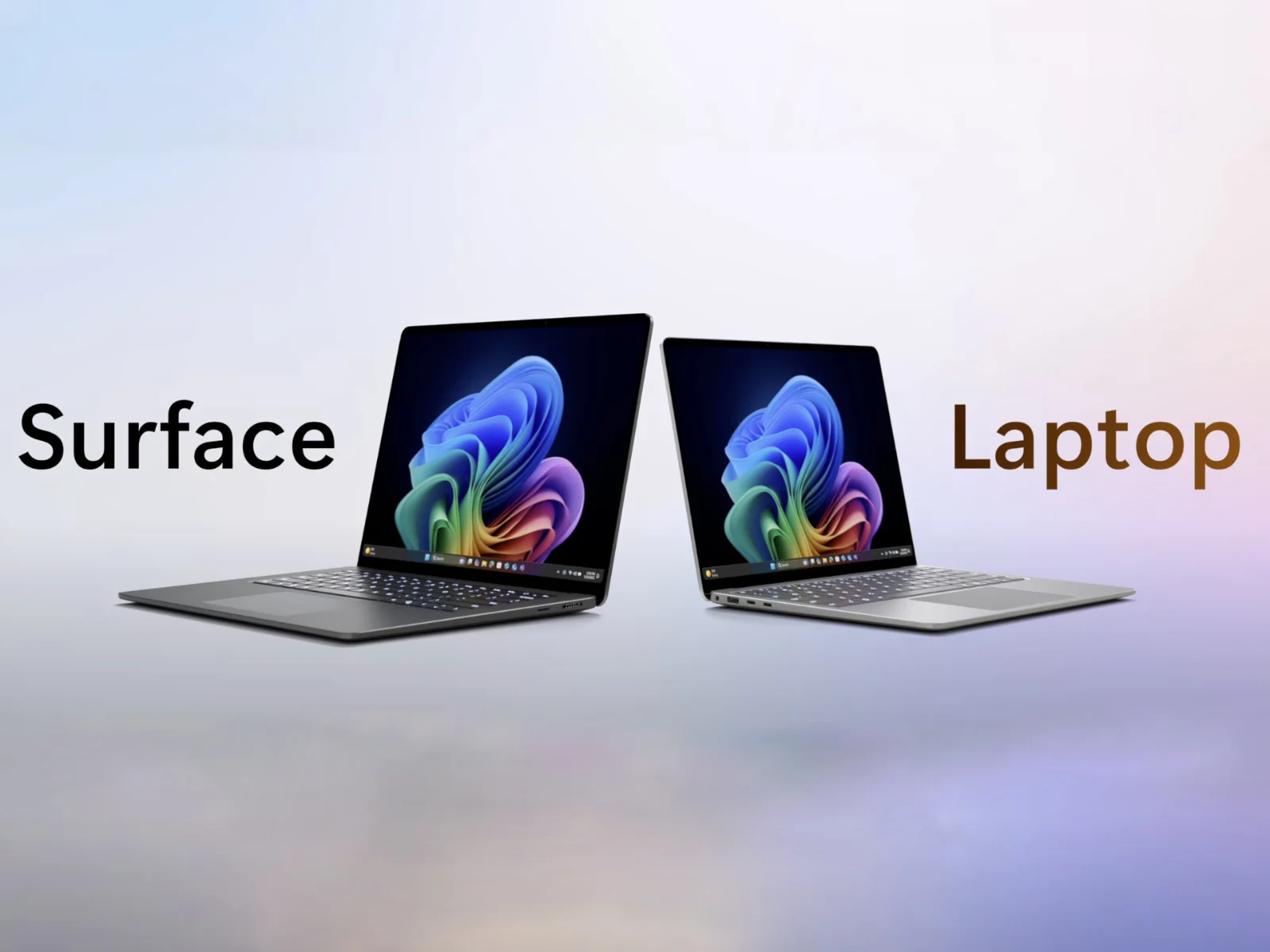
    To quickly sum up, Roland Quandt mentioned that there will be a fresh Surface Pro 2-in-1 device that will probably replace the current models, plus a new version of the Surface Laptop 7 which uses ARM chips. The current Surface Laptop 7 has a 13.8-inch screen and costs around $866 somewhere online. Windows Central reports that rather than focusing on a 15-inch version, Microsoft will instead add some OLED screen options for the Surface Laptop 8, especially for the 13.8-inch variants. This move could give users better display quality without changing overall device size.

    Display Features and Specifications

    This site emphasizes that the OLED screens will mostly be reserved for more expensive, high-end configurations. Similar to what they do now with the Surface Pro, the OLED option will likely be limited to these premium models. There are also whispers that the new Surface Laptop might come with a higher resolution screen, but it’s still not clear if this is related to the OLED panels or a separate upgrade altogether. It remains one of the interesting mysteries about the upcoming lineup.

    Entry-Level Models and Display Technology

    For the more basic versions, the devices will keep using the same 120 Hz IPS displays found in the current Surface Laptop 7 series. These models are expected to stay affordable while still offering decent performance. Plus, Windows Central hints that the launch dates for this year’s Surface devices might be sooner than later, giving fans something to look forward to over the coming months.

    Sources
  • MacBook Pro to Get Major OLED Upgrade with Touch Support by 2027

    MacBook Pro to Get Major OLED Upgrade with Touch Support by 2027

    Key Takeaways

    1. The next MacBook Pro series may feature OLED displays with touch capabilities for the first time.
    2. Analyst Ming-Chi Kuo predicts the release of these OLED MacBook Pros between late 2026 and early 2027.
    3. Kuo’s timeline aligns with predictions from other insiders like Mark Gurman.
    4. The inclusion of OLED technology could greatly enhance the visual experience for users.
    5. As the release date approaches, more details about the new MacBook Pro are expected to be revealed.


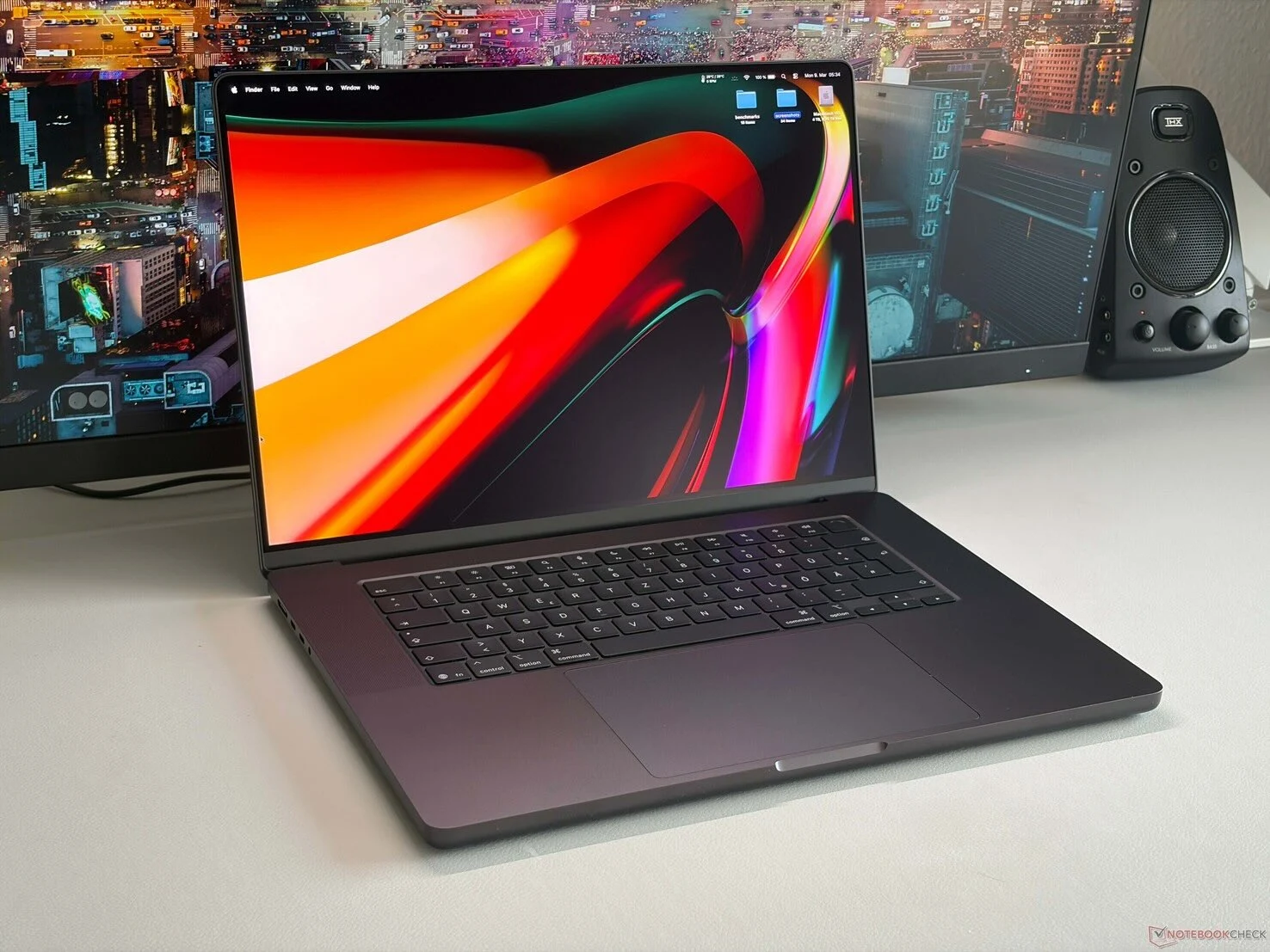
    We have heard a lot about the potential features of Apple’s next MacBook Pro series. Besides the expected upgrades to the SoC, it seems like the MacBook Pro could also introduce OLED displays with touch capabilities for the very first time in its history.

    Analyst Insights

    Well-known analyst Ming-Chi Kuo has shared his predictions for the new Pro laptop. He believes that the next series of OLED MacBook Pros is expected to arrive sometime between late 2026 and early 2027. This timeline aligns with what other insiders, such as Mark Gurman, have also suggested. Additionally, Kuo confirmed that these laptops will come equipped with OLED screens that support touch functionality.

    Future Expectations

    Ming-Chi Kuo’s insights provide an interesting glimpse into what users might expect from future Apple products. The inclusion of OLED technology could significantly enhance the visual experience for users, especially with the added touch capability. As the release date approaches, more details are likely to emerge, and fans of Apple will be eagerly waiting for any updates.

    Source:
    Link


  • Asus Zenbook Duo 2026 Outshines Predecessor in Four Key Areas

    Asus Zenbook Duo 2026 Outshines Predecessor in Four Key Areas

    Key Takeaways

    1. The Zenbook Duo (2026) features improved performance and battery life with the new Intel Panther Lake platform, 32 GB of RAM, and 2 TB of storage.
    2. The new model has a dual battery design with a total capacity of 99 Wh and weighs only 1.65 kg, with a 5% smaller footprint than the previous version.
    3. Both 14-inch OLED screens offer 2.8K resolution, 144 Hz refresh rates, and can reach brightness levels of up to 1,000 nits.
    4. Enhanced connectivity includes one Thunderbolt 4 port on each side and multiple additional ports.
    5. The device includes six speakers, with two front-firing, but pricing and availability details have not yet been announced.


    The 2025 version of the Zenbook Duo left a strong impression on us when we reviewed it last year (curr. $1,692 on Amazon), thanks to many improvements compared to its 2024 model. Now, Asus has revealed a 2026 version after giving us a sneak peek nearly a month ago.

    Performance and Battery Life

    In summary, the Zenbook Duo (2026) is set to outdo its earlier version in both speed and battery longevity, thanks to the new Intel Panther Lake platform. With a solid 32 GB of RAM and a massive 2 TB of storage, Asus has noted that this new model will feature an unspecified Core X9 processor, probably the Core Ultra X9 388H.

    Design and Display

    Furthermore, Asus has introduced a new dual battery design, which enables this year’s Zenbook Duo to have a total capacity of 99 Wh. Remarkably, the device only weighs 1.65 kg and has a footprint that is 5% smaller than the previous model. Both of its 14-inch OLED screens provide stunning 2.8K resolutions with refresh rates of 144 Hz and can reach up to 1,000 nits in brightness, all while covering 100% of the DCI-P3 color space.

    Connectivity and Sound

    Asus has also added one Thunderbolt 4 port on each side, along with various other ports. There are six speakers in total, including two that are front-firing. While Asus has yet to announce pricing or availability details, it has hinted that the Zenbook Duo (2026) will be available in some regions before the month ends.

    Source:
    Link


  • Future iPad Air and MacBook Air OLED Release Roadmap

    Future iPad Air and MacBook Air OLED Release Roadmap

    Rumors about Apple planning to use OLED screens in its iPad and MacBook lines have been circulating for quite some time. There have been indications that OLED versions of the iPad Air and iPad Pro were in development since the start of this decade. However, global supply-chain problems have been mentioned as one of the factors delaying the launch of these OLED iPads.

    Apple’s Progress with OLED

    Recently, Apple has taken a step forward in what Hyundai Motor Securities refers to as its anticipated OLED strategy. As shown in the image below, the company made progress in the spring by launching the new iPad Pro 11 and iPad Pro 13 (currently priced at $1,099 on Amazon). Sadly, Hyundai Motor Securities suggests that Apple isn’t likely to introduce OLED displays in upcoming iPads and MacBooks any time soon.

    Future OLED Models

    In line with the latest rumors, the South Korean investment firm predicts that the iPad mini and MacBook Pro will be the next devices to get OLED upgrades, but not until 2026. Following these releases, the long-awaited iPad Air may arrive in 2027, with the MacBook Air possibly coming the year after. Interestingly, including the MacBook Air in this timeline conflicts with another recent report from South Korea, which we have discussed in a different piece.

    Source: Link


    Image 1
  • 2024 iPad Pro: Thinner Design Revealed in CAD Renders

    2024 iPad Pro: Thinner Design Revealed in CAD Renders

    Apple is rumored to launch updated iPad Pro models as soon as next month, with the most significant change being the introduction of OLED displays for both the 11-inch and 13-inch models. If these rumors hold true, it would be the first time Apple will OLED technology into its iPad lineup.

    Switching to OLED displays brings several advantages. OLED panels are notably thinner compared to LCD or mini-LED screens, allowing for slimmer device profiles.

    Updated iPad Pro Models with OLED Displays

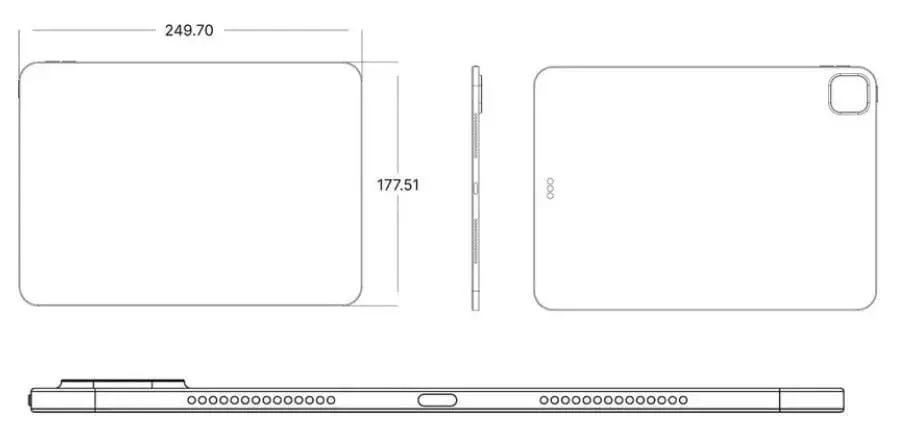
    Recently leaked CAD drawings and rumored dimensions of the upcoming tablets support this. The design of the tablets appears to be the same as their predecessors, with the rear camera island positioned in the upper left corner and speakers and USB-C port located at the bottom of the device.

    However, the latest rumored dimensions for the upcoming 11-inch and 13-inch iPad Pro models suggest slimmer tablets than their predecessors. Here are the rumored dimensions of the current and upcoming models:

    • Current 11-inch iPad Pro: 247.6mm x 178.5mm x 5.9 mm
    • Upcoming 11-inch iPad Pro: 249.7mm x 177.5mm x 5.1mm
    • Current 12.9-inch iPad Pro: 280.6mm x 214.9mm x 6.4mm
    • Upcoming 13-inch iPad Pro: ~281.5mm x 215.5mm x 5.0mm

    One noticeable difference between the 2022 and 2024 models is the thickness. The 13-inch model is reportedly 1.4mm thinner (5.0mm vs 6.4mm), while the 11-inch model is 0.8mm thinner (5.1mm vs 5.9mm).

    Technological Upgrades and Specifications

    This reduction in thickness can be attributed to the adoption of OLED panels, which require fewer layers compared to the previous LCD panels.

    Besides this, the iPad Pro (2024) will also receive an upgrade under the hood, transitioning from the 5nm Apple M2 chipset to the more advanced 3nm M3.

    Additionally, there have been discussions about adding support for MagSafe charging, and consumers may also see a refreshed Magic Keyboard and a new Apple Pencil.

    2024 iPad Pro: Thinner Design Revealed in CAD Renders

    11-inch iPad Pro (2024)
    13-inch iPad Pro (2024)

  • India Unveils POCO X6 & X6 Pro: 120Hz OLED Screens, 3-Year OS Upgrades

    India Unveils POCO X6 & X6 Pro: 120Hz OLED Screens, 3-Year OS Upgrades

    POCO X6 Series and POCO M6 Pro Smartphones Unveiled During Event

    Today, POCO revealed the much-awaited POCO X6 series and the POCO M6 Pro smartphones at a significant event. The X6 lineup encompasses both standard and pro models. In the lead-up to the launch, the Xiaomi sub-brand had been hinting at the key features of these new devices. It seems that the X6 and X6 Pro are essentially rebranded versions of the Redmi Note 13 Pro and Redmi K70e, respectively. While there are numerous similarities between the two phones, there are also some noticeable distinctions.

    POCO X6 Series Specifications and Characteristics

    Equipped with a flat OLED display measuring 6.67 inches, the POCO X6 and X6 Pro showcase impressive features. These screens offer a 1.5K pixel resolution, a 120Hz refresh rate, and Dolby Vision support. Moreover, both phones incorporate an in-screen fingerprint sensor. With a peak brightness of 1,800 nits, the displays are shielded by Gorilla Glass Victus. Design-wise, the rear of the devices highlights an elongated rectangular black camera island, lending a unique dual-toned appearance.

    Regarding photography capabilities, the POCO X6 series boasts a triple rear camera setup. This setup includes a 64MP primary camera with OIS, an 8MP ultra-wide-angle lens, and a 2MP macro camera. On the front side, users will find a 16MP selfie camera housed within a centrally aligned punch-hole cutout.

    Powering the devices, the POCO X6 features a Dimensity 8300 Ultra chipset, while the X6 Pro is equipped with a Snapdragon 7s Gen 2 SoC. Both models offer up to 12GB of RAM and 512GB of storage. The standard model is supported by a 5,100mAh battery with 67W charging capabilities, whereas the pro variant boasts a 5,500mAh battery with 90W charging.

    The POCO X6 Pro stands out as the first Xiaomi phone to be preloaded with the new HyperOS. Additionally, both the X6 and X6 Pro operate on MIUI 14-based Android 14. POCO has assured users that both devices will receive three years of OS updates and four years of security patches.

    Pricing and Release

    The base version of the POCO X6, featuring 8GB of RAM and 256GB of storage, is priced starting at Rs 21,999. The 12GB + 256GB and 12GB + 512GB variants are available at Rs 23,999 and Rs 24,999, respectively. On the flip side, the POCO X6 Pro comes at a price of Rs 26,999 for the 8GB + 256GB option and Rs 28,999 for the 12GB + 512GB configuration.

    The POCO X6 is offered in two color choices: Mirror Black and Snowstorm White. In contrast, the X6 Pro is available in three color options: Spectre Black, Racing Grey, and POCO Yellow. Both the X6 and X6 Pro will be up for grabs on Flipkart starting January 16. ICICI Bank cardholders can also benefit from a Rs 2,000 discount.

    In summary, POCO has unveiled the highly anticipated X6 series and the M6 Pro smartphones at its recent event. These devices bring remarkable specifications and features at competitive price points, making them a compelling choice for smartphone enthusiasts.

  • By 2027, Apple has intentions to shift to OLED technology for iPad Mini, Air, and MacBooks.

    By 2027, Apple has intentions to shift to OLED technology for iPad Mini, Air, and MacBooks.

    Apple to Refresh Entire iPad Lineup in 2024

    According to reports, Apple is planning to refresh its entire iPad lineup next year. The 11th Gen iPad, 7th Gen iPad Mini, and 6th Gen iPad Air are expected to be released by the end of the first quarter in 2024. However, the higher-end Pro models may arrive at a later date. Rumors have been circulating about Apple adopting OLED displays for its next-generation iPads. A new report has now revealed some fresh details about the upcoming seventh-generation iPad Mini.

    Transition to OLED Displays

    Apple seems to be working towards transitioning to OLED displays for its MacBooks and iPads in the coming years. The company has already made the switch to USB-C ports on its entire product portfolio with the iPhone 15 series this year. Additionally, Apple has also introduced its proprietary silicone chipsets on Macs and iPad models.

    Currently, Apple’s iPads use LCD display panels. However, rumors suggest that next year’s iPad Pros may abandon the mini-LED screen in favor of OLED panels. This transition is expected to begin with the iPad Pro 2024. Furthermore, the report suggests that Apple may expand the usage of OLED displays to the iPad Mini and iPad Air in 2026. It is also speculated that the iPad Mini will have an increased screen size, going from the current 8.3 inches to 8.7 inches.

    Differences in Display Performance

    The report also highlights that there will be differences in display performance among the OLED iPad Pro, iPad Air, and iPad Mini models. The flagship Pro variants are expected to adopt LTPO technology along with ProMotion, while the Air and Mini models will feature a single-stack LTPS OLED panel. Additionally, the iPad Air with a 12.9-inch display will also receive an OLED panel, but it is set to debut in 2027. For next year, the same model is expected to be released with an LCD screen.

    Transition to OLED Panels on MacBooks

    In addition to the iPads, the report reveals that Apple will also transition to OLED panels on MacBooks, starting in 2025 with the 16-inch Pro model. This transition will eventually extend to the 13, 14, and 15-inch MacBook models by 2026.

    These developments indicate Apple’s commitment to adopting OLED technology across its product lineup. With the upcoming refresh of the iPad lineup in 2024, users can expect enhanced display performance and a wider range of options to choose from.
    Source: 1, 2